
IV. BUDDHISM AND JAPANESE CULTURE
Buddhism has had a great deal to do not only with the development of the arts in Japan, but with the advancement of culture in all its branches. In fact Japan without Buddhism would probably never have reached the present stage of civilisation. Buddhism has represented so far in the history of Japan everything she needed. It was through its agency that this isolated island of ours got acquainted with Continental civilisation, Indian and Chinese, upon which our ancestors built up the foundation of present-day Japan.
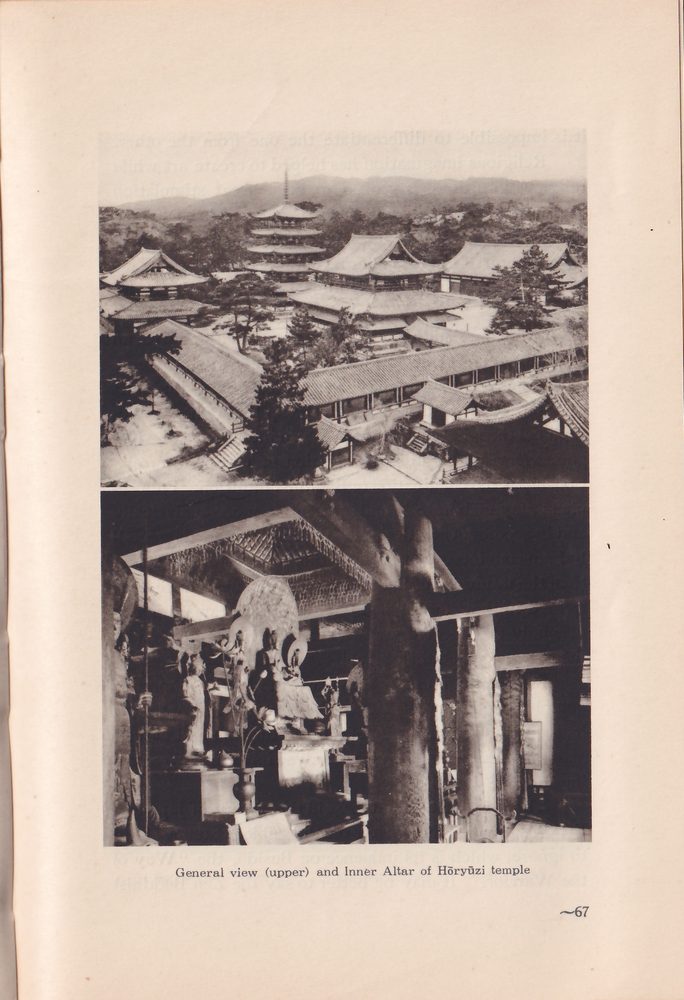
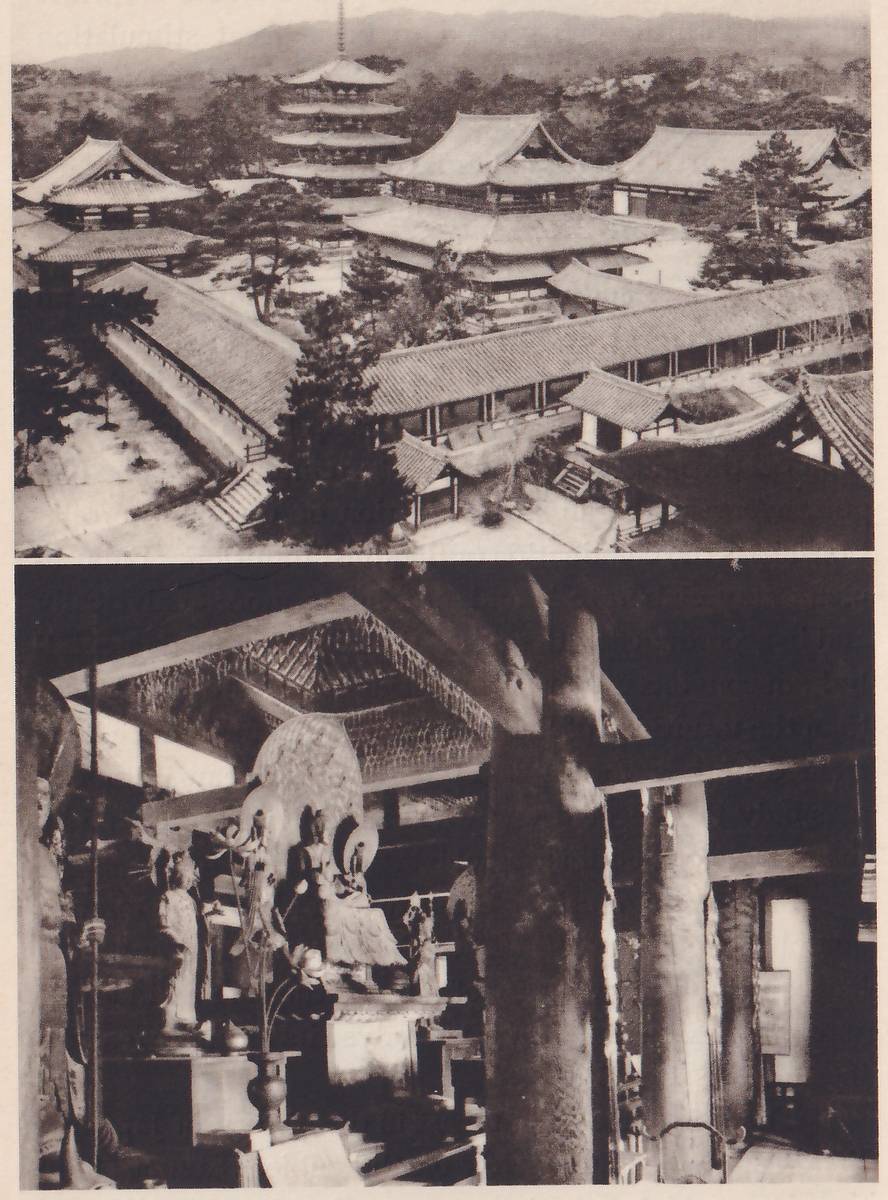
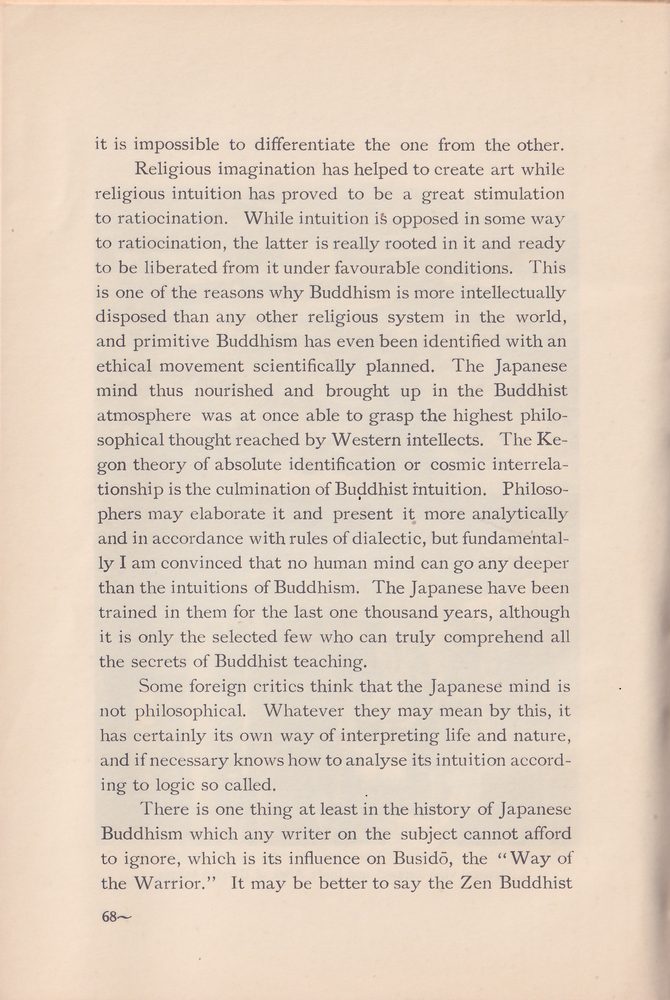
As to the arts, as is well known, they are inseparable from Buddhism. Visit Hōryūzi near Nara and you find it a regular treasure-house of the arts. The grand ensemble of architecture alone, not to speak of the wall-paintings and sculptures all of which are great works of art, is a most remarkable monument for the Buddhist genius. In the Heian (784–1192), Kamakura (1192–1333) and Asikaga (1392–1573) periods which followed, almost all the masterpieces of art are connected with Buddhism directly or indirectly. Any historical Buddhist temple in Kyoto and vicinity is a real repository of the artistic works created by Japanese men of genius, whose source of imagination and inspiration is traceable to Buddhism.
In India from which Buddhism comes, religion and philosophy are indeed so inextricably interwoven that
it is impossible to differentiate the one from the other.
Religious imagination has helped to create art while religious intuition has proved to be a great stimulation to ratiocination. While intuition is opposed in some way to ratiocination, the latter is really rooted in it and ready to be liberated from it under favourable conditions. This is one of the reasons why Buddhism is more intellectually disposed than any other religious system in the world, and primitive Buddhism has even been identified with an ethical movement scientifically planned. The Japanese mind thus nourished and brought up in the Buddhist atmosphere was at once able to grasp the highest philosophical thought reached by Western intellects. The Kegon theory of absolute identification or cosmic interrelationship is the culmination of Buddhist intuition. Philosophers may elaborate it and present it more analytically and in accordance with rules of dialectic, but fundamentally I am convinced that no human mind can go any deeper than the intuitions of Buddhism. The Japanese have been trained in them for the last one thousand years, although it is only the selected few who can truly comprehend all the secrets of Buddhist teaching.
Some foreign critics think that the Japanese mind is not philosophical. Whatever they may mean by this, it has certainly its own way of interpreting life and nature, and if necessary knows how to analyse its intuition according to logic so called.
There is one thing at least in the history of Japanese Buddhism which any writer on the subject cannot afford to ignore, which is its influence on Busidō, the “Way of the Warrior.” It may be better to say the Zen Buddhist
influence, for it is chiefly Zen that was studied by the Samurai class. The reason is that the Samurai should be always thinking of death which may befall him at any moment. While death is the gravest problem for all of us and it is really what turns us to religion, it was a more serious and threatening one if one can say so for the Samurai whose profession was rather to court it. His business was to fight and fighting means to kill the opponent or to be killed by him. The most efficient and capable Samurai was, therefore, the one who could defy death. But this defying was not to be just giving up life after the fashion of a desperado. There ought to be a certain philosophicalPrinted: philosohical understanding of the question, “What is life?” or “What is death?” This understanding is given by Zen simply and directly, that is, without the intricate medium of intellection and ritualism, which excellently suited the Samurai psychology.
The Samurai may be a great statesman, or a learned scholar, but the one thing most needed for him was to be above death. When his mind was freed from it, to whatever decisions he might come in the course of his profession he could carry them out regardless of any personal consequences following them. Or we can say this: his judgments which he was then ready to execute to the best of his ability, would be quite impersonal and therefore more to the point.
Busidō developed under the Hōzyō régime when Zen Buddhism was introduced from China, and it was at once embraced by the Hōzyō family and his retainers. They are noted for their simple life, bravery, and wise administration. The Mongolian invasion which was indeed the
greatest event in the history of Japan before the Russo-Japanese War (1904–1905), was repulsed by them, and most historians think the strength of character of the central figure engaged in the task was derived from his training in Zen. However this may be, there is no doubt that Zen has been a great spiritual force for the building up of Japanese Busidō.
Of the most important contributions Buddhism has given to the moral and spiritual culture of the Japanese people, we mention the spirit of tolerance and the love of nature. The first appears to be a kind of spiritual love for the enemy. When the Mongolian invaders were driven back, for which many sacrificedPrinted: sacrified their lives on both sides, a temple was erected afterwards at Kamakura for the consolation of the departed spirits, both Japanese and Mongolian. At the termination of the Korean War undertaken by Taikō Hideyosi in 1591–1598, one monument was erected in Korea itself and another at Mount Kōya, both of which were dedicated to the dead on both sides, Japanese and Korean, praying that they would all attain Buddhahood regardless of the sides they represented. Death wipes out all such earthly considerations and unites every one of us in one Reality, that is, in one Buddhahood.
Where their spiritual consideration takes a moral form, it becomes kindly treatment of the enemy. As long as the latter offers resistance, the Japanese are merciless, but once surrendered they treat him as their equal, as was the case with the Russian generals and officers at the time of the Russo-Japanese War.
The love of nature which is innate to the Japanese
heart has been enhanced and given a far deeper significance by Buddhism. What was mere sensibility is now spiritual interpretation; what was no more than a naive sentimental response to nature is now a most comprehensive and highly religious feeling for it, animate and inanimate. What is known as kuyō (pūja in Sanskrit) is one of the manifestations of such feeling. Pūja originally means “reverence,” “paying homage,” or “adoration.” This is given both to persons and non-sentient objects. When it is applied to a person nowadays in Japanese Buddhism, it is making offerings, in most cases material. When it is done to other beings including dead objects and even man-made instruments it is the sentiment of love expressed in a peculiarly Buddhist form. We often hear or read about a kuyō rite performed for the insects singing in the autumn field, or the brushes thrown away by the painter and calligrapher, or the needles used by tailors and house-keeping wives, or the broken dolls, or the human or animal corpses used for medical experiments, or the fishes caught in the fishermen’s nets, the animals killed by the butchers, the enemies fallen in the battle-field, the animals which died in captivity, for instance in the zoological garden, or the plants weeded on the farm for the sake of the stronger ones, and many other objects, of nature or of human construction. To understand this strange Buddhist performance, one must be thoroughly acquainted with the Mahayana feeling of universal salvation and cosmic fellowship, which is no more than the feeling of love for all things sentient and non-sentient.
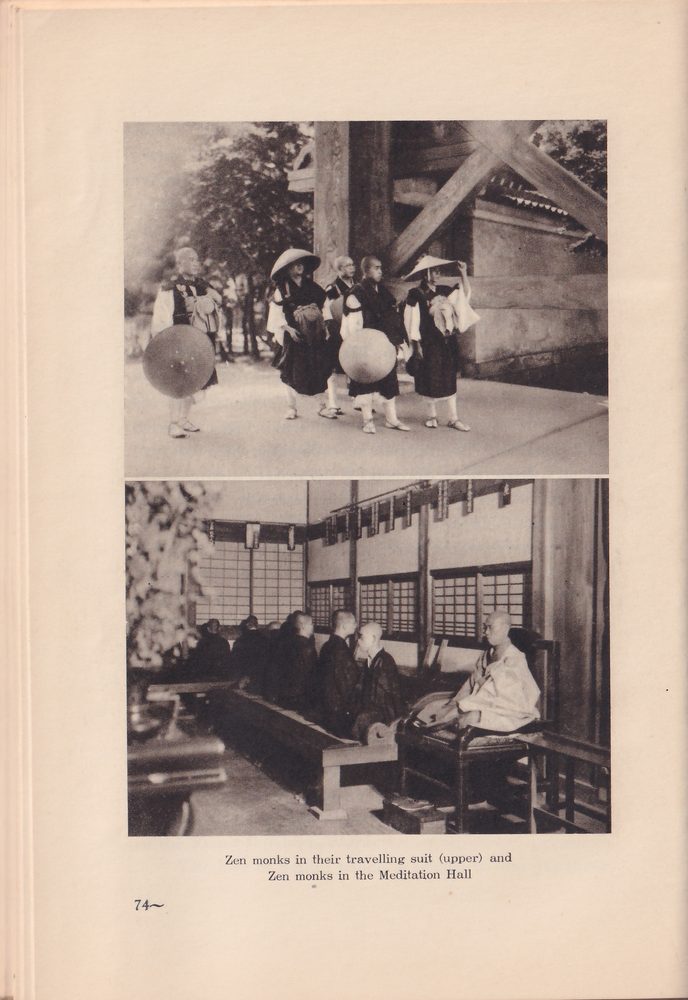
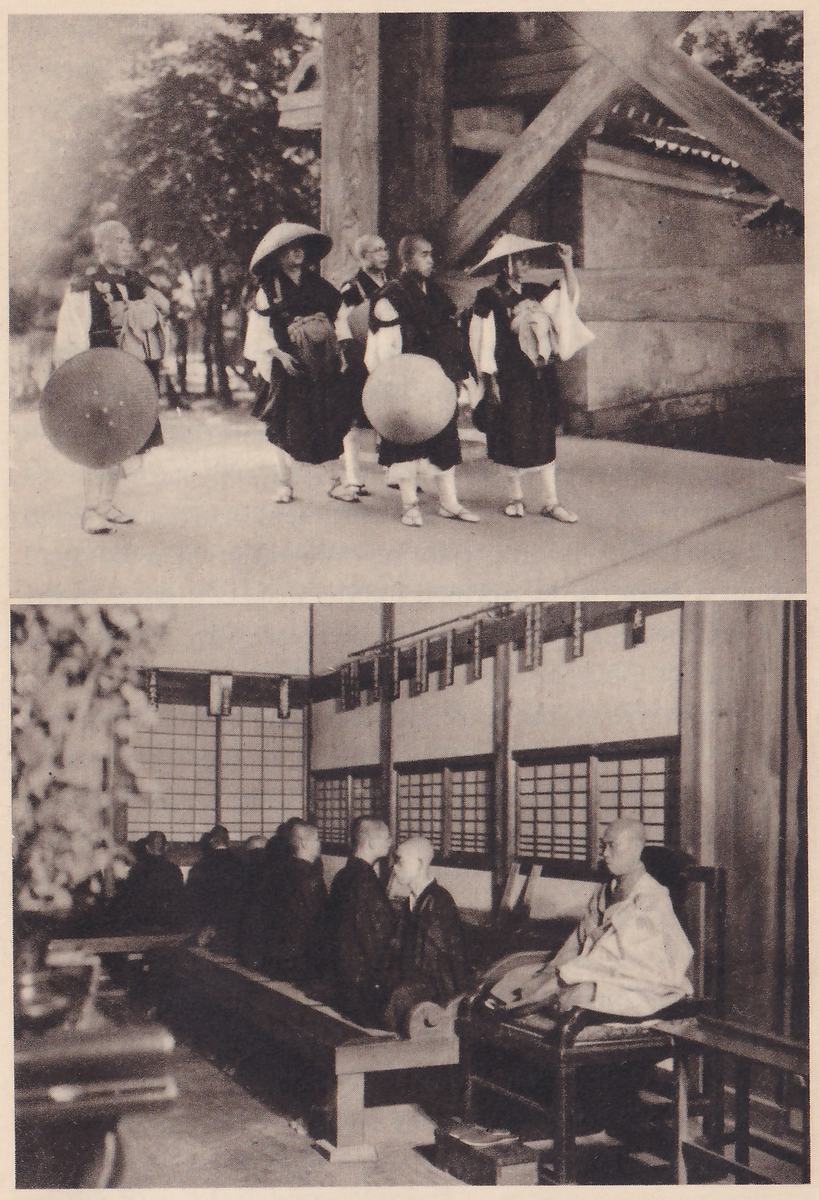
Zen monks in the Meditation Hall
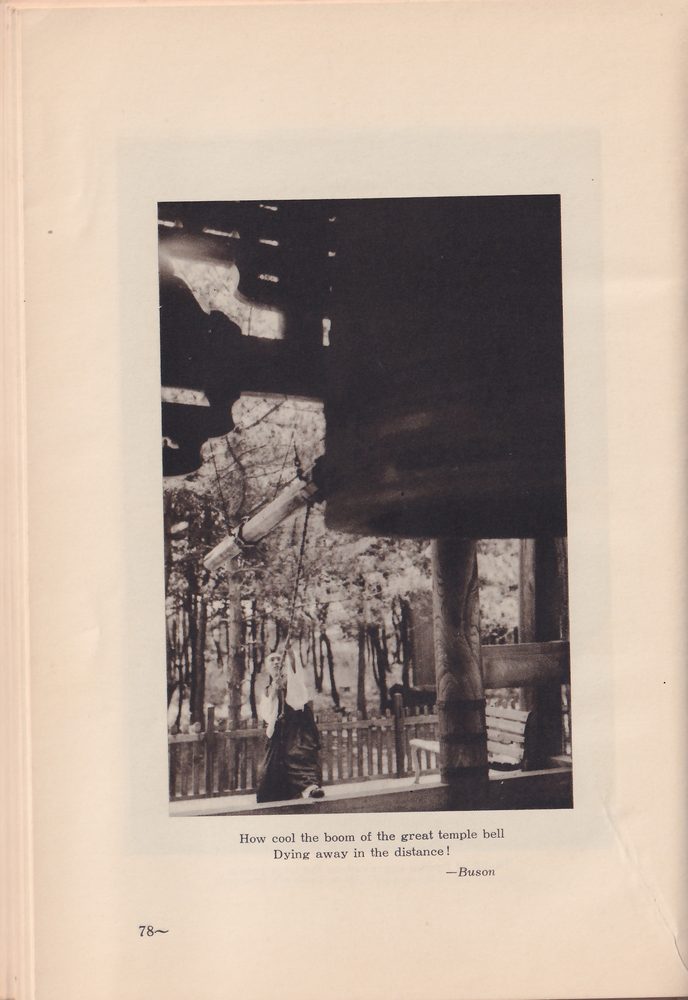
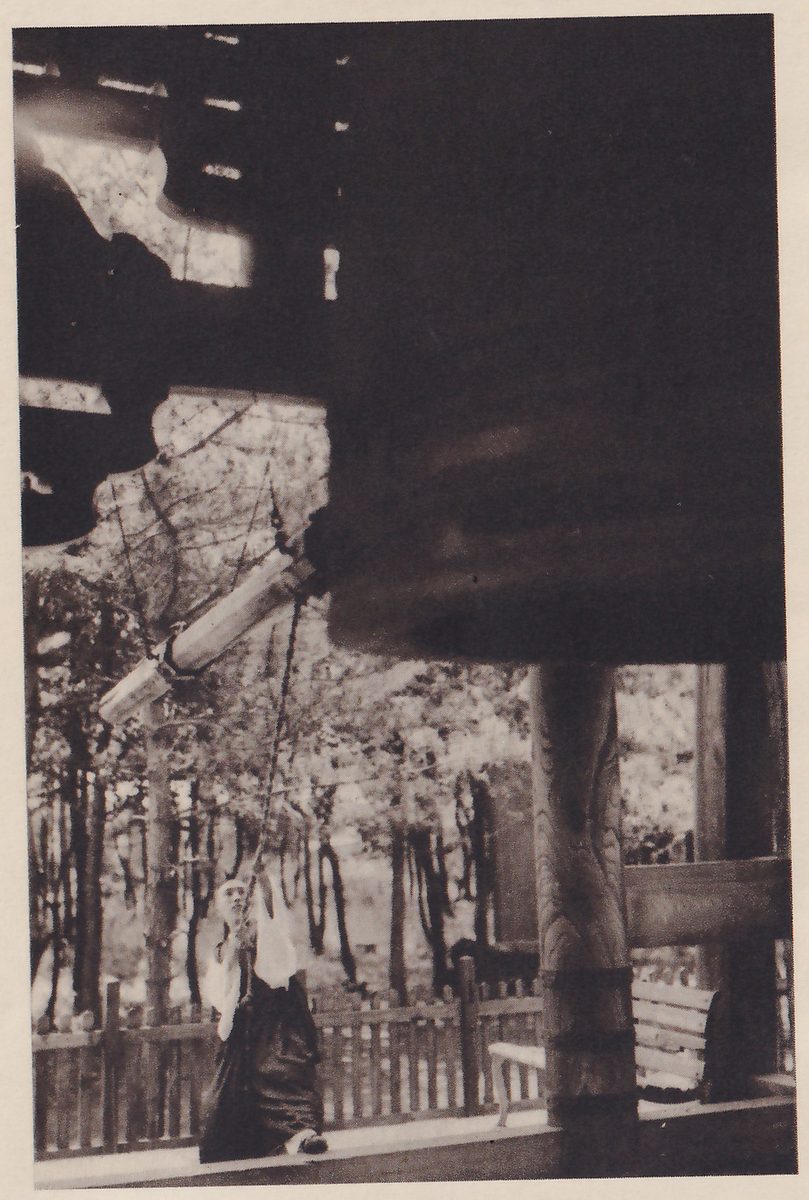
Dying away in the distance!
—Buson
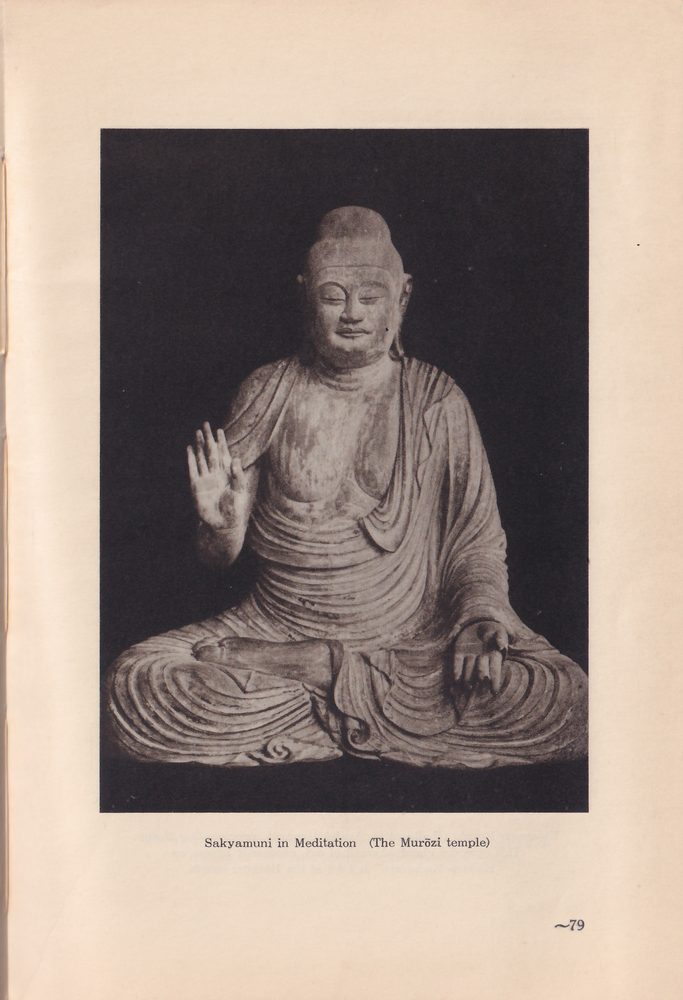
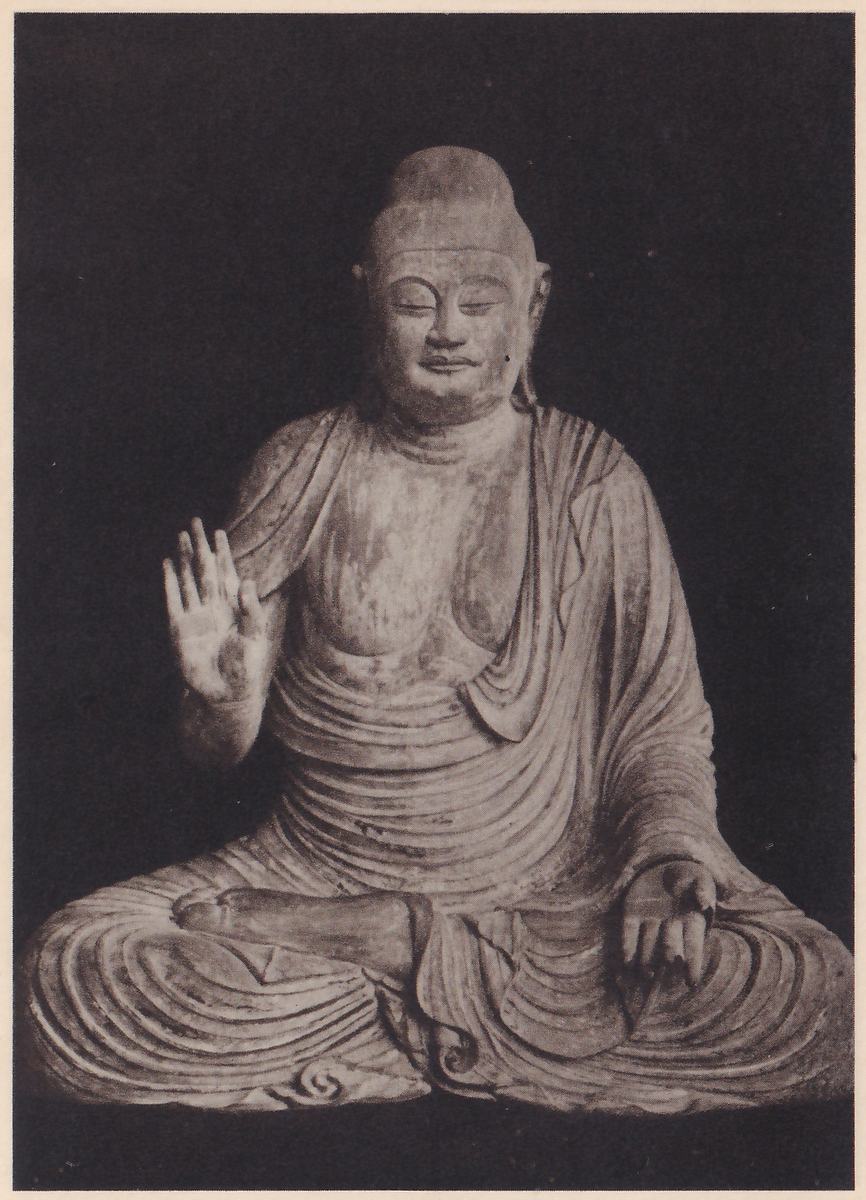
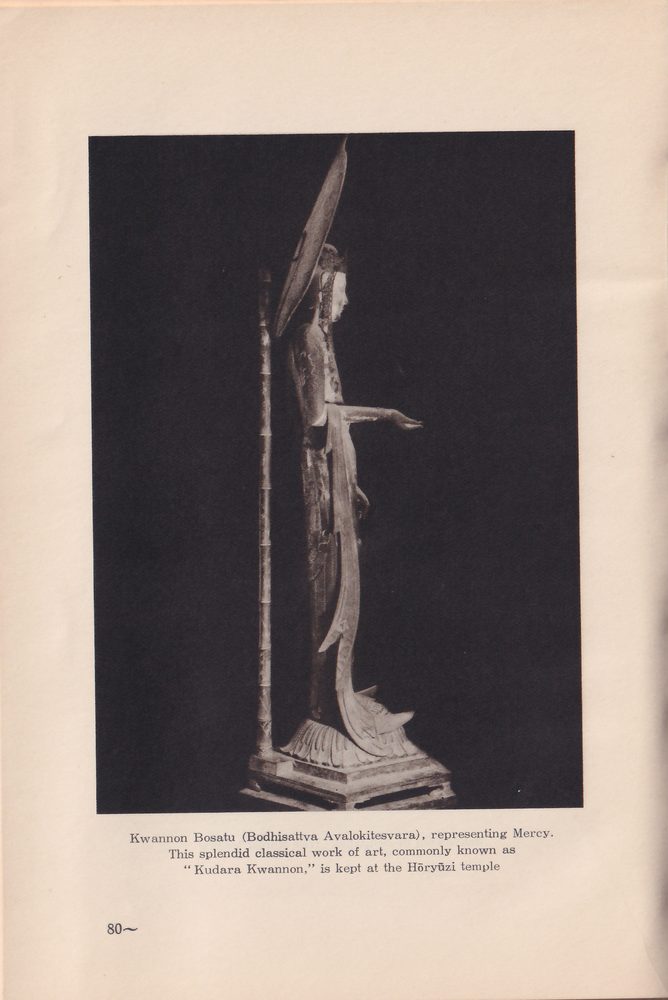
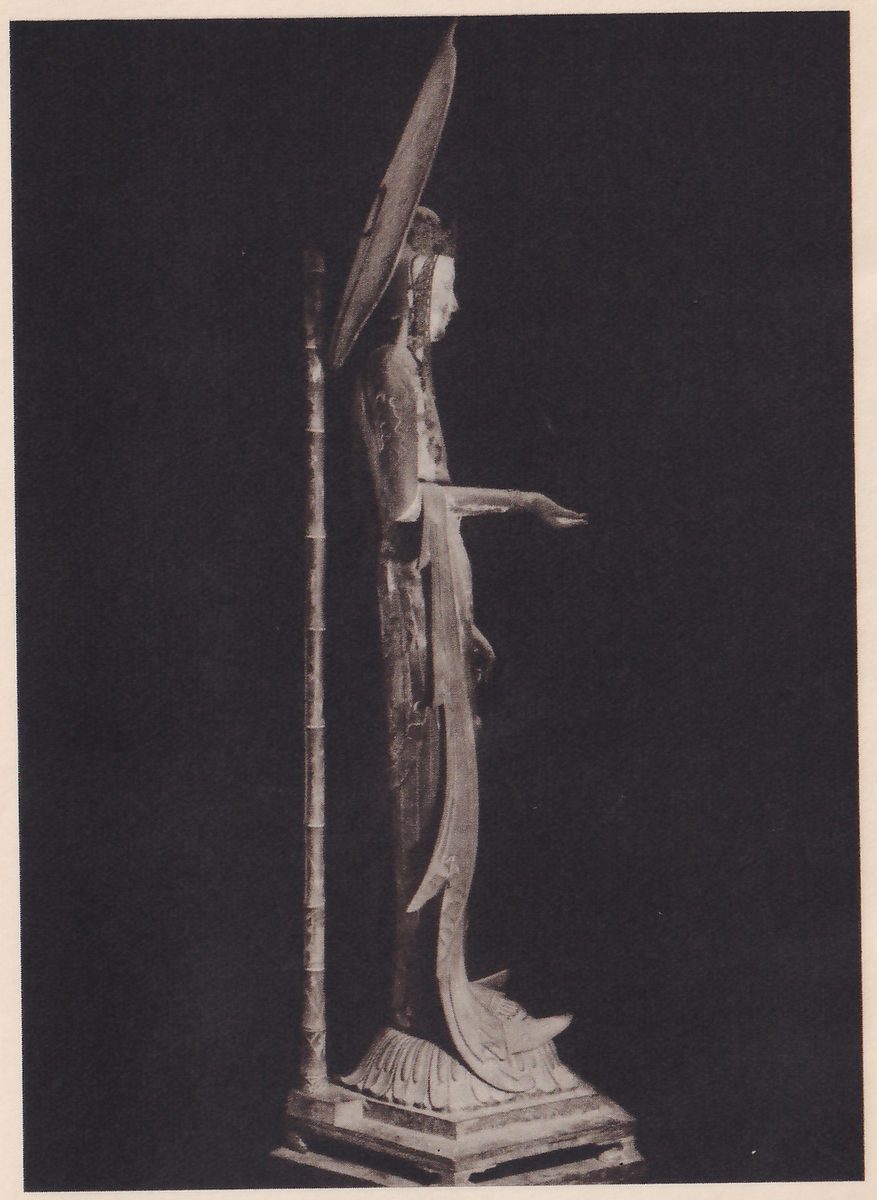
This splendid classical work of art, commonly known as
“Kudara Kwannon,” is kept at the Hōryūzi temple
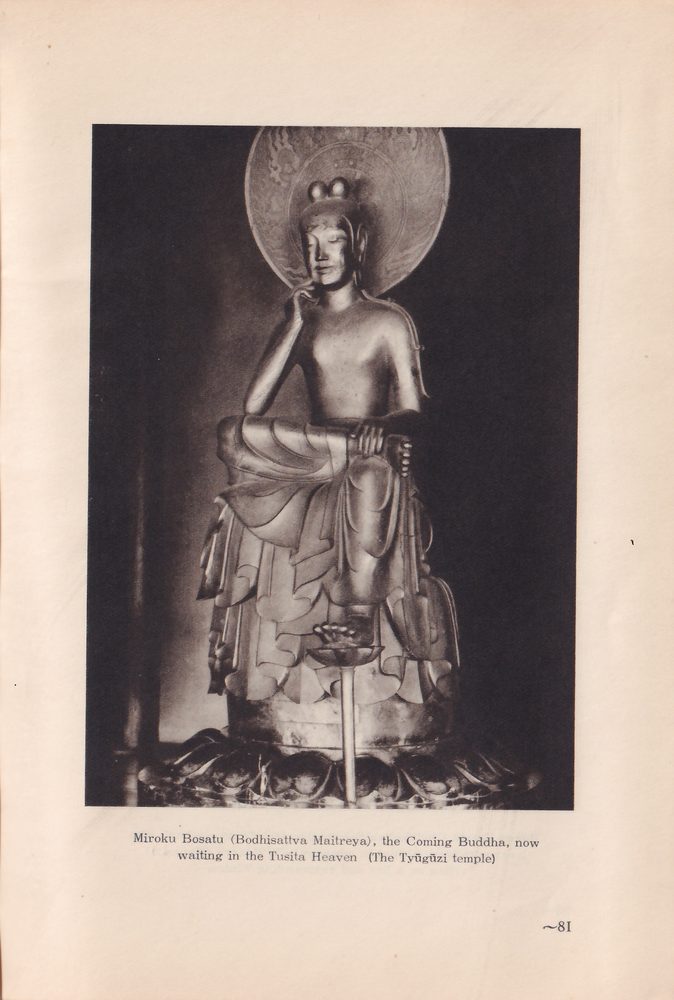
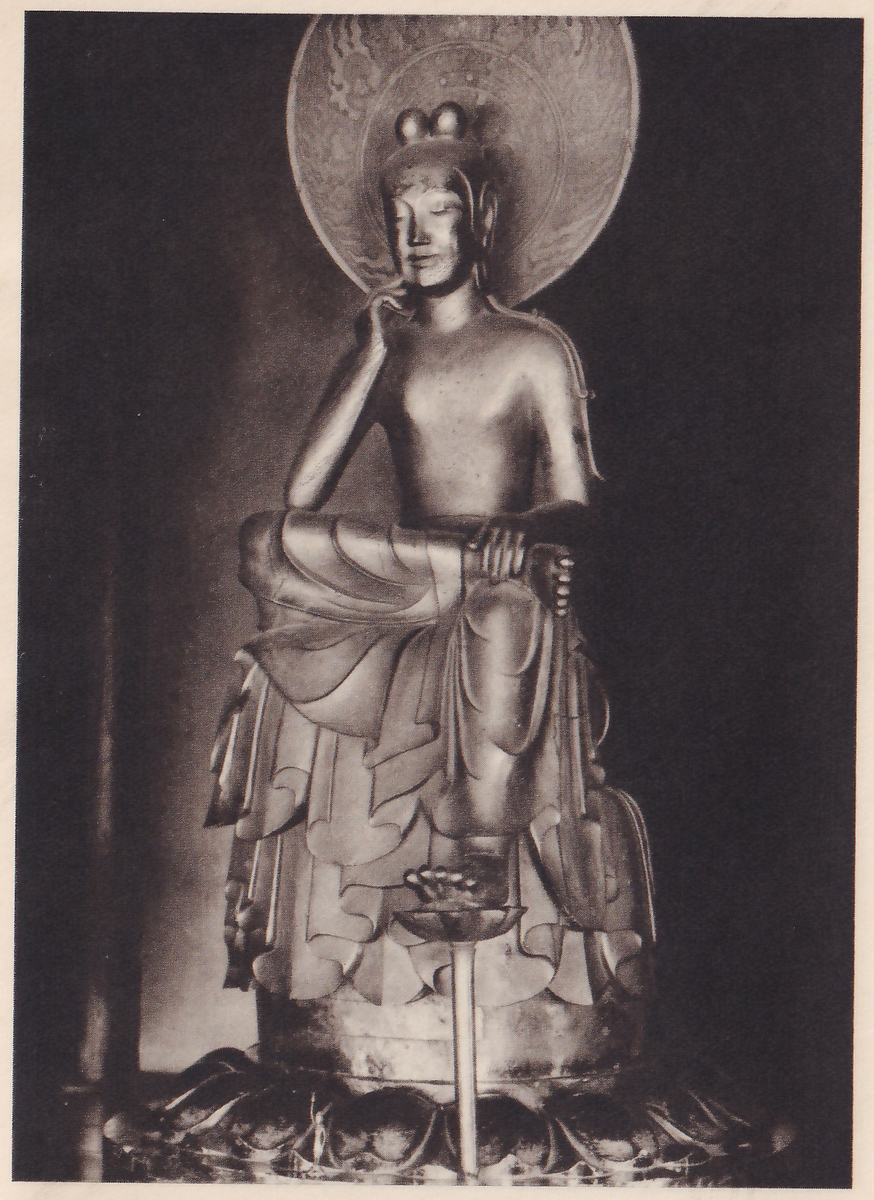
waiting in the Tusita Heaven (The Tyūgūzi temple)
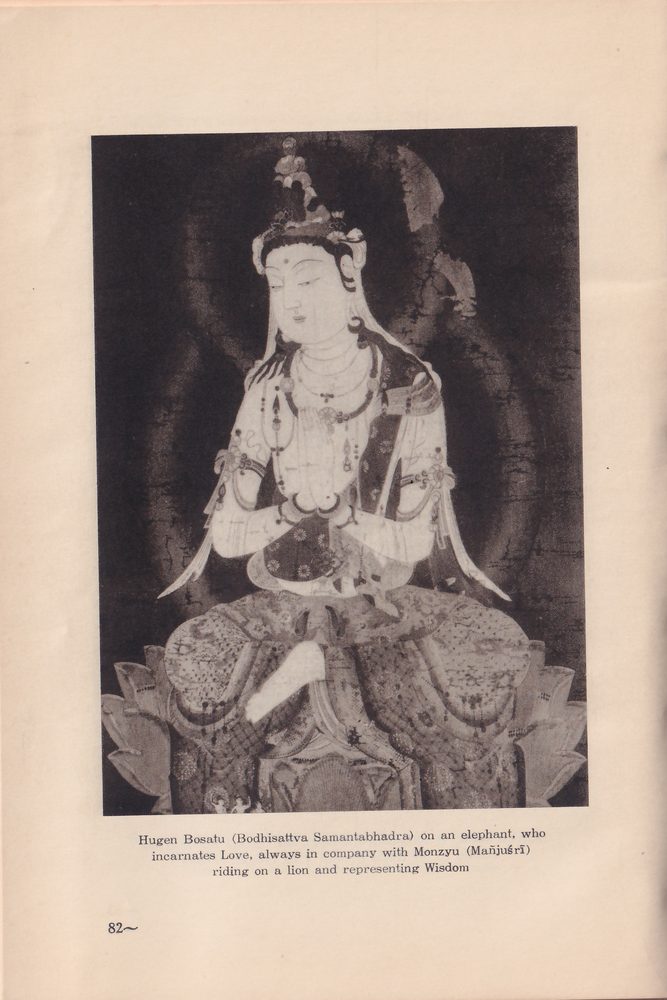
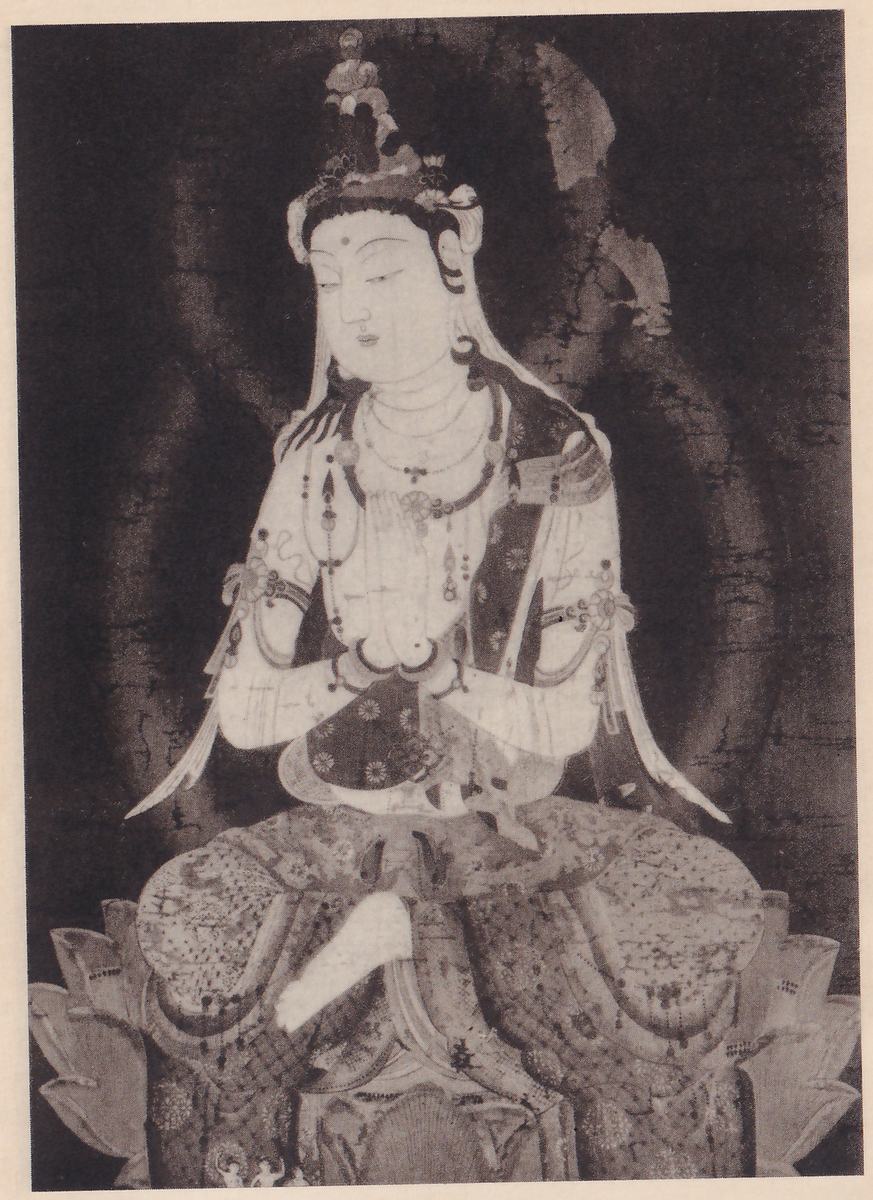
incarnates Love, always in company with Monzyu (Mañjuśrī)
riding on a lion and representing Wisdom
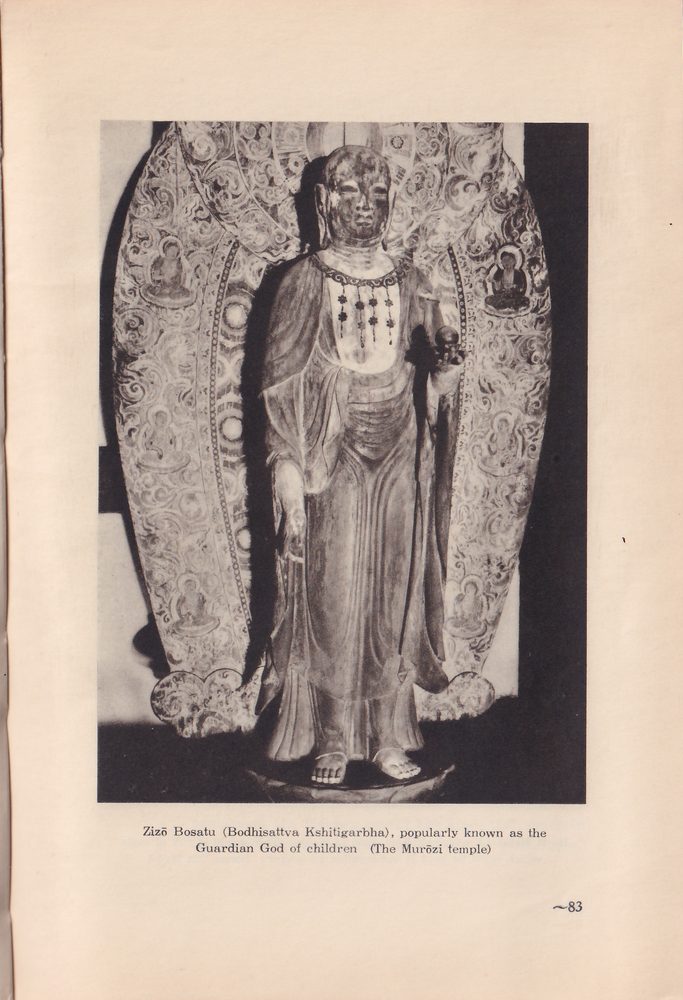
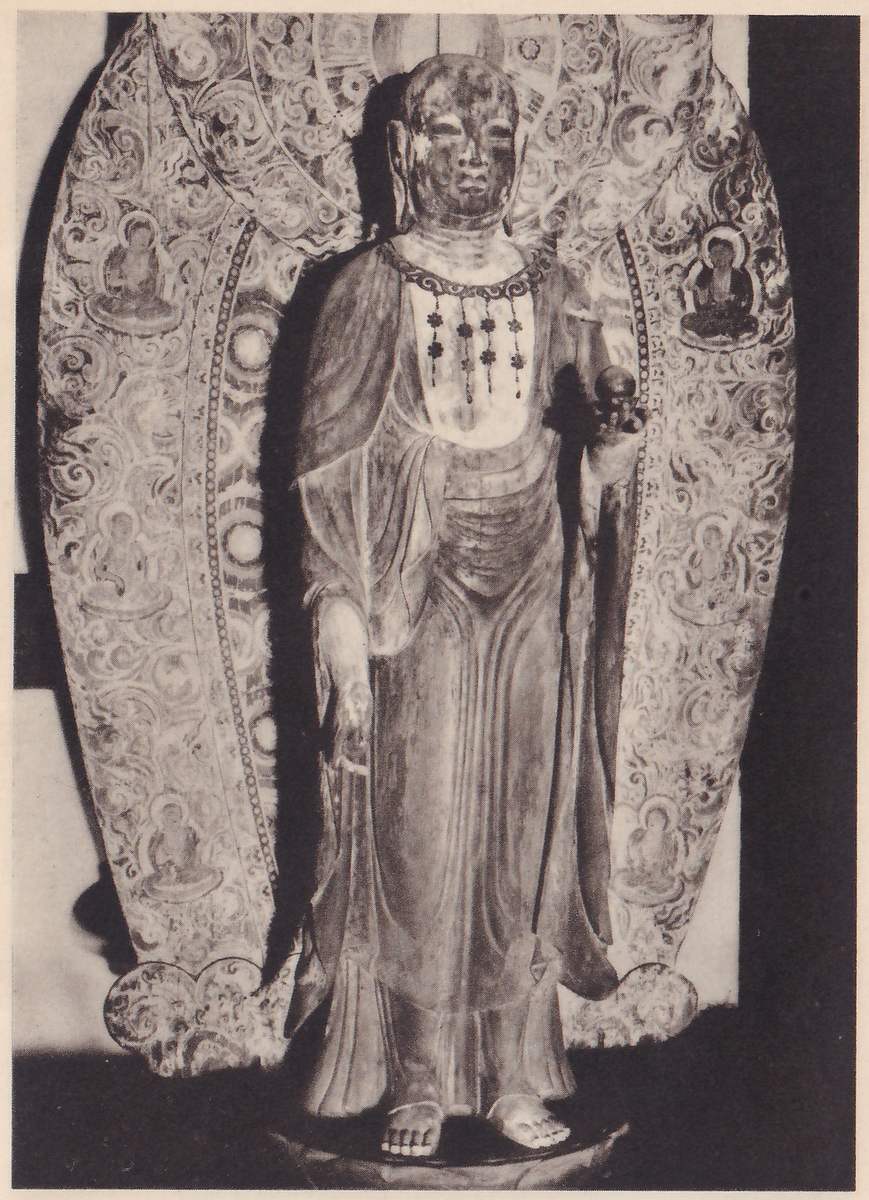
Guardian God of children (The Murōzi temple)
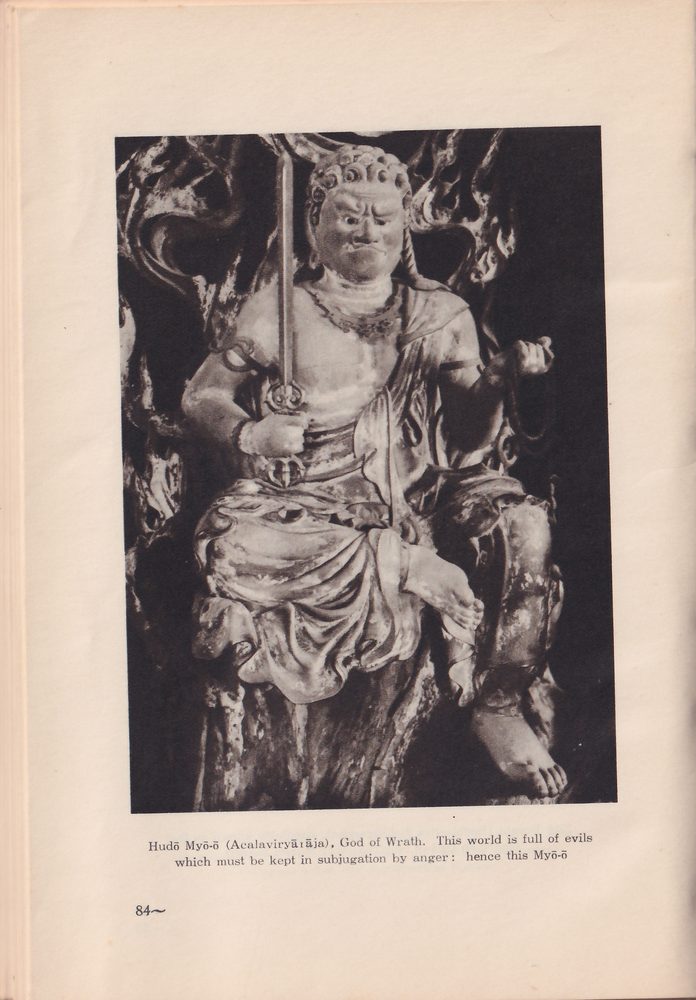
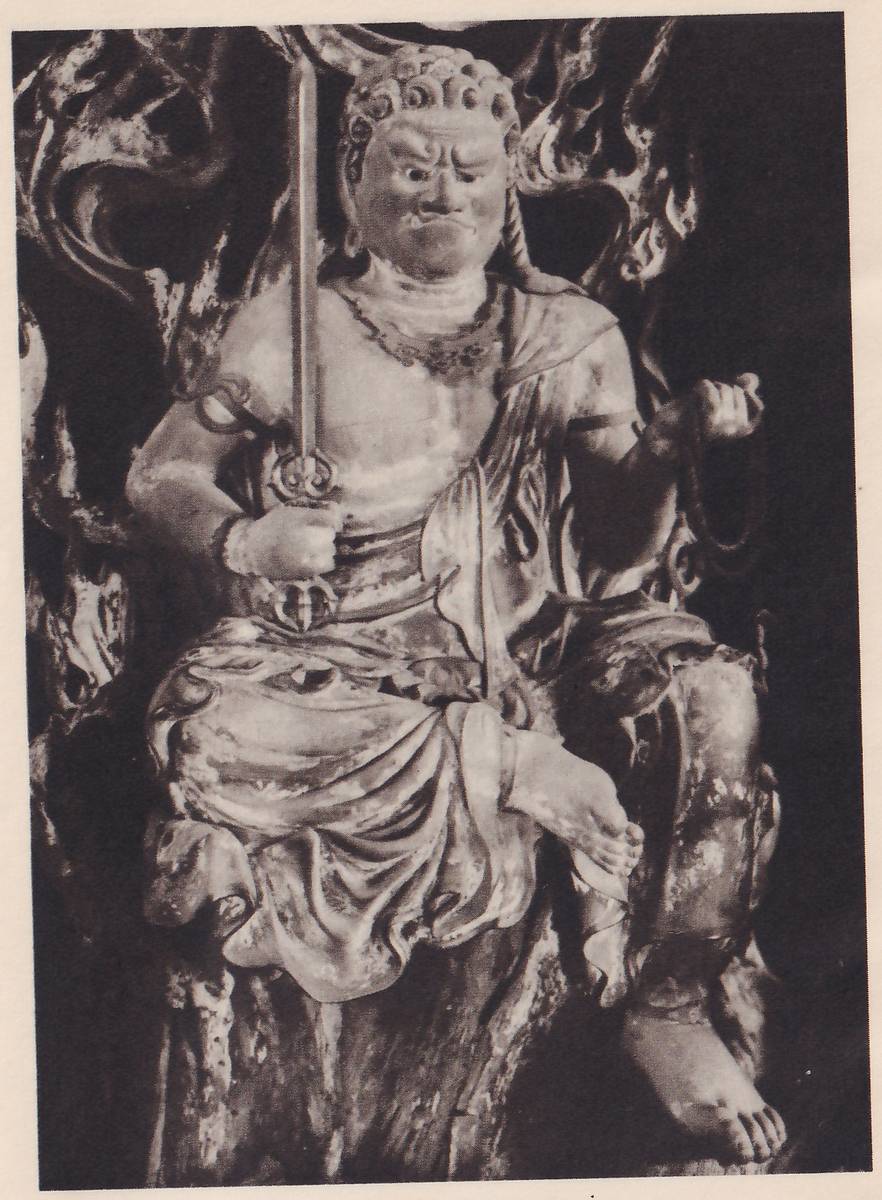
which must be kept in subjugation by anger: hence this Myō-ō