
SUNDAY MORNING IN JAPANESE HOME
It is early dawn, but already there is stir and bustle, for the Mesomiyas are early risers. Though the older folk, especially the “grandmother,” would have liked to sleep longer on Sundays, it cannot be this morning, as the two kiddies have a busy programme today, and they are up early, animatedly talking, laughing and discussing. It is national holiday on top of Sunday, a combination which the young masters and children do not appreciate too much. They are patriotic enough to want to celebrate the holiday for its own sake. There is determination all round to make one holiday serve for two. Hence the unwonted bustle.
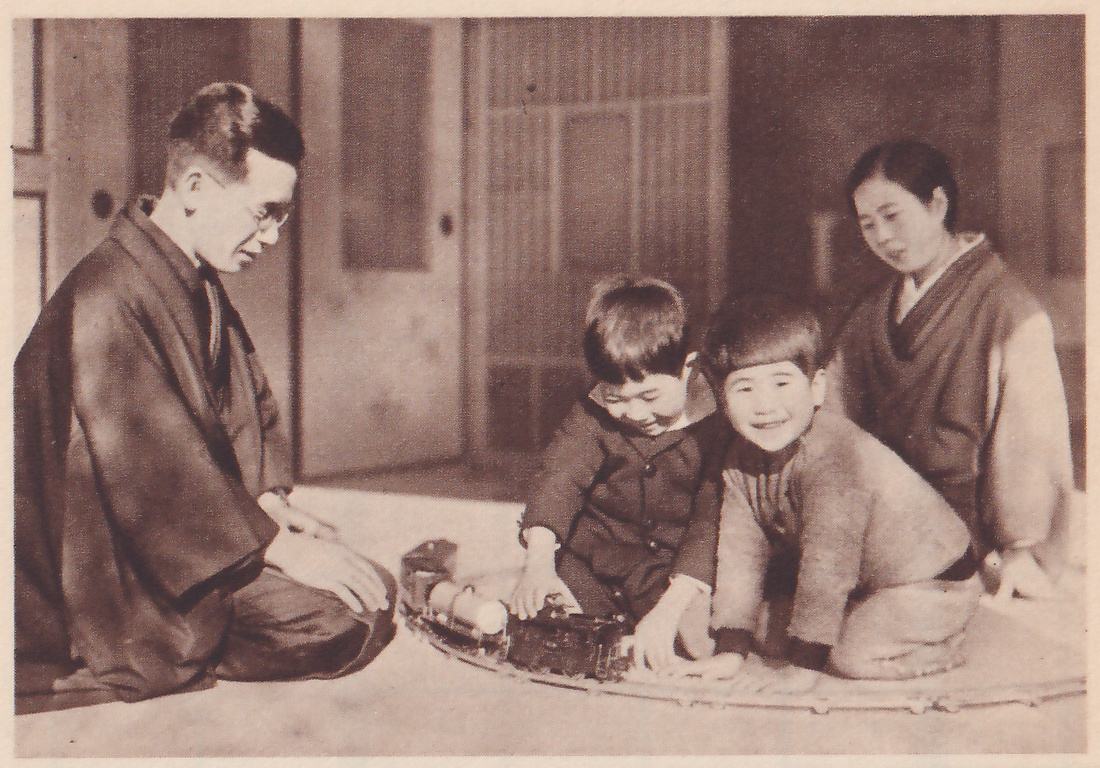
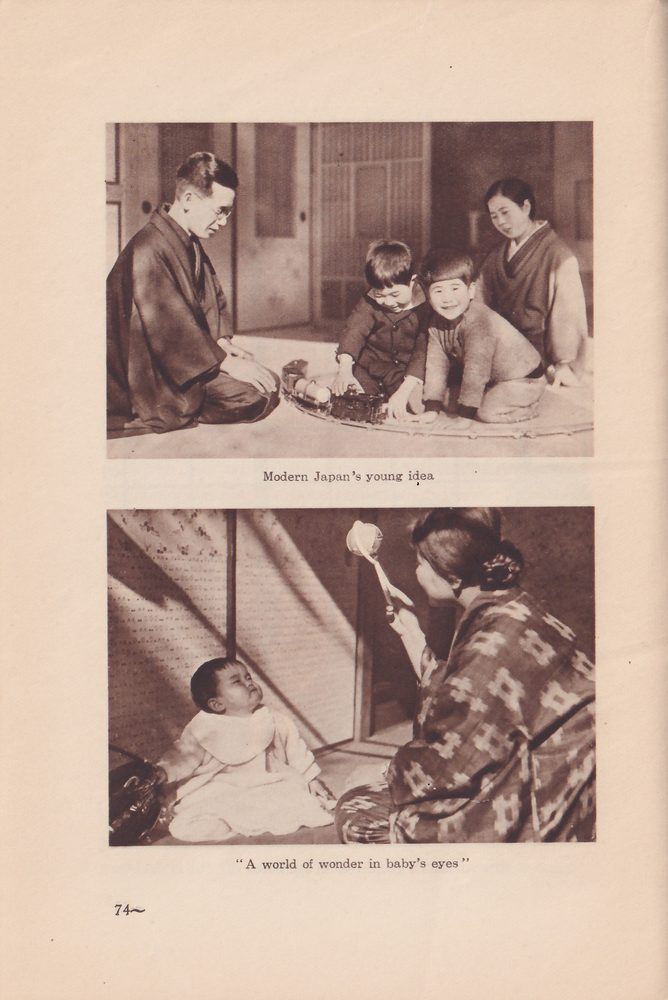
This is an exceptionally large family, consisting of eleven persons: Three married couples, two children, two babies and one maidservant. Mr. Mesomiya Sr. is called “grandpa,” or, “the old man,” not so much because of his age, he is only sixty-two, as because he happens to have two grandchildren, Mrs. Mesomiya calls herself “Obaa-san” (grandmother) on the same principle, her age being only fifty-five. She is a female Mussolini, and she is the last court of appeal in the household government.
The house is large enough and to spare, being built not so long ago with a view to the swelling size of the family. “What should we do with such a desert of a house if all the young folk were gone from us?” is one of the oft-reiterated plaints heard from the grandmother’s lips. Down
in a nook of her heart somewhere seems to lurk a haunting fear that some members of the family may have to go some day.
The two children—a boy of 13 and a girl of 15—have gone out to do their morning exercises in the Hachiman temple near by, where every morning about fifty persons, old and young, assemble for the radio gymnastics. Several old men with white beards and bone-and-skin faces are seen in the group, rain or shine.
The Morning Worship
The maid servant, Osode-san, is up, of course, glued to the gas stove in the kitchen, superintending the preparation of the breakfast, while the rest of the family take turns in making their matutinal ablutions. Now, Obaa-san performs her first and most important devotion of the day. She goes to the Shinto altar which, curiously, is placed on a shelf hung from the ceiling in one of the rooms adjoining the genkwan, almost to be seen from outside. Her worship here consists of one deep bow and the clapping of her hands three times, which takes about five seconds.
Anon is heard the “ching, ching” of a bell; it is the Obaa-san performing her morning service at the butsudan, or Buddhist shrine. It consists of mumbling some words, inwardly articulated, so that none can hear what she is saying, preceded by striking the little bowl-like bell placed upon a padded cushion, with a pencil-like rod. The ceremony takes only one minute.
On the 1st, 15th and 28th of every month, as well as on the memorial days of ancestors and during the Bon holidays in July, she presents lighted tallow candles and
other offerings, but on ordinary days she just rings, bows and prays, after the offering of rice and water which is usually made by the servant as soon as the morning rice is boiled. Once the Obaa-san replied in answer to some impertinent comment made by one of the company at the breakfast table: “What would have become of all of you if it were not for my prayers every day?” From which it was inferred that she was praying for the good of the family—for their health, wealth and happiness.
The two young ladies make a point of following her example as soon as their toilet is over, but as to the male members of the family, including the old man and the young husbands, they are apt to “forget” the ceremony, and at times will hear the Obaa-san’s hand-clapping or bell-ringing while in bed, only to remember that it is time to get up.
“Grandpa”
At the breakfast table the two kiddies are missing. They have come back, eaten and gone out again. There are to be some athletic matches at the Meiji stadium—the exciting event of the season over which the whole of Tokyo goes crazy. The games begin in the afternoon, but to make sure of their seats many people go at early dawn.
As the old man surveys the company, a nameless emotion seems to swell in his bosom, and he pursues his meal in thoughtful silence. It is only the second week of his eldest son’s marriage, and the new couple, with the other young couple, are seated before him, with the Obaa-san at the other end. A certain air of formality hangs over them; they are apparently not quite used to each other as yet.
Mr. Mesomiya knew his best days early in his thirties, when he thought himself well on the way to becoming a millionaire. Plop, changed the tide of fortune, and he went from bad to worse, and everything he did went askew till he stood on the brink of bankruptcy. (There were a boy and a girl, very young then, but now both are married and actually seated before him with their respective spouses.) He pulled himself together, determined to begin all over again, and became an insurance canvasser. It was not a very dignified job in these days. The old street-song beginning with “If the insurance solicitor be a human being, etc.,” was not quite forgotten. But he stuck to it for 25 years. Declining all offers of promotion in position, he preferred to remain in the old job till he was regarded as a prince of canvassers and one of the treasures of the company. His clients came to him, bringing more clients with them, instead of his going after them, as all fresh canvassers had to do. Meanwhile, two more children were born—now a girl of fifteen and a boy of thirteen. He has also paid his old debts, saved a little and built a house of his own—quite a pretentious one, ten rooms upstairs and down, on an estate of 500 tsubo in this north-eastern suburb of Tokyo, since incorporated in Greater Tokyo.
His Son-in-law
His first daughter, that is, his second child, was married five years ago, when she was but eighteen, to one of the promising clerks of the same insurance company. The old man more than his daughter cast an eye on him, for though he was an Imperial University graduate, he was not
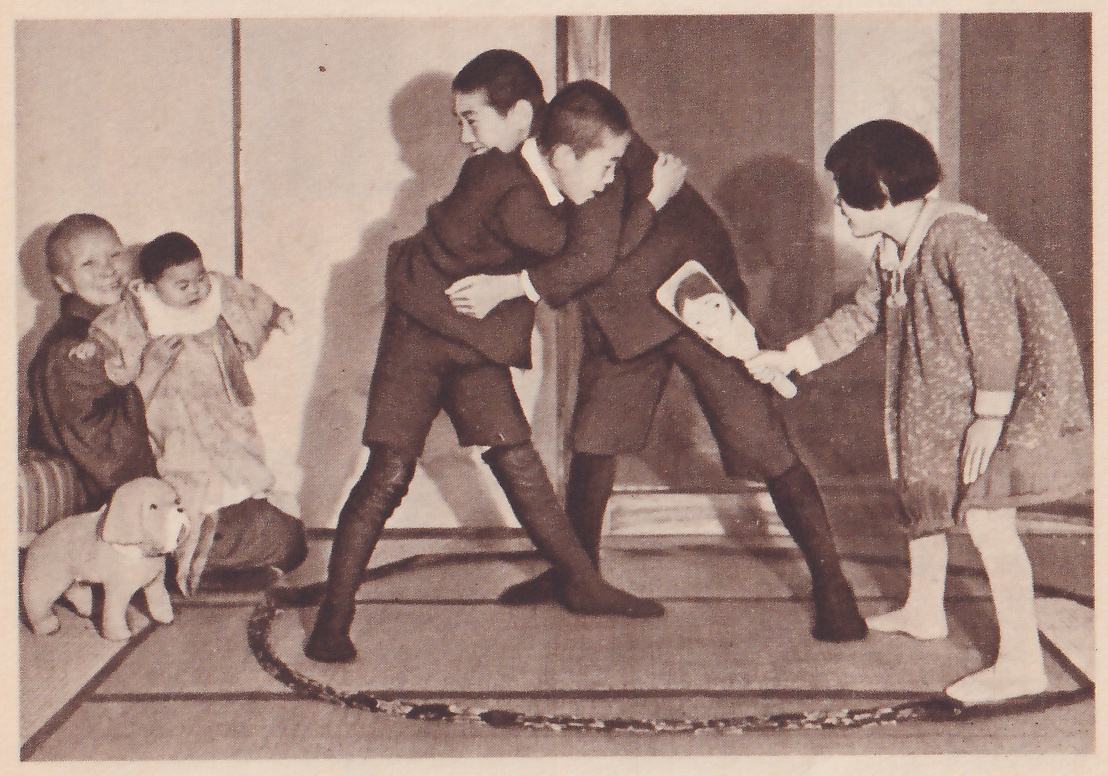
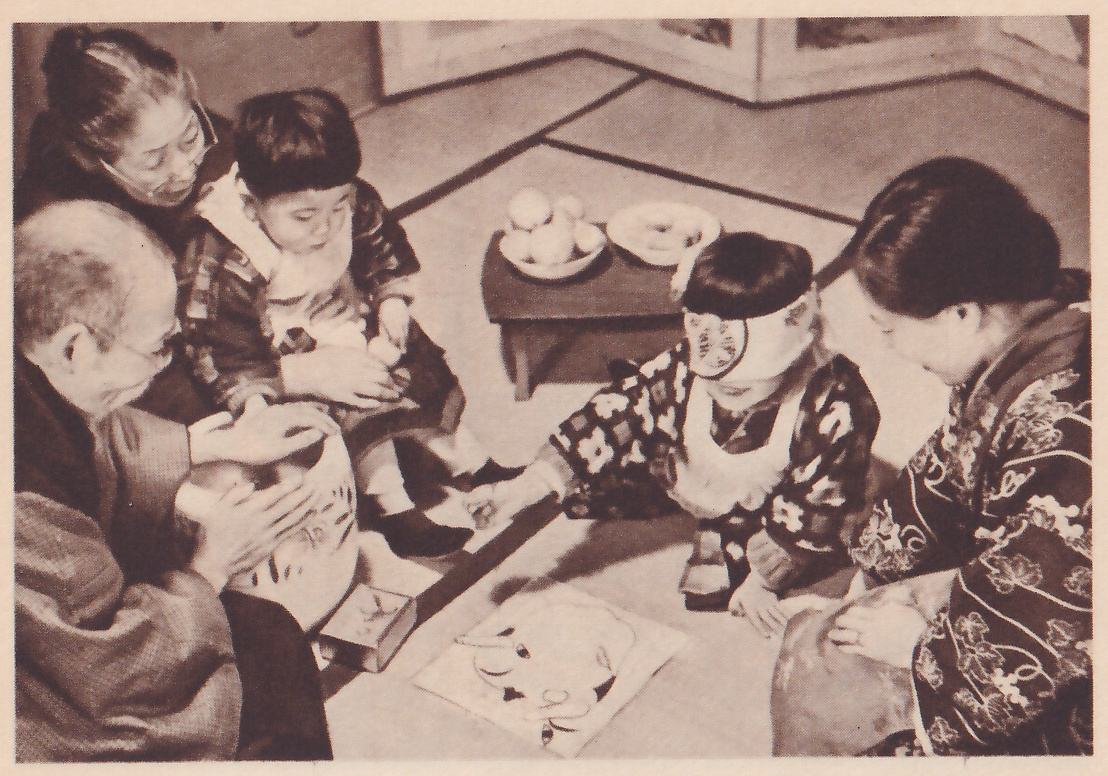
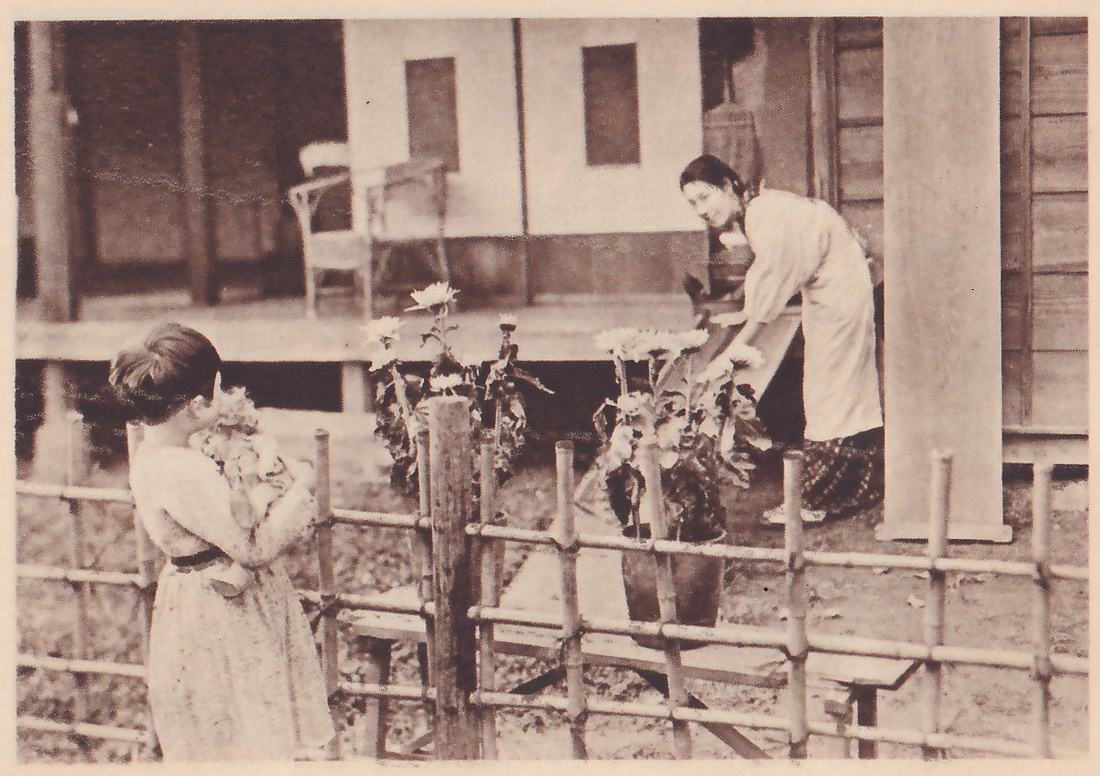
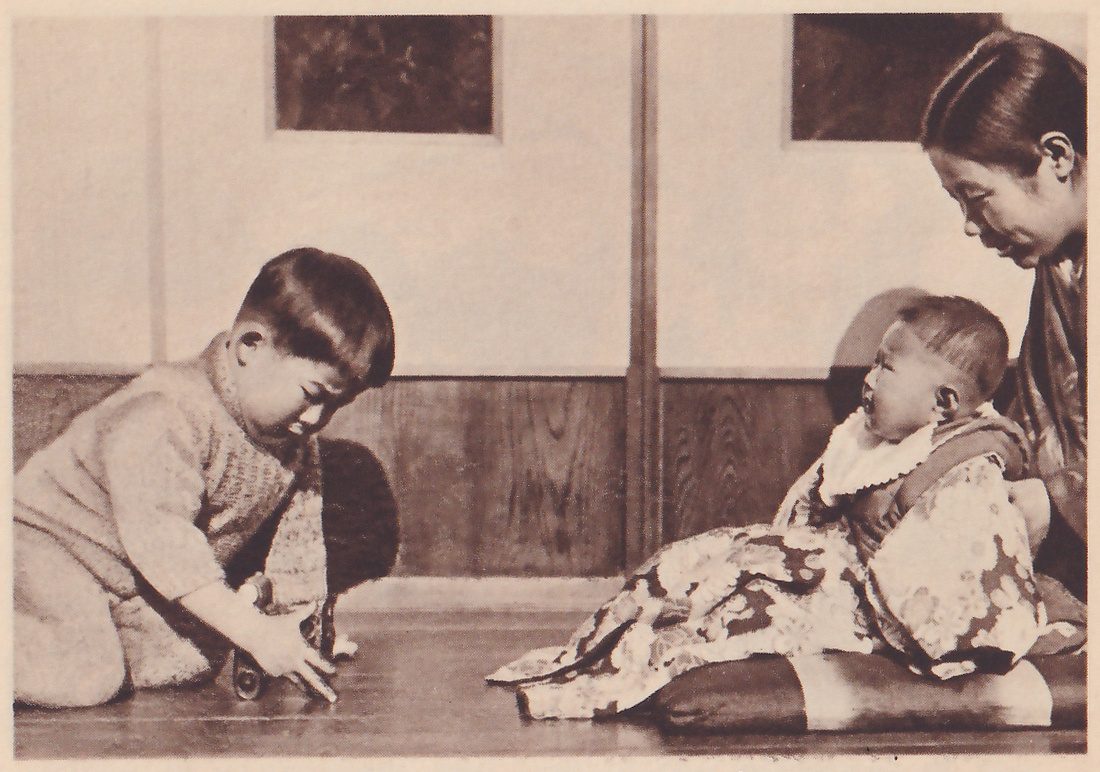
snob enough to think himself too good for the company. The young Mr. Wataru is much respected in the firm, even by the loud-speaking manager who sometimes finds it difficult to understand his classical phrases, having himself risen from the ranks, and not being accustomed to the language of culture. The president of the company and his wife were kind enough to act as the nakōdo for the ceremony, and Mr. Wataru had no objection to living under the same roof with his parents-in-law, though he has not married into the family as an irimuko (adopted son and heir). On one of the two pillars forming the gate to the house is affixed a wooden tablet bearing Mr. Wataru’s family name, while the other pillar bears that of Mr. Mesomiya.
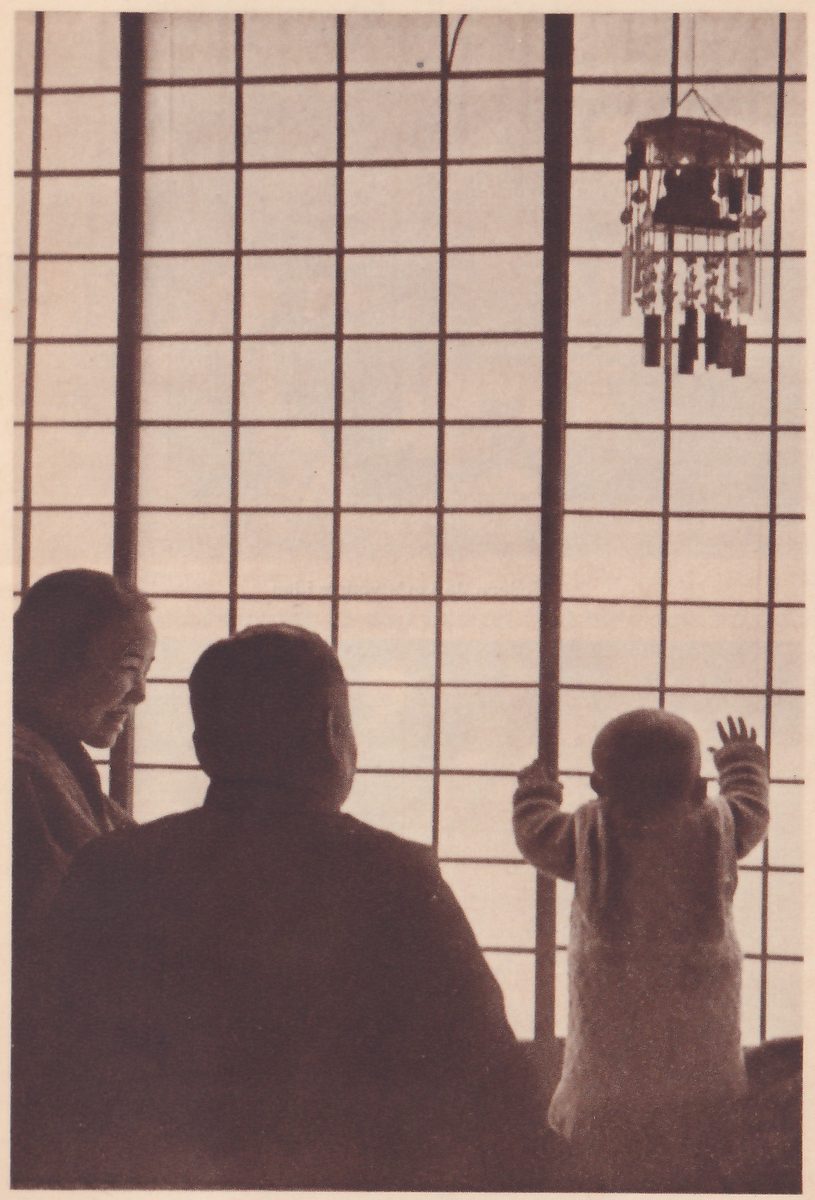
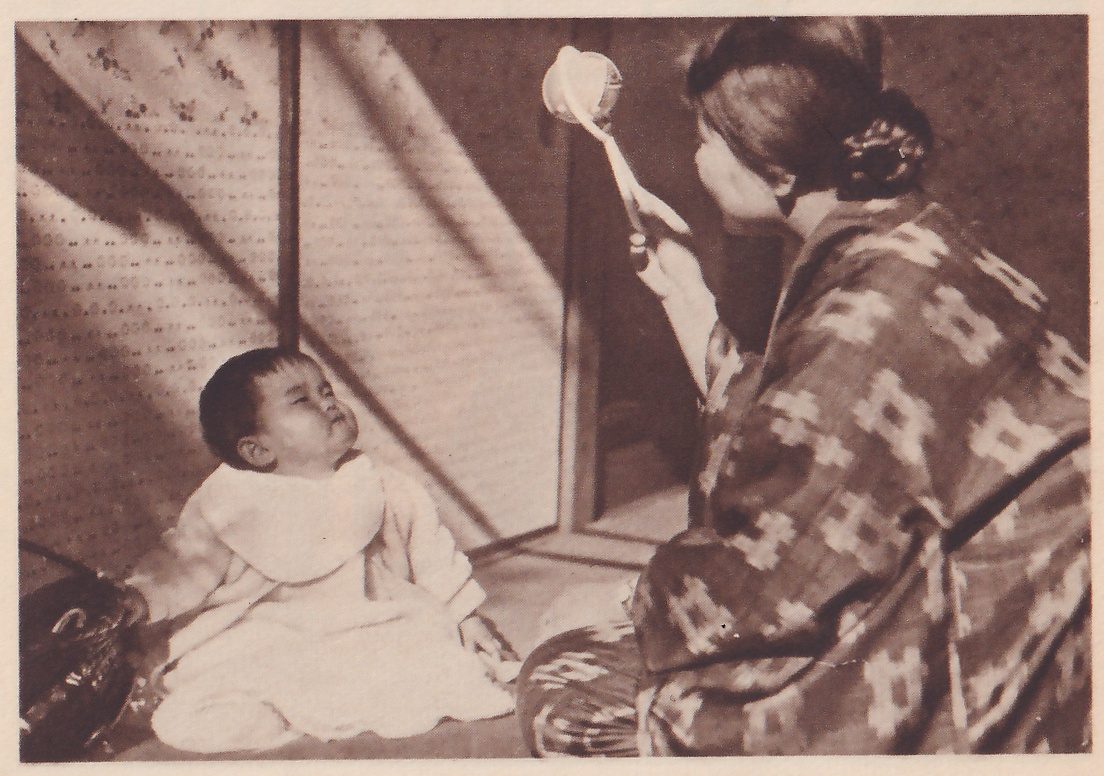
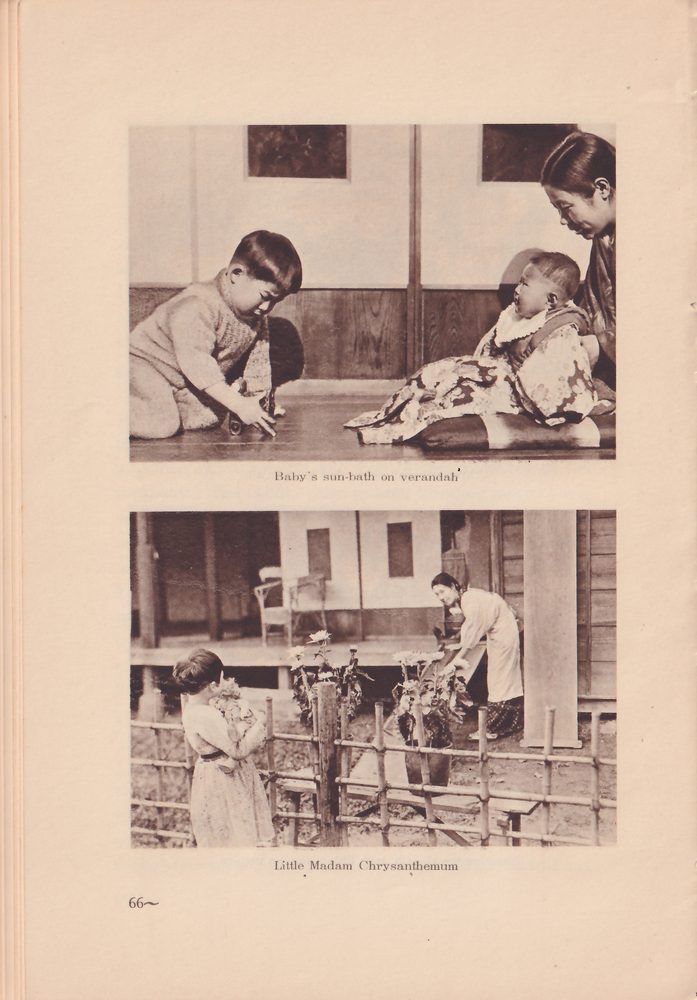
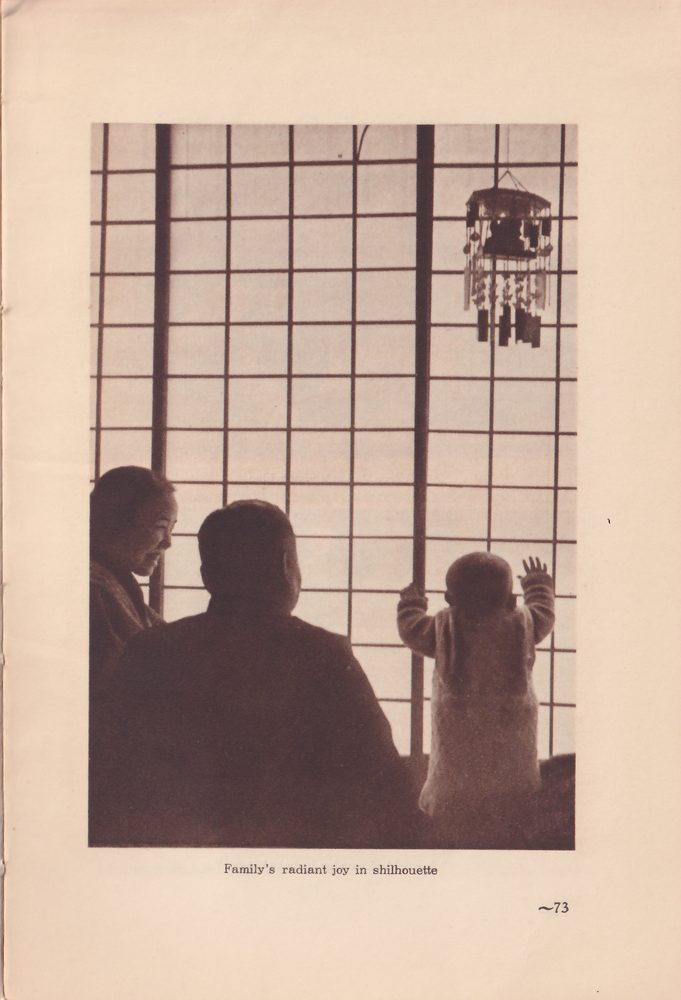
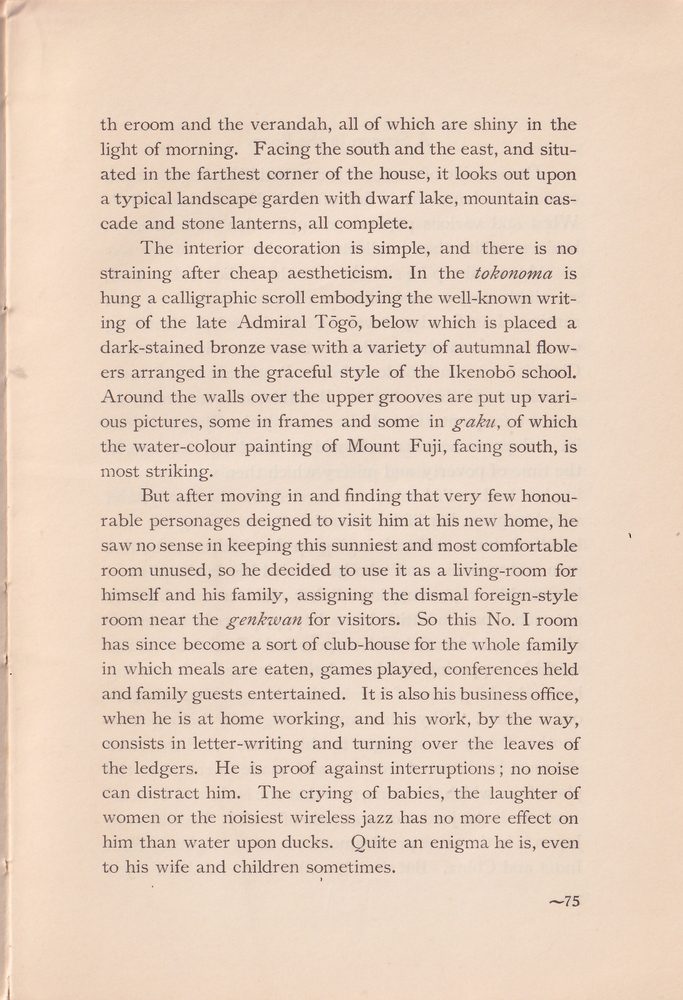
Two babies, both boys, have been born of this marriage—the darlings of the whole family, especially of the grandmother. According to the old idea, all this may seem a reversal of the proper order, for a younger daughter was married before the eldest son and heir, but the son was only a student at the time the marriage took place. Mesomiya Jr. has always looked on Wataru as if he were his elder brother, though legally Wataru is his younger brother-in-law.
Mr. Mesomiya Jr.
Two years ago Mr. Mesomiya Jr. graduated at the College of Architecture, and was immediately employed in a certain Government office as assistant engineer. He was a peculiar lad. Though endowed with good brains, he was constitutionally incapable of drinking or smoking; his only hobby was walking and hiking; he was taciturn, addicted
to shabby clothes and solitary habits. Not strikingly handsome, he cut a grotesque figure, as he lumbered his way about on high clogs, his hair unkempt and his feet bare of socks, summer and winter, and the girls fled before him. “He may be a genius and all that, but he is so filthy,” they said. But all the men friends of the family thought him a prodigy who would make a name in the world some day.
Since he became a “salaried man” he has somewhat improved in appearance; he puts on the costume of civilization, viz. tie, shoes, felt hat, etc. all of which, however, seem lost upon his topheavy head and his gnarled trunk. He has already added to his credit several monumental buildings, including a palatial hotel, a railway station, a stadium, etc., and he is regarded as a handy and willing workman with whom his superiors would not part for the world, though another bureau in the same Department wanted him at a higher salary. All this, however, did not seem to enhance his value in the eyes of marriageable girls. Yet the miracle happened only 12 days ago. He was married to one of the most eligible girls the marriage market could offer—a well-educated, lovely girl of two and twenty and of a very modern type, daughter of a landed proprietor said to be enormously rich, one of Mr. Mesomiya Senior’s old clients.
It is whispered that this girl had known an affair of the heart once, but had emerged therefrom disillusioned of all young men with pretty faces, and when she heard of the virtues and talents of Mr. Mesomiya Jr. she at once respected him, and, when she came to know him personally, learned to love him. Hence this romance without
romance. Mr. Mesomiya Jr., too lazy to keep a house of his own, invited his bride to live under his parental roof, which she was willing to do, knowing what sort of persons her parents-in-law were. A week’s honeymoon over, the young man must resume his official duties early this week.
To return to the Ojii-san’s reflections, is he musing on the somewhat perplexing question of how to right this apparently topsyturvy situation. His daughter, with her husband, seems to have become fixed in the home, while his first son and heir, with his modern rich wife, appears to be a bird of passage, destined to leave the house some day unless the rest of the family go; or is he merely enjoying a soothing but melancholy sense of relief, now that he has “delivered his two jewels into the hands of their legitimate owners?”
Though a busy worker always, the Ojii-san is no longer a slave of the company. Soon after his son obtained his official job, he had to retire from the company, owing to the new regulation regarding the age-limit on the service of employees. The directors, hating to lose his service, persuaded him to continue work as the company’s agent on a commission basis, instead of as its employee as before. So he put up a sign-board announcing a general insurance agency, and at the same time made a contract with other reputable companies to cover all branches of insurance. Since then he has been his own master, doing much of his work through correspondence, and continuing to enjoy about the same income as before.
He can give up all work if he wants to, but he doesn’t. The lessons of his adversity, now nearly 30 years old, are
still vividly remembered, from which he has drawn his favourite maxim: “No work is harder than enforced idleness.”
Mrs. Mesomiya Jr.
The breakfast over, Mr. Mesomiya Jr., so lethargic in days of single blessedness, shows an extraordinary alacrity in rising to his feet. “Ah, we must take the 10 a.m. train for Yokosuka to call on one of my superiors there. Come, you must get ready, Mayo-san!” And he adds that it is a nuisance, this post-nuptial duty to visit friends and relatives, and that at the rate of one or two visits every Sunday how long it is going to last he cannot tell.
After him follows Mayo-san, a young woman of stately figure, almost queenly by the side of her cumbrous husband, whose shoulders are uncommonly high, supporting a large bull-like head with scarce any space in between, where the neck ought to be. Mayo-san is very fair, almost like an Occidental woman, with a pair of brilliant jet-black eyes, shedding a searching light of intelligence, and her lips are thin, her mouth small and sensual. She speaks in a high key and somewhat quickly with finely articulated accents, which may betoken feminine talkativeness, but at the present stage of intimacy her character remains more or less unrevealed. She is smiling always, all obedience and acquiescence whenever her husband asks her to do anything.
Presently the couple reappear to say “sayonara” for the morning, the man in a smart morning coat and the wife in resplendent “visiting kimono,” the lower part of which bears a gorgeous chrysanthemum design. With a silk
scarf and parasol in one hand and handbag in the other, she looks like a show girl at a department store; on her left fingers shine two brilliant rings—a platinum wedding ring with a diamond and another with a large yellow opal. The whole family come out to the genkwan to see them off, the mother and daughter with an eye of envious admiration.
“You might as well leave a card at the house opposite, thanking them for their courtesy.” It is the old man bidding the son. “There was a removal a few days ago, and that house is occupied at last, and I forgot to drop in and thank them for the soba they sent up.”
“O.K., father!” and off they go, side by side.
Mr. and Mrs. Wataru
Mr. Wataru wearily takes up the newspapers and slowly wends his way up the stairs into his private study. He is of a kindred nature with his brother-in-law, both being lazy, care-free sort of dogs, passive rather than active, more fond of taking than giving orders at home. But otherwise he is at the opposite pole. He is a thorough man of the world, very big in build, quite handsome, looking almost like an athletic champion. Able alike to drink and smoke, he is capable even of walking into fashionable cafés on the Ginza and flirting with waitresses. On returning home after such an escapade, however, he will make a full report to the people at home, to which his child-wife will listen with much laughing and quite a detached interest as if it never occurred to her to be jealous of her husband’s conduct outside. Mr. Wataru is a man of many hobbies; he can play cards, Japanese and foreign,
chess or go, and is a good hand at archery, billiards and Mahjong. Recently he has taken it into his head to look up old Japanese literature, which seems to be all the craze among the literary-minded now. Time never hangs on his hands, nor does life hold much worry for him.
Mrs. Wataru is a very slim and small girl, very much like her mother in that respect, and looks extremely young, almost as young as eighteen. When seen by herself, as when she goes out for her weekly lessons in flower arrangement and cooking, both of which she started after she was married and had borne two babies, she is never suspected of being the mother of two. Without the burden of overmuch education, but equipped with gentle domestic manners and everyday common sense and an unsuspected capacity to talk with fluency even in the company of men and strangers, she is a born housewife of the old school, a young replica of her mother. But unfortunately her health is delicate; she has the look of “an autumnal leaf trembling in the moonbeams.”
No. I Room
Directly the room is cleared of the breakfast things and of the persons referred to, the old man takes the broomstick and sweeps the whole length and breadth of the room, as is his wont after every meal, and sits down before his small desk to look into his morning mail. While he is reading, we shall take a look round the room.
It was his idea, when the house was building, to make this 10-mat room a special parlour for receiving honourable guests only. With that end in view he had the best of wood used for the ceiling, tokonoma pillars, beams around
the roomPrinted: th eroom and the verandah, all of which are shiny in the light of morning. Facing the south and the east, and situated in the farthest corner of the house, it looks out upon a typical landscape garden with dwarf lake, mountain cascade and stone lanterns, all complete.
The interior decoration is simple, and there is no straining after cheap aestheticism. In the tokonoma is hung a calligraphic scroll embodying the well-known writing of the late Admiral Tōgō, below which is placed a dark-stained bronze vase with a variety of autumnal flowers arranged in the graceful style of the Ikenobō school. Around the walls over the upper grooves are put up various pictures, some in frames and some in gaku, of which the water-colour painting of Mount Fuji, facing south, is most striking.
But after moving in and finding that very few honourable personages deigned to visit him at his new home, he saw no sense in keeping this sunniest and most comfortable room unused, so he decided to use it as a living-room for himself and his family, assigning the dismal foreign-style room near the genkwan for visitors. So this No. I room has since become a sort of club-house for the whole family in which meals are eaten, games played, conferences held and family guests entertained. It is also his business office, when he is at home working, and his work, by the way, consists in letter-writing and turning over the leaves of the ledgers. He is proof against interruptions; no noise can distract him. The crying of babies, the laughter of women or the noisiest wireless jazz has no more effect on him than water upon ducks. Quite an enigma he is, even to his wife and children sometimes.
A Sermon in the Room
On one side of the room is a beautiful mahogany book case which, however, is full of thick Directories, Who’s Whos and various papers and application forms more ofPrinted: more ot business utility than intellectual nourishment.
At 10 sharp he switches on the radio and a loud, seemingly angry voice fills the room—a Buddhist priest ranting. Last Sunday it was a Confucian scholar lecturing on a text from the Analects. Sometimes it is even a Christian sermon broadcast from a Protestant church, or a mass from a Catholic church. Buddhist sermons are by no means infrequent. Out of idle curiosity the Ojii-san listens in. “Suppose here is an old widow who long, long ago, in the time of poverty and misery which then was threatening her husband’s house, was married into the family, and who has given her lifelong service to recovering her husband’s fortunes and to bringing up the children to be fine men and women—and who has buried her husband in an honourable way, marrying all her children suitably. Is not such a person entitled to a happy, peaceful life in her old age, to be treated with respect and affection by all the world? Supposing that her relatives, instead of honouring her and taking care of her in her old age, should say to one another, ‘Why, this woman originally belonged to another family—a stranger to this house—and therefore she must be divorced from us and made to return to the place from which she came, now that she is old and useless’—where is the justice or gratitude of it all? Buddhism in Japan is in the same predicament. It came originally from India and China. But since it wedded into this land 1,300
years ago it has remained faithful in the service of the country. What is there in the culture and civilization of Japan—in any branch of it whatsoever—to which Buddhism has not contributed out of its abundant store of art, wisdom, learning and beauty? Shintoism itself has been not a little influenced by Buddhism. But Buddhism is no longer Indian or Chinese; it has crept into the very blood and bone of Japanese life, inalienable and inseparable, and yet there is a tendency in this country to separate the inseparable under the pretext of keeping the old Japanism unadulterated—”
At this point a visitor is announced, and the old man with a sigh of relief turns switches off abruptly. Let us also take our prying eyes and ears from off the private life of the good Mesomiyas, wishing good luck to every one of them.
The Mesomiya’s is in a way an exceptional home, but not so rare as to be a great exception. Its exceptional element consists in the mingling of the old and the new, modernistic intellectuality allied to old-fashioned traditions. This is not surprising when we remember that a high degree of culture and education is often found in harmonious alliance with great conservatism, while what is shallow and cheap often passes for the new and modernistic.