
MORAL BACKGROUND OF JAPANESE HOME
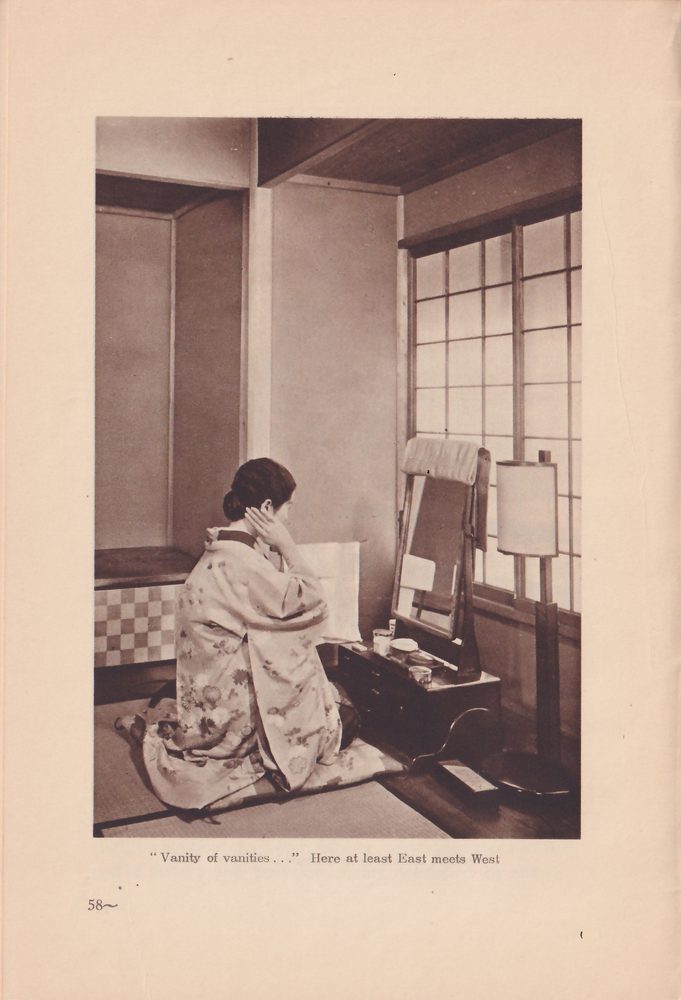
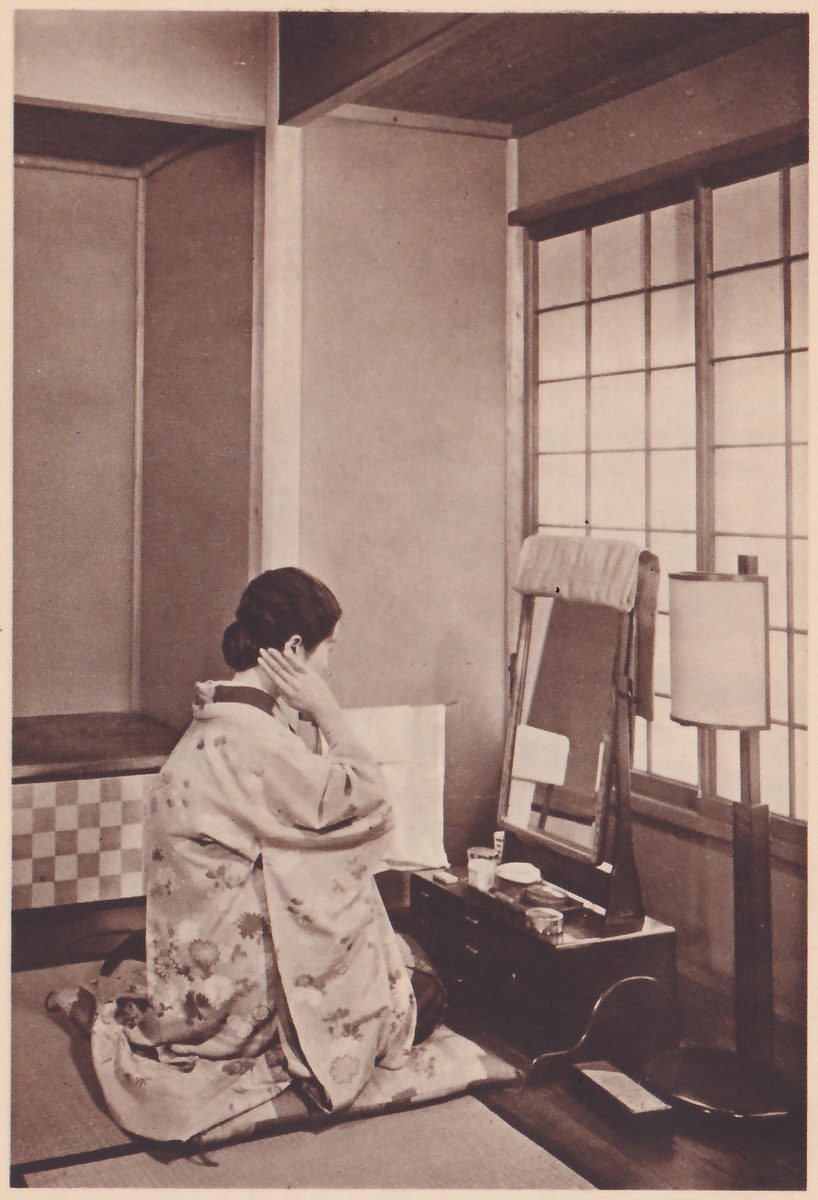
People brought up in the religious traditions of Christendom may easily envisage the possibility of a comfortable material existence, even of a highly developed intellectual and artistic life, in a so-called pagan nation, but that it can contain really happy home-life they will probably find not so easy to believe. Such persons, if there be, should consider the life in ancient Greece or that in Japan today. There is a strong resemblance between them. Both had pantheons of numerous gods and goddesses, the one under the great Zeus and the other under the Amaterasu-Ōmikami, the Heaven-shining Goddess of the Sun.
Japan’s Moral Foundation
Nearly 1,300 years ago, almost in the morning mists of her awakened national life, Japan stood converted to Buddhism—a religion of eternal life and of mercy and benevolence to all life, even to plants and insects. Buddhism, or its preachers, knew how to adapt its doctrines to circumstances of clime and climate, and presently there was an alliance between them and the older doctrines of the native gods, both united in upholding the sacrosanct traditions respecting the Mikado. Precepts of Confucius and other Chinese sages and philosophers had already preceded Buddhism, paving the way for its advent. Thus in 8th-century Japan there already reigned a golden age
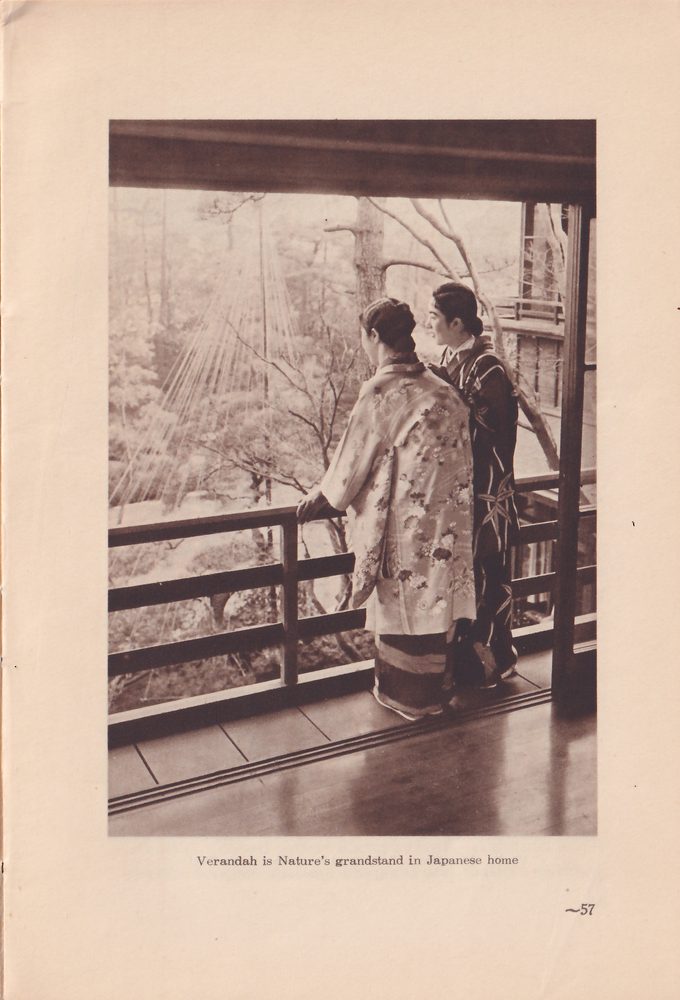
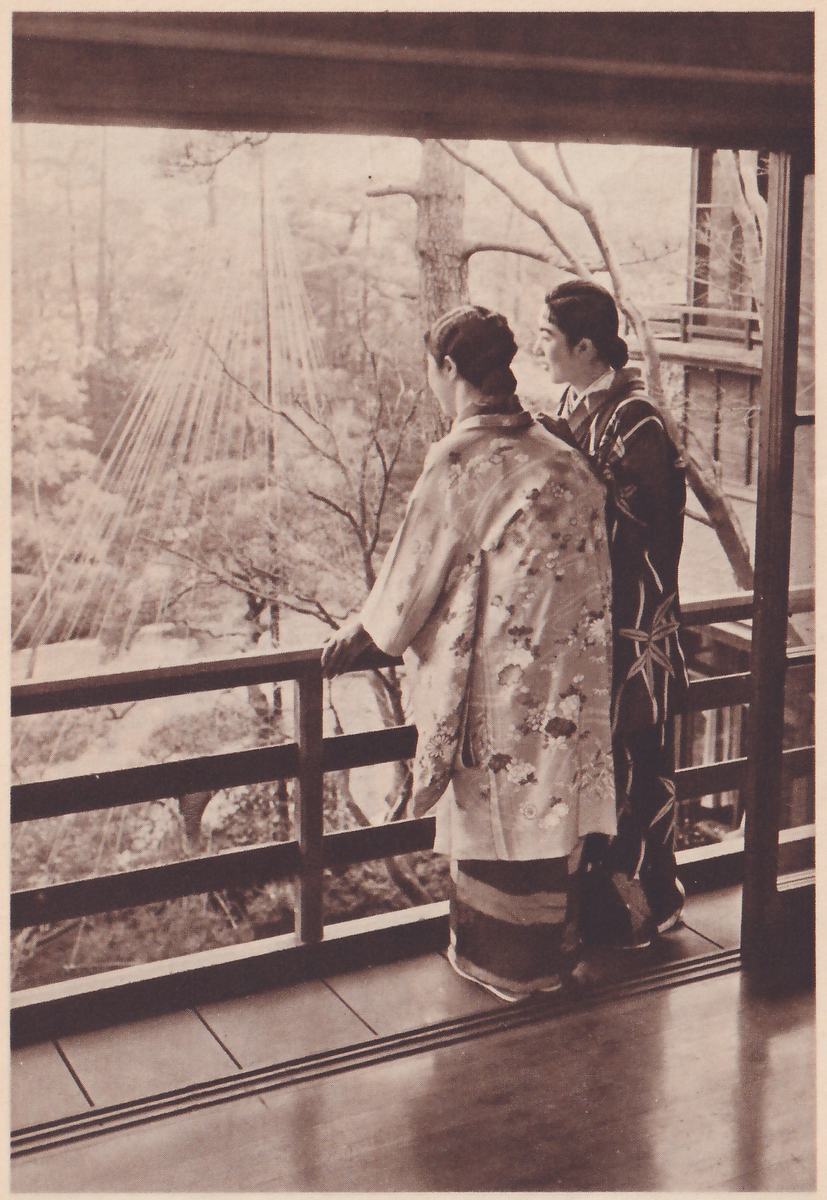
of religion, art and letters. Then were produced great masterpieces in poetry and in art, especially in painting and architecture. In acts of piety and of religious fervour wonderful examples were set. Since that amazing era of Nara civilization Japan has kept in evergreen freshness the memory of the ancient culture and traditions, and no wonder they have been closely interwoven into the fabric of Japanese life, national and individual. Upon this moral foundation has been built the modern civilization, made up of the European morals, science, religion, arts and philosophy, freely adopted and adapted during the past seventy years. Such is the moral structure of Japan, and such is the paganism of Japan, if you like. Its most vivid illustration and tangible exemplification may be seen in the Japanese family life of today.
Foreign Influences
There were also dark pages in our history: The arrogance of sacerdotalism and consequent clashes between ecclesiastic and lay authorities; internecine warfare between the military clans of Genji and Heike; and unphilosophic feuds among scholars and literati of different schools. But through it all, the fundamental principles of national life have been kept intact, just as the Shōsōin of Nara, repository of priceless treasures of the Nara Period (710–794 A.D.), has been preserved till this day despite the many fires and battles which have broken out around it.
Thus the Japanese life, moral and material, is of a highly complex character, having very deep roots in the soil of history and tradition, richly nourished by the re-
ligions and philosophies of India, China and Europe. Reverence for the Mikado is the oldest heritage of the nation, coeval with the dawn of the nation. The very name of the country is significant: “Sumeramikuni,” or “the Mikado’s August Country.” Filial piety, fraternal love and submission to proper authority are of Confucian origin. Confucianism has also taught, though in terms of a lay moralist, reverence for Heaven as the source of all-pervading grace for mankind. All the qualities that go to make men and women model human beings, such as the thirteen qualities of Benjamin Franklin, once so popular with Japanese youth, were inculcated by numerous schools of moral teachers of both native and foreign origin.
The Imperial Rescript
To cover all this extensive field of moral and religious teaching there is one small compact document which every Japanese knows by heart, and that is the Imperial Rescript on Education issued in 1890. This is read by every little girl and boy as soon as he is able to read, the ceremonial reading of it being one of the principal acts at every important school function.
The moral life of the Japanese is not as strained as that of a rigid moralist of this or that denomination. As subjects of Dai Nippon and of the Emperor, we have such and such obligations, just as we are to behave in such and such a manner as children, brothers as well as neighbours, citizens or public officials, and so on. As men in their cosmic relations to the universe, we are, under the Constitution, allowed perfect liberty of faith. A distinct line is drawn between matters temporal and matters spiritual,
there being no overlapping of the boundaries. The fact of a man being a Shintoist, a Buddhist or a Christian does not, ipso facto, bestow upon him any advantage or disadvantage in the estimate of public authority or in the field of competition in any line of endeavour. This is a most remarkable feature of Japanese polity, which we would call Japanese liberalism under Imperial protection.
It is, however, true that an increasingly zealous and watchful effort is being made in these days regarding the “clarification of the national polity,” and this I would think is a temporary phenomenon, bound to pass with the return of normalcy, for I do not think the national polity of Japan is such a fragile plant as to require so constant and so zealous a watering to keep it in flower. Bolshevism, Communism, and all other “red” doctrines calculated to loosen the ancient ties of love and reverence between the Mikado and His people, are feared as a pest, and everything is being done to keep them away from the Imperial shores. Therefore, so long as you do not attempt to revolutionize the national polity, you have every liberty under the sun here, being free to think and act just as you wish.