
THE MOTHER-IN-LAW
Now that the days of the almighty mother-in-law in the scheme of Japanese home life are gone, the voice of regret is being raised here and there, and we see many an apologist appearing, even from among young ladies, to plead her cause, attesting that she was a much maligned person and that both she and her thankless service are being increasingly missed.
While the Western mother-in-law, we understand, was a bugbear to her son-in-law, her Japanese prototype was one in the eyes of her daughter-in-law.Printed: daughter-in-law.. She was a necessary product of an age, an indispensable instrument of fate in bringing up a good daughter-in-law. But for her there would have been no model wife, no Japanese home, no family life such as we have inherited.
In old days of early marriage when the groom was less than twenty and the bride fifteen they would have been helpless without the guiding hand of the mother-in-law to keep the home going in the way it should. The girl was brought up in the tender atmosphere of loving parents, “shielded from the hard winds of the outside world,” as an old saying is, and in blissful ignorance of the realities of life, “unable to tell the East from the West.” Such a person, when she was married, must find in her mother-in-law what a new recruit must find in the drill sergeant, or what a new college graduate finds in his first employer. Even the most kindly offices of her
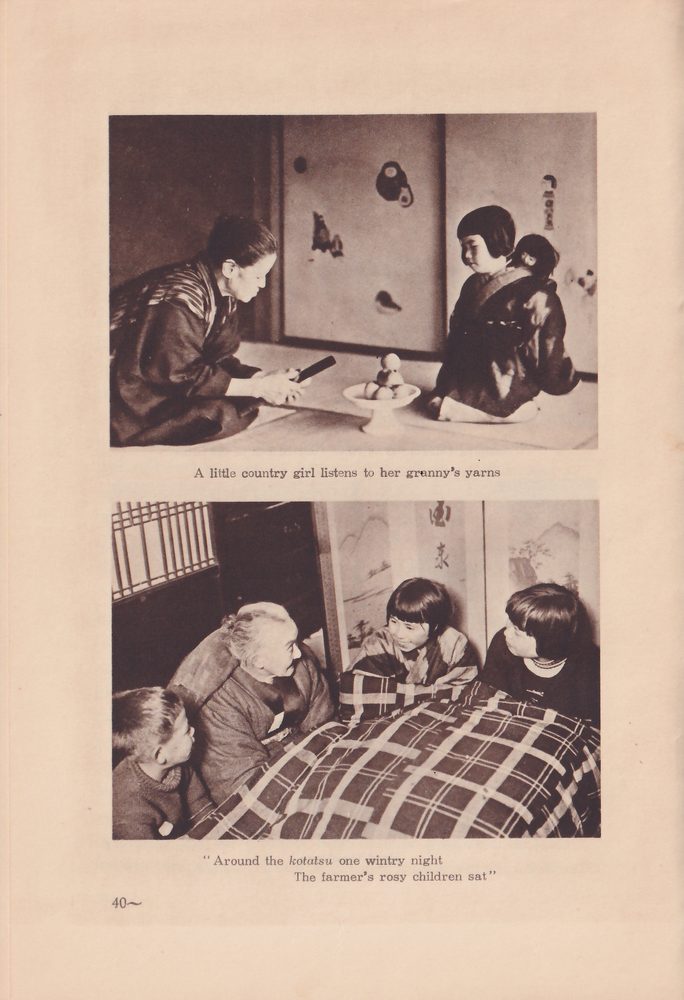
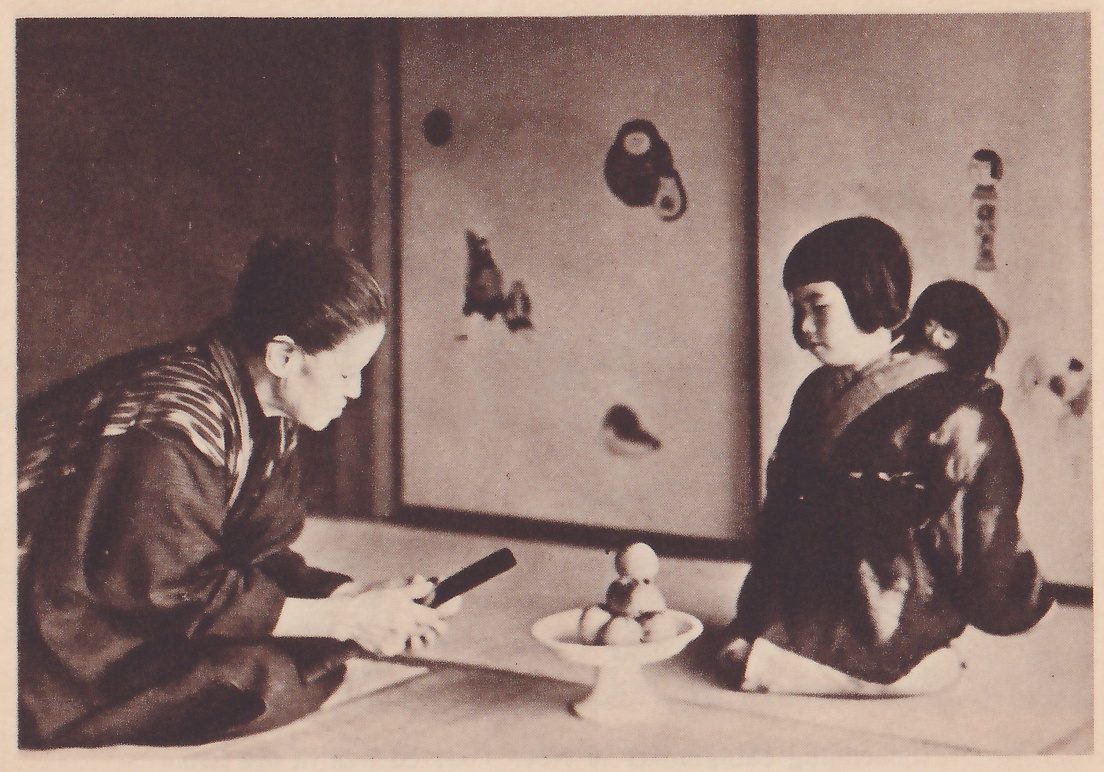
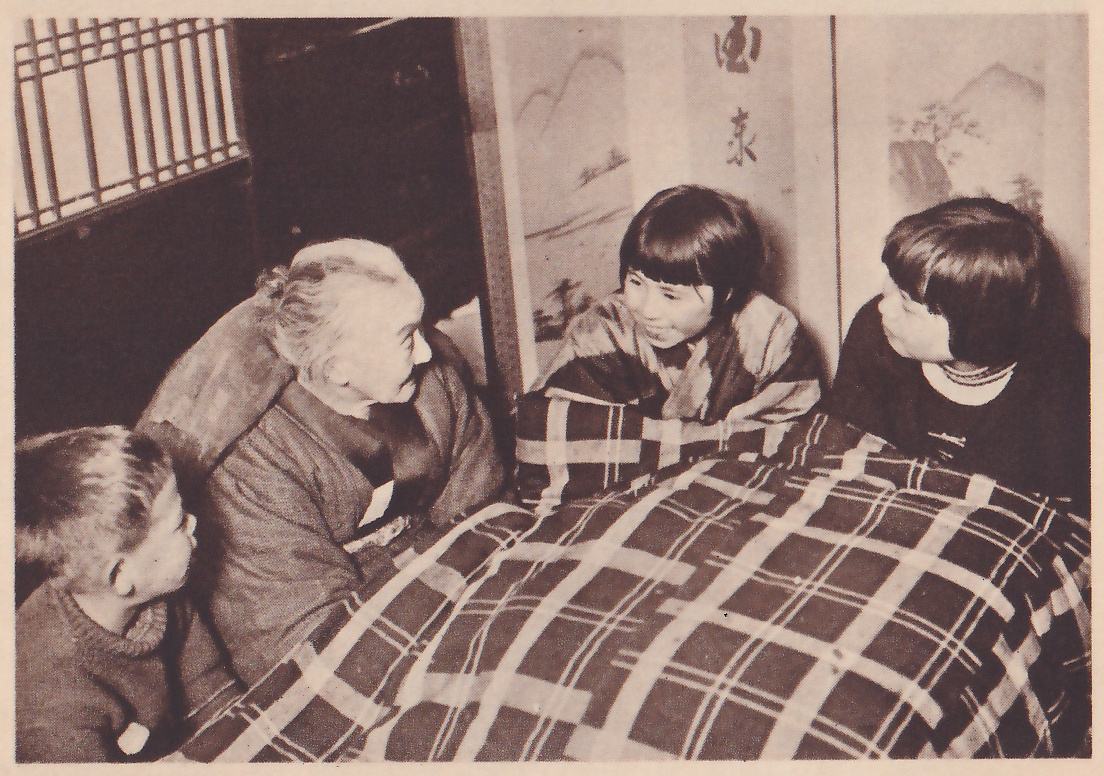
The farmer’s rosy children sat”
mother-in-law must sometime appear harsh and cruel to the young bride who wrongly believedPrinted: belived that her mother-in-law might prove a tyrant. It was only natural, therefore, if she thought somewhat ill of her mother-in-law. On the side of the mother-in-law, she also had her pre-conceived and unalterable views. Having in her time gone through the same mill, and having found in later life that her experience on the whole had been all for her good, she considered it both her privilege and her duty to rule over the young woman, firmly convinced that she was working for the salvation of both her son and daughter-in-law. It was a sort of harmless feud that was waged for centuries.
Young women of this enlightened age, in the first flush of their awakened self-consciousness, raised the protest: “I will not marry if I have to live with a mother-in-law.” Such a protest is no longer called for, as it is the mother-in-law who will rather beg to be excused from being annoyed by young married folk. With the “abolition of age,” as already said, older men and women must continue immersed in affairs of the world on their own account; they can no longer hope to depend entirely on their children or children-in-law in the winter of life. They must work harder and longer to give their children better sustenance and more expensive education than their fathers did. In fact, when they have fairly succeeded in marrying off their daughters and giving their boys a college education they are in most cases as good as finished themselves; many parents do not survive it. How could they, under the circumstances, take on the onerous and thankless duty of “bringing up” the young daughter-in-law, unless they really must?
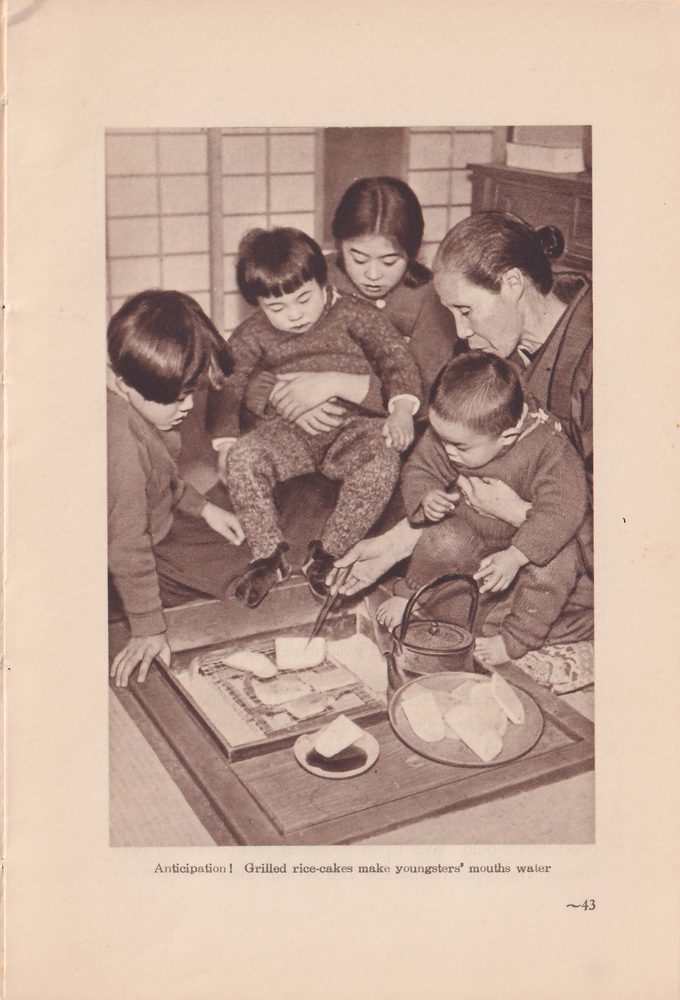
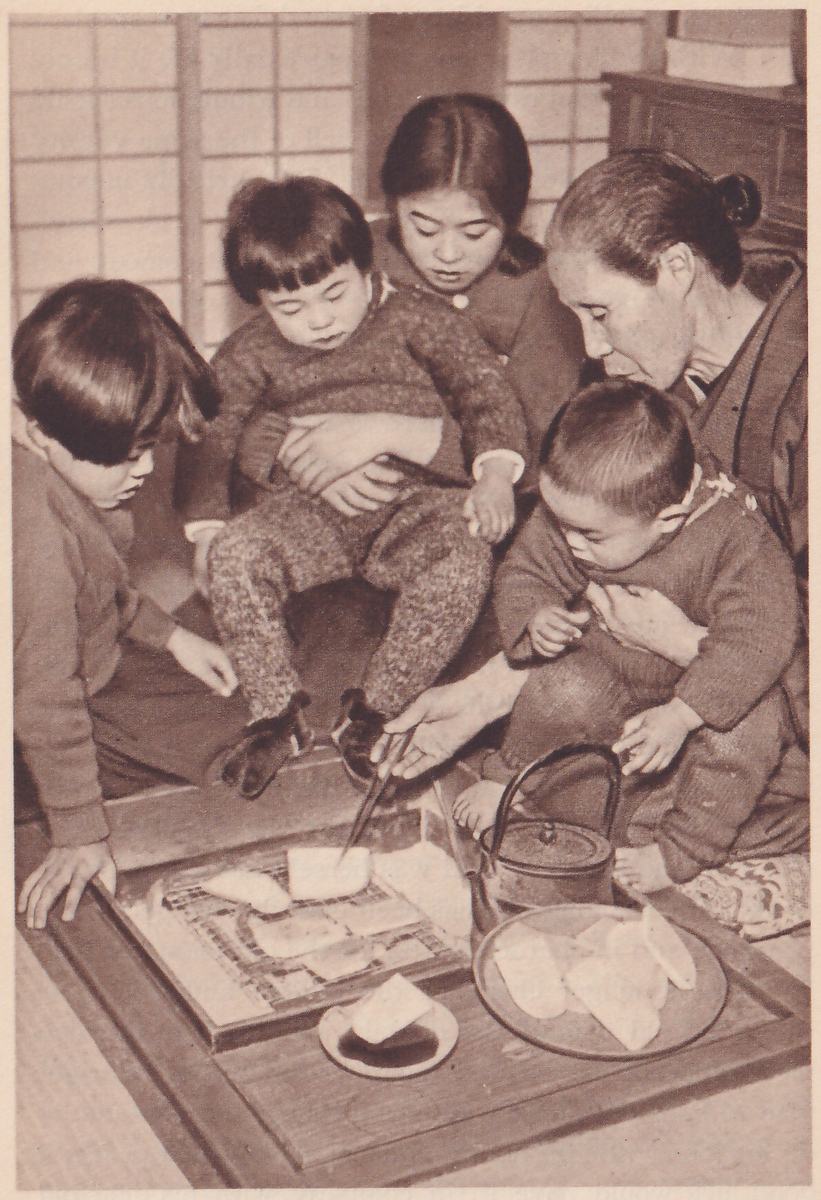
In country districts where the majority of the people are farmers and tradesmen, the cohabitation of young and old married folk is often not only necessary but advisable. Where the son is to inherit the occupation and property of his father, he must make his father’s home his own, and his wife will have to live with him and his parents. But in urban districts where young men are not obliged to succeed to the parental occupation but may pursue professions of their own, it is increasingly their custom to set up a home for themselves. Should they live under the same roof as their parents, it is the older rather than the younger couple who play the humble part. When a dispute arises, the mother-in-law may bring the weight of her longer experience and wider knowledge of the world to bear on it, against which the younger wife will call upon her school-learned and book-inspired lore; and the contest more likely than not will end in the defeat of the mother-in-lawPrinted: motherin-law, as the sympathy of the whole civilized world is with the younger. In an ever-increasing degree older people are advised on all hands to yield and make way before the younger.
More Liberty, More Divorces
So this is going to be perhaps a golden age for young wives, but there is the inevitable “perhaps” in the case. There are already signs that the young wife’s heaven without mother-in-law is not necessarily going to be as happy as it was once thought to be. Without the restraining hand of an arbiter between wife and husband, the married couple are thrown on each other for good or bad, and, in case of unpleasantness or disagreement, they have to fight it out between themselves, and may often go
to extremes failing an object of mutual fear or respect.
With the complications in Japan’s daily life it is only to be expected that domestic trials and tribulations should also increase. These are pretty well of the same variety as in other countries, either of the geometrically unequilateral triangle variety or of the incompatibility class leading to all sorts of solutions, some not without comedy and others with not a little tragedy. This is, of course, an inevitable concomitant of modern life, and yet we who stand, so to speak, midway between the old and the new are tempted to wonder if there is not a via media somewhere along which the old and new plans may be brought to meet in harmonious alliance, thereby making the nearest approach to an ideal home. In fact, we know of many families where such an ideal has been all but fulfilled, and where the advantages of the old system are enjoyed without their drawbacks of former times.
In short, the home life of the young Japanese is in the crucible, and some years will have yet to pass before it will assume a more definite form. Meanwhile, we know for certain that the mother-in-law of the old school, such as our grandmother knew and was herself, has disappeared, or that, if remaining, she has been entirely changed in appearance and in character. As for the old man, her husband, he no longer cherishes the bygone ambition to be the grand old man of the domain and to claim the filial piety of both his son and daughter-in-law. He is right glad to keep out of the way of the young, and continue to do his job or ride his hobby-horse in undisturbed peace, if good luck would have it, in company with his dear old spouse, the typical Japanese Darby and Joan.