
CHILDREN
“What is the use of a book without pictures?” asked Alice. In the same strain of wistful longing will every Japanese ask: “What is the use of a home without children?”
No Japanese home can be a home, sweet home without children. It has been so from time immemorial, as we shall presently see. There is something in the Japanese love of children that is transcendental, mysterious. It amounts to an adoration, a worship, even a religion itself. It is a native quality, born and developed on Japanese soil. Most other qualities now identified with the Japanese character probably had their origin in foreign countries. Filial piety, for instance, was taught by Confucius long before the Christian Era and was implanted in Japan long before the 8th century. Buddhism came a little later. But of this more anon.
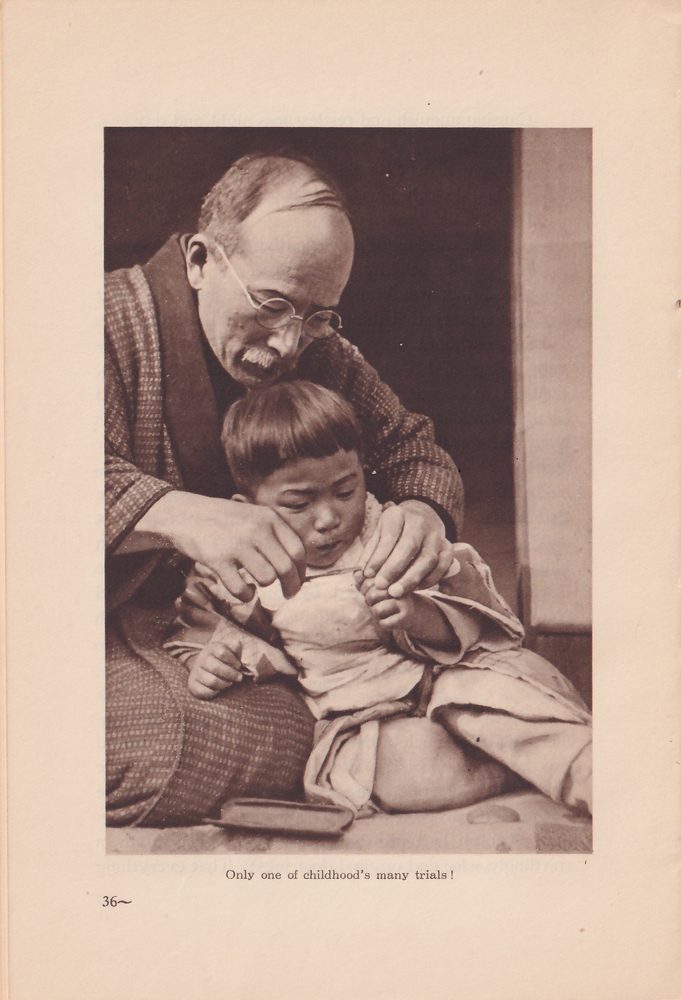
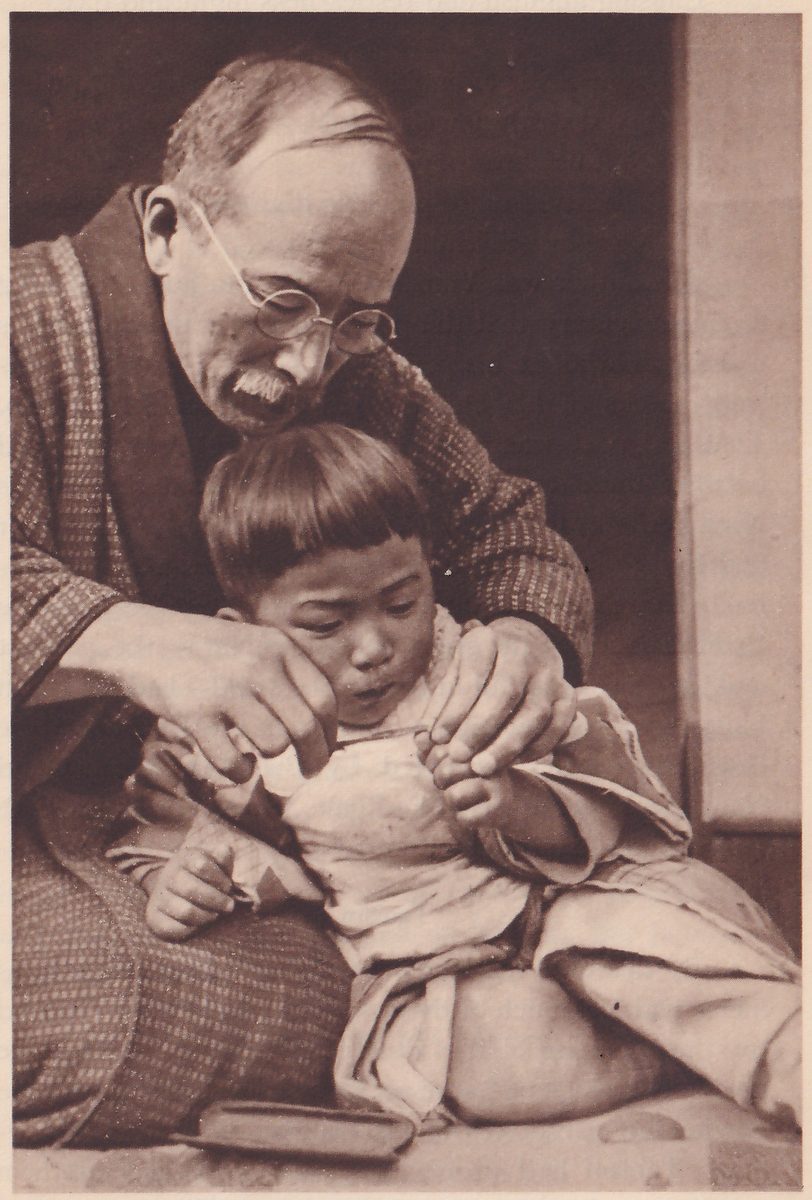
Even a casual visitor to these shores will be struck by the large measure of indulgence allowed the children both in and out of the home. Most of the so-called popular festivals, and nearly all the domestic observances and festivities, are given in honour of or for the sake of children. The five famous festivals occur to the mind at once: New Year celebrations in January, Girls’ Festival of March 3, the Boys’ Festival of May 5, Star Festival of July 7, and the Chrysanthemum Festival of September 9.
It is true that adults played no mean part in these festivals. The samurai paid congratulatory visits on these
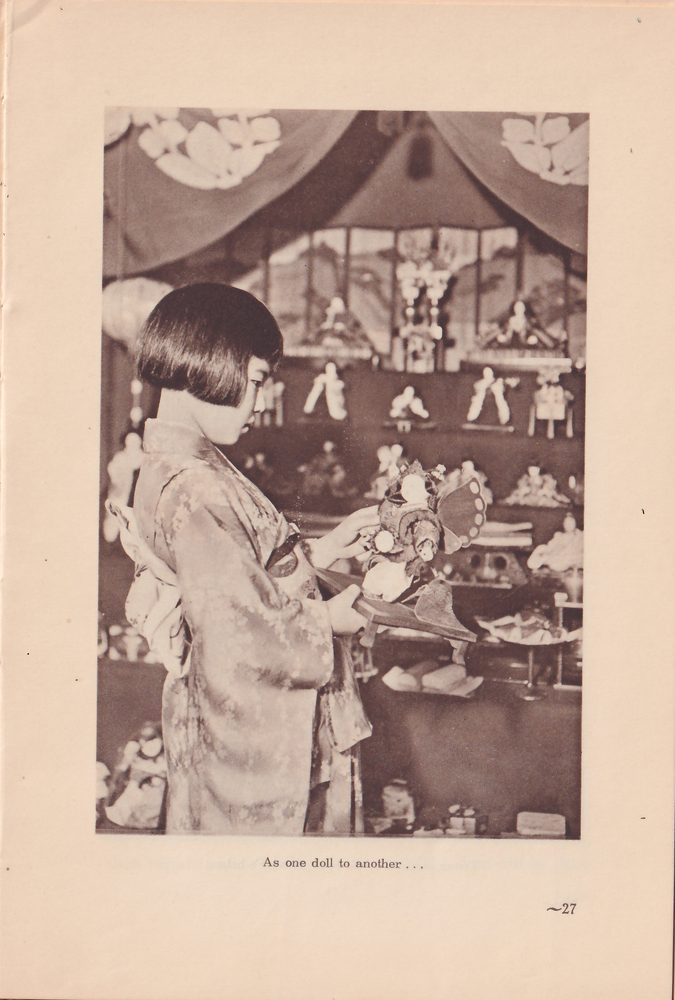
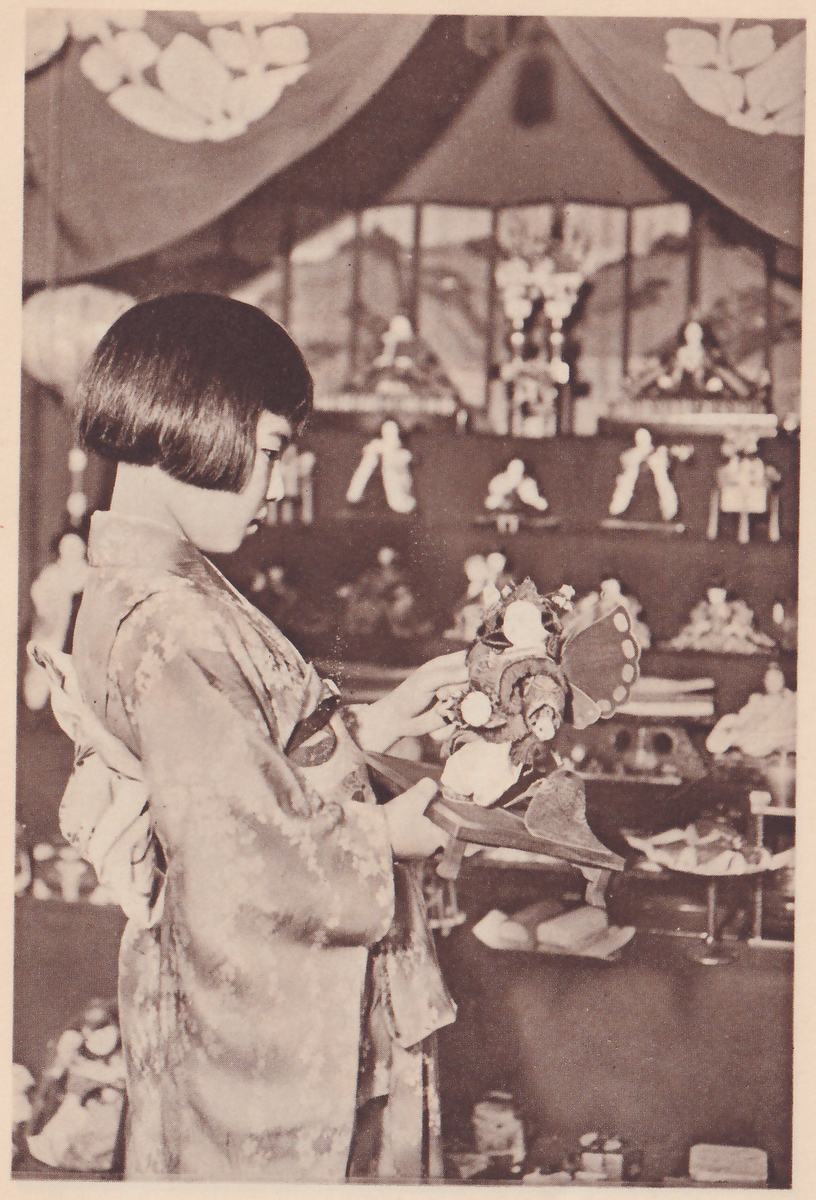
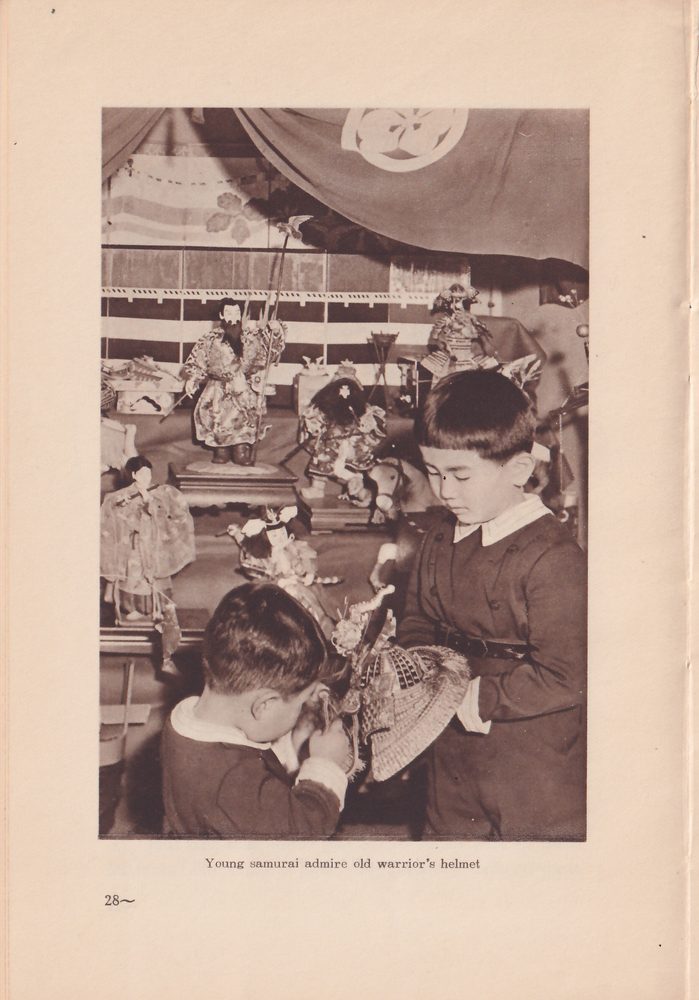
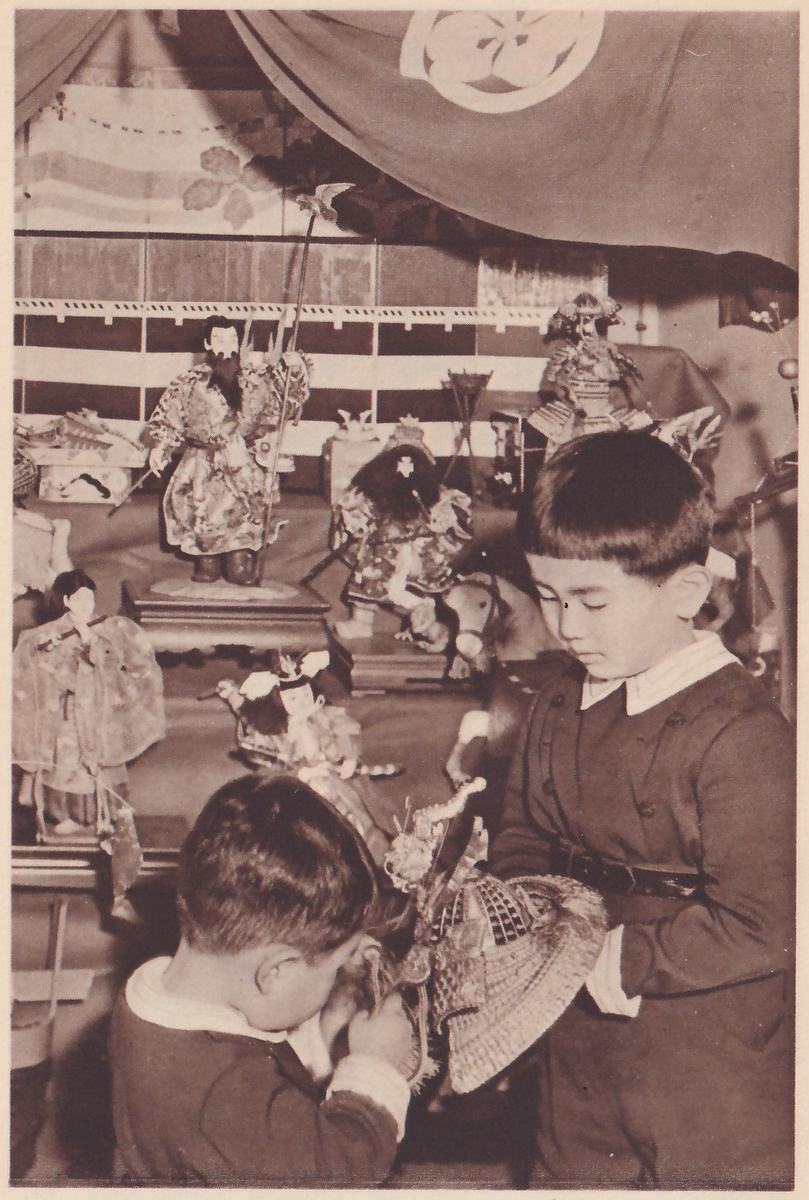
days to the courts of their liege lords, or were entertained there, and among the common gentry presents and compliments were exchanged. At the present time similar good-will ceremonies and functions are held, but the adults are always in subordinate rôles, supposedly assisting the children, at these festivals.
Spontaneous Revivals
It may be recalled that in 1873 these old-time festivals were officially abolished as antiquated relics of the Tokugawa régime, and replaced by a new set of “national holidays,” mostly in commemoration of events concerning the Imperial Household. As the years passed, however, they were gradually revived till they have become what they are—unofficial national festivals. All because there is a children’s lure in them. If the Festival of Chrysanthemums alone has been allowed to drop out unregretted, it is chiefly because the drinking of kiku-saké, or chrysanthemum wine, connected with it was no concern of children.
If it be said that love is loved and marriage is made in Japan for the sake of unborn babies, it may sound more like a quotation from Schopenhauer than a statement of fact, yet fact it is. It is the common saying and belief in Japan that marriage is the duty one owes to one’s parents and ancestors, so that no marriage is considered a success, no matter how happy the married couple are, unless crowned with the joy of a baby. Every person at all entitled to the respect of the community must have had more than one experience of having acted as nakōdo, or go-between in marriage, and the duty of a nakōdo is not regarded as having been perfectly done till he has
attended as guest of honour at the celebration of the first birth held at the home of the couple in whose bringing together he was the instrument of Providence.
In feudal times childlessness was often conceded to be legitimate cause for divorce. Because of the Japanese touching love of children, the wife would consider herself almost cursed were she childless. It was, therefore, an event of unspeakable joy when she bore her first child. So that as soon as the wife bore a child her prestige and influence rose to the plane of equality with her husband. She had now become mistress of the home, and could challenge the rest of the family, and look the whole world in the face. Until she had a child of her own, therefore, she could not consider her position as entirely secure. There was, of course, an easy remedy for childlessness in the form of adoption, but it was not to be lightly resorted to, for it might cause domestic complications if a birth took place at a later time when the adopted child had grown older.
It is no wonder that there should have developed in the Japanese vocabulary a phrase meaning “child-treasure,” which implies that as long as you have this treasure you might do without any other treasure—wealth, talent or social station. Moreover, the Japanese equivalents for such English words as “wealth,” “happiness” and “long life” are understood to include the secondary significance of being rich in children, just as the word “riches” cannot be conceived apart from the idea of having plenty of money. We hear a discussion now and then about “birth control,” especially among those pretending to be “new” or “modern,” but so far it has had no effect upon the yearly increase of births over deaths.
Scenery and Children
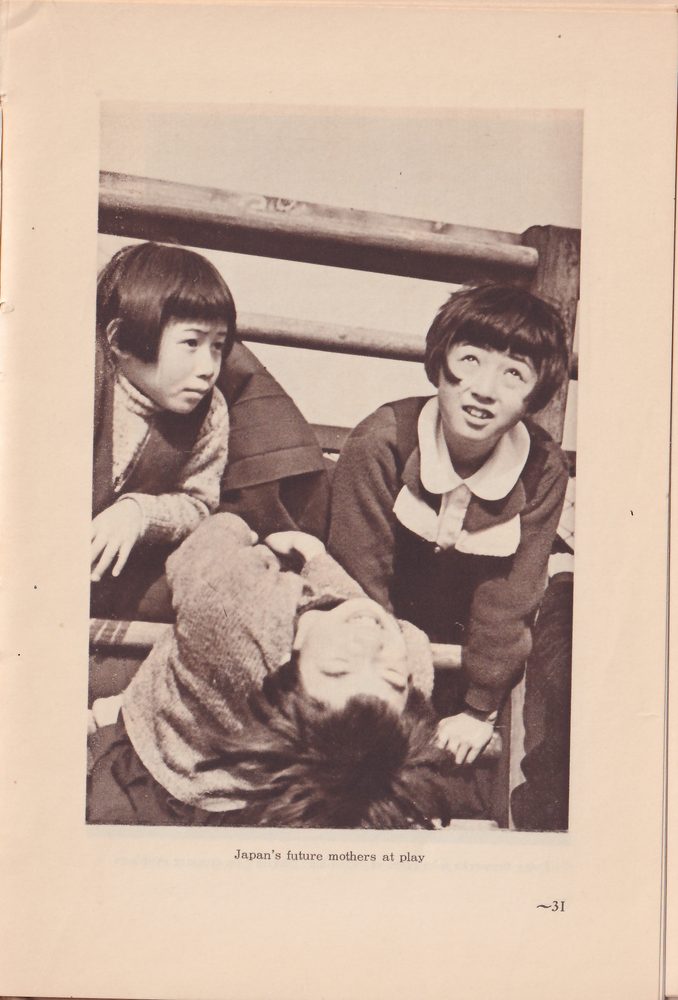
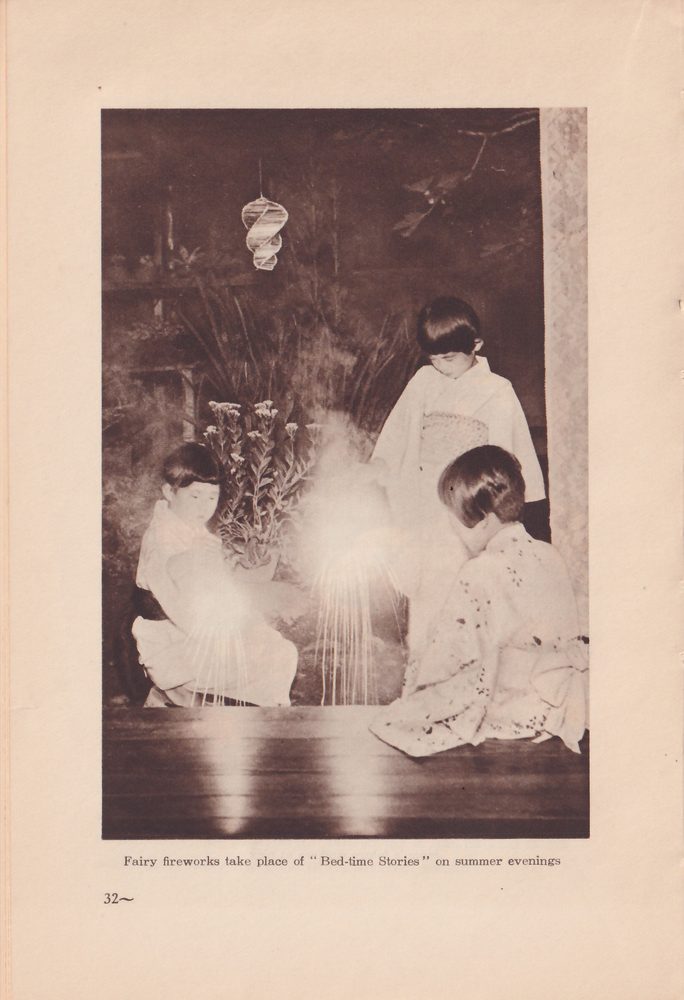
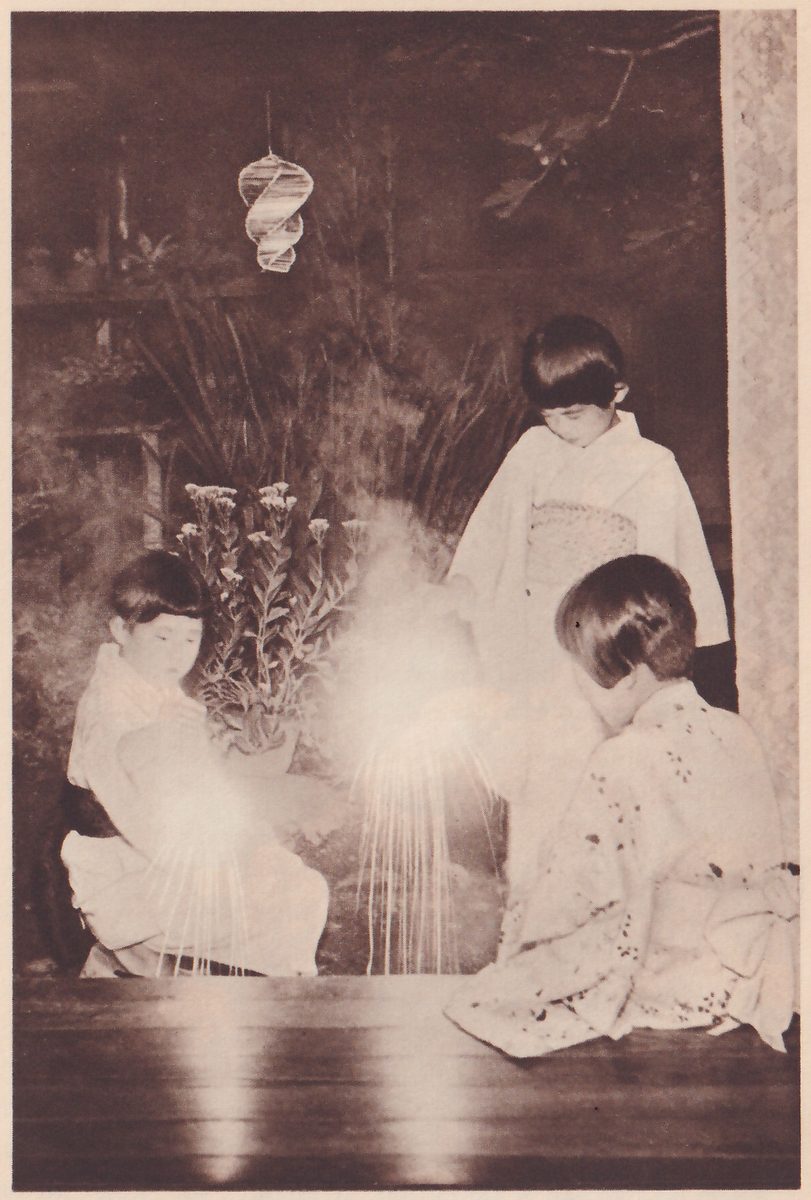
The charm and beauty of the Japanese landscape is associated with children. Take typical scenes of the four seasons, as represented by the cherry of spring, the star-spangled summer night, the maple colours of autumn and the snow-clad pines of Christmas time. In every one of these pictures the presence of children is invariably noted, both to enhance and to enjoy the pleasures of each season. Thus, when the cherry blossoms are in their glory, out comes a procession of little boys and girls dressed as Buddhist acolytes, parading through parks and streets. The meeting of the star lovers across the Milky Way on July 7 is the summer-time occasion of merry-making for children. The “kimono day for children,” by which some people call the Shichigosan, falls on the finest day in Japanese autumn when the sky is blue and serene, the air rarified and fragrant with the chrysanthemum, and the foliage turning crimson everywhere. The happy children are accompanied by their parents or other kinsmen in their pilgrimages to various shrines, and thousands of people gather at street corners and in the temples to see them. As the old year is passing, they are fêted once more with the modern joy and gaiety of Christmas, almost as the Western children are. Shops and streets bear signs of festivity everywhere, and in every home where there are children, Christian or non-Christian, we hear voices raised in merry-making and in happy domestic reunions.
Love of Children in Literature
No less in art and literature than in everyday life
are the children given a prominent place both as a source of inspiration and an objective. In the Kabuki drama we frequently see children impersonated by juvenile actors to give pathos or joy to the stories unfolded, especially in Chikamatsu’s tragic or comic plays of love. Men are generally supposed to live for ambition, for wealth, fame or power, but in Japan the first aim of life seems identified with the love of children. If men work to earn a comfortable living or to rise to high position in life and women marry to keep a house, it is all for the sake of getting good children, thereby perpetuating their family line, which is their most sacred duty to the gods and their highest joy in life.
Let us look up our classics and see how our ancestors treated this matter. The so-called Nara Period, which practically covers the whole of the 8th century, was the golden age of Buddhism, of poetry and the arts. The famous Mannyoshū, the oldest and the greatest anthology of Japanese poetry, was produced in this epoch, or rather it contains by far the greatest number of the poems produced during this time. Of the many that sing the love of children the following one, especially the last verse which forms a tanka (31-syllable poem) by itself, is very famous and most likely to be quoted as long as the Japanese language is spoken.
In Adoration of Children
Eating the melon, I think of my children,
Eating the chestnut, more and more.
Whence is this affection I cannot tell,
But there they are before my eyes always,
Causing anguish and restlessness night and day.
All your silver an’ gold
And costly jewels untold—
Of what use are they?
Treasure more precious than they
Are our children dear, I say.
The author was Yamanoe-no-Okura, and it is stated in a commentary that the poem embodies the sentiments of a father who, at his post in the far-off Chikushi (Kyūshū), thinks of his children left in the capital (Nara). That the poet was a staunch nationalist may be read between the lines. It may be remembered that in this Nara Period (710–794 A.D.) all Japan, from the Emperor and Empress down, had become Buddhists; every household throughout the Empire being ordered to keep a little Buddhist shrine; the great Buddha of Nara—the greatest and the most beautiful in the whole world—had just been built; some of the highest offices in the Court and the Government were occupied by Buddhist priests; and Nara, the Imperial city, like Rome, was the capital of both temporal and spiritual authority.
Taoism
By this time the humane precepts of the gentle Confucius had lost much of their novelty and become eclipsed by the glamour of the lotus religion, and also by the mystic teachings of Lao-tsze, founder of Taoism, and the bewitching paradoxes of his brilliant disciple, Chwang-tsze. Taoism had propagated what appeared to them startlingly wise and original doctrines: That everything
is nothing and nothing is everything—vice is virtue and strength weakness—the secret of good government is to let the people alone—wisdom is foolish—the wise thing for man to do is to drift down the current of life, like water, without aim or ambition, and to live as long as possible. Chwang-tsze went a step further and through the sonorous period of his wonderful prose wove a brilliant cobweb of Taoistic philosophy of which the following may be taken as a characteristic sentence: “Man is immortal, and his life and death are only chasing each other in endless succession like the sequence of the four seasons.” And he ridiculed Confucian ethics, and laughed at all human ties and emotions.
The doctrines of these two philosophers exerted an insidious influence on the literary productions of that period, an influence which continues till this day to be traced in various branches of Japanese literature. Between the sacrosanct doctrines of Buddhism and the cynical paradoxes of Lao and Chwang, the orthodox ethics of Confucius were for a time neglected. So was the simple but austere doctrine of the Way of the Gods, which stressed reverence for the Mikado and the sacredness of family obligations.
In the light of the moral atmosphere prevailing at that time, one can appreciate both the spirit and the letter of the poem quoted. In plainer language, the poet declaimed: “I cannot tell—nobody can tell—the why and wherefore of it all, but we do love our children, and that is true morality. Children are the best treasure man can have. Is there any treasure on earth comparable to this? If there is, tell me what it is, but you cannot.”