

II. VARIOUS PHASES OF JUDO
(A) Judo and Physical Education
I was successful in applying the principle of maximum efficiency to ways of attack and defence. Encouraged by this success, I came to ask whether this same principle could not be applied to the improvement of health, that is to physical education. For this purpose the aim of physical education must first be made sufficiently clear. Unfortunately, people do not agree in regard to the aim of physical education. On this subject I have made a study myself and exchanged views with many different people. Today, I have come to believe that the aim should consist in making the body healthy, strong and useful, giving due regard to mental and moral discipline. The aim of physical education having thus been made clear, the next step to take is to find a way to apply our principle to it. The ways in which young men are being trained physically are numerous and varied, but in most civilized countries athletics (including all varieties of sports) and gymnastics are the two kinds most widely practised. I shall, therefore, confine myself to criticizing them from the standpoint of principles.
There are so many athletic sports that it is difficult to speak of them indiscriminately.. However, this much is clear: those sports were not originally devised to develop the body harmoniously nor to make the body physiologically perfect, but to compete for some purpose other than
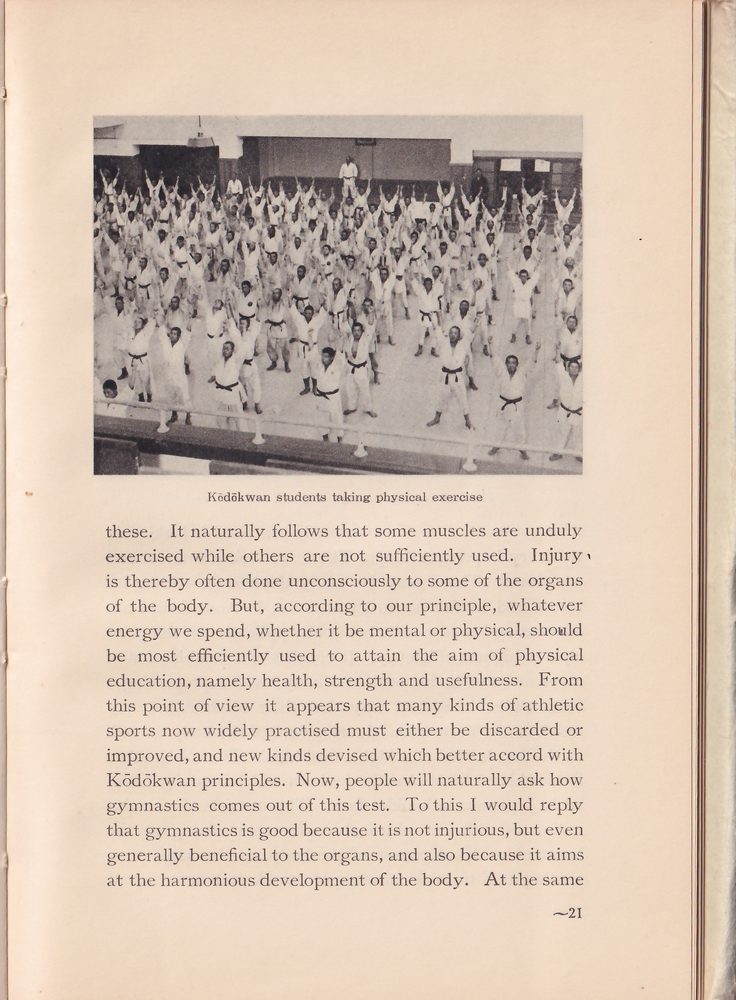
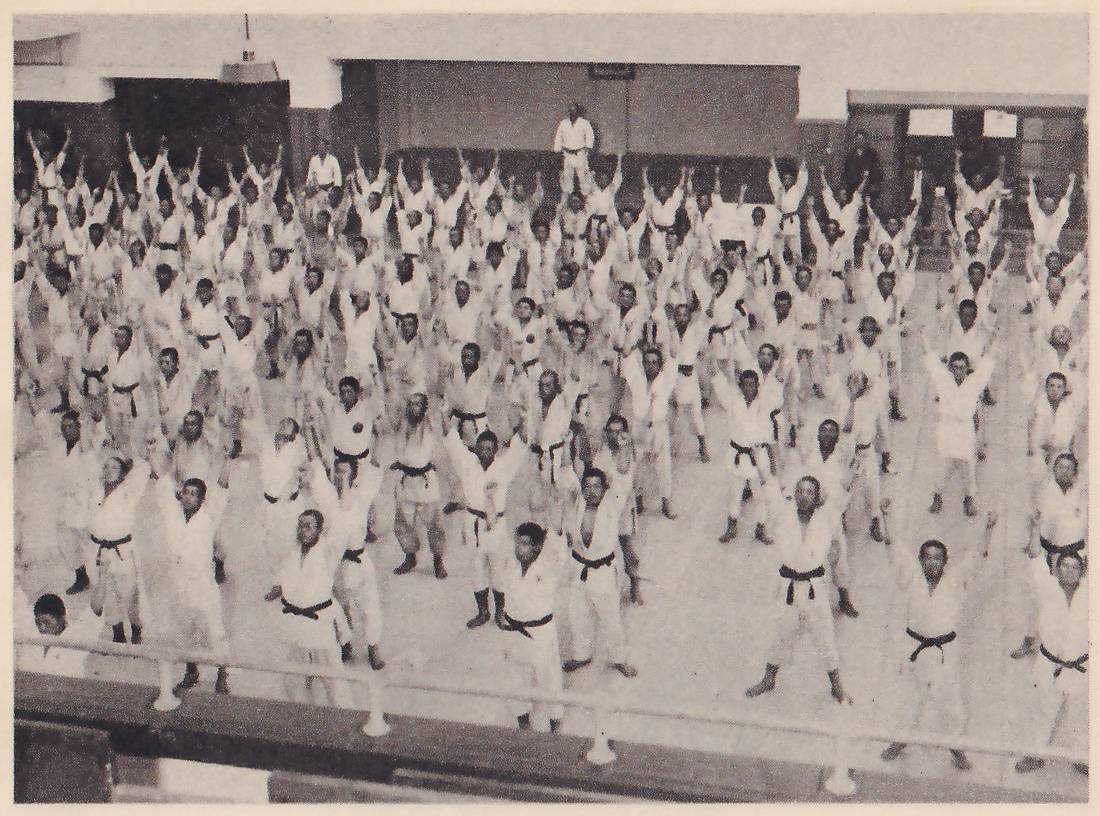
these. It naturally follows that some muscles are unduly exercised while others are not sufficiently used. Injury is thereby often done unconsciously to some of the organs of the body. But, according to our principle, whatever energy we spend, whether it be mental or physical, should be most efficiently used to attain the aim of physical education, namely health, strength and usefulness. From this point of view it appears that many kinds of athletic sports now widely practised must either be discarded or improved, and new kinds devised which better accord with Kōdōkwan principles. Now, people will naturally ask how gymnastics comes out of this test. To this I would reply that gymnastics is good because it is not injurious, but even generally beneficial to the organs, and also because it aims at the harmonious development of the body. At the same
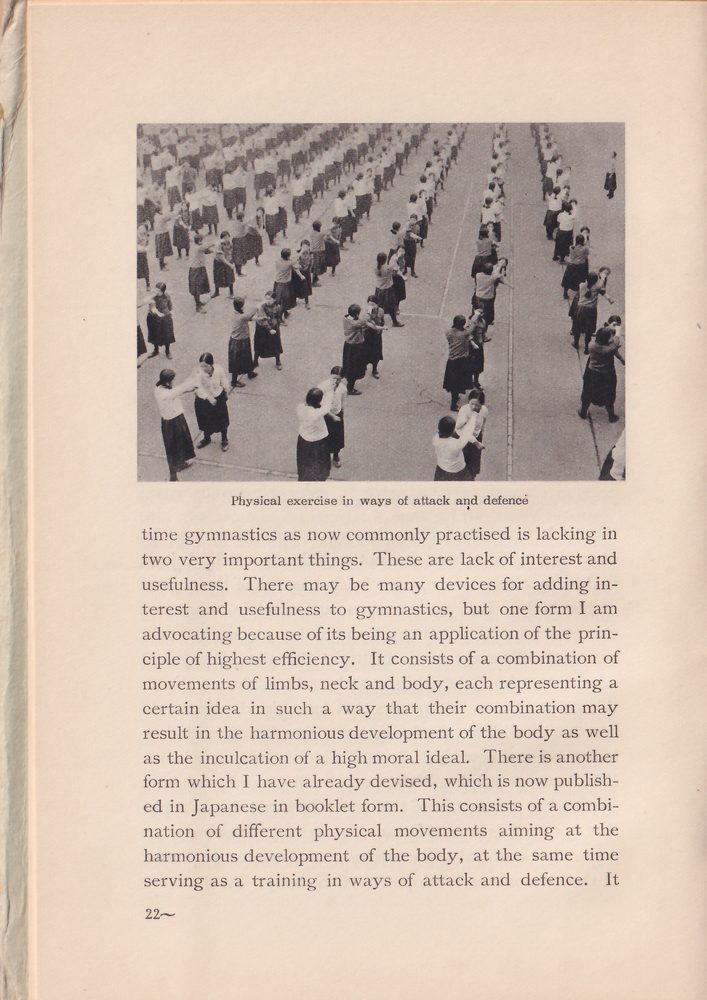
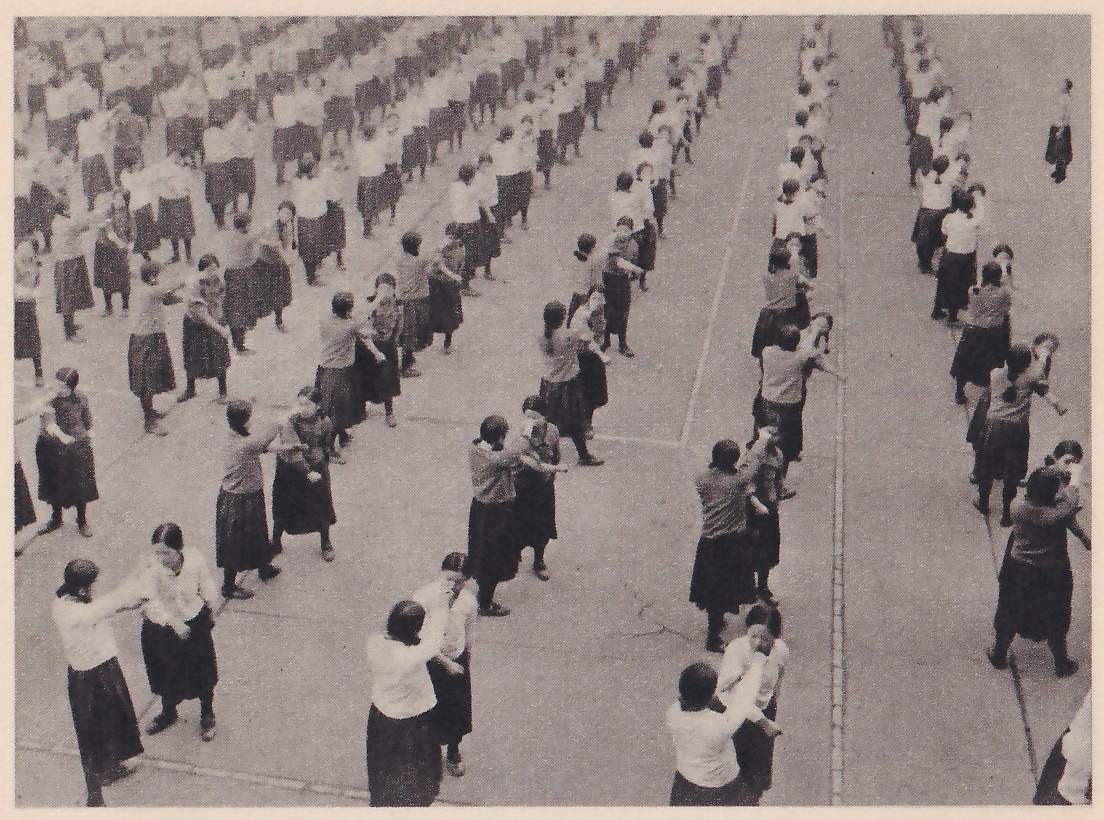
time gymnastics as now commonly practised is lacking in two very important things. These are lack of interest and usefulness. There may be many devices for adding interest and usefulness to gymnastics, but one form I am advocating because of its being an application of the principle of highest efficiency. It consists of a combination of movements of limbs, neck and body, each representing a certain idea in such a way that their combination may result in the harmonious development of the body as well as the inculcation of a high moral ideal. There is another form which I have already devised, which is now published in Japanese in booklet form. This consists of a combination of different physical movements aiming at the harmonious development of the body, at the same time serving as a training in ways of attack and defence. It
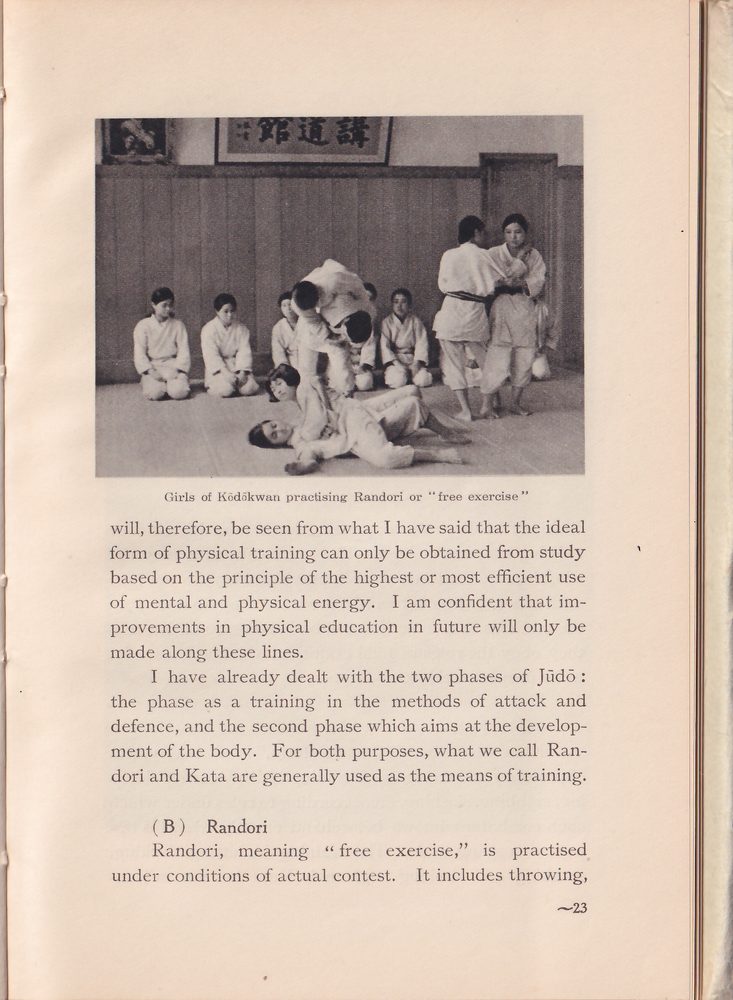
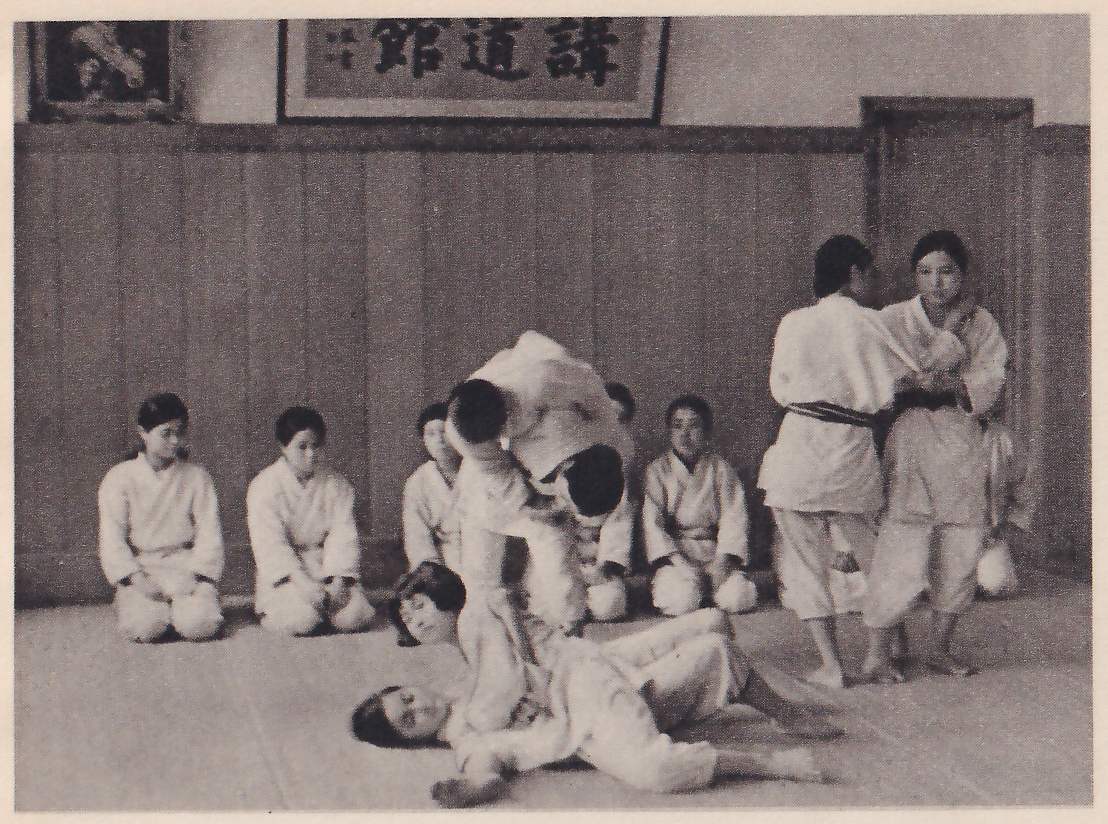
will, therefore, be seen from what I have said that the ideal form of physical training can only be obtained from study based on the principle of the highest or most efficient use of mental and physical energy. I am confident that improvements in physical education in future will only be made along these lines.
I have already dealt with the two phases of Jūdō: the phase as a training in the methods of attack and defence, and the second phase which aims at the development of the body. For both purposes, what we call Randori and Kata are generally used as the means of training.
(B) Randori
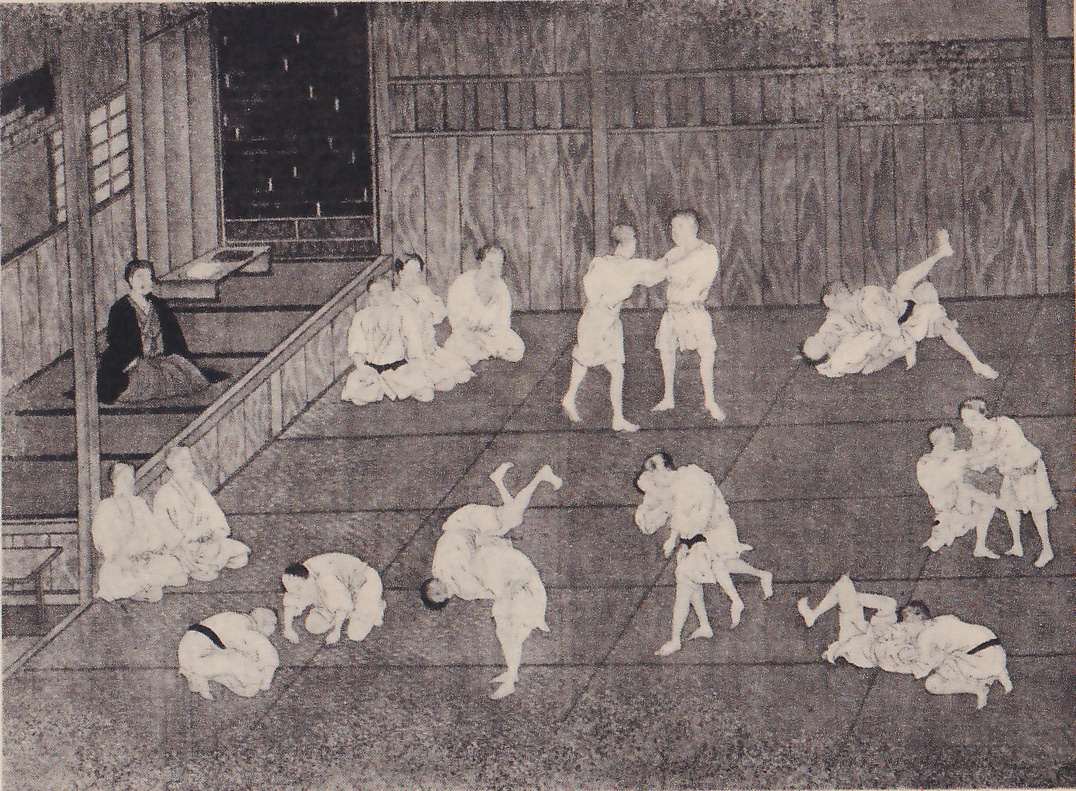
Randori, meaning “free exercise,” is practised under conditions of actual contest. It includes throwing,
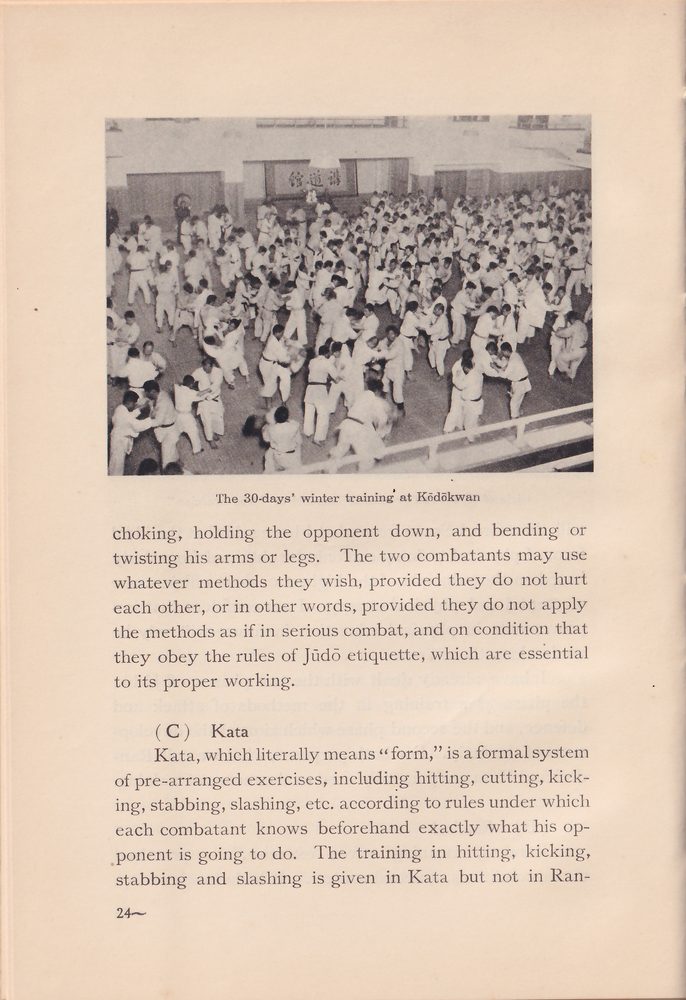
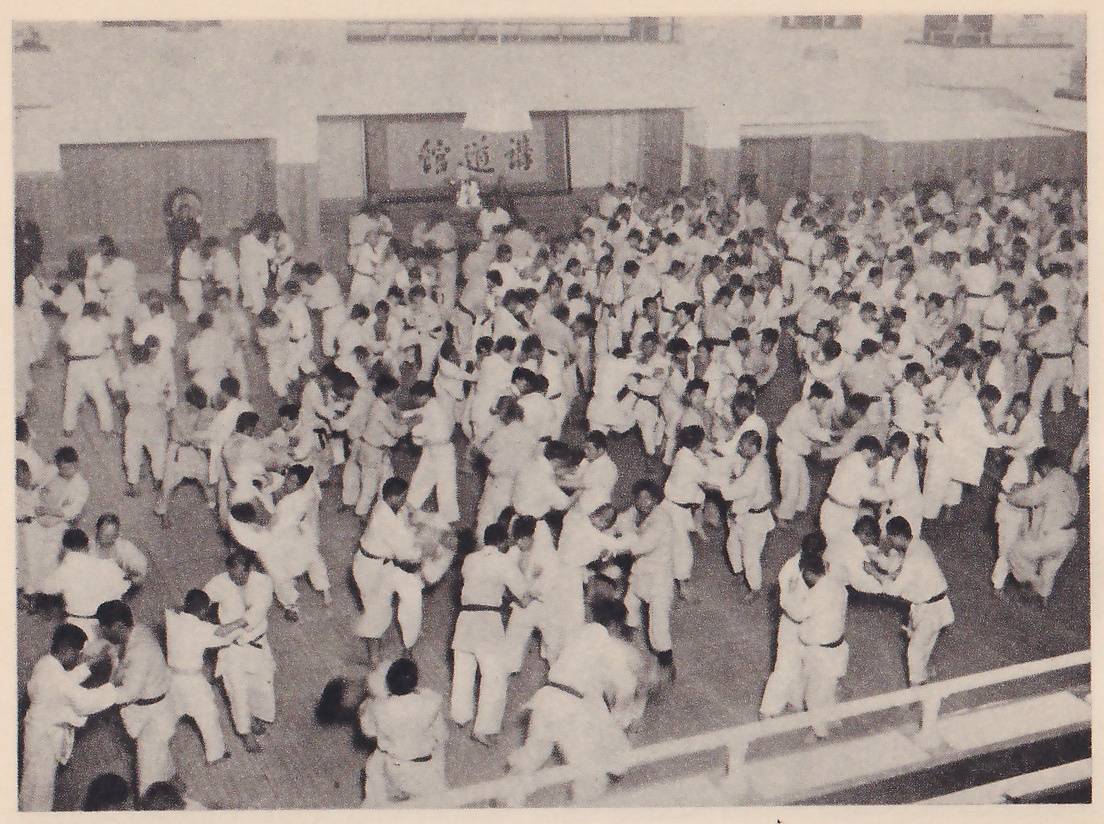
choking, holding the opponent down, and bending or twisting his arms or legs. The two combatants may use whatever methods they wish, provided they do not hurt each other, or in other words, provided they do not apply the methods as if in serious combat, and on condition that they obey the rules of Jūdō etiquette, which are essential to its proper working.
(C) Kata
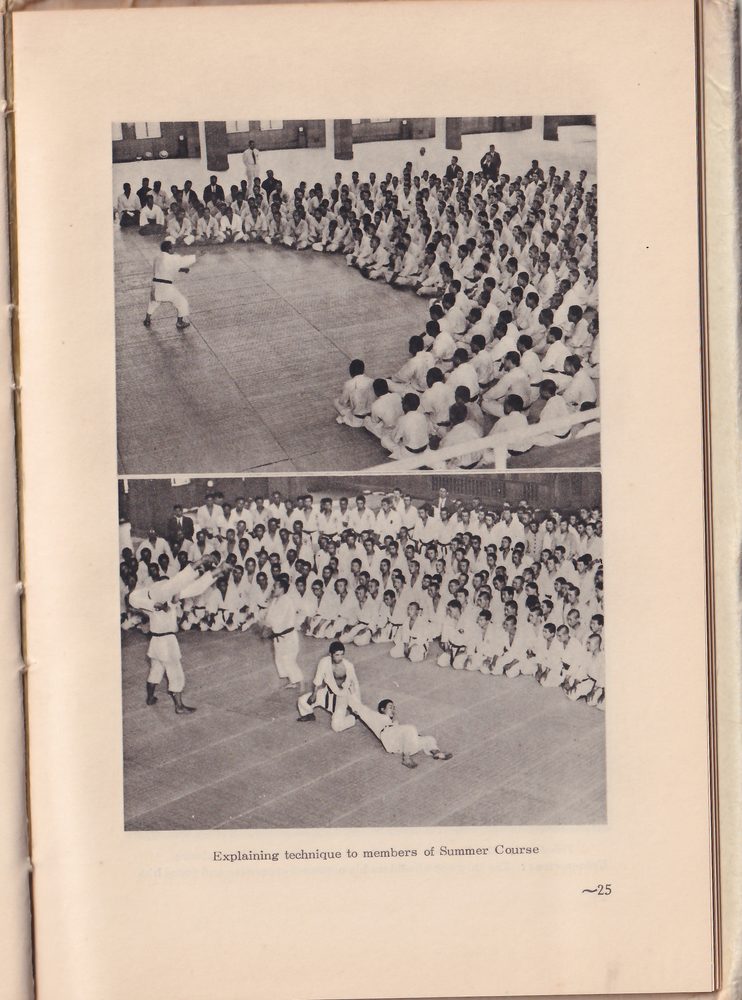
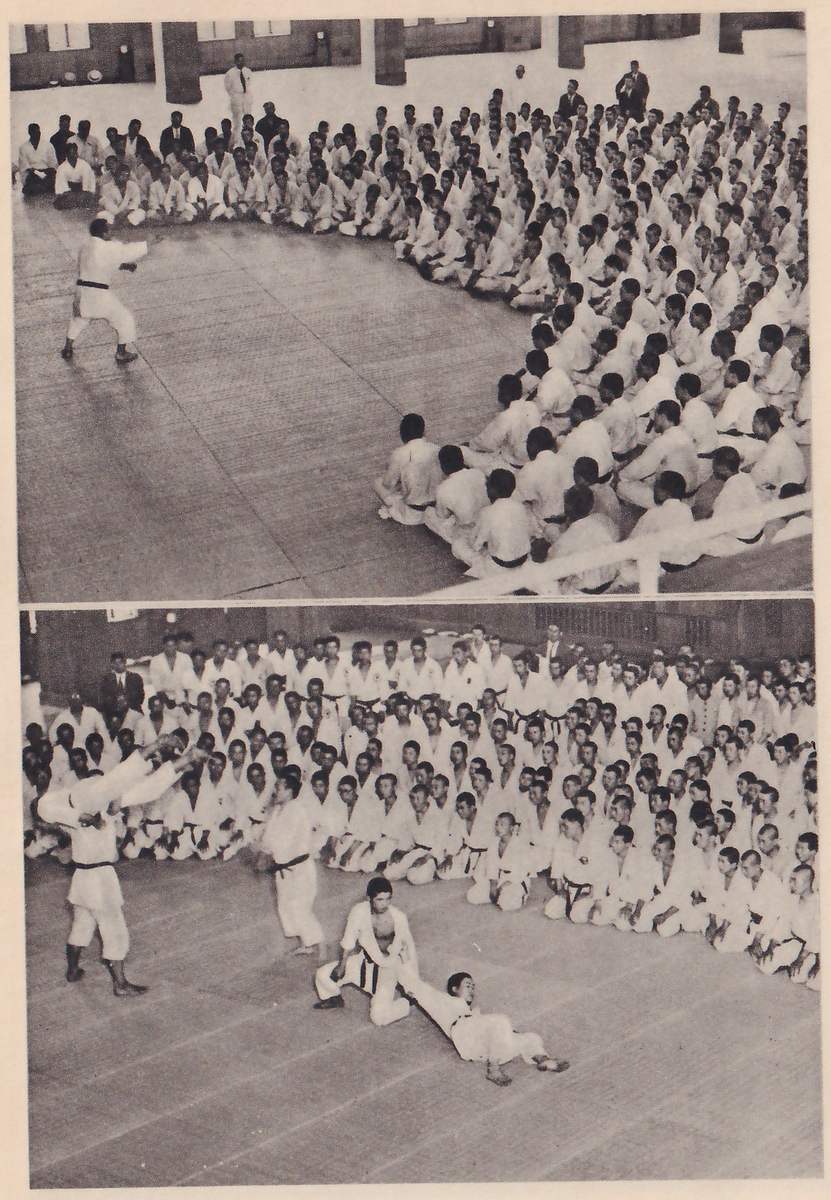
Kata, which literally means “form,” is a formal system of pre-arranged exercises, including hitting, cutting, kicking, stabbing, slashing, etc. according to rules under which each combatant knows beforehand exactly what his opponent is going to do. The training in hitting, kicking, stabbing and slashing is given in Kata but not in Ran-
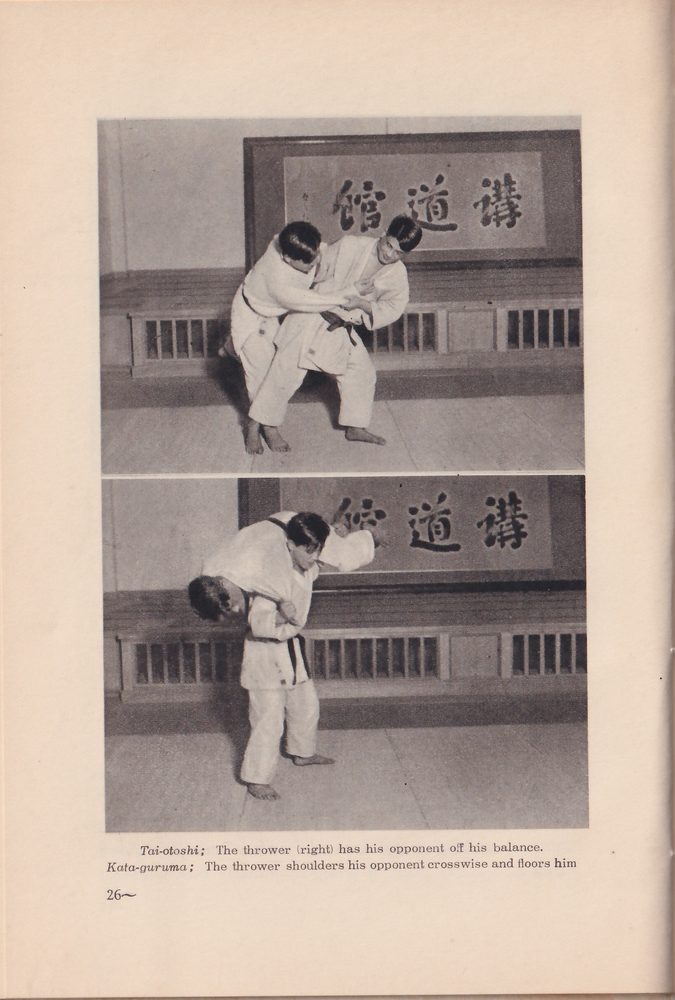
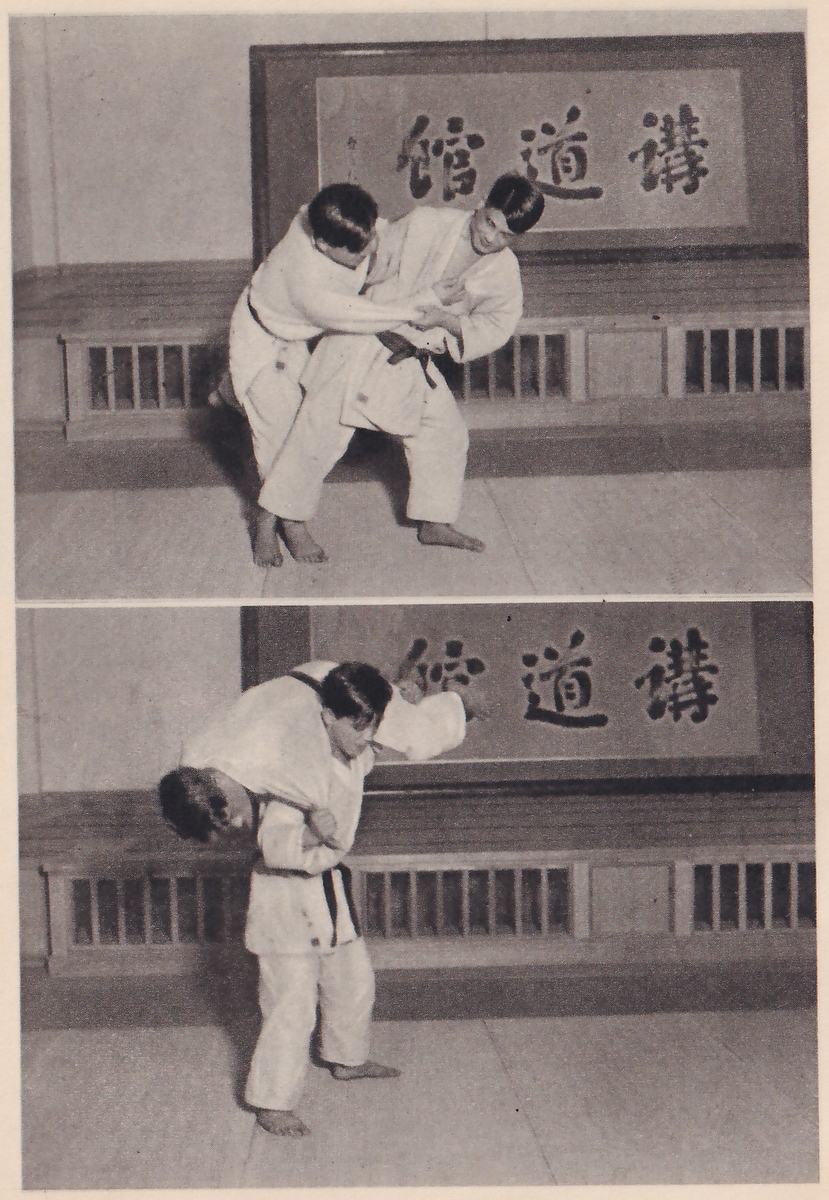
Kata-guruma; The thrower shoulders his opponent crosswise and floors him
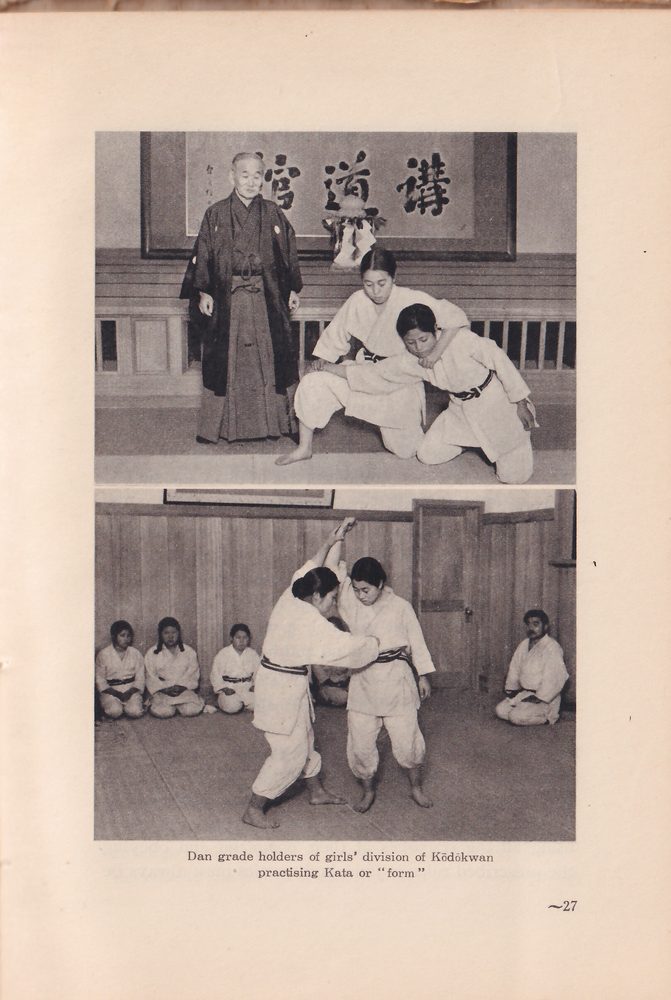
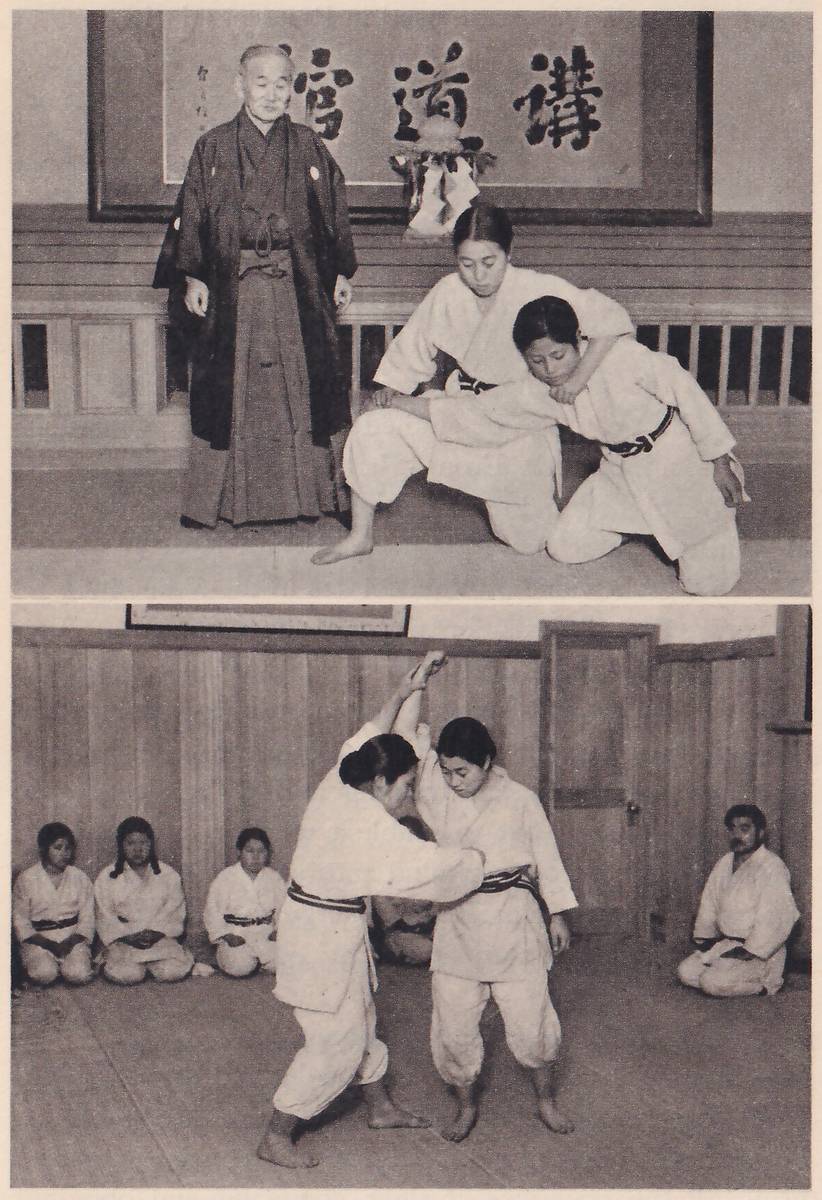
practising Kata or “form”
dori, because if they were used in Randori injuries might frequently occur, but when taught in Kata no such injury is likely to result because all the attacks and methods of defence are prearranged.
Randori may be practised in various ways. If the object be simply training in the method of attack and defence, the attention should be specially directed to the training in the most efficient ways of throwing, bending, twisting, etc. without special reference to developing the body or to mental and moral culture.
Randori can also be studied with physical education as its main object. From what I have already said, anything to be ideal must be performed on the principle of maximum-efficiency.
One great value of Randori lies in the abundance of movements it affords for physical development. Another virtue is that every movement has some purpose, and is executed with spirit, while in ordinary gymnastics the exercises and movements lack interest. The object of a systematic physical training in Jūdō is not only to develop the body but to enable a man or a woman to have perfect control over mind and body, and to prepare him or her ready to meet any emergency, whether it be purely accidental or an attack by others.
(D) Judo and Mental Training
Mental training in Jūdō can be derived through both Kata and Randori, but more successfully through Randori. As Randori is a competition between two persons using all the resources at their command and obeying the prescribed rules of Jūdō, both parties must always be
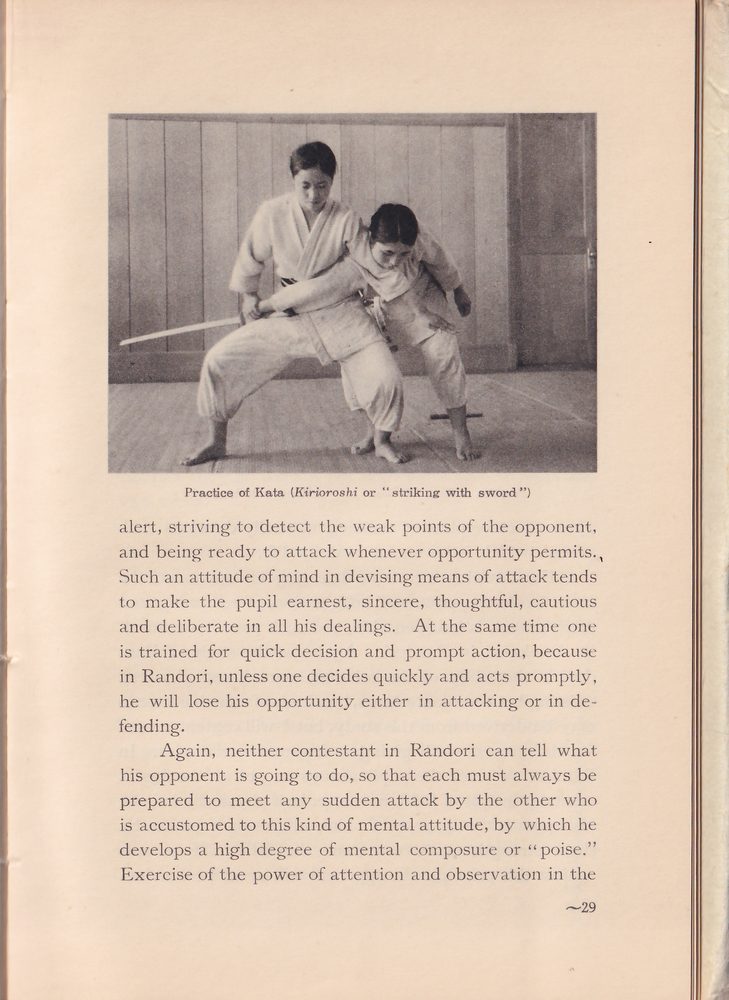
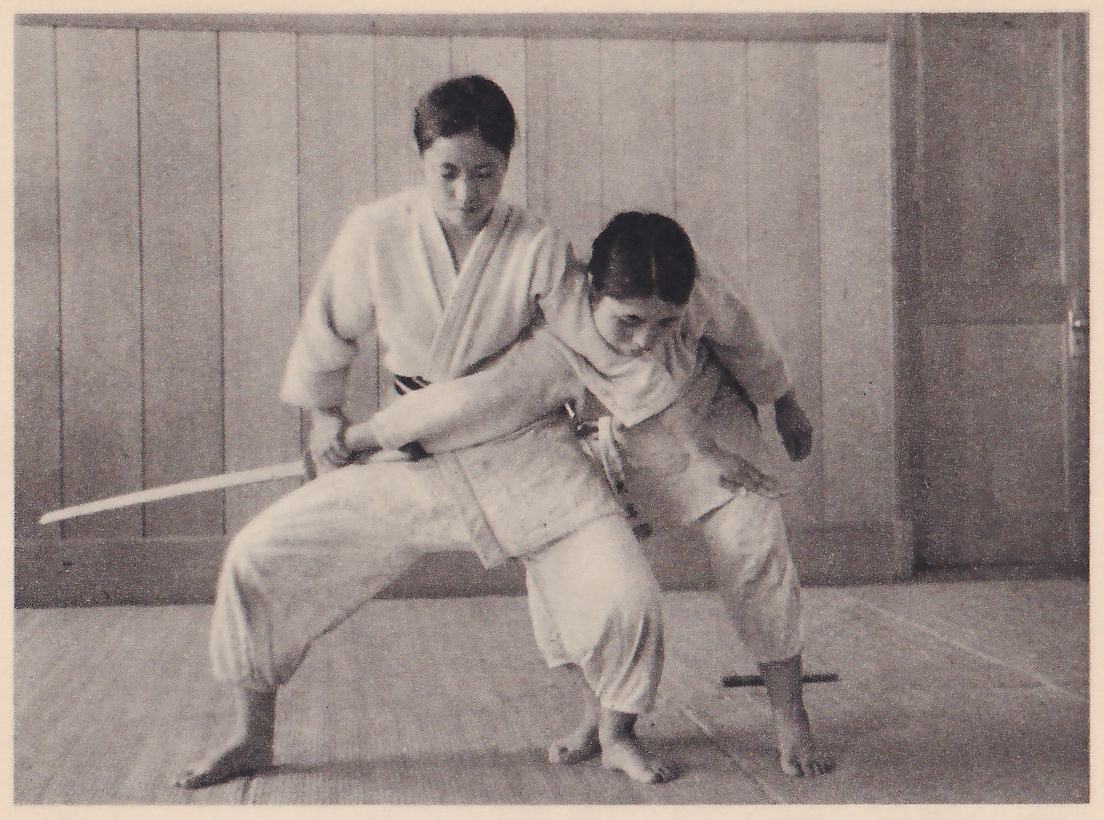
alert, striving to detect the weak points of the opponent, and being ready to attack whenever opportunity permits. Such an attitude of mind in devising means of attack tends to make the pupil earnest, sincere, thoughtful, cautious and deliberate in all his dealings. At the same time one is trained for quick decision and prompt action, because in Randori, unless one decides quickly and acts promptly, he will lose his opportunity either in attacking or in defending.
Again, neither contestant in Randori can tell what his opponent is going to do, so that each must always be prepared to meet any sudden attack by the other who is accustomed to this kind of mental attitude, by which he develops a high degree of mental composure or “poise.” Exercise of the power of attention and observation in the
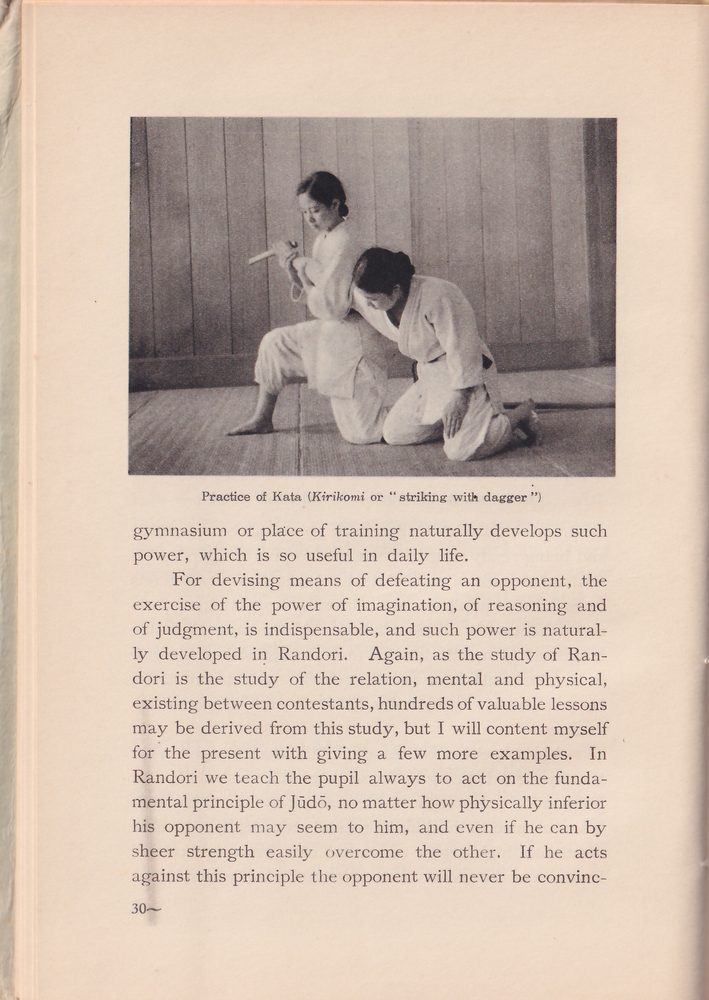
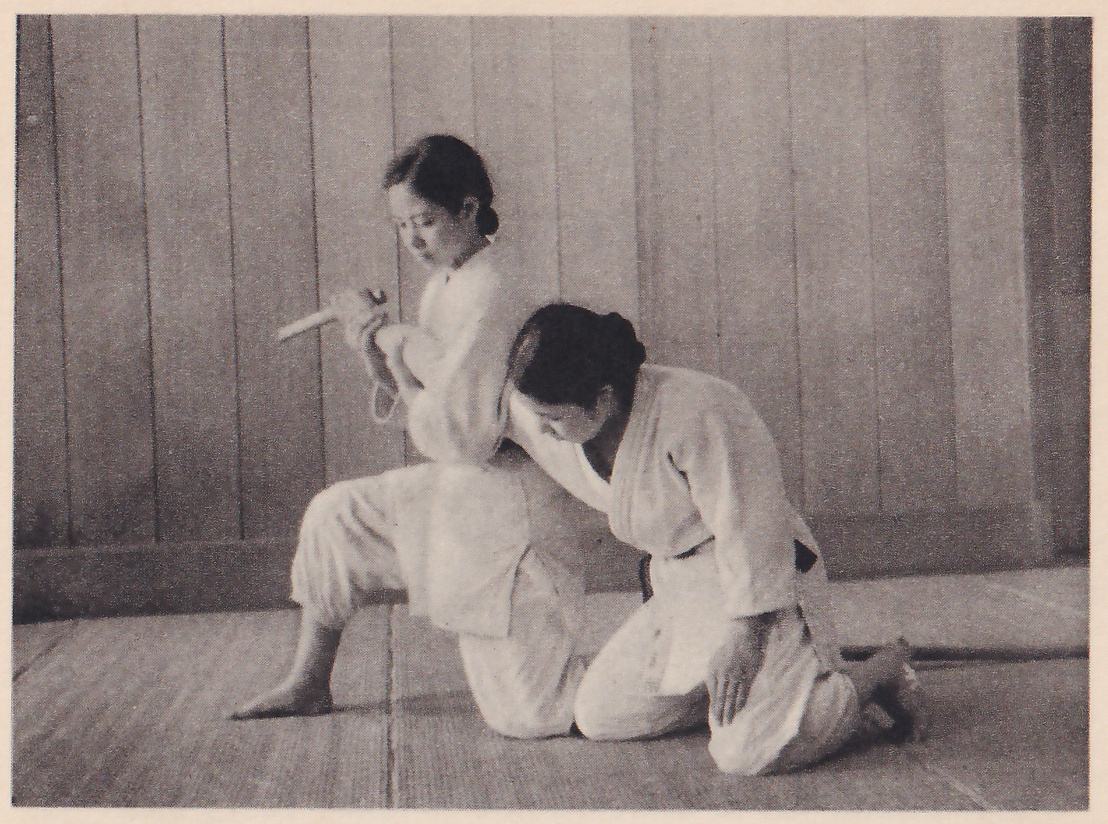
gymnasium or place of training naturally develops such power, which is so useful in daily life.
For devising means of defeating an opponent, the exercise of the power of imagination, of reasoning and of judgment, is indispensable, and such power is naturally developed in Randori. Again, as the study of Randori is the study of the relation, mental and physical, existing between contestants, hundreds of valuable lessons may be derived from this study, but I will content myself for the present with giving a few more examples. In Randori we teach the pupil always to act on the fundamental principle of Jūdō, no matter how physically inferior his opponent may seem to him, and even if he can by sheer strength easily overcome the other. If he acts against this principle the opponent will never be convinc-
ed of his defeat, whatever brutal strength may have been used against him. It is hardly necessary to call attention to the fact that the way to convince your opponent in an argument is not to push this or that advantage over him, be it from power, knowledge or wealth, but to persuade him in accordance with the inviolable rules of logic. This lesson, viz. that suasion, not coercion, is efficacious—which is so valuable in actual life—we may learn from Randori.
Again, we teach the learner, when he has to resort to any trick in overcoming his opponent, to employ only just as much of his force as is absolutely required for the just purpose in question, cautioning him against either an over- or an under-exertion of force. There are not a few cases in which people fail in what they undertake simply because they go too far, not knowing where to stop, and vice versa.
To take still another instance from Randori, we teach the learner, when he faces an opponent who is madly excited in his desire to gain the victory over him, not to resist him directly with might and main, but by playing with him till the very fury and power of his violent opponent expend themselves.
The usefulness of this attitude in everyday transactions with others is patent. As is well known, no amount of reasoning can avail us when we are confronted by a person who is so agitated as to seem to have lost his temper. All that we can do in such a case is to wait until his passion wears itself out. All these teachings we learn from the practice of Randori. Their application to the conduct of daily affairs is a very interesting subject of study and is valuable as intellectual training for young minds.
(E) Judo and Ethics
Concerning the moral phase of Jūdō, let us first see how the principle of maximum-efficiency helps us in promoting moral conduct. A man is sometimes very excitable and prone to anger for trivial reasons. But when one comes to consider that “to be excited” is an unnecessary expenditure of energy, and of benefit to nobody, but rather harmful to oneself and others, it will be seen that students of Jūdō must of necessity refrain from such conduct.
A man is sometimes despondent or gloomy due to disappointment, and has no courage to work. Such a man Jūdō advises to find out what is the best thing he can do in the existing circumstances. Paradoxical as it may seem, such a man is, to my mind, in the same position as one who is at the zenith of success. In either case, there is only one course to follow, the course which after due consideration he deems to be the best to decide upon at the time. Thus the teaching of Jūdō may be said to lead a man out of the depths of disappointment and lethargy to a state of vigorous activity with bright hopes for the future.
The same reasoning applies to those persons who are discontented. Discontented persons are often in a sulky state of mind and blame other people for what is their own fault, instead of attending to their own business. The teaching of Jūdō will make such persons understand that this conduct is against the principle of maximum-efficiency, and enable them to realize that by the faithful pursuance of that principle they will become more cheerful. Thus the teaching of Jūdō is, in many ways, useful to the promotion of moral conduct.
(F) Aesthetic in Judo
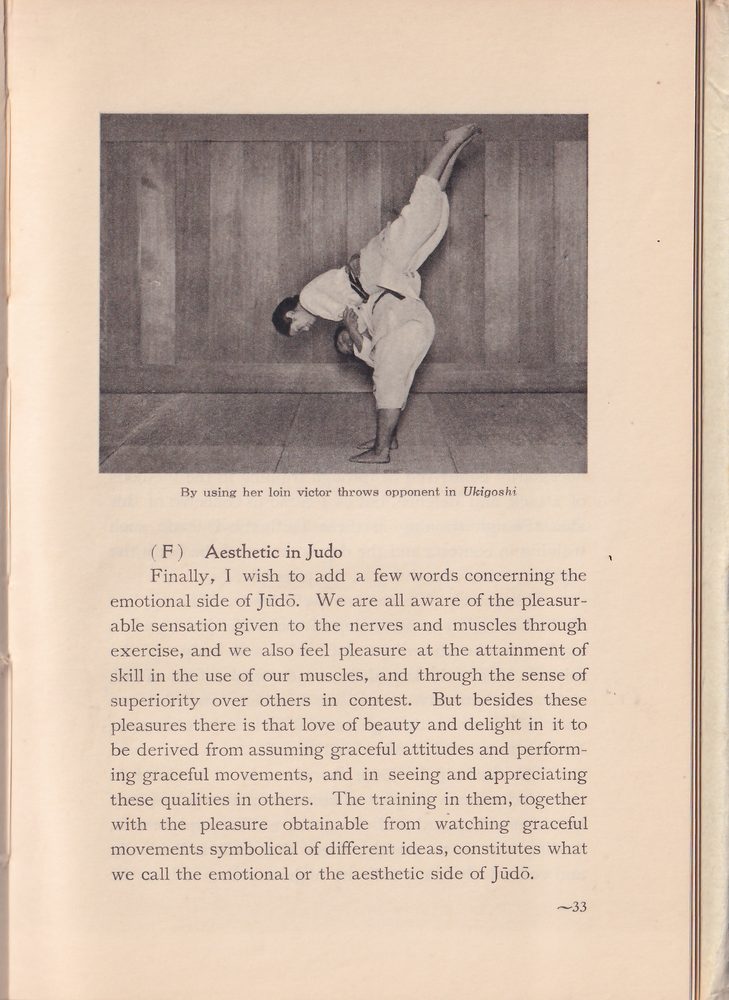
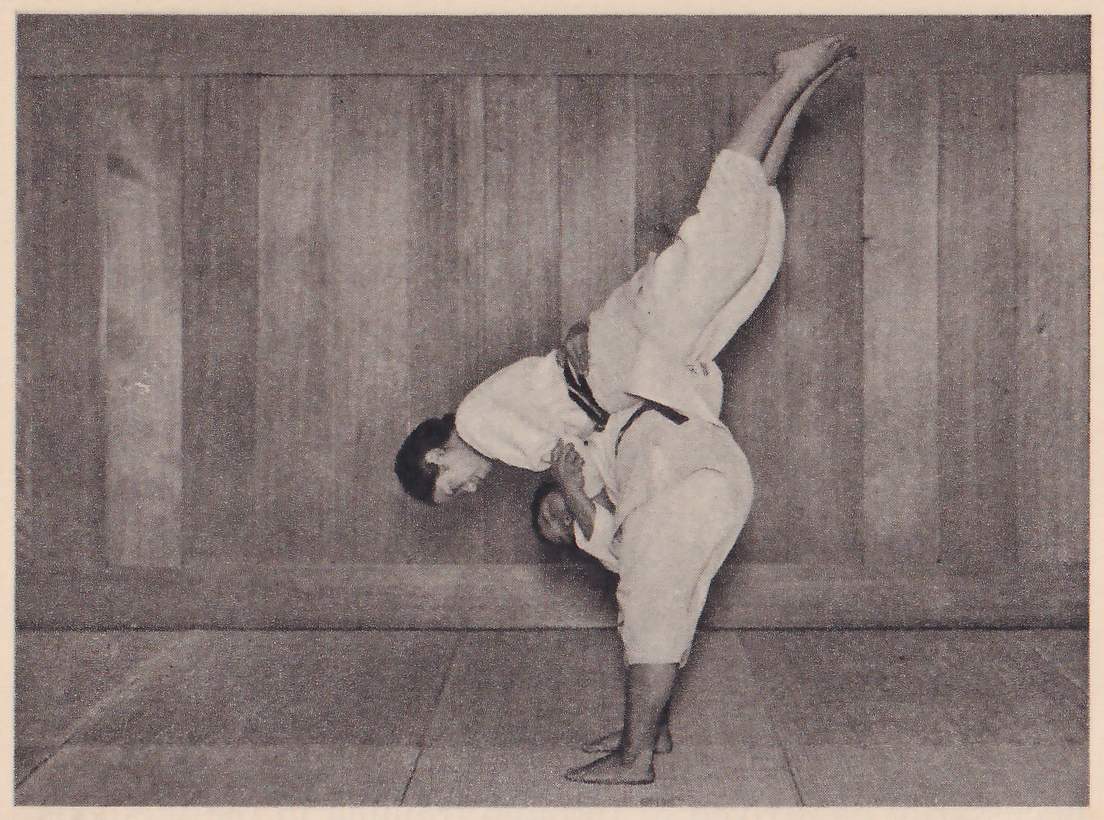
Finally, I wish to add a few words concerning the emotional side of Jūdō. We are all aware of the pleasurable sensation given to the nerves and muscles through exercise, and we also feel pleasure at the attainment of skill in the use of our muscles, and through the sense of superiority over others in contest. But besides these pleasures there is that love of beauty and delight in it to be derived from assuming graceful attitudes and performing graceful movements, and in seeing and appreciating these qualities in others. The training in them, together with the pleasure obtainable from watching graceful movements symbolical of different ideas, constitutes what we call the emotional or the aesthetic side of Jūdō.
Let us now sum up what has so far been said:—
Jūdō is a study and training in mind and body as well as in the regulation of one’s life and affairs. From the thorough study of the different methods of attack and defence I became convinced that they all depend on the application of the one, all-pervading principle, namely: “Whatever be the object, it can best be attained by the highest or maximum-efficient use of mind and body for that purpose.”
Once the real import of this principle is understood, it may be applied to all phases of life and activity, thereby enabling one to lead the highest and most rational life.
The real understanding of this principle need not necessarily be arrived at through training in the methods of attack and defence, but as I came to conceive of this idea through training in these methods, I made such training in contests and the development of the body the regular means of arriving at the principle.
This principle of maximum-efficiency, when applied to the keying-up or perfecting of social life, just as when applied to the co-ordination of mind and body—in the science of attack and defence—demands, first of all, order and harmony among its members, and this can only be attained through mutual aid and concession, leading to mutual welfare and benefit.
The final aim of Jūdō, therefore, is to inculcate in the mind of man a spirit of respect for the principle of maximum-efficiency and of mutual welfare and benefit, leading him so to practise them that man individually and collectively can attain the highest state, and at the
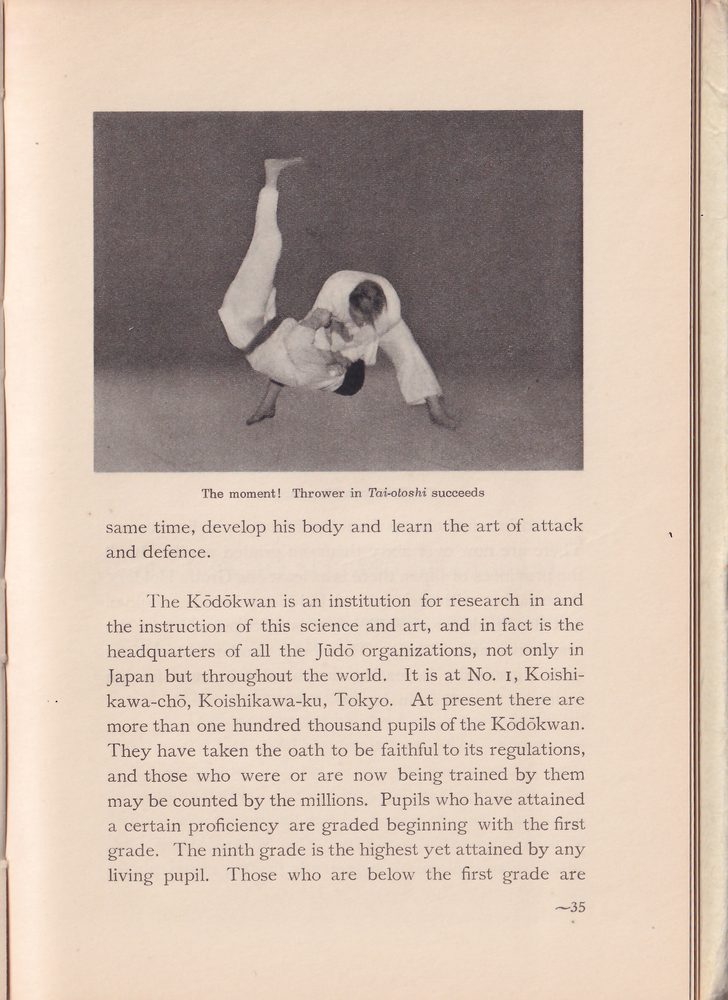
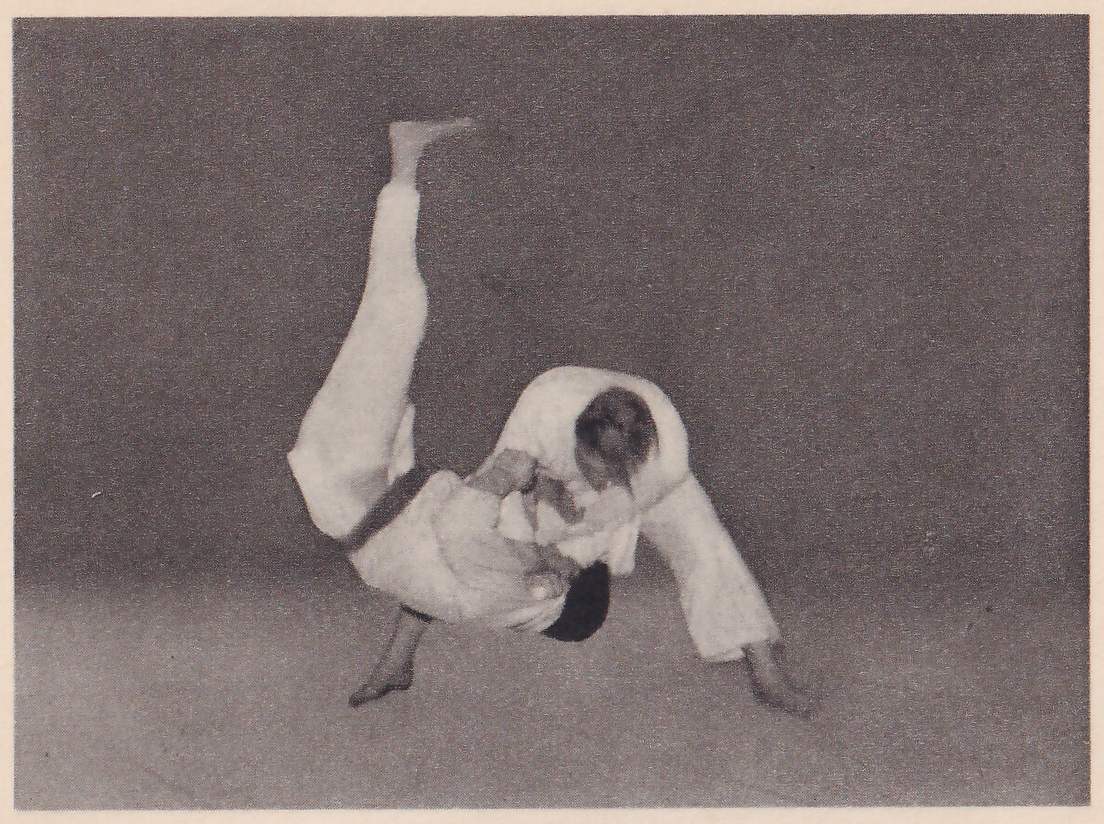
same time, develop his body and learn the art of attack and defence.
The Kōdōkwan is an institution for research in and the instruction of this science and art, and in fact is the headquarters of all the Jūdō organizations, not only in Japan but throughout the world. It is at No. 1, Koishikawa-chō, Koishikawa-ku, Tokyo. At present there are more than one hundred thousand pupils of the Kōdōkwan. They have taken the oath to be faithful to its regulations, and those who were or are now being trained by them may be counted by the millions. Pupils who have attained a certain proficiency are graded beginning with the first grade. The ninth grade is the highest yet attained by any living pupil. Those who are below the first grade are
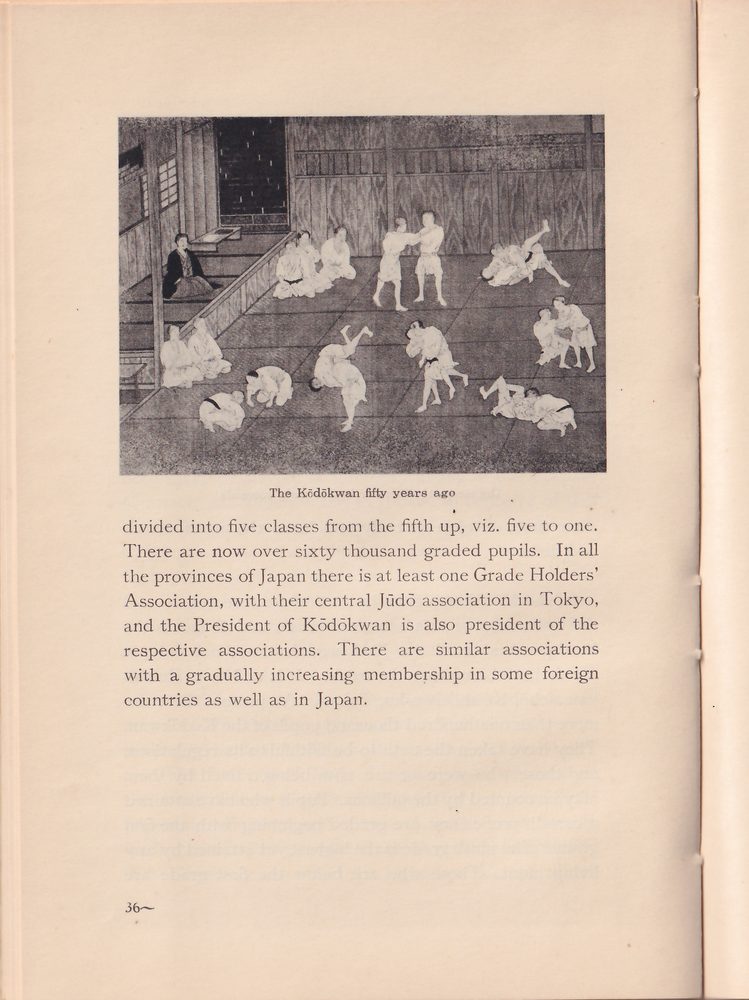
divided into five classes from the fifth up, viz. five to one. There are now over sixty thousand graded pupils. In all the provinces of Japan there is at least one Grade Holders’ Association, with their central Jūdō association in Tokyo, and the President of Kōdōkwan is also president of the respective associations. There are similar associations with a gradually increasing membership in some foreign countries as well as in Japan.