
III. PRESENT TENDENCIES AND THE FUTURE OF JAPANESE MUSIC
From what has been written above the reader will understand how Japanese music is standing at the crossroads of her very life, an altogether new experience for her. This is a most critical period in her history. The choice stands before her of giving up her own fine traditions and thus courting disaster, or undergoing a true reform, and thus feel the throb of new life. A study of the past history of our music would show that it has frequently seen great expansion and development through the taking over of new materials from abroad. We have, we trust, made it clear that various forms of Japanese music today are the living records of such expansion and such development. Those who are interested in the music of Japan should not only be ready to recognize the beauty of form shown by our newly created musical types at each step in their development, but should also clearly trace the stream of Japanese spirit which flows through all such development, and which continues even to our day.
The real state of Japanese music today may be said to be that of rivalry between our own traditional forms and those introduced from abroad. The impetus of this rivalry has not reached the point of mutual destruction. Rather may we affirm that most of the
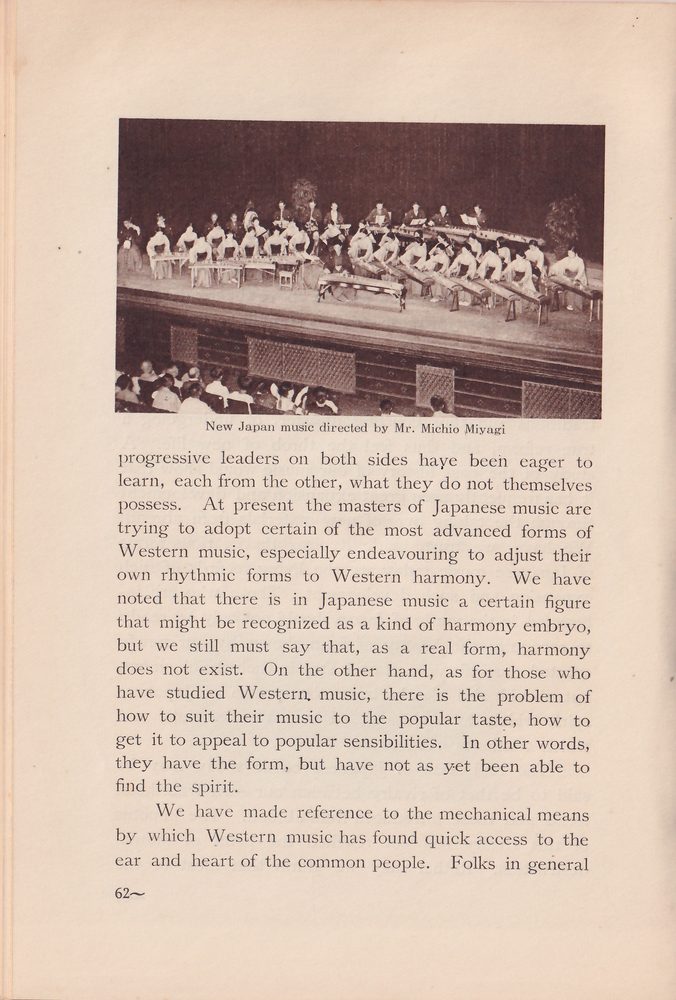
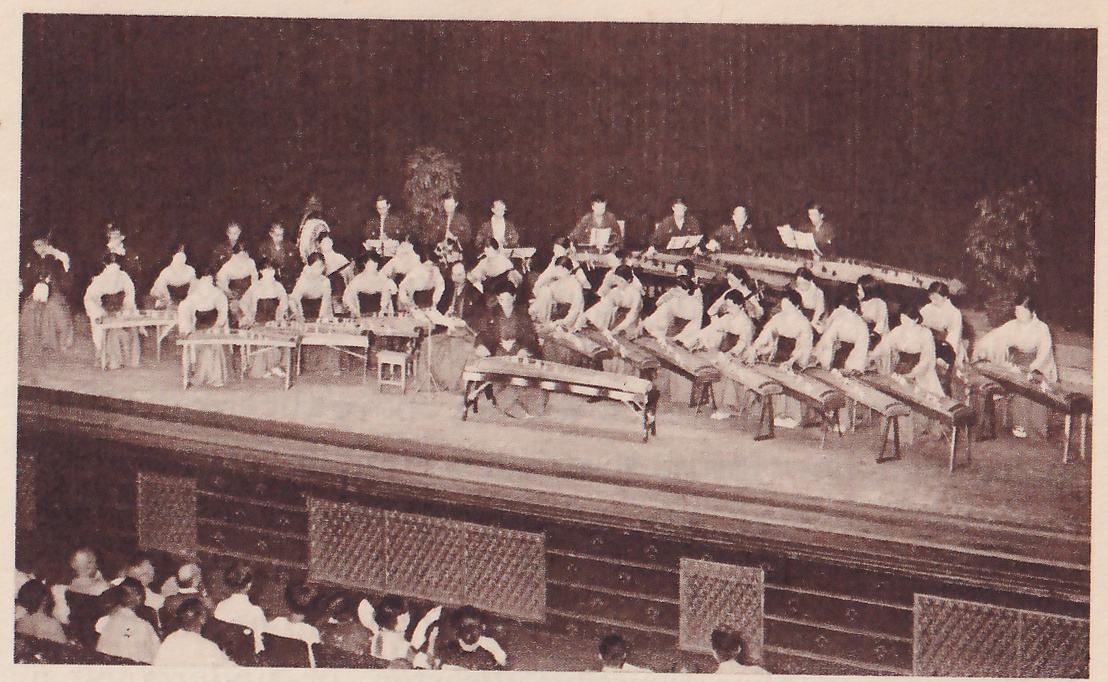
progressive leaders on both sides havePrinted: haye been eager to learn, each from the other, what they do not themselves possess. At present the masters of Japanese music are trying to adopt certain of the most advanced forms of Western music, especially endeavouring to adjust their own rhythmic forms to Western harmony. We have noted that there is in Japanese music a certain figure that might be recognized as a kind of harmony embryo, but we still must say that, as a real form, harmony does not exist. On the other hand, as for those who have studied Western, music, there is the problem of how to suit their music to the popular taste, how to get it to appeal to popular sensibilities. In other words, they have the form, but have not as yet been able to find the spirit.
We have made reference to the mechanical means by which Western music has found quick access to the ear and heart of the common people. Folks in general
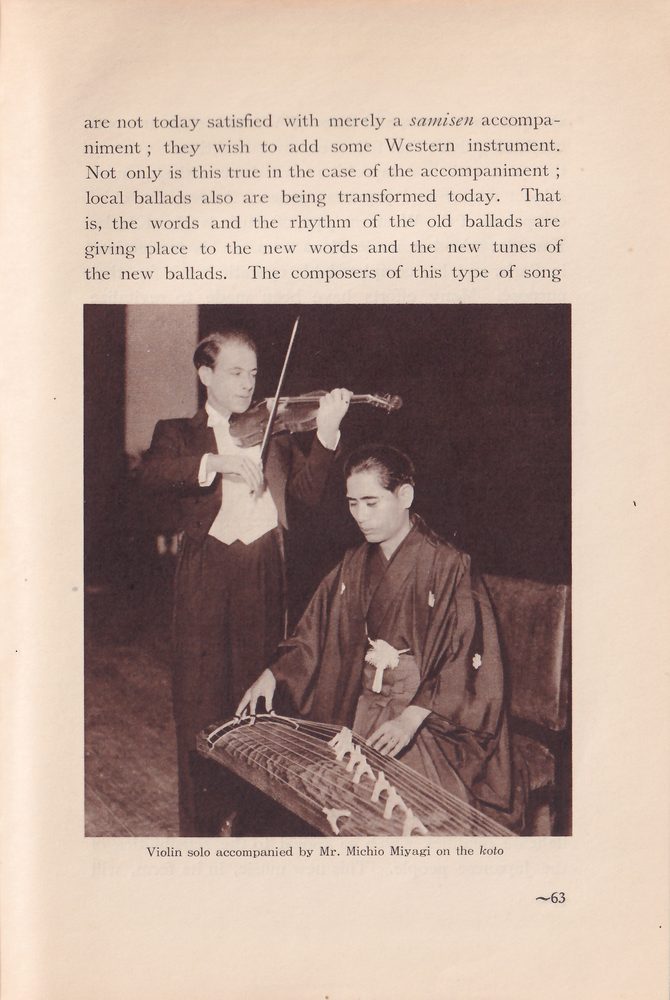
are not today satisfied with merely a samisen accompaniment; they wish to add some Western instrument. Not only is this true in the case of the accompaniment; local ballads also are being transformed today. That is, the words and the rhythm of the old ballads are giving place to the new words and the new tunes of the new ballads. The composers of this type of song
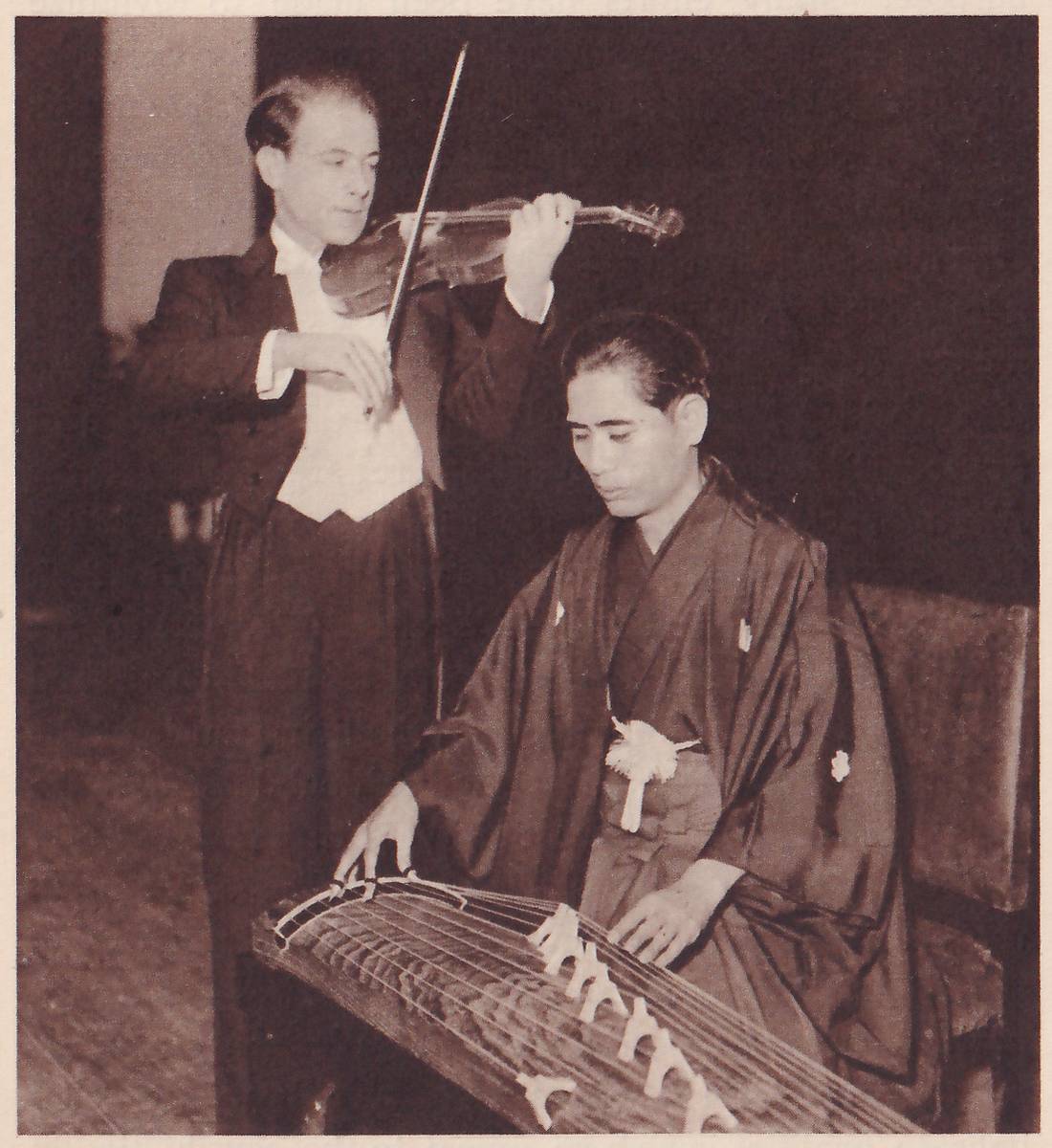
are quite numerous, and those of Western style are outnumbering those that follow our own traditions. Among the most artistic compositions are those with Japanese subject matter and Japanese tunes. Among the chief composers of the Western type of music is Mr. Kōsaku Yamada, who has made plans to stage his productions in Paris, and has completed his operatic work for that purpose. Many efforts have been made to revitalize Japanese music by employing new forms. For example, Mr. Michio Miyagi, an outstanding master of koto music, of whom previous mention has been made, has succeededPrinted: succeded in composing concertos for koto in harmony with Western musical instruments. Moreover, Mr. Miyagi has adopted many of the Western musical forms in his newer musical compositions. These perhaps indicate the direction in which Japanese music is to advance in the near future. Besides Mr. Miyagi, there are those of the Nagauta school who are active in the production of this new type of music. These new compositions in their form resemble quite closely Western music, and so are comparatively easy for foreigners to understand and appreciate. They are, moreover, the living music of the day in which we live, and therefore doubtless form the most interesting music for the Western ear.
It is thus possible, shall we not assume, for us to use our imagination as to what the Japanese music of the future is likely to be. We shall see it, for the most part, in musical forms of a general Western character. At the same time it will still preserve those traditional delicate qualities which so appeal to the sensibilities of the Japanese people. This new music, in its form, will
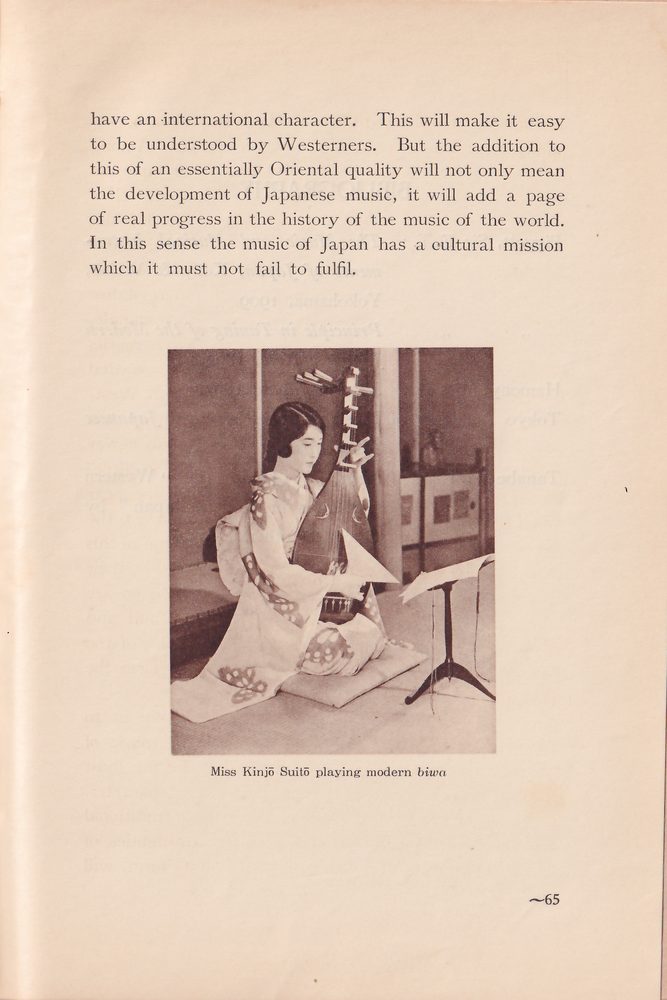
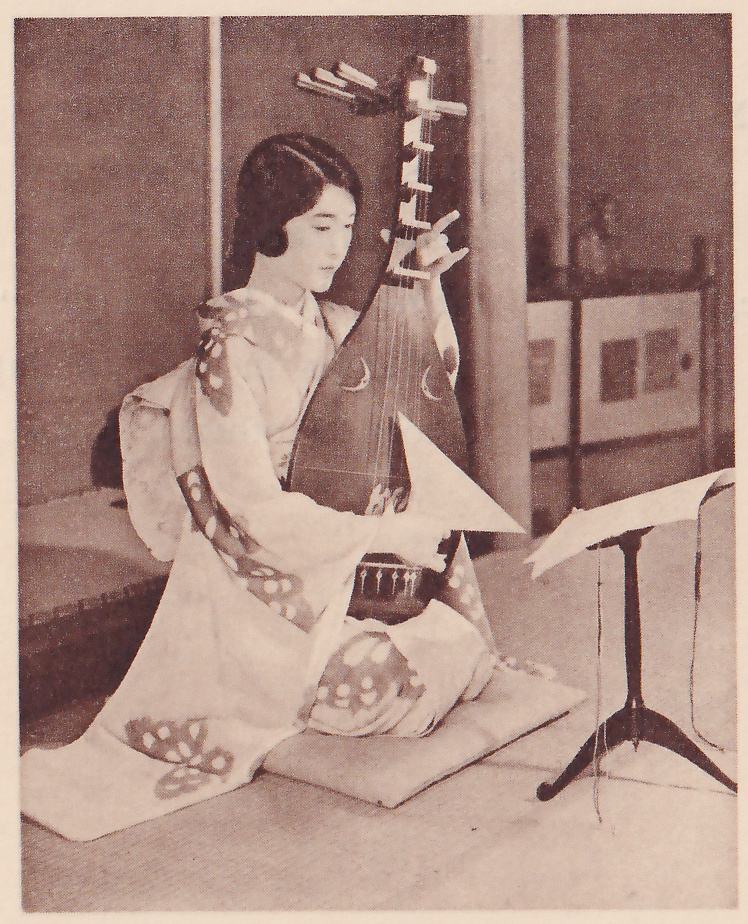
have an international character. This will make it easy to be understood by Westerners. But the addition to this of an essentially Oriental quality will not only mean the development of Japanese music, it will add a page of real progress in the history of the music of the world. In this sense the music of Japan has a cultural mission which it must not fail to fulfil.