VIII. FAMOUS LOCAL FOODS
Just as there are characteristic foods in every country, there are countless local foods in our country. I shall now explain a few of them here.
EDO FOODS (Tokyo Foods)
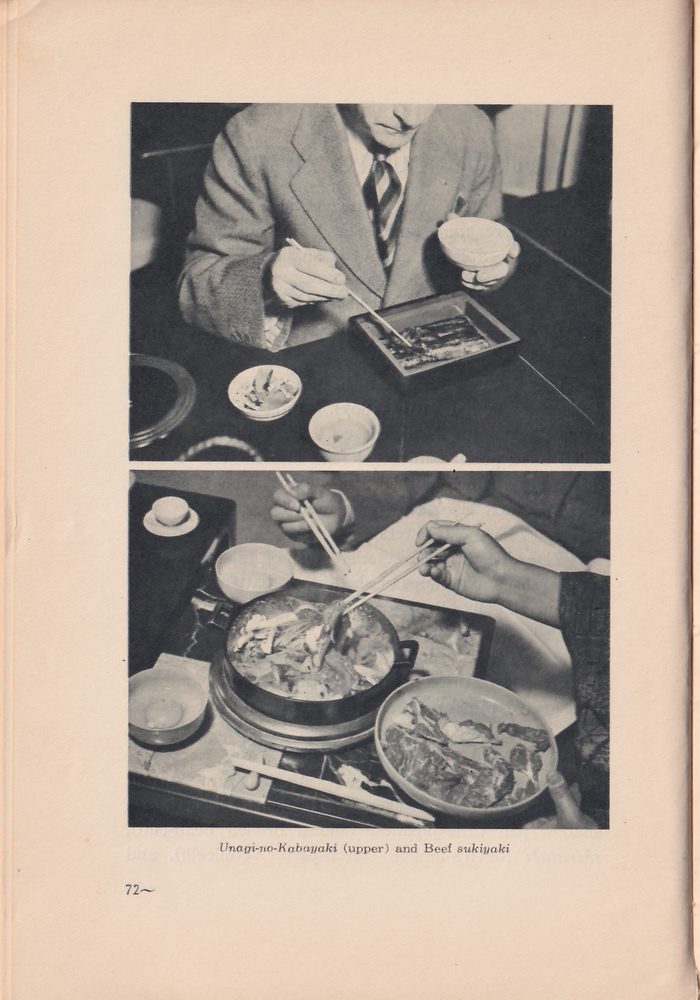
1. Unagi-no-Kabayaki (Eels broiled with soy, sugar and sweet saké)
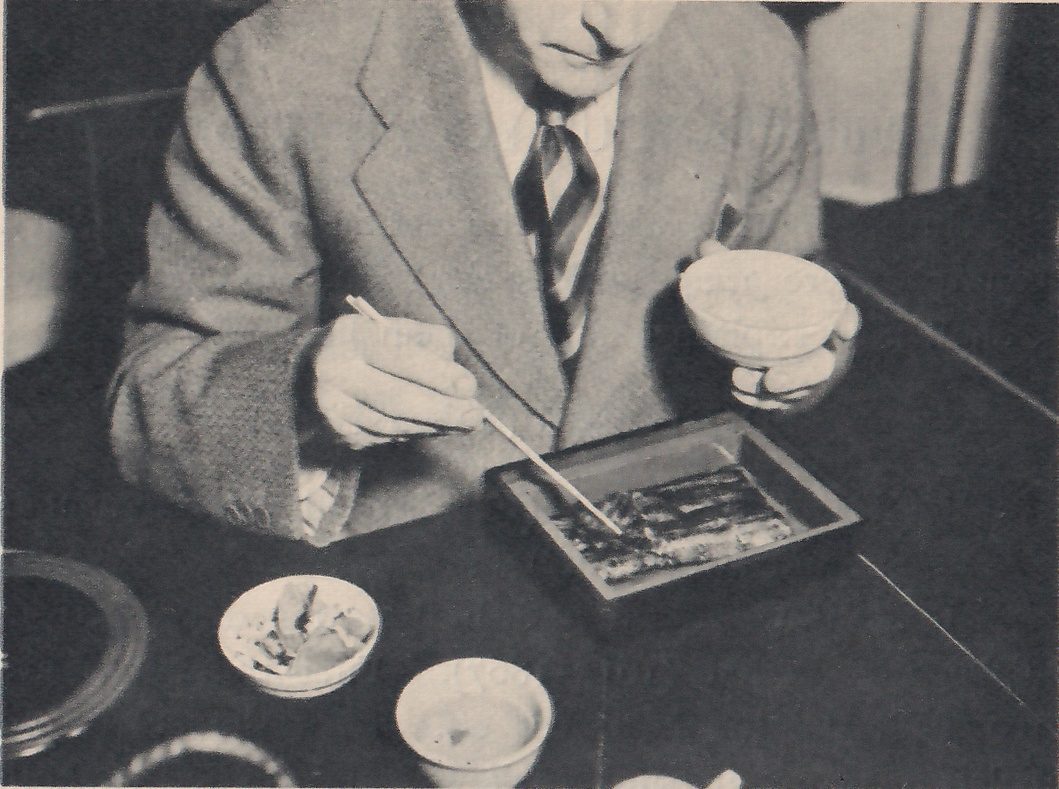
Roasted eels form a dish that was developed in Tokugawa Period (1615–1867). First the bones are removed, and the head cut off. Then the eel is impaled on a green bamboo skewer and broiled on both sides, after which a thick and tasty sauce is poured over it and it is roasted and eaten hot.
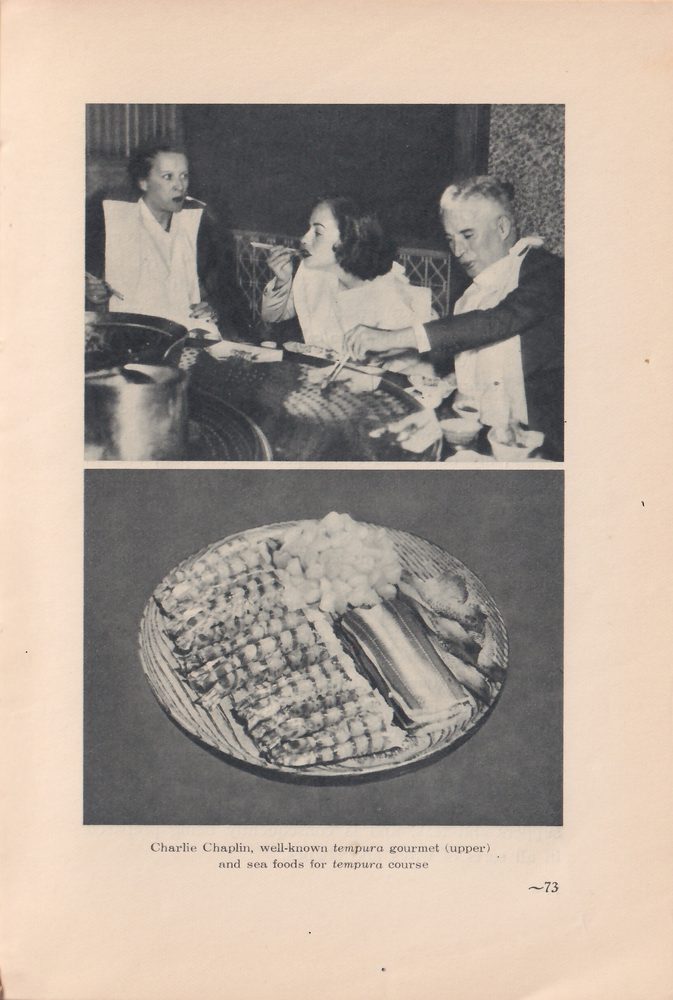
2. Tempura (Fritters)
Tempura is a characteristic dish of Japan made by dipping fish or shrimps or shell-fish in batter and frying in deep gingelly oil or torreya oil. Recently, salad oil has also been used.
Tempura is eaten with grated radish in a tasty sauce made of dried bonito stock, sweet saké and soy. The grated radish is to help to digest the fat as well as to serve as flavour.
3. Sukiyaki, Chicken or Beef
Sukiyaki is a simple food with a natural flavour made by putting thin slices of chicken or beef into a shallow pan with Japanese onions, broiled bean-curd, shirataki (devil’s-tongue starch-paste vermicelli), and
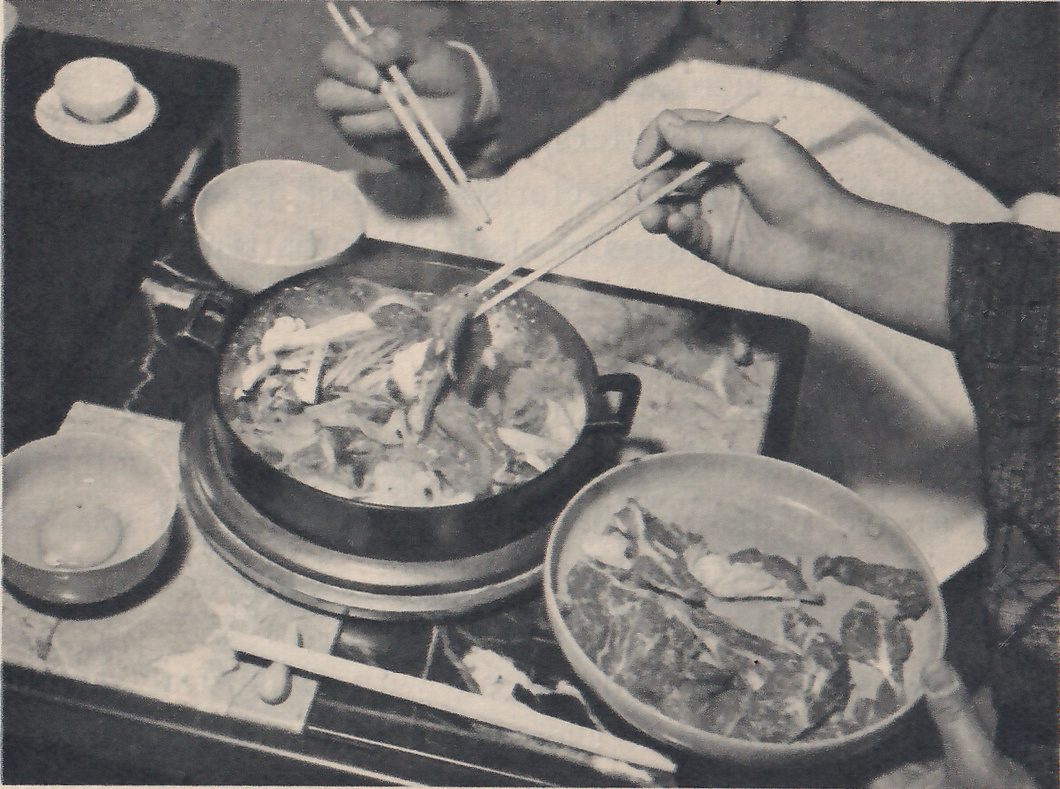
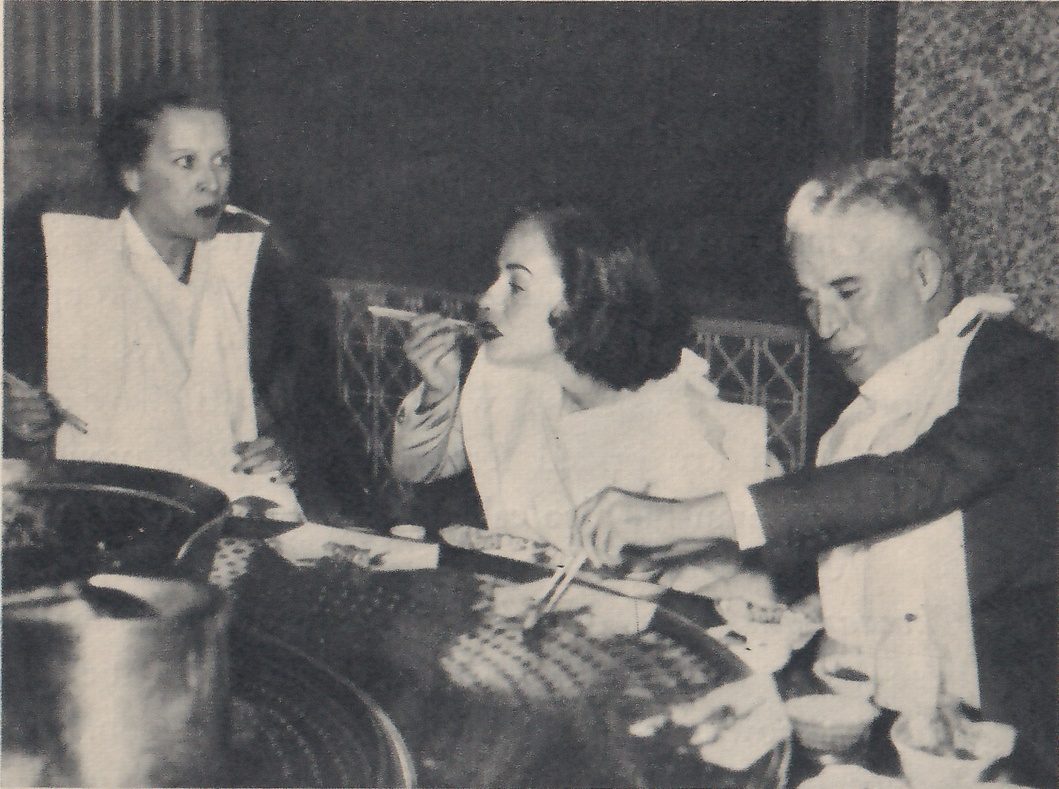
then cooking them in a sauce made of sweet saké, soy and stock. It is a great favourite with young moderns.
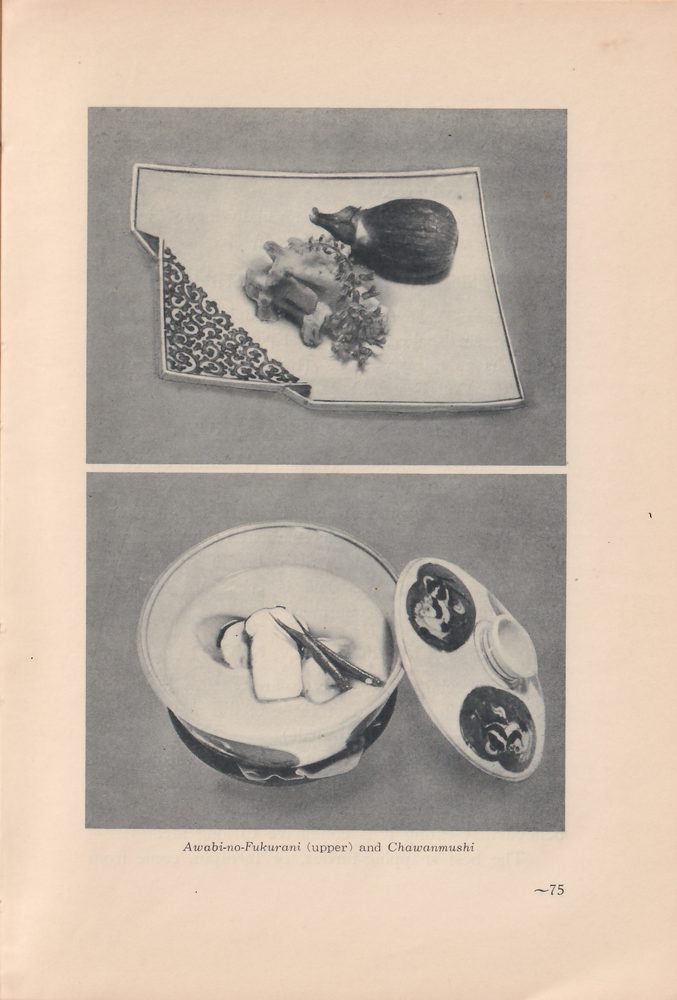
4. Awabi-no-Fukurani (Ear-shell)
Ear-shells are found plentifully in the seas outside Tokyo Bay and are most delicious in May, June, July and August, when the meat is taken from the shell, thoroughly washed, and boiled in water. When they have been boiled soft, they are seasoned with sugar, a little soy and sweet saké, and are prized for their delicate flavour.
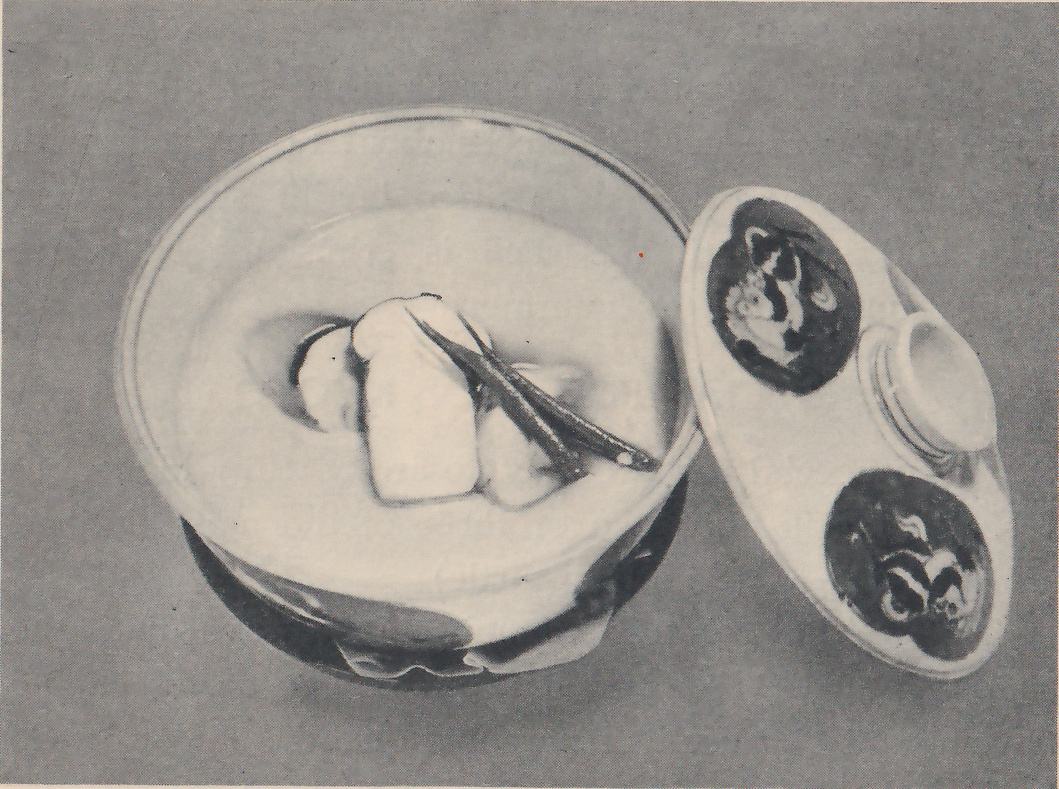
5 Chawanmushi, also called Keiranmushi (Steamed egg custard)
Chawanmushi is cooked in a characteristically Japanese bowl with a lid. First, chicken or duck is put into the bowl, then vegetables of the season. In spring, lily bulbs and young peas in the pod, and in the autumn, mushrooms, chestnuts, trefoil and gingko nuts are added. Egg thinned with dried bonito stock is poured in, and the bowl is steamed in a steaming basket until the custard thickens. It is a dish specially suitable for ladies.
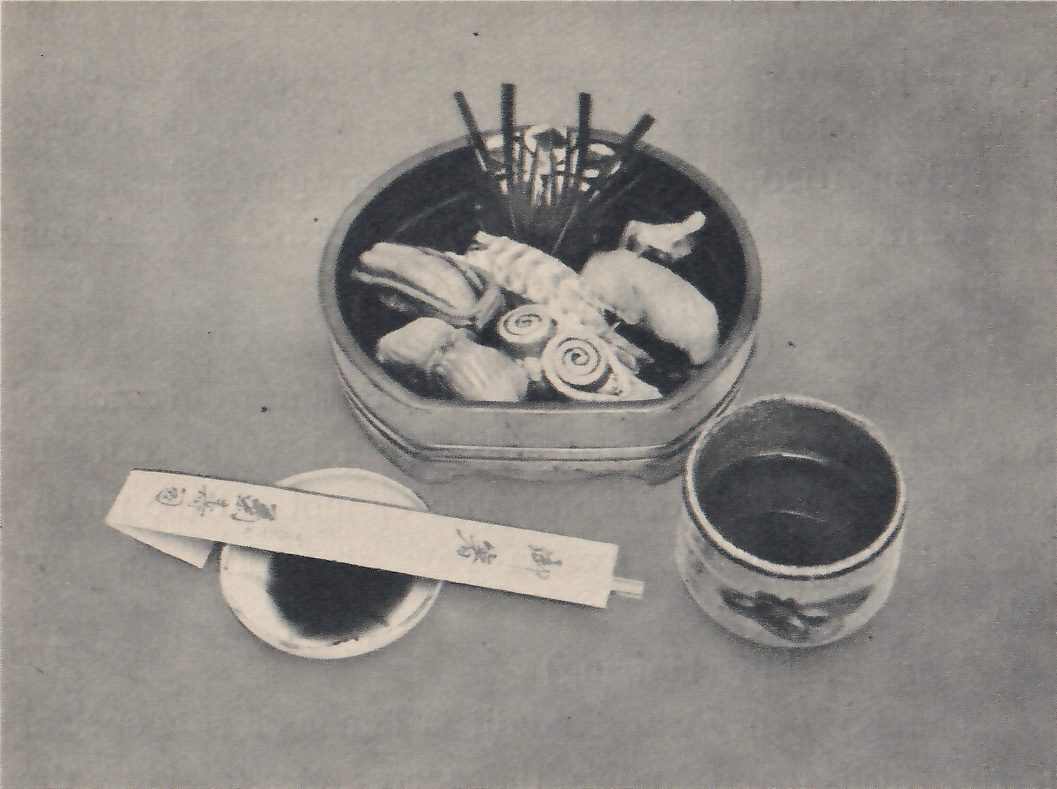
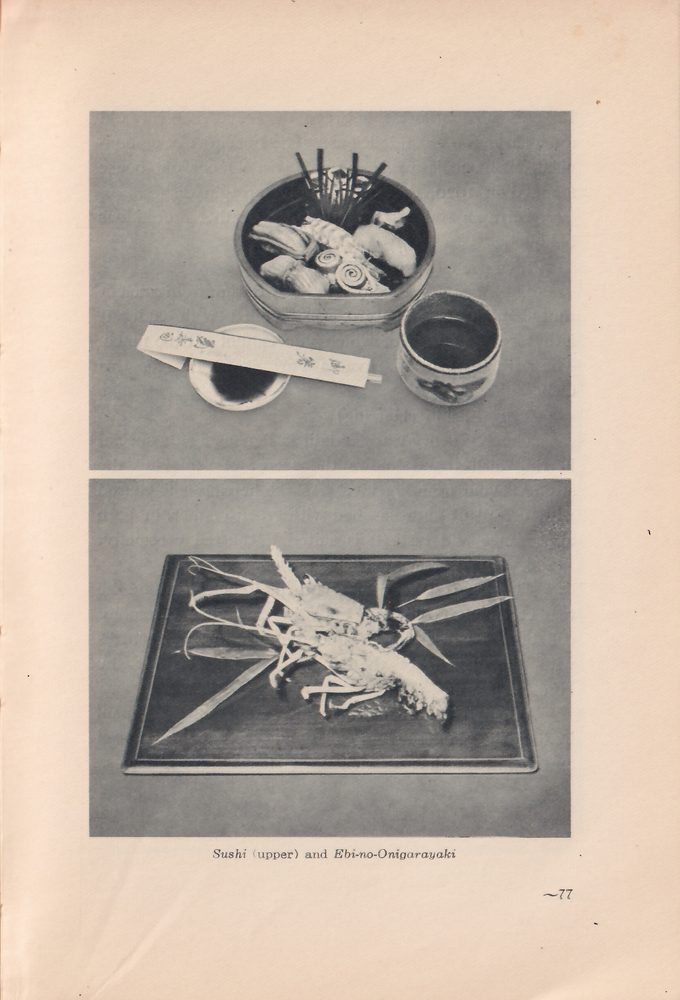
6. Sushi (Vinegar-spiced rice)
Sushi has been made in many ways since olden times and is prized by rich and poor alike. Boiled rice is first flavoured with vinegar and salt; then, after it cools, raw fish or shell-fish pickled in vinegar and salt, to which shrimp or omelette is added.
It is a cold food eaten as a light meal at noon, in lunches or between meals, like the sandwiches of the West. In recent times it has been served at buffet suppers and teas, and is consequently being prepared in all sorts of ways and shapes.
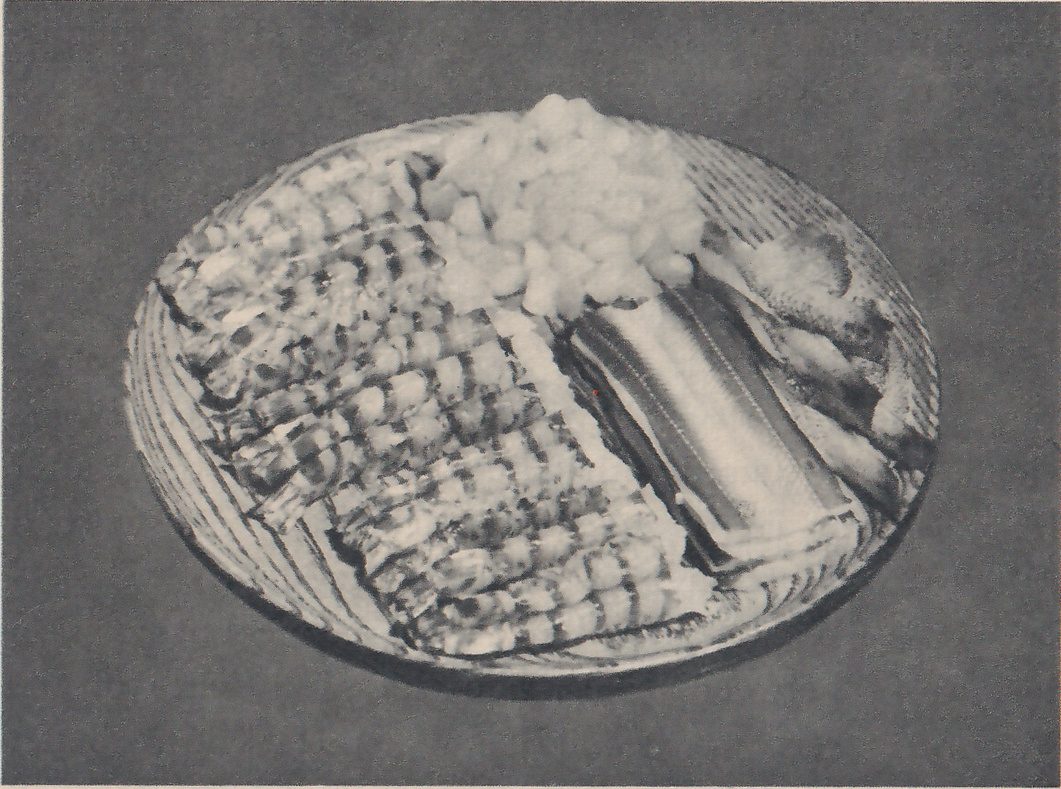
The famous sushi of Tokyo is nigiri-zushi (hand-moulded), but there are other kinds such as Osaka-zushi, cut in little squares, and sasaba-zushi, wrapped in dwarf-bamboo leaves.
There are, besides, such specially-made kinds as ayu-zushi, suzume-zushi, saba-zushi, etc.
SPECIAL FOOD OF ENOSHIMA
Sazae-no-Tsuboyaki (Turbo baked in the shell)
The shell-baked turbo of Enoshima near Tokyo is famous as a tasty food. (Its preparation is given under the Doll Festival.)
SPECIAL FOOD OF KAMAKURA
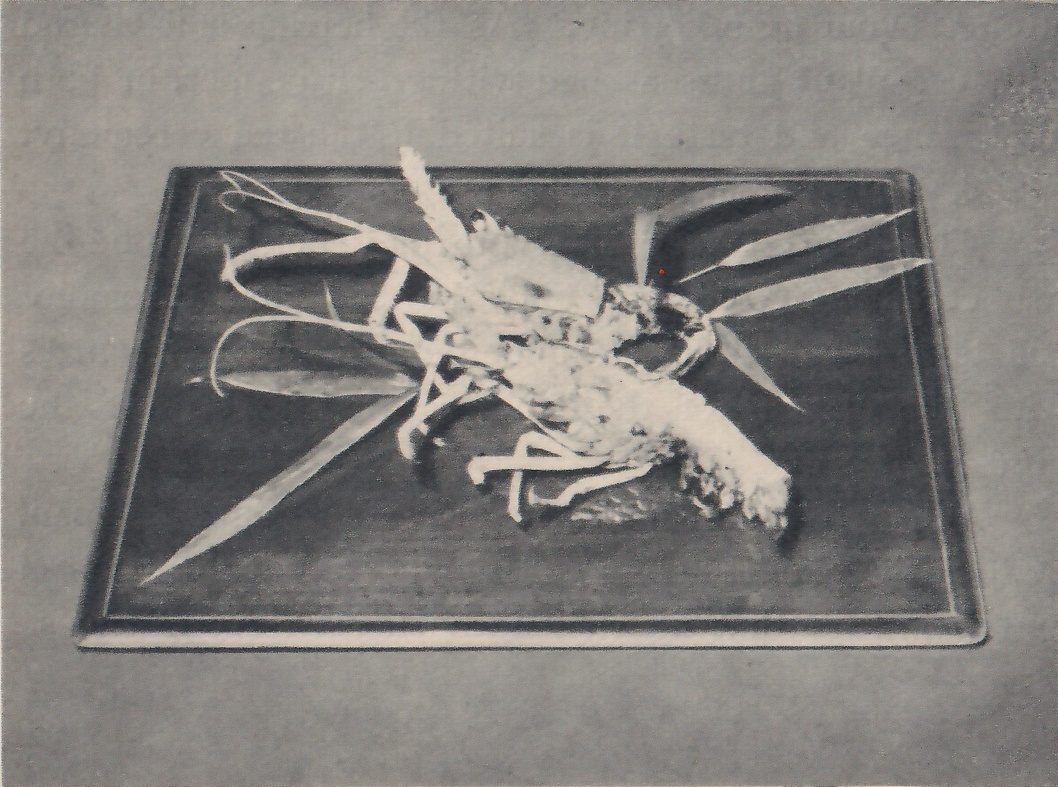
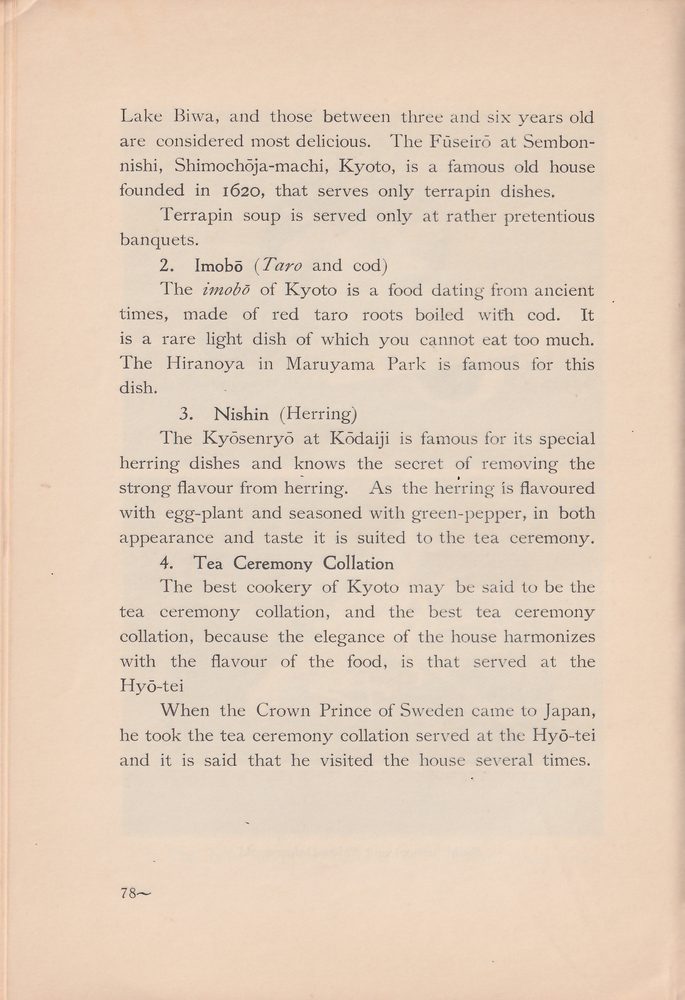
Kamakura Ebi-no-Onigarayaki (Lobster baked in the shell)
Kamakura lobsters are caught in the sea off Kamakura. They are cut into pieces about 1.6 ins. long with the shell on and boiled in dried bonito stock, sweet saké and soy until the shell is crimson. They are highly appreciated by gourmets.
SPECIAL FOODS OF KYOTO
The special foods of Kyoto are of many kinds, but I shall explain only two or three of the most famous.
1. Suppon (Snapping-turtle)
Even the greatest connoisseurs always find the snapping-turtle rare, and it is prized because of its fine flavour and because its nourishing qualities make people believe that eating it is conducive to long life.
The best snapping-turtles, or terrapin, come from
Lake Biwa, and those between three and six years old are considered most delicious. The Fūseirō at Sembon-nishi, Shimochōja-machi, Kyoto, is a famous old house founded in 1620, that serves only terrapin dishes.
Terrapin soup is served only at rather pretentious banquets.
2. Imobō (Taro and cod)
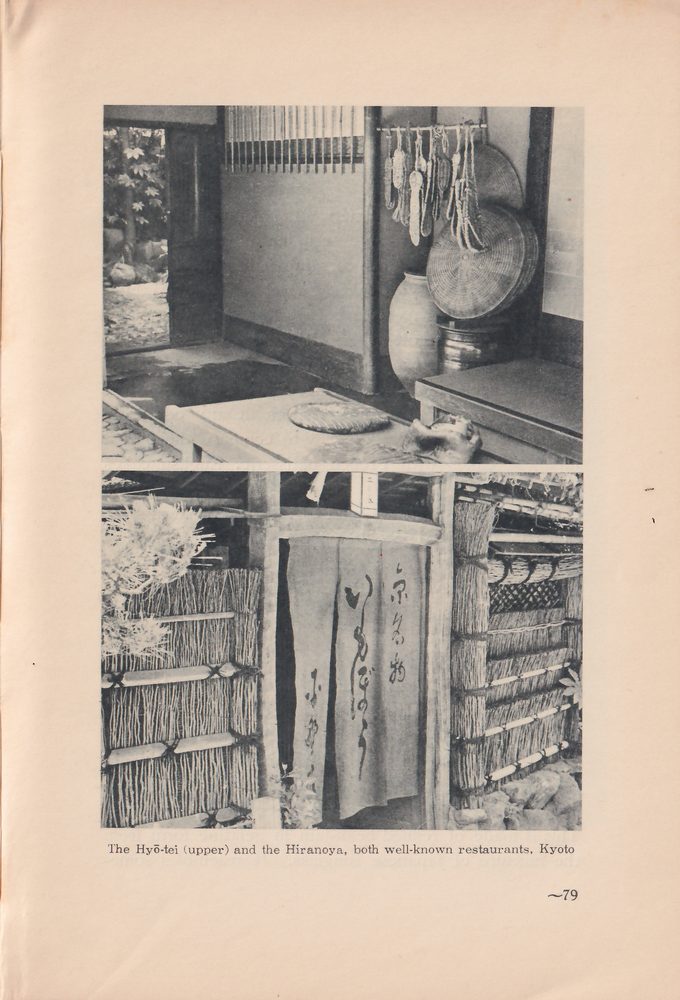
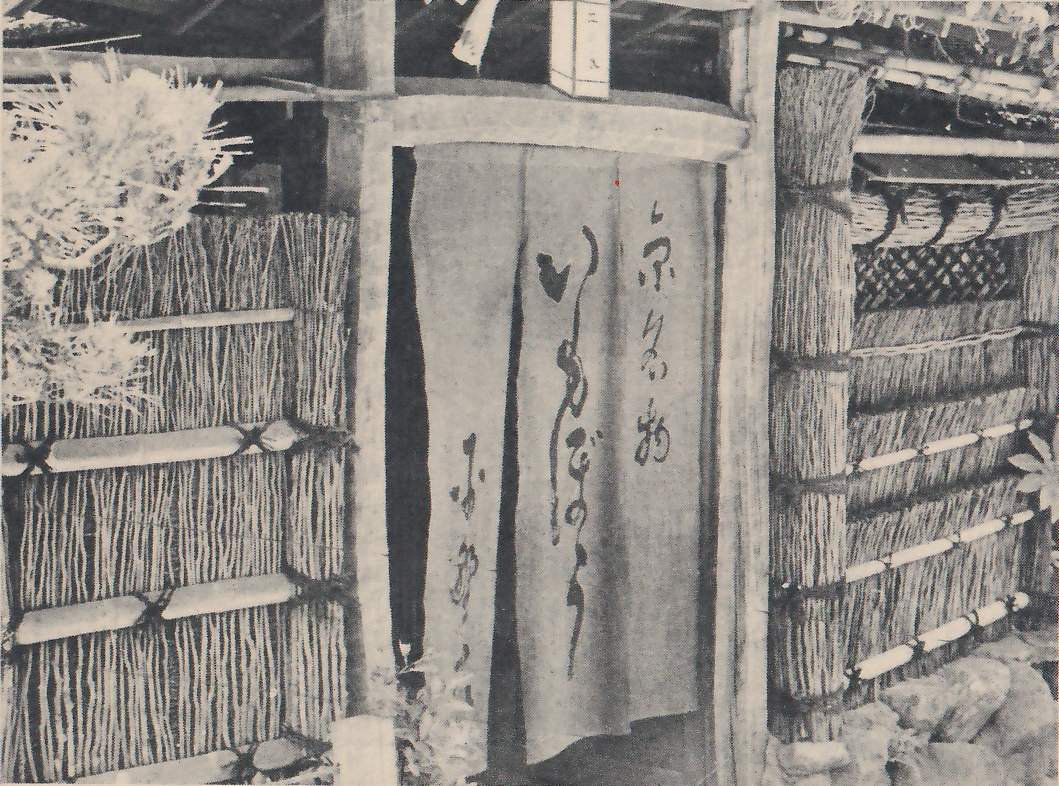
The imobō of Kyoto is a food dating from ancient times, made of red taro roots boiled with cod. It is a rare light dish of which you cannot eat too much. The Hiranoya in Maruyama Park is famous for this dish.
3. Nishin (Herring)
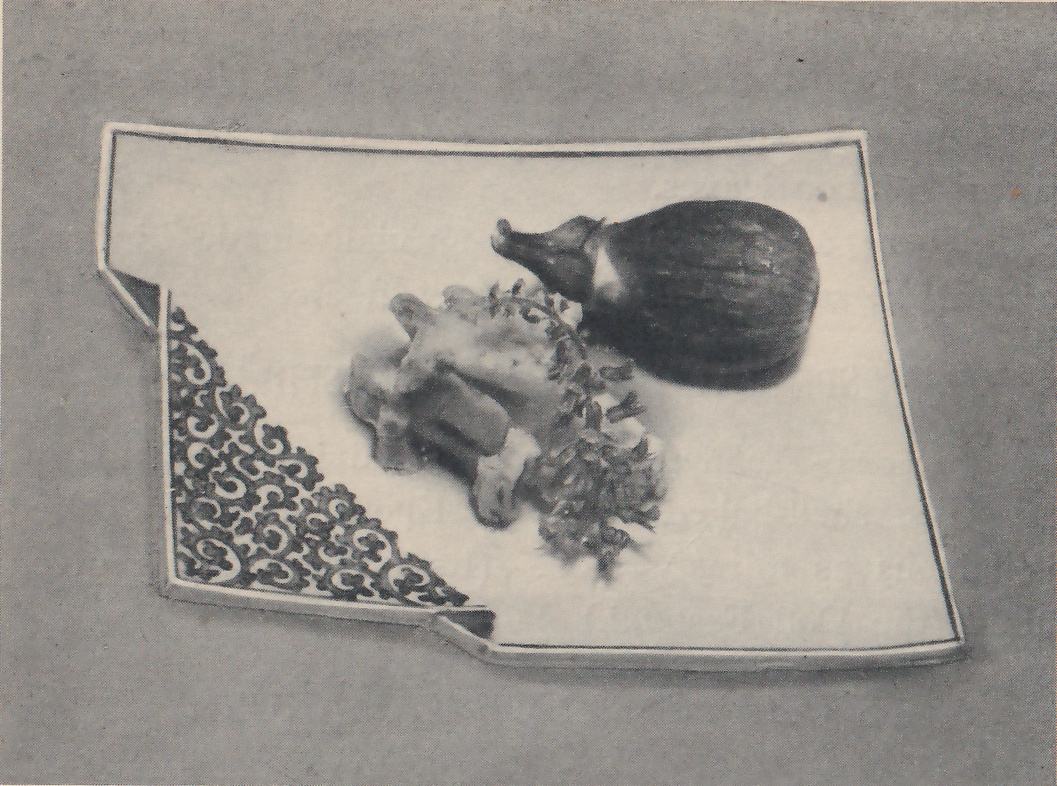
The Kyōsenryō at Kōdaiji is famous for its special herring dishes and knows the secret of removing the strong flavour from herring. As the herring is flavoured with egg-plant and seasoned with green-pepper, in both appearance and taste it is suited to the tea ceremony.
4. Tea Ceremony Collation
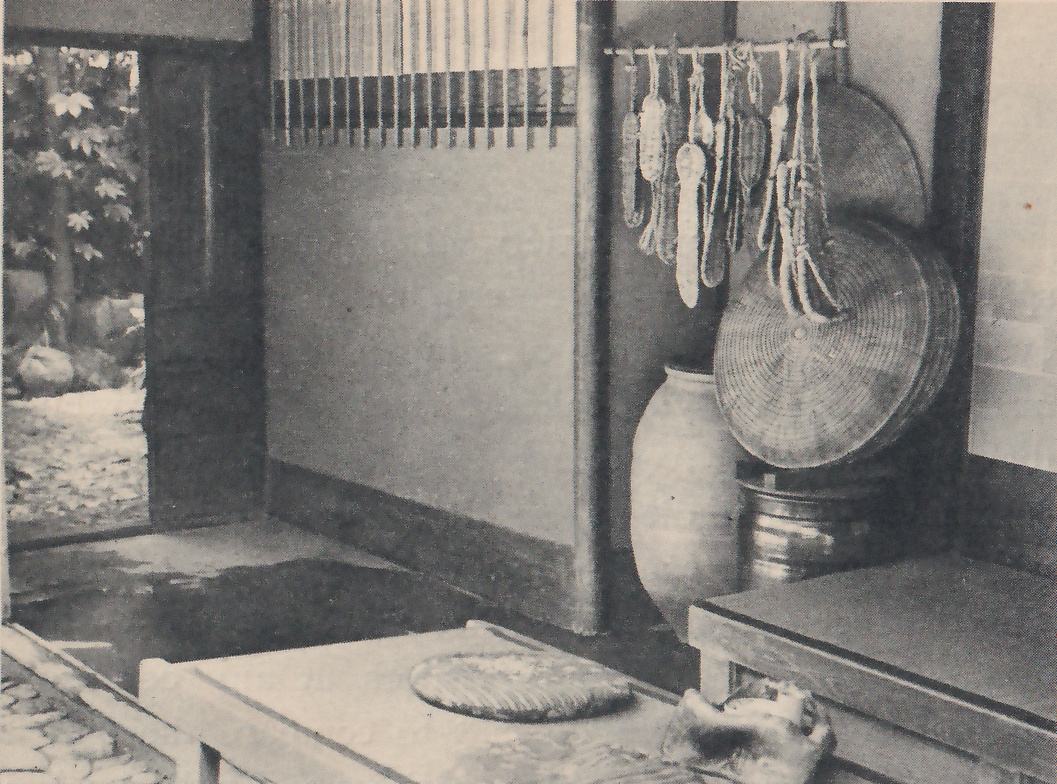
The best cookery of Kyoto may be said to be the tea ceremony collation, and the best tea ceremony collation, because the elegance of the house harmonizes with the flavour of the food, is that served at the Hyō-tei.Printed: is that served at the Hyō-tei
When the Crown Prince of Sweden came to Japan, he took the tea ceremony collation served at the Hyō-tei and it is said that he visited the house several times.