Fine Japanese Calligraphy

The Art of Master Japanese Calligrapher Eri Takase

[p. 80]

JAPANESE CAKES

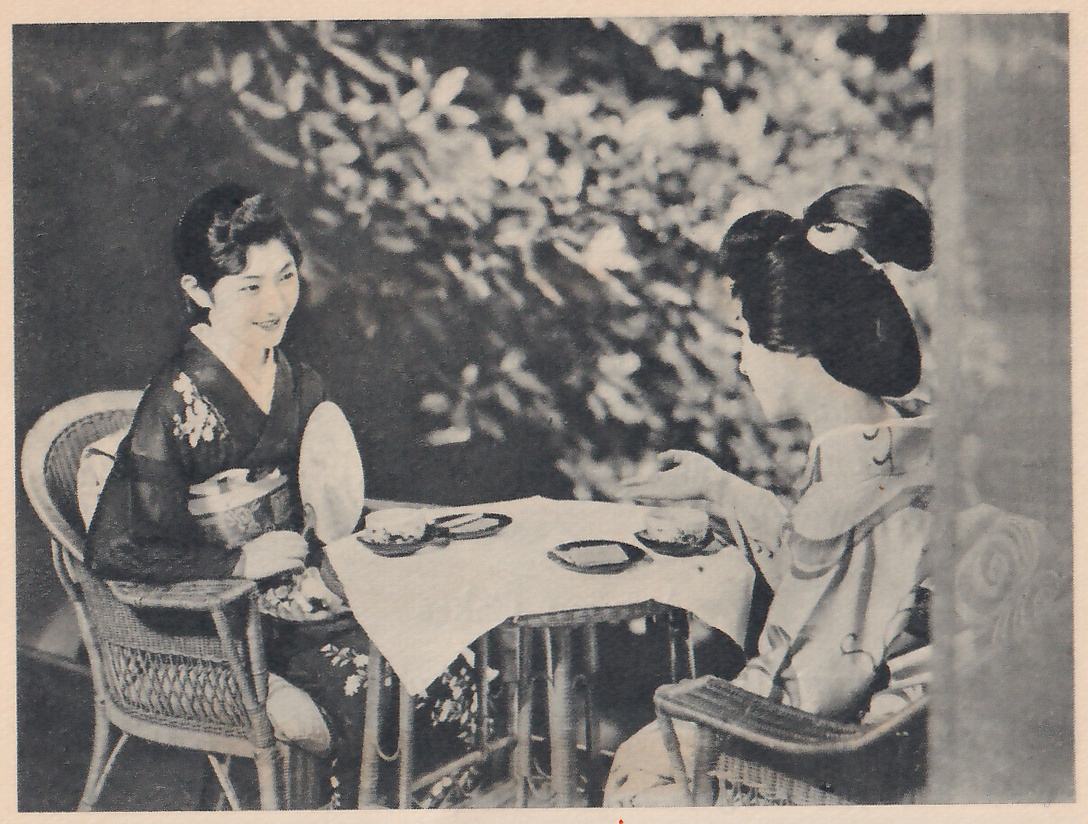
There is such a variety of Japanese cakes that space forbids a detailed description of them. Moreover, with the past few years Japan has introduced so many European-style cakes, which, like everything that she adopts, have also been adapted to the native customs and ingredients, so that today it is doubtful whether any other country has such a variety of cakes. This is encouraged by the fact that it is the custom in Japan to serve cakes to visitors at any odd time of the day. It is also difficult to compare the native Japanese cakes with French pâtisserie, English cakes or American “goodies.”

There are some specially popular Western-style cakes in Japan. The oldest and most popular of all is the kasutera. It is a speciality of Nagasaki in Japan, and it is believed that the Spanish or Portuguese introduced it into that port as long ago as the 16th century.

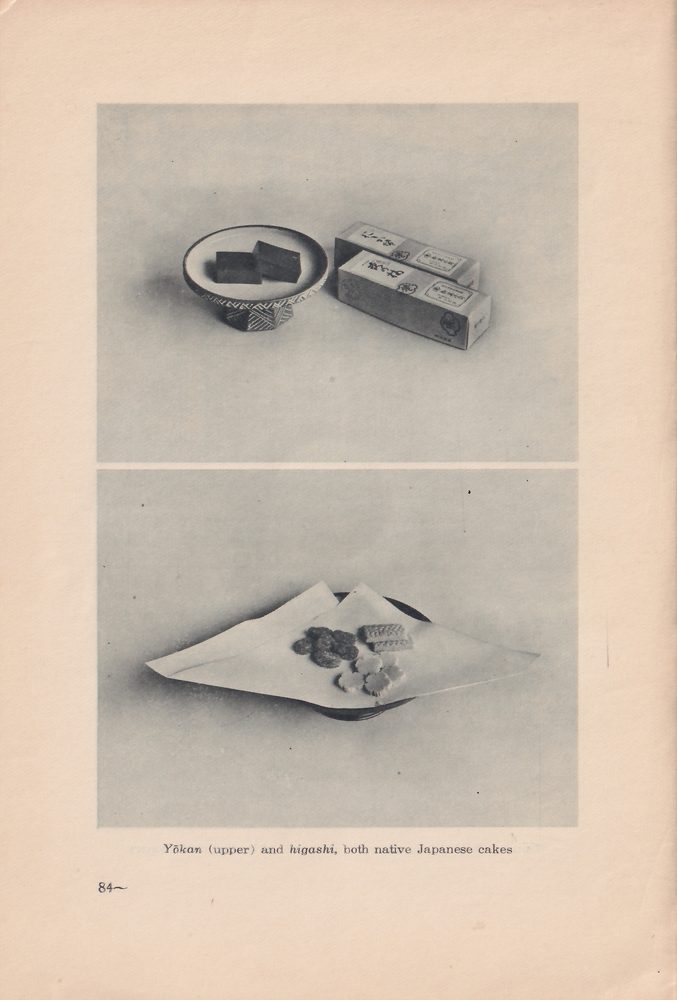
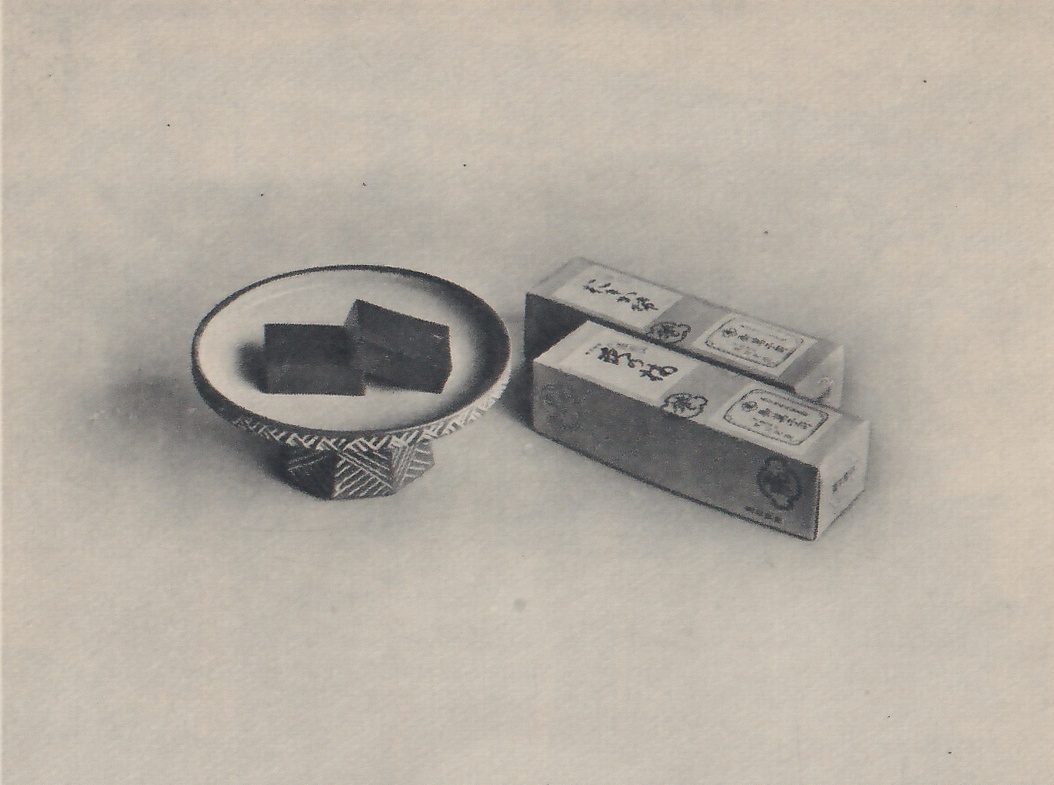
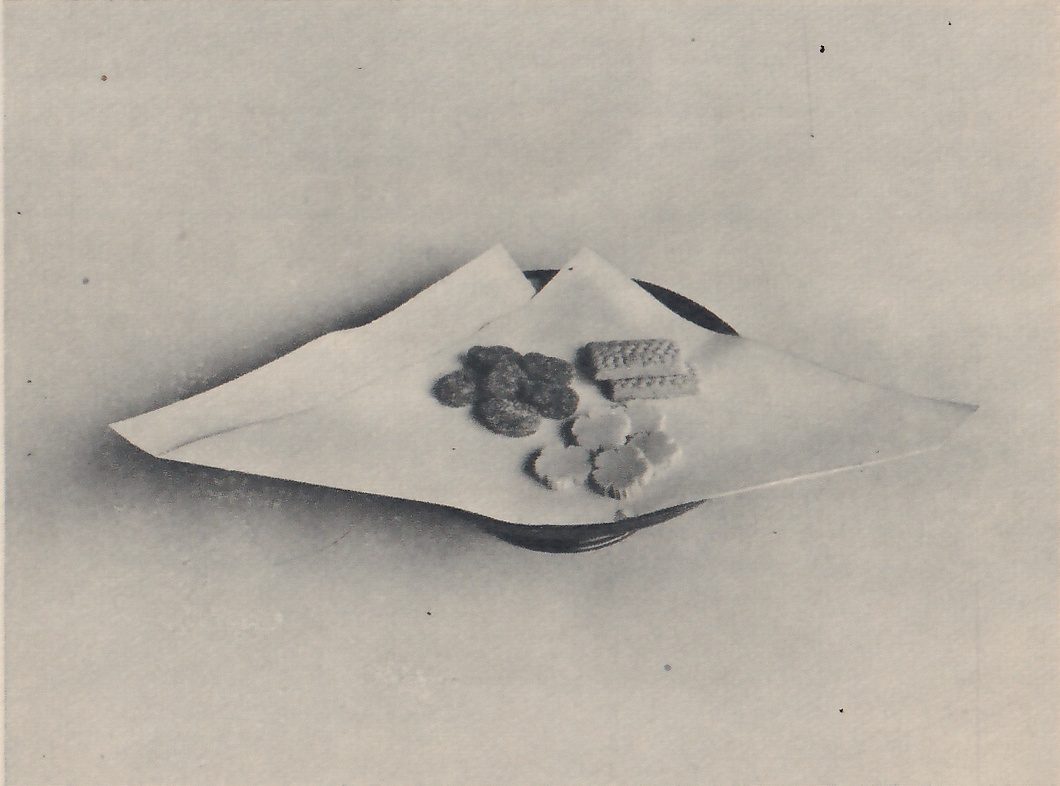
Native Japanese cakes may be considered as being in two classes—higashi (dried cake) and namagashi (undried cake). Namagashi is made of bean-jam for the most part. Bean-jam is just like a cream made of red beans and sugar. Namagashi is divided into yōkan and others. One of the most popular and ubiquitous cakes, or rather sweetmeats, in Japan is yōkan. This is made of refined bean-jam in gelatine form from the mixture of Japanese isinglass. It resembles some-
[after-80-face]

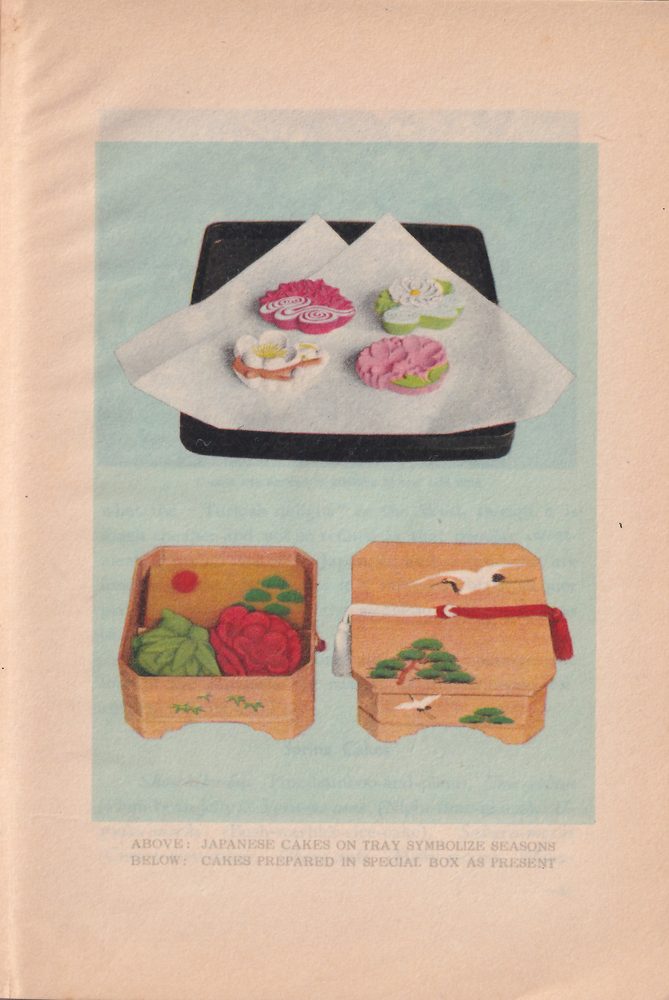
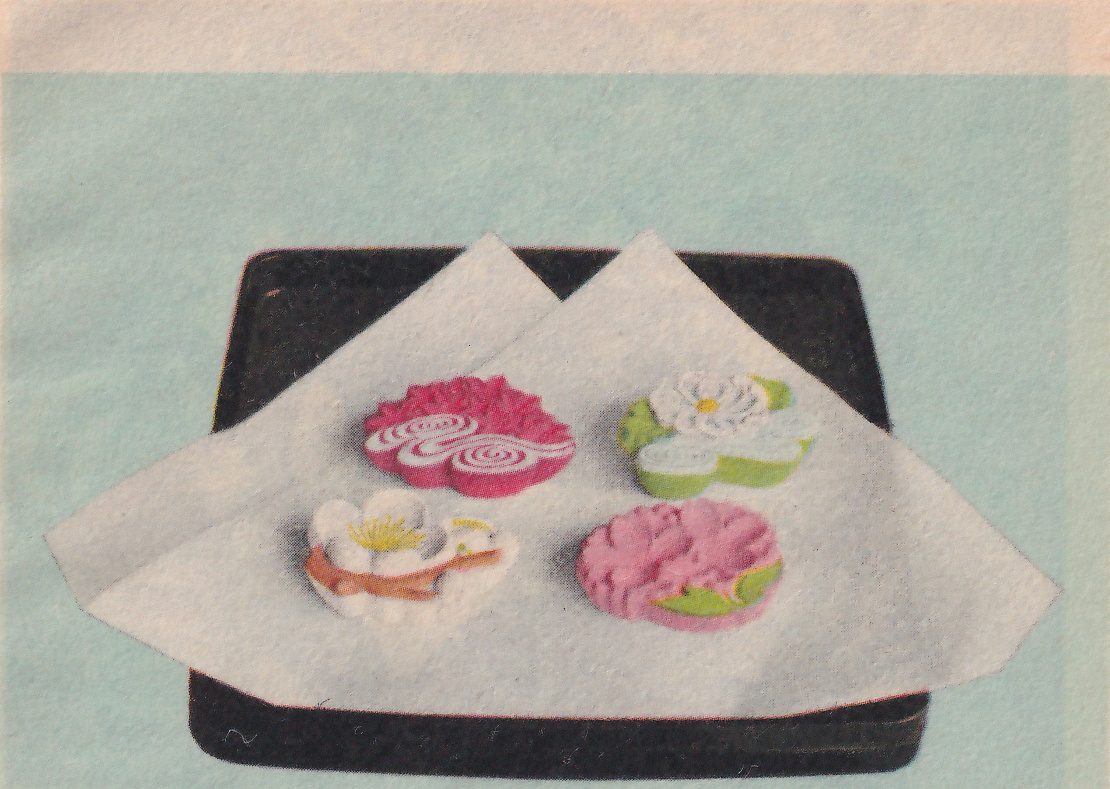
Colour plate. Against a pale blue-green ground, a black square tray carries a white sheet of paper folded into two peaks, and on the paper sit four small shapes: at the upper left a deep pink round one with white curling lines; at the upper right a white flower shape with a yellow center on pale green leaf shapes; at the lower left a white flower shape with a yellow center and an orange-brown branch; and at the lower right a pink round one with green leaf shapes at its foot. A pale grey band runs along the top edge of the plate.
ABOVE: JAPANESE CAKES ON TRAY SYMBOLIZE SEASONS
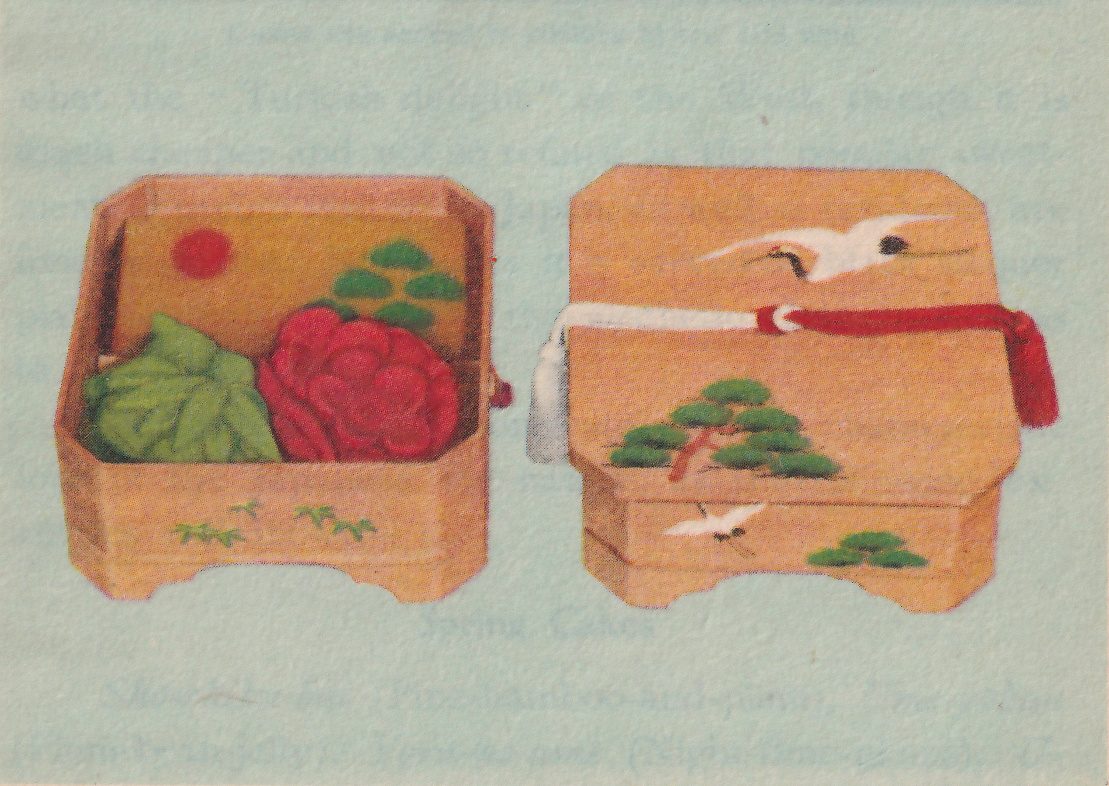
Colour plate. Against a pale blue-green ground, two shallow boxes with short curved feet stand side by side, in light golden-brown with painted green pines and white birds. The box at the left is open: its inside shows a red disc at the upper left and a green pine at the upper right, and it holds a green leaf-shaped item and a deep red flower-shaped item. The box at the right has its lid on, painted with a white bird in flight at the upper right and green pines, and a white and red twisted cord with a white tassel at the left and a red tassel at the right is tied across its upper edge.
BELOW: CAKES PREPARED IN SPECIAL BOX AS PRESENT

[p. 81]

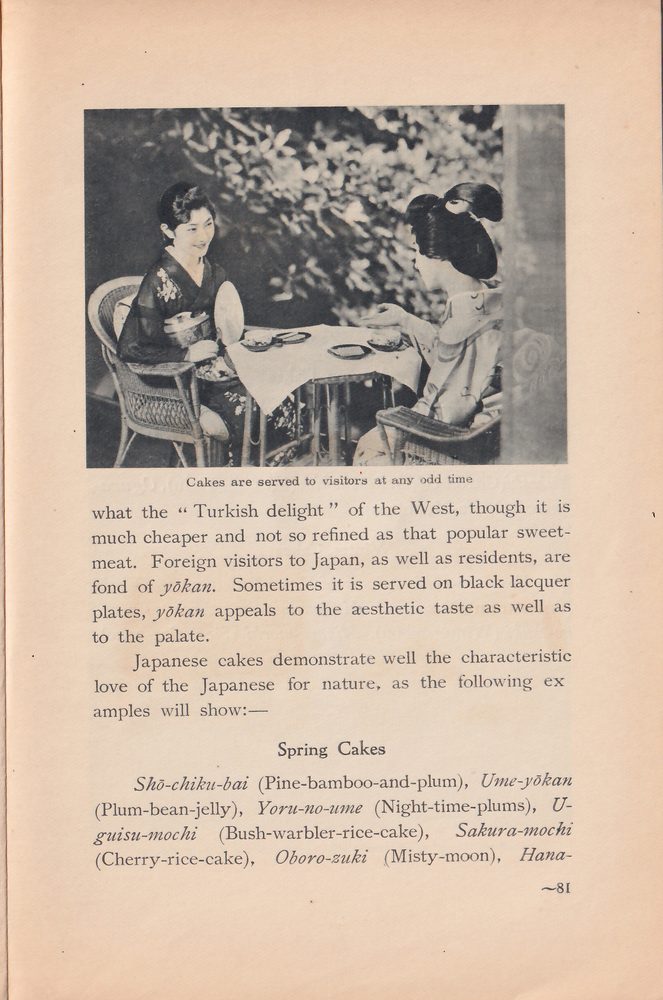
Black-and-white photograph of two people seated at a small round table covered with a pale cloth, in cane armchairs, in front of a dense mass of leaves. The one at the left smiles and has the hair dressed up, wears a dark patterned garment with a wide band at the waist, and holds a round container, with a flat round pale shape beside it. The one at the right is seen from behind with the hair in a large rounded knot with an ornament, in a pale garment, with an arm stretched toward the table. On the table stand small dishes and cups with lids.
Cakes are served to visitors at any odd time

what the “Turkish delight” of the West, though it is much cheaper and not so refined as that popular sweetmeat. Foreign visitors to Japan, as well as residents, are fond of yōkan. Sometimes it is served on black lacquer plates, yōkan appeals to the aesthetic taste as well as to the palate.

Japanese cakes demonstrate well the characteristic love of the Japanese for nature, as the following examples will show:—

Spring Cakes

Shō-chiku-bai (Pine-bamboo-and-plum), Ume-yōkan (Plum-bean-jelly), Yoru-no-ume (Night-time-plums), Uguisu-mochi (Bush-warbler-rice-cake), Sakura-mochi (Cherry-rice-cake), Oboro-zuki (Misty-moon), Hana-

[p. 82]

fubuki (Blossom-snowstorm), Momo-yama (Peach-mountain), Tsubaki-mochi (Camellia-rice-cake), Sazanami (Rippling-waves).

Summer Cakes

Hotaru-gusa (Firefly-grass), Mizu-no-tsuki (Water-moon), Satsuki (May), Kashiwa-mochi (Willow-rice-cake), Chimaki (Rice-dumpling-in-bamboo-leaves), Mizu-yōkan (Soft-bean-jelly), Yatsuhashi (Eightfold bridge), Satsū (Tea-way).

Autumn Cakes

Kuri-manjū (Chestnut-bean-jam-bun), Kuri-shigure (Chestnut-drizzling-shower), Mado-no-tsuki (Moon-in-the-window), Hagi-no-mochi (Bush-clover-rice-cake), Yubeshi (Citron-cake), Musashino (Musashi-Plain), Ogura-yama (Ogura-Mountain).

Winter Cakes

Koshi-no-yuki (Snow-of-Koshi-Province), Fubuki (Snowstorm), Sasa-no-Yuki (Bamboo-grass-snow), Fuyu-no-tsuki (Winter-moon), Mizore-mochi (Sleet-rice-cake).
[p. 83]

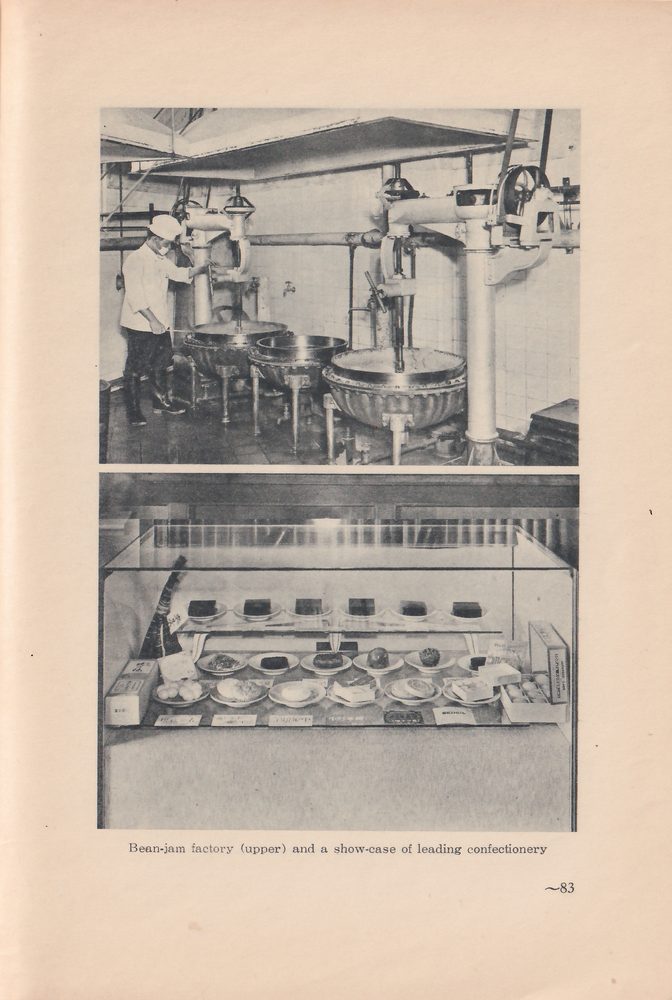
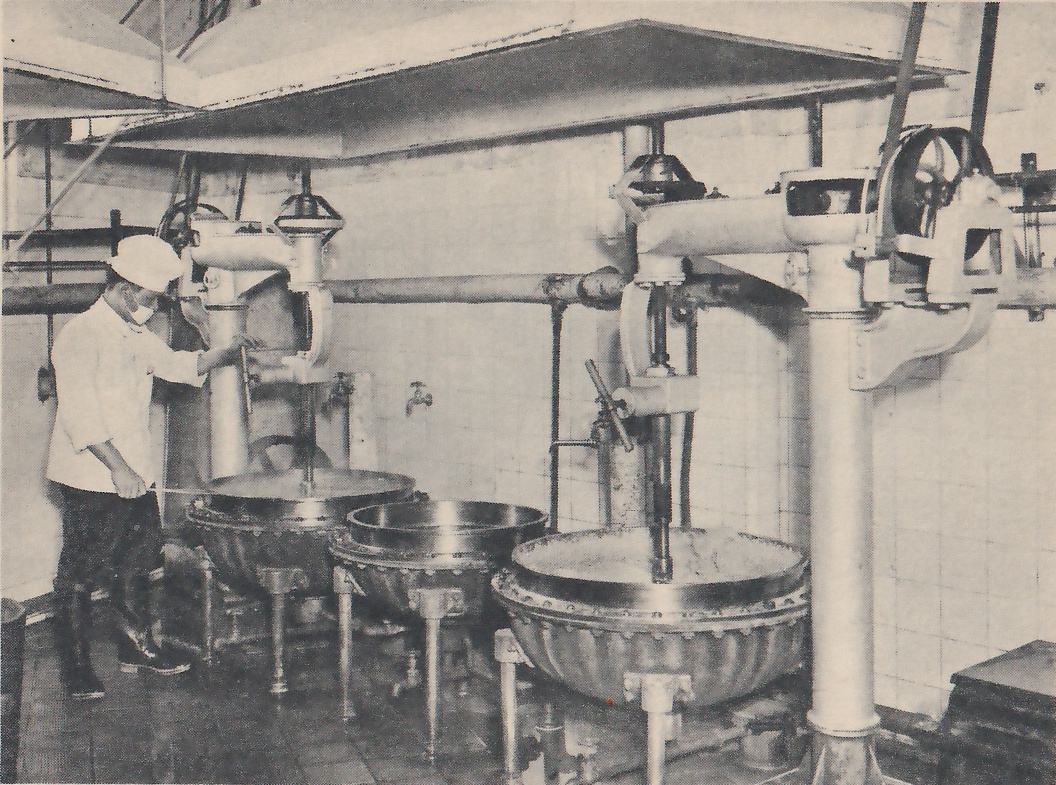
Black-and-white photograph of a room with white tiled walls and a pale ceiling hood. Three wide round-bottomed vessels with fluted sides stand on legs in a row, each with a tall upright shaft, with a stirring arm held by a tall column at the right; the vessel at the right holds a pale mass. At the left a person in a white cap, a mask over the mouth, a white jacket and tall boots stands at the first vessel with one hand on its shaft and the other holding a long rod across it. Pipes run along the wall.
Bean-jam factory (upper)
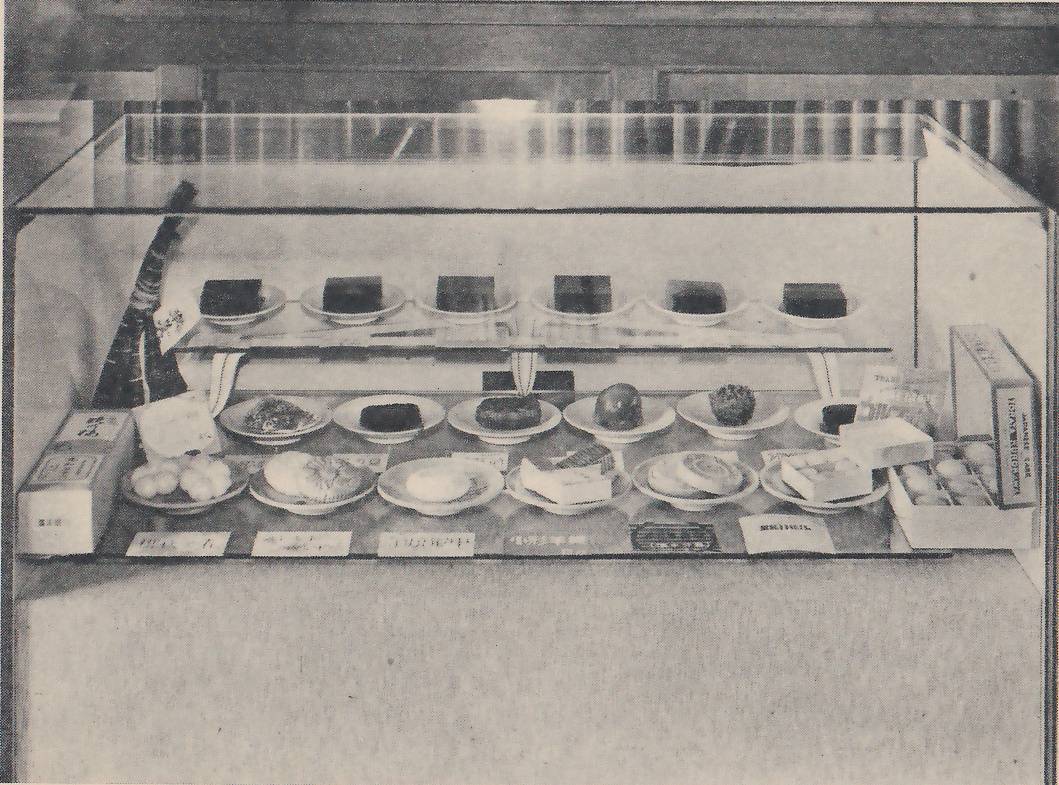
Black-and-white photograph of a glass-fronted display case with two shelves, seen from the front at a slant. On the upper shelf is a row of small plates, each with a dark rectangular block. On the lower shelf are many plates with small pale and dark items of various shapes, and boxes with printed labels at the left and right ends, the label on the right-hand box printed sideways with the small English words JAPANESE CAKE above a larger line that cannot be read. Small cards with Japanese characters stand in front of the plates, and a tall dark slanting item leans at the left.
a show-case of leading confectionery

[p. 84]

The upper of two black-and-white photographs: a shallow round dish on a footed stand with an angular pattern, holding two dark rectangular blocks side by side. Beside it at the right lie two long narrow boxes side by side, each with brushed Japanese characters on its top, a printed label and a small round mark on its end.The lower of two black-and-white photographs: a pale sheet folded into two peaks lies over a round dark dish, with small pieces on it: a group of small round pieces with rough surfaces at the left, a rectangular piece with a ridged pattern at the right, and a few pale flower-shaped pieces at the lower center.
Yōkan (upper) and higashi, both native Japanese cakes