
IV. ANNUAL CELEBRATIONS AND CEREMONIAL FOODS
I. THE DOLL FESTIVAL*
Japanese annual festivals are characteristic both as customs and in food, and the Doll Festival fortunately coming round while Mr. and Mrs. H. were in Japan, I decided to invite them and have them see a typical celebration.
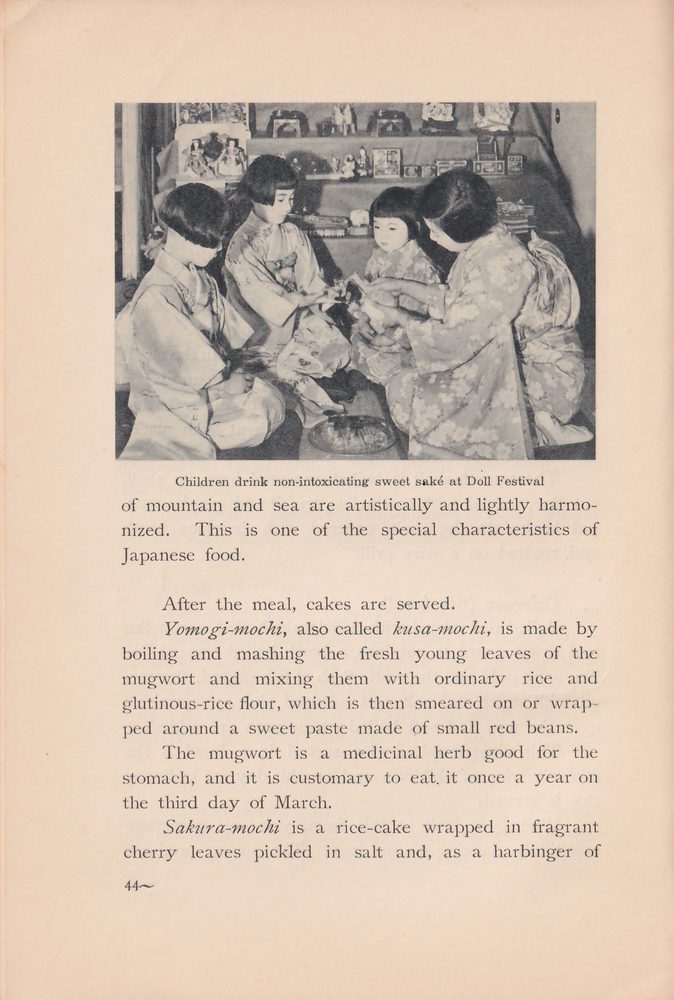
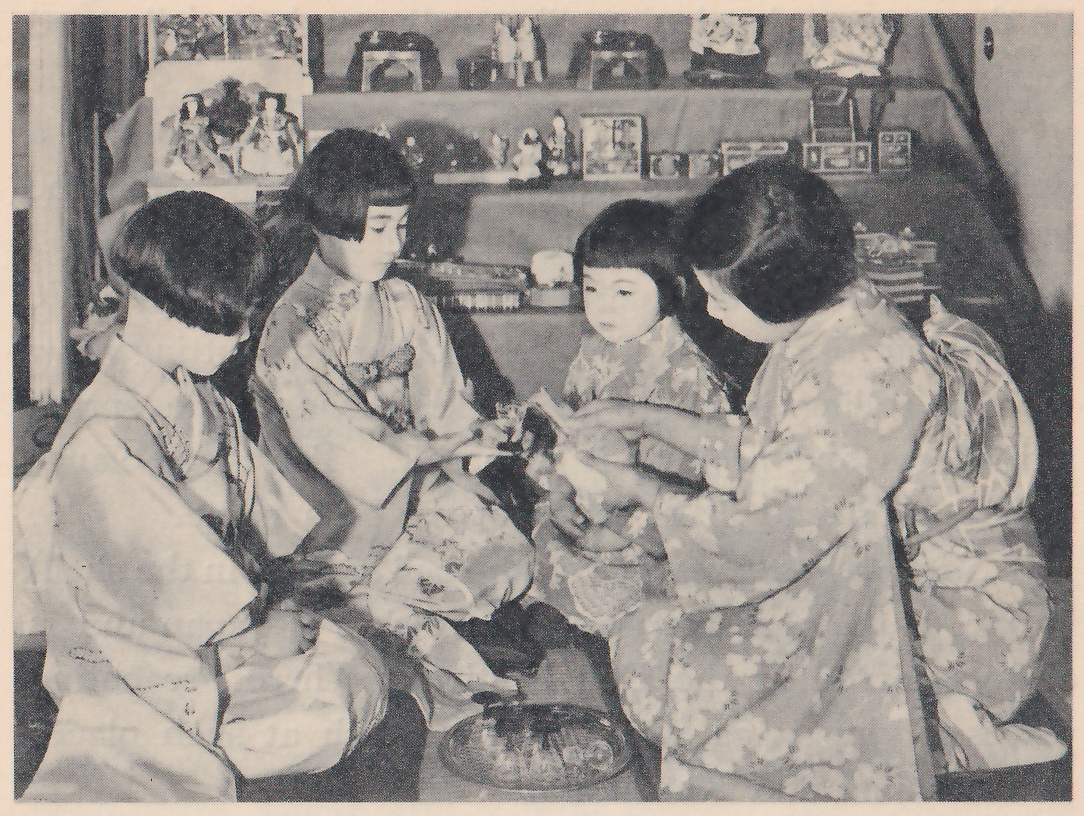
Imagine, therefore, a middle class home uptown in Tokyo. In one corner of the best room the doll shelves were all decorated. Shaped like a flight of steps they were covered with a red blanket, and on the top shelf sat the dairi-bina (the Prince and Princess dolls) in front of a golden folding screen. On the next shelf the three court ladies in white figured satinPrinted: sat in kimono and scarlet divided skirts, and on the next shelf, the five musicians with flute, drum, etc., with old-fashioned lanterns and artificial peach blossoms at the sides, with the palace orange tree on the right and the palace cherry tree on the left. As offerings there were set out white saké, doll cakes, roasted beans, diamond-shaped sekihan (red rice) mugwort rice-cakes, wreath-shells, clams and red rice, but the wreath-shells and clams were made of wheat-gluten candy and the sekihan was made of dried boiled rice that would last.
* Ref. Tourist Library: 12. Children’s Days in Japan.
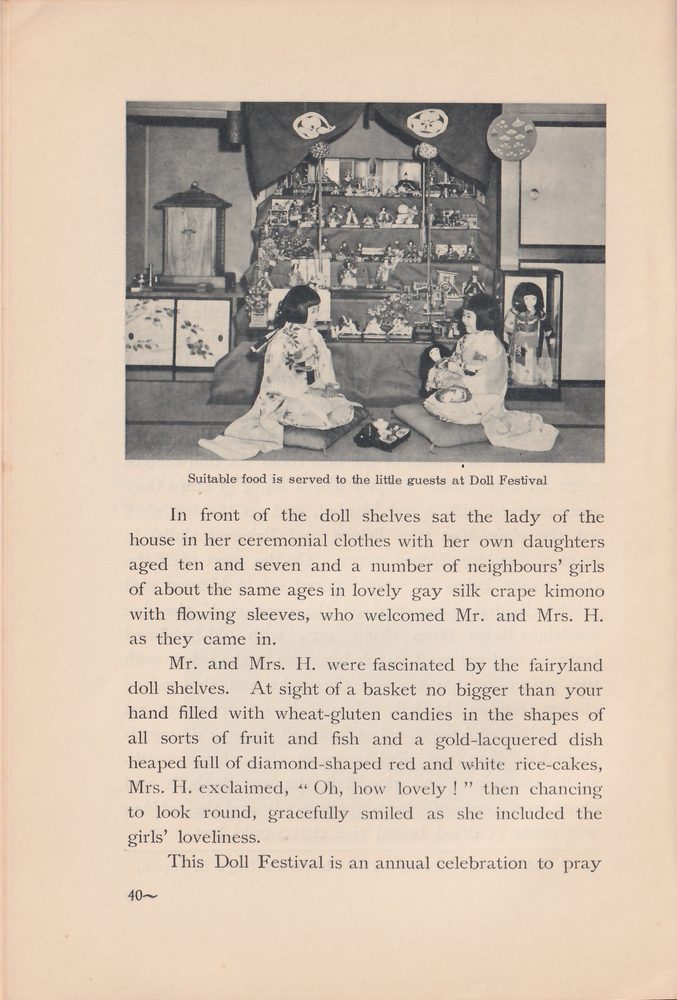
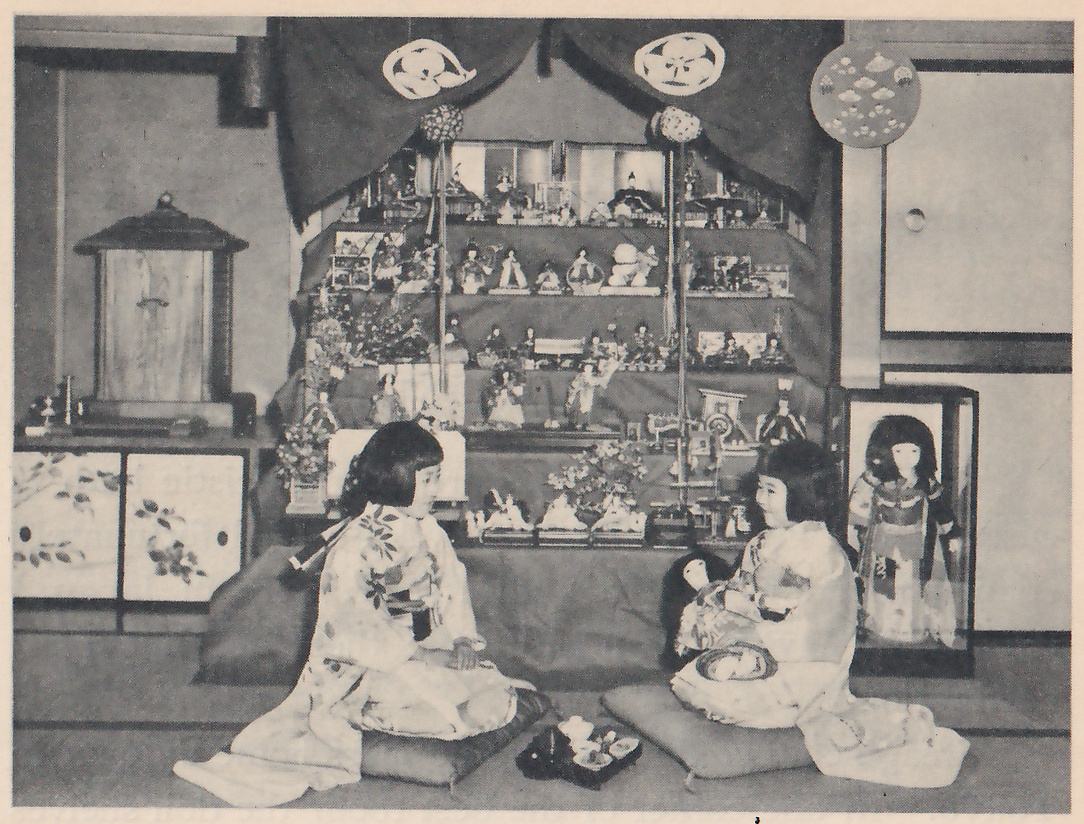
In front of the doll shelves sat the lady of the house in her ceremonial clothes with her own daughters aged ten and seven and a number of neighbours’ girls of about the same ages in lovely gay silk crape kimono with flowing sleeves, who welcomed Mr. and Mrs. H. as they came in.
Mr. and Mrs. H. were fascinated by the fairyland doll shelves. At sight of a basket no bigger than your hand filled with wheat-gluten candies in the shapes of all sorts of fruit and fish and a gold-lacquered dish heaped full of diamond-shaped red and white rice-cakes, Mrs. H. exclaimed, “Oh, how lovely!” then chancing to look round, gracefully smiled as she included the girls’ loveliness.
This Doll Festival is an annual celebration to pray
for the happiness of little girls, and because it falls in the season of peach blossoms, is also called the “Peach Festival.” It has been celebrated in the upper classes ever since the end of the Ashikaga Period (1392–1568), and among the people since the Tokugawa Period (1615–1867). It seems to have grown out of little girls’ doll play.
Besides the food offerings, suitable food is served on little trays to the girls, who, in their peace and harmony, never know when evening falls. Mr. and Mrs. H. were also served with such trays.
To give an idea of the sort of care with which Japanese food is prepared, I shall now set down that day’s menu.
Doll Festival Menu
Omukō—kaimori (shell-fish dish)
Clams, green peas, white bean-paste.
Owan (clear soup)
Shrimp balls, dwarf cortinellus, field-peas.
Okuchitori (side-dish)
Momozono-kan (peach-garden bean-jelly), tachibana-tamago (mandarin-orange egg), warabite-sayori (halfbeak fern-shoot-hands).
Hachizakana (fish dish)
Turbo roasted in the shell.
Ochawan—chirashi zushi (vinegar-spiced rice)
Komagoma-shiitake (cortinellus cut fine), dried gourd, kinshi-tamago (spun gold egg), kurenai-soboro (boiled fish grated and stained red), green peas.
Okwashi (sweetmeats or confections)
Yomogi-mochi (mugwort rice-cakes), sakura-mochi (rice-cakes stuffed with bean-jam and wrapped in cherry leaves).
Non-alcoholic sweet saké (in place of white saké)
Here follows an explanation of the menu:
Omukō—kaimori (shell-fish dish)
Clams and wreath-shells are used in the Doll Festival menu because low-tide falls on the festival day, the third day of the third month (lunar calendar), and shell gathering, called shiohigari, is popular.
The shell-fish dish is made by cutting clams fine, mixing with green peas boiled soft, stirring in white bean-paste, sugar and a little vinegar and serving on the half shell.
The shell is served on a little sheet of paper placed on the plate known as the omukō-zara.
Owan (clear soup)
Two or three little balls of shrimp made by grinding in a mortar and moulding are boiled and placed in a beautiful lacquered bowl, then two dwarf cortinelluses boiled in clear soup and some green young field-peas boiled in salt are added and warm clear soup is poured over them just before serving.
Okuchitori (side-dish)
Momozono-kan (peach-garden bean-jelly) is made by mixing together yam, sugar and vegetable gelatin, and by colouring it pink to represent the peach gardens
of the season, hardening like ordinary bean-jelly and cutting into neat slices.
Tachibana-tamago (mandarin-orange egg) is a delicacy made of eggs which takes its name from the little palace orange tree on the doll shelves.
Warabite-sayori (halfbeak fern-shoot-hands) is made by slicing open a halfbeak, filleting it, putting nori with it, rolling it up to look like curling little spring fern-shoots and broiling it with salt. The resemblance of fern shoots to little hands gives it its name.
Sazae-no-tsuboyaki (wreath-shell roasted in the shell) is one of the characteristic local dishes of Japan and is always served at the Doll Festival. There are eating places serving it as a famous local dish at such places as Enoshima and Kamakura.
The wreath-shell is boiled, removed from its shell, cut fine, mixed with cortinellus, trefoil and gingko-nuts, put back into the shell, covered with delicious broth and roasted on a wire grill.
Ochawan (rice bowl)
Boiled rice mixed with deliciously boiled cortinellus and dried gourd is put into a bowl, boiled egg cut fine like spun gold and the white flesh of fish grated, flavoured with sugar and salt and coloured pink are sprinkled over the top, and soft boiled green peas are added.
This vinegar-spiced rice served in a bowl is the favourite rice of children, and on this day no ordinary rice is served.
When you look at this feast, you see springtime beautifully dancing on the tray. The spring products
of mountain and sea are artistically and lightly harmonized. This is one of the special characteristics of Japanese food.
After the meal, cakes are served.
Yomogi-mochi, also called kusa-mochi, is made by boiling and mashing the fresh young leaves of the mugwort and mixing them with ordinary rice and glutinous-rice flour, which is then smeared on or wrapped around a sweet paste made of small red beans.
The mugwort is a medicinal herb good for the stomach, and it is customary to eat it once a year on the third day of March.
Sakura-mochi is a rice-cake wrapped in fragrant cherry leaves pickled in salt and, as a harbinger of
cherry blossom time, has a fresh seasonal flavour.
As a drink, the elders take white saké, but since there is alcohol in it, the children use non-intoxicating sweet saké instead.
Mr. and Mrs. H. as guests of the day, did just as the girls did and ate their soup and roasted wreath-shell with exclamations of delight. They amused the girls with their inexperienced handling of the chopsticks. And they accepted their little doll cakes as precious things when they took their leave.
“Today’s Doll Festival was most interesting. Won’t you please tell us briefly at the next opportunity how many feasts of that kind there are in connection with annual celebrations?” they said.
I will tell here about the Tango Festival I explained to them later.
2. THE TANGO FESTIVAL (Boys’ Festival)*
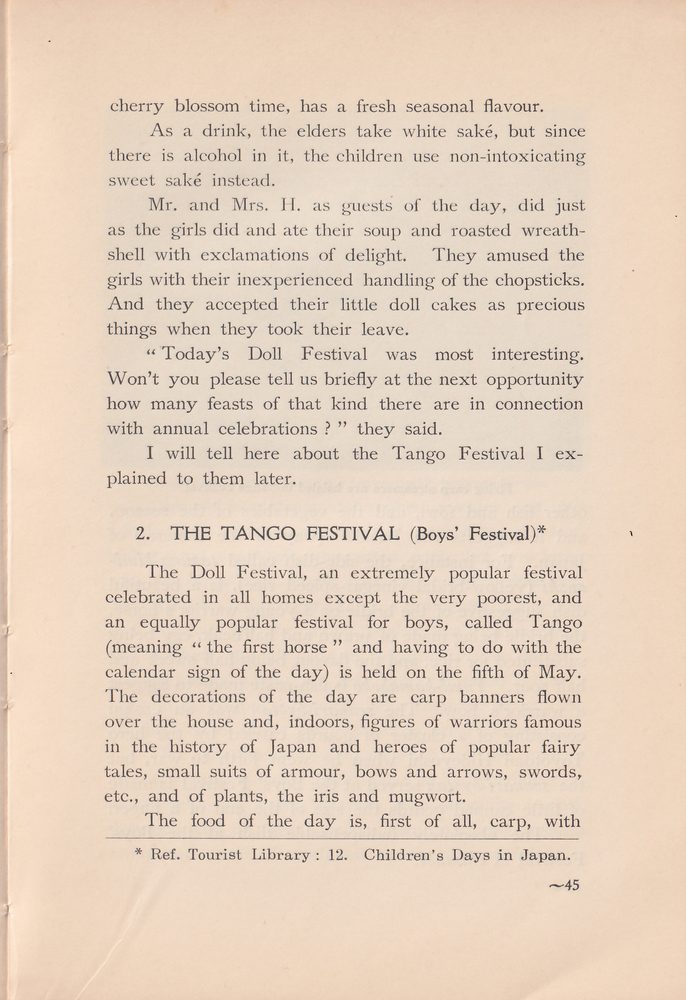
The Doll Festival, an extremely popular festival celebrated in all homes except the very poorest, and an equally popular festival for boys, called Tango (meaning “the first horse” and having to do with the calendar sign of the day) is held on the fifth of May. The decorations of the day are carp banners flown over the house and, indoors, figures of warriors famous in the history of Japan and heroes of popular fairy tales, small suits of armour, bows and arrows, swords, etc., and of plants, the iris and mugwort.
The food of the day is, first of all, carp, with
* Ref. Tourist Library: 12. Children’s Days in Japan.
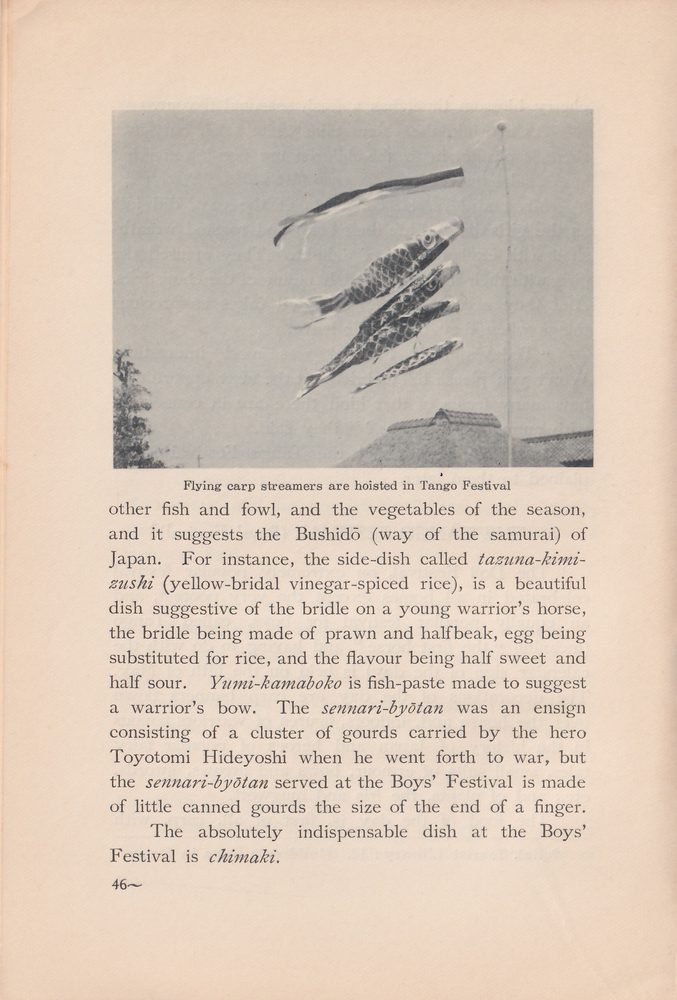
other fish and fowl, and the vegetables of the season, and it suggests the Bushidō (way of the samurai) of Japan. For instance, the side-dish called tazuna-kimizushi (yellow-bridal vinegar-spiced rice), is a beautiful dish suggestive of the bridle on a young warrior’s horse, the bridle being made of prawn and halfbeak, egg being substituted for rice, and the flavour being half sweet and half sour. Yumi-kamaboko is fish-paste made to suggest a warrior’s bow. The sennari-byōtan was an ensign consisting of a cluster of gourds carried by the hero Toyotomi Hideyoshi when he went forth to war, but the sennari-byōtan served at the Boys’ Festival is made of little canned gourds the size of the end of a finger.
The absolutely indispensable dish at the Boys’ Festival is chimaki.
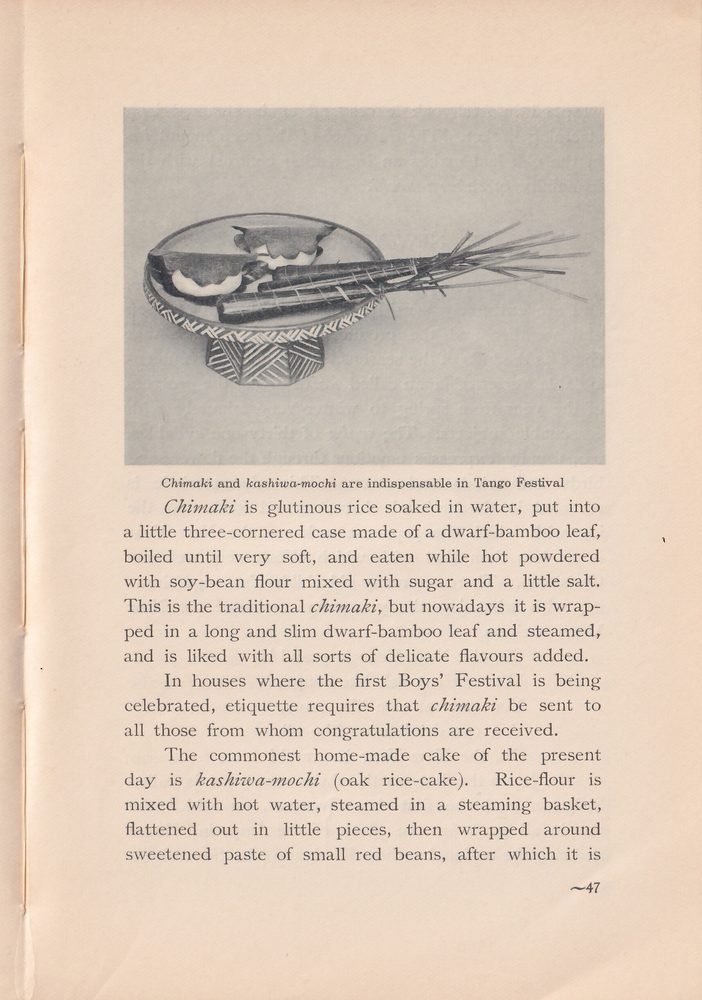
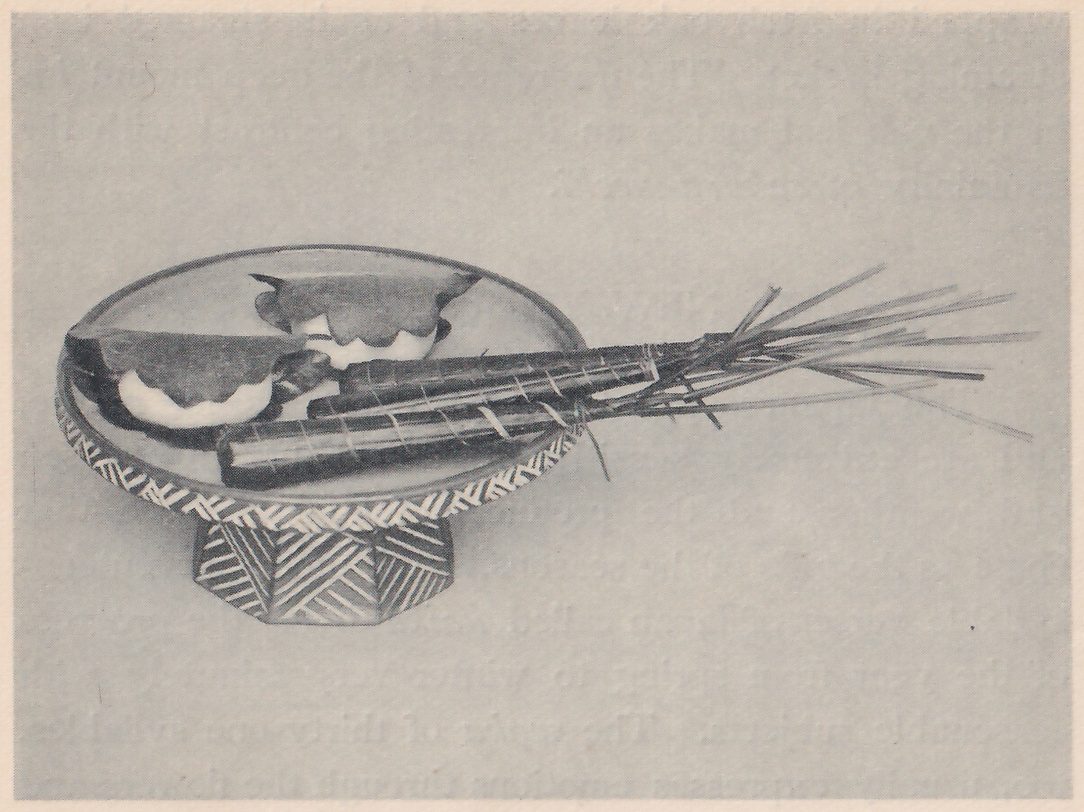
Chimaki is glutinous rice soaked in water, put into a little three-cornered case made of a dwarf-bamboo leaf, boiled until very soft, and eaten while hot powdered with soy-bean flour mixed with sugar and a little salt. This is the traditional chimaki, but nowadays it is wrapped in a long and slim dwarf-bamboo leaf and steamed, and is liked with all sorts of delicate flavours added.
In houses where the first Boys’ Festival is being celebrated, etiquette requires that chimaki be sent to all those from whom congratulations are received.
The commonest home-made cake of the present day is kashiwa-mochi (oak rice-cake). Rice-flour is mixed with hot water, steamed in a steaming basket, flattened out in little pieces, then wrapped around sweetened paste of small red beans, after which it is
wrapped in fresh oak leaves and again steamed in a steaming basket. The fragrance of the deep mountains in the oak leaf makes an interesting contrast with the femininity of sakura-mochi.
3. NEW YEAR’S FOOD
The Japanese people have a deep love for nature, and are extremely sensitive to the changes of season and weather and the products of land and sea that come as the gifts of the seasons. The unique seventeen-syllable verses of Japan called haiku divide the progress of the year from spring to winter very minutely with seasonable subjects. The waka of thirty-one syllables, too, usually expresses emotions through the flowers and birds and winds and moon. This characteristic is revealed in the national character and food, and the joy with which the Japanese welcome the New Year is no less than that with which Westerners welcome Christmas. There are many old children’s songs showing with what joy the youngsters welcome the New Year, such as
Oh, the New Year is grand!
You can eat fish like rouge,
You can eat rice like snow,
You can drink wine like oil.
Oh, the New Year is grand!
In Japan the first month of the new year is called Shōgatsu and the first day Gwantan, on which the people all pray for the glory of the Imperial House and sing the national anthem Kimigayo (Our Sovereign’s
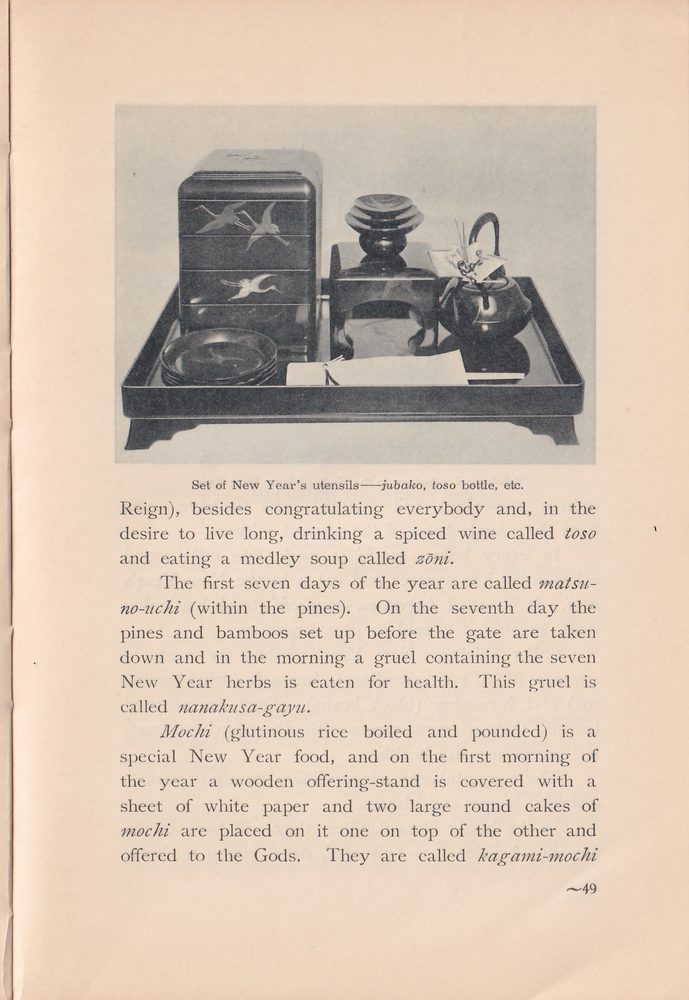
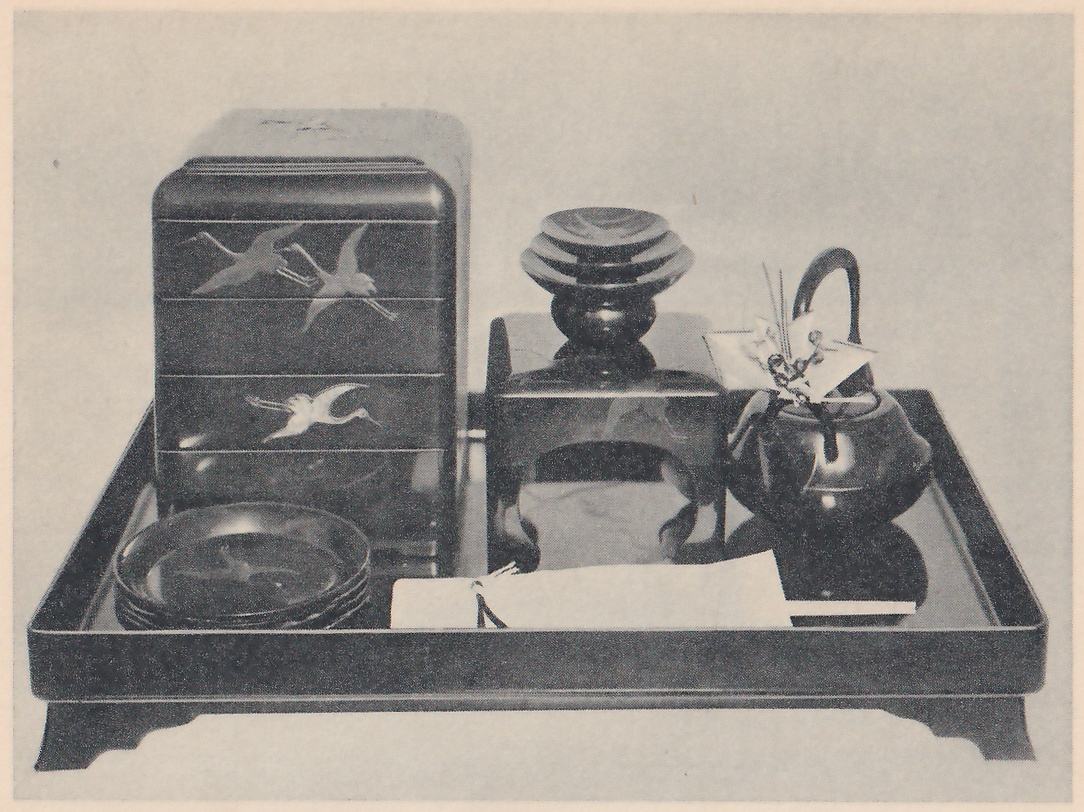
Reign), besides congratulating everybody and, in the desire to live long, drinking a spiced wine called toso and eating a medley soup called zōni.
The first seven days of the year are called matsu-no-uchi (within the pines). On the seventh day the pines and bamboos set up before the gate are taken down and in the morning a gruel containing the seven New Year herbs is eaten for health. This gruel is called nanakusa-gayu.
Mochi (glutinous rice boiled and pounded) is a special New Year food, and on the first morning of the year a wooden offering-stand is covered with a sheet of white paper and two large round cakes of mochi are placed on it one on top of the other and offered to the Gods. They are called kagami-mochi
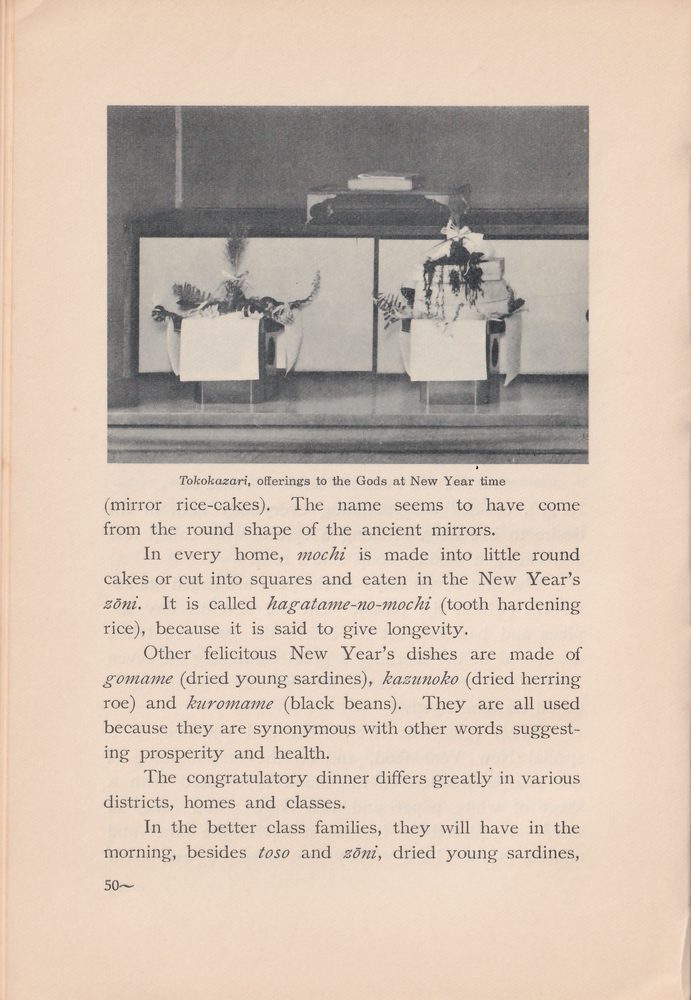
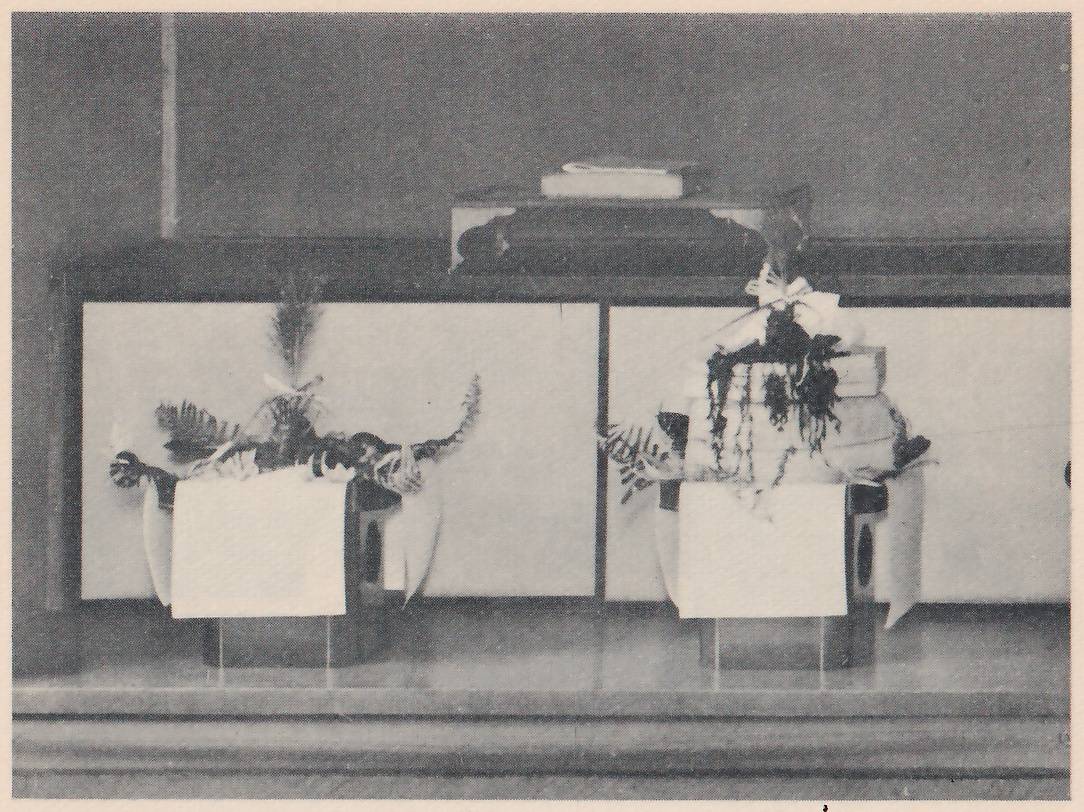
(mirror rice-cakes). The name seems to have come from the round shape of the ancient mirrors.
In every home, mochi is made into little round cakes or cut into squares and eaten in the New Year’s zōni. It is called hagatame-no-mochi (tooth hardening rice), because it is said to give longevity.
Other felicitous New Year’s dishes are made of gomame (dried young sardines), kazunoko (dried herring roe) and kuromame (black beans). They are all used because they are synonymous with other words suggesting prosperity and health.
The congratulatory dinner differs greatly in various districts, homes and classes.
In the better class families, they will have in the morning, besides toso and zōni, dried young sardines,
dried herring roe and black beans, some side-dish or salad, at noon again a strictly congratulatory meal and in the evening a regular formal dinner.
In all homes everybody rests as far as possible and, in order to enjoy a happy New Year in leisurely fashion, all make ready by preparing fish, fowl and vegetables and putting them in jūbako (sets of elegantly lacquered boxes for food) to be served with toso to callers at any time.
It has also been the custom since ancient times to make a soup of clams.
After the third day of celebrating, the people hold social gatherings at home or at restaurants at which informal dinners are served.
4. FLOWER-VIEWING FOOD
The cherry blossom is the national flower, and places famous for cherry blossoms are plentiful both in town and country.
It has always been the custom to rejoice under the flowers when the cherries are in their glory in April.
During the Genroku Years (1688–1704) in the middle of the Tokugawa Period, all the townspeople lived in peaceful extravagance, and their flower-viewing was beautiful.
They made what was called a kosode-maku by stretching ropes from tree to tree and hanging women’s beautiful coats on them, thus dividing off a section for each family, within which they spread red blankets
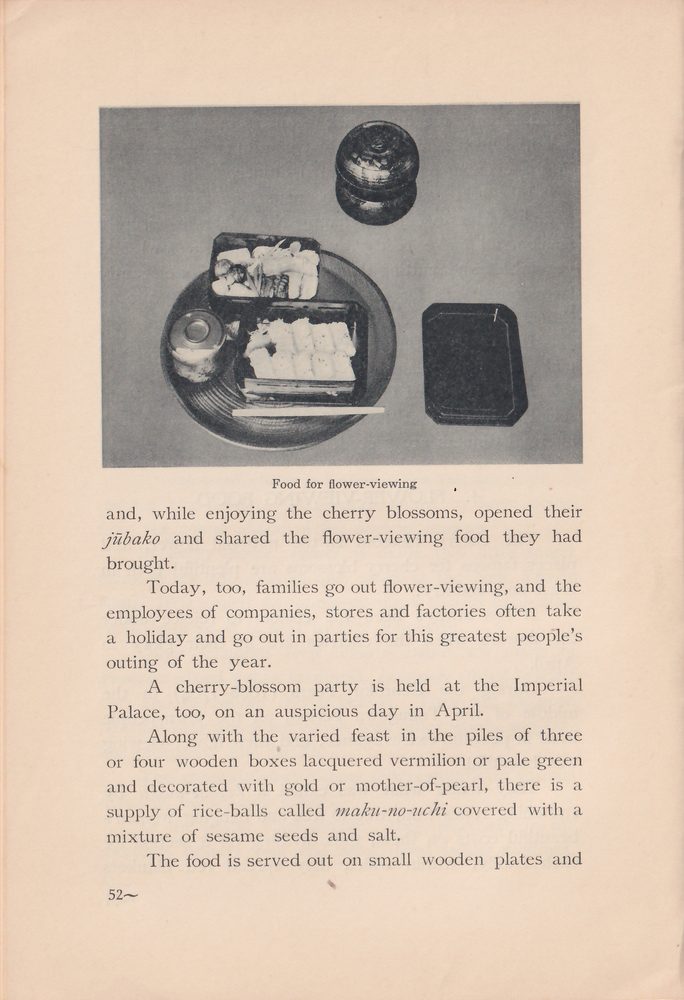
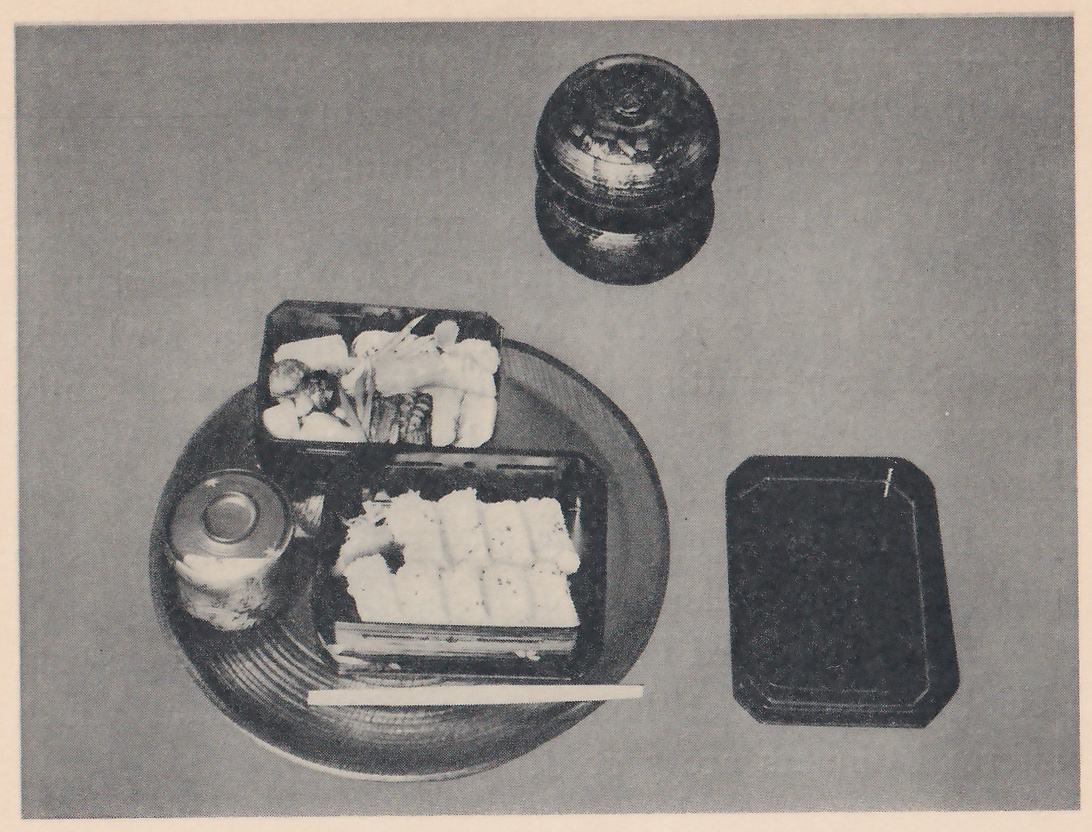
and, while enjoying the cherry blossoms, opened their jūbako and shared the flower-viewing food they had brought.
Today, too, families go out flower-viewing, and the employees of companies, stores and factories often take a holiday and go out in parties for this greatest people’s outing of the year.
A cherry-blossom party is held at the Imperial Palace, too, on an auspicious day in April.
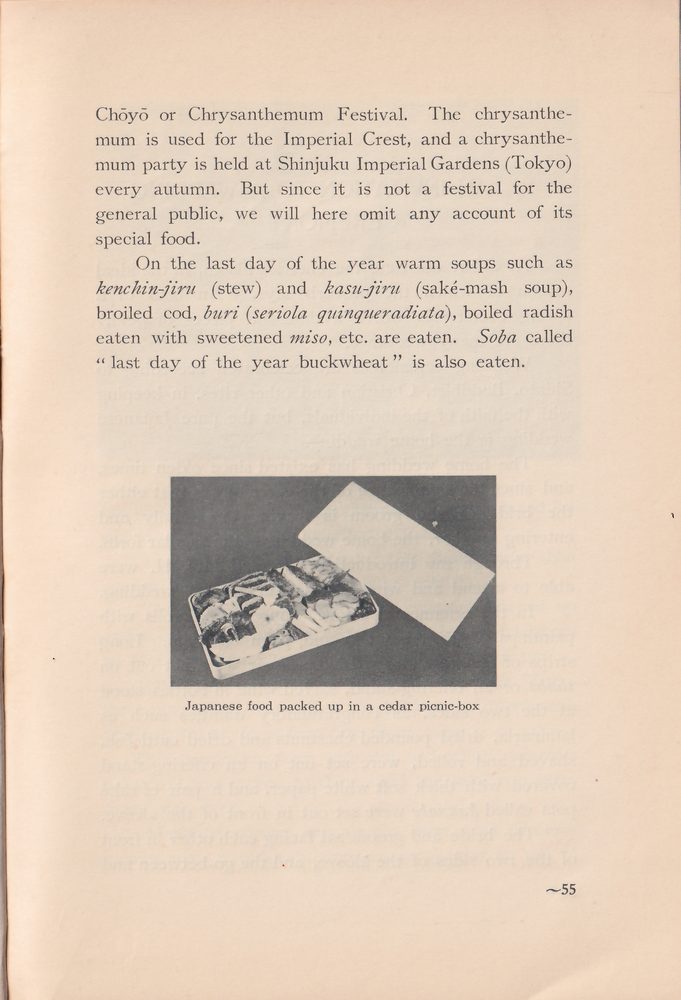
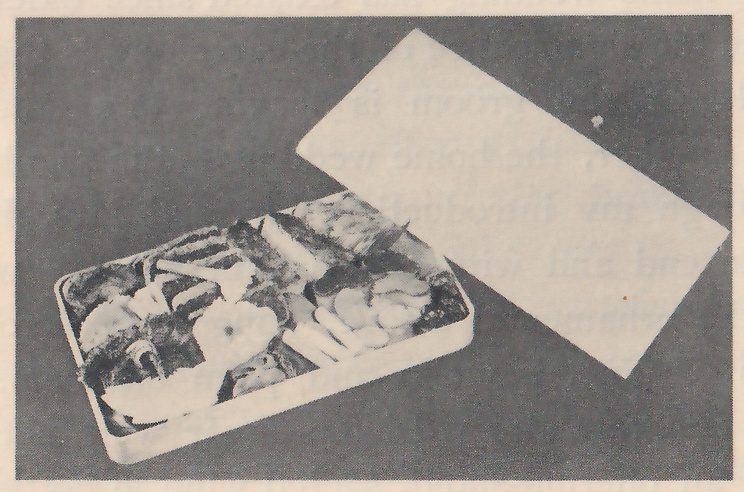
Along with the varied feast in the piles of three or four wooden boxes lacquered vermilion or pale green and decorated with gold or mother-of-pearl, there is a supply of rice-balls called maku-no-uchi covered with a mixture of sesame seeds and salt.
The food is served out on small wooden plates and
eaten like a picnic lunch in the West.
In addition, there are in the boxes all sorts of sushi to suit individual tastes.
Sushi, peculiar to Japan, may be likened to the sandwiches of the West.
Nowadays, many people go to see the cherry blossoms while carrying half-gallon saké-bottles, but those who treasure the ancient refinements carry their saké in gourds slung in heavy red cords with red tassels attached.
5. MOON-VIEWING FOOD*
Equally with the cherry flowers, the Japanese love the moon, in the spring shining hazily on the blossoms, in the summer cool beside the waters, and in the winter clear and cold on the frosty nights.
But above all they single out the autumn moon, calling it meigetsu, and the way they gaze at it, and sing the praises of this silver white moon makes it seem that everybody in the country is a poet.
The moon called meigetsu is the full moon of the fifteenth of the eighth month, lunar calendar, or the harvest-moon, also called the mid-autumn meigetsu. In ancient times, the nobles used to go to famous moon-viewing places like Waka-no-ura and Suma and compose poems about her. Consequently the places for viewing the moon became legion.
On the evening of the fifteenth, home meals connected with the moon are often served, but the com-
* Ref. Tourist Library: 12. Children’s Days in Japan.
monest custom is to set up a shelf and place on it as offerings to the moon certain wild flowers, the first fruits of the season such as persimmons and grapes, and such vegetables as taros boiled with the skin on, and green soy-beans.
And it is customary to place on the shelf, too, fifteen little dumplings made of rice-flour.
The whole family goes out on the verandah and enjoys to the full the autumn calm, and finally, as they sit praising the moon and chatting, they eat of whatever among the offerings is edible.
There is also in autumn the chrysanthemum-viewing food. In ancient times there was a festival on the ninth day of the ninth month, lunar calendar, called the
Chōyō or Chrysanthemum Festival. The chrysanthemum is used for the Imperial Crest, and a chrysanthemum party is held at Shinjuku Imperial Gardens (Tokyo) every autumn. But since it is not a festival for the general public, we will here omit any account of its special food.
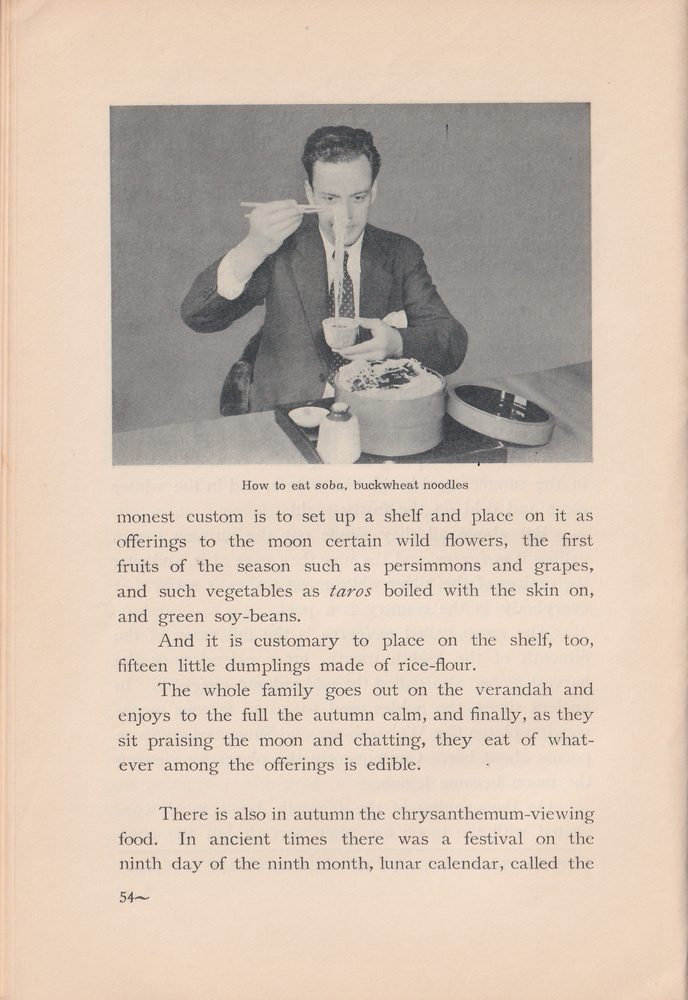
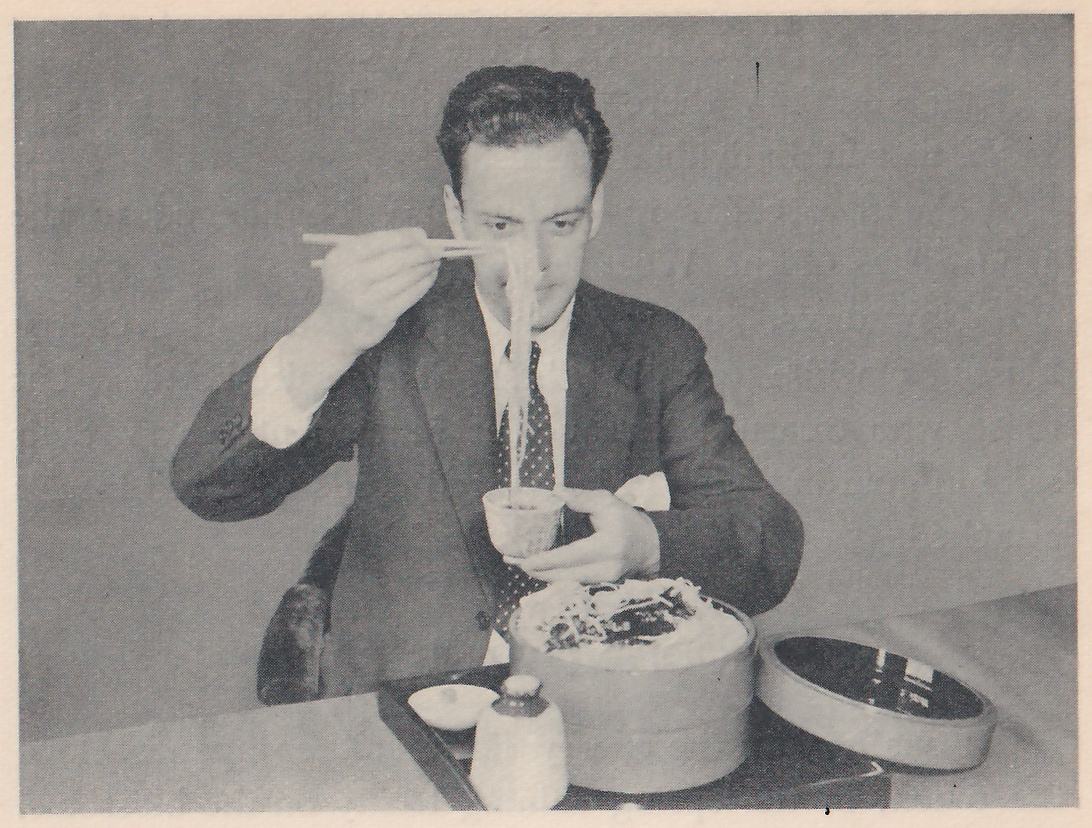
On the last day of the year warm soups such as kenchin-jiru (stew) and kasu-jiru (saké-mash soup), broiled cod, buri (seriola quinqueradiata), boiled radish eaten with sweetened miso, etc. are eaten. Soba called “last day of the year buckwheat” is also eaten.