
III. JAPANESE TABLE ETIQUETTE
I. FORMAL DINNERS
Foods Served at Wedding Feasts, Congratulatory Banquets and Buddhist Masses.
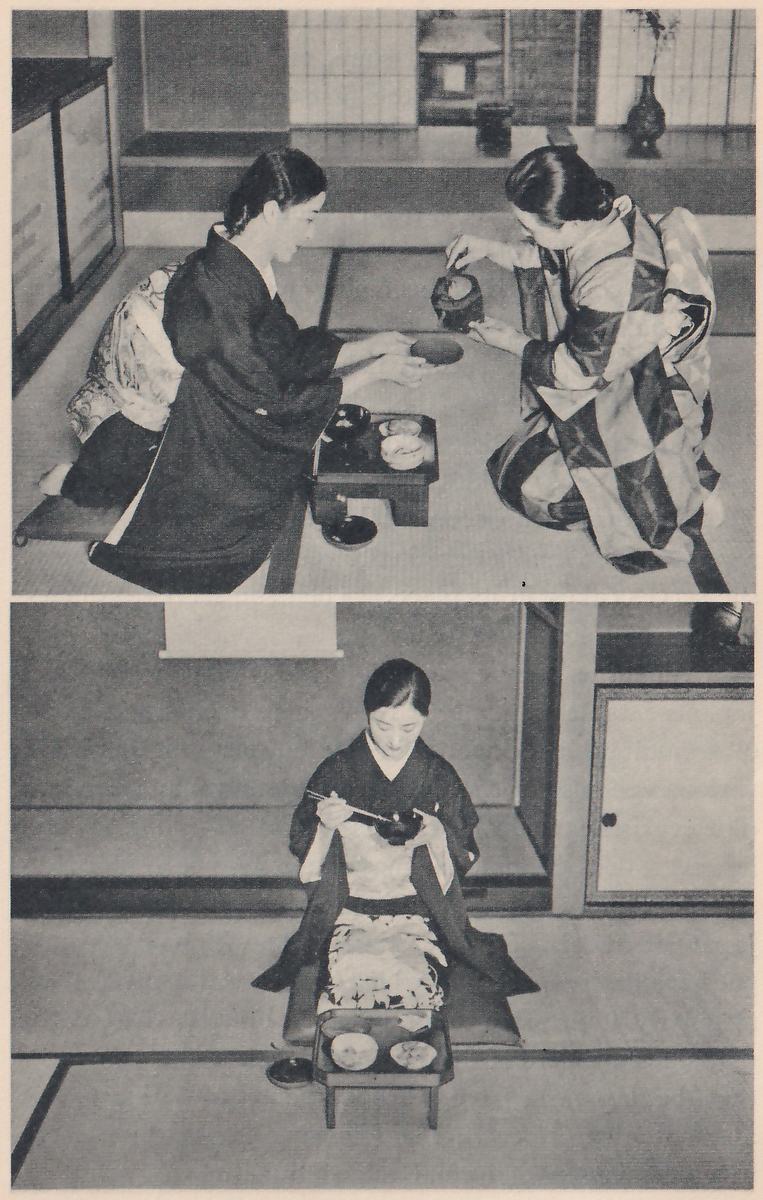
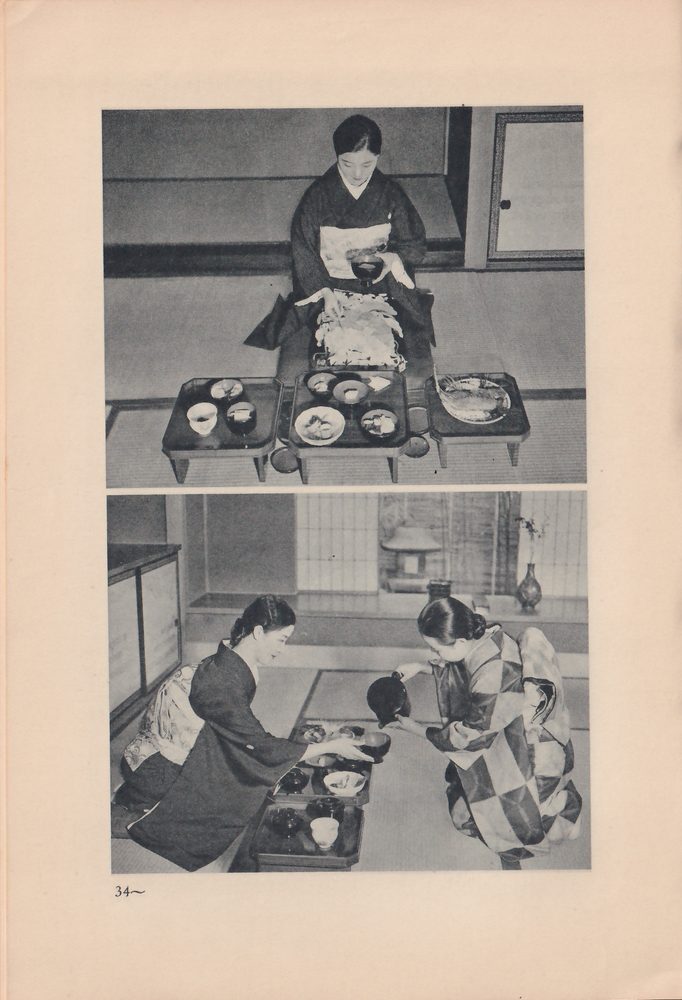
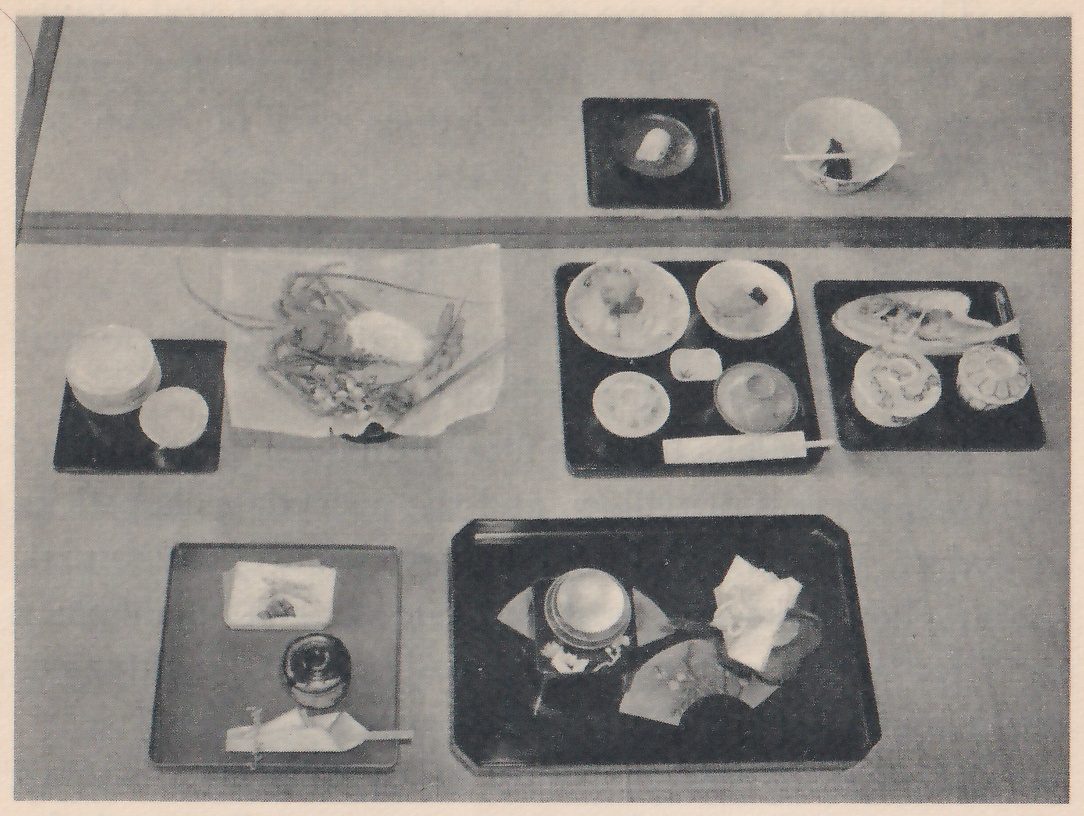
The formal meal consists of one soup and three dishes, two soups and five dishes, or three soups and seven dishes. First comes the soup tray containing soup, raw fish, etc., with which is served saké, and when this tray has been removed, the first, second and third trays of the meal proper are brought in.
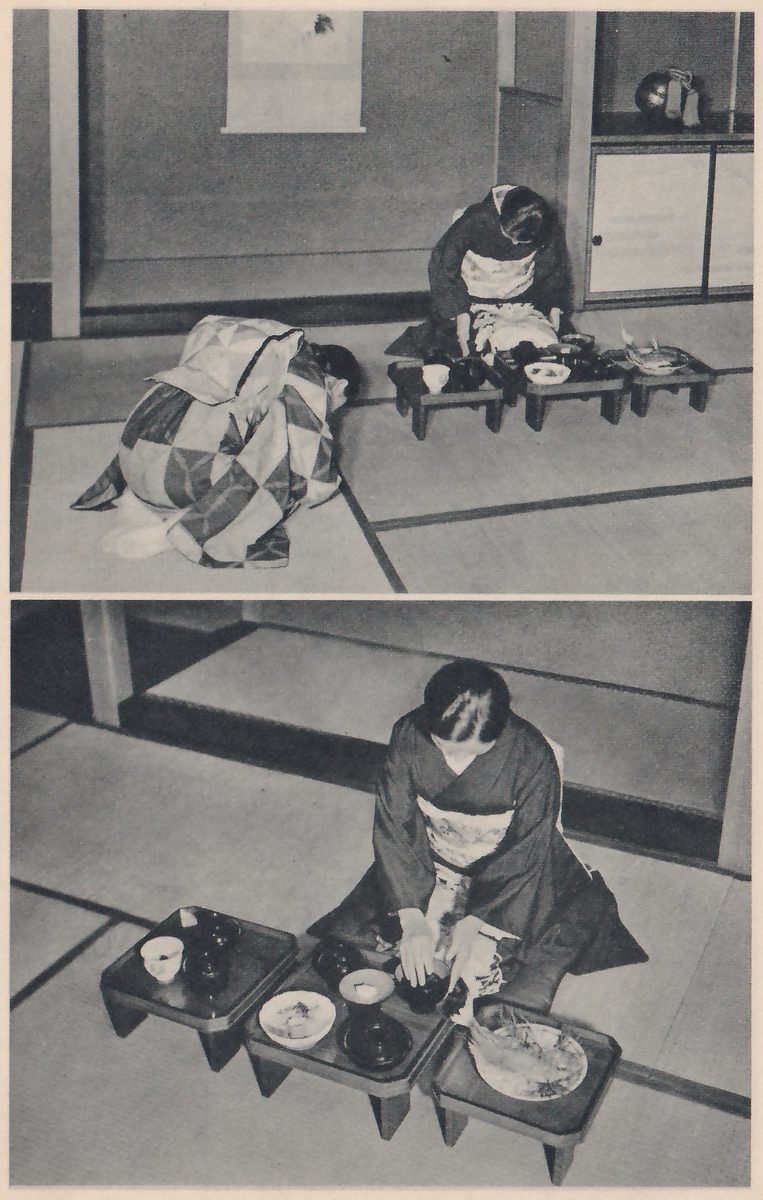
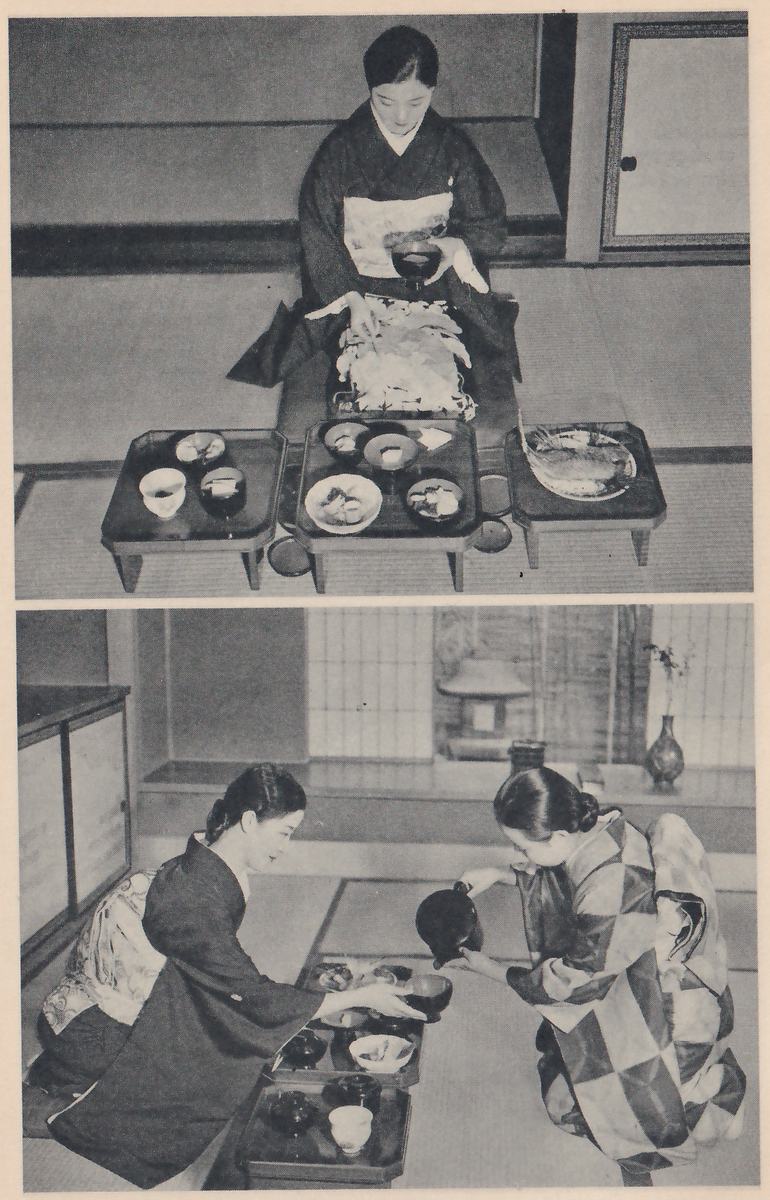
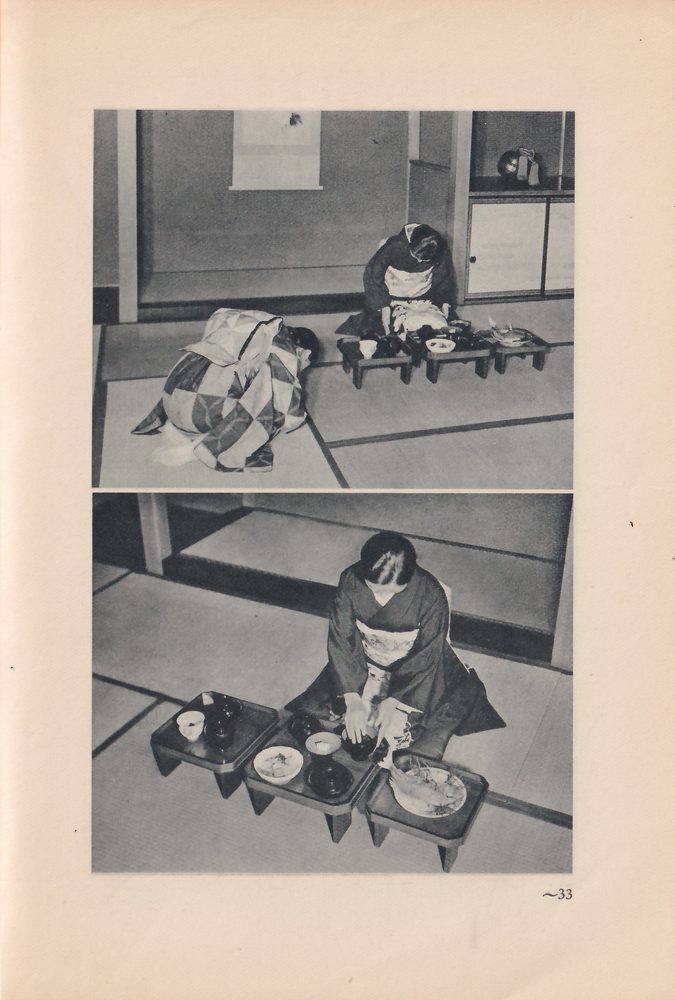
The first tray is placed straight in front of the diner, the second to the right of the first and the third to the left.
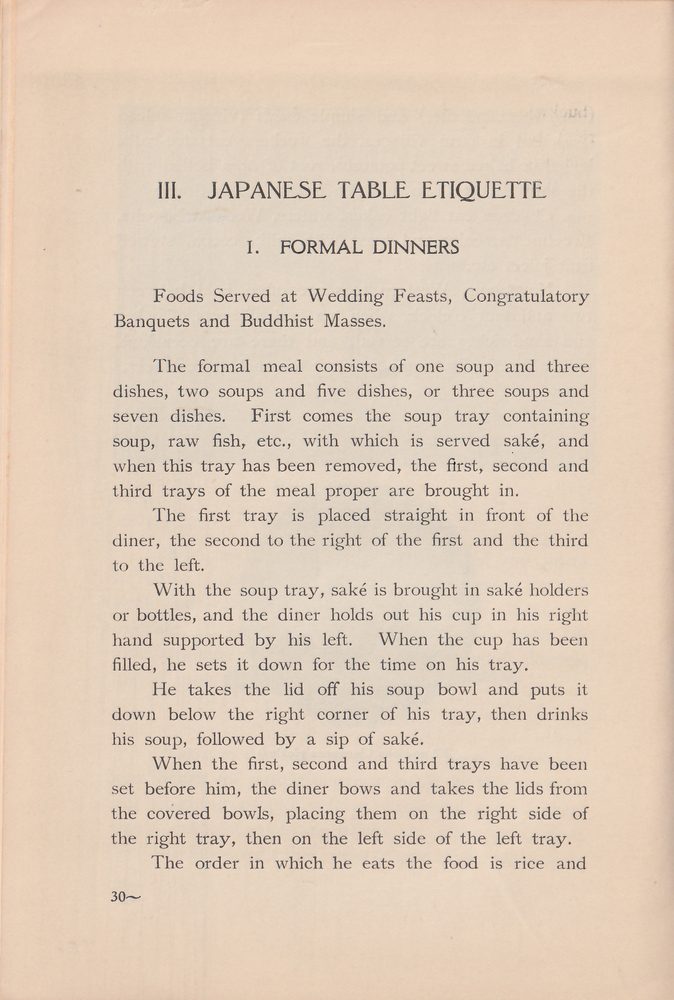
With the soup tray, saké is brought in saké holders or bottles, and the diner holds out his cup in his right hand supported by his left. When the cup has been filled, he sets it down for the time on his tray.
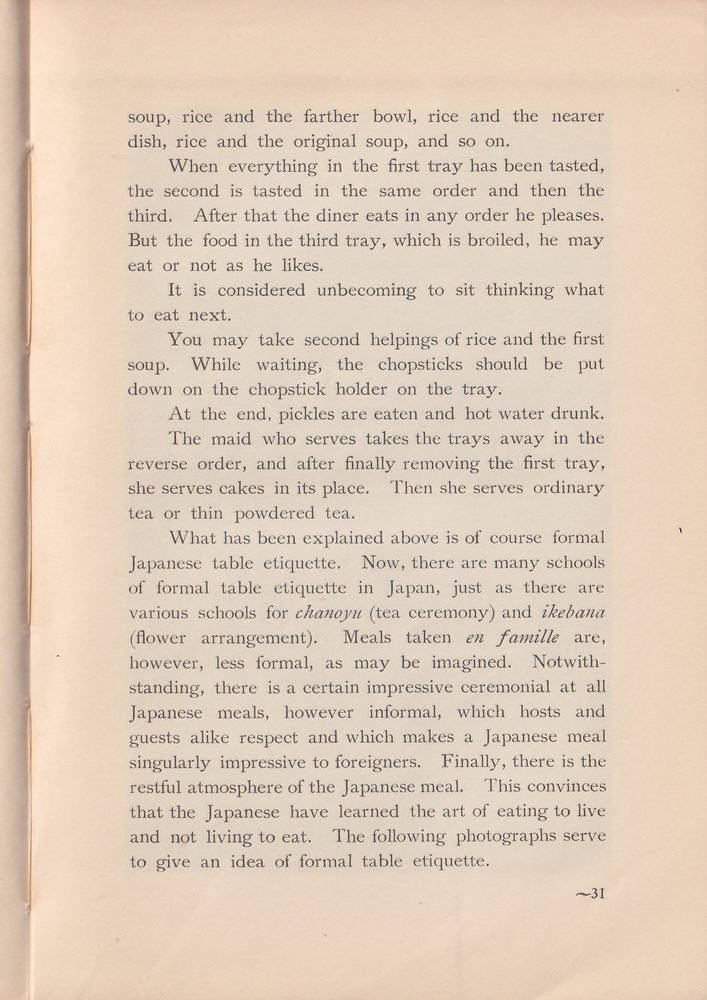
He takes the lid off his soup bowl and puts it down below the right corner of his tray, then drinks his soup, followed by a sip of saké.
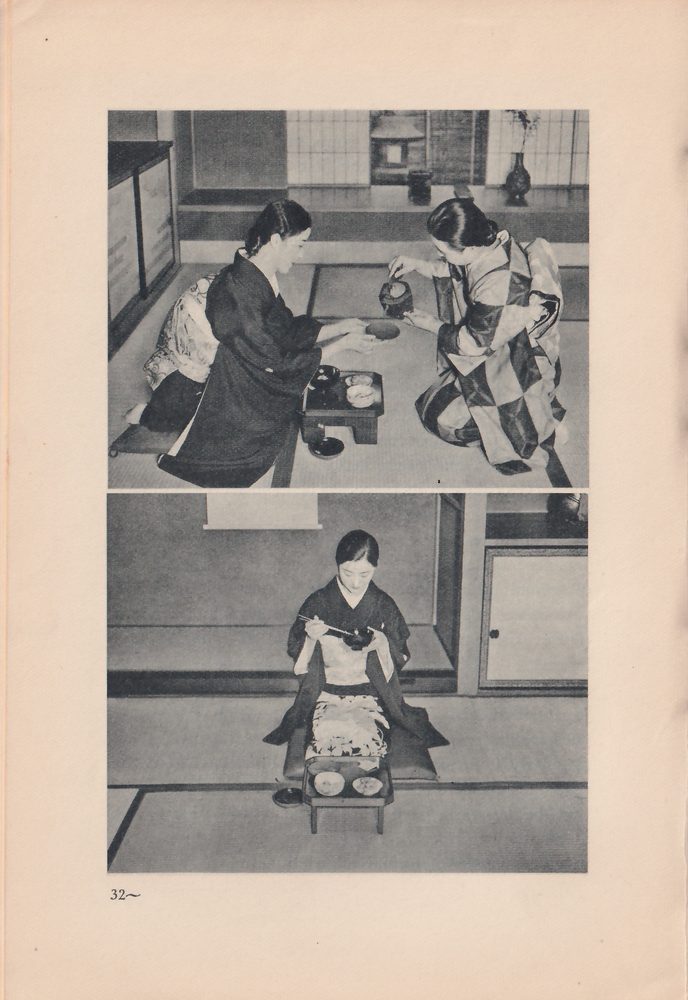
When the first, second and third trays have been set before him, the diner bows and takes the lids from the covered bowls, placing them on the right side of the right tray, then on the left side of the left tray.
The order in which he eats the food is rice and
soup, rice and the farther bowl, rice and the nearer dish, rice and the original soup, and so on.
When everything in the first tray has been tasted, the second is tasted in the same order and then the third. After that the diner eats in any order he pleases. But the food in the third tray, which is broiled, he may eat or not as he likes.
It is considered unbecoming to sit thinking what to eat next.
You may take second helpings of rice and the first soup. While waiting, the chopsticks should be put down on the chopstick holder on the tray.
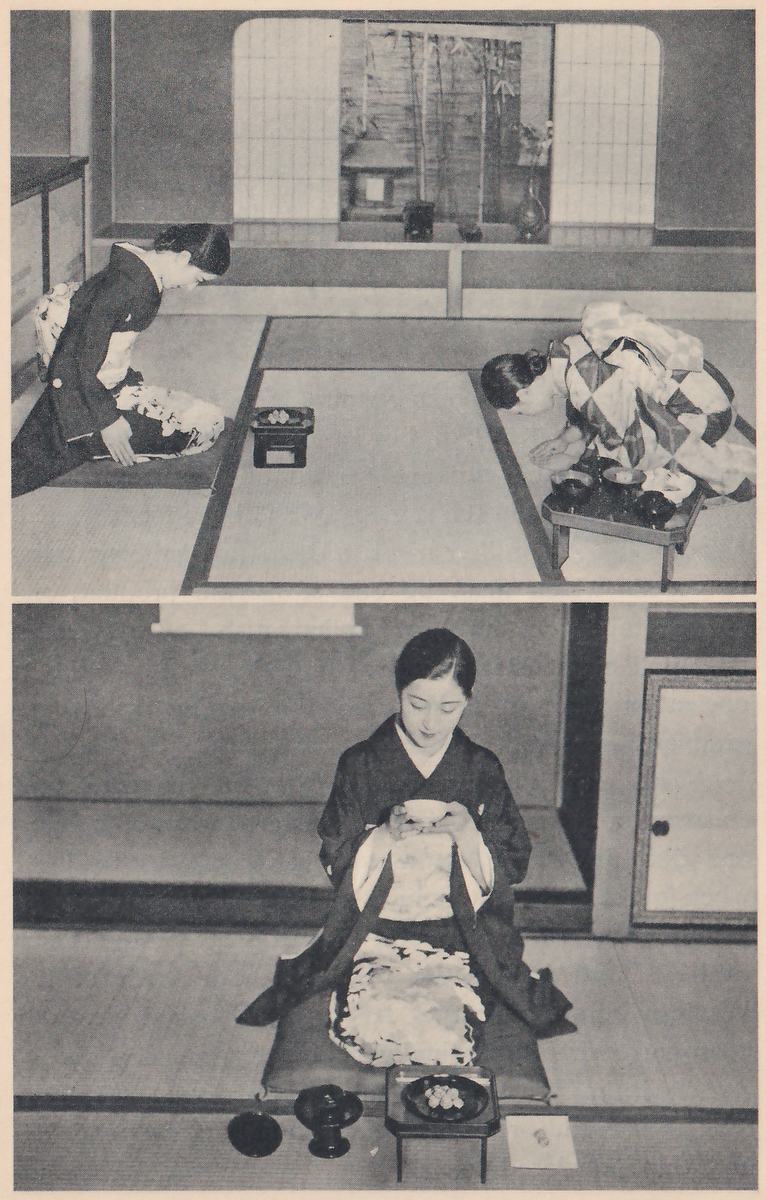
At the end, pickles are eaten and hot water drunk.
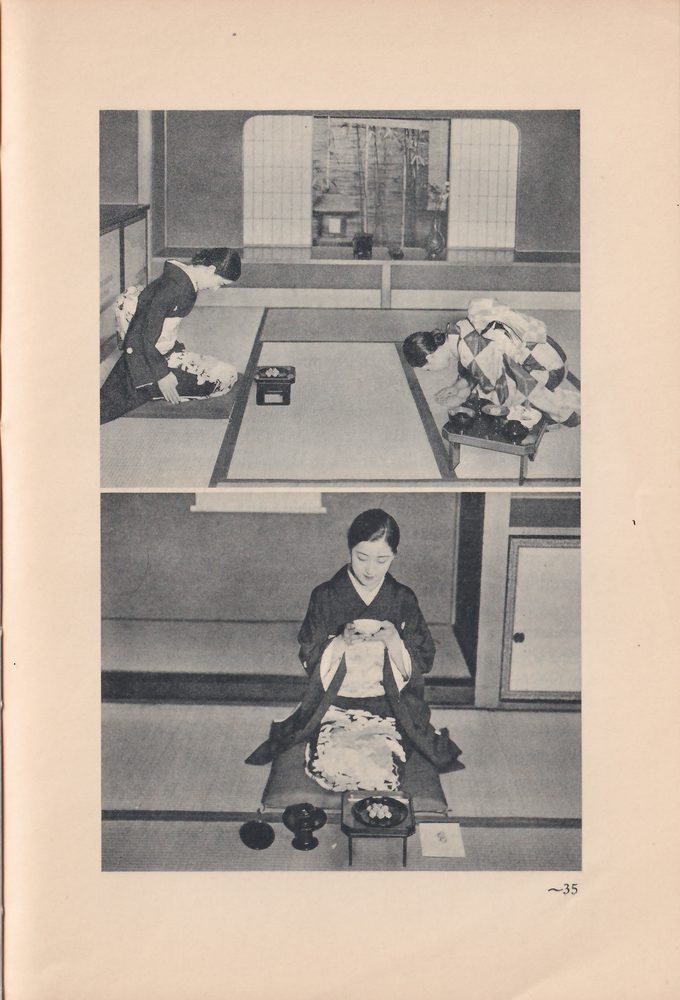
The maid who serves takes the trays away in the reverse order, and after finally removing the first tray, she serves cakes in its place. Then she serves ordinary tea or thin powdered tea.
What has been explained above is of course formal Japanese table etiquette. Now, there are many schools of formal table etiquette in Japan, just as there are various schools for chanoyu (tea ceremony) and ikebana (flower arrangement). Meals taken en famille are, however, less formal, as may be imagined. Notwithstanding, there is a certain impressive ceremonial at all Japanese meals, however informal, which hosts and guests alike respect and which makes a Japanese meal singularly impressive to foreigners. Finally, there is the restful atmosphere of the Japanese meal. This convinces that the Japanese have learned the art of eating to live and not living to eat. The following photographs serve to give an idea of formal table etiquette.
2. REGULAR DINNERS
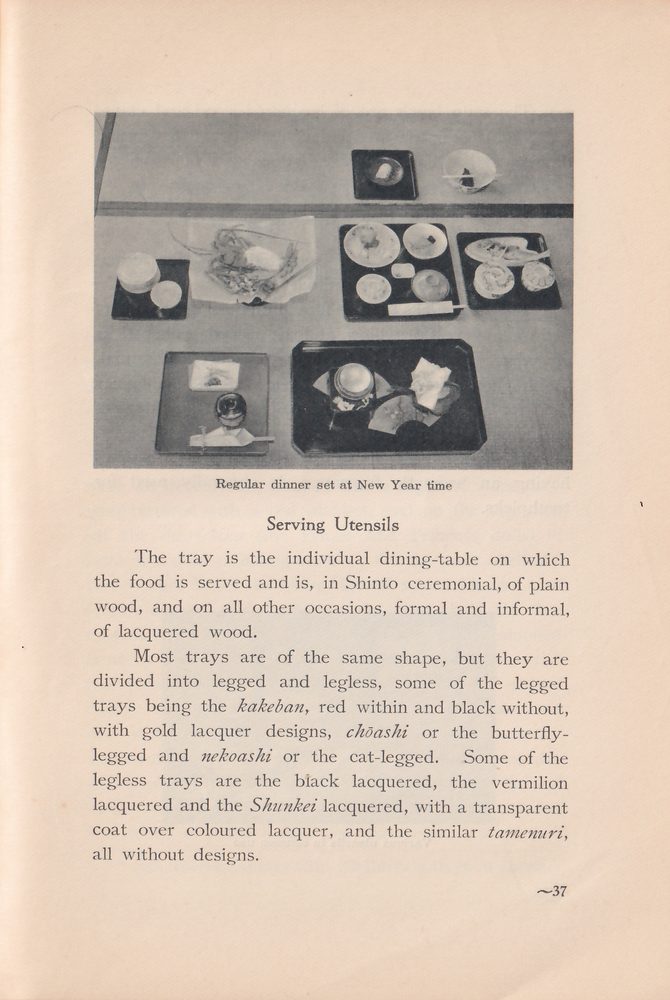
The regular dinner is that generally served in society. It is a mixture of the collation served before the tea ceremony and the formal dinner, and is a convenient meal which offers opportunity for the combining of the most delicious foods.
At the regular dinner, trays raised on legs are used, but when served at tables, the trays are of the ordinary sort.
A mukōzuke (a dish of mixed foods served on the far side of the tray), a bowl of soup, one other small bowl and a saké cup are served on the tray. The saké is received in the same way as at the formal meal.
Then fish, broiled meat, hassun (a dish containing two foods which must be one of marine product, one of vegetable or herb), a boiled dish, chawanmushi (steamed egg custard) and a fried dish are brought in one at a time in order, and the earlier dishes are gradually removed.
This way of serving comes from the tea ceremony collation and resembles the Western way of serving one dish at a time, so that it has come to be used when guests are seated in chairs at tables.
It is now very general for all sorts of delicacies to be served before the meal in the manner of the Western hors d’œuvres. At the end, boiled rice and bean-paste soup, and finally coarse tea are served.
Then in some cases, after the tray is removed, fruit is served, or cakes and ordinary tea, or cakes and thin powdered tea.
Serving Utensils
The tray is the individual dining-table on which the food is served and is, in Shinto ceremonial, of plain wood, and on all other occasions, formal and informal, of lacquered wood.
Most trays are of the same shape, but they are divided into legged and legless, some of the legged trays being the kakeban, red within and black without, with gold lacquer designs, chōashi or the butterfly-legged and nekoashi or the cat-legged. Some of the legless trays are the black lacquered, the vermilion lacquered and the Shunkei lacquered, with a transparent coat over coloured lacquer, and the similar tamenuri, all without designs.
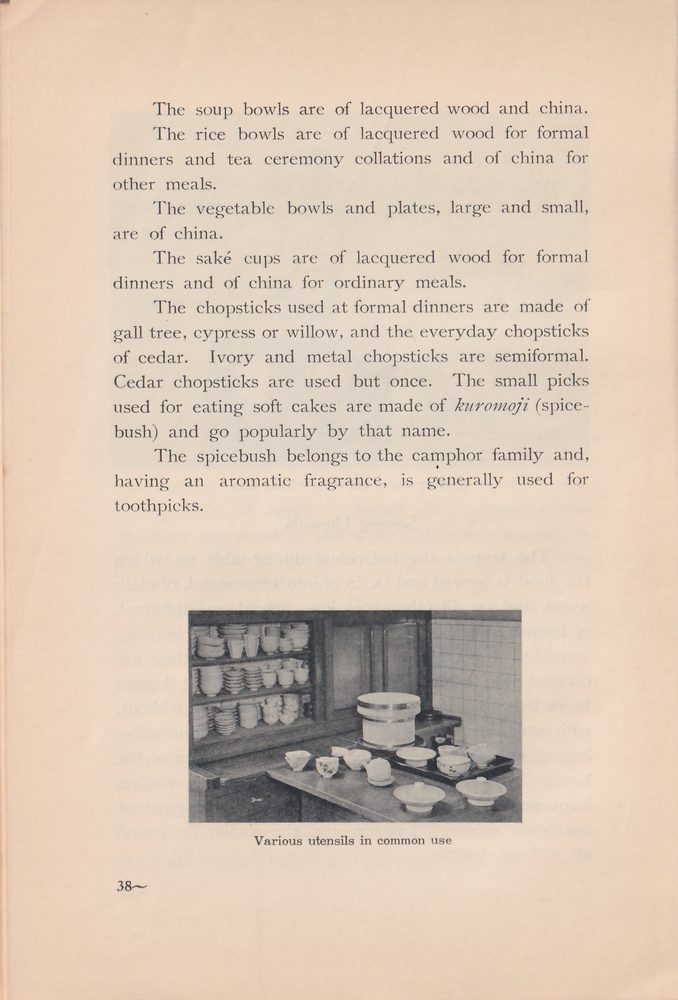
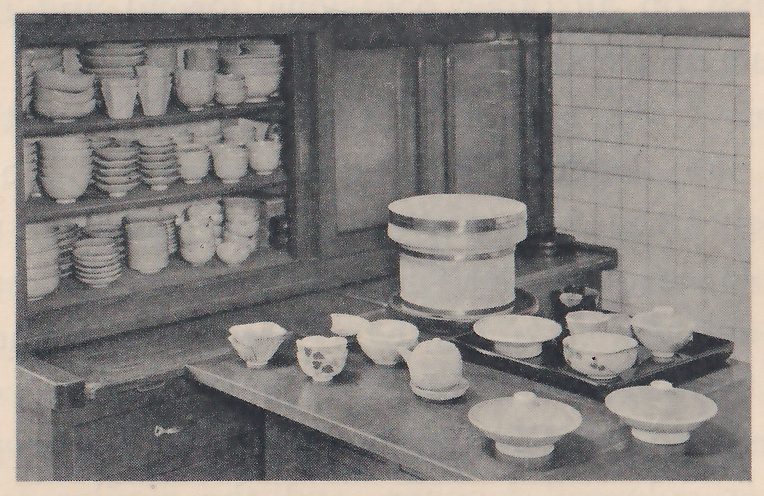
The soup bowls are of lacquered wood and china.
The rice bowls are of lacquered wood for formal dinners and tea ceremony collations and of china for other meals.
The vegetable bowls and plates, large and small, are of china.
The saké cups are of lacquered wood for formal dinners and of china for ordinary meals.
The chopsticks used at formal dinners are made of gall tree, cypress or willow, and the everyday chopsticks of cedar. Ivory and metal chopsticks are semiformal. Cedar chopsticks are used but once. The small picks used for eating soft cakes are made of kuromoji (spicebush) and go popularly by that name.
The spicebush belongs to the camphor family and, having an aromatic fragrance, is generally used for toothpicks.