
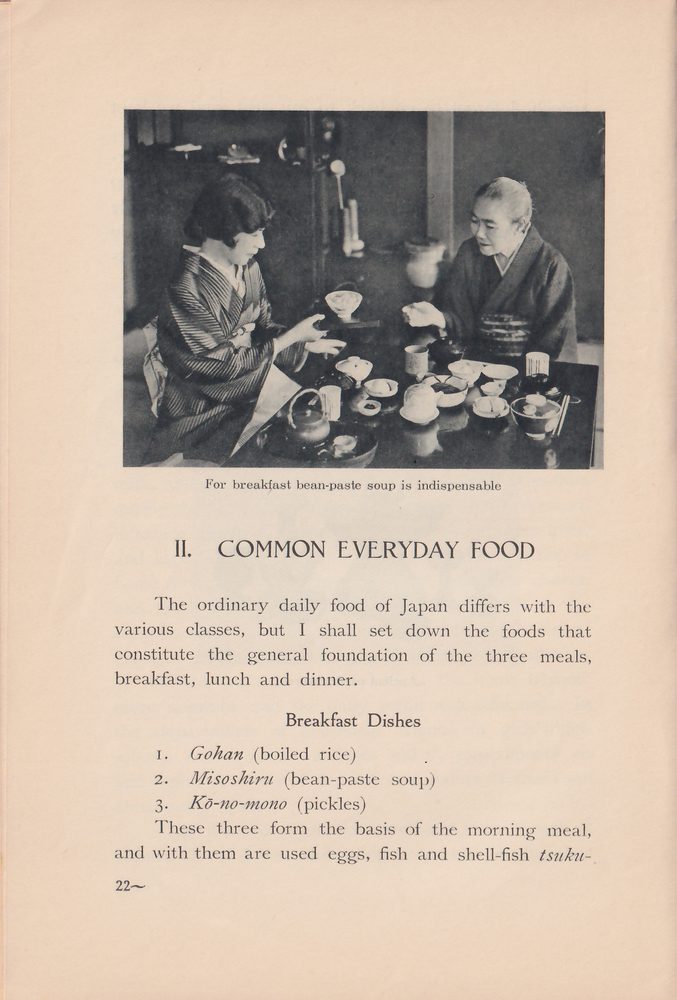
II. COMMON EVERYDAY FOOD
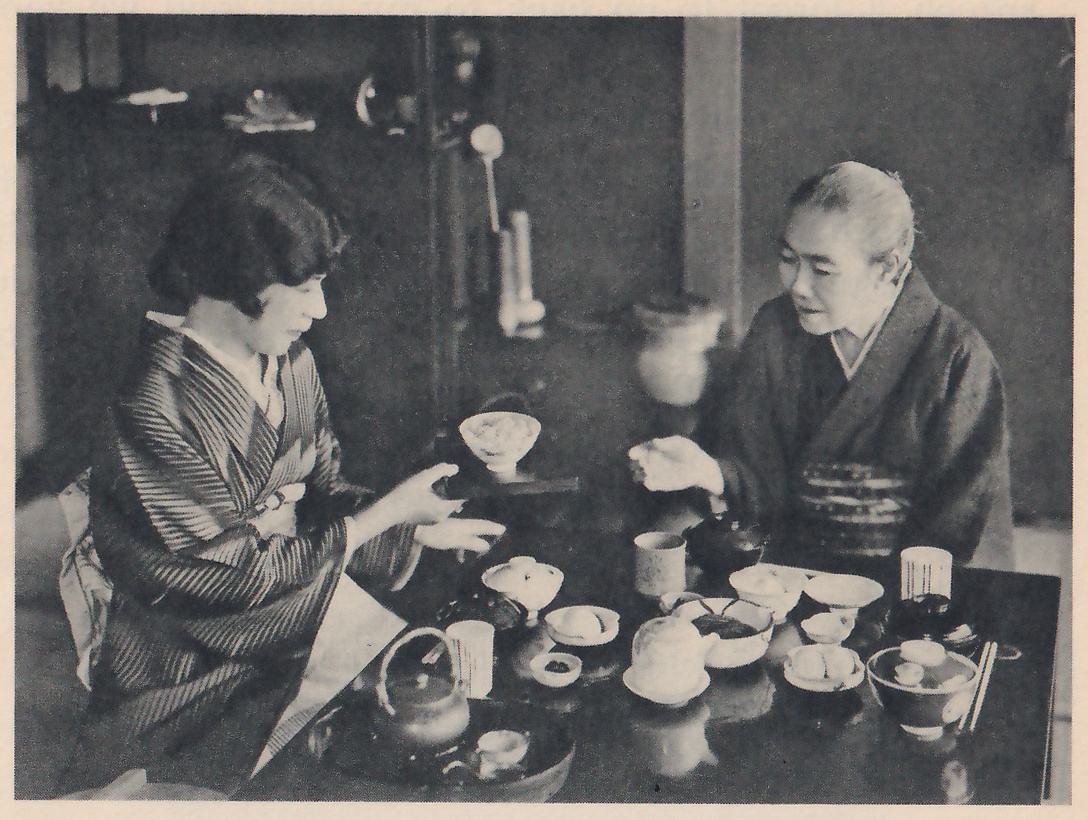
The ordinary daily food of Japan differs with the various classes, but I shall set down the foods that constitute the general foundation of the three meals, breakfast, lunch and dinner.
Breakfast Dishes
1. Gohan (boiled rice)
2. Misoshiru (bean-paste soup)
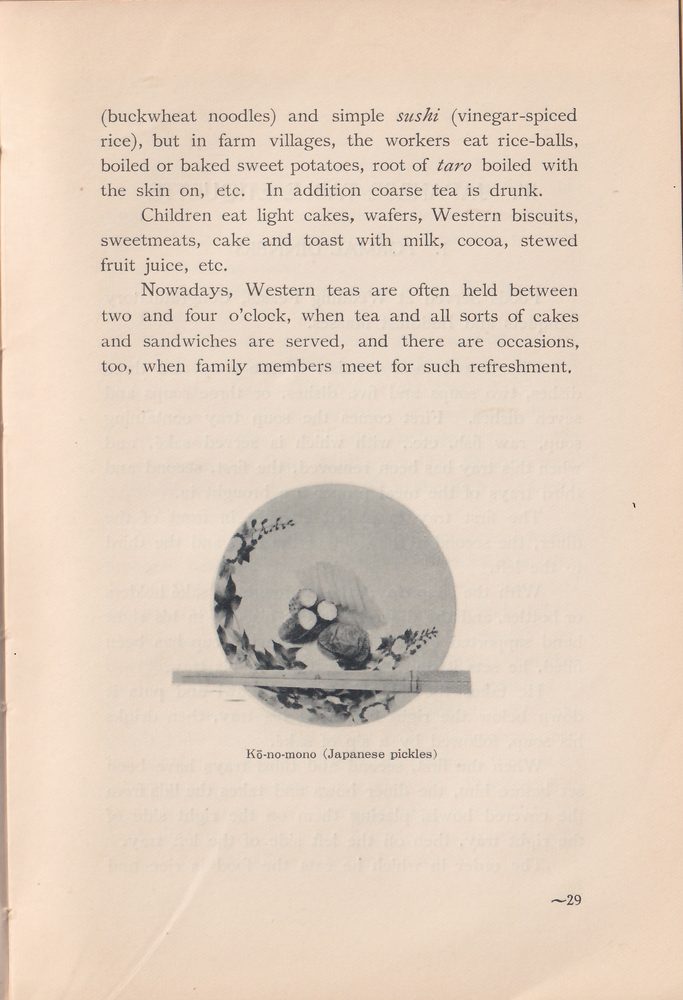
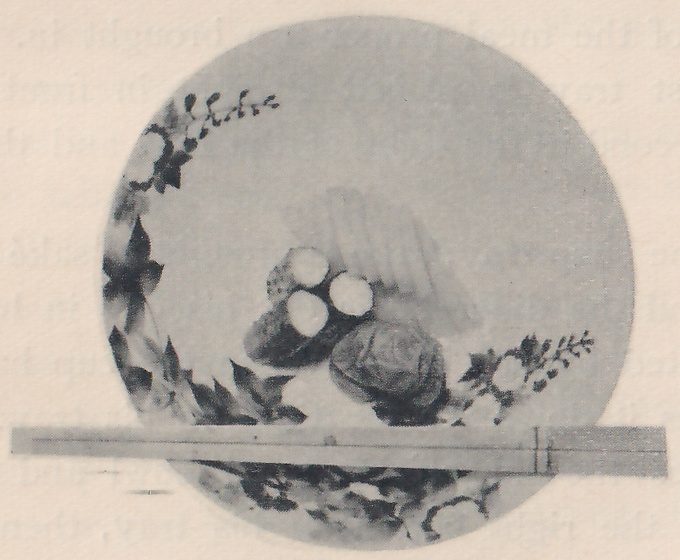
3. Kō-no-mono (pickles)
These three form the basis of the morning meal, and with them are used eggs, fish and shell-fish tsuku-
dani (foods boiled down in soy), shiokonbu (the laminaria boiled in brine and soy), nori (laver), nimame (boiled beans), various kinds of bean-paste dishes, pickled plums, etc.
How to Cook Rice
Polished rice is generally used, but recently for nutritive reasons, half-polished rice, rice in embryo, etc. have gained considerable popularity.
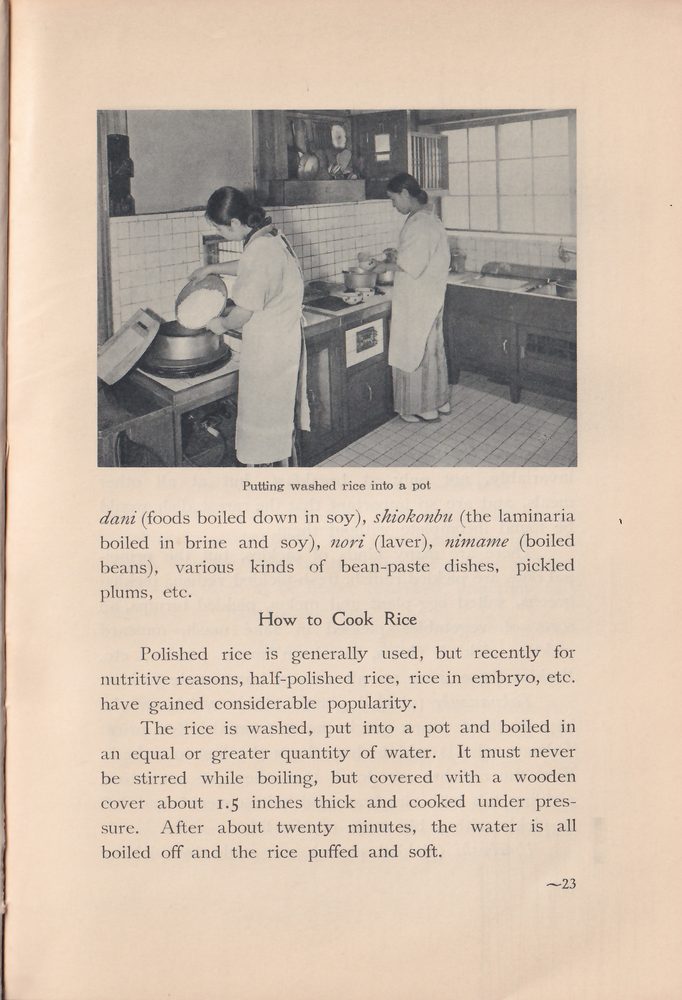
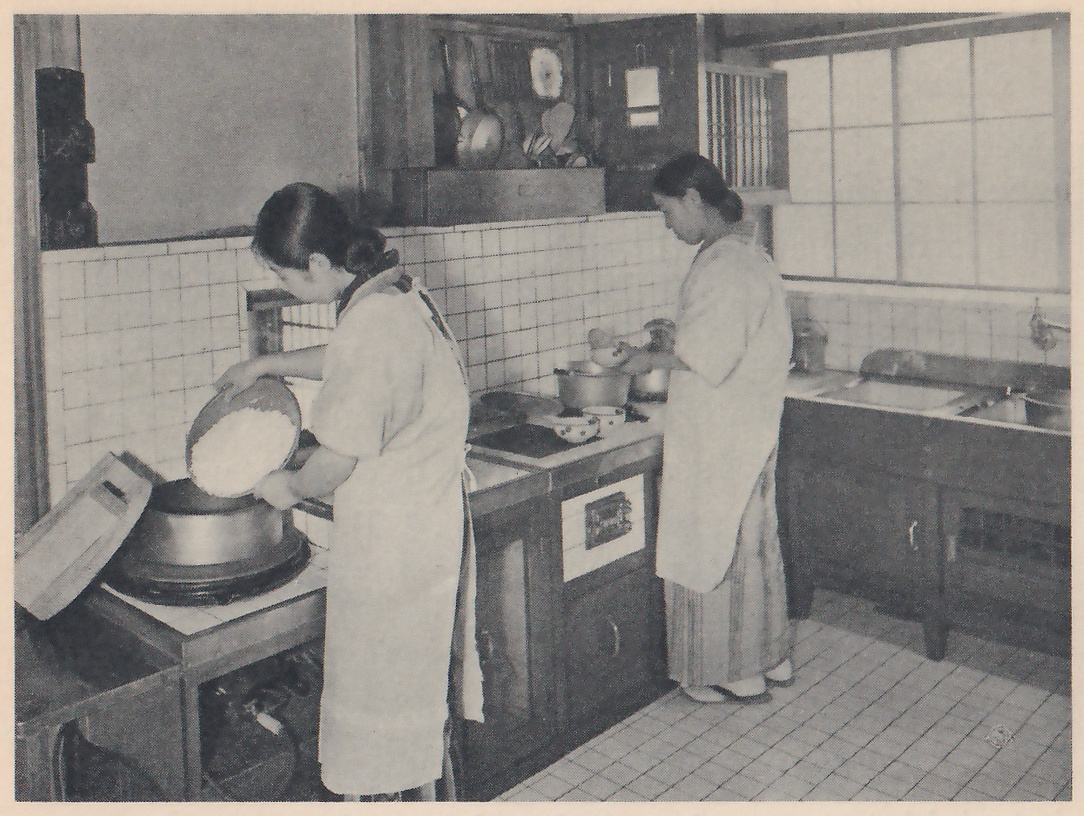
The rice is washed, put into a pot and boiled in an equal or greater quantity of water. It must never be stirred while boiling, but covered with a wooden cover about 1.5 inches thick and cooked under pressure. After about twenty minutes, the water is all boiled off and the rice puffed and soft.
Bean-Paste Soup
The miso (bean-paste) for the soup is made by boiling soy beans and crushing them, adding rice or wheat ferment and salt, then putting them in a tub and letting them go through a sort of fermenting process for more than two months.
Bean-paste soup is made by mashing miso well in a mortar, adding water, straining in a pan and boiling with vegetables of the season. It is flavoured with grated dried bonito or small dried fish. Besides vegetables, sometimes bean-curd, fish, eggs, etc. are added.
Kō-no-mono
Kō-no-mono are also called tsukemono and almost correspond to the pickles of the West. They are eaten invariably, not only at breakfast, but at all other meals, and are so important that the rarest dish would be found incomplete without them.
There are many kinds of pickles, but the principal ones are pickled radish, fresh-pickled radish, pickled greens, salted egg-plant and melon, pickled turnips, all sorts of vegetables pickled in saké mash, mustard pickles, pickled plums, rice-bran mash pickles, etc. Besides these there are all sorts of home-made pickles.
Takuanzuke (pickled giant radish), which can be kept for three years, got its name from the Zen priest Takuan, who is said to have been the first to make it. First the radishes are dried, then they are put into a pickling tub with rice-bran and salt, covered and left to pickle with a big stone on the lid.
Umeboshi (pickled plums) are made by pickling
first in brine, then after they have been dried in the sunshine of midsummer, they are again pickled with perilla leaves. From early times the people of Japan have eaten them at or before breakfast, and they may be called a “natural medicine.”
Noon Lunch Dishes
The noon meal is generally simple, boiled rice being the main dish, with boiled vegetables, boiled lentils (soy beans, black beans or peas boiled and flavoured with sugar and soy), dried fish, bean-curd or eggs. And there are always pickles.
Sometimes udon (a kind of macaroni made of wheat flour), sōmen (vermicelli) or soba (buckwheat noodles) are used in place of boiled rice, and always eaten with
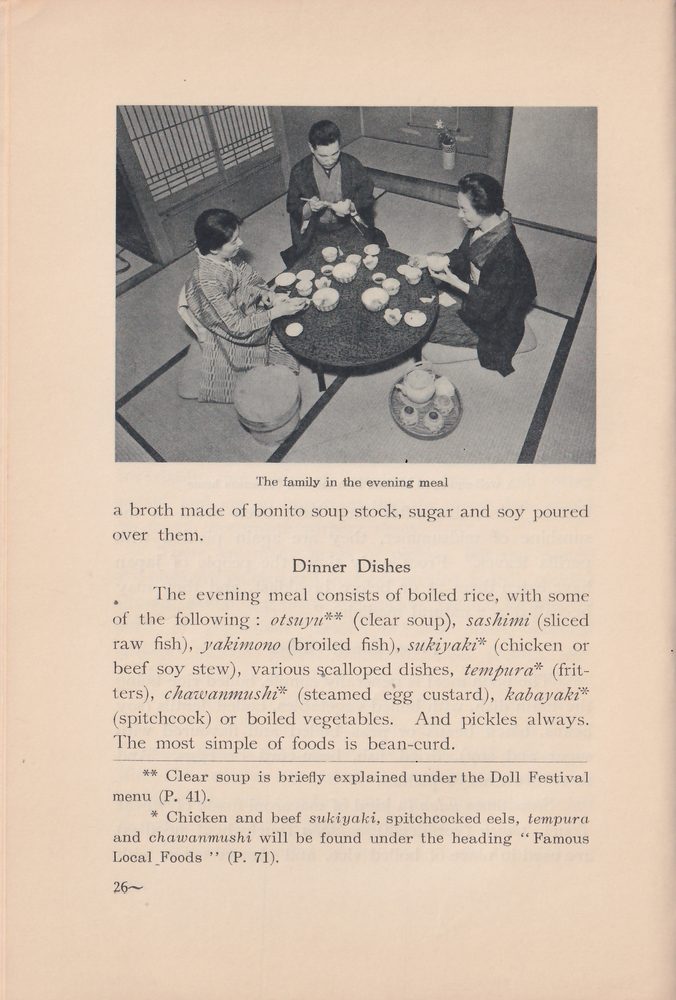
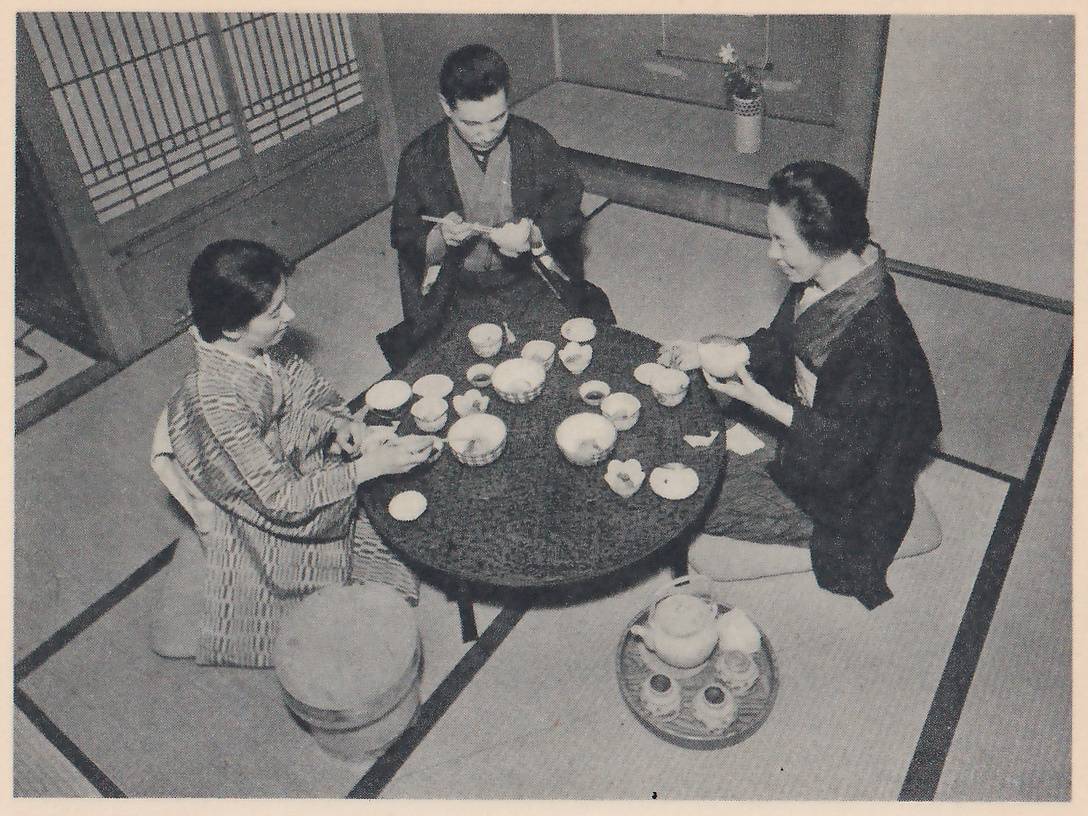
a broth made of bonito soup stock, sugar and soy poured over them.
Dinner Dishes
The evening meal consists of boiled rice, with some of the following: otsuyu** (clear soup), sashimi (sliced raw fish), yakimono (broiled fish), sukiyaki* (chicken or beef soy stew), various scalloped dishes, tempura* (fritters), chawanmushi* (steamed egg custard), kabayaki* (spitchcock) or boiled vegetables. And pickles always. The most simple of foods is bean-curd.
** Clear soup is briefly explained under the Doll Festival menu (P. 41).
* Chicken and beef sukiyaki, spitchcocked eels, tempura and chawanmushi will be found under the heading “Famous Local Foods” (P. 71).
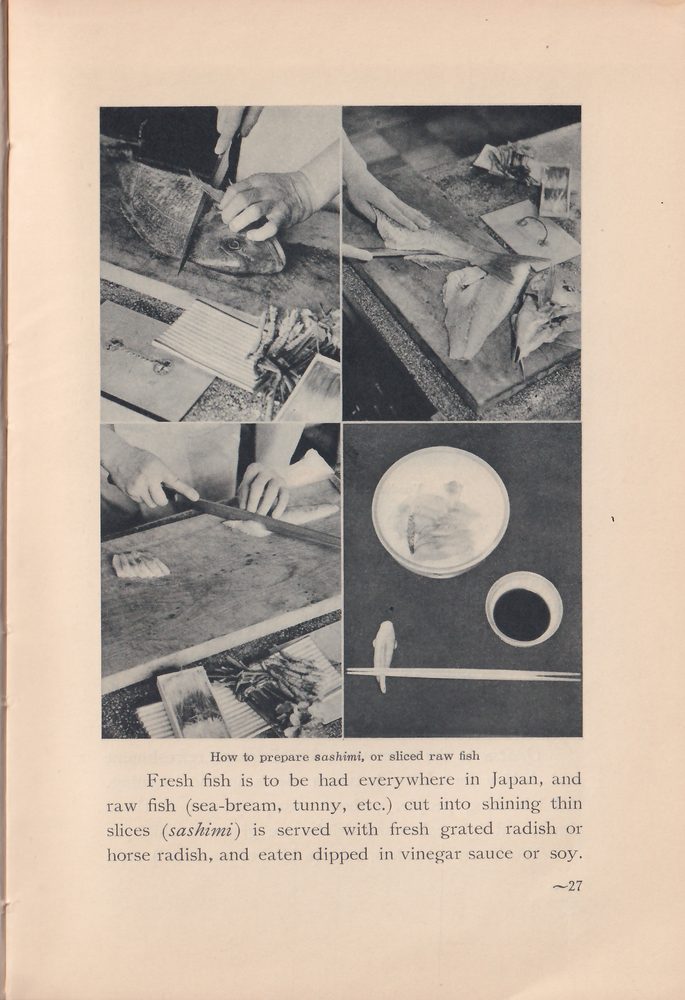
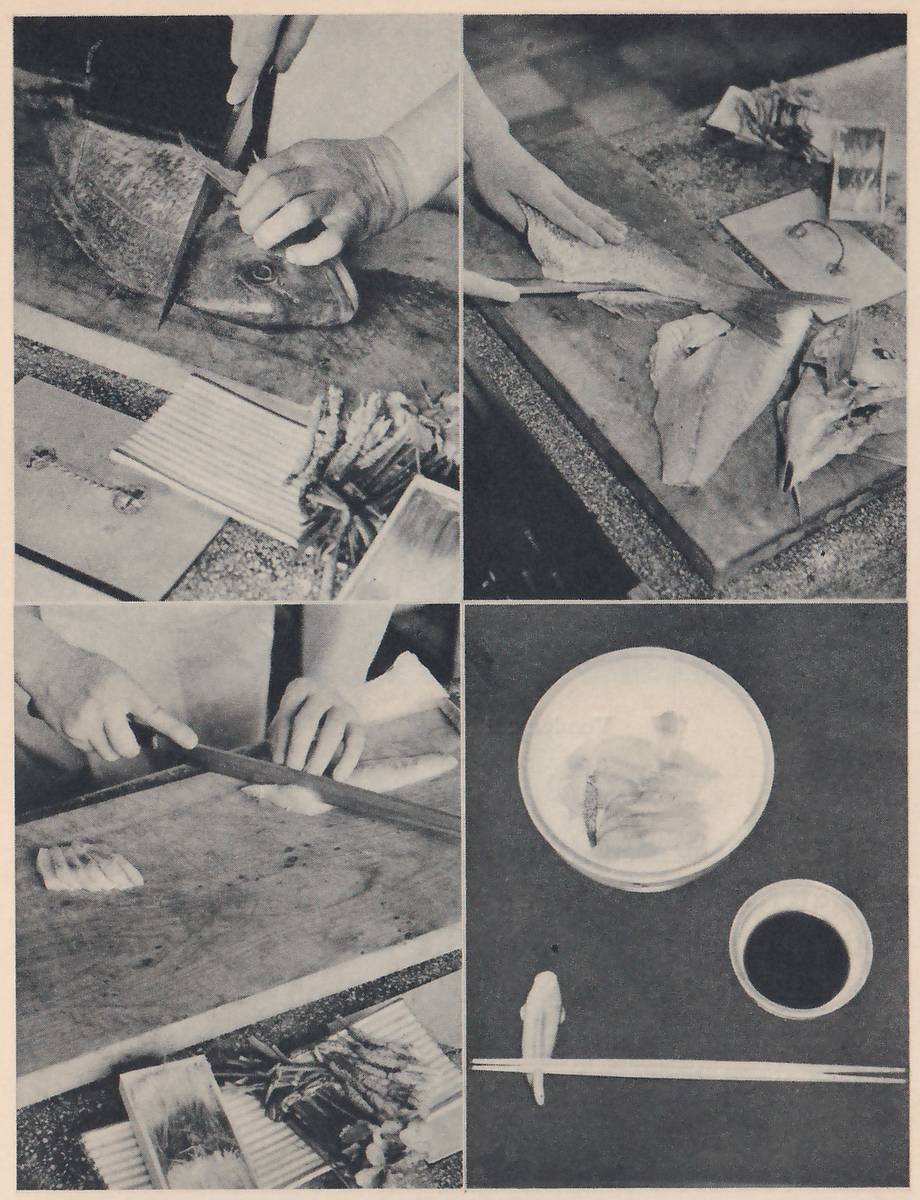
Fresh fish is to be had everywhere in Japan, and raw fish (sea-bream, tunny, etc.) cut into shining thin slices (sashimi) is served with fresh grated radish or horse radish, and eaten dipped in vinegar sauce or soy.
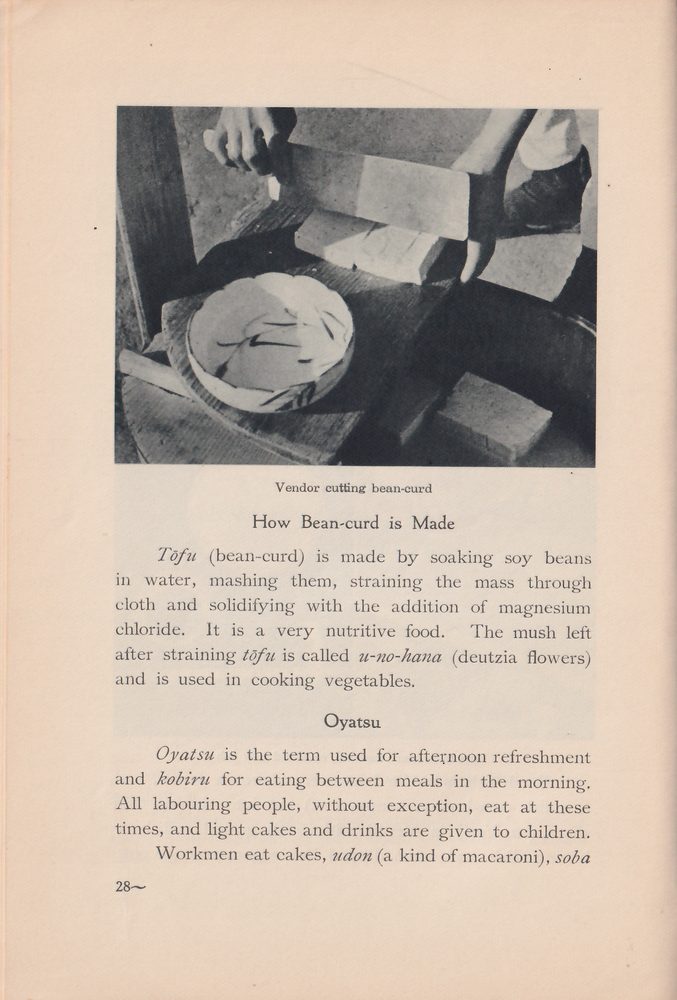
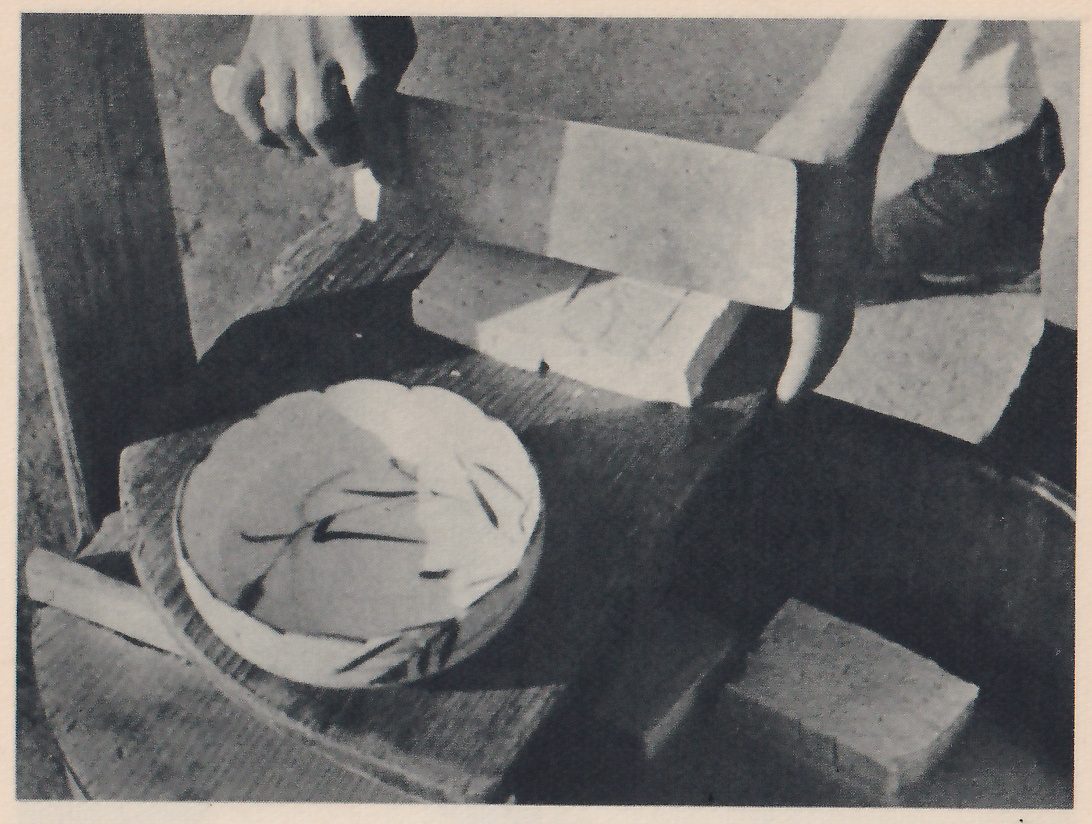
How Bean-curd is Made
Tōfu (bean-curd) is made by soaking soy beans in water, mashing them, straining the mass through cloth and solidifying with the addition of magnesium chloride. It is a very nutritive food. The mush left after straining tōfu is called u-no-hana (deutzia flowers) and is used in cooking vegetables.
Oyatsu
Oyatsu is the term used for afternoon refreshment and kobiru for eating between meals in the morning. All labouring people, without exception, eat at these times, and light cakes and drinks are given to children.
Workmen eat cakes, udon (a kind of macaroni), soba
(buckwheat noodles) and simple sushi (vinegar-spiced rice), but in farm villages, the workers eat rice-balls, boiled or baked sweet potatoes, root of taro boiled with the skin on, etc. In addition coarse tea is drunk.
Children eat light cakes, wafers, Western biscuits, sweetmeats, cake and toast with milk, cocoa, stewed fruit juice, etc.
Nowadays, Western teas are often held between two and four o’clock, when tea and all sorts of cakes and sandwiches are served, and there are occasions, too, when family members meet for such refreshment.