
IV. SPA TREATMENT
From of old the therapeutic virtues of mineral waters have been established throughout the world. In Europe the miraculous efficacy of mineral waters was long believed to be the work of some kind of spirit existing in them. Modern progress in medicine and chemistry rules out such a superstitious conception, but then a really satisfactory explanation is yet to seek.
Balneotherapeutics, or spa treatment in plain English, includes the drinking of waters and the use of hot baths and natural vapour baths, as well as of the various kinds of mud and sand used for hot applications. It goes without saying therefore that this branch of therapeutics merits particular attention in a country like Japan where, as has been amply said in the previous chapter, there are hot springs in abundance.
The action of mineral waters on the human body is as complicated as it is delicate and subtle. Experiments prove that, therapeutically speaking, artificial waters cannot compare with natural ones. The chemical composition of a mineral spring is extremely small in quantity, but it has much curative value all the same. For instance, when iron spring waters are used internally the amount of iron to be absorbed by the system is a mere fraction. And yet it is common knowledge that an iron spring is highly efficacious in anemia.
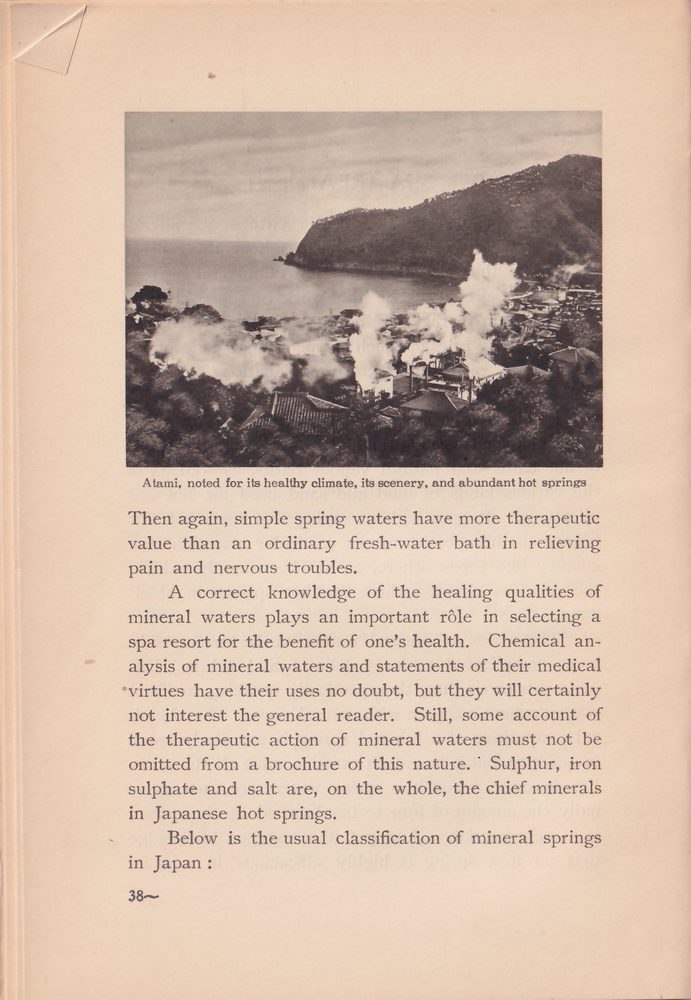
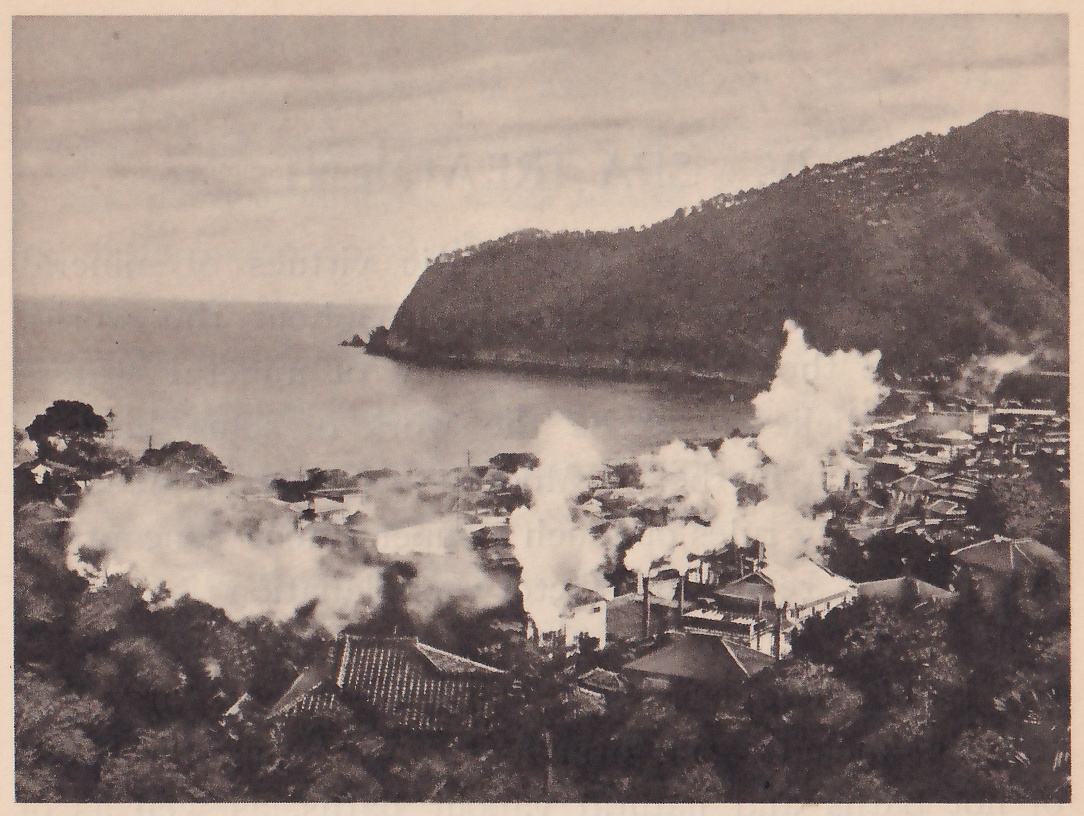
Then again, simple spring waters have more therapeutic value than an ordinary fresh-water bath in relieving pain and nervous troubles.
A correct knowledge of the healing qualities of mineral waters plays an important rôle in selecting a spa resort for the benefit of one’s health. Chemical analysis of mineral waters and statements of their medical virtues have their uses no doubt, but they will certainly not interest the general reader. Still, some account of the therapeutic action of mineral waters must not be omitted from a brochure of this nature. Sulphur, iron sulphate and salt are, on the whole, the chief minerals in Japanese hot springs.
Below is the usual classification of mineral springs in Japan:
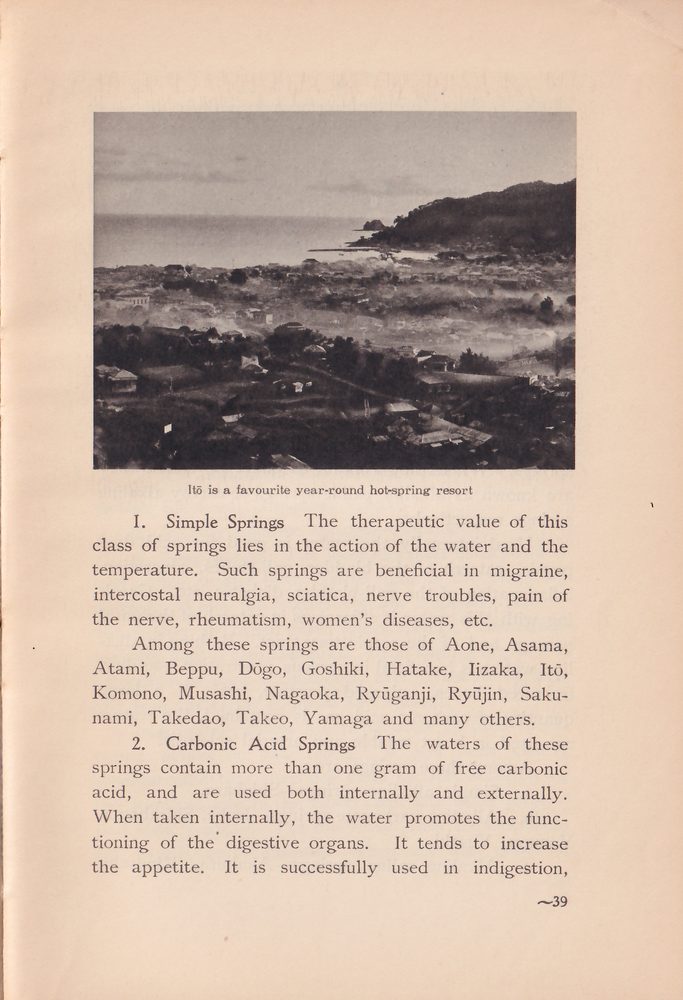
1. Simple Springs The therapeutic value of this class of springs lies in the action of the water and the temperature. Such springs are beneficial in migraine, intercostal neuralgia, sciatica, nerve troubles, pain of the nerve, rheumatism, women’s diseases, etc.
Among these springs are those of Aone, Asama, Atami, Beppu, Dōgo, Goshiki, Hatake, Iizaka, Itō, Komono, Musashi, Nagaoka, Ryūganji, Ryūjin, Sakunami, Takedao, Takeo, Yamaga and many others.
2. Carbonic Acid Springs The waters of these springs contain more than one gram of free carbonic acid, and are used both internally and externally. When taken internally, the water promotes the functioning of the digestive organs. It tends to increase the appetite. It is successfully used in indigestion,
catarrh of the bladder, and bronchial catarrh.
As carbonated waters are tasty and easily preserved, they are widely used as excellent table water and often for medical purposes. Some of them have established themselves as popular commercial beverages under the names of Hirano-sui, Nunobiki-tansan, Wilkinson-tansan, Nippon-Ebian, etc.
Among springs of this class we have those of Arima, Beppu, Furō, Hotta, Takarazuka and Yumoto.
3. Alkaline Springs As a rule, alkaline spring water contains a large percentage of carbonate of soda, with a higher or lower proportion of free carbonic acid. When alkaline springs contain a certain quantity of free carbonic acid, they are called alkaline carbonated springs. When they contain sulphate or earth, they are known as alkaline saline springs or earthy alkaline springs respectively.
Used internally the water is good for acid dyspepsia, catarrh of the bladder, gall-stones, concretion, inflammation of the gall-bladder, diabetes, etc. Gargling with this water is efficacious in catarrh of the nasal passage and of the respiratory tract. Bathing in alkaline waters is beneficial in nervous prostration, sterility, fractured bones, enlarged prostate, etc. If a large quantity of carbonic acid gas is contained, the waters are used in heart trouble and arterial sclerosis.
Among these springs are:
a. Simple alkaline springs—Shiobara.
b. Alkaline carbonate springs—Isobe, Shirahama, Yumura, Yusaki.
c. Alkaline saline springs—Akakura, Kinosaki,
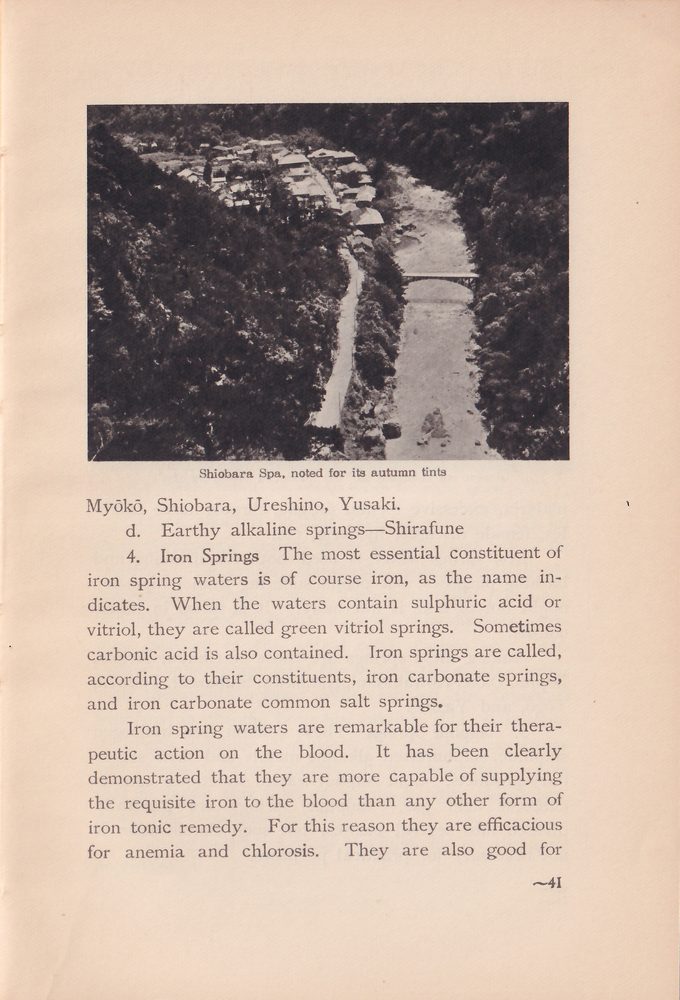
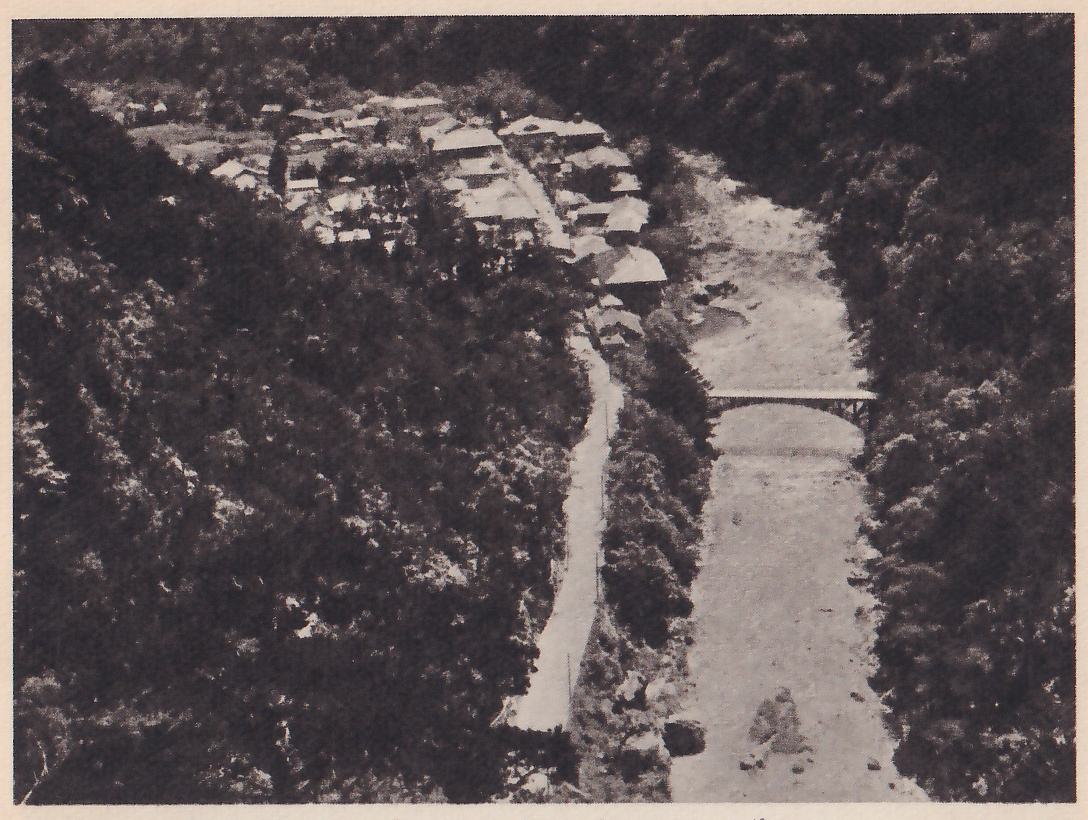
Myōkō, Shiobara, Ureshino, Yusaki.
d. Earthy alkaline springs—Shirafune
4. Iron Springs The most essential constituent of iron spring waters is of course iron, as the name indicates. When the waters contain sulphuric acid or vitriol, they are called green vitriol springs. Sometimes carbonic acid is also contained. Iron springs are called, according to their constituents, iron carbonate springs, and iron carbonate common salt springs.
Iron spring waters are remarkable for their therapeutic action on the blood. It has been clearly demonstrated that they are more capable of supplying the requisite iron to the blood than any other form of iron tonic remedy. For this reason they are efficacious for anemia and chlorosis. They are also good for
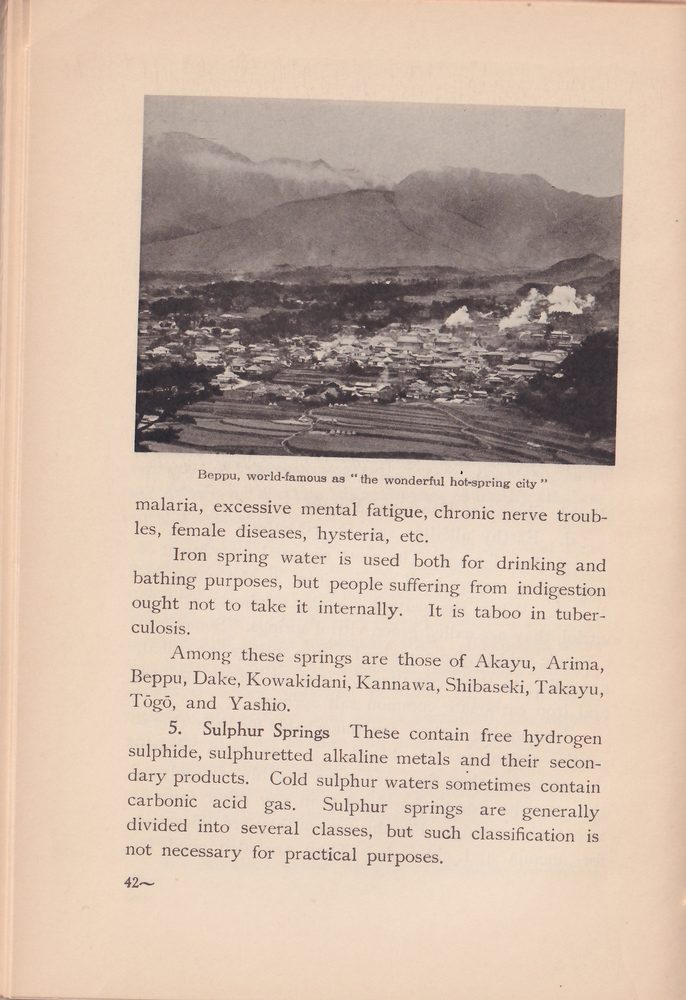
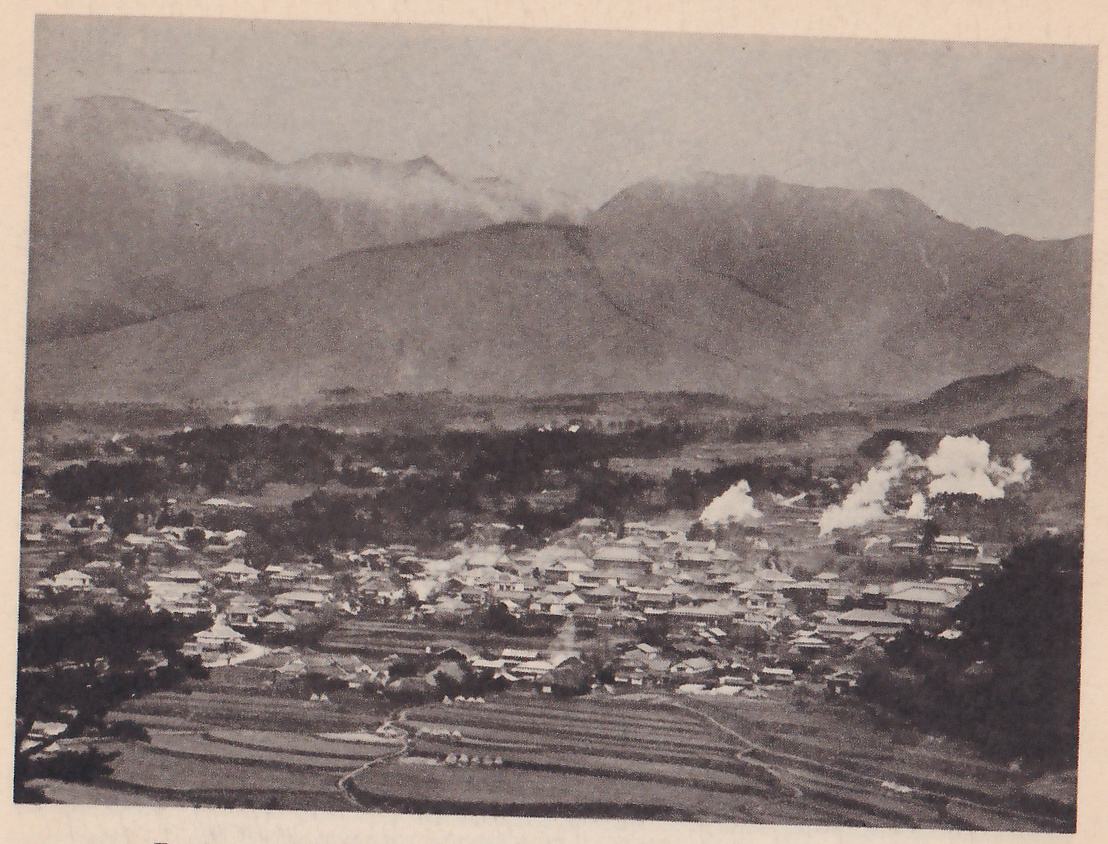
malaria, excessive mental fatigue, chronic nerve troubles, female diseases, hysteria, etc.
Iron spring water is used both for drinking and bathing purposes, but people suffering from indigestion ought not to take it internally. It is taboo in tuberculosis.
Among these springs are those of Akayu, Arima, Beppu, Dake, Kowakidani, Kannawa, Shibaseki, Takayu, Tōgō, and Yashio.
5. Sulphur Springs These contain free hydrogen sulphide, sulphuretted alkaline metals and their secondary products. Cold sulphur waters sometimes contain carbonic acid gas. Sulphur springs are generally divided into several classes, but such classification is not necessary for practical purposes.
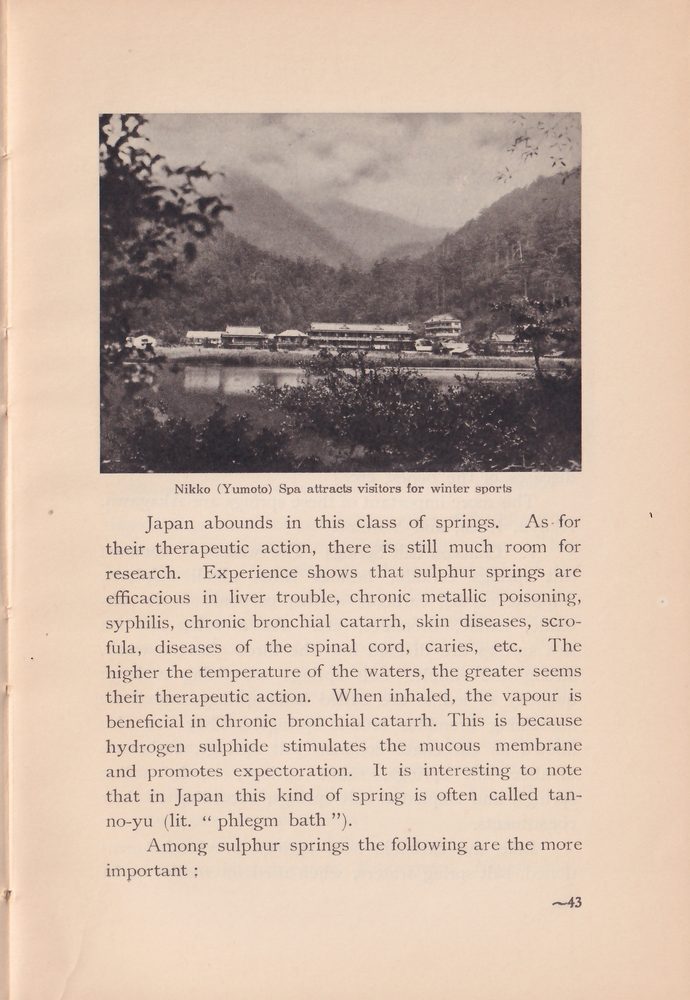
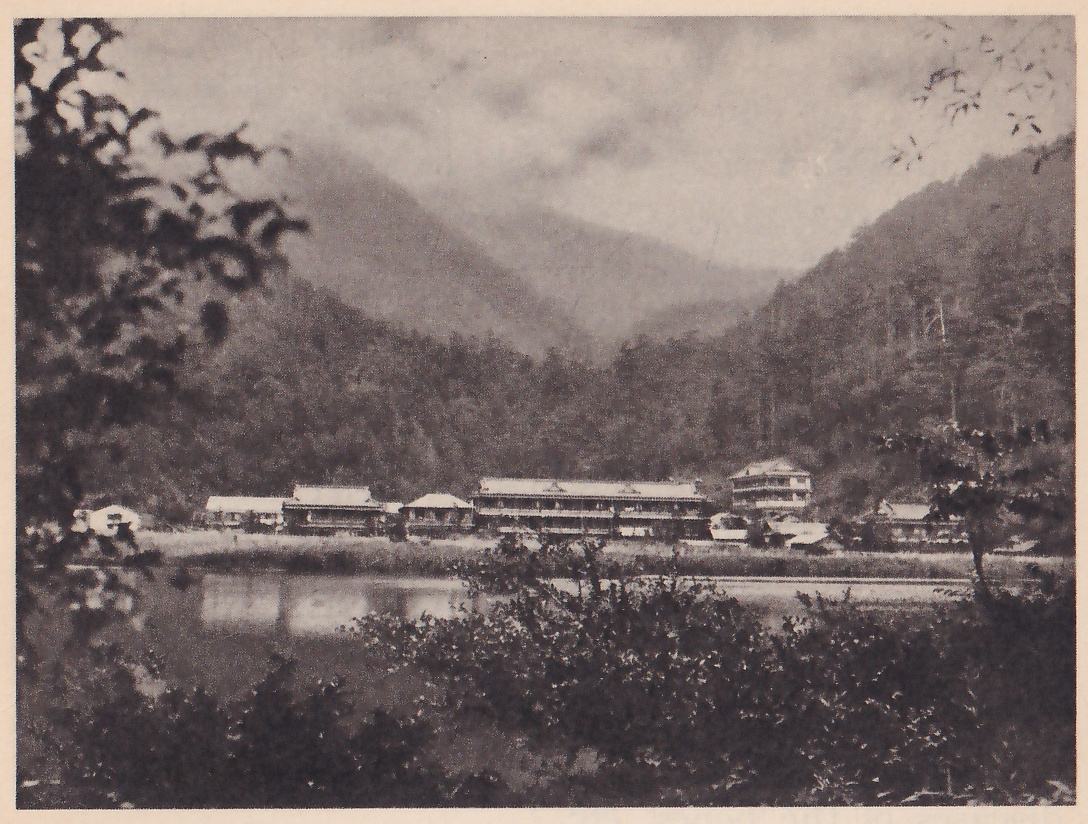
Japan abounds in this class of springs. As for their therapeutic action, there is still much room for research. Experience shows that sulphur springs are efficacious in liver trouble, chronic metallic poisoning, syphilis, chronic bronchial catarrh, skin diseases, scrofula, diseases of the spinal cord, caries, etc. The higher the temperature of the waters, the greater seems their therapeutic action. When inhaled, the vapour is beneficial in chronic bronchial catarrh. This is because hydrogen sulphide stimulates the mucous membrane and promotes expectoration. It is interesting to note that in Japan this kind of spring is often called tan-no-yu (lit. “phlegm bath”).
Among sulphur springs the following are the more important:
Akakura, Awazu, Kawarayu, Musashi, Nakabusa, Narugo, Nasu-Yumoto, Nikko-Yumoto, Nozawa, Sukayu, Tsubame, Yamanaka, Yamashiro, Yunomine.
6. Earthy Springs Earthy waters contain a large amount of mineral matter in solution, including calcium, magnesium salts, carbonic ferric suboxide, carbonate of soda, common salt and so on. When a large quantity of carbonic acid gas is contained, we have what are called earthy carbonate springs. When calcium sulphate predominates in earthy carbonate waters, they are called gypseous waters. In Japan there are few springs of this class.
Earthy waters are prescribed for catarrh of the bladder, prostatitis, inflammation of joints, pleurisy, diseases of the bones, etc.
The more important of these springs are Akagawa, Akayu, Kuzu, and Yoshino.
7. Common Salt Springs The waters of common salt springs contain, besides salts, alkali sulphate, sulphate earths, carbonic earths, carbonic ferric suboxide, iodine, bromides, etc. As a rule, common salt springs are divided into the three classes—weak, strong and simple. Salt springs containing a large quantity of iodine are called iodic springs, and those containing bromides bromic springs. They are also known as carbonate common salt springs, carbonate alkaline salt springs, saline springs, earthy saline springs, and sulphated salt springs, according to their constituents.
Like the carbonic acid springs previously mentioned, salt spring waters, when used internally, assist
digestion, promote the peristaltic action of the intestines, increases haemoglobin, and quickens metabolism. They are efficacious, therefore, in chronic catarrh of the stomach, inflammation of the duodenum, inflammation of the gall-bladder, constipation, scrofula, women’s diseases and catarrh of the respiratory organs. Baths in these waters are used in skin diseases and diseases of the bones. Moreover, baths in salt springs have the effect of keeping the bather warm long after he comes out of the water; for the salt crystals left on the skin prevent the heat from escaping from the body.
Salt springs are abundant in Japan. The following are the more important ones:
a. Weak Common Salt Springs:
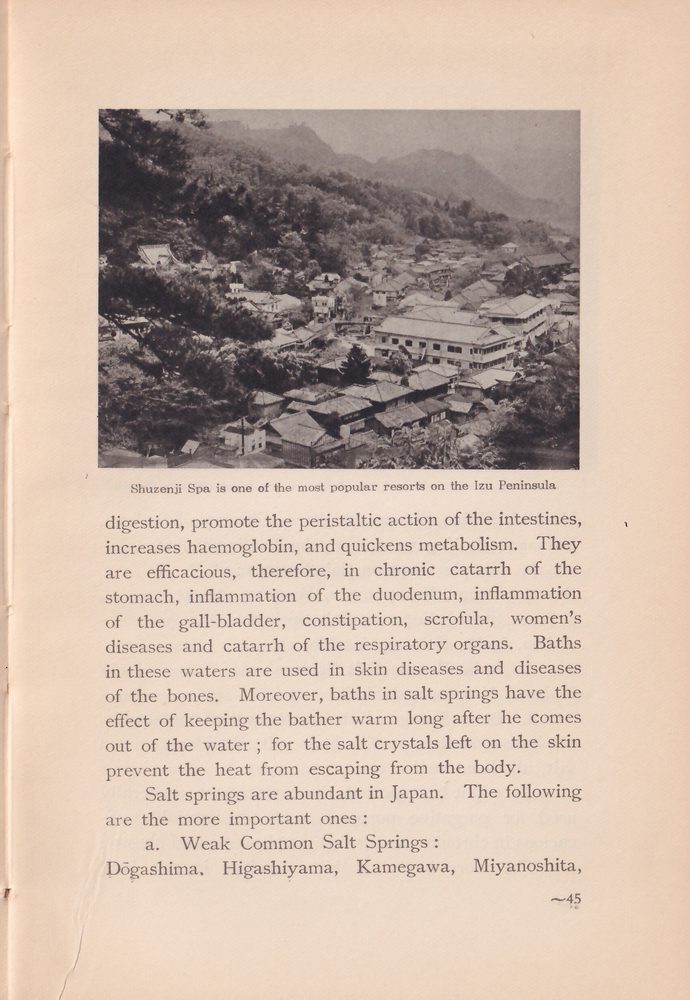
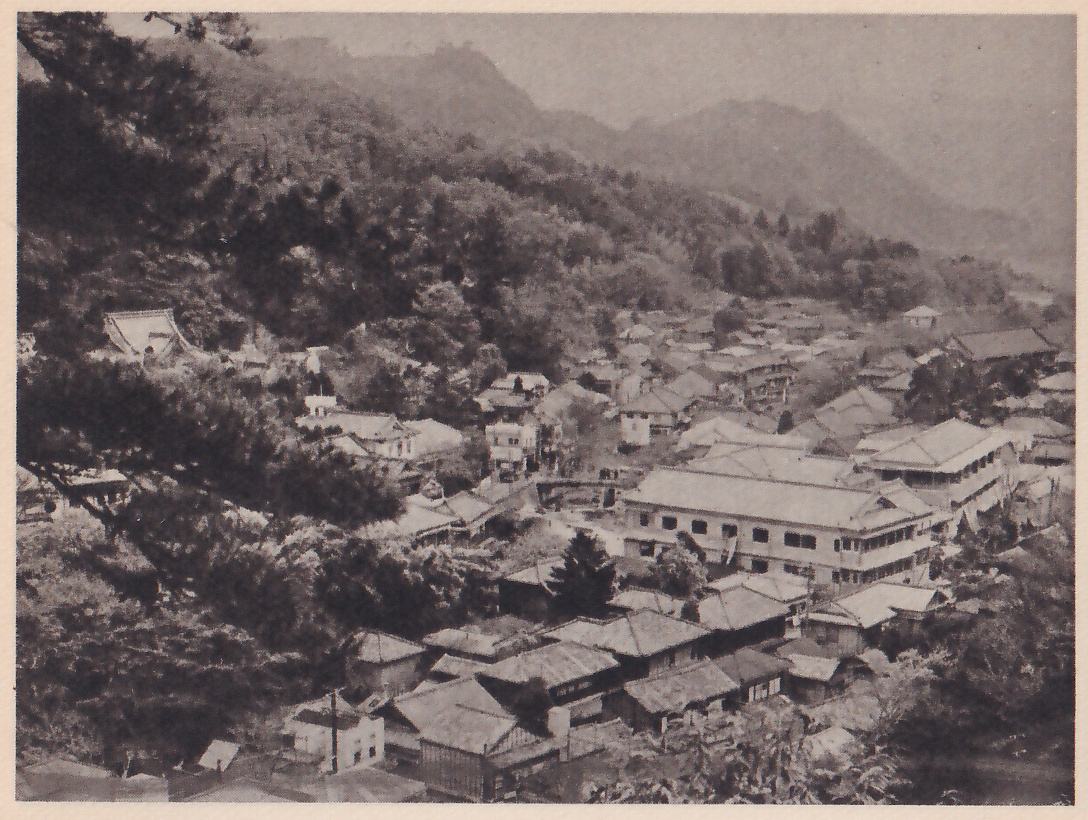
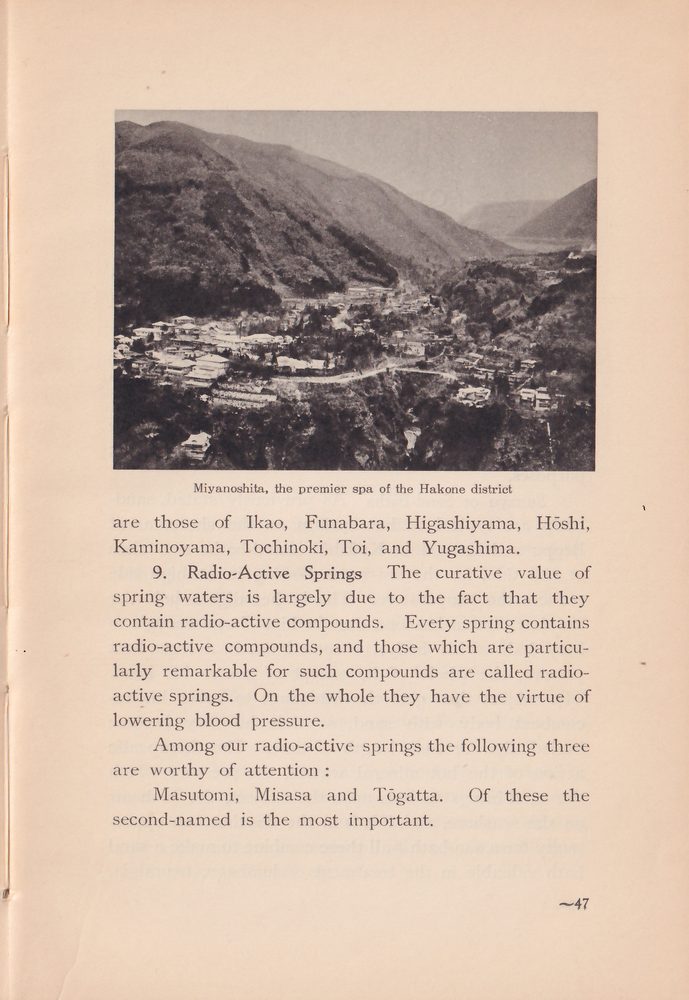
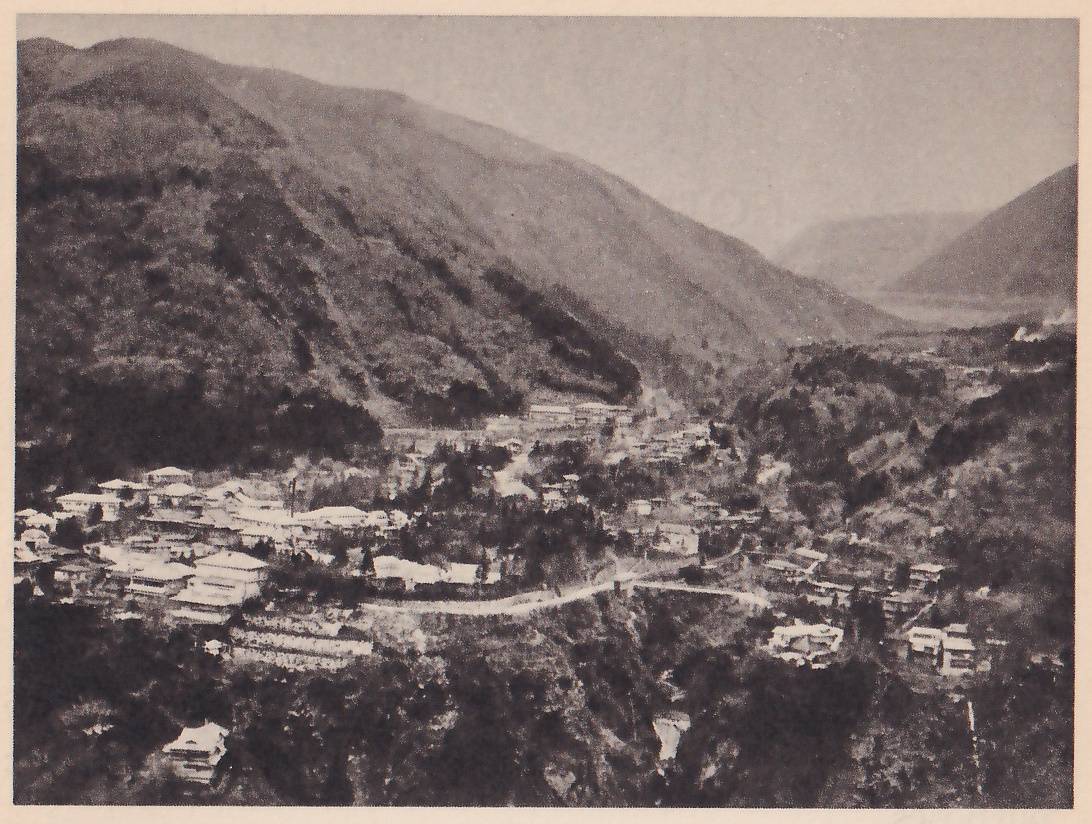
Dōgashima, Higashiyama, Kamegawa, Miyanoshita,
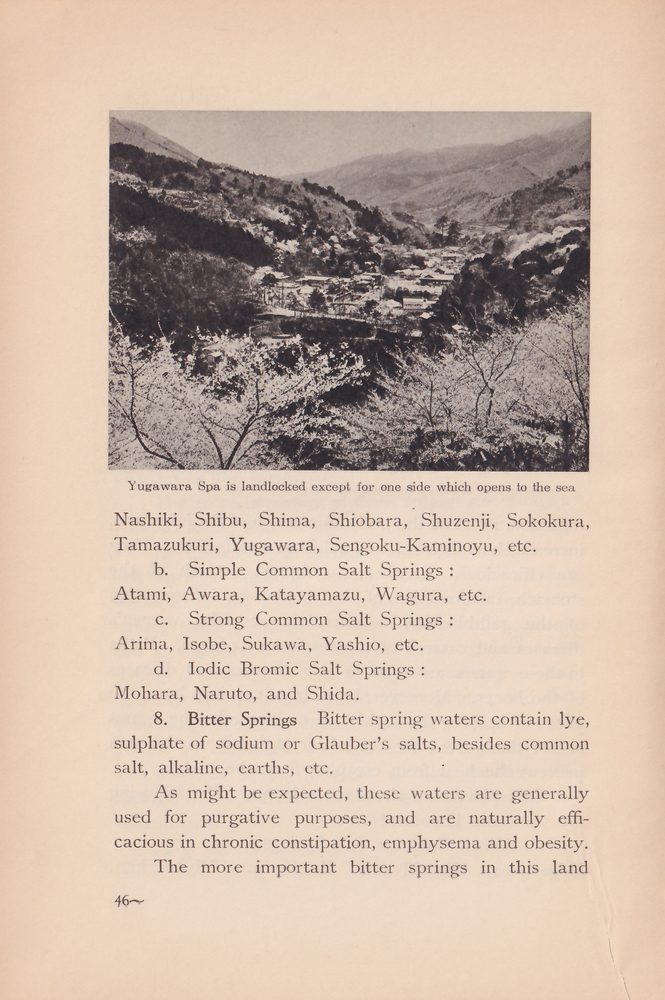
Nashiki, Shibu, Shima, Shiobara, Shuzenji, Sokokura, Tamazukuri, Yugawara, Sengoku-Kaminoyu, etc.
b. Simple Common Salt Springs:
Atami, Awara, Katayamazu, Wagura, etc.
c. Strong Common Salt Springs:
Arima, Isobe, Sukawa, Yashio, etc.
d. Iodic Bromic Salt Springs:
Mohara, Naruto, and Shida.
8. Bitter Springs Bitter spring waters contain lye, sulphate of sodium or Glauber’s salts, besides common salt, alkaline, earths, etc.
As might be expected, these waters are generally used for purgative purposes, and are naturally efficacious in chronic constipation, emphysema and obesity.
The more important bitter springs in this land
are those of Ikao, Funabara, Higashiyama, Hōshi, Kaminoyama, Tochinoki, Toi, and Yugashima.
9. Radio-Active Springs The curative value of spring waters is largely due to the fact that they contain radio-active compounds. Every spring contains radio-active compounds, and those which are particularly remarkable for such compounds are called radio-active springs. On the whole they have the virtue of lowering blood pressure.
Among our radio-active springs the following three are worthy of attention:
Masutomi, Misasa and Tōgatta. Of these the second-named is the most important.