
II. FOLKLORE CONCERNING HOT SPRINGS
In Japan, as in other countries, similarly blessed with hot springs, we have extensive folklore concerning them. The legend that Charles V discovered the springs of Karlsbad during a hunting expedition is too well known to need more than mere mention. Another legend attached to a certain spa in South Germany says that sight was restored to a blind baby whose eyes were washed with the waters of the mineral spring, as advised by a divinity who had appeared in a dream to the baby’s mother.
There are a great many similar legends in Japan, too. Not only are such traditions interesting, but they are also helpful to anyone who wishes to make a study of hot springs in Japan.
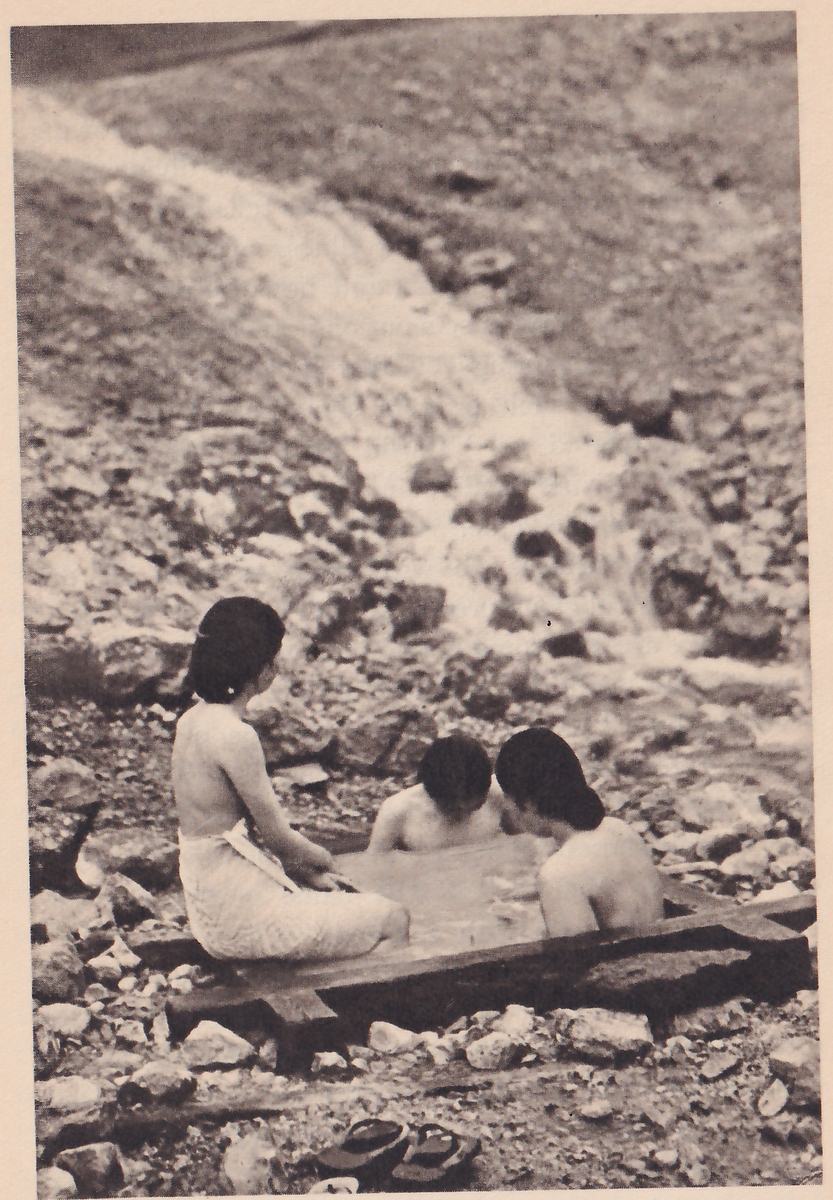
As already stated, the Japanese have made use of hot springs from remote antiquity. Tradition says that as early as 700 B.C. people were already acquainted with them. Some of these time-honoured springs still enjoy wide popularity. Those at Atami, Shuzenji, Suwa and Dōgo are, for example, believed to come under the category of these centuries-old springs. There are nearly a thousand mineral springs, both hot and cold, scattered over the land. It stands to reason therefore that all sorts of legends about them should
have been handed down from generation to generation.
Let us first consider how the chemical composition of various springs caught the popular imagination and affected the naming of springs. We have a good many springs known as Unagi-yu (lit. “eel bath”), such as those at Narugo Spa in Miyagi Prefecture and at other spas, so named from the fact that alkaline waters make the skin slimy for the time being. The names of some of the iron springs often contain the word aka (red), because the waters of such springs are of a reddish colour. Thus we have Akakura Spa in Niigata Prefecture and Akagawa Spa in Aomori Prefecture, to mention two only. Then there are a great many springs containing salt. So when we speak of the spas of Shio-bara, Shio-no-yu, Ya-shio, and En-zan, we know
at once that they are salt springs, shio and en being the two ways in which the Chinese character for salt is read in the Japanese language. Then again, the ways the waters act on the bather’s skin give different names to different springs. Thus we have springs called Hari-no-yu (lit. “needle bath”), Ara-yu (lit. “coarse bath”), Wata-no-yu (lit. “cotton bath”), Atsu-yu (lit. “boiling hot bath”) and so on. All this goes to show how interesting it is sometimes to infer the chemical composition of springs from their names.
There are also many hot springs, the names ot which bespeak the efficacious virtues they possess. Take, for example, Me-no-yu (lit. “eye bath”) at Asama Spa. The springs so named are, needless to say, efficacious in eye diseases. In Akita Prefecture
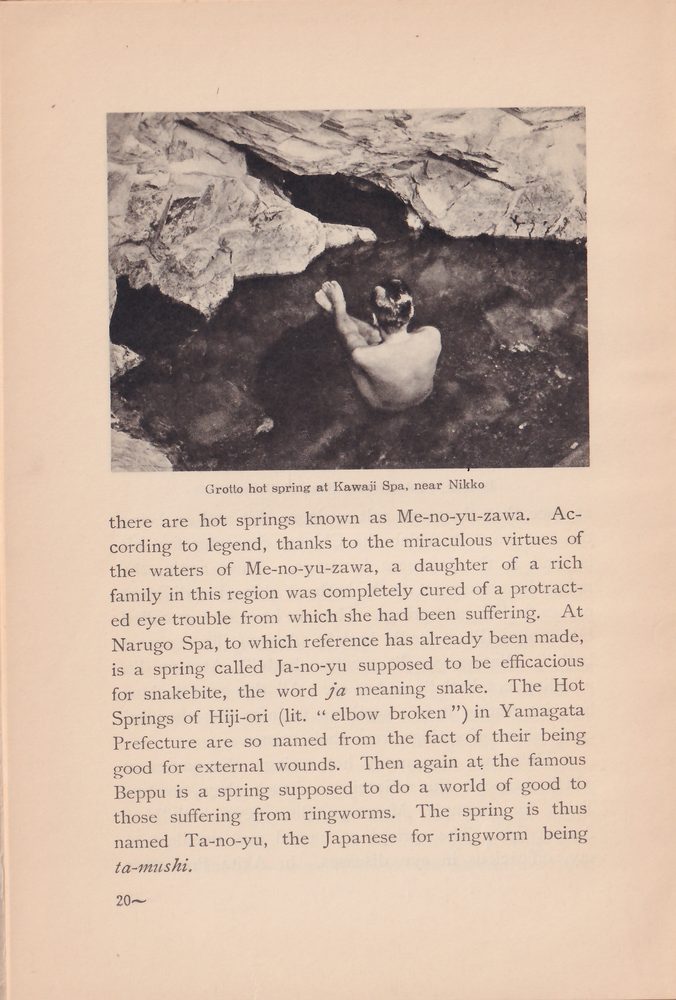
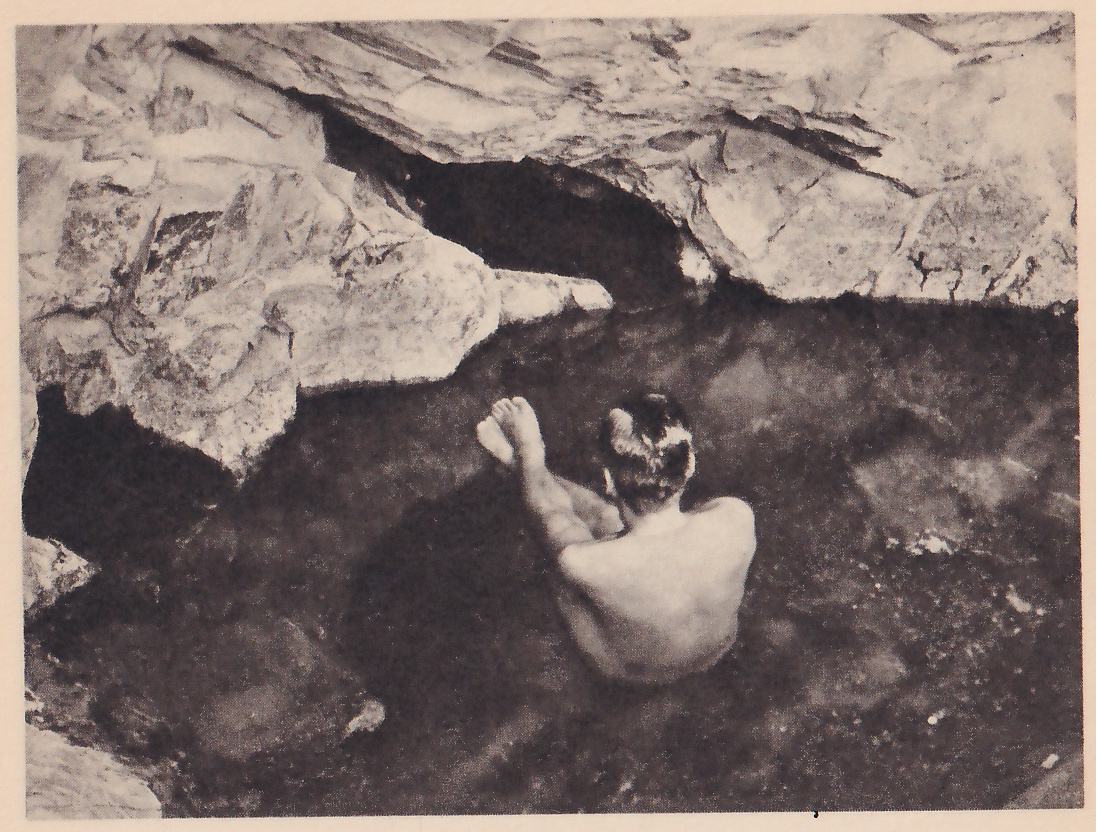
there are hot springs known as Me-no-yu-zawa. According to legend, thanks to the miraculous virtues of the waters of Me-no-yu-zawa, a daughter of a rich family in this region was completely cured of a protracted eye trouble from which she had been suffering. At Narugo Spa, to which reference has already been made, is a spring called Ja-no-yu supposed to be efficacious for snakebite, the word ja meaning snake. The Hot Springs of Hiji-ori (lit. “elbow broken”) in Yamagata Prefecture are so named from the fact of their being good for external wounds. Then again at the famous Beppu is a spring supposed to do a world of good to those suffering from ringworms. The spring is thus named Ta-no-yu, the Japanese for ringworm being ta-mushi.
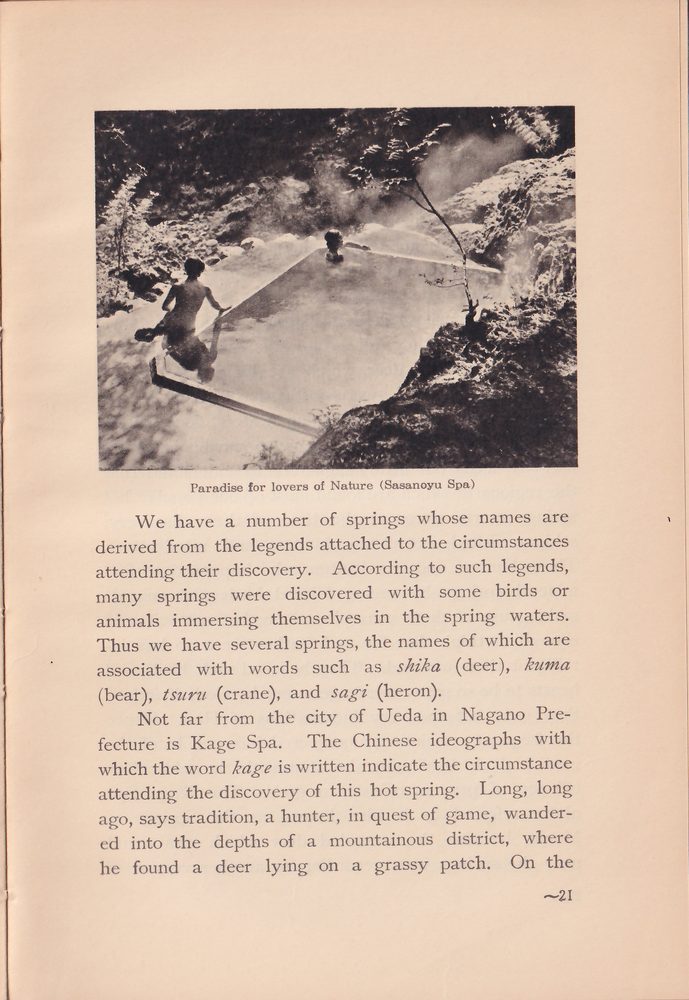
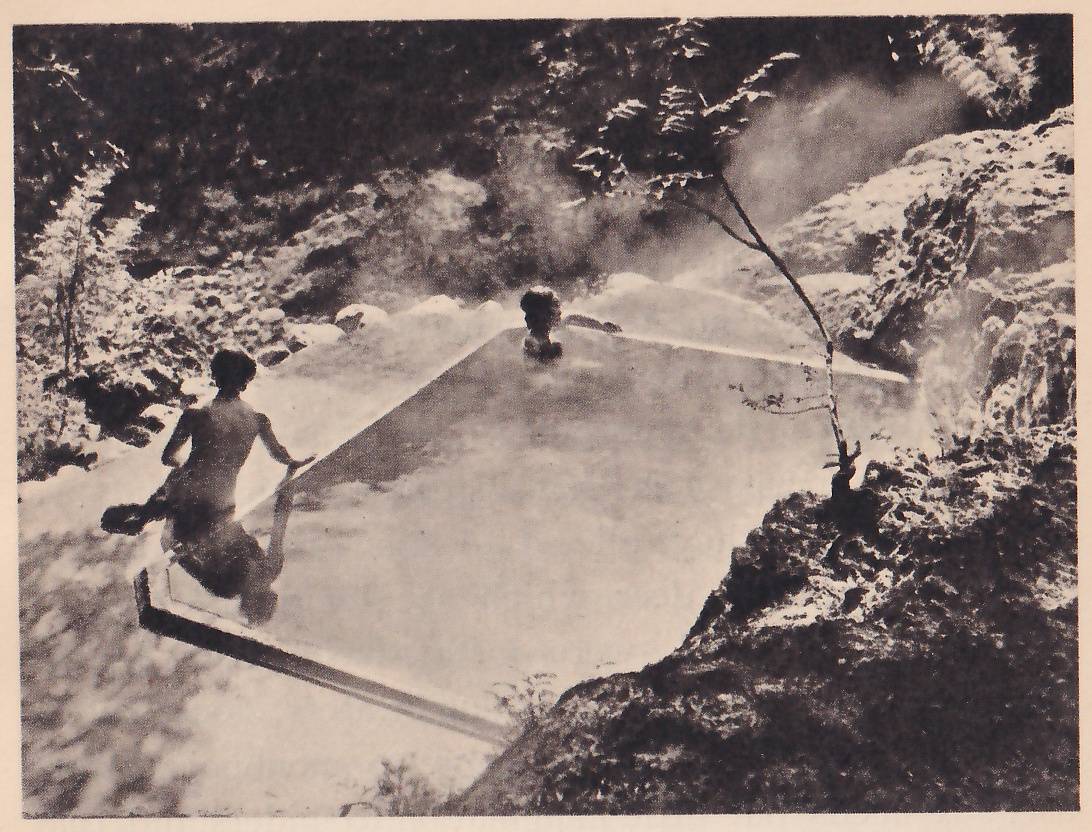
We have a number of springs whose names are derived from the legends attached to the circumstances attending their discovery. According to such legends, many springs were discovered with some birds or animals immersing themselves in the spring waters. Thus we have several springs, the names of which are associated with words such as shika (deer), kuma (bear), tsuru (crane), and sagi (heron).
Not far from the city of Ueda in Nagano Prefecture is Kage Spa. The Chinese ideographs with which the word kage is written indicate the circumstance attending the discovery of this hot spring. Long, long ago, says tradition, a hunter, in quest of game, wandered into the depths of a mountainous district, where he found a deer lying on a grassy patch. On the
approach of the hunter the animal made as if to implore him, instead of trying to run away. The huntsman noticed that the poor deer had an injured leg. Beside the animal were rising clouds of vapour. Evidently the wounded deer was resting after a hot spring bath. The legend does not tell us whether or no the hunter took pity on the unfortunate animal and let it alone. But that is of little importance. What is important for our present purpose is that legends of this kind are many and that they all go to show that birds and animals, especially deer which are by nature fond ot bathing in the mud, were instinctively alive to the curative value of mineral spring waters, long before man, the lord of creation, came to monopolize their use. It needs but little imagination to understand that the regions in which are found most of our popular hot spring resorts were, at the time of their discovery, seldom visited except by hunters and woodcutters. Those hunters and woodcutters who happened to find mineral springs by seeing injured birds and animals making use of them were pious men, but not scientific enough to think that fur and feather were no less intelligent than mankind. They believed such birds and beasts to be so many messengers sent by God, if indeed they were not the very incarnations of Him. Hence the frequent association, among credulous people, of the medicinal virtue of mineral waters with the miraculous efficacy of prayers offered to gods. The Kage Spa above referred to is also known as the Springs of Monju, because the wounded deer which was found near the springs was, according to another version of
the legend, an incarnation of Monju Bosatsu (Manjusri Bodhisattva), the God of Wisdom and Intellect. We have a number of tales in Japanese folklore showing how hot springs were found by virtue of divine revelations. The commonest of such tales tells how prayers for recovery from a lingering illness are heard, how oracles are given in a dream, and how the person who has offered the prayers sets out on a successful journey in search of the spring revealed in the vision. It is but natural that such prayers should be supposed to have been offered to Yakushi Nyorai and Dainichi Nyorai, two divine healers in Buddhism, and also to Shintō gods of medicine. Incidentally, a study along this line will furnish one with some material for the study of the religious creeds of the Japanese people.
There are also some hot springs which, though they have similar traditions attached to them, are not named accordingly. Take, for example, the spa of Takeo in Saga Prefecture in Kyūshū. Legend says that the Empress Jingu, well known for her Korean expedition, saw a white heron taking a bath and thereby discovered this spa. Yet the present name of the spa has nothing at all to do with a heron.
It is interesting to note that the discovery of many a mountain spring is credited to celebrated Buddhist priests such as Gyōki Bosatsu (670–749), Kūkai, otherwise called Kōbō Daishi (774–835), etc. This is due to the fact that in olden days priests used to make a pilgrimage to a lofty peak, which they regarded as sacrosanct, just as do the Japanese people of today. Thus these priests went in for what may nowadays be
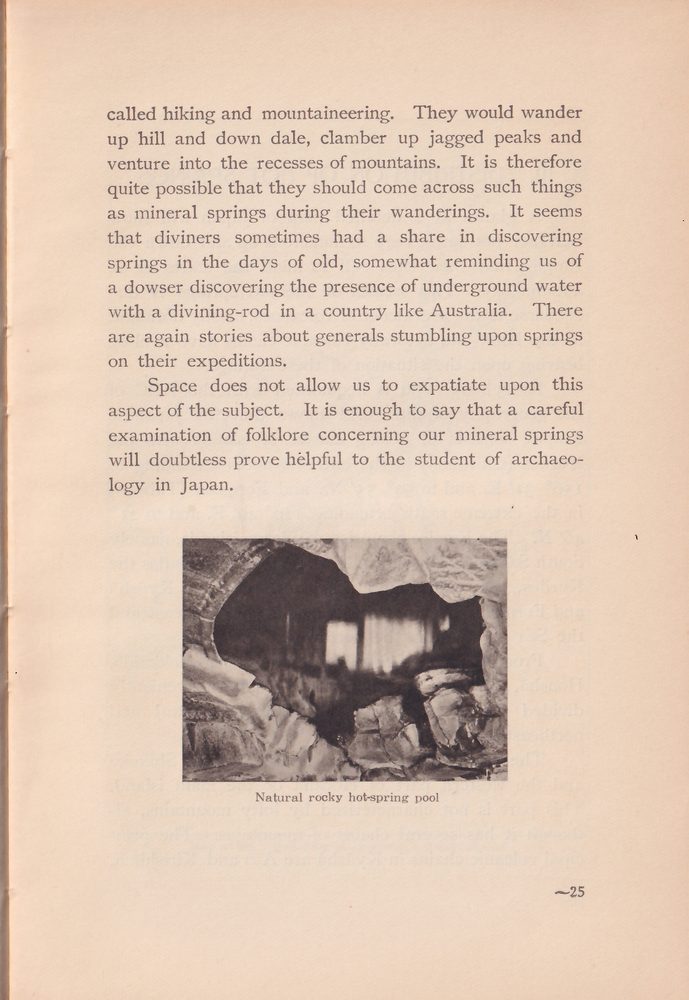
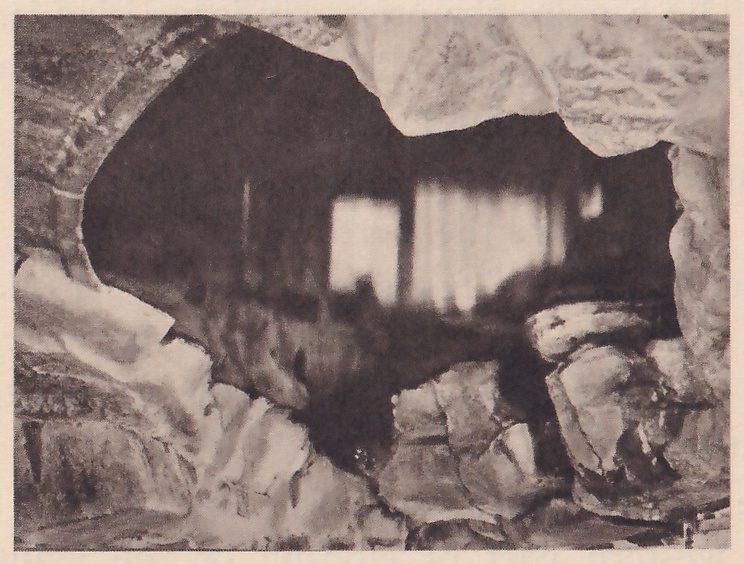
called hiking and mountaineering. They would wander up hill and down dale, clamber up jagged peaks and venture into the recesses of mountains. It is therefore quite possible that they should come across such things as mineral springs during their wanderings. It seems that diviners sometimes had a share in discovering springs in the days of old, somewhat reminding us of a dowser discovering the presence of underground water with a divining-rod in a country like Australia. There are again stories about generals stumbling upon springs on their expeditions.
Space does not allow us to expatiate upon this aspect of the subject. It is enough to say that a careful examination of folklore concerning our mineral springs will doubtless prove helpful to the student of archaeology in Japan.