
V. SHINTŌ, AS A NATIONAL RELIGION, NOT ENTIRELY DEVOID OF A UNIVERSAL ASPECT, AND REMARKABLY TOLERANT
I have tried to show that Shintō is a thorough-going national religion throughout each and every phase of its long development, from the stage of nature religion to that of culture religion, with the Jinnō or Divine Ruler of the nation at the centre of worship, keeping pace with the progress of Japanese civilization in general, so that in the mental texture of the people their religious faith and national consciousness have been so closely interwoven as now to be incapable of separation. The consciousness of the Japanese or their attitude of patriotic reverence towards the Jinnō has been raised to the extent of intensely religious fervour. Lafcadio Hearn calls it the “Religion of Loyalty,” but he confesses that so trite an English word as loyalty cannot cover all the connotation of the original Japanese, and the word loyalty is an utterly dead rendering; he wishes to call it “mystical exaltation” or “a sense of uttermost devotion” to the Jinnō or Divine Ruler of the nation.
Shintō, characterised as faith in the Jinnō or Divine Ruler of the nation, is not a religion a posteriori adopted purposely by the State as in the case of the State religion in a Western country, but the religion a priori of the heart and life of every Japanese subject, male and female, high and low, old and young, educated or illiterate. This is the reason why a Japanese never
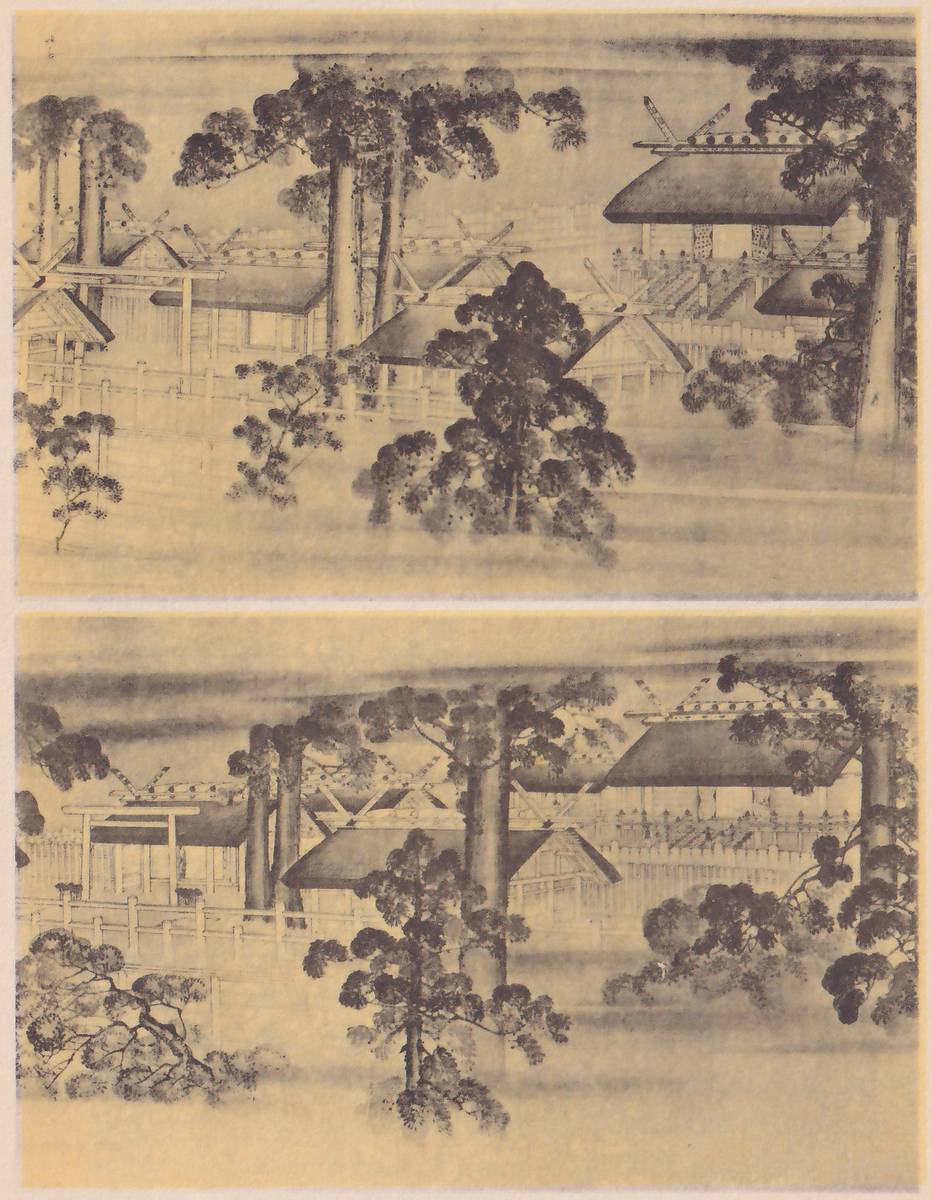
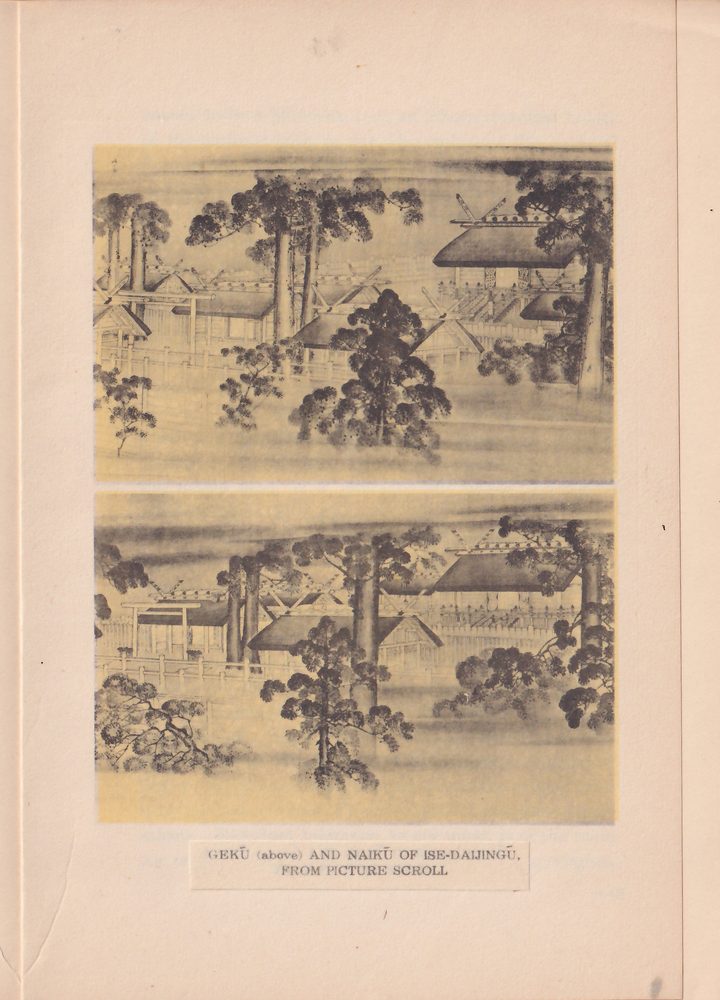
FROM PICTURE SCROLL
ceases to be a Shintoist, i. e., an inborn steadfast holder of the national faith, or one who embraces the national faith or the Way of the Gods as a group or folk religion, as distinguished from a personal or individual religion, even though he may accept the tenets of Buddhism or Confucianism—probably Christianity here in Japan not being excepted—as his personal or individual religion. In effect this amounts to saying that abjuration by Japanese of the National Shintō Faith would mean treachery to the Empire and disloyalty to its Divine Ruler. Professor Royce of Harvard University very happily explains in his book “Sources of Religious Insight” how this National Shintō Faith, vehemently alive, and constantly stimulating the sentiment of every Japanese towards the heaven-descended sovereign of his native land, is a characteristic phase of national religion, when he says:
“However far you go in loyalty, you will never regard loyalty as a mere morality. It will also be in essence a religion. Loyalty is a source not only of moral but of religious insight. The spirit of true loyalty is of its very essence a complete synthesis of the moral and of the religious interests. The cause is a religious object, it points out to you the way of salvation.”
As demonstrated above Shintō is truly the faith of the Japanese people from of old. It is thus a national religion and so has an aspect of particularism or separatism or exclusionism like Judaism, but at the same time it is by no means devoid of a noble spirit of religious universalism. Religious tolerance, to my mind, is in the main one of the remarkable features of theanthropic religion.
Accordingly is Buddhism very tolerant in character; whereas Judaism and Mohammedanism—Christianity not an exception—are rather intolerant, because each of these shares more or less the common character of a theocratic religion. As Shintō is characteristically theanthropic and ipso facto tolerant, there has resulted the rapprochement between Shintō and Buddhism, which actually took place quite easily, immediately after the introduction of Buddhism into Japan. The earliest consequence of this reconciling tendency, harmonization and syncretism in both religions, was to be seen at the time of Imperial Prince Regent Shōtoku (574–621), and afterwards thanks to the genius of the celebrated Buddhist priests Dengyō (767–822), Kōbō (744–835), Jikaku (794–864), Chishō (814–890) and many other religious leaders both Buddhist and Shintoist, in Japan, Shintō was by degrees formulated as Ryōbu or Dual Shintō—a syncretism of Shintō and Buddhism—at about the beginning of the 13th century.
By way of illustrating this strikingly reconciling religious spirit of the Japanese I wish here to quote one instance out of many:
The renowned Daibutsu or colossal bronze statue of the Buddha Birushana (Sanskrit Vairocana) at Nara, familiar to every foreign tourist, is a statue of a Buddhist God in name but in fact it represents Amaterasu-Ōmikami, the Ancestral Sun-Goddess of Ise, according to ShirenPrinted: Siren of the 14th century, a celebrated biographer of Japanese Buddhist priests (“Genkō-shakushoPrinted: Genkō-Sakusho”). So the colossal image of world-wide fame may appropriately be called a pious monument erected by the Emperor
Shōmu in 752, materially symbolizing that noble spirit of religious tolerance—one of the essential characteristics alike of Shintō and Buddhism, both belonging to the theanthropic trend of religious thought.
As the Japanese history “Azumakagami” tells, in 1195 the statue of Birushana at Ōba in Matano Village, Kanagawa Prefecture, was made of the wooden material which had been the august central pillar of the Ise Shrine sacred to the Ancestral Sun-Goddess. This shows that, to the Japanese religious consciousness, Shintō and Buddhism were by that time perfectly reconciled and completely amalgamated, and the people took it as a matter of course that Buddhas and Shintō Gods were one and the same thing in essence, only in a different manifestation. To such an extent were the foreign religion and the national faith on amicable terms by the beginning of the 13th century, no more knowing any conflict between them. This is nothing but a manifestation of the tolerant spirit, which is characteristically theanthropic. Thus, Iso-no-Kami-no-Yakatsugu (729–781), as early as the eighth century, said:
“The esoteric teachings of Buddhism and the tenets of the outsiders are after all one and the same in essence. At a cursory glance the latter may seem strange and incompatible with the former; yet, tactfully utilized, there is no conflicting difference at all between them.”
—Shoku-Nihongi
In the same strain the reputed author Kitabatake-Chikafusa also says:
“If examined carefully, there is no antagonistic
difference at all between foreign teaching and our own.”
—Tōkehiden
And in a similar manner the learned court noble Ichijō-Kaneyoshi declares:
“Buddhism never differs from the original teachings of our country and thus there is perfect coincidence of the teachings of the foreign texts and our own.”
—Shōdan-Chiyō
Lastly, let us add a few words on the universalistic phase of Shintō. Sectarian or denominational Shintō reveals an aspect of universalism much more than the Shintō of the national faith, because the former is rather less closely connected than the latter with the nation and in consequence some of the Shintō sects have a Kami or Shintō God who has no reference to the history of this country. For instance, the Kami or God which the Konkō Sect worships has little or no connection with the “Kojiki” or the “Nihongi,” the time-honoured historical chronicles of Japan, and so far it is not national but universal, fairly free from national tradition. The God of this sect is called “Tenchi-Kane-no-Kami,” which means “Heaven-and-Earth-Including-Deity,” i. e., the Absolute Divinity, the Boundless One, with Heaven and Earth within its own Divine Self. Such a god, like the God of Christianity, transcends the boundaries of any particular nation or country, so it is quite natural that the Shintō sect, with such a universal god at its centre of faith, is also of a universal nature. The same may hold good in some other Shintō sects, the Kurozumi Sect, for instance. Kurozumi-Munetada (1779–1849), the
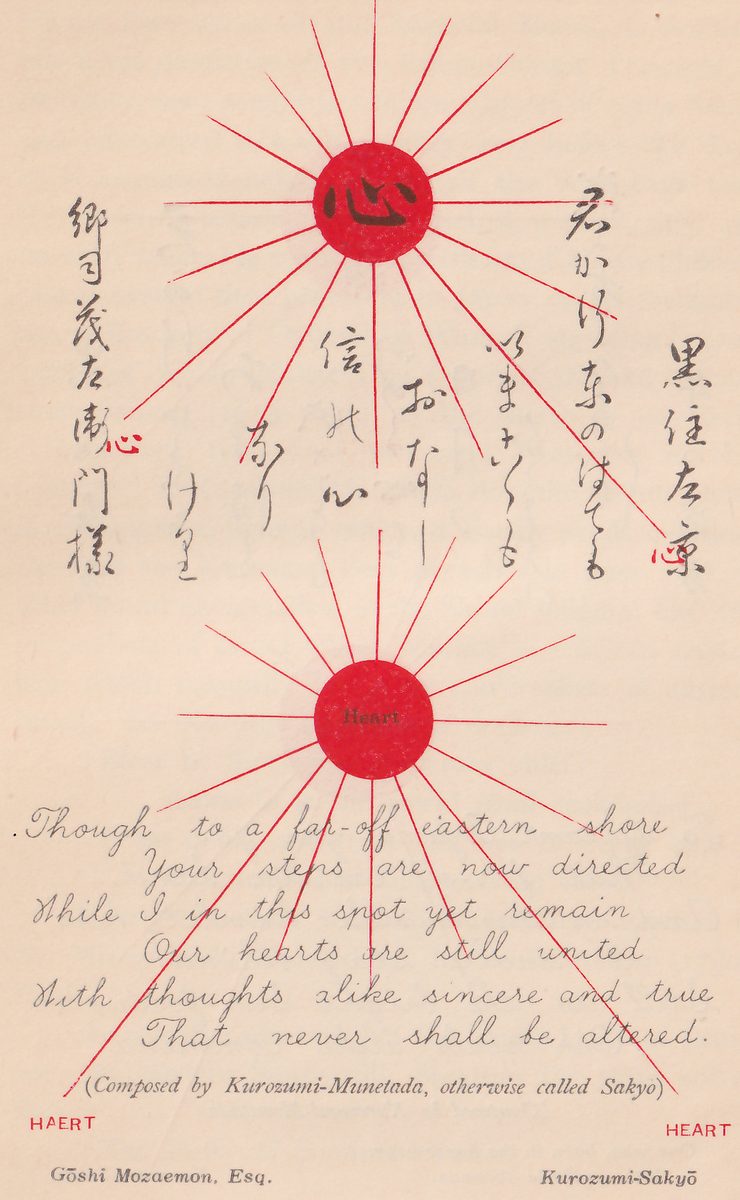
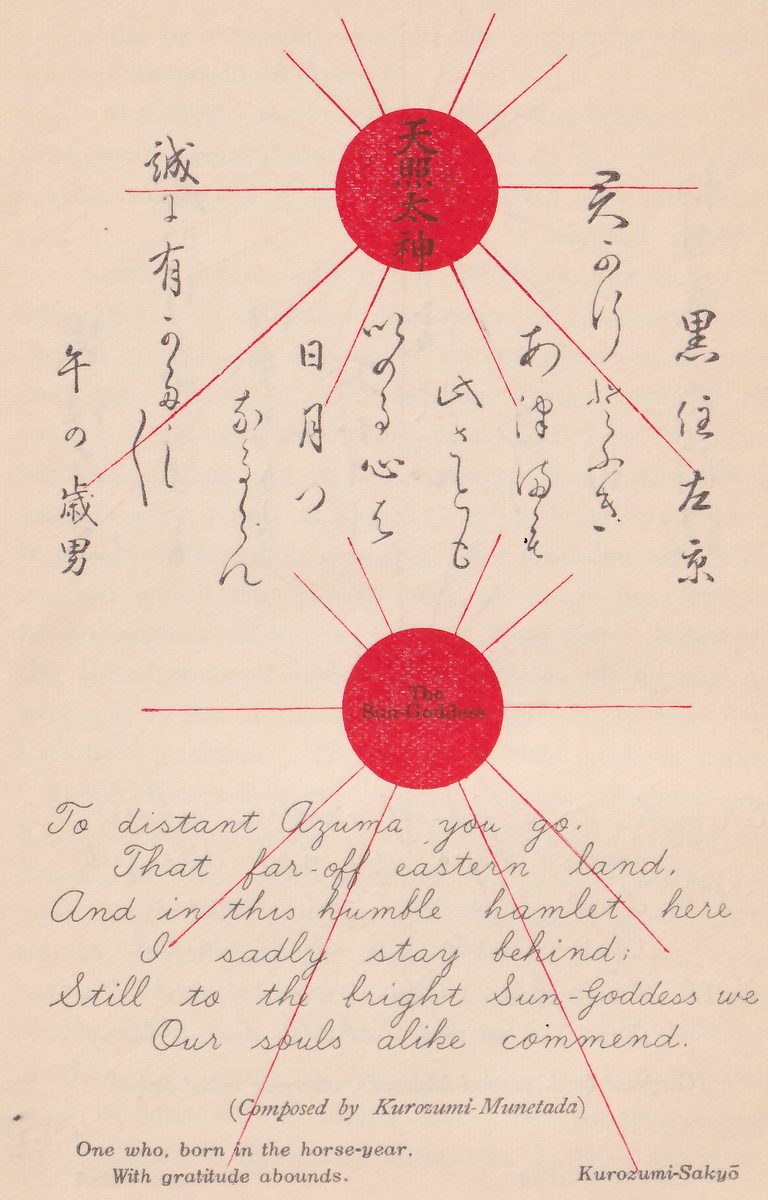
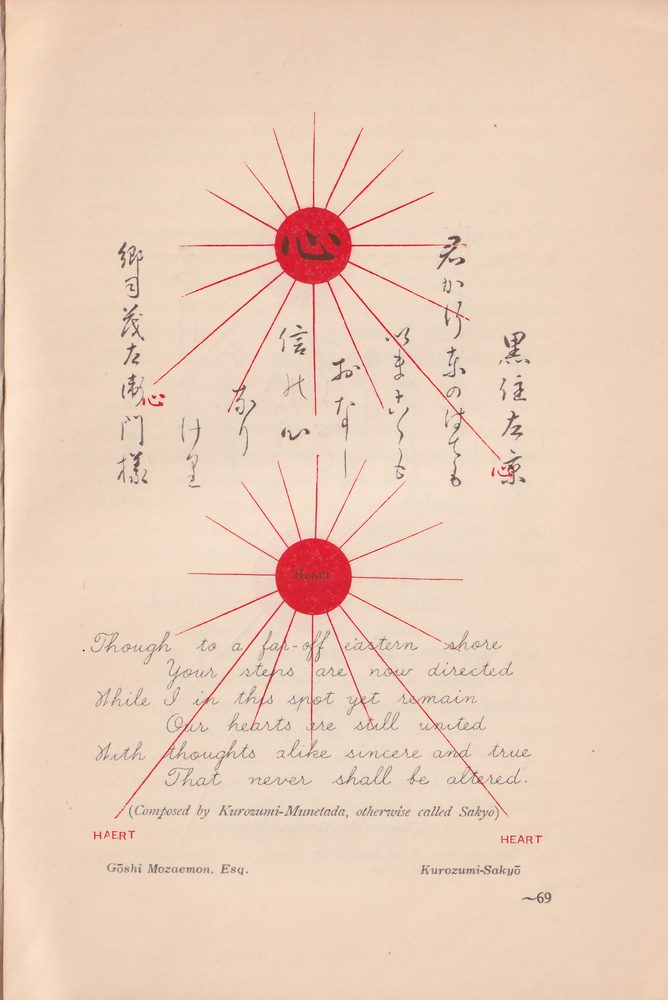
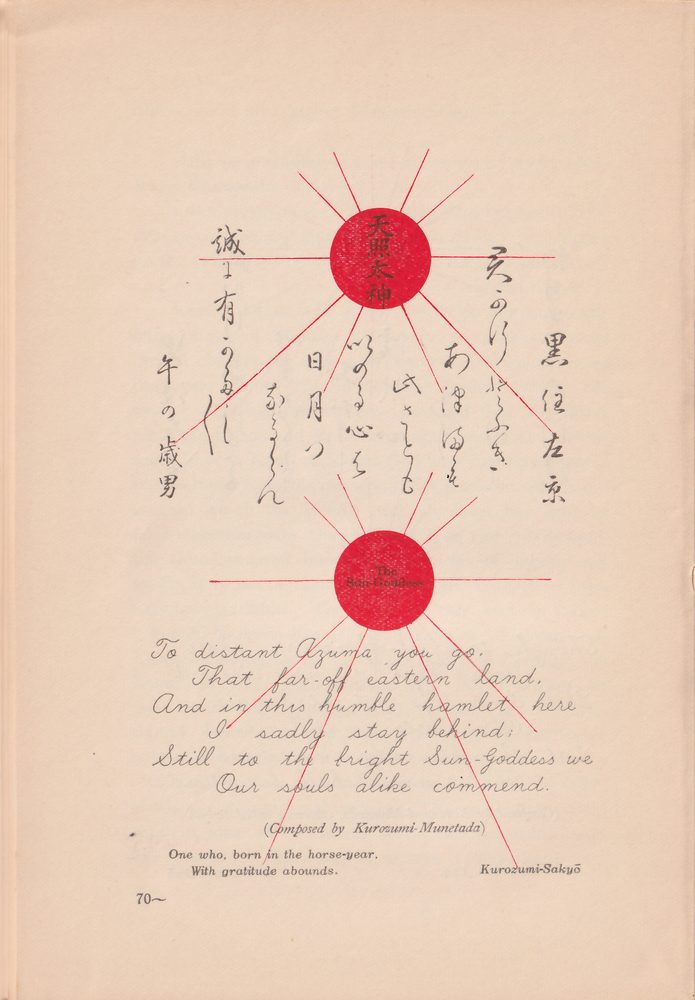
founder of the sect, preaches that the Sun-Goddess, Divine Ancestress of the Imperial House, is nothing but a manifestation of the Ethico-Cosmic Principle of Sincerity, once taught in Chinese classics of olden times, and introduced into this country long before the days of Kurozumi-Munetada, although the sect says that Kurozumi-Munetada promulgated it without any apparently traceable connection with any Chinese philosophical system then prevalent in Japan, as, for instance, the philosophy of Ōyōmei or Wang-Yang-Ming (1472–1528), of which Nakae-Tōju (1608–1648) and Kumazawa-Banzan (1619–1691), as the latter is popularly called, were two great professed advocates in this country. If Kurozumi-Munetada sees the Shintō Deity in the spiritual light of ethics, it hardly needs mentioning that the Kurozumi Sect preaches in some way or other moral universalism in the Shintō religion, like the prophetism of Israel whose essence is religious moralism, which naturally led it to universalism in ancient Israel. So, Kurozumi-Munetada declares:
“Blest be Sincerity, of virtues chief!
Alone in it the world shall seek relief
From doubt and fear—till men of every land
In universal brotherhood do stand.”
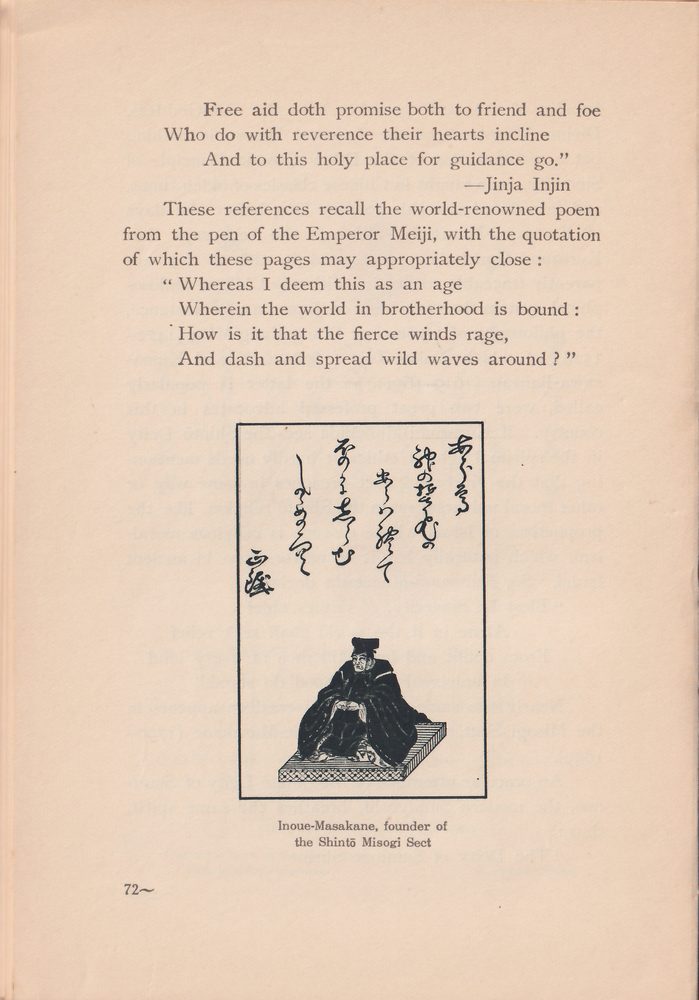
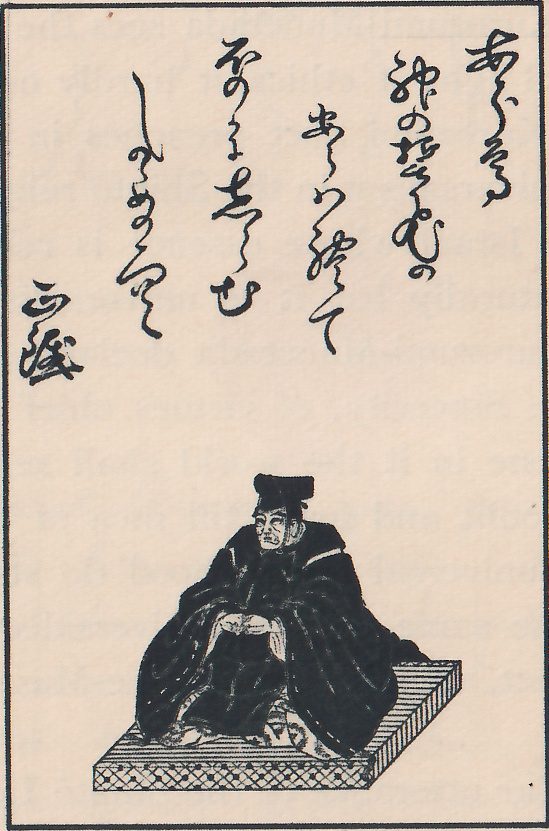
Nearly the same religious universalism appears in the Misogi Sect, founded by Ino-ue-Masakane (1790–1849).
An oracular utterance of the Shintō Deity of Suminoe, the modern Sumiyoshi, breathes the same spirit, thus:
“The Deity of Suminoe Shrine
Free aid doth promise both to friend and foe
Who do with reverence their hearts incline
And to this holy place for guidance go.”
—Jinja Injin
These references recall the world-renowned poem from the pen of the Emperor Meiji, with the quotation of which these pages may appropriately close:
“Whereas I deem this as an age
Wherein the world in brotherhood is bound:
How is it that the fierce winds rage,
And dash and spread wild waves around?”