IX. ARCHITECTURE TODAY
(1) MODERN ARCHITECTURE
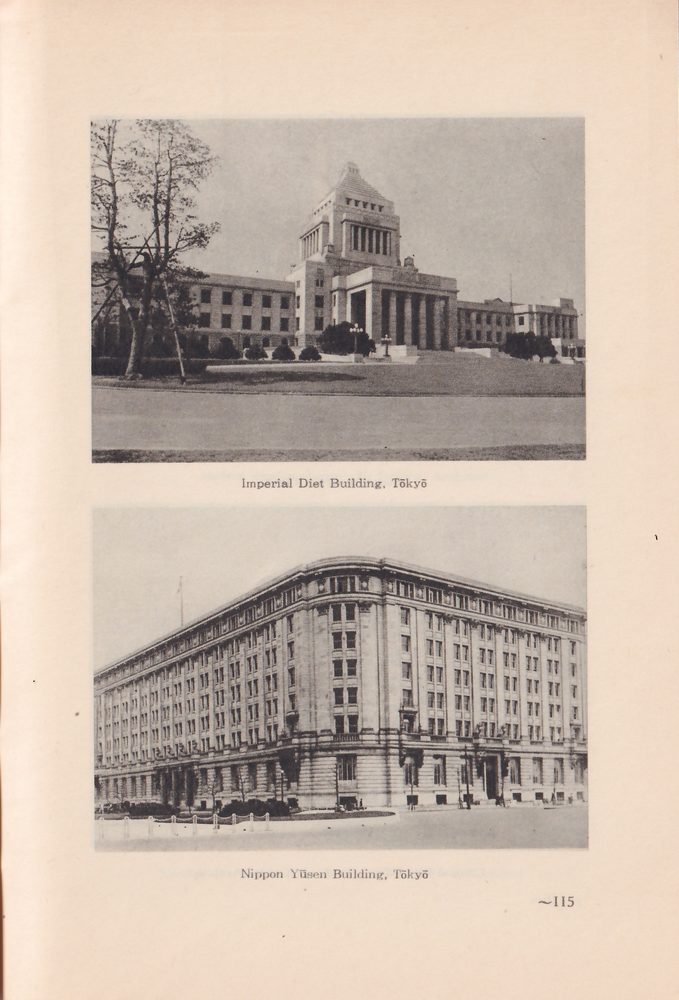
Changed social conditions and the advent of new building materials caused the rise of “Modern Architecture” in Japan at the beginning of the Taisyō Era (1912–1926). Though it came into existence much later than in Europe, its manifestations were much the same as in Europe and America. The modern movement in architecture is in Japan the result of influences received from Europe, such as “L’Art Nouveau” in France, but we cannot find any good examples of the new style buildings of this period.
Later, young architects in Japan were much influenced by modern architecture in Austria and Germany, and the names of such architects as Otto Wagner, Josef Olbrich, Josef Hoffmann, Peter Behrens and Van de Velde were quite familiar to them.
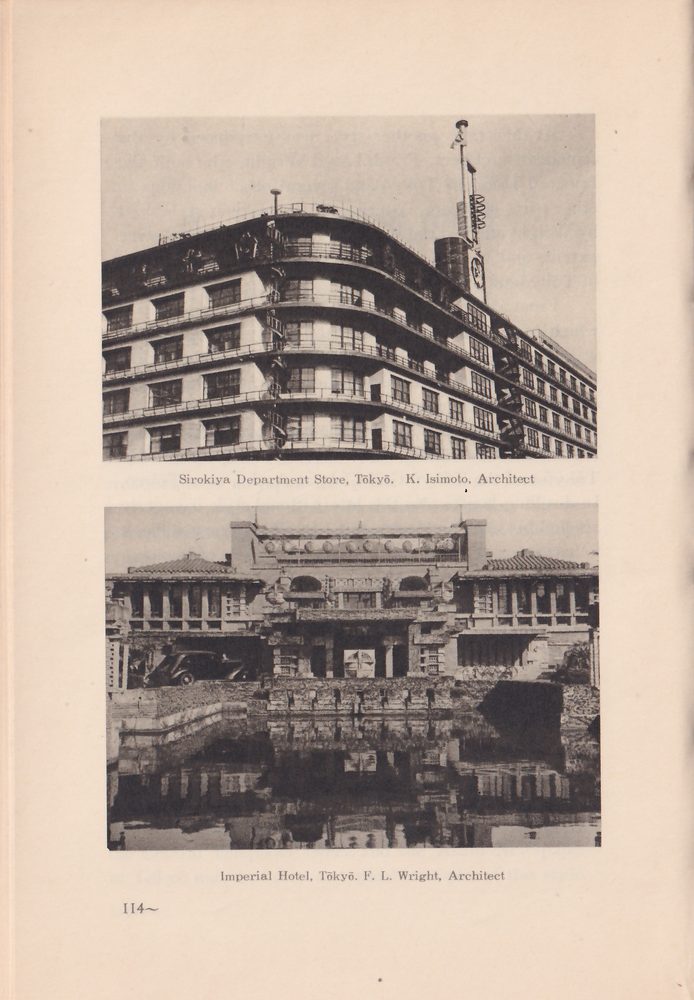
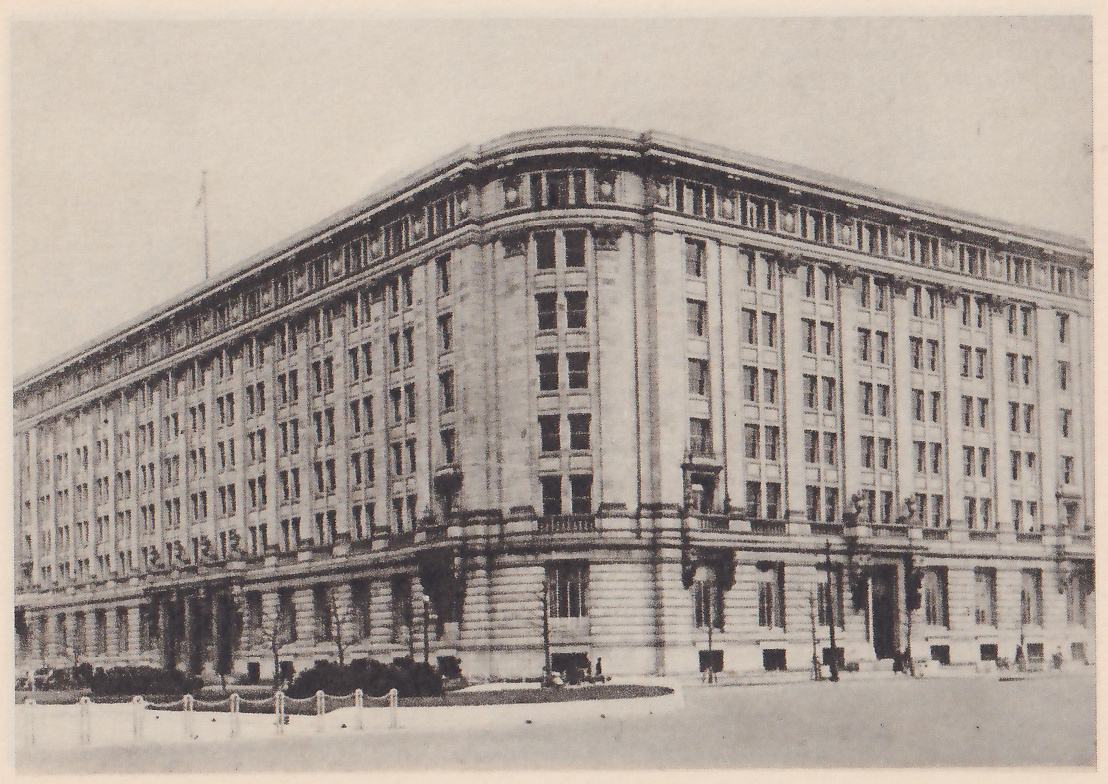
From about 1920 modernistic buildings began to be built by these young architects. As expressionist architecture was flourishing most in Germany and Austria, at that time, the influence of architects such as Erich Mendelsohn, Hans Pölzig, Walter Gropius and Bruno Taut was to be distinctly seen in their works. The buildings of the Central Telephone Office and the Asahi Newspaper in Tōkyō may be taken as typical examples of this style.
At this stage another style was introduced by the American architect, Frank Lloyd Wright, who built the Imperial Hotel in Tōkyō and several other buildings in other parts of Japan. Afterwards, the peculiar style used by Wright affected the young Japanese architects to some extent, and we can see not a few buildings in this style in Tōkyō and other places.
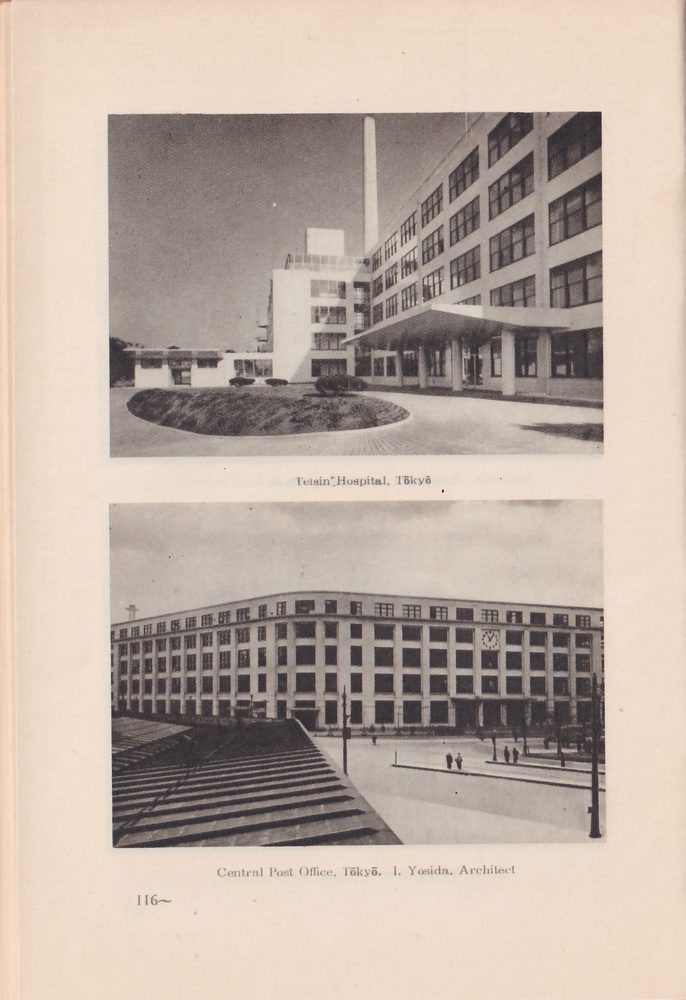
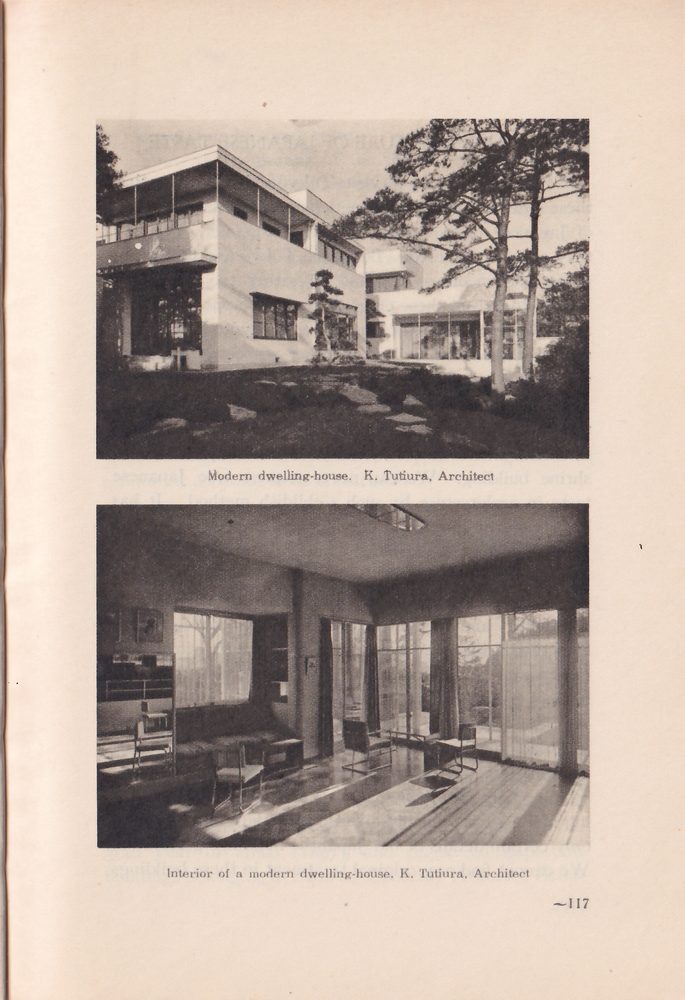
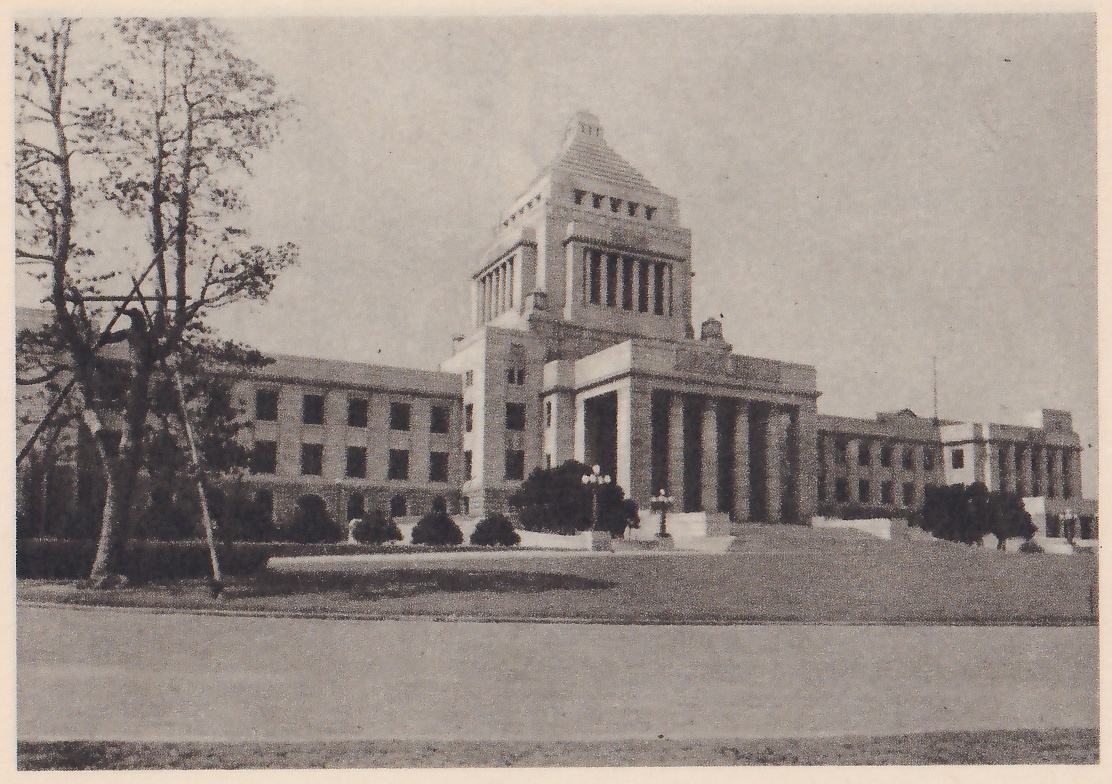
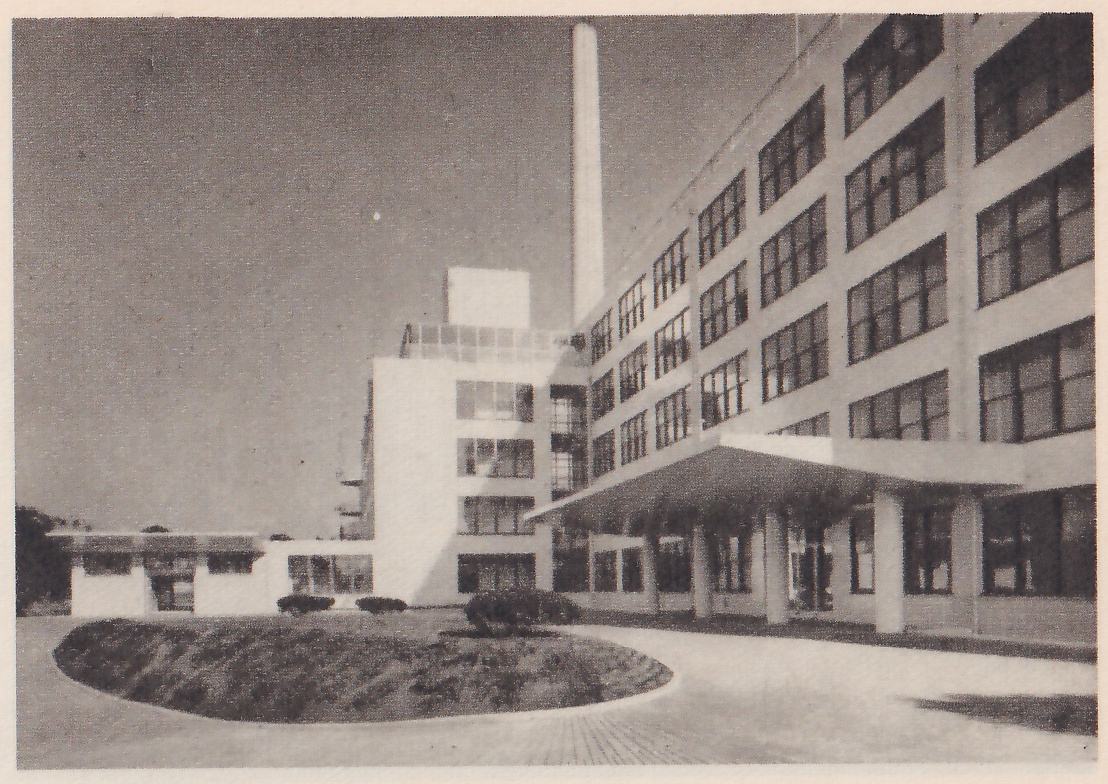
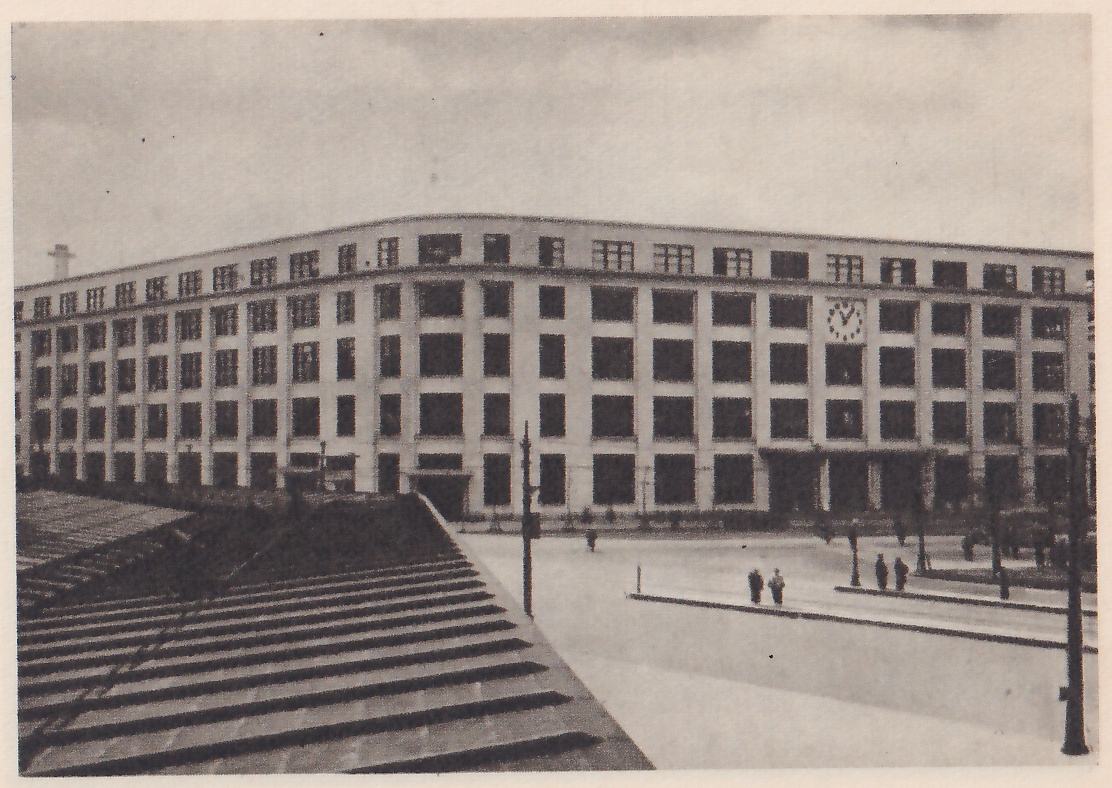
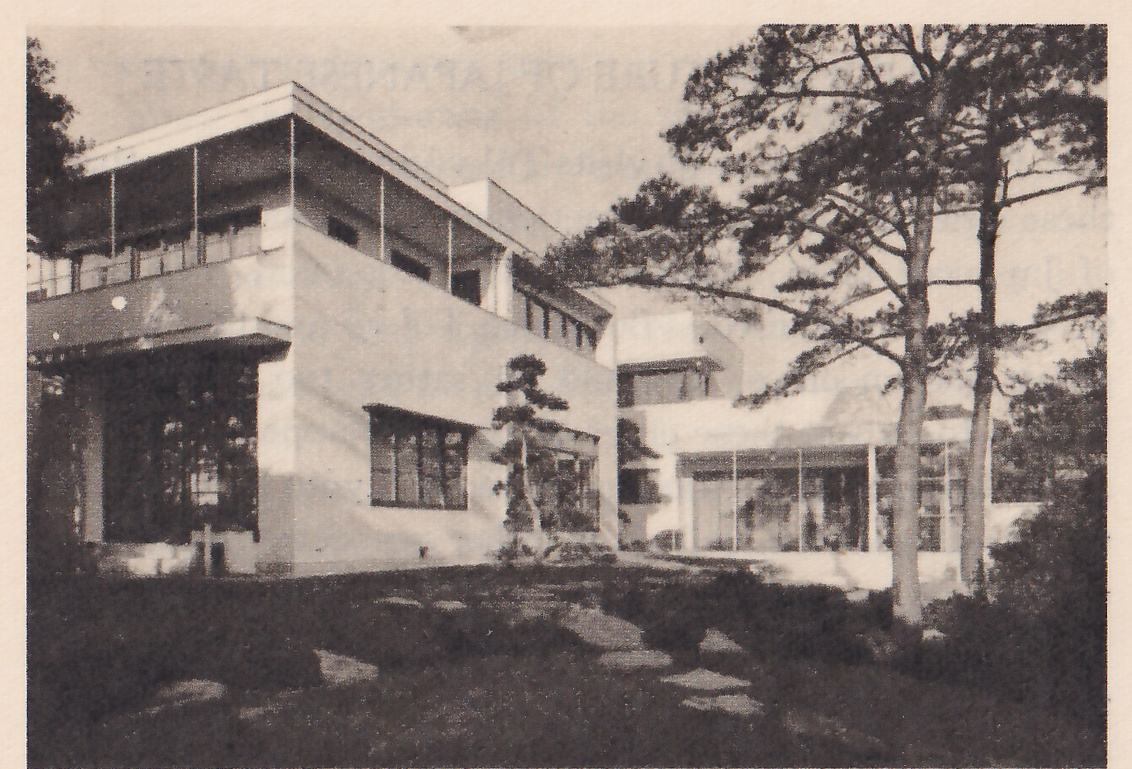
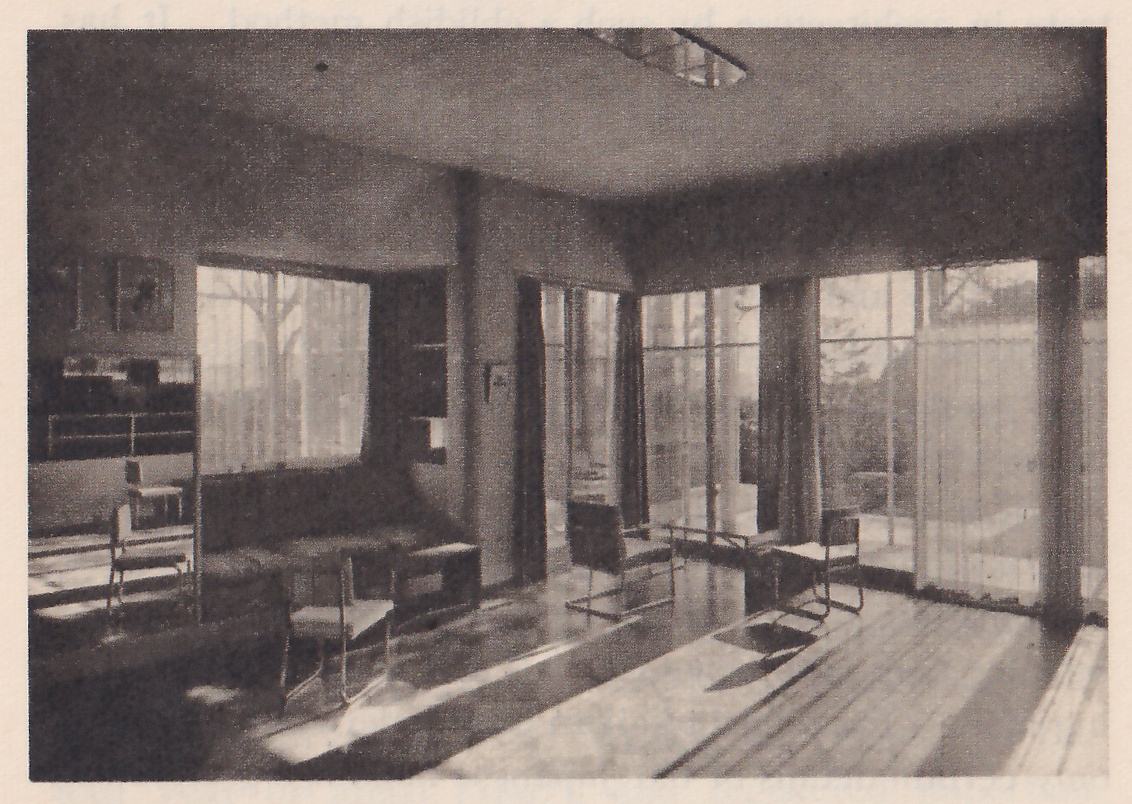
From about 1925, the new architectural movement, which is usually called “International style,” and which was promoted by such architects as Le Corbusier in France and Walter Gropius in Germany, began to exercise an influence over Japanese architects. We can see good examples of this style in the buildings of the Central Post Office, near Tōkyō Station, the Teisin Hospital in Tōkyō and the Tōkyō Golf Club, at Asaka, near Tōkyō. In dwelling-houses also this international style is eagerly applied by some architects, but I think it is very difficult to harmonize this style with all the conditions of Japanese daily life.
(2) ARCHITECTURE OF JAPANESE TASTE
Every foreigner who visits Tōkyō and Ōsaka says that these cities are too much Americanized and have nothing of Japanese taste or atmosphere. Moreover, they say they are disappointed. But since Tōkyō and Ōsaka are great modern cities, it would be rather too much of a Utopia to expect these cities to have the appearance and atmosphere of such cities as Nara or Kyōto in architectural treatment as well as in other respects. It is both unreasonable and impossible.
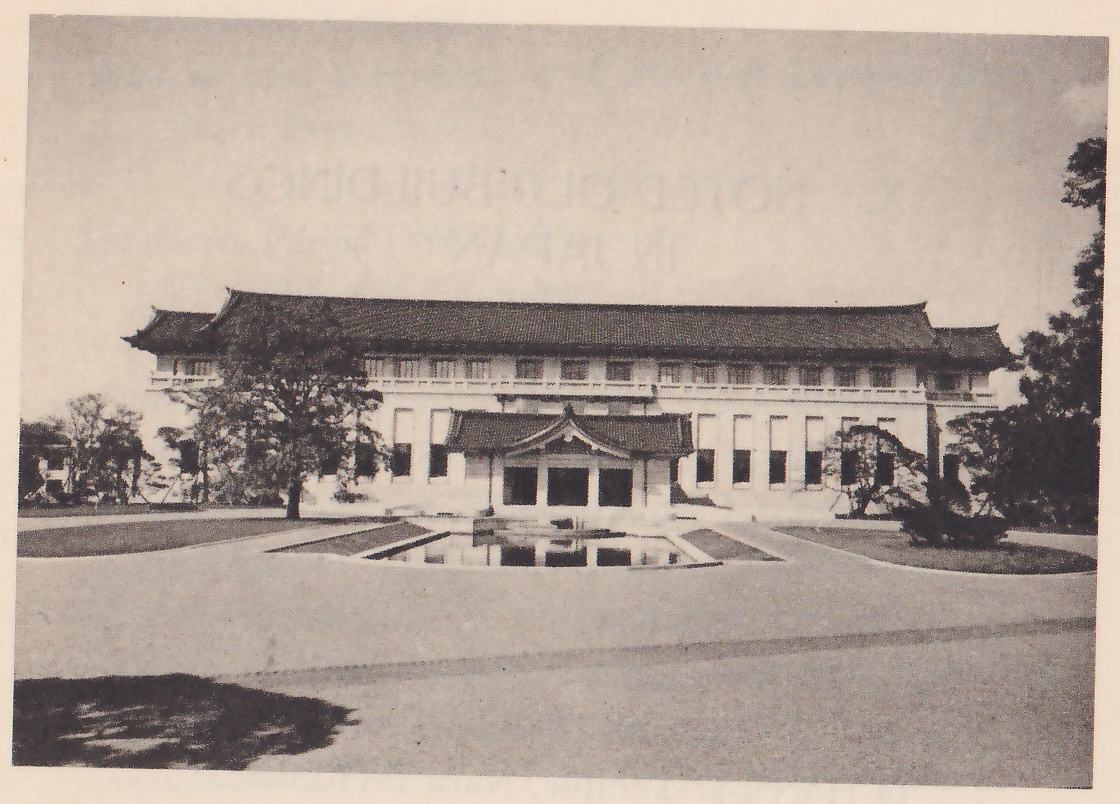
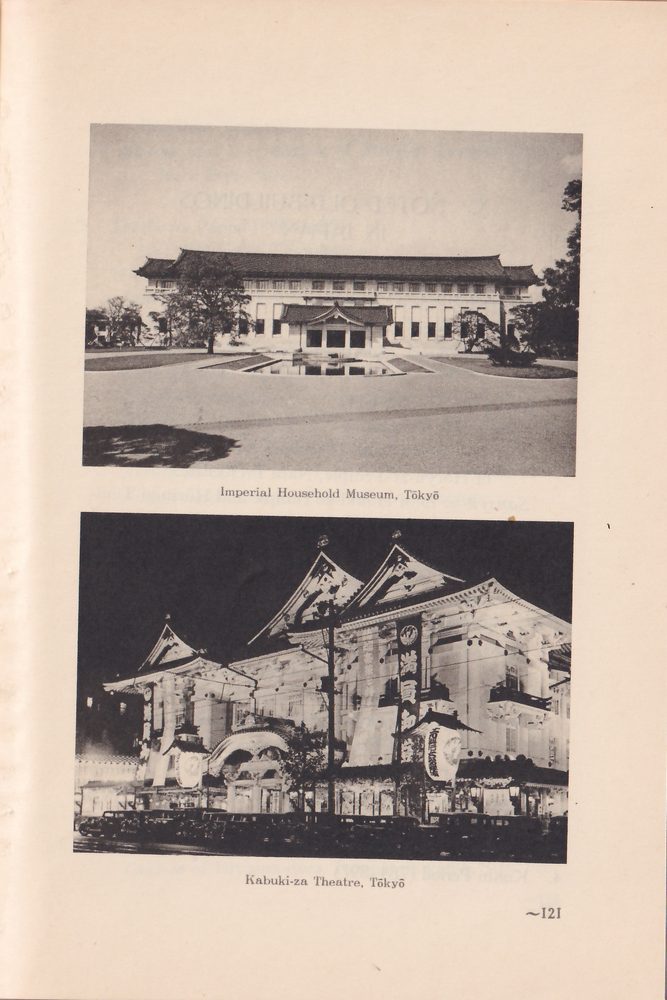
It is, moreover, quite a mistake to express Japanese taste in architecture by incorporating in modern buildings some detailed forms of an old Buddhist temple or Sintō shrine building. We can never express true Japanese taste in architecture by such a childish method. It has been eagerly discussed among our architects in recent years how best to express Japanese taste in large buildings such as museums, city halls, theatres, department stores and office buildings. But it is difficult to find a satisfactory and rational way, and I think it unlikely that a method will be evolved in the near future which will incorporate and express pure Japanese taste in large modern buildings.
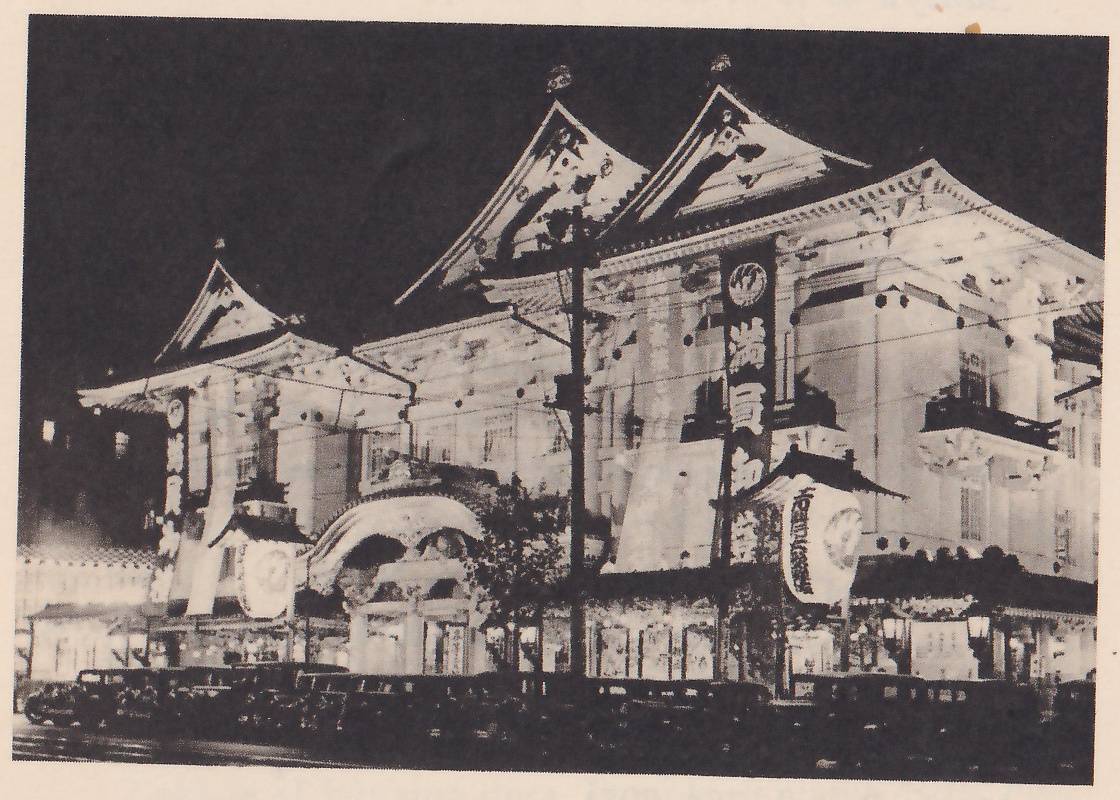
The Kabuki-za Theatre and the Gunzin-kaikan Hall in Tōkyō may be said to be examples of attempts at such a combination, but the Kabuki-za is merely an old style building built with new materials and methods, and nothing more. The Gunzin-kaikan is a modern building with only certain details of old Japanese buildings grafted on. We cannot find any original treatment in these buildings
to express true Japanese taste.
Since the beginning of the Meizi Era the religious buildings have lost their long tradition of taking the lead in the field of architecture in Japan, and recently non-religious buildings have taken their place, just as in modern Europe and America. Nevertheless, not a few large Buddhist temples and Sintō shrines have been built since the Meizi Era. They have all been constructed following traditional Japanese treatment, and among these religious buildings the Meizi Shrine, Tōkyō, and Tyōsen-zingū, Keizyō, are the outstanding masterpieces.
The Nisi-hongan-zi Temple, Tōkyō, is a peculiar example which expresses Oriental taste, following the style of Indian Buddhistic architecture, in spite of using modern reinforced concrete in its construction.
(3) PRESERVATION OF OLD BUILDINGS
I wish to give here an excerpt from Dr. T. Sekino’s essay which was read at the “World Engineering Congress” in Tōkyō in 1929:
“Nearly all buildings in Japan are made of wood, which easily becomes weathered and is moreover inflammable. It is a miracle to find that representative buildings of all periods have been preserved, without major gaps throughout the thirteen hundred years of our history. As these buildings are precious monuments of our civilization and art, the government issued the law for the ‘Preservation of Old Shrines and Temples’ in the 30th year of Meizi (1897), and registered important buildings belonging to them as ‘Specially Protected Build-
ings,’ granting a subsidy for their repair. Then, in the 4th year of Syōwa (1929), a new law for the ‘Protection of National Monuments and Treasures’ was promulgated, which is in the main an extension of the older law of 1897, and includes buildings belonging to the State, to public corporations, and even to private families among those liable to be placed under national protection. In this new law the denomination of ‘National Monuments’ is substituted for that of ‘Specially Protected Buildings’ used in the older law.
“We had already registered 1,116 buildings as ‘Specially Protected Buildings’ under the older law, and their number was to increase year by year. As the new law which is much wider in application can include, besides shrines and temples, castles, mausoleums, Confucian temples and schools, as well as private houses, the increase is bound to be much greater in future.”
At present there are about 1,500 buildings registered as National Monuments.
In the Department of Education, there are official registers in which names, sites, construction, history and dimensions of the National Monuments are noted, and measured drawings and photographs are preserved together with them.