

V. THE SHOSO-IN, OR IMPERIAL REPOSITORY AT NARA
Delivered at the Art Institute of Chicago
JAPAN is the proud possessor of an eighth century treasure-house with its contents. In every respect this is unique. We know that Egypt, Central Asia, India, China, and some other countries have yielded up works of art from centuries much earlier than that represented by the collection in our treasure-house, but these have all been formerly buried under ground and later dug up. The treasures in the Japanese Imperial Repository, on the contrary, have never been buried under ground, and they have always been kept in the original wooden building where they were placed nearly twelve centuries ago. It is a veritable miracle that this wooden structure with its precious contents should have withstood the dangers and vicissitudes of all these centuries and thus have preserved for us a collection of products wide and varied enough to enable us to envision the art and culture of Japan as it flourished in the eighth century. That treasure-house is the Shoso-in of Nara.
The name is made up of three characters: "Sho," meaning chief, "so" repository, and "in" denoting the compound in which the repository is situated. The same name was applied to the government warehouses which were built in different provinces in ancient times, but the Shoso-in of a temple designates the chief of these repositories. Each important Buddhist temple at that time had a number of treasure-houses and one or a pair of them Noms designated as Shoso or chief warehouse. But now the term Shoso-in is used to designate the Imperial Repository in Nara which was originally the chief treasure-house of the Todaiji temple, completed about the year 752.
The Todaiji temple was established by the Emperor Shomu for the protection of the nation and kept under the Imperial supervision. Its chief deity was and still is the Vairocana Buddha, the image of which was cast in bronze and housed in the main hall of that temple. Buddhism, which was introduced into Japan from Korea about two centuries before the establishment of the Todaiji, was then in full bloom, and Japan was in the Golden Age of her art. The Emperor Shomu was anxious to create the largest bronze image of the Buddha in existence. He was firmly determined to have this colossal image cast in bronze; as he says in his edict, he was resolved to realize his wish even if it should exhaust the bronze resources of the country to cast the colossal image and even if mountains had to be levelled for the purpose of building a temple for it. The Emperor himself carried a bit of earth in his sleeves and helped to lay the foundation of the image. The colossal statue, a sitting Buddha measuring some fifty-three feet in height, was cast in bronze, the work being completed in 749, except for the gilding of the statue. Three years later, in 752, a grand ceremony, known as the "eye opening ceremony," was performed for the inauguration of this image, when no less than 10,000 priests, including many from India and China and far-off countries, participated. In 756, four years after the inaugural services, the abdicant Emperor Shomu died. On the forty-ninth day after his death - when an important Buddhist ceremony was performed such as is still customary among Buddhists in Japan--the Empress Dowager Komyo dedicated to the Vairocana Buddha practically all the treasures and other objects that had once belonged to the Emperor Shomu. All these objects were placed in the chief treasure-house of the Todaiji and kept under Imperial supervision and these treasures form the nucleus of the Shoso-in collection.
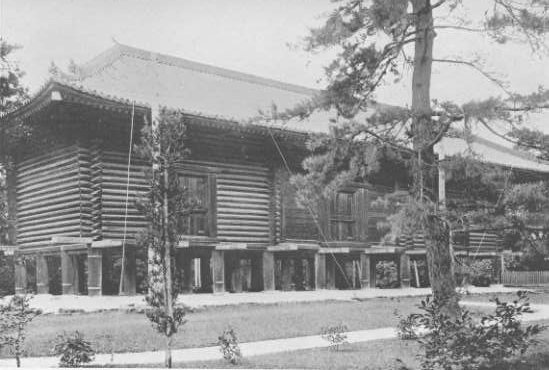
The building of the Shoso-in measures about 109 ft. in length, and 31 ft. in width, 27.5 ft. to the eaves and 45.7 ft. to the ridge of the roof, and stands on forty massive pillars, the floor being raised about nine feet above the ground. The building is divided into three sections called the North, Middle and South Sections, respectively. They are about equal in length, except the Middle Section, which is slightly longer than the others. Each has an upper floor and a common attic extending from one end of the building to the other under one roof. The general belief among scholars has been that there was originally a pair of treasure-houses which constituted the Shoso-in and that these two buildings were subsequently joined together into one. According to this theory, there were originally two buildings which constituted the present North and South Sections, while the Middle Section was formed by joining the two buildings together. This theory is supported by the difference in style of building adopted for the Middle Section from that of the end sections. In spite of all this our opinion now, after years of investigation, is that it is more than likely that the original structure was built in the way it now stands. The North and South Sections are built of timber in triangular shape; to be more exact, the section of each timber is a hexagon obtained by cutting off the apexes of an almost equilateral triangle, the longest side measuring about ten to twelve inches and the shortest side about three. The end sections are constructed in the fashion of a log cabin, the timbers being laid horizontally, and crossing at the corners in such a way as to give a smooth surface to the interior and a highly corrugated appearance to the exterior. No filling being used, only about three inches of the timbers come in contact. This is said to permit a free circulation of air into the building in dry weather by the contraction of the timber, while the least moisture will cause the timber to expand and shut it out. The building has no windows, but each section is provided with an entrance with two in-swinging doors. There are no steps leading up to the entrance, so at the time of the airing of the treasures a temporary verandah with a flight of steps is added to facilitate access to the interior. The building was constructed in 752 and repaired from time to time, and in 1913 it was taken apart and reconstructed in the original form with the original material, new timber being introduced only where it was absolutely necessary. Thus the original material still constitutes the main part of the building and the structure is believed to stand today practically as it stood nearly twelve hundred years ago. (Plate 44.)
A large number of treasures handled or used by the Emperor Shomu - presumably all the treasures and nearly all the furniture of the palace - were dedicated to the Great Buddha, whose image the Emperor Shomu caused to be created. That dedication was accompanied by a carefully prepared catalogue or memorandum of dedication known as the Kenmotsucho. It is a wonderful document and is still preserved in its entirety and in excellent condition. It is in a long scroll, about fifty feet long and ten and a half inches wide, and opens with a remarkable preamble or prayer by the Empress Dowager to the Great Buddha for the welfare of her deceased husband. It may be roughly translated as follows:
"Prayer at the dedication of national treasures and other objects to the Todaiji temple for the sake of the retired Emperor. By the Empress Dowager.
"I hear that a fierce fire flows constantly through the Phenomenal 'Three Worlds' of Kamadhatu, Rupadhatu, and Arupadhdtu, and poisonous nets are stretched across everywhere on the wearisome 'Five Roads' of Hades, Hunger, Beasts, and Heaven. The Omnipotent and Omnipresent heavenly teacher, Buddha, preaches his doctrine for the benefit of all creatures. Open- the mirror of his wisdom, he wills to save the world, and finally let the clamorous multitude enter into the realm of tranquillity and lead all moving creatures to the garden of perpetual joy. Such being the case, faith in him will instantly destroy all sins, however many; and votive offerings to him will immediately bring happiness unbounded.
"As I meditate upon His Majesty the late Emperor, I realize that his virtue filled the universe, and his wisdom was as clear as the sun and as the moon. He revered the 'Three Sacred Treasures' of Buddha, Dharma and Samgha; suppressed wickedness, and by means of the Four Paths of Salvation increased the happiness of the world. His fame reached even to India and Priest Bodhai came from afar, traversing wide deserts. The influence of his virtue extended to China also and Priest Ganjin (Chien-chen) came from thence adventuring over the blue seas.
"Furthermore, heaven was partial in the blessings it bestowed upon him; the gods presented him with gifts of good omen, and the earth was lavish of her rarest treasures. He was regarded as a saint by his people, and they all rejoiced in the belief that he would outlive a thousand autumns, nay, ten thousand years.
"Alas! who could l-save anticipated the dark river of death that separates this world from the next ? To our great sorrow, there could be no prolongation of his august life on earth, and the trees have shed their leaves Time ceaselessly flows on and nine and forty days have now elapsed; I was unaware of the passage of time since my grief was growing ever deeper and my sadness ever heavier. Opening the earth will reveal no sign; and to appeal to heaven brings me no solace. So I desire to give succour to his august spirit by the performance of this good deed, and therefore, for the sake of the late Emperor, these various articles which he handled: girdles, ivory sceptres, bows and arrows, swords, collection of calligraphs, musical instruments, and the rest - that are in truth rare national treasures - I donate to the Todaiji as a votive offering to the Vairocana Buddha, various other Buddhas, Bodhisattvas, and all the saints. May these gifts, I humbly pray, help his spirit on the Wheels of Sacred Laws to speed on its way to the temple of the Lotus World. There may he always enjoy heavenly music, and may he finally be admitted to the sacred hall of the Buddha of Light, and assuredly enjoy the company of Fugen Bosatsu (Visvabhadra) and together with Monju Bosatsu (Manjusri) spread the divine influence! Thus may his benevolence extend to the ten milliards and his virtue disseminate over a billion worlds!
"I pray further that Her Majesty, the present Empress, may live the life everlasting, and enjoy happiness that will outlast the mountains when they have crumbled to dust, and the oceans when they have run dry. May her body and soul long be undisturbed, and may she live always in perfect peace! Further do I beseech that heaven and earth and time may all be in harmony and peace, and that the people in diverse walks of life may enjoy prosperity, yet keep themselves in accord with the ways of the well disciplined, resting under the unstrained benign influence. May all the creatures in the universe -those in every direction, in the 'Three Worlds' of progress, those on the 'Six Roads' in the course of the transmigration of the soul, and those born in every form and manner - alike enjoy this happiness and attain the state of Bodhi and Nirvana."
Then comes a long list of donated articles and this is followed by a short comment, or prayer, which may be rendered thus:
"The list given above contains treasures that have been handled by the late Emperor and articles which served him in the palace. These objects remind me of the bygone days, and the sight of them causes me bitter grief. Herewith I most respectfully dedicate them to the Vairocana Buddha. May this good deed, I humbly pray, help to hasten his spirit on to visit the holy saints of the 'Ten Realms' and safely cross the 'Three Rivers' of fire, blood and swords, and then be able to tinkle the bell of his carriage at the Palace of Flowers, and finally dwell on the shores of Nirvana!"
The scroll ends with the signatures of five grandees. Throughout the length of the scroll are 489 impressions of the square Imperial seal, three impressions to a line across the width of the paper, these almost literally covering the whole surface. It enumerates priest robes, a cabinet containing a number of scrolls of calligraphs, a number of knives, girdles, sceptres, paper weights, rhinoceros-horn cups, backgammon and go boards with their pieces, dice, rosaries, various kinds of musical instruments, one hundred swords, one hundred and three bows, one hundred quivers and a great number of arrows, one hundred suits of armour, twenty bronze mirrors, one hundred folding screens, a number of arm-rests, a pair of platforms for Imperial seats, and a number of other objects. It also contains a careful description of each object mentioned.
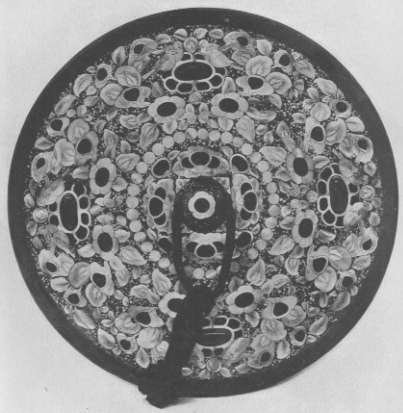
Take, for instance, the mirrors. It gives the shape, the design on the back of each mirror, the colour of silken tassel tied to each knob, a description of the box in which was kept, the lining of the box, the diameter of the mirror, and even the weight, designating at the same time the number of the chest in which it was kept.
So well prepared is the list that we have been able to identify many of the objects in the collection, thus making them extremely valuable in the study of the art, culture and history of the nation. The scroll is dated the 21st day of the 6th month of the 8th year of Tempyo Shoho, which corresponds to July 22, 756, according to the solar calendar of the West.
There were other dedications made by the Imperial Family, including a variety of medicines, rugs, more scrolls of calligraphs, embroidered slippers, incense burners, and so forth. Attention may be called to the dedication of various medicines which was also made on the forty-ninth day after the death of the Abdicant Emperor Shomu. The original memorandum of dedication of medicines is still preserved in an excellent condition. It is covered with forty-three impressions of the same square Imperial seal, and bears the same signatures. It gives a long list of medicines, consisting of sixty varieties, with their weights and receptacles. Toward the end, just before the signatures of the five grandees who also signed the other Kenmotsucho, there is a prayer which may be roughly rendered as follows:
"The above-mentioned medicines are hereby placed in the temple with adoration of the Vairocana Buddha. Any person who suffers from illness and is in need of them should apply to the head-priests of the temple, whereupon permission will be given for distribution. We humbly beseech that all who partake of these medicines may be freed from all sicknesses and saved from all ailments! May everything good for them be accomplished and all evil checked and driven away, and may the course of their long life not be prematurely interrupted through the inevitable effect of causes beyond their control, and may they, after a natural death, be born in the eternally flowering paradise, face to face with the Vairocana Buddha, and may they themselves attain Buddhahood!''
There still remain in the Repository a large number of medicines (at least twenty six), the names of which correspond to those in the original list. There are other medicines not mentioned in the Kenmotsucho. In addition, there still exist thirty-five accessories, such as bags bearing the names of the medicines mentioned in the original document. There are some, also, of which the names do not appear in the original document. According to one specialist, all the medicines now preserved in the Shoso-in - some merely the names on bags without contents - may be classified as follows: ten belonging to the animal, forty-one to the vegetable, and seventeen to the mineral kingdom.
The building of the Shoso-in with its contents has always been under Imperial supervision. Both North and South sections were Imperially sealed, that is, the locks were sealed with paper bearing the Emperor's signature, and opened only at the Emperor's command in the presence of an Imperial messenger. In 950 the contents of two other official treasure-houses of the Todaiji temple were transferred to the South Section of the Shoso-in, the objects previously in the South Section having been removed to the Middle and North Sections to make room for the new addition. We have reason to believe that most, if not all, of the objects then added date from the time of the inauguration of the Great Buddha in 752. From that time on the North and the Middle Sections were Imperially sealed and the South Section was ecclesiastically sealed; that is, the lock of the South Section was sealed with a piece of paper bearing the names of the three chief priests of the Todaiji temple. While the first two were opened only at the Imperial command, the third was accessible to the temple authorities. The treasures, however, were kept under strict supervision, a care-fur record being made of all withdrawals or additions and these were extremely rare. This system was continued until about sixty years ago when the entire building was taken over by the Imperial Household department, and the North, Middle, and South Sections, as well, came to be sealed with the Imperial signature. Since then none of the doors have been opened except in the presence of the Imperial messenger at the Emperor's command.
It was not until 1882 that shelves (with the exception of a few old ones) and glass cases were installed within the building and objects arranged on them for the inspection of visitors. The intrinsic value of these treasures was so keenly appreciated that it was decided to have the building opened periodically to air the treasures and at the same time to allow a limited number of privileged or qualified persons to see them.
Statistics showed the latter part of October and the first part of November to be the driest period of the year in the ancient capital of Nara, and that time was chosen for the airing. For a number of years in recent times, it has been customary to open the Shoso-in on or about the 20th of October and spend the rest of the month in arranging, photographing and cataloguing the treasures. A limited number of persons is allowed in the building during the first ten days or so in November, except on rainy days, and then the building is closed on the 16th to remain closed until eleven months later.
Records show that an inventory of the treasures was taken from time to time at the Imperial command. It seems that the chests in which the treasures were kept were taken out: of the building, the contents carefully examined and the result recorded and reported to the Emperor. These inventories were made in triplicate: one copy was presented to the Emperor, one copy was deposited in the treasure-house and a third copy was kept in the temple Todaiji. We still have a number of these inventories in the Shoso-in. From them we know that some of the shelves and stands which are now used for display were already in use in 911, and that, for instance, a stone flute which is broken in the middle and mended was already broken when examined in the year 793. From the existing records we know that certain objects have been withdrawn from the repository and returned or other objects returned in their stead. Thus these inventories and other records add great value to the treasures which are still preserved.
Besides these records we have a large number of objects inscribed and dated. There are no less than 532 dated objects, of which 488 bear the date of the eighth century. A large number of masks and banners, and also a large gilt bronze in the shape of a conventional cloud, were evidently used in connection with the inauguration of the Great Buddha on the 9th day of the 4th month, and 4th year of Tempyo Shoho (752), for they bear written or incised dates on them. A number of bell shaped bronze weights to be attached to banners must have been used in the great ceremony observed for the first anniversary of the Abdicant Emperor Shomu's death, as the following date is carved on each - the 2nd day of the 5th month, in the 9th year of the Tempyo Shoho (757). I may mention that there are 565 bamboo baskets which were used to hold flowers during the Buddhist ceremonies held at the Todaiji temple and that on seventeen of them are written the date, corresponding to August 30, 755, of the first anniversary of the death of Emperor Shomu's mother; and 112 of them are dated to show that they were used on May 24, 757 (according to the Western calendar), the first anniversary of the Abdicant Emperor Shomu's death.
Practically no Imperial donation was made after the eighth century, for the Nara capital was abandoned in 784 and finally removed to Kyoto in 794 to remain there for nearly eleven centuries, and the connection of the Imperial family with the Todaiji continued no longer intimate. The existence in the Shoso-in of articles of a later date may be accounted for by the fact that the contents of a pair of ancient treasure-houses belonging to the same temple were placed in the South Section in 950, as we have already noted. Judging from the list, prepared at the Imperial command in 1117, of the things then found in the South Section (though some things had already been transferred to other sections) almost all the treasures date from the eighth century. No further additions have been made since then, except on one or two occasions, including a collection of documents and a few other objects which are believed to have originally belonged to the Shoso-in.
The present catalogue of the Shoso-in treasures contains 644 items, but: this number by no means indicates the actual number of objects in the collec- tion. To explain this I must mention that some of the items consist of a great number of objects. To give some instances of this for illustration I may men' tion that the single item of patterned rugs contains thirty-one separate rugs, that of coloured rugs contains fourteen separate rugs, and that of gigaku masks contains no less than sixty seven different masks of a collection of one hun- dred and sixty-four; that of tsuki bows contains twenty-four different bows of varying length; that of arrows contains no less than 3,707 separate arrows fletched with different kinds of feathers; that of writing brushes contains seventeen different brushes with handles of varying materials; that of hemp paper consists of nineteen rolls of blue, yellow, white and other colours, containing in all more than 1,300 sheets; that of small knives contains sixty different knives of varying sizes and decoration; that of pewter dishes consists of 697 dishes of varying sizes, and so on. Not only so, but we must note that the catalogue mentions only those objects that are displayed in the building at the time of the annual airing, and that there are a number of things that are not displayed but kept in closed chests. For instance, there are about 62,500 glass beads of varying colours, as well as 291 magatama (curved jewels), put away. Fragments of textile fabrics have been classified and mounted suitably for preservation. Only a few of these are shown, while stored away there are no less than 70,000 pieces, some large and some very small. And there still remains a large quantity waiting to be classified and mounted.
Thus it is impossible to give the exact number of articles in this treasure-house. And they consist of some twenty-five different classes, namely, documeets, household furniture, kitchen utensils, writing paraphernalia, musical instruments, masks and costumes used in dances, personal ornaments, weapons, (swords, bows, arrows and spears), armour, horse-trappings, medicines, Buddhist images, temple and altar utensils, sutras and their accessories, the belongings of priests, objects used in ceremonies, carpenters' tools, incense wood, textile fabrics, glass beads, implements used in games, and miscellaneous others. The collection represents no less than two hundred and forty different kinds of objects. (Plates 43, 45, 64, 66, 67 68 69 70 71 .)
These objects represent a wide variety of workmanship. The technique used in making some of them is considered too difficult for the modern craftsman to master. No doubt some, if not many, of these treasures were brought from China and other parts of the world, while others were made in Japan, at that time. It is not easy to determine the provenance of some of these articles, and this remains a subject for discussion. For instance, students of ceramics all over the world are still divided as to the provenance of the pottery ware in the collection. There is a great quantity of documents numbering several thousands of scrolls - 4,960 sutras, and nearly 1,000 scrolls of documents. A large number of the documents are also connected with sutras, but there are as well innumerable fragments of public records of the seventh and eighth centuries. A more careful study of these documents will doubtless throw a flood of light upon the objects preserved in this unique treasure house.
It is indeed a miracle, as I have said before, that such a large collection of treasures should have been kept intact in this wooden building for nearly 1,200 years. To us Japanese, the moral influence of the Imperial seal placed on the locks has had a great deal to do with it. No doubt the interest taken by different Emperors in the treasures which once formed the possession of an illustrious Emperor helped to conserve the collection. The great reverence in which the people of Japan have held the Imperial family throughout its history of 2,600 years has doubtless helped to make the miracle possible. Even impetuous warriors in times of war dared not desecrate the Imperial seal. Twice other buildings of the Todaiji were destroyed by fire, but the Shoso-in escaped the catastrophe. Once lightning struck the building in the thirteenth century, but the damage was slight. The authorities concerned with the supervision of this treasure-house are earnestly studying ways and means further to preserve the treasures and hand them down to posterity even for ages to come. Cases have already been made and more are being made for their safety and preservation, and the best artists and artisans have been employed to make exact replicas of certain of the treasures so that they may be kept in Tokyo and Nara museums and shown to the public frequently. Yet the ques- tion of how to preserve the originals, and at the same time afford opportunities for the people to study and appreciate them, is seriously vexing the authorities concerned. Hidden among trees in the ancient city of Nara, the wooden edifice of this unique treasure house still stands, as it has stood for nearly twelve centuries, a monument to the culture and loyalty of the Japanese people.
NOTES ON PLATES
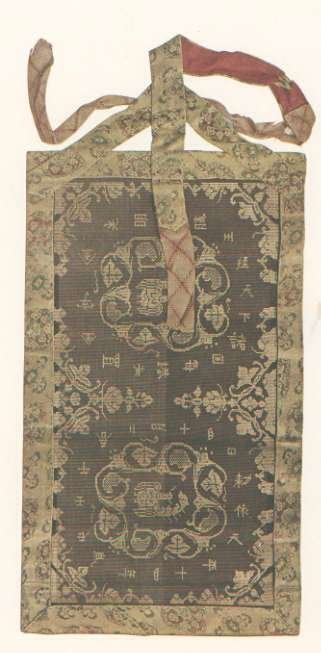
Plate 43. Cover for Saishowo-kyo Sutra. The woof is of fine split bamboo, which is not visible, as it is entirely covered with the warp of silk thread with which are woven floral designs and thirty-four ideographs, proclaiming, "In every pagoda in the various provinces throughout the realm, a copy of the Konkomyo Saishowo-kyo in gold letters is placed by the Imperial order issued on the 14th day, 2nd month, 14th year of Tempyo" (March 24, 742). Middle Section. Reproduced in colour.
Plate 44. 44. The Shoso-in Building. Built of wood in 752. In three sections: North, Middle, alla South. Each section is provided with a door, but without steps leading up to it. The building has no windows, and the floor is about nine feet above ground.
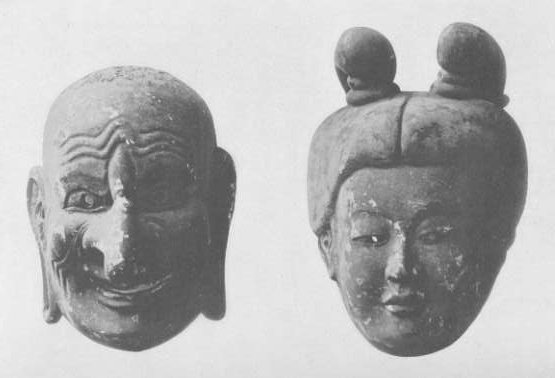
Plate 45. Gigaku Masks. There are 164 gigaku masks in the Shoso-in; some of them are dated and were evidently used at the inauguration of Dai Butsu (bronze image of the Vairocana Buddha) which took place on the 9th day, 4th month, 4th year of Tempyo Shoho (May 26, 752). North Section.
Plate 46. Upper: Arm-Rest, covered with striped brocade. The brocade is cut on the bias. North Section.
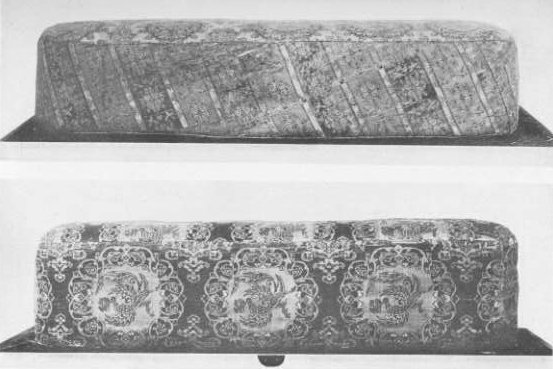
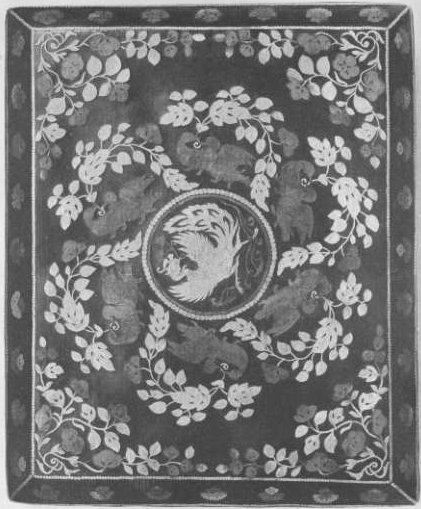
Lower: Arm-Rest, covered with brocade of phoenix design on a purple ground. North Section.
Plate 47. Left: Screen Panel with "Seal" Style Characters formed of bird's feathers. The inscription on the screen of which this panel shows a portion toward the end, runs as follows:
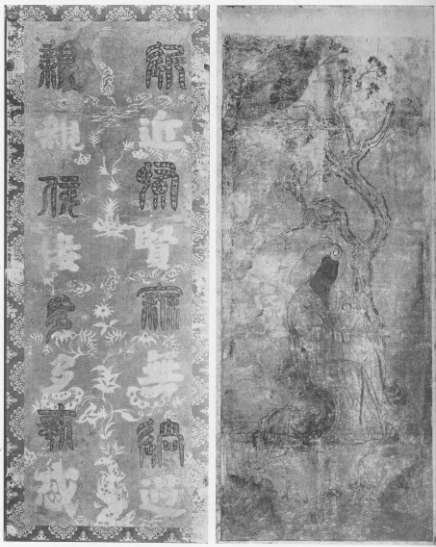
"The sovereign does not govern alone;
The subjects support and elaborate.
When caution is taken in the heart,
No regret will follow.
An enlightened monarch seeks to spread a civilizing influence,
By taking the right men into his service.
Trust a fool and the government will be corrupted;
Employ men of wisdom, and the people will grow intimate.
Allow wise men to approach, and there will be no error;
Grow intimate with a flatterer, and illusions will be many.
Move towards the good at the sight of it;
Then, finally, august virtue will be attained."
Right: Screen Panel with a Lady Sitting on a Rock under a Tree. Originally the figure, except face and hands, was decorated with bird's feathers, though only the outline now remains.
Plate 48. Ivory Footrules, carved in bachiru style. The ivory, finished in the desired form, was dyed or stained, then the design was carved on it, and later other colours were added to the unstained parts where the carving was deep. Obverse and reverse of two footrules. North Section.
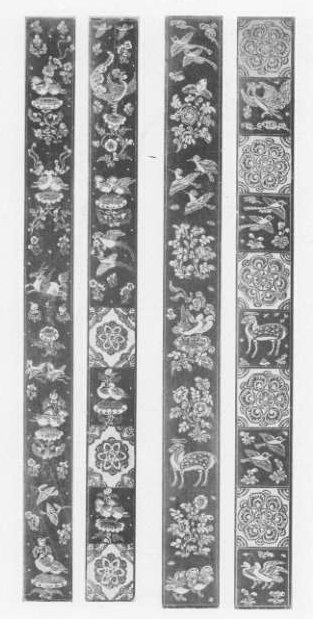
Plate 49. Box with Lid. Covered all over with jinko and shitan-wood, decorated with marquetry and drawings of waves and mountains. Decorated also with plaques with paintings of flowers and birds, animals and water, covered over with sheets of rock crystal. Middle Section.
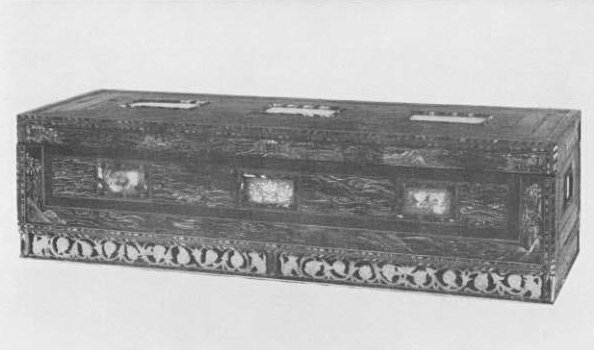
Plate 50. Box with Lid. Top of lid reproduced in colour. Compare Plate 49.
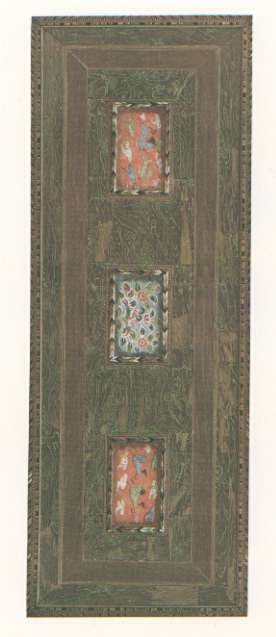
Plate 51. Red Lacquered Cabinet. First used by the Emperor Temmu (673-686) and bequeathed to five succeeding Emperors and Empresses before it was donated to the Great Buddha in 756. In the original memorandum of dedication, prepared in 756, this cabinet is described as "old fashioned." North Section.
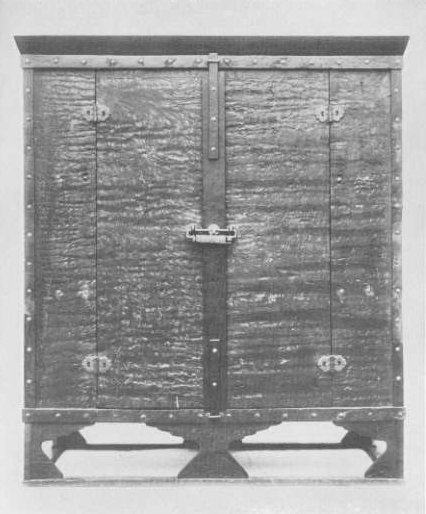
Plate 52. Lid of a Box Wood stained with sapan-juice and decorated with a picture of three children amidst floral designs painted in gold and silver. Middle Section.
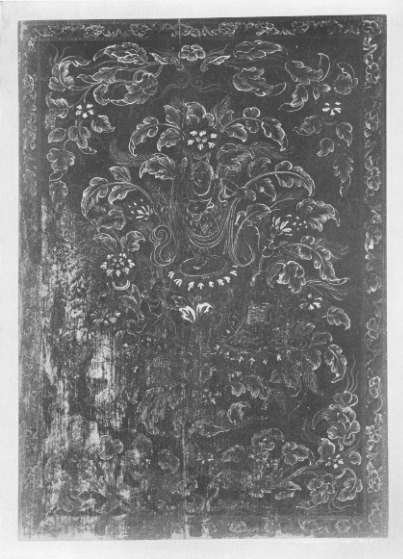
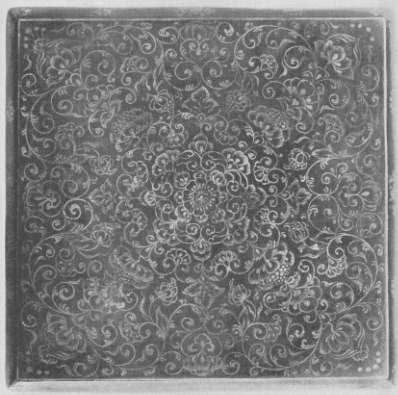
Plate 53. I id of Lacquered Box, decorated with litharge painting in conventional floral design. Middle Section.
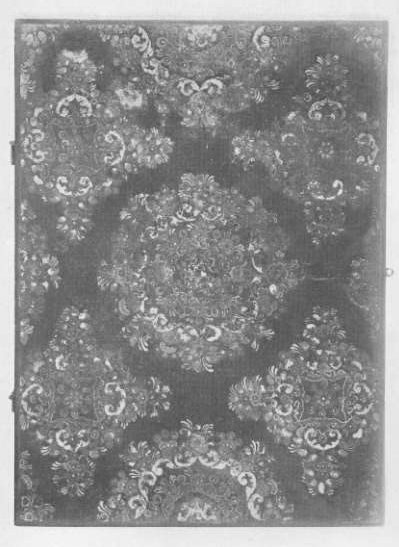
Plate 54. Upper: Lacquered Box for Mirror. Hemp-cloth foundation; decorated with a painting of flowers and birds in gold and silver. North Section.
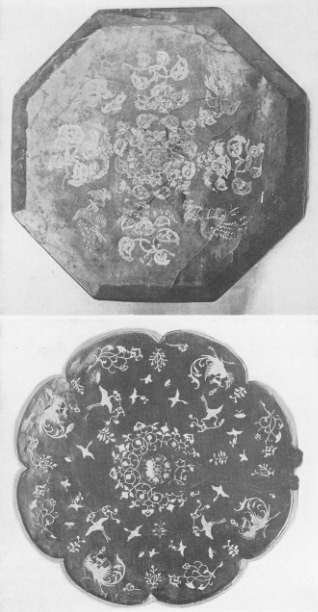
Lower: Bronze Mirror. With back decorated with a design of birds, flowers and clouds in gold and silver inlaid in lacquer. North Section.
Plate 55. Lacquered Ewer. Bamboo basket-work foundation, lacquered and inlaid with silver design; designated as gin heidatsu. North Section.
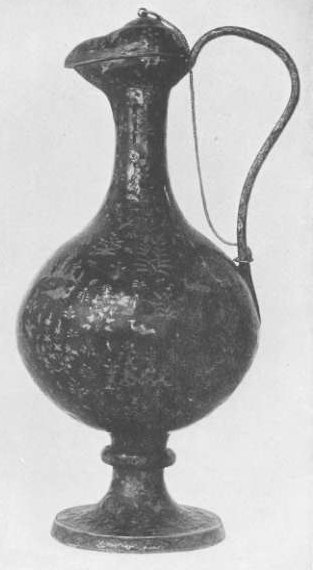
Plate 56. Lacquered Kin. Obverse and reverse. Of wood, lacquered and inlaid profusely with gold and silver in a style known as hyomon. For the translation of the inlaid inscription on the underside see pp. 120, 121. North Section.
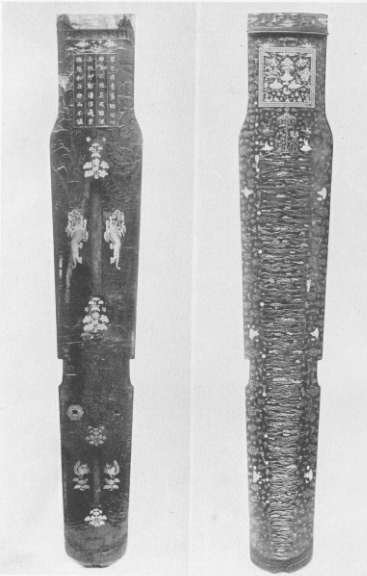
Plate 57. Left: Genkan. Obverse and reverse. Of shitan-wood inlaid with mother-of-pearl, amber and tortoise-shell. North Section.
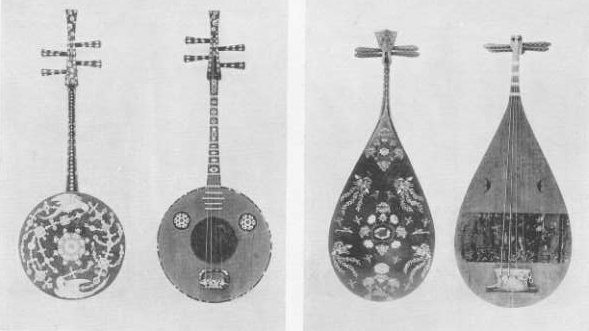
Right: Four-Stringed Biwa. Obverse and reverse. Of shitan-wood, inlaid with mother-of-pearl, amber and tortoise-shell. North Section.
Plate 58. Plectrum-Guard of Four-Stringed Biwa. Painted on leather is a landscape. In the foreground are mounted hunters shooting arrows at a tiger. In the middle distance two men are carrying game to the scene of a feast where a person is playing on a musical instrument. In the further distance where a stupendous cliff soars on one side more mounted hunters are seen. In the farthest distance tips of mountains are visible above mist like islands in the sea. South Section.
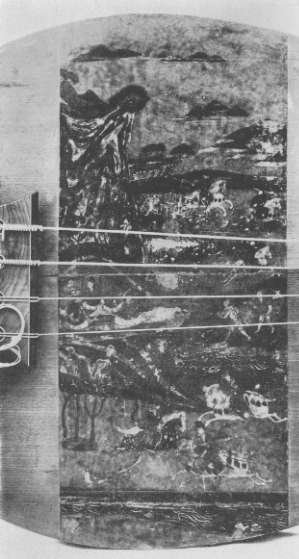
Plate 59. Plectrum Guard of Five-Stringed Biwa. A sheet of tortoise-shell inlaid with mother-of-pearl, depicting a palm-tree with birds flying about and a man riding on a camel and playing on a four-stringed instrument with a plectrum. North Section.
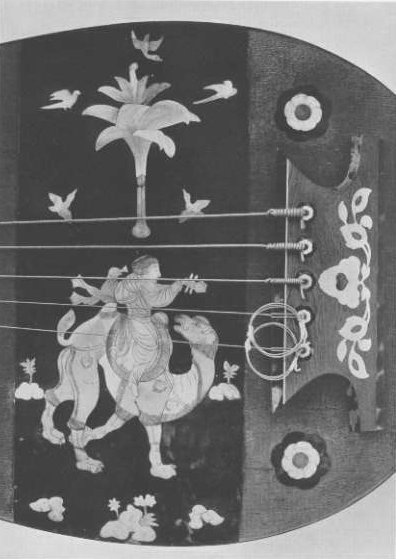
Plate 60. Top: Gilt Copper Dish. Tureen-shaped; with spreading foot and rim, outside covered with chasing in a floral design; the cover in pierced work of floral scrolls surmounted by a blossom. South Section.
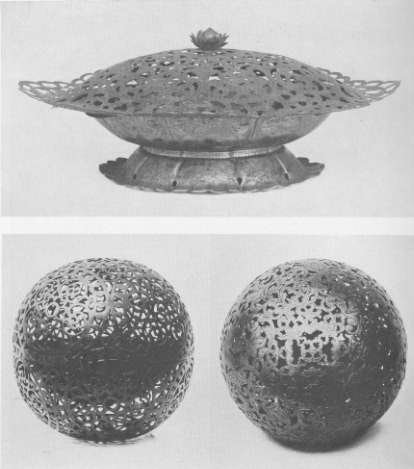
Left: Copper Incense Burner. With floral scroll design in pierced work. Middle Section.
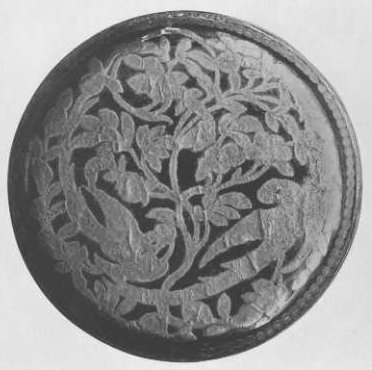
Right: Silver Incense Burner. Carved in open work, the design being floral scrolls containing a phoenix and a lion. Each contains a tray for burning incense supported on gimbals. North Section.
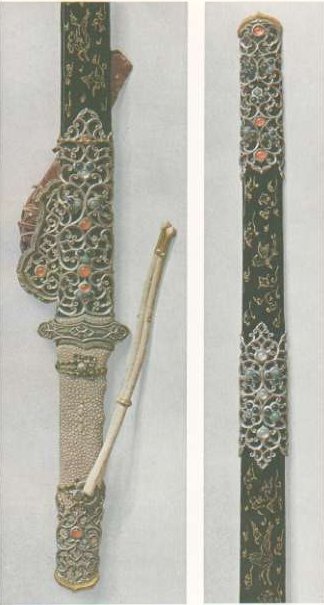
Plate 61. First and second from left: A Pair of Tosu. Rhinoceros-horn handle, decorated with silver in floral scroll set with beads of natural pearls. The entire sheath covered over with silver in pierced work set with coloured glass and natural pearls. Upon the wooden tag is written, "Dedicated by Tachibana Fujin." Middle Section.
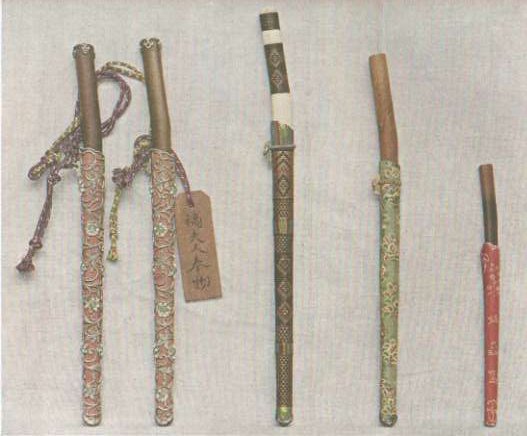
Third from left: Tosu. With handle bound with birch-bark strips braided in pattern; similarly made sheath, decorated with silver and beetle (tamamushi) wings. Middle Section.
Fourth from left: Tosu. With hilt of mottled rhinoceros-horn and sheath with a painting of flowers on a light green ground, and covered over with transparent tortoise-shell. Middle Section.
Extreme right: Tosu. With mottled rhinoceros-horn hilt and crimson ivory sheath carved in bachiru style. Middle Section.
Reproduced in colour;
Plate 62. Toko, Gilt Copper Vase. Incised all over in designs of men and beasts, flowers and birds, mountains and clouds, etc. The vase was originally a ceremonial implement in ancient China, but it came to be used later for the game of throwing darts into it. Middle Section.
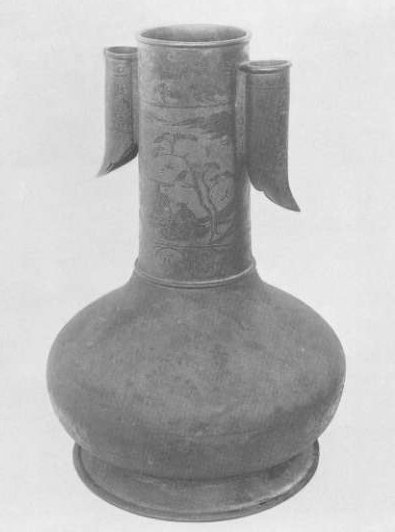
Plate 63. Top: Gilt Bronze Brazier. Supported by five legs shaped like an animal's foot and surmounted by a horned animal head. It may have been used as a censer, though it is nearly a foot and a half in diameter. Middle Section.
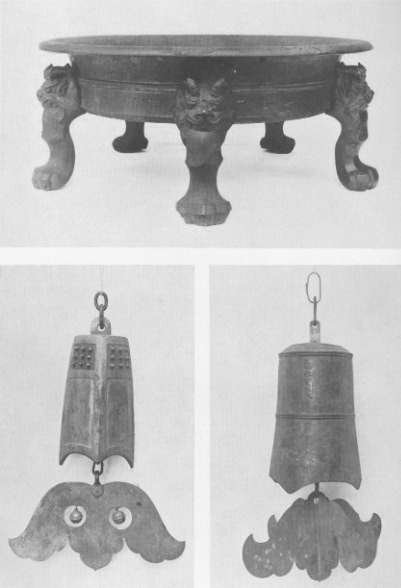
Left: Gilt Bronze Lozenge Weight for Banners. The tongue is suspended by a metal piece in a floral design. South Section. Right: Bronze Cylindrical Weight for Banners. Carved with date corresponding to May 24, 757, the first anniversary of Abdicant Emperor Shomu's death. South Section.
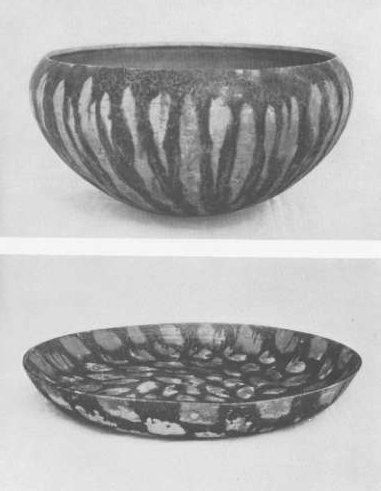
Plate 64. Upper: Pottery Bowl in the shape of an alms bowl; with bluish green streaks on white glaze. South Section. Lower: Large Pottery Plate, with splashes of green glaze on white. The provenance of these potteries is still in dispute. South Section.
(Treasures of the Shoso-in by the courtesy of the Imperial Household Museum.)