



Eri's Choice · VD5J
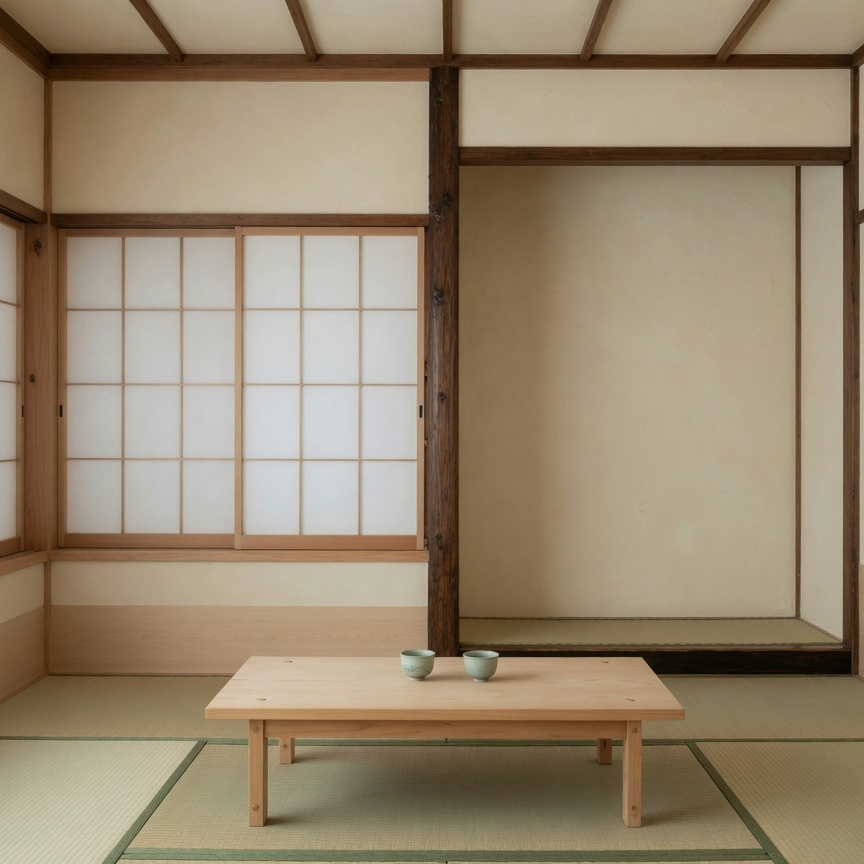
Eri's Choice is a design that does not keep strictly to one style; it is Master Takase's own artistic choice.
商売繁盛
shōbai hanjō
Thriving Business
A thriving business: trade that goes well and earns a good profit.
Hand-brushed by Master Eri Takase
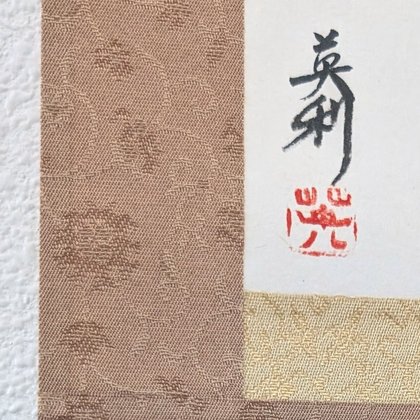
Master Japanese Calligrapher Eri Takase brushes your scroll by hand when you order it. Each scroll bears her red seal, 英利, and her signature.
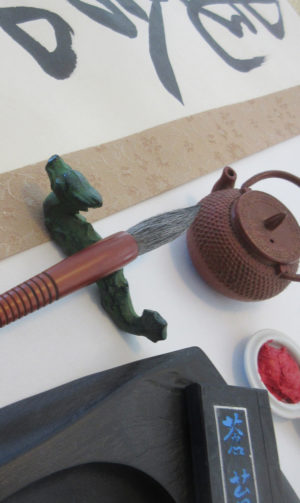
Eri Takase was born and raised in Osaka, Japan, and holds the rank of Shihan, the highest rank in Japanese calligraphy, from the Bokuteki-kai and the Bunka-shodo.
12 1/4" × 43" Japanese Scroll
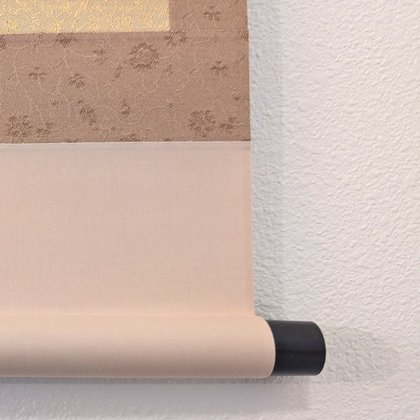
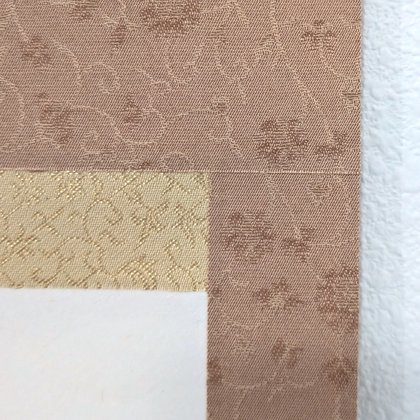
The scrolls are 12 1/4" W × 43" H (31 × 109 cm), with woven damask borders and layered Japanese paper (washi), designed to last generations. The scrolls themselves are made by a scroll maker in Gifu, Japan, and we have worked with them for over two decades.
Ships in 1-3 days from Washington State
Your scroll is brushed when you order it and completed within 1 to 3 business days.
Your scroll ships from Master Takase's studio in Washington State. Shipping is calculated at checkout. We ship worldwide.
Includes detailed explanation, gift-ready
Your scroll arrives boxed, with a printed insert describing the words in detail.
Sending it as a gift? Add your message at checkout and we will include it with the insert.
30-day money-back guarantee
Every order is covered by our 30-day money-back guarantee. If your scroll arrives damaged, or we made an error, we replace it or refund you in full, including shipping.
Explanation
商売繁盛 (shōbai hanjō): a thriving business, trade that goes well and earns a good profit.
商売繁盛 says that a business is thriving: trade goes well and the profit is good. Two words make the phrase: 商売, trade or business, and 繁盛, flourishing. In use the phrase is also a wish. It is a blessing said over a shop, and a prayer at shrines and on charms. One Japanese dictionary gives the prayer as its example of the word 繁盛: to pray for the household's safety and a thriving trade. Whether it is for your own business or for someone else's is yours.
A primer of 1784 lists what people pray for when they go to the gods and Buddhas. 商売繁盛 is in it: the household safe, health and long life, a thriving trade, and no misfortune or disaster. A survey of the Hagi domain's towns, ordered in 1841, describes the Ebisu feast in the market town of Miyaichi. The merchant houses set out offerings and sacred wine and invite friends and acquaintances. The houses entertain their guests lavishly and pray for a thriving trade.
In 1894 Lafcadio Hearn set 商売繁盛 among the prayers said under the breath to a family's ancestral dead. He gave it in English as That our business may prosper. A missionary's letter quoted in a magazine of 1920 describes the morning service at a bank. The staff stand together and say Shobai Hanjo, Success to the business. Until 1946 the phrase was written 商売繁昌 almost everywhere. Japanese dictionaries today head the phrase 商売繁盛, and one notes that it is also written 商売繁昌. The scroll writes 盛.
The two words are older, but the four characters together are Japanese and of the early eighteenth century: in the full texts searched for this history (the National Diet Library's and the National Institute of Japanese Literature's), they first stand in the puppet plays of Chikamatsu Monzaemon, in 1705 and 1715, as a blessing spoken or sung over merchants, once in a New Year song in which the young Ebisu appears as the god of trade and guards it.
Learn More About These Words
We want you to be as happy with the meaning as you are with Master Takase's art. To learn more, visit Philology of 商売繁盛.


