

Eri's Choice · VD5J
Eri's Choice is a design that does not keep strictly to one style; it is Master Takase's own artistic choice.
晴耕雨読
seikō udoku
Plow in the Sun, Read in the Rain
Plowing the fields on fine days, reading at home on rainy ones: a life lived at ease.
Hand-brushed by Master Eri Takase
Master Japanese Calligrapher Eri Takase brushes your scroll by hand when you order it. Each scroll bears her red seal, 英利, and her signature.
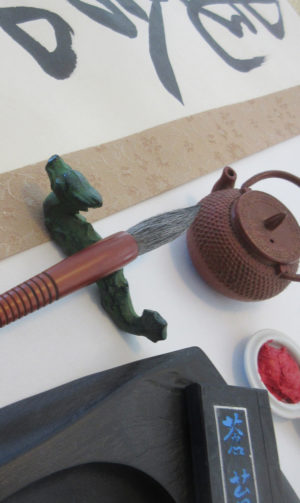
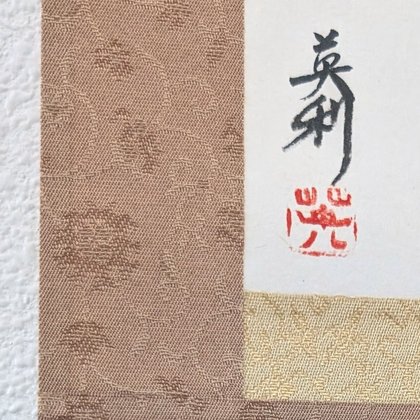
Eri Takase was born and raised in Osaka, Japan, and holds the rank of Shihan, the highest rank in Japanese calligraphy, from the Bokuteki-kai and the Bunka-shodo.
12 1/4" × 43" Japanese Scroll
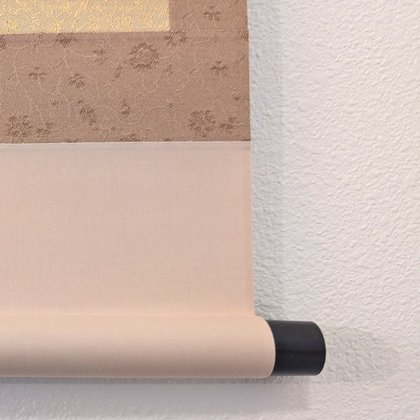
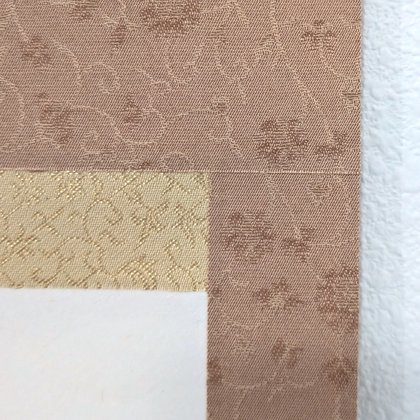
The scrolls are 12 1/4" W × 43" H (31 × 109 cm), with woven damask borders and layered Japanese paper (washi), designed to last generations. The scrolls themselves are made by a scroll maker in Gifu, Japan, and we have worked with them for over two decades.
Ships in 1-3 days from Washington State
Your scroll is brushed when you order it and completed within 1 to 3 business days.
Your scroll ships from Master Takase's studio in Washington State. Shipping is calculated at checkout. We ship worldwide.
Includes detailed explanation, gift-ready
Your scroll arrives boxed, with a printed insert describing the words in detail.
Sending it as a gift? Add your message at checkout and we will include it with the insert.
30-day money-back guarantee
Every order is covered by our 30-day money-back guarantee. If your scroll arrives damaged, or we made an error, we replace it or refund you in full, including shipping.
Explanation
晴耕雨読 (seikō udoku): plowing the fields on fine days and reading at home on rainy ones, a life lived at ease.
晴耕雨読 is four characters for a way of life: plowing the fields on fine days and staying home to read on rainy ones. Japanese dictionaries say the phrase is used of living at ease, as one pleases. The four characters say fine weather, plow, rain and read. In Japanese journals today the phrase is used above all for retirement. Whether you take it as a day balanced between work and books or as the life after retirement is yours.
A book of news stories of 1873 tells of a village headman in Yamagata. He had once been appointed an official and resigned for the sake of his aged parents. He set up a small school for the village children and named it for 晴耕雨読. In 1883 the Buddhist priest Fukuda Gyōkai wrote out the four characters and gave them to his host. The poem he wrote with them ends: leisure belongs to the man who plows when it is fine and reads when it rains.
Books of lives from 1888 to 1903 use the phrase for the official who leaves office. One of 1903 says of a man who had given up all thought of office: he took no more part in the world's affairs, and passed his days at ease, plowing when fine and reading when it rained. Plowing when fine and reading when it rains: is that not also good? wrote Tokutomi Iichirō in a book of short essays of 1898. In 1999 a Japanese magazine reported that a former prime minister had gone to Yugawara to live 晴耕雨読.
The ideal of the scholar who farms and reads is Chinese and old, but the four characters themselves are, in every record searched for this history, Japanese: they first appear, in the National Diet Library's full text, as the name of a pupil's country house in a quatrain the poet Yanagawa Seigan wrote between 1845 and 1848, which compares the pupil to a Chinese recluse who plowed by day and read by night and recasts day and night as fine weather and rain.
Learn More About These Words
We want you to be as happy with the meaning as you are with Master Takase's art. To learn more, visit Philology of 晴耕雨読.


