



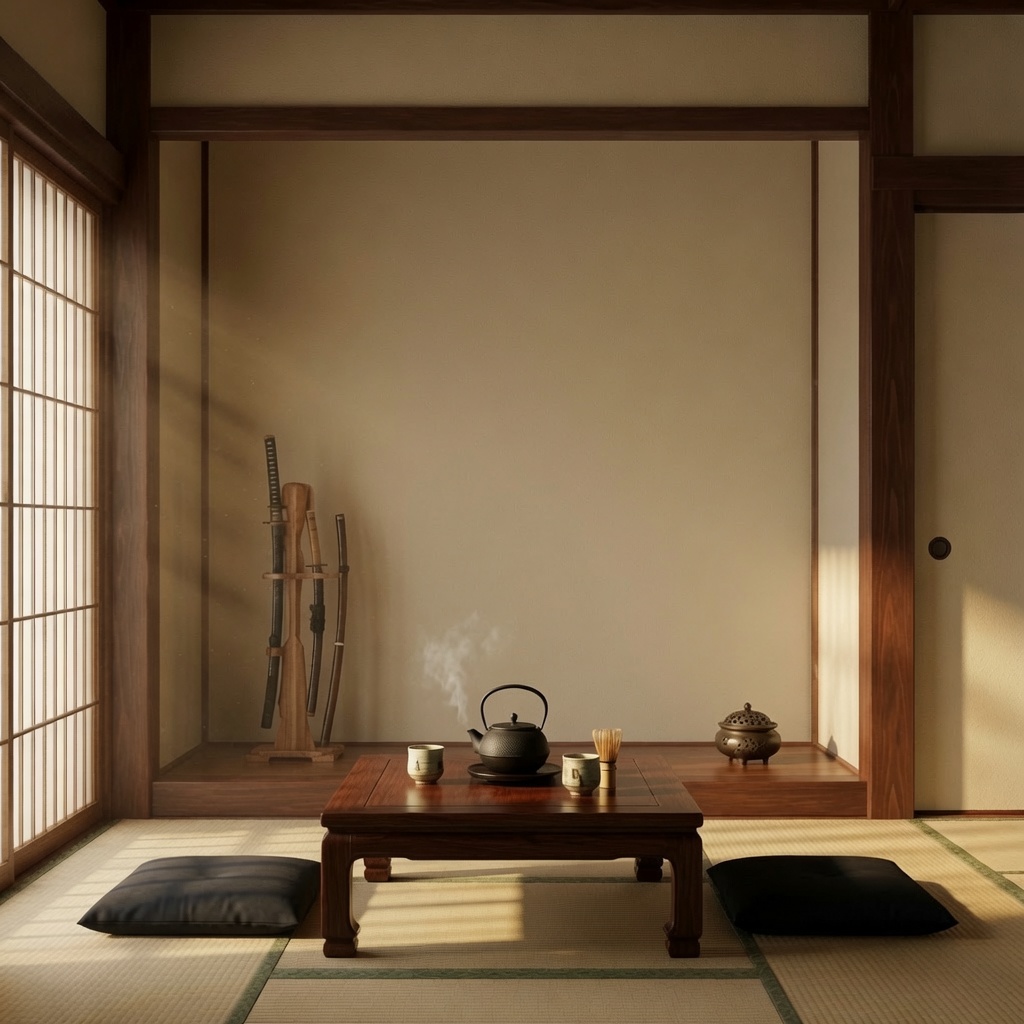

Block · kaisho 楷書 · VB2C
Block or kaisho (楷書) styles are the most common and recognizable styles. Block styles are easily read and are noted for their angular form and their vertical and horizontal lines.
真剣 shinken Real Sword
A real sword, a live blade rather than a wooden or bamboo practice sword, and the everyday word for being in earnest.
Master Takase creates this beautiful scroll when your order is placed, personally preparing the ink and brushing your art, which proudly bears her signature and seal. This is an original work of art.
Description
真剣 (shinken): a real sword, a live blade rather than a wooden or bamboo practice sword, and the everyday word for being in earnest.
The デジタル大辞泉 gives both senses: a real sword, said as against a wooden or bamboo practice sword; and meeting a thing seriously, in earnest. The 精選版 日本国語大辞典 gives the same two, and a third: true, no lie. JMdict, the open Japanese–English dictionary, gives serious; earnest before real sword (as opposed to a wooden practice weapon).
Hepburn's dictionary of 1867 reads the two characters as makoto no tsurugi, the true sword. With 勝負, a bout, they make 真剣勝負 (shinken shōbu): a bout fought with real swords, and contending in earnest. In its earnest sense, 真剣 is a manner of meeting a thing. The serious of a serious flaw, grave in itself, JMdict gives to another word, 深刻.
In Ihara Saikaku's 武道伝来記, printed in 1687, one man says a blow of the bamboo practice sword leaves no wound and so proves nothing. The other answers with a question: do you suppose that with a real sword I could not do it?
In a book of 1703, 好色敗毒散, the word is said of a money-changer's trade in gold, the 真剣 trade, where genuine reads as well as in earnest. Ejima Kiseki repeats the sentence nearly word for word in a book of 1715.
In a sharebon of 1794, a book of pleasure-quarter talk, a guest is told that's a lie and answers with the one word しんけん: for real! Earlier in the same book a line is said しんけんで, in earnest. Both are in kana, both are about speech, and neither has a sword in it.
Writers drew the real sword as a figure for being in earnest. In a novel of 1735, a card game on a riverboat turns to high stakes, as a bout with wooden swords becomes one with real blades. In Natsume Sōseki's 虞美人草, a novel of 1907, a character says being serious, you see, means a 眞劒勝負, a fight with real swords.
In English, Hepburn's dictionary of 1867 gives the blade alone: Real sword, (not a wooden one). Brinkley's of 1896 adds a sense it marks colloquial: Real, not ideal; practical. Inouye's of 1909 carries the earnest sense in an example: If in real earnest, I should not be beaten by you. In 1913 E. J. Harrison wrote, of a contest between a boxer and a judo man that never came off, of what the Japanese call a shinken (real fight).
Whether you take it as the live blade or as being in earnest is yours.
No source read here names a maker for 真剣: Chinese histories already set a real sword, 真劍, against an imitation one, glossed as wooden; the earliest Japanese example in the 精選版 日本国語大辞典 is of 1687, in a story of Ihara Saikaku set against the practice sword; and among the witnesses read here its earnest sense is plainest first in speech.
We want you to be as happy with the meaning as you are with Master Takase's art. To learn more, visit Philology of 真剣.
Delivery
Your scroll is brushed when you order it and completed within 1 to 3 business days. It ships by USPS Priority Mail from Master Takase's studio in Washington State, boxed and ready to hang, with a printed page giving the art's English, romaji and Japanese.
Sending it as a gift? Add your message at checkout and we will include it.
Shipping is calculated at checkout from your address; within the United States it is $13 to $23. We ship worldwide, and any import charges for your country are shown at checkout before you pay.
Every order is covered by our 30-day money-back guarantee. If your scroll arrives damaged, or we made an error, we replace it or refund you in full, including shipping. Refund policy
About Our Scrolls
Master Japanese Calligrapher Eri Takase brushes your scroll by hand when you order it. Each scroll bears her red seal, 英利, and her signature.
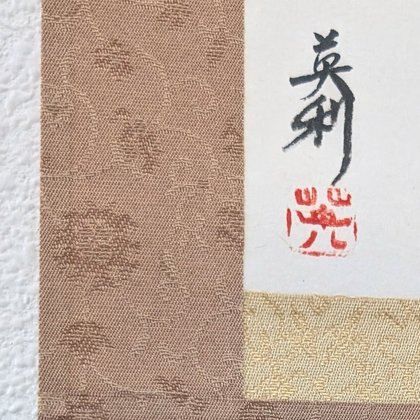


The scrolls are 12 1/4" W × 43" H (31 × 109 cm), with woven damask borders and layered Japanese paper, designed to last generations. The scrolls themselves are made by a scroll maker in Gifu, Japan, and we have worked with them for over two decades.
Eri Takase was born and raised in Osaka, Japan, and holds the rank of Shihan, the highest rank in Japanese calligraphy, from the Bokuteki-kai and the Bunka-shodo. About Master Takase


