


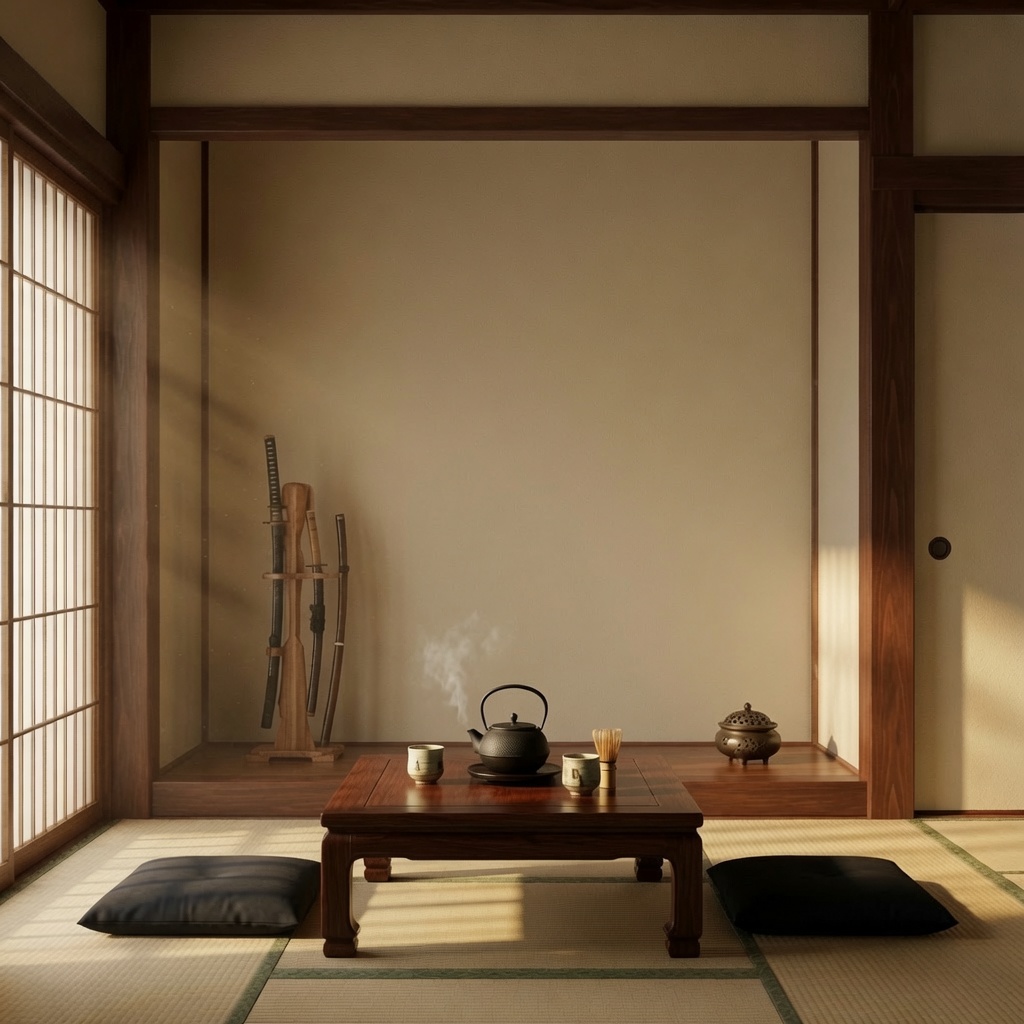

Block · kaisho 楷書 · VB5J
Block or kaisho (楷書) styles are the most common and recognizable styles. Block styles are easily read and are noted for their angular form and their vertical and horizontal lines.
克己復礼
kokki fukurei
Master the Self, Return to Propriety
Restraining oneself and keeping to propriety.
Hand-brushed by Master Eri Takase
Master Japanese Calligrapher Eri Takase brushes your scroll by hand when you order it. Each scroll bears her red seal, 英利, and her signature.
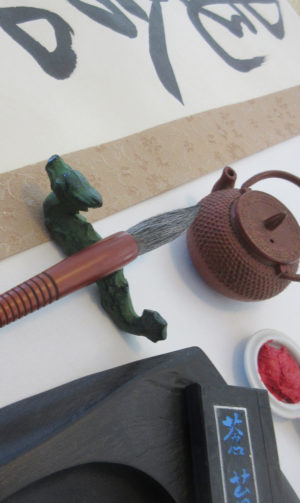
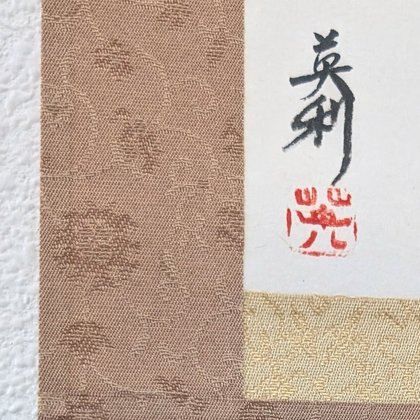
Eri Takase was born and raised in Osaka, Japan, and holds the rank of Shihan, the highest rank in Japanese calligraphy, from the Bokuteki-kai and the Bunka-shodo.
12 1/4" × 43" Japanese Scroll
The scrolls are 12 1/4" W × 43" H (31 × 109 cm), with woven damask borders and layered Japanese paper (washi), designed to last generations. The scrolls themselves are made by a scroll maker in Gifu, Japan, and we have worked with them for over two decades.


Ships in 1-3 days from Washington State
Your scroll is brushed when you order it and completed within 1 to 3 business days.
Your scroll ships from Master Takase's studio in Washington State. Shipping is calculated at checkout. We ship worldwide.
Includes detailed explanation, gift-ready
Your scroll arrives boxed, with a printed insert describing the words in detail.
Sending it as a gift? Add your message at checkout and we will include it with the insert.
30-day money-back guarantee
Every order is covered by our 30-day money-back guarantee. If your scroll arrives damaged, or we made an error, we replace it or refund you in full, including shipping.
Explanation
克己復礼 (kokki fukurei): restraining oneself and keeping to propriety.
克己復礼 is restraining oneself and keeping to propriety. One Japanese dictionary puts it as holding back too much self-assertion and acting as propriety asks. 克己 is to overcome one's own desires. 復礼 is to follow propriety. Whether you take it as a rule of the dōjō or as a rule of daily life is yours.
The Analects passage that holds 克己復礼 goes on to name four particulars. Do not look at, listen to, speak or move in anything contrary to the rites. In Japan the scholar Ogyū Sorai preferred to read 復 as tread: to carry out the rites. In 1803 Suzuki Akira put the line into Japanese prose. He wrote it as To master oneself and tread the rites is goodness.
A jūjutsu manual published in 1894 writes of the undisciplined bouts of the town dōjō. It sets 克己復礼 against the loser of a bout who complains and makes excuses. In English the phrase has been rendered subdue one's self and return to propriety and master oneself and return to propriety. The classical texts write it 克己復禮.
The four characters are Confucius's answer to his disciple Yan Hui, who asked him about goodness, in the Analects, and the 春秋左氏伝 has Confucius quote them as a saying written down of old; the Japanese dictionaries give the Analects as the source of the phrase.
Learn More About These Words
We want you to be as happy with the meaning as you are with Master Takase's art. To learn more, visit Philology of 克己復礼.


