



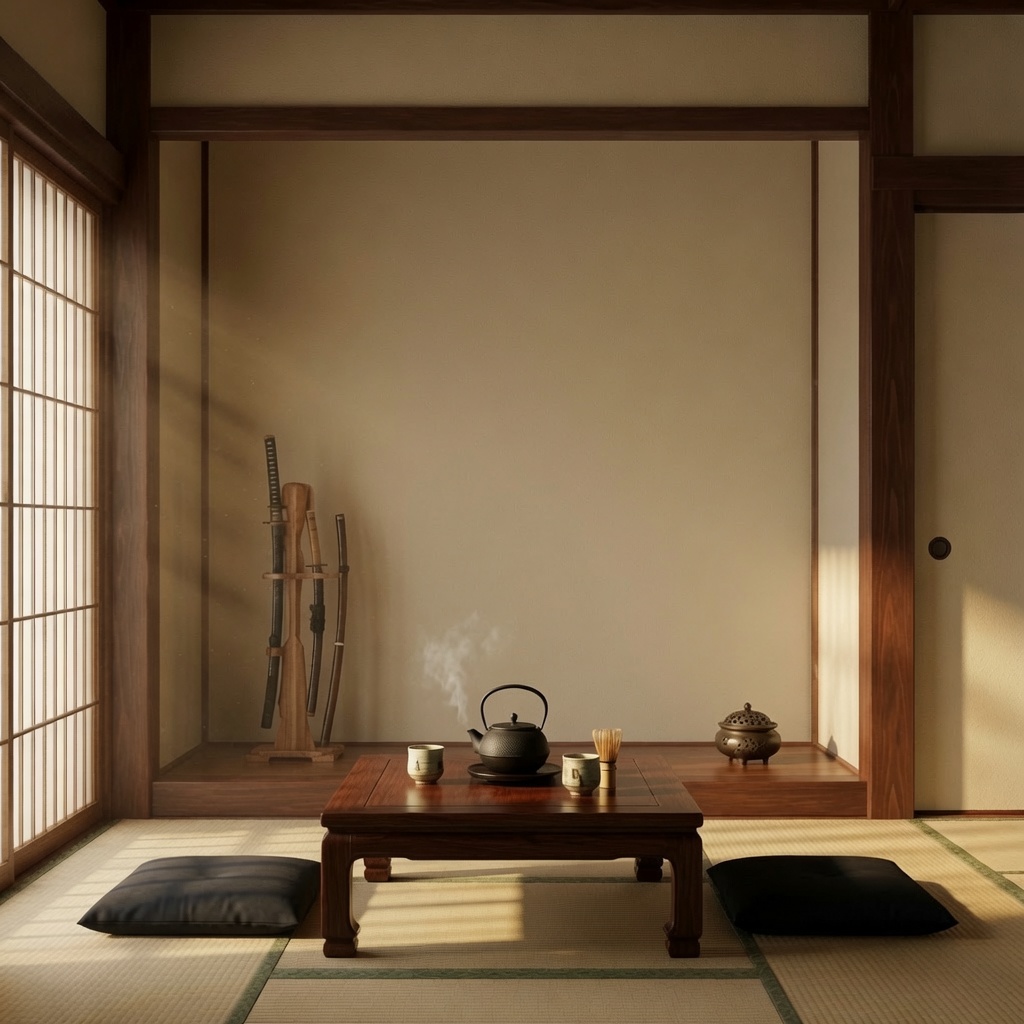

Block · kaisho 楷書 · VB4C
Block or kaisho (楷書) styles are the most common and recognizable styles. Block styles are easily read and are noted for their angular form and their vertical and horizontal lines.
空手道
karatedō
Karate-Do
Karate, the unarmed martial art. The name 空手道 carries 道, the way, as judo and kendo do.
Master Takase creates this beautiful scroll when your order is placed, personally preparing the ink and brushing your art, which proudly bears her signature and seal. This is an original work of art.
Description
空手道 (karatedō): karate, the unarmed martial art.
A dictionary and an encyclopedia give 空手道 as another name for 空手, karate, and give it no sense of its own. The dictionary calls karate a fighting art of defending oneself and mastering an opponent with bare hands, built on strike, kick and block. 道 is a way, the character that judo and kendo carry. Character by character, the name says the way of the empty hand.
In a book of 1936, the Keiō University karate club claimed the change to the new name as its own initiative. Its reason: karate was passing from martial technique to martial way.
Keiō's own guide, issued in December 1929, still listed the club as a 唐手 research society, for the study of 唐手術. 術 is a technique or art. A club list can be carried forward from an earlier one. So the guide is a tension with the club's date for its declaration, not a refutation of it. The karate club of the 第一高等学校, another Tokyo school, recorded attending the Keiō club's anniversary meet on 20 October. The entry gives no year, but it stands in the chronicle of the year the school club's rules took effect, from 1 April 1929. The chronicle calls the Keiō club by its old name and says nothing of a declaration.
In its English of 1975, Funakoshi Gichin's memoir of 1956 places the decision at Keiō: It came about when Keio University formed a karate research group, and I was able then to suggest that the art be renamed Dai Nippon Kempo Karate-do ("Great Japan Fist-Method Empty-Hands Way").
Funakoshi's book 空手道教範 has a chapter that its English, in the edition of 2012, calls From Technique Toward the Way. The chapter says: This inward quality of mind and outward quality of technique must be present at the same time to be faultlessly called "The Way of Kara-te." The chapter also says: Techniques are for people, not people for techniques.
In October 1936 the newspaper 琉球新報 held a round table of Okinawan teachers. Shimabukuro, the head of the library, asked whether karate had lately taken 道, as judo and kendo had, because the spirit was the chief thing. Nakasone Genwa answered that the usage seemed to be in the sense of cultivating the spirit.
At the round table of 1936, Miyagi Chōjun said he thought 空手道 better than 空手. The Okinawa branch of the Dai Nippon Butokukai, the national martial arts body, called the art 唐手道, he said, with the 唐 kept.
An advertisement for a book of 1938, titled with 道, quotes Kanō Jigorō, the founder of judo. In its words he praises 空手術 as free in attack and defense alike. After the war, a police manual of 1948 named 空手術 among the arts its method drew on.
Waseda University's book of student training, of 1943, lists eight martial sections, 空手道 among them, and writes 道 on all eight. By then 空手道 was one instance of a general form.
Most of the English books read for the history give the 道 to Funakoshi. His pupil Nakayama Masatoshi's Dynamic Karate, in its English of 1966, says: My teacher, Funakoshi Gichin, changed the concept of karate-jitsu (literally, "Chinese hand techniques") to karate-do (literally, "empty-hand ways") in 1935.
John Stevens, in 1995, gives the 道 to Funakoshi's book: Karate was no longer a mere art, it was a "Way". The change of 唐 to 空 he gives to the Keiō club: … the Keio University Karate Club actually made the substitution in 1929. Funakoshi's declaration helped make the change permanent.
The karate club of Keiō University in Tokyo declared 空手道 as the art's name and dated its declaration to 20 October 1929; Funakoshi Gichin made it the title of his book in 1935, Miyagi Chōjun in Okinawa wrote 唐手道 in 1934, and the Dai Nippon Butokukai, which headed its karate rank 空手術 in 1937, wrote 空手道 by 1943.
We want you to be as happy with the meaning as you are with Master Takase's art. To learn more, visit Philology of 空手道.
Delivery
Your scroll is brushed when you order it and completed within 1 to 3 business days. It ships by USPS Priority Mail from Master Takase's studio in Washington State, boxed and ready to hang, with a printed page giving the art's English, romaji and Japanese.
Sending it as a gift? Add your message at checkout and we will include it.
Shipping is calculated at checkout from your address; within the United States it is $13 to $23. We ship worldwide, and any import charges for your country are shown at checkout before you pay.
Every order is covered by our 30-day money-back guarantee. If your scroll arrives damaged, or we made an error, we replace it or refund you in full, including shipping. Refund policy
About Our Scrolls
Master Japanese Calligrapher Eri Takase brushes your scroll by hand when you order it. Each scroll bears her red seal, 英利, and her signature.
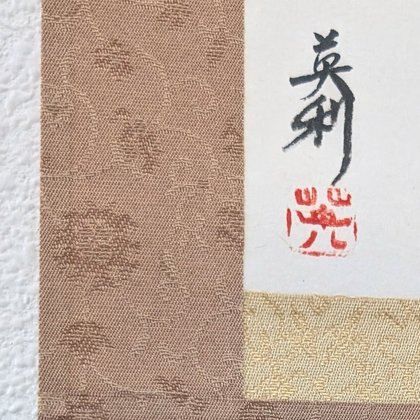


The scrolls are 12 1/4" W × 43" H (31 × 109 cm), with woven damask borders and layered Japanese paper, designed to last generations. The scrolls themselves are made by a scroll maker in Gifu, Japan, and we have worked with them for over two decades.
Eri Takase was born and raised in Osaka, Japan, and holds the rank of Shihan, the highest rank in Japanese calligraphy, from the Bokuteki-kai and the Bunka-shodo. About Master Takase


