



Block · kaisho 楷書 · VB5J
Block or kaisho (楷書) styles are the most common and recognizable styles. Block styles are easily read and are noted for their angular form and their vertical and horizontal lines.
少年老い易く学成り難し
shōnen oiyasuku gaku narigatashi
Youth Grows Old Quickly, and Learning Is Hard to Win
Youth grows old easily, and learning is hard to complete, so study without wasting a moment.
Master Takase creates this beautiful scroll when your order is placed, personally preparing the ink and brushing your art, which proudly bears her signature and seal. This is an original work of art.
Description
少年老い易く学成り難し (shōnen oiyasuku gaku narigatashi): youth grows old easily, and learning is hard to complete, so study without wasting a moment.
少年 here is a young person, man or woman. 老い易く is to grow old easily, and 成り難し is to be hard to complete. 学 is learning, the study itself.
The line opens a poem, which goes on, in the form the dictionaries give: a moment of time is not to be taken lightly; not yet woken from the dream of the spring grass by the pond, and the paulownia leaves before the steps already sound of autumn. The third line of the poem answers the poet Xie Lingyun's famous line spring grass grows by the pond, which he said came to him in a dream.
Saitō Hidesaburō's English-Japanese dictionary of 1915 set 少年老い易し beside Shakespeare's Youth's a stuff will not endure. Kenkyūsha's Japanese-English dictionary matched the line with Art is long and life is short in 1939, and in 1954 added a translation: Easily youth may pass into age, but learning is hard to acquire. Art is long sets the length of an art against the shortness of a life; the line sets how fast youth passes against how slow learning is.
A seven-character quatrain written for a scholar's study in a Zen monastery around 1400, which the poet's own collection gives to the monk Kanchū Chūtei and an anthology of 1623 to Ishō Tokugan; in Japan it was being called a poem of Zhu Xi by the first half of the nineteenth century, and schoolbooks printed it under his name as 偶成 from the first years of the twentieth.
We want you to be as happy with the meaning as you are with Master Takase's art. To learn more, visit Philology of 少年老い易く学成り難し.
Delivery
Your scroll is brushed when you order it and completed within 1 to 3 business days. It ships by USPS Priority Mail from Master Takase's studio in Washington State, boxed and ready to hang, with a printed page giving the art's English, romaji and Japanese.
Sending it as a gift? Add your message at checkout and we will include it.
Shipping is calculated at checkout from your address; within the United States it is $13 to $23. We ship worldwide, and any import charges for your country are shown at checkout before you pay.
Every order is covered by our 30-day money-back guarantee. If your scroll arrives damaged, or we made an error, we replace it or refund you in full, including shipping. Refund policy
About Our Scrolls
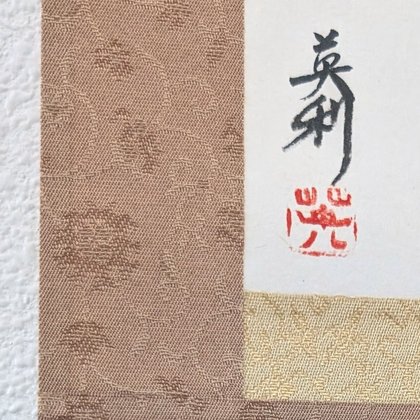
Master Japanese Calligrapher Eri Takase brushes your scroll by hand when you order it. Each scroll bears her red seal, 英利, and her signature.
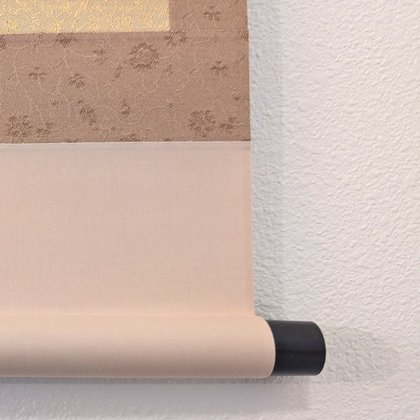
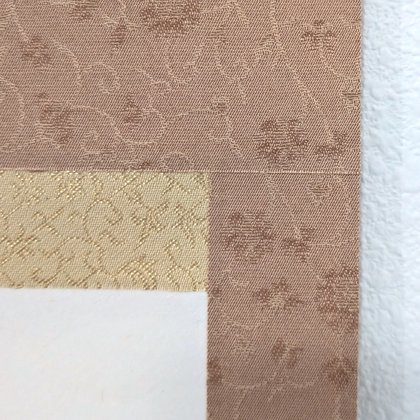
The scrolls are 12 1/4" W × 43" H (31 × 109 cm) with woven damask borders and Japanese paper that are layered so the scroll hangs straight and will not warp over time. The scrolls themselves are made by a scroll maker in Gifu, Japan, and we have worked with them for over two decades.
Eri Takase was born and raised in Osaka, Japan, and holds the rank of Shihan, the highest rank in Japanese calligraphy, from the Bokuteki-kai and the Bunka-shodo. About Master Takase


