



Jiun · 自運 · VD5B
Jiun (自運) is the calligrapher's word for writing from one's own invention. As a Shihan, Master Takase has a hand of her own, and these designs are that hand: she draws freely on the classic scripts to create exactly the look she wants.
苦の娑婆や
桜が咲けば
咲いたとて
ku no shaba ya
sakura ga sakeba
saita tote
issa 一茶
A world of grief and pain:
Flowers bloom;
Even then ...
This world of suffering; and if the cherry blooms, so it has bloomed.
Master Takase creates this beautiful scroll when your order is placed, personally preparing the ink and brushing your art, which proudly bears her signature and seal. This is an original work of art.
Description
A world of grief and pain:
Flowers bloom;
Even then ... [1]
|
ku no shaba ya sakura ga sakeba saita tote |
苦の娑婆や 桜が咲けば 咲いたとて |
| issa | 一茶 |
苦の娑婆や桜が咲けば咲いたとて (ku no shaba ya sakura ga sakeba saita tote): this world of suffering; and if the cherry blooms, so it has bloomed.
苦の娑婆や桜が咲けば咲いたとて holds pain and beauty in a single breath. 娑婆 is the Buddhist word for this world, from the Sanskrit sahā, the land to be endured, and 苦の娑婆 was Kobayashi Issa's stock phrase for it. とて at the end is a shrug, even granting that. Both readings, the bitter and the accepting, sit inside that one particle, and the verse does not say which.
References:
[1] Translation by R. H. Blyth, Haiku, vol. 1 (Hokuseido Press, 1949), p. 177.
The verse is first written in Issa's verse journal for 1819, the 八番日記, among the verses of the tenth month and in a plainer form, and the cherry form on this scroll is the one he brushed over a seated figure he liked to draw as himself, on silk, signed 人も一茶.
We want you to be as happy with the meaning as you are with Master Takase's art. To learn more, visit Philology of 苦の娑婆や桜が咲けば咲いたとて.
Delivery
Your scroll is brushed when you order it and completed within 1 to 3 business days. It ships by USPS Priority Mail from Master Takase's studio in Washington State, boxed and ready to hang, with a printed page giving the art's English, romaji and Japanese.
Sending it as a gift? Add your message at checkout and we will include it.
Shipping is calculated at checkout from your address; within the United States it is $13 to $23. We ship worldwide, and any import charges for your country are shown at checkout before you pay.
Every order is covered by our 30-day money-back guarantee. If your scroll arrives damaged, or we made an error, we replace it or refund you in full, including shipping. Refund policy
About Our Scrolls
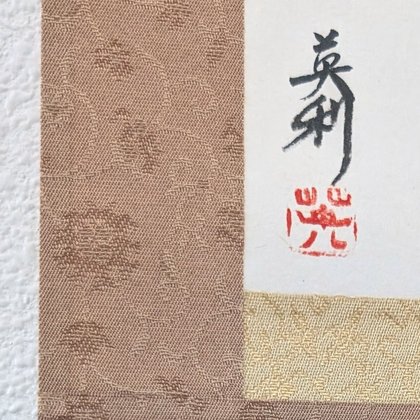
Master Japanese Calligrapher Eri Takase brushes your scroll by hand when you order it. Each scroll bears her red seal, 英利, and her signature.
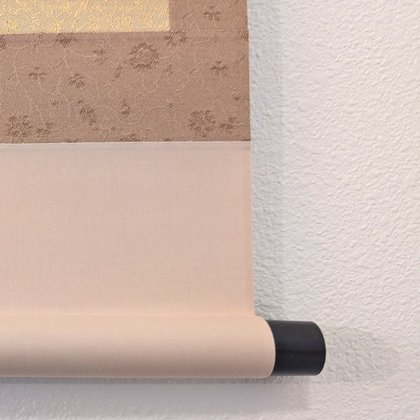
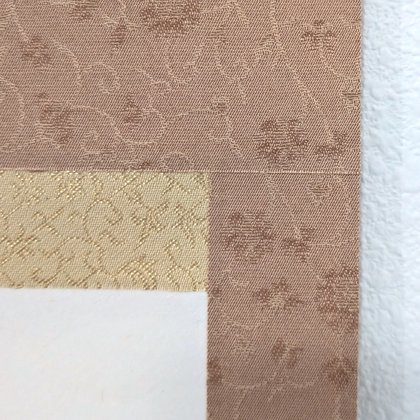
The scrolls are 12 1/4" W × 43" H (31 × 109 cm), with woven damask borders and layered Japanese paper, designed to last generations. The scrolls themselves are made by a scroll maker in Gifu, Japan, and we have worked with them for over two decades.
Eri Takase was born and raised in Osaka, Japan, and holds the rank of Shihan, the highest rank in Japanese calligraphy, from the Bokuteki-kai and the Bunka-shodo. About Master Takase
Related products

Issa - This dewdrop world, is a dewdrop world, and yet露の世は露の世ながらさりながらtsuyu no yo wa tsuyu no yo nagara sari nagara

Issa - Snail, ever so slowly climb, Mt Fuji蝸牛そろそろ登れ富士の山katatsuburi sorosoro nobore fuji no yama

Issa - The bitter part, eaten by the mother, mountain persimmon澁いとこ母が喰ひけり山の柿shibui toko haha ga kui keri yama no kaki
