


Jiun · 自運 · VD6B
Jiun (自運) is the calligrapher's word for writing from one's own invention. As a Shihan, Master Takase has a hand of her own, and these designs are that hand: she draws freely on the classic scripts to create exactly the look she wants.
塚も動け
我が泣聲
は秋の風
tsuka mo ugoke
waga naku koe wa
aki no kaze
bashō 芭蕉
Shake even the grave,
My wailing is
the autumn wind
Grave-mound, move too: my weeping voice is the autumn wind.
Master Takase creates this beautiful scroll when your order is placed, personally preparing the ink and brushing your art, which proudly bears her signature and seal. This is an original work of art.
Description
Shake even the grave,
My wailing is
the autumn wind [1]
|
tsuka mo ugoke waga naku koe wa aki no kaze |
塚も動け 我が泣聲 は秋の風 |
| bashō | 芭蕉 |
塚も動け我が泣聲は秋の風 (tsuka mo ugoke waga naku koe wa aki no kaze): grave-mound, move too: my weeping voice is the autumn wind. 塚 is the burial mound and も makes it too, so the mound is to be shaken along with everyone at the graveside; 動け is the command, move; 我が泣く聲 is my weeping voice; 秋の風, the autumn wind, is the season word. The voice does not resemble the wind. It is the wind, and the wind is told to move the mound. The poet it mourns, Kosugi Isshō, was a tea dealer and the most prolific poet in Kaga, dead the winter before at thirty-six. The two had never met; Isshō had hoped to, and Matsuo Bashō arrived to find him gone. On one of the designs Master Takase brushes うごけ and わが in kana; the words are the same.
Calligraphy Notes:
1) In older works, one most commonly sees waga written as a single kanji 我. The modern form adds the hiragana が which makes it 我が. As an example, Miyamori has 塚も動け我泣聲は秋の風, and the readers of 1926 to 1936 write 塚も動け我が泣聲は秋の風. We consider both to be correct and use both.
Translation Notes:
塚も動け
我が泣聲
は秋の風1) 塚 (tsuka) means "(1) mound; heap; hillock; (2) burial mound; tomb; tumulus; barrow;". The particle も (mo) means "also" or "even". This is important and is not reflected, in our opinion, in most of the translations. We capture this by using "even" as in "shake even the grave" 塚も動け.
2) 動け (ugoke) is the imperative form of 動く (ugoku) meaning "to move".
3) 我が (waga) means "my; one's own; our". As a fun fact, by itself 我 has eight different readings!
4) 泣聲 (naku koe) would today be written 泣き声 (nakigoe) meaning "cry; crying voice".
5) 秋の風 (aki no kaze) meaning "autumn wind" is composed of 秋 (aki) meaning "autumn" and 風 (kaze) meaning "wind".
References:
[1] After Asatarō Miyamori, An Anthology of Haiku Ancient and Modern (Maruzen, 1932), p. 12.
The verse was composed by Bashō at the memorial for the poet 一笑 in Kanazawa, on the twenty-second day of the seventh month of Genroku 2 (5 September 1689), printed first in 1691 in the memorial anthology 西の雲 and in 其角's 雑談集, and recorded in his own travel book おくのほそ道.
We want you to be as happy with the meaning as you are with Master Takase's art. To learn more, visit Philology of 塚も動け我が泣聲は秋の風.
Delivery
Your scroll is brushed when you order it and completed within 1 to 3 business days. It ships by USPS Priority Mail from Master Takase's studio in Washington State, boxed and ready to hang, with a printed page giving the art's English, romaji and Japanese.
Sending it as a gift? Add your message at checkout and we will include it.
Shipping is calculated at checkout from your address; within the United States it is $13 to $23. We ship worldwide, and any import charges for your country are shown at checkout before you pay.
Every order is covered by our 30-day money-back guarantee. If your scroll arrives damaged, or we made an error, we replace it or refund you in full, including shipping. Refund policy
About Our Scrolls
Master Japanese Calligrapher Eri Takase brushes your scroll by hand when you order it. Each scroll bears her red seal, 英利, and her signature.
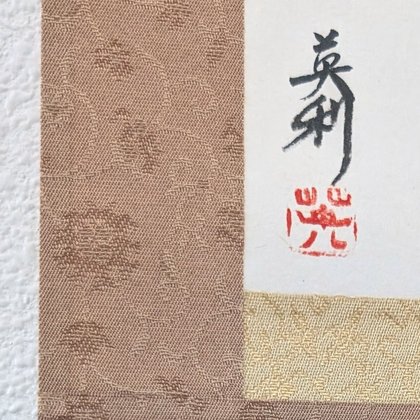
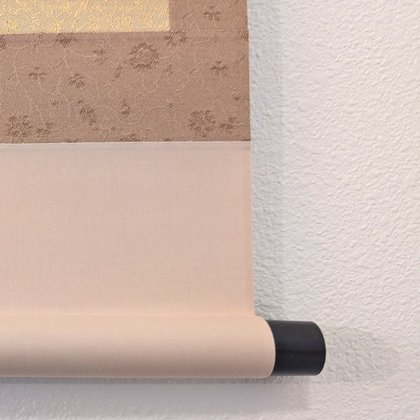
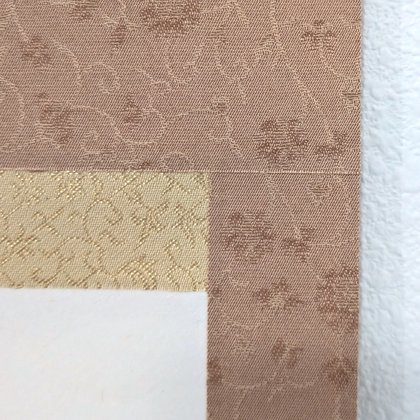
The scrolls are 12 1/4" W × 43" H (31 × 109 cm), with woven damask borders and layered Japanese paper, designed to last generations. The scrolls themselves are made by a scroll maker in Gifu, Japan, and we have worked with them for over two decades.
Eri Takase was born and raised in Osaka, Japan, and holds the rank of Shihan, the highest rank in Japanese calligraphy, from the Bokuteki-kai and the Bunka-shodo. About Master Takase
Related products

Bashō - How admirable, to see lightning, and not think life is fleeting稲妻にさとらぬ人の貴さよinazuma ni satoranu hito no tattosa yo

Bashō - Summer grass, all the warriors are, but the remains of dreams夏草や兵どもが夢の跡natsukusa ya tsuwamono domo ga yume no ato

Bashō - The old pond, a frog jumps in, the sound of water古池や蛙飛込水の音furu ike ya kawazu tobikomu mizu no oto
