

A flood of customers, a thousand guests coming ten thousand times, the wish a shop hangs at its door for a trade that never stops.
千客万来 was painted on Edo tea-house lanterns, and an 1811 poem joked that if every guest came, the shop would be in trouble. Worn as a tattoo, it is a wish that your business keeps them coming.
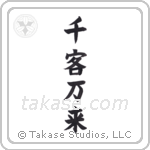
Flood of Customers
千客万来
senkyaku banrai
Vertical Block VB3C
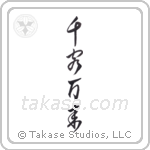
Flood of Customers
千客万来
senkyaku banrai
Vertical Cursive VC3B
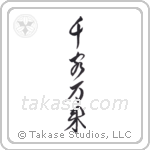
Flood of Customers
千客万来
senkyaku banrai
Vertical Jiun VD3B
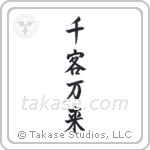
Flood of Customers
千客万来
senkyaku banrai
Vertical Semi-Cursive VS3C
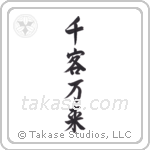
Flood of Customers
千客万来
senkyaku banrai
Vertical Semi-Cursive VS3D
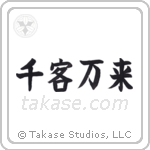
Flood of Customers
千客万来
senkyaku banrai
Horizontal Block HB3A
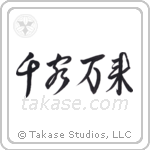
Flood of Customers
千客万来
senkyaku banrai
Horizontal Cursive HC3A
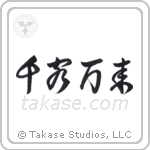
Flood of Customers
千客万来
senkyaku banrai
Horizontal Jiun HD3A
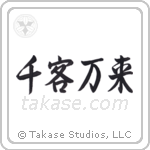
Flood of Customers
千客万来
senkyaku banrai
Horizontal Semi-Cursive HS3A
