
露の世は露の世ながらさりながら tsuyu no yo wa tsuyu no yo nagara sari nagara Issa - This dewdrop world, is a dewdrop world, and yet
露の世は露の世ながらさりながら (tsuyu no yo wa tsuyu no yo nagara sari nagara) means a world of dew is a world of dew, and yet. Kobayashi Issa set it after his infant daughter's death in おらが春, his book of 1819, from a line in his diary two years older. This study follows its text, the one word it turns on, and how readers in Japanese and English have heard it.

Abstract
露の世は露の世ながらさりながら, a world of dew is a world of dew, and yet, is Kobayashi Issa's verse on the death of his infant daughter Sato, set in おらが春, his book of the year 1819, which he finished in 1820, and signed there. It reworks a line in his diary of 1817, 露の世は得心ながらさりながら, a world of dew, though I have accepted it, and yet, headed only in mourning; the diary sets that line in the month in which his infant son had died the year before; that it mourned the son is an inference from that date, which the diary itself does not make, and English writers from 1960 on have stated it as fact. The first line grants the Buddhist teaching that the world is as brief as dew and the last word, さりながら, and yet, declines to finish the thought; most readers gathered here hear grief in that word, while Basil Hall Chamberlain in 1902, who, Miyamori Asatarō judged, did not know it was an elegy, and a Japanese critic in 1906 heard a man unwilling to throw the world away. The English renderings from Chamberlain's on keep the repetition and end on the conjunction, except Miyamori's own two, which carry the repetition as a rhyme.
Overview
The text. The scroll carries 露の世は露の世ながらさりながら, and the witnesses write one text. The 1878 printing of おらが春 writes 露の世ハ露の世なからさりなから, the topic particle in katakana and the voicing marks left off, as its cursive hand does [1]; the 1930 typeset of the same book writes 露の世ハ露の世ながらさりながら [2]. A preaching dictionary of 1909 [3] and the anthologies of 1924 to 1935 [4][5][6][7] write 露の世は露の世ながらさりながら. A 1933 rhetoric writes the last word さり乍ら [8]. The collection of his hokku that his followers printed in 1829 writes it with the kanji 去, 露の世ハ露の世なから去なから, and its enlarged edition of 1848, in a 1935 reprint, 露の世は露の世ながら去ながら [9]. A handbook of 1896 writes the particle か, 露の世か [10]. All one text. The meter is five, seven, five: つ・ゆ・の・よ・は, つ・ゆ・の・よ・な・が・ら, さ・り・な・が・ら. Issa's own diary holds an earlier line two years before the journal, 露の世ハ得心ながらさりながら [11]; it differs in its middle and is set out in the historical record.
The sense. The first line is the doctrine and the last word is the refusal, and most commentators cited here in either language read it so. A handbook of 1896 finds the feeling of the repetition 切, keen [10]. Tabuchi in 1909 uses the verse to show preachers a grief that resignation does not reach [3]. Takakusu in 1911 calls さりながら the voice of feeling against the first line's teaching [12]. Miyamori in 1932 hears in it but how sad this is! [13]. Blyth in 1952 asks Can an emotion of such profundity belong to a world that is merely a dewdrop world? Unconsciously almost, in his anguish, Issa is doubting one of the fundamental tenets of the Pure Land Sect, and inclining towards the Zen point of view, that this world is the eternal world [14]. Hass in 1994 names the first line a sect's conventional piety and sets the Diamond Sutra behind it [15]. Shirane in 2002 calls the passage that holds the verse the climax of the book [16]. Ueda in 2004 reads in it a conflict between intellect and emotion [17]. None of them reads the verse as consolation. Two early readers heard something else in the reservation. Chamberlain in 1902, who, Miyamori judged, did not know the verse was an elegy, took it for the Zen teaching held with a proviso, we cannot quite afford to throw life and its joys away [18], and Nakagawa Shimei 中川四明 in 1906 filed it under humor with feeling, 有情滑稽: 世は厭はしきも、扨て捨てたくはなし, the world is hateful, and yet one would not throw it away [19]. Miyamori named Chamberlain's mistake [13]. The open question is whom the diary's earlier line mourned, taken up under the attribution below.
The words. 露の世 is the world as dew, the Buddhist figure for impermanence, 無常; Hass calls This is a world of dew a conventional piety of the Jodo-shin sect [15], and Issa was a 浄土真宗 believer, which one encyclopedia makes the other subject of his book [20]. ながら is while being, though it is: the world is dew, granted. さりながら is and yet, and the whole verse is on it. Takakusu in 1911: この「さりながら」と云ふのが「併し」と云ふことである、これが情の聲である, this "sarinagara" means "but", and it is the voice of feeling [12]. Miyamori calls the conjunction extremely smooth and melodious [13]. It is the one word in the verse that is not doctrine. In the diary's earlier line the middle was 得心ながら, though I have accepted it: 得心 is 心から承知すること, consent from the heart [21][11]. As words the line says: A dew-world is a dew-world, granted; and yet.
The verse in English. Chamberlain in 1902 was first, and kept the repetition: Granted this dewdrop world is but / A dewdrop world,—this granted, yet [18]. Miyamori in 1932 gave the sense in two couplets, Life is the morning dew; / 'Tis true, but well-a-day!, and meant the rhyme of the second to stand for the repetition; on the same page he printed Glenn Shaw's World like a dewdrop— / Though it's only a dewdrop, / Even so, even so—, which keeps the repetition and doubles the broken close [13]. Each later rendering cited here keeps both: Blyth in 1952 [14], Yuasa in 1960 [22], Hass in 1994 [15], Hamill in 1997 [23], Shirane in 2002 [16], and Aitken in 2011, whose The dewdrop world / is a dewdrop world / and yet ... and yet the house English follows [24].
The historical record
1817. Issa, 七番日記, the Seventh Diary, the fifth month of 文化14. Among the month's verses, under the one-word heading 悼, in mourning, with 秋, autumn, set above it for the season of its dew: 露の世ハ得心ながらさりながら, a world of dew: though I have accepted it, and yet [11]. The diary names no one. Issa's son Sentarō 千太郎 had been born on the fourteenth of the fourth month of 1816 and had died on the eleventh of the fifth, which the same diary records on that day, 四月十四日生男子寅刻沒, the boy born on the fourteenth of the fourth month died at the hour of the tiger [11]; so the line stands in the month of his death, a year on. His verse to the child, はつ袷にくまれ盛りにはやくなれ, first summer robe: grow quickly to the age when boys are hated by all, stands in the same diary that year [17].
1819, printed 1852. Issa, おらが春, My Spring, a journal of prose and verse. The book is the journal of the year 1819, 文政2; one dictionary estimates the fair copy as 1820, and Ueda writes that Issa revised many diary verses to fit the book, composed new ones where none served, and had most of it done by the end of spring 1820 [17]; it was first published in 1852, twenty-five years after Issa's death, by 白井一之 from the autograph kept in 山岸梅塵's family, as a facsimile print [20]. The 1878 Nagano printing gives the passage in a cursive hand [1], and the 1930 typeset prints it whole [2]. The daughter, two years old by the old count, dies of smallpox, 終に六月廿一日の蕣の花と共に此世をしぼミぬ, at last on the twenty-first of the sixth month she withered from this world with the morning glories; her mother clings to the dead face and weeps; the father tries the consolations and cannot hold them, 思ひ切がたきハ恩愛のきづな也けり, hard to cut is the bond of a parent's love; then the verse, with 一茶 under it; then the note that a pilgrimage north had been turned back at 善光寺 that April, かゝる不幸あらん迚、道祖神のとゞめ給ふならん, as if the road gods, foreseeing this misfortune, had stopped it [2]. After the verse, under the heading 其引, stand verses by other poets on their own lost children, and on the next leaf the dragonfly-hunter verse with Chiyo's name under it [1]. The editors' notes name the child さと and the year 文政二年 [5][7]; Shirane gives her dates as June 6, 1818, to August 10, 1819, fourteen months, and notes that her name suggests satoru, to awaken [16]; Ueda gives her death as August 11, from the entry in Issa's next diary that counts her 400 days, and derives the name from satoshi, intelligent [17].
1829. 『一茶発句集』, a collection of Issa's hokku printed by his followers two years after his death. In the autumn book, among the dew verses and directly after 人問ハ露と答へよ合点か, the verse stands under a headnote, 愛子を失ひて, having lost a beloved child, written 露の世ハ露の世なから去なから; two pages before it stands 秋風やむしり残りの赤い花, autumn wind: the red flowers left unplucked, under さと女三十五日, Sato's thirty-fifth day, the memorial verse for the same child [9]. The headnote names no child. 一具, who enlarged the collection in 1848, writes in his preface that after Issa died his followers gathered and a collection came out, but as a privately held printing, not public, 句集いできにたれど、それさへ藏板とかいふものにて、世におほやけならざるををしみ [9]. So the verse was in print twenty-three years before おらが春, for the followers rather than the public.
1896. 大橋又太郎 (ed.), 『俳諧獨學』, a handbook of haikai. The earliest reader here to name a child names the wrong one: Issa, bound by 妻と一子の石太郎, his wife and his one son Ishitarō, 石太郎が疱瘡を煩らいて果てたるを歎きて、露の世か露の世ながら去ながらとは言ひぬ、其繰返したる情、いかにも其切なるを覺ゆ, grieving that Ishitarō had died of smallpox, said "a world of dew, is it; a world of dew, and yet"; the feeling of the repetition is keen indeed [10]. Ishitarō was a later son, born in the winter of 1820, after the verse was written, and dead early in 1821, suffocated on his mother's back, not of smallpox [17]; the child dead of smallpox in Issa's book is Sato [2].
1906. 中川四明, 『俳諧美學』, an aesthetics of haikai, the chapter on humor. 露の世は露の世なからさりなから 一茶 / 是亦有情滑稽なり。世は厭はしきも、扨て捨てたくはなし, this too is humor with feeling: the world is hateful, and yet one would not throw it away [19]. No child is named.
1909. 田淵静縁 (ed.), 『布教大辭典』, a dictionary for preachers. The verse as the type of a grief that doctrine does not cure [3]:
可愛い小供を天然痘の爲めに失ひ、どうしても、其諦めがつきませぬ、露の世は露の世ながらさりながらもと、其悲しい心の中をば歌ひ出したことがあります He lost a dear child to smallpox and could not, whatever he did, resign himself; and he sang out the grief in his heart, "a world of dew is a world of dew, and yet."
1911. 高楠順次郎, 『国民道徳の根柢』, lectures on national morals. The gloss on さりながら quoted above, with the lecturer's own lost child beside it [12].
1911. 辻井亨 (ed.), 『寸鉄短歌集』, a popular anthology. On pages 56–57 the verse stands after a headnote about another poet, 井上士朗は名古屋の醫である、愛子が疱瘡に果てたるを歎きて, Inoue Shirō was a physician of Nagoya; grieving a beloved child dead of smallpox, and the name 士郎 stands under it in the poets' column [25]. It is a misattribution, taking Issa's own story of a child dead of smallpox to another poet against the signature in Issa's book, and a witness that by 1911 the verse could travel in a popular book as a bereaved parent's line, detached from its book.
1924 to 1935. The おらが春 passage in the school anthologies and editions. 『俳諧文選』 (1924) prints the verse with its source, おらが春 [4]. 志田義秀's 『俳文学選』 (1926) heads the passage 幼時さと女を悼む, mourning the infant Sato, and notes in the margin みどり子—名さと。時に二歲。文政二年, the infant: named Sato; then two years old; 1819 [5]. 藤村作's annotated おらが春 (1935) glosses the passage [6]; 潁原退蔵's 『俳文俳論新選』 (1935) gives the verse as 一茶 (おらが春) with the note みどり子ー名さと。文政二年二歲にして歿す [7]. The 1930 一茶叢書 prints the whole passage with the signature and the 其引 verses after it [2].
1933 and 1935. A rhetoric and a reprint. 鵜沢四丁's 『俳諧修辞学』 (1933) writes the last word さり乍ら [8]. 藤井紫影's 『名家俳句集』 (1935) reprints 一具's enlarged 一茶發句集 of 1848, which keeps the 1829 headnote 愛子を失ひて and the さと女三十五日 verse a page before it, and writes 去ながら [9].
1921. 小池直太郎 (ed.), 『一茶日記抄』, extracts from the diaries, pages 86–87. The editor sets the verse to Sentarō and the diary's 悼 line one after the other under his own heading 五月、二男千太郎生る。(夭死), fifth month: second son Sentarō born (died in infancy) [26]. The juxtaposition is the editor's; the diary sets the two lines a year apart [11][17].
1940. 志田義秀 (ed.), 『俳文学選』, page 78. The note to the おらが春 passage: 七番日記文化十四年五月の條に、悼、「露の世は得心ながらさりながら」の句あり。(この句、同月生れて夭折せし二男千太郞の悼句か)。この句の改作流用なるべし, under the fifth month of 文化14 in the Seventh Diary, headed 悼, is the verse 露の世は得心ながらさりながら (perhaps a verse mourning the second son Sentarō, born that month and dead in infancy); this verse is probably its reworking and reuse [27]. The son is offered as a guess, with か.
1941. 勝峯晋風, 『評釈おらが春』, page 224. 露の世とだけでは諦められぬ。此の世への執着が殘ることになる。「さりながら」が一茶の人間的な述懷になるのだが、七番日記に「悼」の題で「露の世は得心ながらさりながら」の先案があつて、この句はその再考なのである, the world of dew alone cannot make him resign himself; the attachment to this world remains. さりながら becomes Issa's human confession; but the Seventh Diary has, under the title 悼, the first draft 露の世は得心ながらさりながら, and this verse is its reconsideration [28]. He names no child.
1943. 宮城謙一, 『一茶と芭蕉』, a study of Issa's place in the history of haikai. 露の世は露の世ながらさりながら、の一茶、子煩惱の一茶、しかも子供に薄倖だつた一茶, the Issa of "a world of dew", the child-doting Issa, and the Issa unlucky in his children, drawn, 宮城 supposes, to 家持's poems on his children, 銀も金も玉もなにかせんまされる寶子にしかめやも and 妻子見ればめごしうつくし, which Issa copied into his 方言雑集 [29].
Today. The dictionaries date おらが春 to 1819 and its printing to 1852, and read the book around the daughter's death and the Pure Land faith that frames it [20].
The attribution. Issa's, in his own book, signed [1][2], and in an earlier form in his own diary [11]. The 1911 anthology gives the verse to 井上士朗 [25], a misattribution against the signature. The occasion is the open question. The first collection of his verse, printed by his followers in 1829, heads it 愛子を失ひて, having lost a beloved child, and names no child [9]. In おらが春 the verse stands after Sato's death; its first form stands in the diary two years before her death, headed only 悼 [11]. 勝峯 in 1941 calls the diary line the first draft and names no one [28]. 小池 in 1921 had set it beside the son's birth [26], and a chronology in a 1926 book of Issa's brushwork sets it under the son's birth and death [30]. 志田 in 1940 guesses, with a question mark, that it mourned the infant son Sentarō, born that month [27], though the diary has him born in the fourth month and dead in the fifth [11]. Nobuyuki Yuasa in 1960 writes that we know for a fact that he really wrote it to commemorate the passing of his first-born son, and gives the diary line in English, I am fully convinced / That this world is dew, / And yet . . . / And yet . . . [22]; Sam Hamill in 1997 repeats Yuasa and goes further: Issa attributed the poem in a way that best suited the work in progress [23]. David G. Lanoue in 2017 dates the diary line to 1817 and reads its heading as the anniversary: a rewrite of one that Issa composed two years earlier, in 1817, to commemorate the one-year anniversary of the death of his firstborn child, the boy Sentarō [31]. The diary does not say whom it mourned; it sets the line in the fifth month of 1817, the month in which the son had died a year before [11], which is the ground of every reading that gives it to him and of Lanoue's anniversary. An 1896 handbook had given the verse to another son, Ishitarō, not yet born when it was written [10][17]. What the witnesses show is that Issa had the line before Sato died and gave it to her in 1819, over his name; that it was first the son's is an inference from its date, likely and unwritten.
What is not a source. The 1911 anthology's 士朗 is a witness to the verse's popular life, not to its author [25]. The son is not a source for the verse: the diary names no one, and the tie to Sentarō is drawn from its date, offered as a guess by 志田 and as a fact by Yuasa [27][22]. The 1896 Ishitarō is a mistake [10]. Chamberlain's Zen reading is reception, made without the occasion [18]. The verses under 其引, by other poets on their own lost children, are the company Issa gave his verse in his own book, not sources for it [1]. The Diamond Sutra's dream, phantom, drop of dew, lightning flash, which Hass sets behind the first line, is the doctrine the verse grants, not its text [15].
The verse in English
1902. Basil Hall Chamberlain, "Bashō and the Japanese Poetical Epigram", pages 298–299, reprinted in Japanese Poetry, 1910, pages 198–199. Given as the verse that expresses, or rather indicates, the spirit of the Zen teaching more perfectly perhaps than any by other authors, romanized with no for wa in its first line [18]:
Granted this dewdrop world is but A dewdrop world,—this granted, yet........
His gloss: Granted that all phenomena are transitory and valueless, like the dew that forthwith dries up and vanishes, still, when all is said and done, we cannot quite afford to throw life and its joys away. No child and no grief. The earliest English rendering cited here, the first to keep the repetition, and the first to write dewdrop.
1932. Asatarō Miyamori, An Anthology of Haiku Ancient and Modern, pages 22–23 (the introduction) and 522–523 (the entry). He calls it his famous verse on the death of his beloved child, heads it 亡兒を憶ふ, Longing for a Departed Child, and renders it twice [13]:
Life is the morning dew; 'Tis true, but well-a-day!
Life is the morning dew, bards say; 'Tis true indeed, but well-a-day!
The couplets keep the sense; the second's rhyme of say and day, he writes, is intended as a reproduction of the repetition of nagara. After his own he prints a third rendering, Trans. by Glenn Shaw:
World like a dewdrop— Though it's only a dewdrop, Even so, even so—
Shaw's keeps the repetition and is the first rendering cited here to double the conjunction. His note on the conjunction, extremely smooth and melodious, is the earliest English remark on the word among the books cited here. The introduction answers the first translator, and on page 523 he drops the probably: Mr. Basil Hall Chamberlain, who probably did not know the verse is an elegy, translates:— Granted this dewdrop world is but / A dewdrop world—this granted, yet. . . . and gives a long explanation to the effect that life is transient but it has joys and permanent elements and is quite enjoyable.
1952. R. H. Blyth, Haiku, volume 3, Summer–Autumn, page 433, under DEW. [14]:
This dewdrop world— It may be a dewdrop, And yet—and yet—
with the 1829 headnote, This verse has the prescript, 愛子を失ひて, "Losing a beloved child", the child named, This child was Sato-jo, and the question quoted above. He adds that Issa had already lost two or three children when this baby girl died; Ueda's life of Issa knows of one before her, Sentarō [17]. The repetition and dewdrop are Chamberlain's, the doubled close Shaw's.
1960. Nobuyuki Yuasa, The Year of My Life, pages 11–12 (the introduction) and 104 (the passage). [22]:
The world of dew Is the world of dew, And yet . . . And yet . . .
The prose before it, Yet try as I would, I could not, simply could not cut the binding cord of human love, is the translation later anthologies print. The introduction gives the diary line too, as the son's.
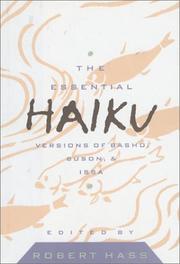
1994. Robert Hass, The Essential Haiku, page 191, with a note on page 289. [15]:
The world of dew is the world of dew. And yet, and yet—
The note: The phrase "This is a world of dew" is a conventional piety of the Jodo-shin sect, but it expresses a fundamental Buddhist idea, and it quotes the Diamond Sutra's All conditioned things are like a dream, a phantom, a drop of dew, a lightning flash. His anthology prints Issa's framing passage on page 228 in Yuasa's prose translation, credited to Yuasa, Yet try as I would, I could not, simply could not, cut the binding cord of human love [22].
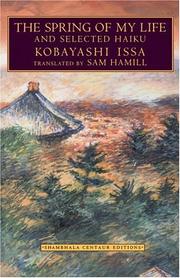
1997. Sam Hamill, The Spring of My Life and Selected Haiku. The verse inside his translation of the journal, and in his introduction Yuasa's report taken further, Issa attributed the poem in a way that best suited the work in progress [23]:
This world of dew is only the world of dew— and yet . . . oh and yet . . .
His only and oh are additions to the Japanese.
2002. Haruo Shirane, Early Modern Japanese Literature: An Anthology, 1600–1900, pages 941–945. The passage in translation with notes giving the daughter's dates and the sense of her name [16]:
This world of dew's a world of dew, and yet— and yet ...
2011. Robert Aitken, The River of Heaven, under the heading AND YET. [24]:
The dewdrop world is a dewdrop world and yet ... and yet.
His note calls it essentially a Pure Land Buddhist plaint and paraphrases the close: Yes, it's an ephemeral world we live in, yes my darling child will be happy in the Lotus Land, and yet ... and yet.
Today. The house English, This dewdrop world, / is a dewdrop world, / and yet, is after Robert Aitken [24]. It keeps the repetition and ends on the conjunction, as every rendering here does from Shaw's on.
A reading
The verse is a sentence that stops. It says what the sutra says, twice, in the poet's own voice, and then it says the one word a believer is not supposed to say, and stops there, and the child is not in it. That is why it is unbearable and why it is not sentimental: the grief is in the grammar, in a conjunction with nothing after it. Blyth's Issa is doubting is right and too strong, and his turn to Zen is Chamberlain's again; Issa is not doubting the doctrine, he is refusing to be consoled by it, which a believer can do. On the occasion, I hold what the poet's own books hold. He had the line two years before Sato died, as 露の世は得心ながらさりながら, under a heading that names no one; in 1819 he set it after her death, signed it, and changed one thing. The word 得心, I have accepted it, is gone, and the doctrine said twice stands in its place. The revision takes the speaker's consent out of the line and leaves only the teaching and the refusal, which is why the finished verse is harder than the draft. Whether the draft was for the son I do not know, and nothing in the diary says; the verse the scroll carries is the one he made for his daughter. Chamberlain's reading, life's joys held against the teaching, is wrong about the occasion and not wrong about the grammar: さりながら is a reservation, and he heard that before anyone in English heard the grief. The 1911 士朗 and the 1896 Ishitarō are mistakes, and telling ones: each keeps a child dead of smallpox and loses whose child it was.
References
- 小林一茶『おらが春』(我春集), 白井彦兵衛 and others, 長野, 1878, scans 33–34. National Institute of Japanese Literature, 国書データベース, doi:10.20730/200003967. https://kokusho.nijl.ac.jp/biblio/200003967/33
- 信濃教育会 編『一茶叢書』, 古今書院, 1930, おらが春, pp. 470–471. National Diet Library pid 1186739, scan 29. https://dl.ndl.go.jp/pid/1186739/1/29
- 田淵静縁 編『布教大辭典』, 法藏舘, 1909. National Diet Library pid 1085751, scan 105. https://dl.ndl.go.jp/pid/1085751/1/105
- 第七高等学校国語科 編『俳諧文選』, 谷村藤吉, 1924. National Diet Library pid 943272, scan 31. https://dl.ndl.go.jp/pid/943272/1/31
- 志田義秀 編『俳文学選』, 明治書院, 1926. National Diet Library pid 947714, scans 43–44. https://dl.ndl.go.jp/pid/947714/1/43
- 藤村作 註解『おらが春』, 栗田書店, 1935. National Diet Library pid 1032293, scans 29–30. https://dl.ndl.go.jp/pid/1032293/1/29
- 潁原退蔵 校註『俳文俳論新選』, 大倉広文堂, 1935. National Diet Library pid 1053619, scan 57. https://dl.ndl.go.jp/pid/1053619/1/57
- 鵜沢四丁『俳諧修辞学』, 宝文館, 1933. National Diet Library pid 1213609, scan 48. https://dl.ndl.go.jp/pid/1213609/1/48
- 『一茶発句集』, 俳諧寺社中校正, 文政12 (1829), 2 vols., vol. 2 (秋), canvas 36, right page; canvas 35, right page, for さと女三十五日. National Institute of Japanese Literature, 国書データベース, work 96071; the 県立長野図書館 copy, BID 100005293. https://kokusho.nijl.ac.jp/biblio/100005293/36 · Its enlargement by 一具 (1848), reprinted in 藤井紫影 校『名家俳句集』, 有朋堂, 1935: 一具's preface, ending p. 784, National Diet Library pid 1259717, scans 425–426, https://dl.ndl.go.jp/pid/1259717/1/425; the verse pp. 812–813, scan 440, https://dl.ndl.go.jp/pid/1259717/1/440
- 大橋又太郎 編『俳諧独学』(日用百科全書 第十一編), 博文館, 1896, p. 235. National Diet Library pid 875456, scan 133. https://dl.ndl.go.jp/pid/875456/1/133
- 信濃教育会 編『一茶叢書』第4編 下巻, 古今書院, 1930, 新校七番日記, 文化14年5月, p. 148, and 文化13年5月, p. 85. National Diet Library pid 1186695, scans 86 and 54. https://dl.ndl.go.jp/pid/1186695/1/86 · https://dl.ndl.go.jp/pid/1186695/1/54
- 高楠順次郎『国民道徳の根柢』, 文泉堂, 1911. National Diet Library pid 899348, scan 48. https://dl.ndl.go.jp/pid/899348/1/48
- Asatarō Miyamori, An Anthology of Haiku Ancient and Modern, Maruzen, Tokyo, 1932, pp. 22–23 and 522–523. Internet Archive anthologyofhaiku0000asat. https://archive.org/details/anthologyofhaiku0000asat
- R. H. Blyth, Haiku, vol. 3, Summer–Autumn, Hokuseido Press, Tokyo, 1952, p. 433.
- Robert Hass, ed., The Essential Haiku: Versions of Basho, Buson, and Issa, Ecco Press, 1994, pp. 191, 228 and 289.
- Haruo Shirane, ed., Early Modern Japanese Literature: An Anthology, 1600–1900, Columbia University Press, New York, 2002, pp. 941–945.
- Makoto Ueda, Dew on the Grass: The Life and Poetry of Kobayashi Issa, Brill, Leiden, 2004, pp. 100, 111, 119, 121, 125 and 131–133.
- Basil Hall Chamberlain, "Bashō and the Japanese Poetical Epigram," Transactions of the Asiatic Society of Japan 30, 1902, pages 298–299; reprinted in Japanese Poetry, John Murray, London, 1910, pages 198–199. https://archive.org/details/transactionsasi20japagoog
- 中川四明『俳諧美学 平言俗語』, 博文館, 1906, p. 237. National Diet Library pid 875470, scan 130. https://dl.ndl.go.jp/pid/875470/1/130
- 「おらが春」, デジタル大辞泉 · 世界大百科事典 · 日本大百科全書 · 山川日本史小辞典, at kotobank. https://kotobank.jp/word/おらが春-41344
- 「得心」, 精選版 日本国語大辞典, at kotobank. https://kotobank.jp/word/得心-582636
- Nobuyuki Yuasa, trans., The Year of My Life: A Translation of Issa's Oraga Haru, University of California Press, Berkeley, 1960, pp. 11–12 and 104.
- Kobayashi Issa, The Spring of My Life and Selected Haiku, translated by Sam Hamill, Shambhala, 1997, translator's introduction.
- Robert Aitken, The River of Heaven: The Haiku of Bashō, Buson, Issa, and Shiki, Counterpoint, 2011, AND YET.
- 辻井亨 編『寸鉄短歌集』, 大日本図書, 1911, pp. 56–57. National Diet Library pid 904562, scan 36. https://dl.ndl.go.jp/pid/904562/1/36
- 小池直太郎 編『一茶日記抄』, 荻原朝陽館, 1921, pp. 86–87. National Diet Library pid 963076, scan 53. https://dl.ndl.go.jp/pid/963076/1/53
- 志田義秀 編『俳文学選』, 明治書院, 1940, p. 78. National Diet Library pid 1029034, scan 46. https://dl.ndl.go.jp/pid/1029034/1/46
- 勝峯晋風『評釈おらが春』, 十字屋書店, 1941, p. 224. National Diet Library pid 1129783, scan 128. https://dl.ndl.go.jp/pid/1129783/1/128
- 宮城謙一『一茶と芭蕉』, 芳文堂, 1943. National Diet Library pid 1128423, scan 93. https://dl.ndl.go.jp/pid/1128423/1/93
- 新井義雄 編『一茶遺墨鑑 附・吟社懐旧録』, 1926. National Diet Library pid 1172241, snippet view. https://dl.ndl.go.jp/pid/1172241
- David G. Lanoue, Write Like Issa: A Haiku How-To, HaikuGuy.com, New Orleans, 2017, p. 110.
Books Cited
Books this article cites that can be ordered today.