戦氣 · 戦氣寒流帯月澄如鏡 senki · senki kanryū tsuki o obite sumeru koto kagami no gotoshi The air of battle
戦氣 (senki), the will and momentum of battle, heads a hanging scroll in Miyamoto Musashi's hand. Below it he brushed a line by the Chinese poet Bai Juyi, which Japan knew from the 和漢朗詠集. This study follows the word, the verse and the scroll into his school's teaching of 1723 and into English.

Abstract
戦氣 (senki) heads a hanging scroll in Miyamoto Musashi's hand, above a line by the Chinese poet Bai Juyi. The scroll is in the Matsui collection in Yatsushiro, Kumamoto; a second, the Terao family's, was shown beside it in 1907 and described in 1921, and where it is now is not known. The word is Chinese, the will and momentum of battle, and in the old art of reading the vapors over an army it names something seen; the Japanese dictionaries at kotobank do not head it. By 1723 Musashi's school headed a statement of its teaching with the two characters and set Bai Juyi's line inside it, and the line says what the air of battle should look like: the cold stream carries the moon, clear as a mirror.
Overview
The sense. A literary word of Chinese origin. The Chinese dictionary 漢典 heads it, 战斗的意志和气势, the will and momentum of battle, and gives fighting spirit as its English [1]. It also has an older, technical sense: in the astronomical treatise of the Book of Sui, 戰氣 is the vapor that stands over an army before it fights, read by color and shape for what it foretells [2]. The Japanese dictionaries at kotobank do not head the word. What they head are its neighbors: 士気, morale, the ardor of soldiers and then of any group; 戦意, the will to fight; 闘志, fighting spirit; and 戦機, a homophone, the moment to fight [3]. English spirit of battle can mean a fighter's ardor, which Japanese says with 闘志 or 戦意, or an army's morale, which is 士気. 戰氣 reaches both and adds what neither English phrase carries: the air of a fight as a thing seen. The house's designs take the two characters, and in the scroll design the line beneath them as well, from one object, a hanging scroll in Musashi's hand, where they stand over a line of verse about a river and the moon [4].
The words. 戰 is battle; 氣 is breath, air, vital force. The word is read senki: a boys' history of 1912 prints せんき beside the characters [5], and the scroll's owner gives the same [4]. It is written three ways. Musashi's scroll and the prewar books that describe it write 戰氣, both characters in the older forms; the owner's description writes 戦気, both modern; the house's word design writes 戦氣, the modern 戦 beside the older 氣. These are one word. The line under it is seven characters, 寒流帶月澄如鏡, read in Japanese kanryū tsuki o obite sumeru koto kagami no gotoshi [6]; the 1912 book reads sumite for sumeru koto [5]. 帶 is to wear at the belt, to carry: the cold stream is the subject and the moon is what it carries.
The text in English. Three English books carry the scroll. Victor Harris in 1974 calls it "Senki" (War spirit) and makes the moon the subject of the line [7]. William Scott Wilson in 2004 gives the spirit of battle, names the poet and the owner, and gets the grammar right [8]. Kenji Tokitsu in the same year meets the two characters in a document of Musashi's school, turns them into Fighters, and takes the line for Musashi's own [9]. JMdict has no entry for 戦気 [10].
The historical record
Seventh century. The word as a thing seen. The astronomical treatise of the Book of Sui, in its section on reading vapors, has the word as a technical term [2]:
凡戰氣,青白如膏,將勇。大戰氣,如人無頭,如死人臥。 The vapor of battle, when it is blue-white like grease: the general is brave. The vapor of a great battle is like a man without a head, like a dead man lying down.
Here 戰氣 is not a feeling. It is what an observer sees in the air over a camp. The general sense, will and momentum, is the one the modern dictionary gives first, with a citation from the Old Book of Tang, 战气方酣, the air of battle at its height [1].
Ninth century. The verse. The line is Bai Juyi's. Bai Juyi 白居易 (772–846), whom Japan calls Hakurakuten, reached Japan in his own lifetime and was among the most widely read of Chinese poets there [11]. The poem is 江樓宴別, Parting at a Banquet in the River Tower, in book sixteen of his collected works; an edition printed in Japan in Musashi's lifetime has the couplet [12]:
寒流帶月澄如鏡 夕吹和霜利似刀 The cold stream carries the moon, clear as a mirror; the evening wind joins the frost, keen as a blade.
About 1013. The anthology. Fujiwara no Kintō put the couplet into the Wakan rōeishū 和漢朗詠集, the anthology of Chinese and Japanese verse for chanting, under winter, in the section Year's End [13]. That is where Japan learned it, with a fixed Japanese reading: kanryū tsuki o obite sumeru koto kagami no gotoshi; sekisui shimo ni washite toki koto katana ni nitari [6].
Early Edo period, seventeenth century. The scroll. Miyamoto Musashi (1584–1645), swordsman, founder of the Niten Ichi-ryū school, painter [14]. The scroll's owner, the Matsui Bunko foundation, describes it so [4]:
戦気 一幅 せんき 紙本墨書 掛幅装 縦124.0cm、横30.2cm 落款「道楽」 印章「二天」(朱文額印) 宮本武蔵筆 江戸時代初期(17世紀) Senki. One hanging scroll. Ink on paper. 124.0 by 30.2 cm. Signature 道楽; seal 二天, red, framed. By Miyamoto Musashi. Early Edo period, seventeenth century.
The two characters are written large, the verse beneath them. The owner says two further things that a reader should have in its words. The signature and the seal are thought to be later additions, and the attribution rests on the hand:
落款の「道楽」と「二天」額印は、後入れと考えられていますが、筆跡は『宮本武蔵書状』等にみられる書体と同一であり、『正面達磨図』(永青文庫所蔵)等にみられる「ゆれ」のある描線が共通することから、武蔵の真筆と考えられます。 The signature 道楽 and the framed seal 二天 are thought to have been added later, but the hand is the same script seen in Musashi's letters, and it shares the wavering line seen in the frontal Daruma in the Eisei Bunko, and so it is thought to be Musashi's own.
And the scroll's oldest record is an entry in the Bukōden 武公傳, the life of Musashi compiled in the eighteenth century by three generations of the 豊田 family, Matsui retainers and teachers of his school: 「戦気 真大文字」「寒流帯月澄如鏡 草文字掛物也」, senki in large block characters; the verse in cursive; a hanging scroll. That entry is given here as the owner reports it.
1671. The commentary. The annotated Wakan rōeishū printed in 1671, its notes on the Chinese verse by 西生永濟 and resting on a medieval commentary, glosses the couplet [15]:
寒流は冬の水也。月に映じて鏡をみがけるやうに見ゆる也。夕吹はゆふべの風也。和霜とは一つになる心也。似刀とは夕霜寒き風の烈しく吹きて面もむけがたき樣也。 寒流 is the water of winter. Reflecting the moon, it looks like a mirror that has been polished. 夕吹 is the evening wind. 和霜 means becoming one with the frost. 似刀 is how a wind cold with the evening frost blows so hard that one cannot turn one's face to it.
This is how an educated reader of Musashi's century understood the line: a plain winter scene, the water made a mirror by the moon.
1723. The school's formula. 寺尾藤次玄高, third son of Musashi's pupil 寺尾求馬助 (Terao Kumanosuke in Wilson's romanization), gave a pupil a written formula in the ninth month of 1723. A 1911 collection of the lives of Higo men prints it and says the original was then in the 井田 family [16]:
兵法二天一流戰氣 二天一流直道體、五方構以五行本、有構無構依敵發、善惡不移誠心中、以音以前如岩尾、寒流帶月澄如鏡、實相圓滿之兵法、大虛而動靜不絕、 寺尾玄高 享保八癸卯年九月日賜之
The heading is the art of war, Niten Ichi-ryū: senki. Eight seven-character lines follow, and Bai Juyi's is the sixth, between 如岩尾, like a great rock, and 實相圓滿之兵法, the art of war complete in its true aspect. Of the texts this study read, it is the oldest dated one that joins the two characters to the verse. It shows that the pair belonged to the school's teaching two generations after Musashi. It does not say what Musashi meant by them.
Undated, printed 1966. The school's catechism. A teaching text of the Niten Ichi-ryū, set out as a master's challenge and a pupil's answer, takes the scroll's pair as its question [17]: 戦気寒流帯月澄如鏡と云事 … 水を主とするや、月を主とする也、又澄と云を主とするや弁し来れ。弁云、此一句は水を主として移すと云心を専示玉也, On "senki: the cold stream carries the moon, clear as a mirror" … is the water the principal, or the moon, or the word "clear"? Answer. The answer: this line takes the water as its principal, and shows above all the heart of utsusu, 移す. In one passage it explains the word as the opponent's attack passing into one's own mind before he makes it, 敵のしかけを、敵のせぬ内に、吾心に自然に通ずる; in another, as taking the opponent's move into oneself and passing on into one's own technique, 敵の仕懸を、吾移してとつて、続て己がわざに移る; and it goes on to say what the clearness is: the mind made water, answering each moment, the stray thoughts swept away. The school, reading its own line, puts the stream first, as the Chinese does, and hears in it not ardor but a mind that takes in what comes. Its date is not established here.
1907 and 1909. Two scrolls. On 19 May 1907 the society for the commemoration of Musashi's relics held a rite in Kumamoto and exhibited what survived. Its book of 1909 prints the list, and the list holds two scrolls [18]: 一、掛物 戰氣云々 一幅 松井敏之男藏, one hanging scroll, "senki" and so on, owned by Baron Matsui, and 一、掛物 戰氣云々 一幅 寺尾雲起氏藏, one hanging scroll, "senki" and so on, owned by Mr. Terao. The same book judges the hand by comparing the lettering of the scrolls handed down in the Baron Matsui house and the Terao house with four other writings, the Terao house's preface to his treatise on strategy, the Noda family's 獨行道, the Maeda family's 五輪書 and the Yamao family's 三十五箇條, and finds 筆力遒健、氣魄ありて禪味を帶びたり, the brush strong and taut, with spirit, and a flavor of Zen; and it reports a habit, marked as hearsay: 「寒流帶月澄如鏡」とは武藏自から好みて常に書きたりといへり, this line, it is said, Musashi liked and always wrote. The Matsui scroll is the one known today.
1909. The homophone. The same year the kendo teacher 三橋鑑一郎 published a collection of the school's writings, and among its sayings it prints 戰機二天流 寒流帶月澄如鏡 師之口傳曰, with 戰機, the moment of battle, the homophone of 戰氣, in the place of the scroll's word [19]. Whether 戰機 there is a variant of the school's own or a slip for 戰氣 is not settled here.
1921. The Terao scroll. A collection of Musashi's surviving calligraphy describes the second scroll in the Terao family's keeping [20]: 熊本寺尾計三君藏上に「戰氣」と大書し、下に「寒流帶月澄如鏡」の七字を題す。即ち武術の玄要を示したるものなり, in the collection of Mr. Terao Keizō of Kumamoto: 戰氣 written large above, and below it the seven characters of the verse; it shows the deep essentials of the martial art. Where the Terao scroll is now, and whether it survives, is not known. A survey of Kumamoto's art in 1976 estimated that three or four more scrolls of the word had come down [21].
1912 and 1915. The line as his portrait. A boys' history of 1912 prints the scroll's text with furigana and says that from this line one can sense his state of mind, その心持も察せられる [5]. The scholar and haiku poet Nunami Keion 沼波瓊音 closes his essay on Musashi with the line in 1915 and turns the hearsay of 1909 into fact: これは武藏が常に書いた語であります, these are words Musashi always wrote [22].
1941 and 1967. The hand judged. Not every reader has admired it. A critic in 1941 wrote that the scroll with 戰氣 written large and the verse beneath 癖がありすぎてあまり好ましくない, has too much mannerism to be much liked, though he granted its content [23]. A study of Musashi's writing in 1967 counted it among the three pieces 真筆と確認できる, that can be confirmed as his own hand [24].
Today. The Matsui scroll has been a designated cultural property of Yatsushiro since 5 January 2023. Its owner reports the customary reading without asserting it: the verse 武蔵の剣の境地を表現したものとされています, is taken to express the state Musashi reached with the sword [4].
What is not a source. The vapor-reading sense of 戰氣 is a sense the word had; no document shows that Musashi drew on it. That he always wrote the line is a report of 1909 with no source named. That he found the couplet in his copy of the Wakan rōeishū is Wilson's sentence, and no record of Musashi's books is cited for it [8]. The line is not Musashi's poem: it is Bai Juyi's, eight centuries older than the scroll.
The word in English
1974. Victor Harris, A Book of Five Rings, page 30. Harris's translation of Musashi's treatise reproduces the scroll as its twentieth plate, with this caption [7]:
Calligraphy by Musashi representing "Senki" (War spirit). It reads: "The Moon in the cold stream like a mirror".
War spirit renders the two characters one for one. The line is turned around: the Chinese, and every Japanese reading of it, make the cold stream the subject and the moon what it carries. He names no poet. His list of illustrations credits the plate to the Eisei Bunko, the Hosokawa collection, and not to the Matsui family.
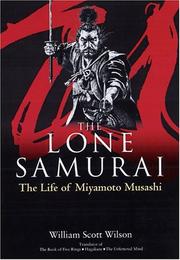
2004. William Scott Wilson, The Lone Samurai: The Life of Miyamoto Musashi, pages 136–139. The fullest of the three English accounts of the scroll [8]:
Although a number of Musashi's calligraphic works survive, by far the best known is a scroll upon which is written 戦氣 (senki), or "the spirit of battle," in large characters (Figure 6). These are followed by smaller characters reading "The cold current holds the moon, its clarity like a mirror," which is the first line of a couplet by Po Chu-i, the T'ang Dynasty poet.
He gives the second line as The evening wind merges with the frost, piercing like a sword, names the Matsui family as owner, and has the grammar right. Three things in his account are errors or unsupported. His caption says signed Niten; the owner gives the signature as 道楽 and the seal as 二天, and thinks both later additions [4]. Two pages on he calls Bai Juyi a tenth-century Chinese poet; Bai Juyi died in 846 [11]. And his sentence that Musashi found the couplet in his own copy of the anthology names no source. He prints the word as 戦氣, the same mixed form the house's word design carries.
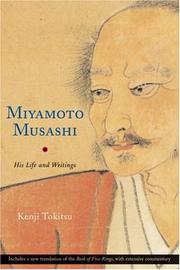
2004. Kenji Tokitsu, Miyamoto Musashi: His Life and Writings, pages 232–233. Among notes he attributes to Musashi's disciples [9]:
THE SCHOOL OF THE FIGHTERS OF THE TWO HEAVENS (Senki niten ryu) The current of a river in winter reflects the moon Like a mirror, and it is transparent. (Kan ryu tsuki o obi, sumerukoto kagami no gotoshi.) This is a famous poem by Musashi.
The heading is his source's: Mitsuhashi's collection prints 戰機二天流, with 戰機, the moment of battle, where the scroll has 戰氣 [19]. Tokitsu's Senki is the homophone's reading, and his Fighters renders neither word. A famous poem by Musashi is an error: the line is Bai Juyi's. Tokitsu takes these notes from the kendo master Mitsuhashi Kan'ichirō's collection, which he dates to 1901 in Kyoto, and of which he writes, He does not give the source of these documents.
2016. Takase Studios, the scroll's earlier page. The studio's own page for the scroll, since retired, named the poet, his dates and the anthology, objected to the renderings that make the moon the subject, the subject is the "cold river" and the object of the verb is "the moon", and gave its own: The cold river reflecting the moon with clarity like a mirror [25]. The objection is sound, and it is the objection made above to Harris. The page also made three claims that nothing cited here supports: that Musashi felt the line captured his approach to battle, that the river is not a mere stream … but the Yangtze River, and that the moon represents the enemy [25].
Today. JMdict has no entry for the word [10]. The house title, Spirit of Battle, renders the two characters one for one, as Wilson does. Word for word the text says battle and air; the reading given at the head of this page, the air of battle, differs from the title because 氣 in this word was, in its Chinese use, something an observer sees over a field, and because the verse under it describes a look and not a feeling. The house's word design writes 戦氣; the scroll writes 戰氣. A rendering of the line must keep the stream as the subject and the moon as what it carries.
A reading
The two large characters name something to be seen. The word already had that sense in Chinese, the air over a fight that a trained eye reads, and the small line under it says what that air should look like: a cold river carrying the moon, clear as a mirror. Not fury; stillness that reflects. The commentary of Musashi's own century read the line as plain winter water made a mirror by the moon, and the school's formula of 1723 set it between like a great rock and complete in its true aspect. That is evidence for the reading and no proof of what Musashi meant. No word of his about the scroll is known, and its owner says only that the piece is taken to express his swordsmanship. The English title will be heard as ardor. The scroll it comes from shows the opposite of ardor, and a person who hangs these two characters should know both halves: what the word says, and what Musashi wrote beneath it.
Notes
- Two readings of 和. The 1928 text of the anthology reads the second line shimo ni washite [6]; the scroll's owner reads it shimo ni kashite [4]. Both stand in print.
- Wilson's simple spear. Wilson observes that the character for battle is made of the elements for simple and spear, and builds a remark about Zen on it [8]. That describes the modern form 戦 (単 and 戈). The scroll writes the older 戰, whose left side is 單.
- Not the word. The Records of the Three Kingdoms, in the life of Zhang Liao, has the two characters side by side: 遼勸太祖戰,氣甚奮. They meet across a clause boundary, Liao urged Taizu to fight; his spirit was greatly roused, and the passage is not a witness for the word [26]. The Taiheiki has two such meetings. In the 1650 printing the sword-light of the old legend rises to heaven 悪星と戦ふ氣有, the ruby giving 戦 as たゝか, with the air of fighting the evil star; and in its rendering of the Six Secret Teachings the brave 戦ひ, 氣青雲をはげまし, fight, and their spirit rises to the blue clouds [27]. Neither is the word.
References
- 「戰氣」, 漢典 (zdic). https://www.zdic.net/hans/戰氣
- 『隋書』卷二十一 志第十六 天文下, text at Wikisource. https://zh.wikisource.org/wiki/隋書/卷21
- 「士気」「戦意」「闘志」「戦機」, デジタル大辞泉 · 精選版 日本国語大辞典, at kotobank. https://kotobank.jp/word/士気-517521 · https://kotobank.jp/word/戦意-549317 · https://kotobank.jp/word/闘志-580332 · https://kotobank.jp/word/戦機-549536
- 一般財団法人 松井文庫「戦気」, in 宮本武蔵, 松浜軒. https://higo-shohinken.jp/miyamotomusashi
- 池辺藤園『少年史談』, 1912. National Diet Library pid 1169609, scan 69. https://dl.ndl.go.jp/pid/1169609/1/69
- 『倭漢朗詠集』歳暮, in 高野辰之 編『日本歌謡集成』巻3, 春秋社, 1928. National Diet Library pid 1176562, scan 31. https://dl.ndl.go.jp/pid/1176562/1/31
- Victor Harris, trans., A Book of Five Rings, by Miyamoto Musashi, The Overlook Press, Woodstock, New York, 1974, plate 20, pp. 30–31; read in the 1982 paperback, fifth printing.
- William Scott Wilson, The Lone Samurai: The Life of Miyamoto Musashi, Kodansha International, Tokyo and New York, 2004, pp. 136–139.
- Kenji Tokitsu, Miyamoto Musashi: His Life and Writings, translated by Sherab Chödzin Kohn, Shambhala, Boston, 2004, pp. 232–233.
- JMdict, at jisho.org, 戦気. https://jisho.org/search/戦気
- 「白居易」, デジタル大辞泉 · 精選版 日本国語大辞典, at kotobank. https://kotobank.jp/word/白居易-113647
- 白居易『白氏文集』巻十六「江樓宴別」, 那波道圓 校刊, 1618 in the library's record. National Diet Library pid 2543995, scan 7. https://dl.ndl.go.jp/pid/2543995/1/7
- 「和漢朗詠集」, デジタル大辞泉 · 精選版 日本国語大辞典, at kotobank. https://kotobank.jp/word/和漢朗詠集-153936
- 「宮本武蔵」, デジタル大辞泉 · 精選版 日本国語大辞典, at kotobank. https://kotobank.jp/word/宮本武蔵-139643
- 西生永濟 · 北村季吟『和漢朗詠集註』(1671), item 二一四 歳暮, in 高野辰之 編『日本歌謡集成』巻3, 春秋社, 1928, with the editor's headnote at scan 10. National Diet Library pid 1176562, scan 119. https://dl.ndl.go.jp/pid/1176562/1/119
- 武藤厳男 編『肥後先哲偉蹟』, 隆文館, 1911, 續 巻二 寺尾藤次, pp. 424–426. National Diet Library pid 778595, scans 222–223. https://dl.ndl.go.jp/pid/778595/1/222
- 今村嘉雄 · 小笠原清信 · 岸野雄三 編『日本武道全集』第1巻 (剣術 1: 柳生新陰流 · タイ捨流 · 心形刀流 · 二天一流), 1966, snippet view, National Diet Library, pid 2466845. https://dl.ndl.go.jp/pid/2466845
- 宮本武蔵遺蹟顕彰会 編『宮本武蔵』, 金港堂書籍, 1909: the exhibition list, scan 142; the hand, p. 131, scan 84; the habit, scan 27. National Diet Library pid 992019. https://dl.ndl.go.jp/pid/992019/1/142
- 宮本武蔵 · 三橋鑑一郎『二刀一流剣道秘要』, 武徳誌発行所, 1909, snippet view, National Diet Library, pid 860425. https://dl.ndl.go.jp/pid/860425
- 森大狂 編『宮本武蔵遺墨集』, 1921, snippet view, National Diet Library, pid 3437779. https://dl.ndl.go.jp/pid/3437779
- 『熊本の美術:肥後の造形文化のながれ 古代から近世まで』, 1976, snippet view, National Diet Library, pid 13242667. https://dl.ndl.go.jp/pid/13242667
- 沼波瓊音『乳のぬくみ』, 1915. National Diet Library pid 904872, scan 130. https://dl.ndl.go.jp/pid/904872/1/130
- 『文化日本』, July 1941, snippet view, National Diet Library, pid 1553950. https://dl.ndl.go.jp/pid/1553950
- 九州大学国語国文学会 編『語文研究』, October 1967, snippet view, National Diet Library, pid 6063594. https://dl.ndl.go.jp/pid/6063594
- Takase Studios, Miyamoto Musashi's Senki - Spirit of Battle, as archived 17 June 2016. http://web.archive.org/web/20160617194730/http://www.takase.com:80/JapaneseCalligraphy/Scrolls/miyamoto-musashi-senki-spirit-of-battle.htm
- 『三國志』卷十七 魏書 張遼傳, text at Wikisource. https://zh.wikisource.org/wiki/三國志/卷17
- 『太平記』40巻, 1650, vol. 13, scan 39, and vol. 22, scan 17. https://dl.ndl.go.jp/pid/2570081/1/39 · https://dl.ndl.go.jp/pid/2570090/1/17
Books Cited
Books this article cites that can be ordered today.