

生甲斐 ikigai Reason For Being
生甲斐 (ikigai) is an everyday Japanese word for what makes a life worth living. The 日本国語大辞典's earliest example is the fourteenth-century 太平記, where it is said of a life not worth living. It follows the word from that negative to the positive, in print by 1838, and into English, where a diagram drawn for another word carried it.

Abstract
生甲斐, ikigai, is an everyday Japanese noun for what makes a life worth living: the worth of being alive, and the thing that gives it, which can be a child, one's work or an aim. It joins 生き, living, with 甲斐, worth, a native noun already in the Man'yōshū; the 日本国語大辞典's earliest example is the war chronicle 太平記, in the negative, 生甲斐なき命, a life not worth the living, and in the Diet Library's classical books, as its full-text search indexes them, the word is mostly negative and the clear positive is in 曲亭馬琴's 八犬伝 in 1838. From 1894 Japanese translations of foreign books call a life 生甲斐ある, worth living, before the novel of 1902 to 1905 that the dictionary gives as its earliest example of the modern sense, and Takenobu's Japanese-English dictionary of 1918 has ikigai as a headword, be worth living. The psychiatrist 神谷美恵子 wrote a book on the word in 1966, anthropologists wrote about it in English by the 1980s, and a general English readership met it through a talk in 2009 and, from 2014, through a four-circle diagram drawn in Spain for a different word, propósito, purpose.
Overview
The sense. An everyday Japanese noun for what makes a life worth living. The 日本国語大辞典 gives two senses [1]. ① 生きているだけのねうち。生きている意義: the worth of being alive at all; the point of living; its earliest example is the 太平記 [1]. ② 生きていくはりあい。生きているという実感: what makes going on living worthwhile; the felt reality of being alive; its earliest example is 徳富蘆花's novel 黒潮 (1902–05) [1]. The デジタル大辞泉 has 生きるに値するもの。生きていくはりあいや喜び, something worth living for; the zest and joy of going on living [2]. JMdict's first gloss is reason for living [3].
The words. 生き iki is the stem of 生きる, to live. 甲斐 kai, voiced to gai after it, is a native noun, かひ, which the 日本国語大辞典 derives from the verb かう, to stand in for, and defines first as the sign that an act was worth doing, its effect, and the satisfaction of having done it, and then as the value an act can be exchanged for [4]. Its earliest example is the Man'yōshū, poem 3810, 我が待ちし代(かひ)はさね無し, there was no worth at all in my waiting, as the dictionary quotes it [4]. The characters 甲斐 are also the name of a province, and the デジタル大辞泉 lists がい as a bound element that makes 生き甲斐 and 働き甲斐, the worth of working [4]. 生甲斐 without the okurigana is the 日本国語大辞典's headword [1] and the spelling of the 1603 print of the 太平記 [5]; 生き甲斐, with the き, is the デジタル大辞泉's headword [2]; and the kana 生きがい is, in Gordon Mathews's words of 1996, how the word is generally written at present [6], and the 世界大百科事典's headword [7]. They are one word.
The text in English. JMdict lists reason for living; something one lives for; purpose in life; raison d'être; ikigai [3].
The historical record
Late fourteenth century, 太平記, book eleven, a war chronicle. After Kamakura falls, the chronicle turns on the men who had stood in the enemy's camp on the Taira's favor and now changed sides: 生甲斐ナキ命ヲ續ン爲ニ所縁ニ屬シ降人ニ成テ, to prolong lives not worth the living, they attached themselves to whomever they knew and surrendered. The words are quoted from the movable-type edition printed in 1603 [5]; the passage is the 日本国語大辞典's earliest example of the word [1]. The first use is a negative, 生甲斐なき命, a life with no worth in it, said of men who surrendered to keep it.
1610, a glossary to the 太平記. The 太平記音義, dated 1610 in the library's record, lists words of the chronicle with their readings, book by book, and under book eleven it gives 生甲斐 with the reading イキカヒ [8].
1646, 曽我物語, book seven, a printed edition of the revenge tale. Jūrō opens his eyes wide: とてもかくてもいきかひなき, one way or the other, with no worth in living [9]. In kana, and again the negative.
1726, 江島其磧 and 自笑, 出世握虎昔物語, an ukiyo-zōshi. 生甲斐なき命をのべ, prolonging a life not worth the living, with the reading いきがひ beside the characters [10]. The 太平記's phrase, three and a half centuries on.
1838, 曲亭馬琴, 南総里見八犬伝, its ninth series. 老て要なき身も今さらに生甲斐ありとぞ思ひける, even a body grown old and of no use felt, after all, that there was worth in living [11]. The volume is dated by the colophon of its set, 天保九年, 1838 [11]. In the Diet Library's classical books as its full-text search indexes them, 232 rows on six spellings in 220 books, this is the earliest clear positive use [12]. Of the rows whose index text shows what follows the word, 74 have it in the negative, なし, なき or もない, and nine have あり or ある; three of the nine are 八犬伝's, and the dated ones before 1838 are two questions that mean the negative and a 1643 commentary on the Genji whose いきかひあれとも reads, by its sense, as いきほひ, influence [12].
1894 to 1902, worth living, in translation. The Diet Library's full-text search has 生甲斐ある from 1894 and 生き甲斐ある from 1901 [12], and three of the oldest of those books, read at the page for this history, are translations. 『新攘夷論』 (1894), a book of W. H. Wilkins's in Japanese: 生きて生甲斐あるは快樂あるか爲めなるも, living is worth it for the pleasure in it [13]. 『日用祈の栞』 (1901), Andrew Murray's book of daily prayer, translated by 稲垣陽一郎: 生き甲斐ある一事はキリストの王國の爲に生くる事なりとして生涯を送れ, live your life holding that the one thing worth living for is to live for the kingdom of Christ [14]. 『我懺悔』 (1902), 加藤直士's version of Tolstoy's Confession: 此一生を生き甲斐あるものとなさんと欲する, wishing to make this one life worth living [15].
1902 to 1905, 徳富蘆花, 黒潮, a novel. In the first volume, printed as a book in 1903: 「…生命がありや生きて居んなけりやなんねエから、まあ挊いで生きて居るでがすよ」「其で生き甲斐があるのかエ?」「甲斐があるたつて、無へたつて、其れが世の中でがすからね。魚は泳ぐ、人間は挊ぐときまつたものでがすからな。」 "If you've got your life you've got to go on living, so I work and I live." "And is there any ikigai in that?" "Worth or no worth, that's the way of the world. Fish swim; a man is made to work, and that's that." [16]. The question is the 日本国語大辞典's earliest example of the modern sense, the zest that makes going on living worthwhile [1]. It is put to a working man, and he answers it with the way of the world: fish swim, and a man works.
1906 to 1909, 夏目漱石. 草枕 (1906; read in the collection 鶉籠, 1907): 出來ぬと云はゞ生甲斐のない男である, if he says it cannot be done, he is a man with no ikigai [17]. 坑夫 (serialized 1908; read in the collected works of 1918): 是では生甲斐がない, there is no ikigai in this [18]. それから (serialized 1909; read in the collected works of 1918): 彼はこれでこそ、生き甲斐があると信じてゐたのだから、彼の健康は、彼に取つて、他人の倍以上に價値を有つてゐた, since he believed that this, precisely, was what made life worth living, his health was worth more than twice as much to him as to anyone else [19]. The negative still serves, and the positive, 生き甲斐がある, is a thing a novelist gives a character. Mathews, citing the 日本国語大辞典 of 1972, names the 太平記 and 夏目漱石's 行人 of 1912 among the works the word appears in [6]; the edition at kotobank gives 黒潮 as its example of the modern sense [1].
1910 to 1945, the numbers. In the Diet Library's full-text search, 生甲斐 is in 471 books of the 1910s, 704 of the 1920s and 652 of the 1930s, and 生き甲斐, with the き, in 424, 976 and 904. By decade the spelling with き is ahead from the 1920s; by year it is ahead in 1915 and in every year from 1917 to 1945 but 1944 [12].
1915, 坪内逍遥 glossing Bernard Shaw. In 教化と演劇, 逍遥 translates a line from the long preface to Shaw's Man and Superman (1903), This is the true joy in life, the being used for a purpose recognized by yourself as a mighty one, as the Project Gutenberg text has it [20]. He renders Shaw's words 是こそ生に於ける眞の喜びなり, this is the true joy in life, and then glosses them in parentheses, first 其の爲に生きて居ると云ふことは實に喜びある, to live for that is truly a joy, and then: 己れ一身の爲に生きて居るのは詰らないが、自分よりも偉大な、立派な或る目的に使はれる爲に生きて居るのは、實に生甲斐のあることである, to live for oneself alone is dull; to live to be used by some purpose greater and finer than oneself is truly a thing with ikigai in it [21]. Shaw's joy is 喜び; 生甲斐 is in 逍遥's own gloss, said of being used by a purpose.
1918, the word in an English dictionary. 武信由太郎's 武信和英大辞典 (Kenkyūsha, Tokyo, 1918) heads an entry ikigai (生甲斐), ~no aru. v. Be worth living, with 生甲斐のない生活, a wretched life, and 働いてこそ此の世は生甲斐があるといふものだ, Work, and you will find this world worth living in [22]. Of the Japanese-English dictionaries searched for this history, on the library's shelf and in the Diet Library's full text, it is the earliest with the word; Hepburn's of 1867 and 1886, Brinkley's of 1896 and Inouye's of 1909 were among those searched and do not have it.
1966, 神谷美恵子, 生きがいについて. 神谷美恵子 was a psychiatrist who from 1965 was 医長 at the leprosarium 長島愛生園, and the author of 生きがいについて, On ikigai [23]; the 20世紀日本人名事典 says her analysis of the question of 生きがい became the origin of the writing on it that followed (その後の生きがい論の起源ともなった) [23]. Mathews dates the book to 1966, reissued in 1980 [6]. In a note he names her book, with two later ones, among the many Japanese writers on ikigai who distinguish the object that makes one's life seem worth living, ikigai taishō, from the feeling that life is worth living, ikigai kan, and reports that she argues that ikigai is less philosophical and more intuitive in its nuances than are comparable terms in Western languages [6]. He calls her a Christian and a physician, and gives her view that ikigai cannot be found merely by adapting oneself to a social role [6]. An English summary of the book was in print the next year: the Bibliographie de la Philosophie for 1967 lists Ikigai nitsuite, translated in the entry as On the Sense of Worth Living, with its chapter heads, among them the sense of Ikigai as a feeling, as the Internet Archive's index of that volume reads [24]. By the early 1970s, Mathews says, she was commenting on the "flood" of books and articles on ikigai [6].
The 1970s and 1980s, in English. English writing on Japan has the word from the early 1970s: a magazine of 1972 glosses it finding something to live for, and Asian Survey in 1975 what makes life worth living, the meaning of life, both as the Internet Archive's index reads them [25][26]. Mathews names David Plath (1980) and Takie Lebra (1984) as writing on Japanese ikigai in English, on the life course of the company employee and on the meaning of motherhood [6].
1996, Gordon Mathews. The anthropologist's book What Makes Life Worth Living? How Japanese and Americans Make Sense of Their Worlds [6] and the article "The Stuff of Dreams, Fading: Ikigai and 'the Japanese Self'" [27]. Mathews met the word living in Japan in the 1980s, a word that both intrigued and puzzled me. He quotes the Nihongo daijiten of 1989, ikiru hariai, yorokobi, meate, which he renders something to live for; the joy and goal of living, and reports opinion surveys in which people in their twenties found their ikigai in leisure or in future dreams of work or marriage, men over thirty in work or in family and children, and most women over thirty in family and children [6].
Looking back: the two halves of the century. The 世界大百科事典's article (栗原彬) says that before the Second World War the Japanese ikigai was of the 滅私奉公 kind, self given up to serve the country and social justice, and after it of the 滅公奉私 kind, a happy home, health, a life to one's taste [7]. Mathews, who reports the same view from Japanese writers, adds: it's difficult to know the extent to which such a past was real or has been mythologized on the basis of a different present; the only prewar data he had found, surveys of conscripts reporting for induction in 1931 and 1940, put many of their ikigai in sacrifice for the nation, but given the setting in which these surveys took place, their data seem suspect [6]. He quotes 神谷美恵子 on the years after the war: Probably no one had time to think about ikigai [6].
2008 and 2009, the cohort studies. Sone and colleagues, Sense of Life Worth Living (Ikigai) and Mortality in Japan: Ohsaki Study [28], and Tanno and colleagues, on ikigai and mortality in the Japan Collaborative Cohort Study [29]: the epidemiology behind the English books' claims about longevity. Ken Mogi calls the first a key study concerning the health benefits of ikigai [30].
2009, Dan Buettner, TED, How to live to be 100+. TED's page for the talk dates it September 2009, at TEDxTC [31]. Mogi: In a TED talk titled 'How to live to be 100+', American writer Dan Buettner discussed ikigai specifically as an ethos for good health and longevity [30]. The talk names ikigai as one reason the people of Okinawa live long, as the English Wikipedia reports it [32].
2011 to 2014, the diagram. Andrés Zuzunaga's page: Creado por Andrés Zuzunaga en 2011. Publicado en 2012 y en las ediciones posteriores hasta 2019 del libro de Borja Vilaseca ¿Qué harías si no tuvieras miedo?. Posteriormente, acabó asociándose al nombre de Ikigai en una charla TED, aunque dicho concepto es mucho más antiguo y no tenía ningún gráfico asociado [33]. The page names no talk, and Buettner's is older than the diagram [31]. Marc Winn, What is your Ikigai?, 14 May 2014: An ikigai is essentially 'a reason to get up in the morning', with the diagram relabeled, and a pointer to Buettner: watch Dan Buettner's TED talk on How to Live to 100+ [34]. In a later note on the same page Winn writes: The diagram is not mine. It began as a purpose venn diagram by the Spanish astrologer Andrés Zuzunaga, which I came across through David Carter's book Breakthrough. What I did was add a single word to a shape that already existed. That join is the whole of my contribution, and the picture went a great deal further than I expected [34].
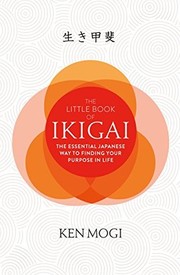
2016 and 2017, the books. Héctor García and Francesc Miralles, Ikigai: The Japanese Secret to a Long and Happy Life (Spanish 2016; English 2017), renders the concept as the happiness of always being busy and prints Winn's diagram, as the English Wikipedia reports it [32]. Ken Mogi's The Little Book of Ikigai (2017) names 神谷 as its source on the child: A carefree child does not need ikigai to carry on, a point stressed by Mieko Kamiya in her famous book On the Meaning of Life (ikigai) [30].
The ngram. In the Google Books English corpus of 2019, the three spellings together rise about three and a half times from 2010 to 2019: capitalized Ikigai sixteen-fold, from 2.3e-9 to 3.8e-8, and lowercase ikigai about one and a half times, from 1.4e-8 to 2.1e-8. The lowercase form's highest year in that corpus is 1996, when Mathews's book printed it some eight hundred times [6], so the peak may be that one book. In the corpus extended to 2022, Ikigai peaks in 2021 [35].
Today. One word, and one arc. In the classical books the Diet Library indexes, it is mostly said in the negative, a life not worth the living; the positive form is in 馬琴 by 1838, Meiji translators call a life worth living with it from 1894, and the dictionary's example of the modern sense is a question put to a working man in a novel of 1903. The dictionaries hold both senses, the worth of being alive and the thing that gives it [1][2], and Mathews splits the same two, the object one lives for and the feeling that life is worth living; the dictionary he quotes from 1989 has meate, aim, beside hariai and yorokobi, and the surveys he reports find it in work, family and children for people over thirty, and in leisure and future dreams for people in their twenties [6]. JMdict: reason for living; something one lives for; purpose in life; raison d'être; ikigai [3]. What a rendering must keep: that the word names both the worth of living and the thing that gives it, which can be a child, one's work or an aim. The test of what the world needs and what one can be paid for is the diagram's, drawn for purpose, and not the word's.
What is not a source. Not Chinese: 甲斐 is a native noun, written in characters that are also a province's name [4]. As a check on the characters, a search of the Chinese Buddhist canon at CBETA and of the Taishō canon at SAT has no 生甲斐, while each returns 甲斐 itself [36][37]. Not purpose alone: the word is built on 甲斐, worth, and an aim is one of the things that can give it [1][6]. Not the diagram: the four overlapping circles that the English word travels with, what you love, what you are good at, what the world needs, what you can be paid for, were drawn in 2011 by Andrés Zuzunaga for propósito, purpose, and relabeled in 2014 by Marc Winn, who writes that adding the word was the whole of the contribution [33][34]. No Japanese source stands behind them.
A reading
The history under the word is two histories. The Japanese word is as old as the 太平記, which the dictionary dates to the fourteenth century, and plain, and in the classical books the Diet Library indexes it is mostly said in the negative, of a life not worth the living; the positive is in 馬琴, and by the 1890s translators were calling a life worth living with it, a decade before a novelist asked a working man whether his had any. In 1915 a translator of Bernard Shaw, glossing the true joy in life, said it of being used by a purpose greater than oneself. By 1966 it was ordinary enough for a psychiatrist to write a book on it, and she was among the Japanese writers who told apart what one lives for and the feeling that living is worth it. English had the word in a Tokyo dictionary by 1918 and in anthropology by the 1980s; a general reader met it in a talk of 2009 and in a diagram of 2014 that Andrés Zuzunaga drew for purpose and Marc Winn relabeled. The diagram is not Japanese; the word is, and it is better than the diagram, because it does not ask what the world needs or what you can be paid for. It asks only whether living is worth it, and names the thing that makes it so.
References
- 「生甲斐」, 精選版 日本国語大辞典, at kotobank. https://kotobank.jp/word/生甲斐
- 「生き甲斐」, デジタル大辞泉, at kotobank. https://kotobank.jp/word/生き甲斐
- JMdict (EDRDG), 「生き甲斐」, at jisho.org. https://jisho.org/api/v1/search/words?keyword=生き甲斐
- 「甲斐」, 精選版 日本国語大辞典 · デジタル大辞泉, at kotobank. https://kotobank.jp/word/甲斐
- 『太平記』 巻第十一, 五大院右衛門宗繁賺相摸太郎事, the movable-type edition printed 慶長8 (1603) by 冨春堂. National Diet Library pid 8943158, scan 3. https://dl.ndl.go.jp/pid/8943158/1/3
- Gordon Mathews, What Makes Life Worth Living? How Japanese and Americans Make Sense of Their Worlds, University of California Press, Berkeley, 1996, pp. 12–14, 19. https://openlibrary.org/isbn/9780520201323
- 「生きがい」 (栗原彬), 世界大百科事典, at kotobank. https://kotobank.jp/word/生きがい
- 『太平記音義』 上巻, 慶長15 (1610) in the library's record, scan 18. National Diet Library pid 2532159. https://dl.ndl.go.jp/pid/2532159/1/18
- 『曽我物語』 巻七, printed 正保3 (1646), scan 17. National Diet Library pid 1287976. https://dl.ndl.go.jp/pid/1287976/1/17
- 江島其磧 · 自笑, 『出世握虎昔物語』, 享保11 (1726), scan 10. National Diet Library pid 2554494. https://dl.ndl.go.jp/pid/2554494/1/10
- 曲亭馬琴, 『南総里見八犬伝』 第九輯 巻二十一, scan 10, dated 天保九年 (1838) by the colophon of 巻二十三 of the same set, scan 31. National Diet Library pids 2551656 and 2551658. https://dl.ndl.go.jp/pid/2551656/1/10 · https://dl.ndl.go.jp/pid/2551658/1/31
- National Diet Library, next-generation full-text search (NDL Lab): 生甲斐 and five other spellings in the classical books, each row read for what follows the word; 生甲斐 and 生き甲斐 counted by year and by decade, 1868–1945; 生甲斐ある, 生き甲斐ある and 生甲斐あり, oldest first. The 1643 row is 『岷江入楚』, pid 2585087, scan 20, a manuscript whose hand was not read with confidence. https://lab.ndl.go.jp/dl/
- W. H. Wilkins, 『新攘夷論』, 八尾書店, 1894, scan 85. National Diet Library pid 783223. https://dl.ndl.go.jp/pid/783223/1/85
- Andrew Murray, ed., 稲垣陽一郎 trans., 『日用祈の栞』, 日本聖公会出版社, 1901, scan 22. National Diet Library pid 824058. https://dl.ndl.go.jp/pid/824058/1/22
- Tolstoy, 加藤直士 trans., 『我懺悔』, 警醒社, 1902, scans 11 and 59. National Diet Library pid 899793. https://dl.ndl.go.jp/pid/899793/1/59
- 徳富蘆花, 『黒潮』 第1, 1903, scan 166. National Diet Library pid 886170. https://dl.ndl.go.jp/pid/886170/1/166
- 夏目漱石, 『鶉籠』, 1907, 草枕, scan 196. National Diet Library pid 885509. https://dl.ndl.go.jp/pid/885509/1/196
- 夏目漱石, 『漱石全集』 第3巻, 1918, 坑夫, scan 250. National Diet Library pid 964817. https://dl.ndl.go.jp/pid/964817/1/250
- 夏目漱石, 『漱石全集』 第4巻, 1918, それから, scan 273. National Diet Library pid 957324. https://dl.ndl.go.jp/pid/957324/1/273
- Bernard Shaw, Man and Superman, 1903, the Epistle Dedicatory, Project Gutenberg #3328. https://www.gutenberg.org/ebooks/3328
- 坪内逍遥, 『教化と演劇』, 1915, the chapter シヨー其人及其作, scans 73–74. National Diet Library pid 954743. https://dl.ndl.go.jp/pid/954743/1/74
- 武信由太郎 編, 『武信和英大辞典』, 研究社, 1918, scan 306. National Diet Library pid 925665. https://dl.ndl.go.jp/pid/925665/1/306
- 「神谷美恵子」, 共同通信ニュース用語解説 · 20世紀日本人名事典, at kotobank. https://kotobank.jp/word/神谷美恵子
- Bibliographie de la Philosophie 14(1), 1967, the entry for 神谷美恵子's book, as the Internet Archive's full-text index reads it. https://archive.org/details/bibliographie-de-la-philosophie_1967_14_1
- Takeshi Umehara, in PHP: A Forum for a Better World, March 1972, as the Internet Archive's full-text index reads it. https://archive.org/details/php-forum-better-world_1972-03_18
- Asian Survey 15(10), October 1975, as the Internet Archive's full-text index reads it. https://archive.org/details/sim_asian-survey_1975-10_15_10
- Gordon Mathews, "The Stuff of Dreams, Fading: Ikigai and 'the Japanese Self'", Ethos 24(4), 1996, pp. 718–747. https://doi.org/10.1525/eth.1996.24.4.02a00060
- Sone et al., "Sense of Life Worth Living (Ikigai) and Mortality in Japan: Ohsaki Study", Psychosomatic Medicine 70(6), 2008, pp. 709–715. https://doi.org/10.1097/PSY.0b013e31817e7e64
- Tanno et al., "Associations of ikigai as a positive psychological factor with all-cause mortality and cause-specific mortality among middle-aged and elderly Japanese people: Findings from the Japan Collaborative Cohort Study", Journal of Psychosomatic Research 67(1), 2009, pp. 67–75. https://doi.org/10.1016/j.jpsychores.2008.10.018
- Ken Mogi, The Little Book of Ikigai, Quercus, London, 2017, pp. 8, 10, 68. https://openlibrary.org/isbn/9781786489036
- Dan Buettner, How to live to be 100+, TEDxTC, September 2009, TED's page for the talk. https://www.ted.com/talks/dan_buettner_how_to_live_to_be_100
- "Ikigai", English Wikipedia. https://en.wikipedia.org/wiki/Ikigai
- Andrés Zuzunaga, cosmograma.com. https://www.cosmograma.com/proposito.php
- Marc Winn, "What is your Ikigai?", 14 May 2014, with a later note, theviewinside.me. https://theviewinside.me/what-is-your-ikigai/
- Google Books Ngram Viewer, ikigai · Ikigai · IKIGAI · reason for being · purpose in life, the English corpora of 2019 and of 2022. https://books.google.com/ngrams/
- CBETA, full-text search for 生甲斐, and for 甲斐 as the control. https://cbdata.dila.edu.tw/stable/search?q=生甲斐
- SAT 大正新脩大藏經テキストデータベース, search for 生甲斐, and for 甲斐 as the control. https://21dzk.l.u-tokyo.ac.jp/SAT/ddb-sat2.php?mode=search&key=生甲斐
Books Cited
Books this article cites that can be ordered today.
ISBN 9781786489036