

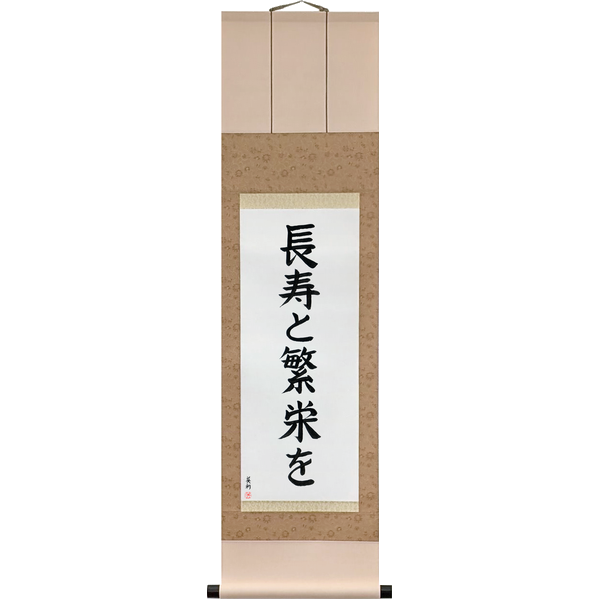
長寿と繁栄を chōju to han'ei wo Live Long And Prosper
長寿と繁栄を (chōju to han'ei wo), long life and prosperity, is the Japanese encyclopedia's rendering of the Vulcan blessing live long and prosper, first spoken in Star Trek in 1967. The wish was Japanese before it was Vulcan: a 1915 health manual promises its reader health, long life and prosperity.
Abstract
長寿と繁栄を, long life and prosperity, is the Japanese encyclopedia's rendering of the Vulcan blessing, live long and prosper, first spoken in Star Trek in 1967. The Japanese existed before the screen: a 1915 health manual wishes its reader health, long life and prosperity, the one page to 1946 in the National Diet Library with the two nouns together. Who first wrote it for the Vulcans is not settled.
Overview
The sense. A wish with its verb withheld: 長寿と繁栄を, live long and prosper, the Japanese encyclopedia's own rendering of the Vulcan blessing, and also a wish a Japanese well-wisher could have made in 1915, and one did.
The words. The words are ordinary. 長寿 chōju, long life, and 繁栄 han'ei, prosperity, end on を with the verb of wishing unsaid, which is how Japanese blesses. The English and the Japanese overlap fully in sense; the difference is of mood: Japanese withholds the verb of a wish.
The text in English. The English is the Vulcan blessing.
The historical record
1915, then 1967. 長寿と繁栄を. The Vulcan salute and its spoken blessing first appeared in the Star Trek episode Amok Time in 1967, the gesture Leonard Nimoy's and the words scripted by Theodore Sturgeon [1]. The Japanese encyclopedia's article on Vulcans gives the greeting as 「長寿と繁栄を」 beside the English, and does not say whether that is the dub's, a subtitler's or its own [2]. The pairing was a Japanese wish before it was a Vulcan one: a 1915 guide to natural cures promises the reader who lives by nature 健康と長壽と繁榮とを保ち得るのである, can keep health, long life and prosperity [3], the only page to 1946 in the National Diet Library with the two nouns together [4], and it shows the rendering is good because it was already Japanese.
What is not a source. The 1915 health manual is not a witness for Star Trek; it is a witness that Japanese wished the same wish. 長寿と繁栄を has a Japanese life of its own, older than the show, which is why it fits.
Today. What a rendering must keep is the withheld verb of the wish.
A reading
長寿と繁栄を wears Japanese that was Japanese before the screen: a health writer wished it to his readers in 1915, and the encyclopedia now gives it as the Vulcan blessing. That is the best kind of translation. Who first wrote it for the Vulcans, the encyclopedia does not say.
References
- "Vulcan salute", English Wikipedia. https://en.wikipedia.org/wiki/Vulcan_salute
- 「バルカン人」, Japanese Wikipedia. https://ja.wikipedia.org/wiki/バルカン人
- 井上正賀, 万病自然療法, 大学館, 1915, scan 161. https://dl.ndl.go.jp/pid/935045/1/161
- National Diet Library Digital Collections, next-generation full-text search on 長寿と繁栄, 1 book to 1946. https://lab.ndl.go.jp/dl/