合氣道 aikidō Aikido
合気道 (aikidō) is the name of Ueshiba Morihei's martial art, which its own literature calls the Way of harmony with ki. It became the art's official name in February 1942, on his son's account, after twenty years under other names. This study follows when each part of the name entered print, what the dictionaries make of it, and how English has rendered it.

Abstract
合気道 (aikidō) is the name under which the art of Ueshiba Morihei 植芝盛平 was officially recognized in February 1942, on his son's account, when it entered the Dai-Nippon Butokukai, after twenty years under other names, among them 合氣柔術, 合氣術 and 合氣武道, each of which is in print before the war; the son also says some people were calling it aikido in the years to 1930. The name is 合気, a word older than the art with three senses of its own, and 道, the way, the suffix by which a Japanese art declares itself a path rather than a technique. The dictionaries define the art by its descent from the Daitō-ryū and its joint locks; the art's own literature defines the name as the Way of harmony with ki. The design brushes the old form 氣, which the Aikikai's newspaper carries in its title and some schools use.
Overview
The sense. A proper name, the name of one art, and every Japanese dictionary heads it. デジタル大辞泉: 古流柔術の一派、大東流柔術の流れをくむ武術。関節の弱点を利用した押さえ技や投げ技を特色とする, a martial art descending from the Daitō-ryū, a school of the old jūjutsu; its mark is pins and throws that use the weak points of the joints. 精選版 日本国語大辞典: 古流柔術の一流派大東流柔術の流れをくむ武術で、当て身技および関節技を主としたもの。合気術, a martial art descending from the Daitō-ryū of the old jūjutsu, centered on strikes and joint techniques; aiki-jutsu. The 世界大百科事典, by Shishida Fumiaki 志々田文明, gives a wide sense and a narrow one: 広義には,古流柔術の一派大東流合気柔術を源流とする〈合気〉の名を冠する日本武術をいう。狭義には,同流修行者の一人植芝盛平によってまとめられた形(かた)(約束練習)による練習法と,その解釈を指すことが多い, broadly, any Japanese martial art bearing the name aiki that descends from Daitō-ryū aiki-jūjutsu; narrowly, most often the method of practice by set forms that Ueshiba Morihei, one of that school's students, assembled, and his interpretation of it [1]. The art's own account of the name is not the dictionaries': aikido, which literally means the Way (dō) of harmony (ai) with Ki [2]. The two do not conflict; one says what the art is and the other what its founder meant by calling it that.
The words. 合気 aiki, the joining of ki, and 道 dō, the way. The first word is the subject of its own study, which this page rests on: in the Edo sword schools 合氣 or 相氣 named the deadlock of two matched fighters, the state a swordsman must get out of; a Meiji book of 1892 sold 合氣の術 as the technique of seizing the enemy's ki before the swords cross; and Ueshiba gave it a third sense, the joining of one's own ki with the ki of the universe [3]. 道 is the suffix of 柔道, 剣道 and 茶道. Kisshōmaru's history of the name gives two steps and two reasons: in 1936 his father dropped bujutsu for aiki-budō because of the philosophical and spiritual emphasis he had incorporated in his own art, and in 1942, entering an association that united the martial arts, he dropped Kobukan Aiki-budo, which suggested that it was merely the Kobukan branch or style of some broader art, for aikido, a unique and distinctive form of budo [2]. The son gives no reason for 道 against 術; that reading is the later English books'. The reading is aikidō: the dictionaries give あいきどう [1]. The design brushes 合氣道 with the older form 氣; the catalogue and the dictionaries write 合気道; JMdict enters both [4]. They are one word.
The text in English. The art's name is left as aikido in every English book read for this page, and glossed. The earliest the Internet Archive's full-text index returns is E. J. Harrison's revised edition of 1955, a chapter on karate and aikido written, he says, at second hand, which derives the art from the sword; the art's own books begin five years later, with Tohei Kōichi's Aikido of 1960, and his text as read here, copyright 1961, calls the art the way of at-one-ment with cosmic power or Ki [5]. Kisshōmaru's Aikido of 1963 opens Aikido is The Way of Chivalrous (or Martial) Spiritual Harmony [6]; Kenkyūsha's fourth edition of 1974 is the first bilingual dictionary to head it, aikido; an art of self-defense derived from judo, in which the opponent's joints are used to advantage in executing holds and throws [7]; John Stevens's glossary of 1984 gives Aikido 合気道 (The Way of Harmony) [8]; Kisshōmaru's Spirit of Aikidō of the same year gives the etymology, the Way (dō) of harmony (ai) with Ki [2]; and JMdict today gives only aikido [4]. Harmony is the word most of the English books read here reach for, though not all of them, and it renders the founder's sense of 合気, not the dictionaries' account of the art.
The historical record
1898, the Daitō-ryū named, as reported. The 世界大百科事典 says that Takeda Sōkaku 武田惣角 (1860–1943), having received the Aizu domain's palace art from Hoshina Chikanori 保科近悳, 1898年以降これを大東流柔術と称して,その普及のため全国を巡回指導した, from 1898 called it Daitō-ryū jūjutsu and traveled the country teaching it [1]. The name of the parent art is a Meiji name; its descent from Minamoto Yoshimitsu in the eleventh century is the school's own tradition, and the same article reports it as 口伝および伝書によれば, according to oral transmission and the scrolls.
1922, the word enters the art's name, as reported. Ueshiba, who had studied under Takeda in Hokkaidō from 1915, was licensed as an instructor in 1922, and the school's own materials first show the word 合気 that year, in the scroll 〈合気柔術秘伝奥儀之事〉 Takeda gave him [1]. Kisshōmaru dates his father's own name for the art, Aiki-bujutsu, to the same year: in 1922 he proclaimed Aiki-bujutsu as a new martial art form [2]; Saotome Mitsugi gives 1923 [9].
1932 and 1933, the older names, as the index places them. The National Diet Library's full-text index, which reads inside the books it serves to readers in Japan only, shows 合氣柔術 as Ueshiba's art in the diary of Ōmoto's leader 出口王仁三郎, June 1932: 合氣柔術の開祖植芝守高氏の門弟たる湯川勉氏, Mr. Yukawa Tsutomu, a disciple of Mr. Ueshiba Moritaka, the founder of aiki-jūjutsu [10]; and 合氣武道 in the journal of the navy officers' association, March 1933, in a program listing 「合氣武道」の說明竝に實演 植芝守高氏, aiki-budō, explained and demonstrated by Mr. Ueshiba Moritaka [11].
1934, 『昭和天覽試合』, the record of the imperial tournament, under the supervision of the Imperial Household Ministry. The earliest printed form of the name this page has read at the page. A jūdōka's entry: 植芝道場に於て大東流合氣柔術を修行し奧義祕傳を許さる, trained in Daitō-ryū aiki-jūjutsu at the Ueshiba dōjō and was licensed in its secret teachings; a kendo master's: 大東流合氣術, Daitō-ryū aiki-jutsu [12]. In 1934 the art is still named for its parent school.
About 1934, 『趣味大観』, a who's-who of amateurs published in 1935. The entry for an Osaka man born in 1893: 武道に於ける熱意は棄て難く、最近約一年前よりは日本皇武館の植芝氏に就き同道場に於て、斯道の修業に專心し, unable to give up his passion for the martial arts, for about a year now he has devoted himself to training under Mr. Ueshiba of the Nippon Kōbukan at that dōjō [13]. The 皇武館, the hall Ueshiba built in Tokyo in 1931 on the 20世紀日本人名事典's account [1], is named in print with no name for the art at all.
1935, 『大本教事件の全貌』, a newspaper's account of the suppression of Ōmoto. 大日本武道會(合氣武道ともいふ)植芝守高氏を會長としてをり, the Dai-Nippon Budōkai (also called aiki-budō) has Ueshiba Moritaka as its chairman [14]. The name 合氣武道, which Kisshōmaru dates to 1936 [2], is in print by 1933 [11]; the Ministry of Justice's report of 1937 on the affair calls the art 合氣武道と稱する一種の柔道, a kind of jūdō called aiki-budō [15].
1939 to 1943, the older names in other books. A gazetteer of the Kinki region describes a disciple of 大東流合氣柔術の武田惣角氏 [16]; the prospectus of the Kenkoku University in Manchukuo lists 合氣武道 among its subjects [17]; the army and navy yearbook of 1943 lists 大東流(合氣柔術之形) [18]. In 1940 the art's foundation took the name 皇武会 [1]. 合氣道 itself appears in no public-domain book the National Diet Library has digitized before 1945 except library catalogues [19]; the index of the books it serves in Japan only finds it in the Butokukai's own journal in October 1943, where a directive names 又各種武道(空手道、合氣道 …)ノ修行者, practitioners of the various budō (karate-dō, aikidō …), and in November 1943 in a list of ranks, 東京合氣道錬士, Tokyo, aikidō, renshi [20].
1942, the name, as the founder's son tells it. The word was spoken before it was official: of the years 1927 to 1930, when his father taught in the Shiba district of Tokyo, Kisshōmaru writes that some people began using the term aikido to describe it [2]. Of 1942: In 1942 various traditions of judo, kendo and other martial arts joined together to form the Greater Japan Martial Virtue Association … he came to feel that the name Kobukan Aiki-budo suggested that it was merely the Kobukan branch or style of some broader art. He decided to proclaim the new name aikido to identify his art as a unique and distinctive form of budo and then entered the association under the new name. In February, 1942, aikido was officially recognized as the name of the Founder's school [2]. The 世界大百科事典 and マイペディア agree on 1942; ニッポニカ and the 日本人名大辞典 give 1944 [1]. The Butokukai's own journal of 1943 [20] rules out 1944 as the year the name came into use. Kisshōmaru's other accounts tie the name to the same event, the entry into the Butokukai, and differ on its year. His introduction to the English Budo of 1991 puts the entry in 1941, It was around this time that the name aikidō first came into use, while the caption on the same page says In 1942 … Morihei was moved to call his system aikidō [21]. His 1977 life of his father, in its English translation of 2008, gives no year: After the war began, his father stopped using the common terms "Aiki Bujutsu" … or "Aiki Budo" and named it "Aikido"; the art, variously known as Aiki Budo, Ueshiba-ryu Aiki Budo, or Kobu-Aiki, entered the association as Aikido-bu, the Aikido section (It was at this time that O Sensei decided he would integrate the name as "Aikido"), with its ranks of Hanshi, Kyoshi, and Renshi until the end of the war [22], the rank the 1943 list prints. Alexander Bennett, the historian of kendo, gives 1942: he changed the name to aikido in 1942, when his group affiliated with the Dai-Nippon Butokukai [23]. Pranin's encyclopedia gives the same year, Its modern name was officially adopted in 1942 as a result of the reorganization of Japanese martial arts by the DAI NIHON BUTOKUKAI, the art having evolved gradually during the late 1920s and 30s under various names; and it has the old name still in use in the year of the new one: under AIKI BUDO, one of the early names used to describe Morihei UESHIBA's art from the mid-1930s to early 1940s, it names the technical manual entitled BUDO which was privately published in 1938 and adds, This term appears as late as 1942 in the program of a martial arts' demonstration held in Manchuria [24].
1944, 『海軍大学校和漢書分類目録』, the catalogue of the Naval War College library. Under 兵術 總說, military art, general: 武道 植芝守高著 昭和一三 和裝 and 武道練習 植芝盛平著 昭和九 和裝, Budō, by Ueshiba Moritaka, 1938, Japanese binding; Budō renshū, by Ueshiba Morihei, 1934, Japanese binding [25]. The founder's two manuals, the second privately published on Pranin's account [24], under the two forms of his name, shelved in a wartime naval library; the manuals themselves are among the sources not seen.
1948 onward, the name of an organization. The foundation was reorganized as the 合気会 in 1948, and the name spread abroad with the art from the 1950s [1].
What is not a source. The word 合気 did not begin with the art, and its earlier life is the subject of the companion study [3]; nothing before 1922 is a witness to the art's name. The school's descent from Minamoto Yoshimitsu is tradition, reported as such by the encyclopedias [1].
The word in English
1955, E. J. Harrison, The Fighting Spirit of Japan, the revised edition. The earliest English book to name the art that the Internet Archive's full-text index returns, searched to 1962, in a chapter headed Karate and Aikido, by a writer who says My knowledge of aikido is equally second-hand because I have never yet had the good fortune to witness a demonstration of the art. He glosses the word: In this context "ai" means grouped, assembled, etc. and "ki" feeling, consciousness, etc.; sets the art beside jūdō, in aikido they are (1) contact; (2) pain and (3) disequilibrium and, if necessary, throw; derives it from a seven-hundred-year-old school of aikijutsu that had originated from kenjutsu; and reports that Kanō sent a special mission composed of certain pupils to study aikido, and that before these lines meet the eyes of my readers much more will have become known about aikido in this country through actual demonstrations of the art given by authorized Japanese experts [26]. The name is in English before the art's own books, at second hand, and derived from the sword, which no Japanese witness above does.
1960, Tohei Kōichi 藤平光一, Aikido: The Arts of Self-Defense. The first English book from the art's own house, by the chief instructor at its Tokyo headquarters, with Ueshiba Morihei as Originator of AIKIDO; the Library of Congress dates it 1960, and the text read here, copyright 1961, glosses the name: AIKIDO is the way of at-one-ment with cosmic power or Ki, and AIKIDO is a way of mental and physical coordination [5].
1963, Ueshiba Kisshōmaru 植芝吉祥丸, Aikido, in the printing of 1974. Aikido is The Way of Chivalrous (or Martial) Spiritual Harmony; Aikido is the art of assimilation and unification with Nature. There is no duality, no struggle, no opponent [6]. The founder's sense, from his son.
1974, Kenkyūsha's New Japanese-English Dictionary, fourth edition. aiki-dō 合気道 n. aikido; an art of self-defense derived from judo, in which the opponent's joints are used to advantage in executing holds and throws [7]. The first bilingual dictionary to head the name among those read for this page: Kenkyūsha's school dictionary of 1968 does not, nor does Nelson's character dictionary, and the third edition of 1954 was not read. Derived from judo is an error: the Japanese dictionaries and the art's own literature descend it from the Daitō-ryū [1][2].
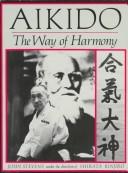
1984, John Stevens, Aikido: The Way of Harmony. The glossary: Aikido 合気道 (The Way of Harmony) After decades of severe physical and spiritual forging, the Founder chose this name to represent his unique system [8].
1984, Ueshiba Kisshōmaru, The Spirit of Aikidō. aikidō, which literally means the Way (dō) of harmony (ai) with ki, and the history of the name from 1922 to 1942 quoted above [2]. Of the later English books read here, some carry this gloss and some gloss only 道.
1991, Stanley Pranin, The Aiki News Encyclopedia of Aikido. A reference work on the art, in English. It dates the parent name from a document rather than a memory: DAITO-RYU AIKIJUJUTSU. Later name of DAITO-RYU JUJUTSU which first appears in the EIMEIROKU of Sokaku TAKEDA in the Taisho period … Entries from 1922 read Daito-ryu Aikijujutsu, the 英名録 being Takeda's enrollment register; and it carries the name 合氣武道 into 1942 and dates the new name's official adoption to the same year, quoted above [24]. Where Kisshōmaru gives the names as a sequence, Pranin shows them overlapping.
1993, Saotome Mitsugi, Aikido and the Harmony of Nature. In 1923, the Founder officially named his art Aiki Bujutsu. Aiki Bujutsu is the blending of spirit based on classical martial movement. Jutsu is technique, as opposed to do, which is a path or way [9].
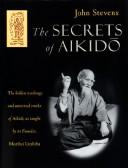
1995, John Stevens, The Secrets of Aikido. Do, the second half of the word Aikido, symbolizes both a particular "path" that one treads and a universal "way" of philosophical principles [27].
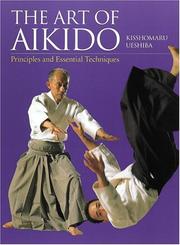
2004, Ueshiba Kisshōmaru, The Art of Aikido. When asked, "What is Aikido?" the Founder Morihei would reply, "The Way to harmonize heaven, earth, and humankind" [28].
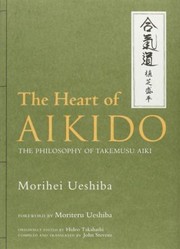
2013, Ueshiba Morihei in John Stevens's translation, and Linda Holiday. The glossary of The Heart of Aikido: Aikido (Way of Harmony, Art of Peace): The addition of the character do, "Way," "Path," "Tao," makes the principle of aiki more concrete [29]. Holiday reports the founder: Although the name "aiki" has existed since ancient times, I decided to call my unique path "Aikido," because the words for "harmony" and for "love" are both pronounced "ai" [30].
Today. JMdict has aikido for 合気道 and enters 合氣道 as a variant form [4]; Wiktionary's English entry gives the etymology lit. way of adapting the spirit [31]. The house title, Aikido, leaves the name as English has left it; the reading given at the head of this page, the way of aiki, translates 道 and leaves 合気 untranslated because that word has three senses and the founder meant one of them, and the companion study sets them out [3]. The design brushes the older form 氣, which the Aikikai's own newspaper, 『合氣道新聞』, has carried in its title since 1959 and some schools use in the titles of their books, while the founder's son titled his own books with the modern 気, as the Japanese title of The Spirit of Aikidō, 合気道のこころ, shows [32][2]; a rendering keeps aikidō with its long vowel.
A reading
The name is younger than every one of its parts. 道 had been the suffix of the Japanese arts since 柔道 and 剣道 took it in the Meiji years; 合気 had been in the sword schools for a century and in a ten-sen book for fifty years; and 合氣柔術, 合氣術 and 合氣武道 were all in print before 合氣道 was, the last of them still in use in 1942 on Pranin's account, though the son says the new name was in some mouths by 1930. What the founder did in 1942, on his son's account, was drop the name of his own hall, the Kōbukan, and the 武 of budō, so that an association uniting the martial arts could not file his art as a branch of some broader one; that the change made his art a way rather than a technique is the later English books' gloss, not the son's reason. The name reached English, in the earliest book the Internet Archive's index returns, in 1955, from a man who had never seen the art, and its own books followed. The dictionaries, which define the art by its joint locks and its descent, and the art's books, which define the name by harmony, are describing the same thing from its two ends. A reader who wants the name's meaning has to hold both: an art of the Daitō-ryū line, and a founder's claim that its 合気 is not the sword schools' deadlock nor the Meiji trick but a joining with the universe. The design's old 氣 is the character as every witness before 1946 read for this page and its companion wrote it, and it changes nothing in the word.
Notes
- The year of the renaming is 1942 in the 世界大百科事典, マイペディア, Kisshōmaru's 1984 book, Pranin and Bennett, 1941 in the text of Kisshōmaru's 1991 introduction and 1942 in the caption on the same page, and 1944 in ニッポニカ and the 日本人名大辞典, which the Butokukai's journal of 1943 rules out; the year of Aiki-bujutsu is 1922 in Kisshōmaru and 1923 in Saotome.
- 『武道練習』 is 1933 in the 世界大百科事典's entry on Ueshiba and in 工藤龍太's dissertation summary of 2011, and 昭和九, 1934, in the 1944 naval catalogue.
- Kenkyūsha's fourth edition defines the art as derived from judo; the Japanese dictionaries and the art's own literature descend it from the Daitō-ryū.
- The 精選版 日本国語大辞典 closes its entry with 合気術, treating the older name as a synonym.
Sources not seen
植芝吉祥丸『合気道』, 光和堂, Tokyo, 1957, and 『合気道開祖植芝盛平伝』, 講談社, Tokyo, 1977, the two Japanese books from which the English naming history descends; held by the National Diet Library and served to readers in Japan only. They would settle the Japanese wording behind the 1922, 1936 and 1942 dates. The second was read in its English translation [22], which gives no year for the renaming.
植芝盛平『武道練習』, 1934, and 植芝守高『武道』, 1938, the founder's two manuals; held by the National Diet Library on paper only, call number 399-43, as its catalogue records. They would settle what name the founder himself printed for the art in 1934 and 1938, which this page has only from the 1944 catalogue's two lines and from Pranin.
大日本武徳会『武徳』, the association's journal, the issues of 1942 and 1943; held by the National Diet Library and served to readers in Japan only [20]. They would settle the name under which the art was entered in the association, and so the 1942 date.
出口王仁三郎『壬申日記』, 1932, and 海軍有終会『有終』, 1933, the two earliest witnesses to the older names; served in Japan only [10][11].
Kenkyūsha's New Japanese-English Dictionary, third edition, 1954; on the Internet Archive as a lending copy whose text its full-text index does not reach. It would settle whether a bilingual dictionary headed the name before 1974.
A reader with access to any of these is invited to write to Takase Studios at Tim@Takase.com.
References
- 「合気道」, 改訂新版 世界大百科事典 (志々田文明), デジタル大辞泉, 精選版 日本国語大辞典, 日本大百科全書(ニッポニカ), マイペディア, ブリタニカ国際大百科事典, and 「植芝盛平」, 日本人名大辞典 and 20世紀日本人名事典, at kotobank. https://kotobank.jp/word/合気道
- Kisshomaru Ueshiba, The Spirit of Aikidō, translated by Taitetsu Unno, Kodansha International, Tokyo, 1984, pp. 19 and 96–99.
- 典 Ten, 「合気 · aiki · Matched ki」, Takase Studios Library, philology, 2026, the historical record and § The word in English. https://takase.com/library/philology/aiki
- JMdict, 「合気」 and 「合気道」, at Weblio 英和・和英辞典. https://ejje.weblio.jp/content/合気
- Koichi Tohei, Aikido: The Arts of Self-Defense, Rikugei Publishing House, Tokyo, 1960, Library of Congress record at Open Library; the text as Aikido: The Co-ordination of Mind and Body for Self-defense, copyright 1961 by Rikugei, in a later Souvenir Press printing, read in the Internet Archive's full-text highlights. https://openlibrary.org/books/OL280421M · Internet Archive aikido0000mori. https://archive.org/details/aikido0000mori
- Kisshomaru Ueshiba, Aikido, translated by Kazuaki Tanahashi and Roy Maurer Jr., Hozansha, Tokyo, 1963, in the printing of 1974, pp. 14 and 155. Internet Archive aikido0000uesh_y8q6. https://archive.org/details/aikido0000uesh_y8q6
- Kō Masuda, editor, Kenkyusha's New Japanese-English Dictionary, fourth edition, Kenkyusha, Tokyo, 1974, p. 9.
- John Stevens, under the direction of Rinjiro Shirata, Aikido: The Way of Harmony, Shambhala, Boston, 1984, pp. 5 and 195–196. Internet Archive aikidowayofharmo0000stev. https://archive.org/details/aikidowayofharmo0000stev
- Mitsugi Saotome, Aikido and the Harmony of Nature, Shambhala, Boston, 1993, the account of the Founder's life that opens the book.
- 月の家(出口王仁三郎)『壬申日記』7の巻, 天声社, 1932, scan 46, snippet view, National Diet Library, pid 1137838. https://dl.ndl.go.jp/pid/1137838
- 海軍有終会『有終』20(3), 1933年3月, scan 83, snippet view, National Diet Library, pid 1555876. https://dl.ndl.go.jp/pid/1555876
- 宮内省監修『昭和天覽試合』大日本雄辯會講談社, 1934, pp. 754 and 843. National Diet Library pid 1232699, scans 408 and 452. https://dl.ndl.go.jp/pid/1232699/1/452
- 『趣味大観』趣味の人社, 1935, p. 578. National Diet Library pid 1229231, scan 1074. https://dl.ndl.go.jp/pid/1229231/1/1074
- 『大本教事件の全貌 附・第一次検挙の予審調書』大阪毎日新聞社, 1935. National Diet Library pid 1096040, scan 25. https://dl.ndl.go.jp/pid/1096040/1/25
- 司法省調査課『報告書』第八, 1937, 第六項 大日本武道宣揚會. National Diet Library pid 1886676, scan 73. https://dl.ndl.go.jp/pid/1886676/1/73
- 日本同盟通信社『光輝近畿大観 皇紀2600年記念誌』, 1939, p. 123. National Diet Library pid 1030146, scan 381. https://dl.ndl.go.jp/pid/1030146/1/381
- 『建国大学要覧』, 1941. National Diet Library pid 1276998, scan 28. https://dl.ndl.go.jp/pid/1276998/1/28
- 『陸海軍軍事年鑑』, 1943. National Diet Library pid 1451423, scan 464. https://dl.ndl.go.jp/pid/1451423/1/464
- 国立国会図書館 次世代デジタルライブラリー, full-text search over the library's digitized public-domain books, on the spellings 合気, 合気之術, 合気術, 合気の術, 合気柔術, 合気武道, 合気道, 相気, 気合術, 大東流, 植芝盛平, 武田惣角 and their kin, with the titles of every hit read. https://lab.ndl.go.jp/dl/
- 大日本武徳会『武徳』, 1943年10月 and 11月, scans 6 and 8, snippet view, National Diet Library, pids 4426252 and 4426253. https://dl.ndl.go.jp/pid/4426252
- Morihei Ueshiba, Budo: Teachings of the Founder of Aikido, introduction by Kisshomaru Ueshiba, translated by John Stevens, Kodansha International, Tokyo, 1991, p. 18.
- Kisshomaru Ueshiba, A Life in Aikido: The Biography of Founder Morihei Ueshiba, translated by Kei Izawa and Mary Fuller, Kodansha International, Tokyo, 2008, pp. 39 and 266.
- Alexander C. Bennett, Kendo: Culture of the Sword, University of California Press, Oakland, 2015, p. 12.
- Stanley A. Pranin, The Aiki News Encyclopedia of Aikido, Aiki News, Tokyo, 1991, pp. 4–5 and 19. Internet Archive the-aiki-news-encyclopedia-of-aikido. https://archive.org/details/the-aiki-news-encyclopedia-of-aikido
- 『海軍大学校和漢書分類目録』第3, 海軍大学校文庫, 1944, pp. 22–23. National Diet Library pid 1123063, scan 16. https://dl.ndl.go.jp/pid/1123063/1/16
- E. J. Harrison, The Fighting Spirit of Japan: The Esoteric Study of the Martial Arts and Way of Life in Japan, W. Foulsham, London, 1955, pp. 78–79. Internet Archive fightingspiritof0000harr, a lending copy. https://archive.org/details/fightingspiritof0000harr
- John Stevens, The Secrets of Aikido, Shambhala, Boston, 1995, pp. 4–8. Internet Archive secretsofaikido0000stev. https://archive.org/details/secretsofaikido0000stev
- Kisshomaru Ueshiba, The Art of Aikido: Principles and Essential Techniques, translated by John Stevens, Kodansha International, Tokyo, 2004, pp. 21 and 69–70.
- Morihei Ueshiba, The Heart of Aikido: The Philosophy of Takemusu Aiki, translated by John Stevens, Kodansha International, Tokyo, 2010, in the Kodansha USA printing of 2013, pp. 11 and 125. Internet Archive heartofaikidophi0000unse. https://archive.org/details/heartofaikidophi0000unse
- Linda Holiday, Journey to the Heart of Aikido: The Teachings of Motomichi Anno Sensei, Blue Snake Books, Berkeley, 2013, p. 65. Internet Archive journeytoheartof0000holi. https://archive.org/details/journeytoheartof0000holi
- "aikido", Wiktionary, the English entry. https://en.wiktionary.org/wiki/aikido
- 国立国会図書館サーチ, titles 合氣道: 『合氣道新聞』, 合気会, 1959 onward, and books of other schools, 1970s to 2002. https://ndlsearch.ndl.go.jp/search?cs=bib&keyword=%E5%90%88%E6%B0%A3%E9%81%93
Books Cited
Books this article cites that can be ordered today.