
I BRIEF HISTORY OF JAPANESE ARMOUR
Since ancient days there has never been a country that did not have war. As all countries had wars, they all had armour. Particularly in Japan, where the military families long held administrative power and the definite culture of warriors known as Busidō firmly existed, armour that was a part of military equipment played an important rôle.
Armour is of course a means of defense against offensive weapons. The history of armour, therefore, is qualified by the development of offensive weapons and war tactics. In evolution, defensive and offensive arms are mutually related as the advance of the one necessarily improved the other.
1. Ancient Period ( –710 A.D.)
Japanese armour has existed since prehistoric days. Armour, called Kawara in olden times, was indispensable just as shields were for defense against Iwatubute (pebbles) thrown by the enemy from a distance or against spears which were then called Hoko. The term Kawara is found in the Koziki (“Record of Ancient Matters”) and the Nihonsyoki (often abbreviated to Nihongi, a history of Japan in the Chinese language), the oldest Japanese history written in the 8th century.
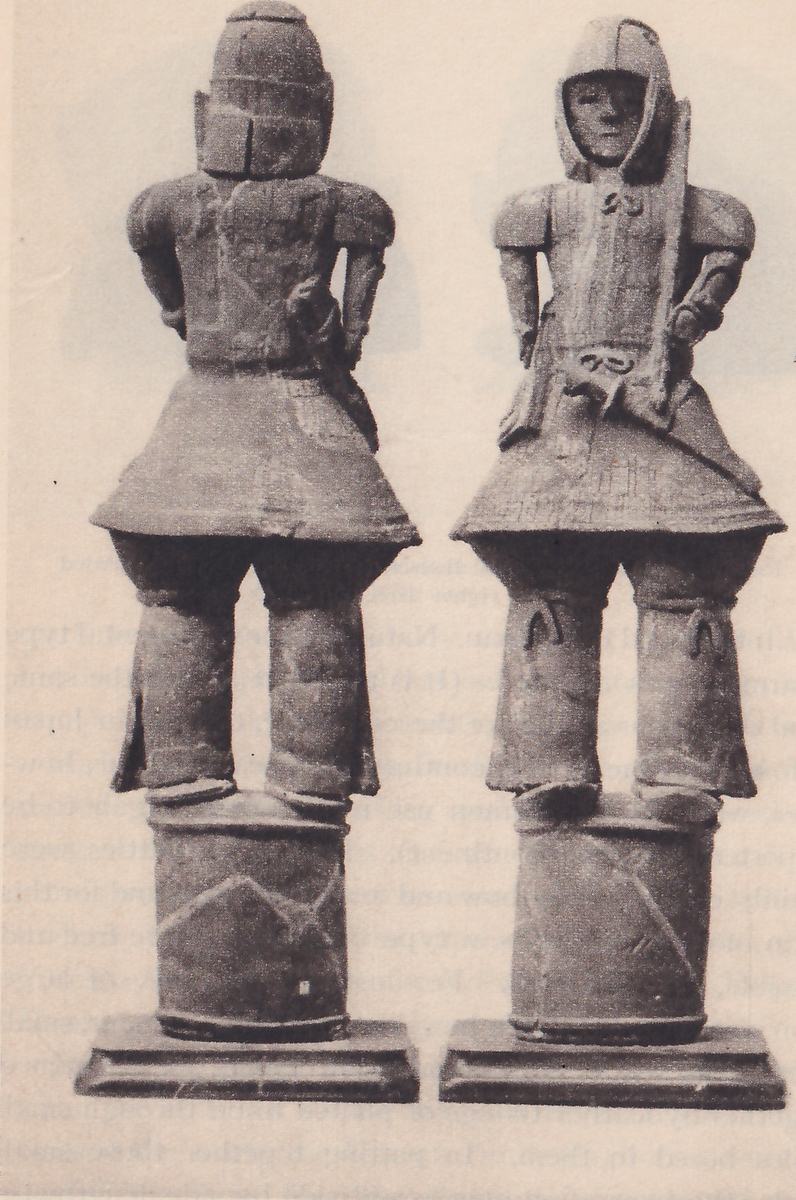
As to the form and construction of the earliest Japanese armour, it is difficult to give any concrete description, but a fairly well developed armour seems to have been
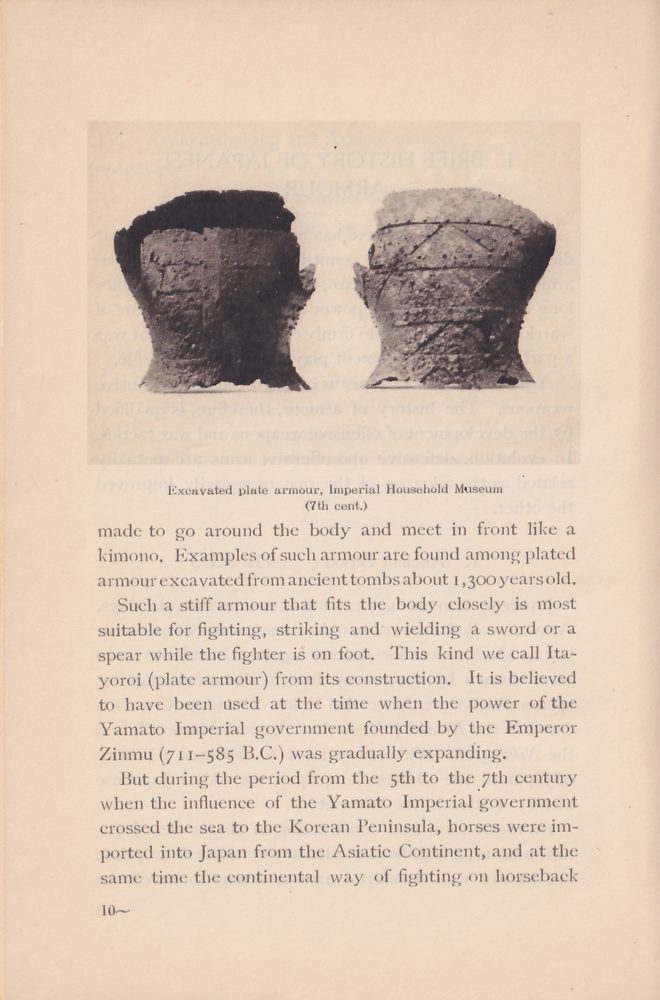
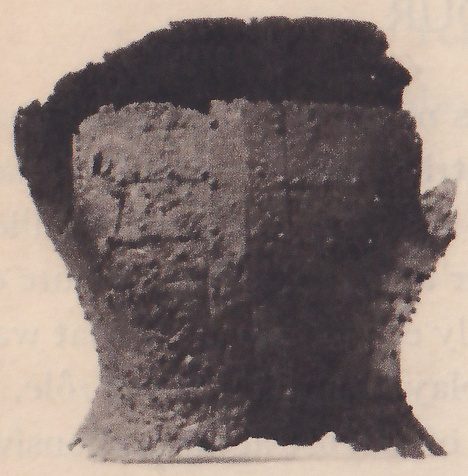
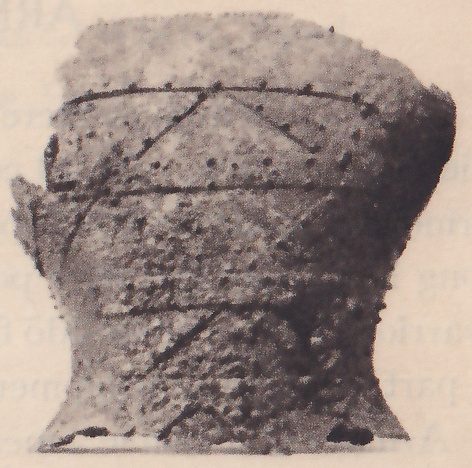
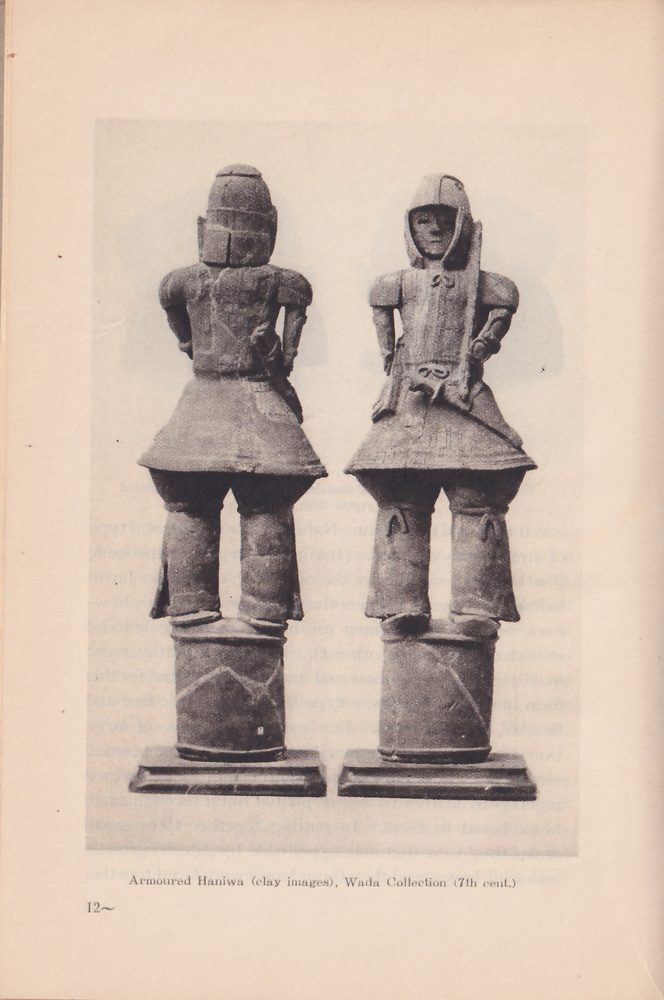
(7th cent.)
made to go around the body and meet in front like a kimono. Examples of such armour are found among plated armour excavated from ancient tombs about 1,300 years old.
Such a stiff armour that fits the body closely is most suitable for fighting, striking and wielding a sword or a spear while the fighter is on foot. This kind we call Ita-yoroi (plate armour) from its construction. It is believed to have been used at the time when the power of the Yamato Imperial government founded by the Emperor Zinmu (711–585 B.C.) was gradually expanding.
But during the period from the 5th to the 7th century when the influence of the Yamato Imperial government crossed the sea to the Korean Peninsula, horses were imported into Japan from the Asiatic Continent, and at the same time the continental way of fighting on horseback
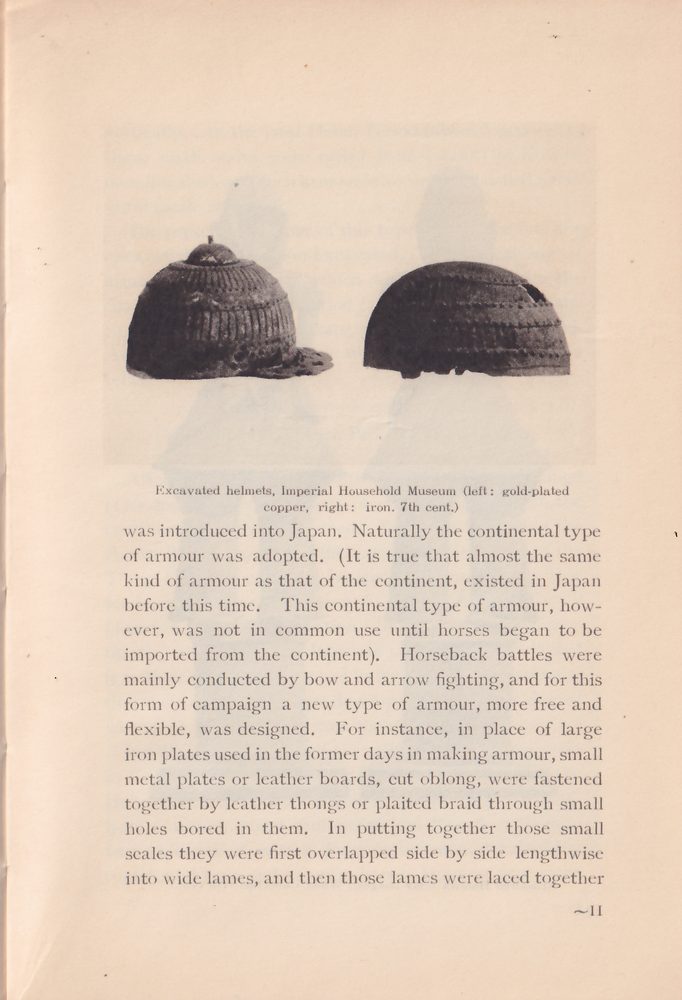
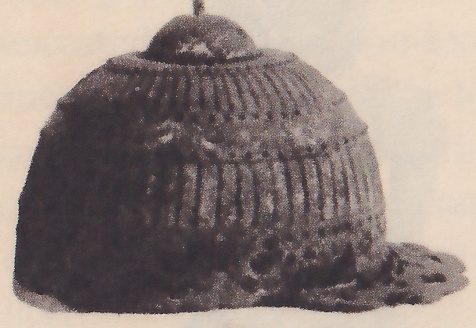
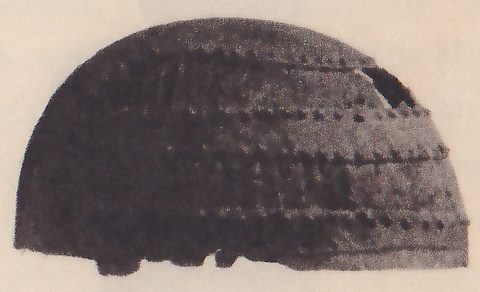
was introduced into Japan. Naturally the continental type of armour was adopted. (It is true that almost the same kind of armour as that of the continent, existed in Japan before this time. This continental type of armour, however, was not in common use until horses began to be imported from the continent). Horseback battles were mainly conducted by bow and arrow fighting, and for this form of campaign a new type of armour, more free and flexible, was designed. For instance, in place of large iron plates used in the former days in making armour, small metal plates or leather boards, cut oblong, were fastened together by leather thongs or plaited braid through small holes bored in them. In putting together those small scales they were first overlapped side by side lengthwise into wide lames, and then those lames were laced together
vertically. In the later Heian Period (about 1,200 A.D.) these small scales were called Sane (scales) or Kozane (small scales), and such armour is accordingly called Sane-yoroi (scale armour).
The preserved armour of this type is classified into the excavated and the non-excavated. The oldest suit of armour preserved today which was not excavated is the Sane-yoroi of the Nara Period (710–794), now kept at the Syōsō-in, Nara, as a treasure of the Imperial Household. Armour of periods earlier than this are all excavated relics.
2. Nara and Heian Periods (710–1185)
After the Korean Expedition of the Empress Zingū (170–269), Japanese armour received influence from the continent as above explained. But from the end of the Asuka Period (592–710), the arms and war tactics of the T’ang Dynasty of China began to be imported. This tendency was not only seen in armour but also in all phases of Japanese civilization. But in absorbing the continental civilization the Japanese of that period adapted it to their peculiar manner of living, and by thus stimulating their native gifts they developed to a higher degree what they had obtained from the continent.
Japan’s armour followed the same process of progress as that taken by her civilization. In the middle of the Heian Period or 10th century when people began definitely to entertain racial sentiments and to reflect them in various forms of culture, Japanese armour absorbed the continental type and an entirely new Japanese type came
into being.
It was at about this time that the military class rose to oppose the nobles who hadPrinted: bad been the guiding influence of the country. Warriors lived in rural districts, and with their military power they gradually extended their influence to surrounding districts. It was natural that fighting should occur among warriors and so their arms were improved. Japanese swords were forged and bows and arrows made, which were much stronger than those in the past. The development of offensive weapons did not leave armour unchanged. The first requirement of armour was to be strong and fit for practical use. Another notable point was that it must be beautiful, at least for the old Japanese. It was particularly so later, in the Kamakura Period (1185–1392), when the ideal of Busidō became definitely crystallized. But already in this period, the life of warriors was guided not only by moral principles but also by a sensitiveness to beauty. They had to win in battles above everything else, and therefore they respected military strength. Yet the æsthetic side of their character was in harmony with their military life, though to some it might sound contradictory. Therein lie the characteristics of Busidō. The warriors’ love of beautiful things and arts was not sentimental or epicurean, but was an important factor through which they cultivated their personality and purified their life. This thought is reflected in the armour and arms of the period.
How then was the armour of this period made? As materials for armour, small boards or scales of cow-hide were mostly used, and also in some important parts, small iron plates or scales called Tetuzane (iron scales) were laced
together and used. All these were painted with shining black lacquer. The plaited silk braid or chamois leather thongs, lacing together the small scales, were dyed various colours with vegetable dyes obtained from flowers, plants and roots. Furthermore, gold- or silver-plated copper scales were added for practical and ornamental purposes. Thus in the Heian (794–1185) and later periods there appeared suits of armour which were really works of art.
In this period, fighting on horseback with bows and arrows was most common. Therefore military families were called Yumiya-no-ie (families of bows and arrows), and Busi, or warriors, were often named Yumitori (bowmen). In the tales of wars and battles, the strength of a force was expressed in terms of the number of horsemen.
The armour of this period can be classified into the two kinds of Ōyoroi (great harness) and Haramaki (simple corselet). Ōyoroi was used by generals and others on horseback, but Haramaki was generally for the foot-soldiers.
The first notable point in the construction of Ōyoroi is that there are attached at both shoulders flexible lames of scales spreading downward, which are not seen in the armour of other countries. They are called Sode (shoulder protectors). As horsemen used both hands for shooting arrows and could not hold shields at the same time, the Sode developed as a substitute for shields to stop the enemy’s arrows and sword-blows. It is attached to the body of the armour by four plaited cords, in a clever way to enable it to move backward and forward.
The shoulder protector is about one foot and four inches
long, and one foot and two inches wide. It is much larger than those of later periods, and therefore is called Ōsode (big shoulder protectors). In the later Kamakura Period (14th century), the fighting method changed from arrow-shooting to close-range fighting with swords and spears. The shoulder protectors were consequently changed and there appeared Hirosode (wide shoulder protectors) or Tubosode (long shoulder protectors) of smaller size. Then, in the Azuti-Momoyama Period (1568–1600), war tactics changed again, and the shoulder protectors became much smaller.
For handling bows and arrows it was necessary to make the part covering the breast as narrow as possible, so as to allow the free movement of the arms, and to cover the gap between the breast-plate and arms there were placed plates of different shapes at the right and left ends of the breast-plate. The front of the body was covered with one piece of stencilled leather. Also, to make the armour more comfortable for use on horseback, the body was made wider at the bottom to allow free movement of the legs. The skirt section of the armour was thus divided into four sections. The divided parts are called Kusazuri (tassets). Further, to enable the riders to turn their heads upwards, the back portion of the armour came to be specially constructed. That is to say, various improvements were made on the armour to make it more convenient and easy for all movements necessary in fighting.
Ōyoroi made before the 16th century and still preserved number only sixty, including fragments. Particularly few are those of the later Heian Period and the early Kamakura Period (12th century), when Ōyoroi was at the height
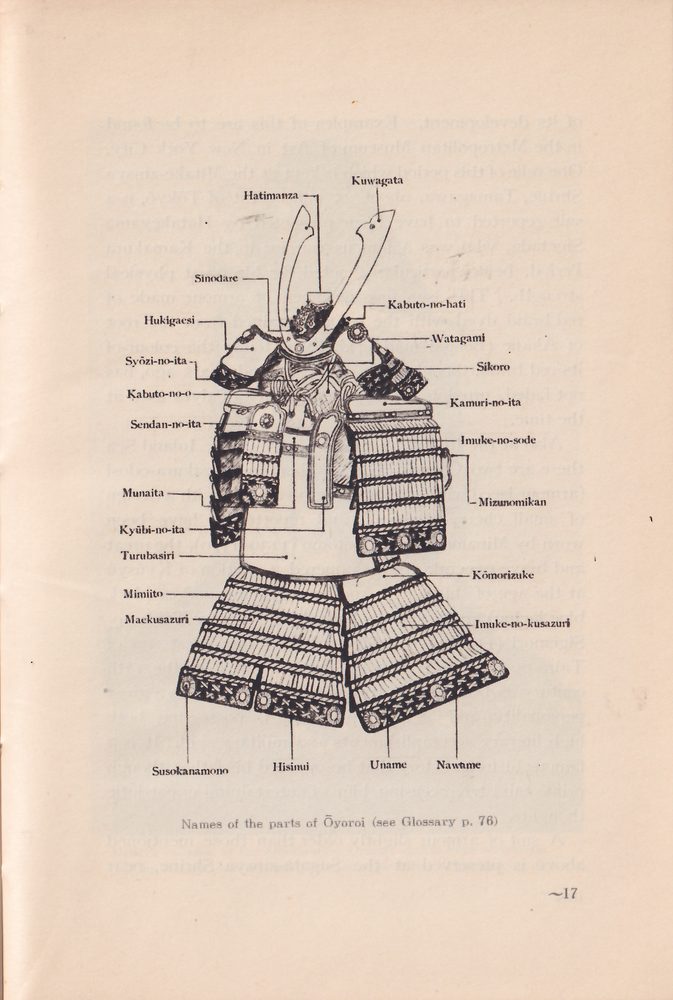
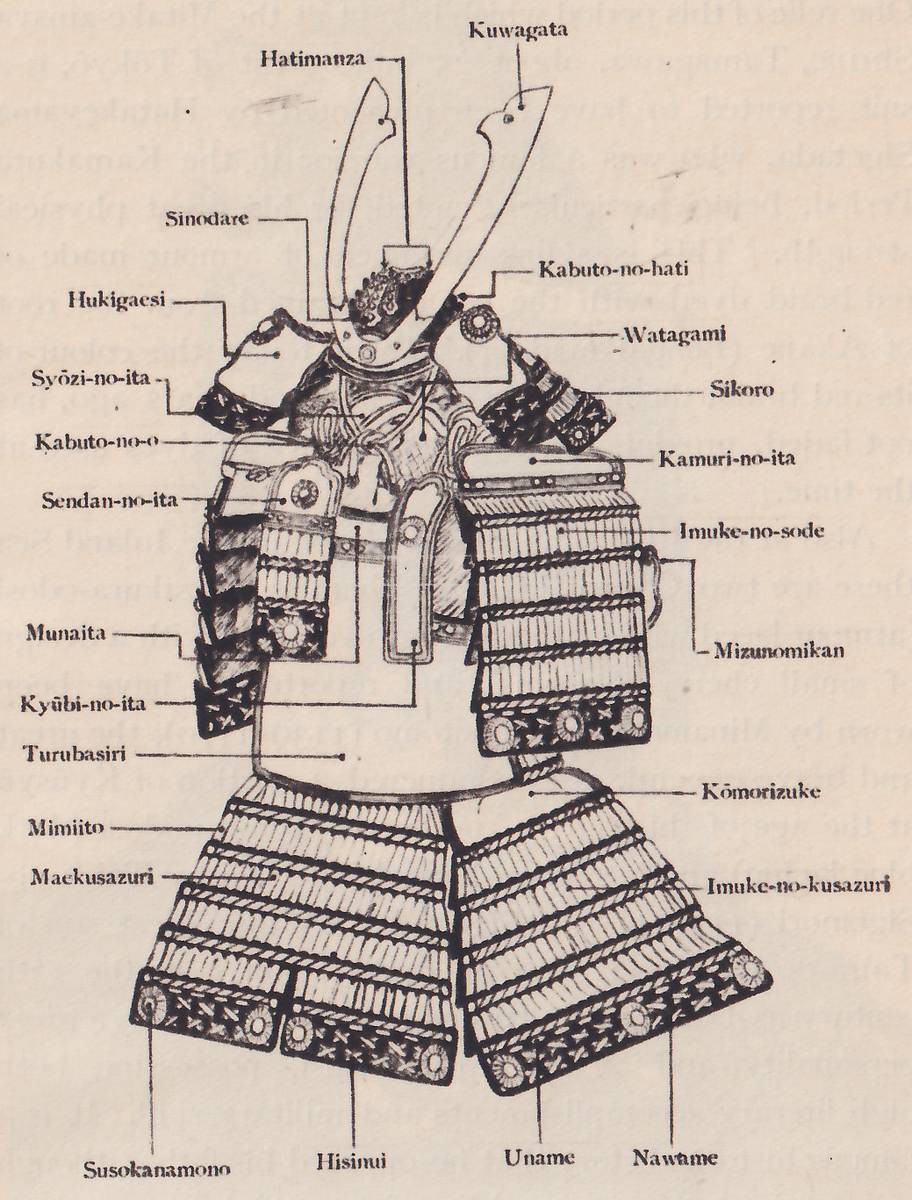
of its development. Examples of this are to be found in the Metropolitan Museum of Art in New York City. One relic of this period which is kept at the Mitake-zinsya Shrine, Tamagawa, about 25 miles west of Tōkyō, is a suit reported to have been presented by Hatakeyama Sigetada, who was a famous warrior in the Kamakura Period, being particularly noted for his great physical strength. This is a fine specimen of armour made of red braid dyed with the colour obtained from the root of Akane (Bengal madder). Even today the colour of its red braid, though made eight hundred years ago, has not faded, proving the superior quality of dyes used at the time.
Also at the Itukusima-zinsya Shrine in the Inland Sea there are two Ōyoroi. One of them is Kozakura-odosi (armour laced with leather thongs decorated with a design of small cherry-blossoms) and reported to have been worn by Minamoto-no-Tametomo (1139–1170), the great and brave general, who conquered a portion of Kyūsyū at the age of thirteen! Another is Kon-ito-odosi (dark blue lacing) and is said to have been used by Taira-no-Sigemori (1138–1179). Sigemori was the eldest son of Taira-no-Kiyomori, who ruled the country in the 12th century as Dazyōdaizin (prime minister), and was a great personality and an exemplary Busi, possessing both high literary accomplishments and military skill. It is a famous historical story that he opposed his father, though prime minister, accusing him of entertaining unpatriotic thoughts.
A suit of armour slightly older than those mentioned above is preserved at the Sugata-zinsya Shrine, near
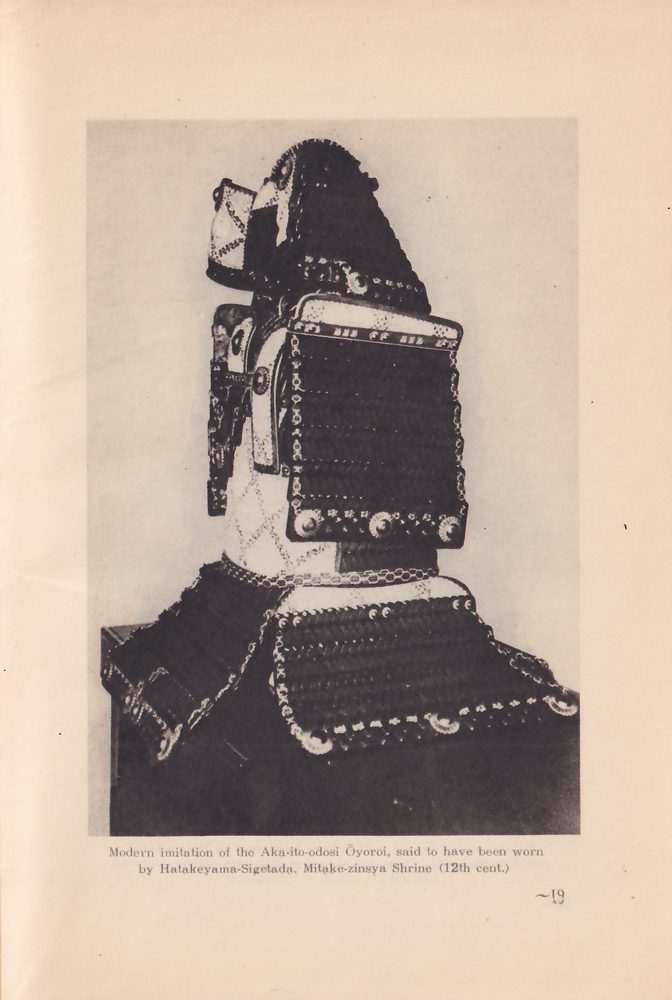
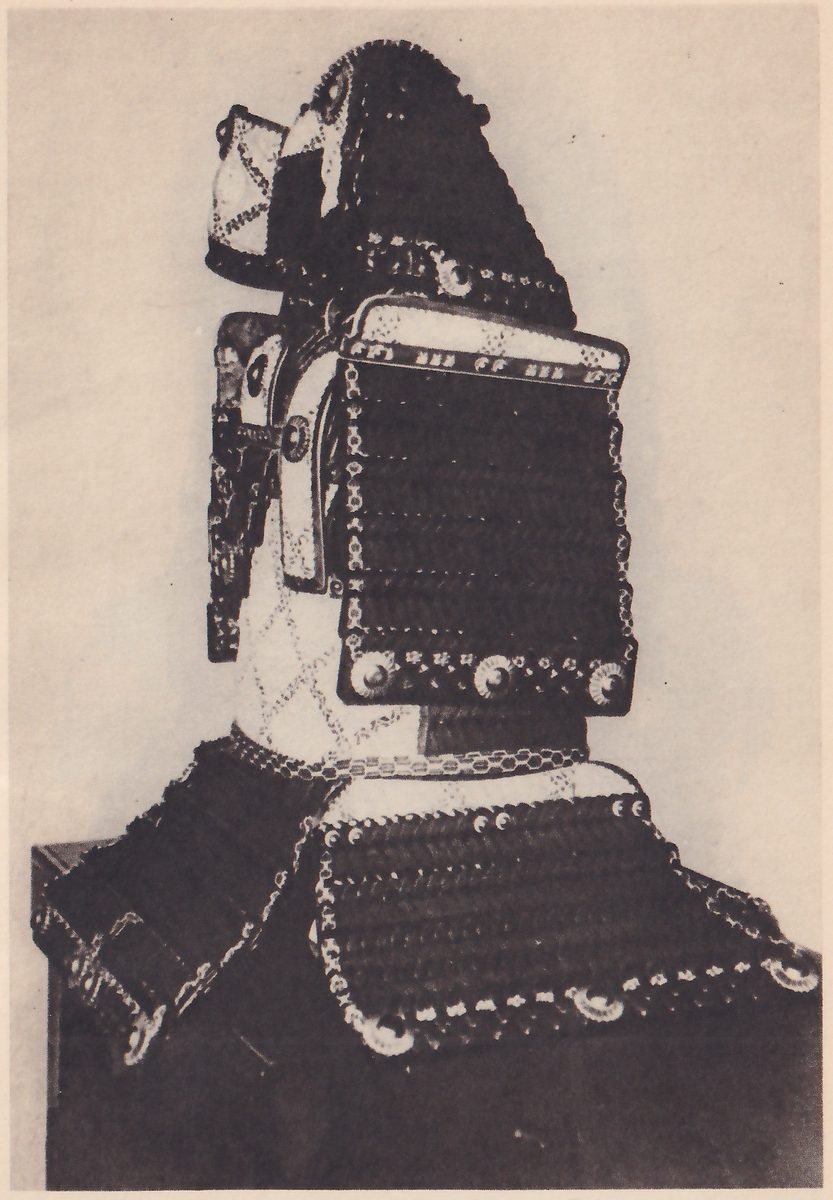
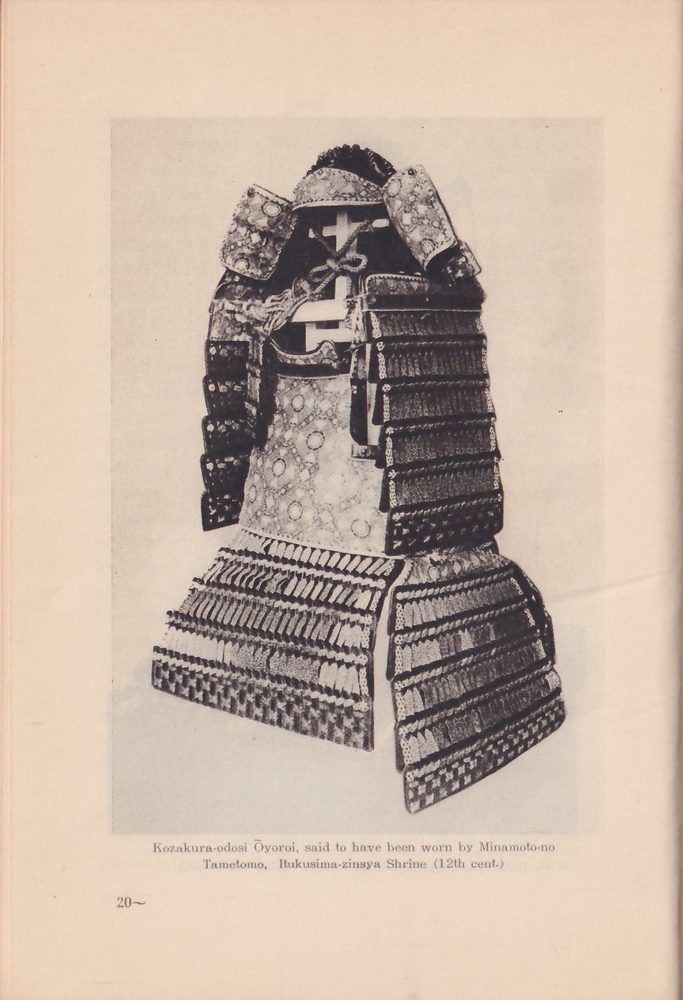
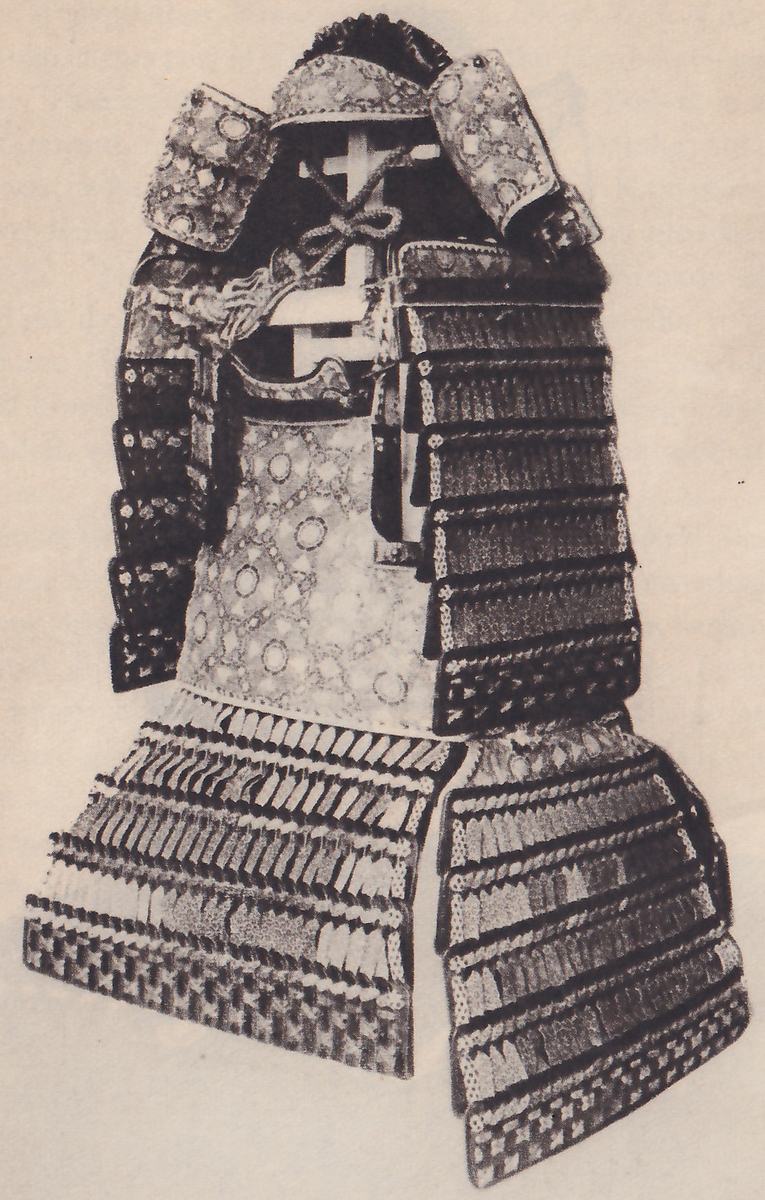
Enzan Station on the Tyūō Railway Line. This has always been called the Tatenasi (shieldless) armour since early days, and has been famous for many generations as a treasure of the Takeda family ruling the province of Kai (the present Yamanasi Prefecture). It is so named in praise of its strength. That is to say, when this armour is worn the warrior is so well protected that he does not require any shield to protect himself.
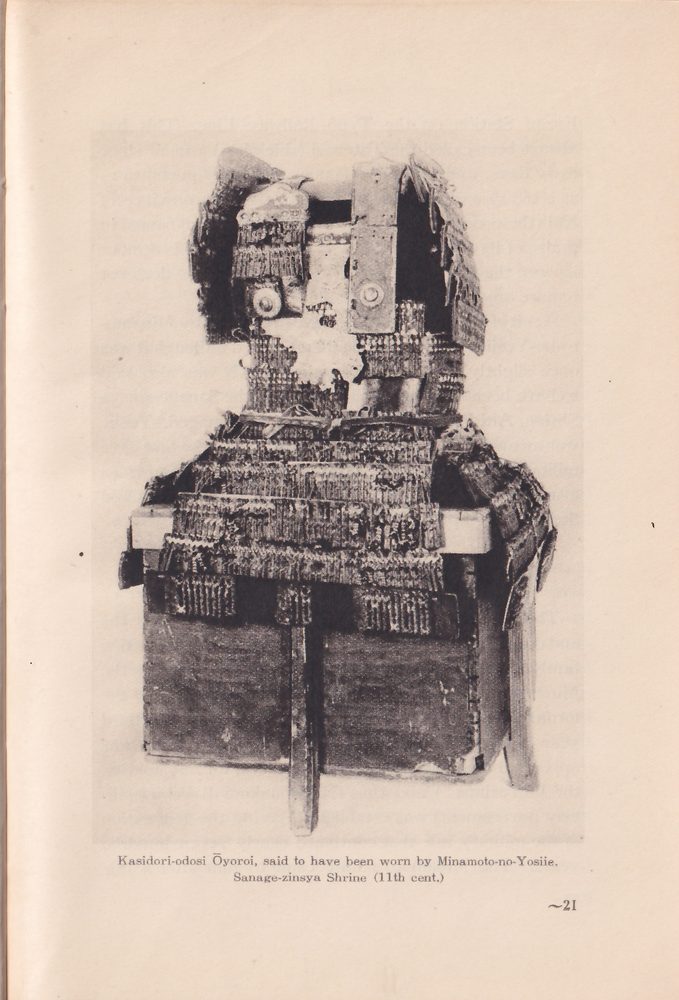
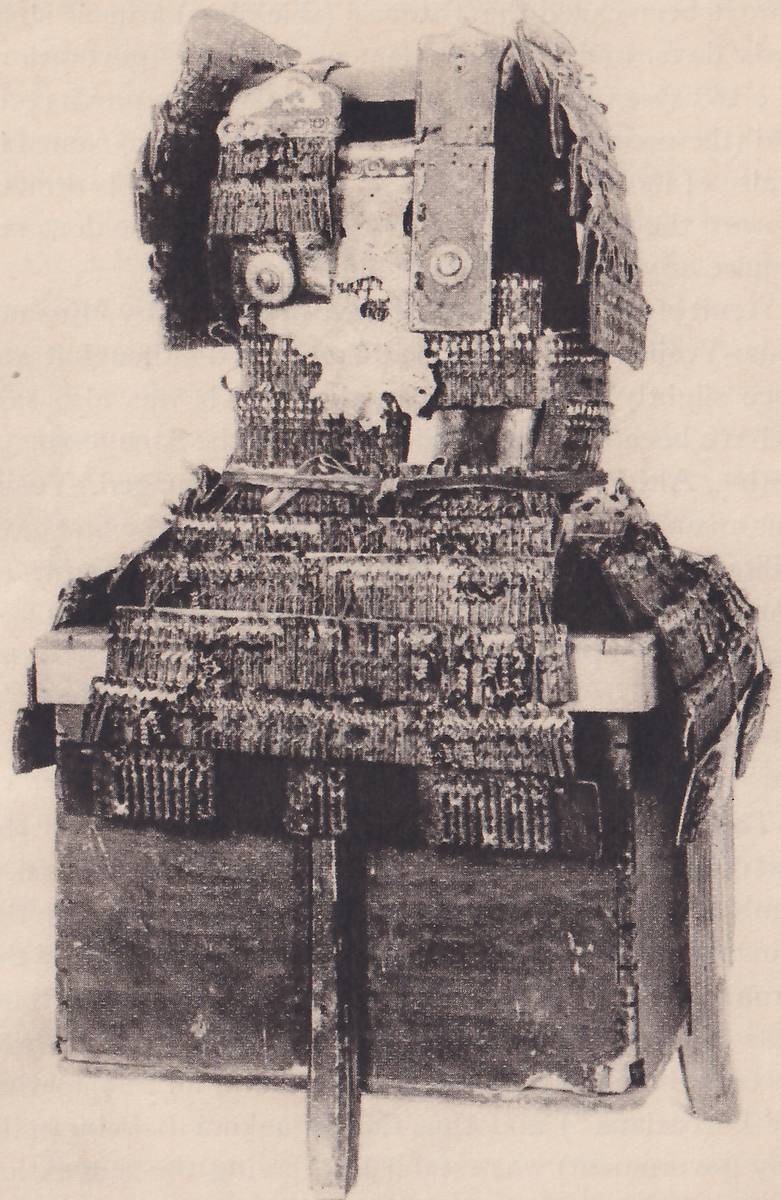
A suit of armour reported to have been worn by Minamoto-no-Yosiie (1041–1108) is still preserved although it was once slightly burnt. Yet another which was also said to have been used by Yosiie is kept at the Sanage-zinsya Shrine, Aiti Prefecture, but it is greatly damaged. Yosiie was an ancestor of Minamoto-no-Yoritomo, who first gave military administration to the country. He is known as a warrior who was a master both in military tactics and literary accomplishments.
3. Kamakura Period (1185–1392)
The Busi class that increased its influence towards the end of the Heian Period (794–1185) established its position firmly in the Kamakura Period. The rivalry between the Minamoto and Taira clans raged fiercely during the former period, but finally the Minamoto won. In the third year of Kenkyū, or 1192, Minamoto-no-Yoritomo was appointed Seiitaisyōgun (“Great General for Subjugating the Barbarians”) and thus the Kamakura Bakuhu (military government) was established, laying the foundation of the military rule that continued nearly seven hundred years. The Minamoto family came to ruin after a rule
of twenty-eight years, and the Hōzyō family took its place and continued the system of military administration.
The Kamakura Period was in a word a period of martial spirit. The warriors of the period, who faithfully followed the spirit of Busidō, were honest and sturdy; they valued the morality of loyalty and filial piety, and the principle of relation between superiors and inferiors, and were willing to sacrifice even their life for the sake of justice. Therefore, it was natural that armour, one of the necessary requirements of warriors, made notable developments in the period.
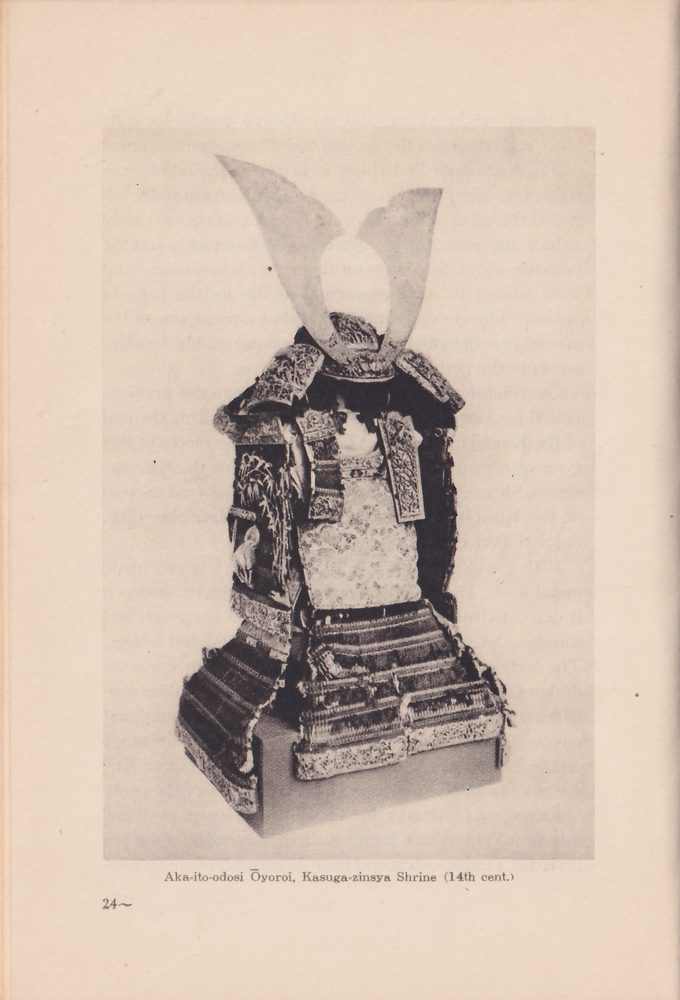
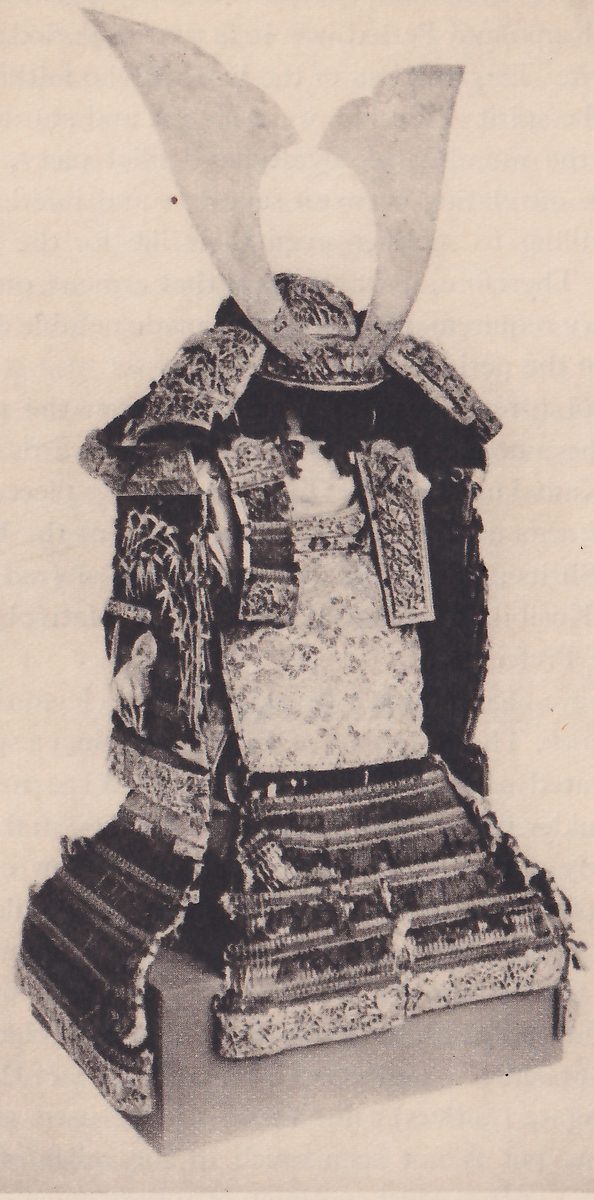
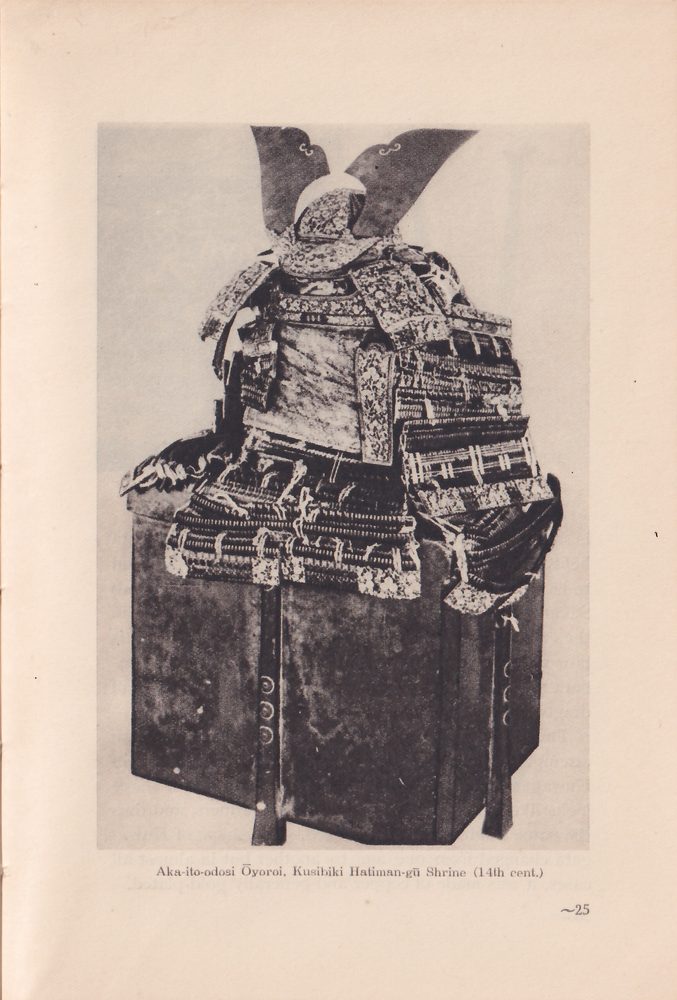
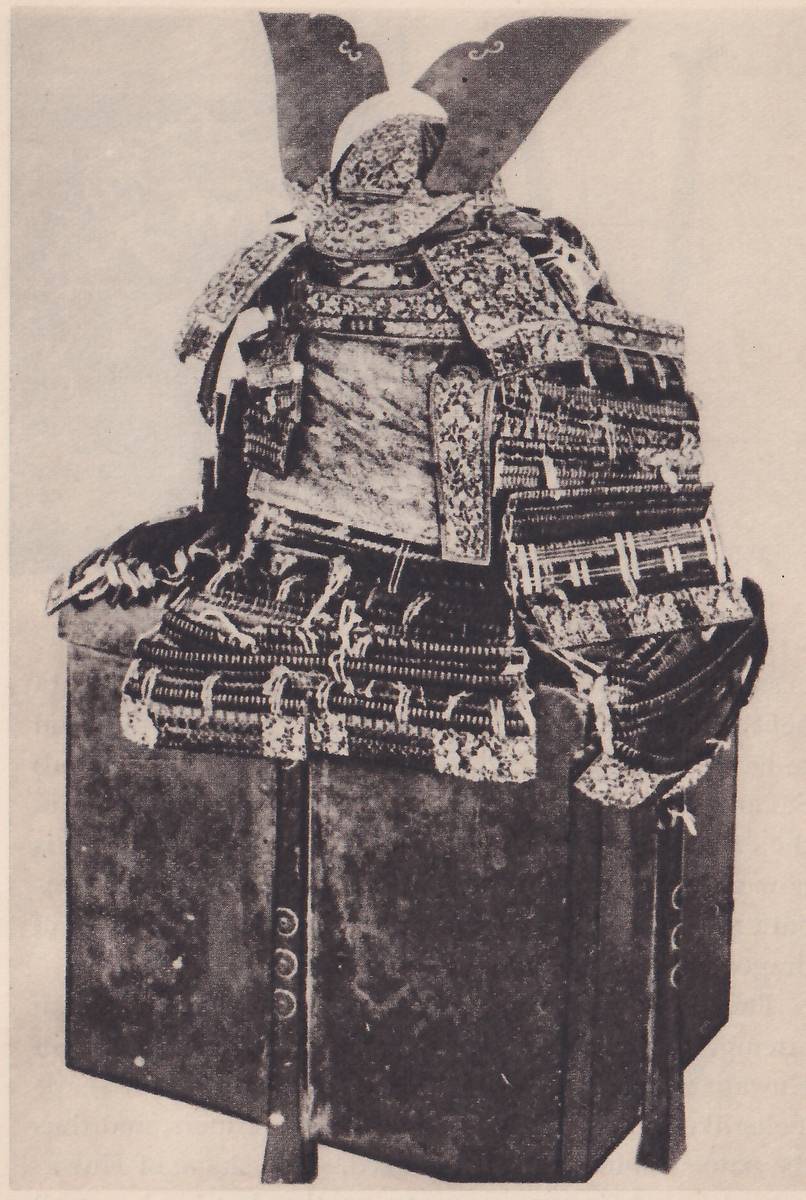
Ōyoroi (great harness) that came from the previous period became more and more elaborate towards the end of the Kamakura Period. Two outstanding pieces of this type of armour are now preserved, one at the Kasuga-zinsya Shrine, Nara, and the Aka-ito-odosi (red lacing) at the Kusibiki Hatiman-gū Shrine at Hatinohe City, Aomori Prefecture.
Both are characterized by skilfully and elegantly made metal work. The body part of the Kasuga-zinsya specimen is decorated with a design of bamboo and sparrows, and the shoulder protectors (Sode) are of bamboo and a tiger. The body of the Kusibiki Hatiman-gū armour carries a design of chrysanthemum blossoms, and its shoulder protectors, that of Masegiku (hedge chrysanthemum) and clouds. One notable feature of these suits of armour is that on the fore part of their Kabuto (helmets) are placed Kuwagata or antlers, projecting from both sides of the peak.
Kuwagata (antlers) came to be widely used at about this time, but is not seen much in the relics of earlier periods. Yet the oldest specimen of antlers now preserved
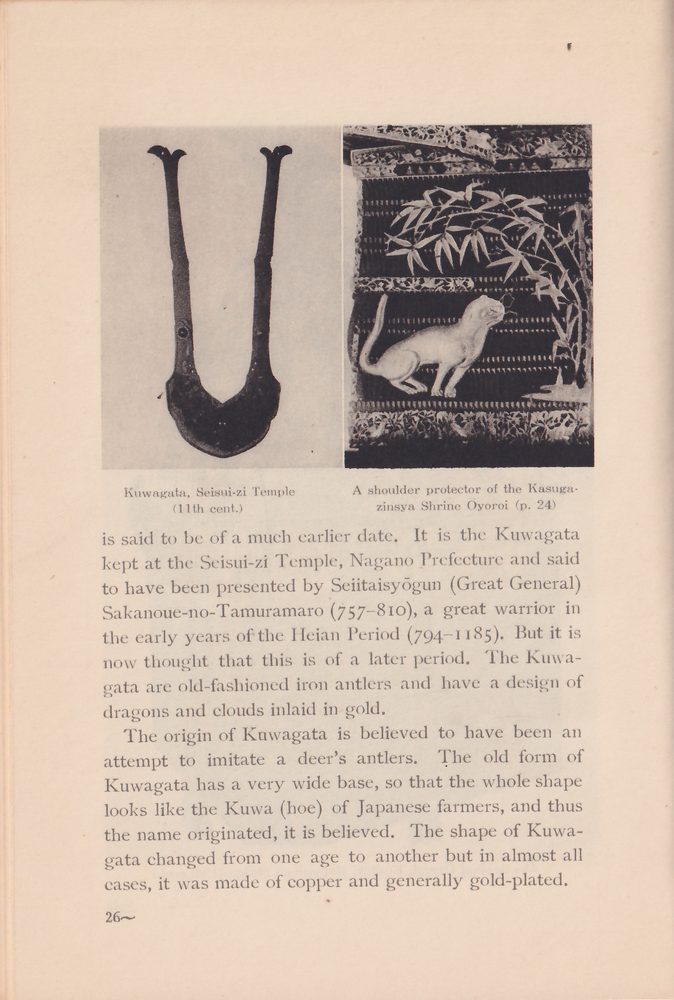
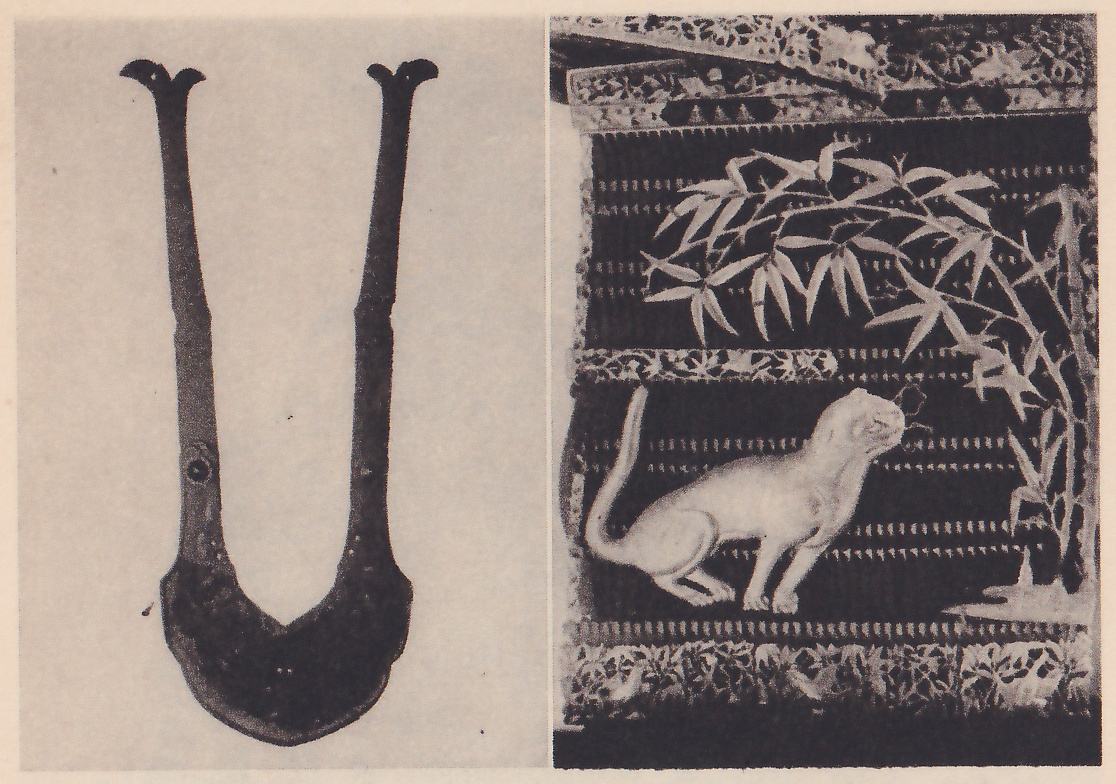
A shoulder protector of the Kasuga-zinsya Shrine Ōyoroi (p. 24)
is said to be of a much earlier date. It is the Kuwagata kept at the Seisui-zi Temple, Nagano Prefecture and said to have been presented by Seiitaisyōgun (Great General) Sakanoue-no-Tamuramaro (757–810), a great warrior in the early years of the Heian Period (794–1185). But it is now thought that this is of a later period. The Kuwagata are old-fashioned iron antlers and have a design of dragons and clouds inlaid in gold.
The origin of Kuwagata is believed to have been an attempt to imitate a deer’s antlers. The old form of Kuwagata has a very wide base, so that the whole shape looks like the Kuwa (hoe) of Japanese farmers, and thus the name originated, it is believed. The shape of Kuwagata changed from one age to another but in almost all cases, it was made of copper and generally gold-plated.
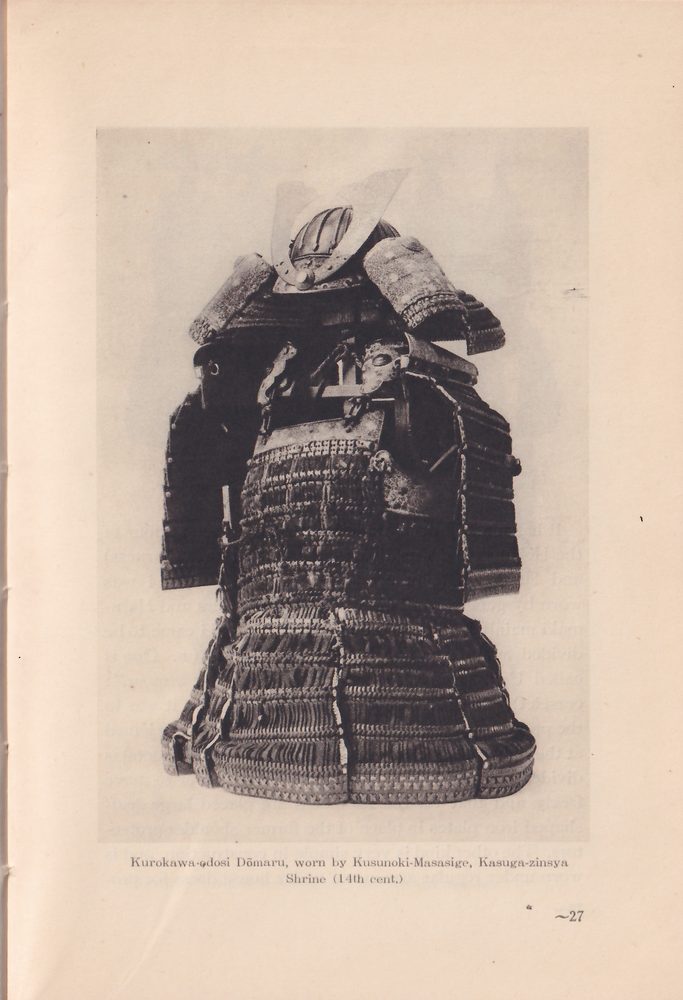
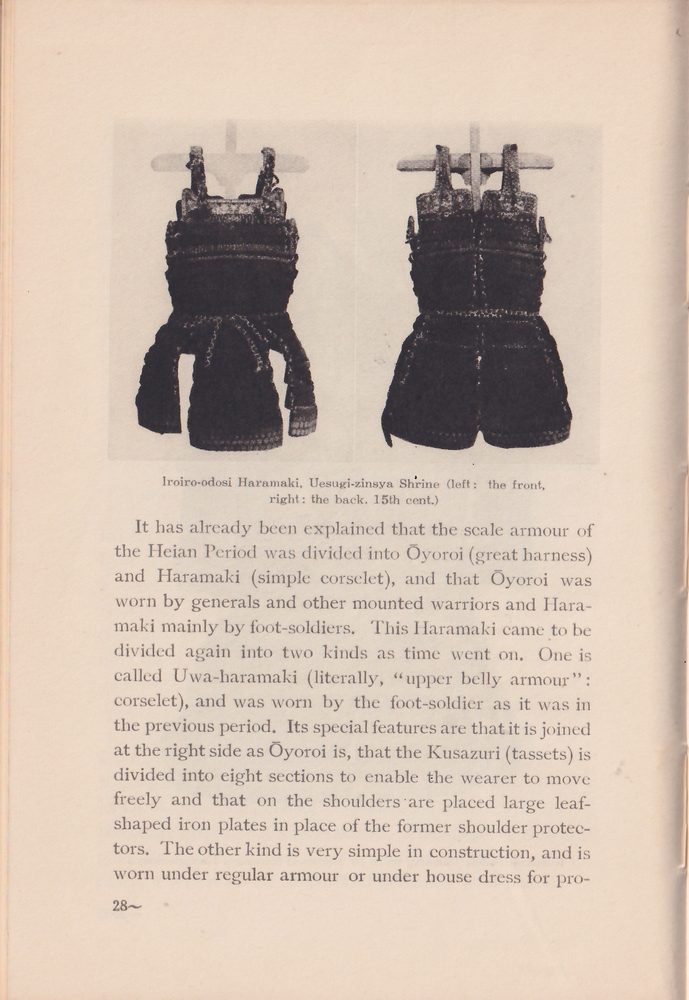
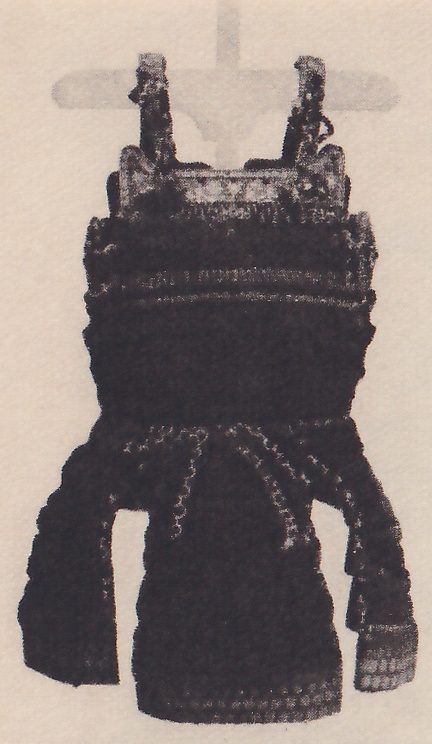
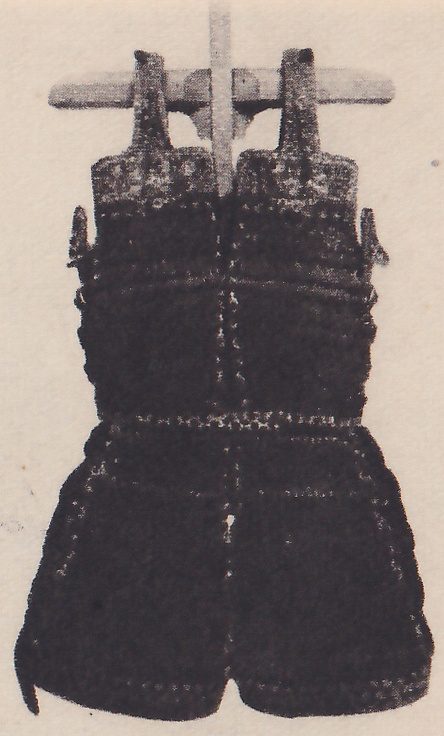
It has already been explained that the scale armour of the Heian Period was divided into Ōyoroi (great harness) and Haramaki (simple corselet), and that Ōyoroi was worn by generals and other mounted warriors and Haramaki mainly by foot-soldiers. This Haramaki came to be divided again into two kinds as time went on. One is called Uwa-haramaki (literally, “upper belly armour”: corselet), and was worn by the foot-soldier as it was in the previous period. Its special features are that it is joined at the right side as Ōyoroi is, that the Kusazuri (tassets) is divided into eight sections to enable the wearer to move freely and that on the shoulders are placed large leaf-shaped iron plates in place of the former shoulder protectors. The other kind is very simple in construction, and is worn under regular armour or under house dress for pro-
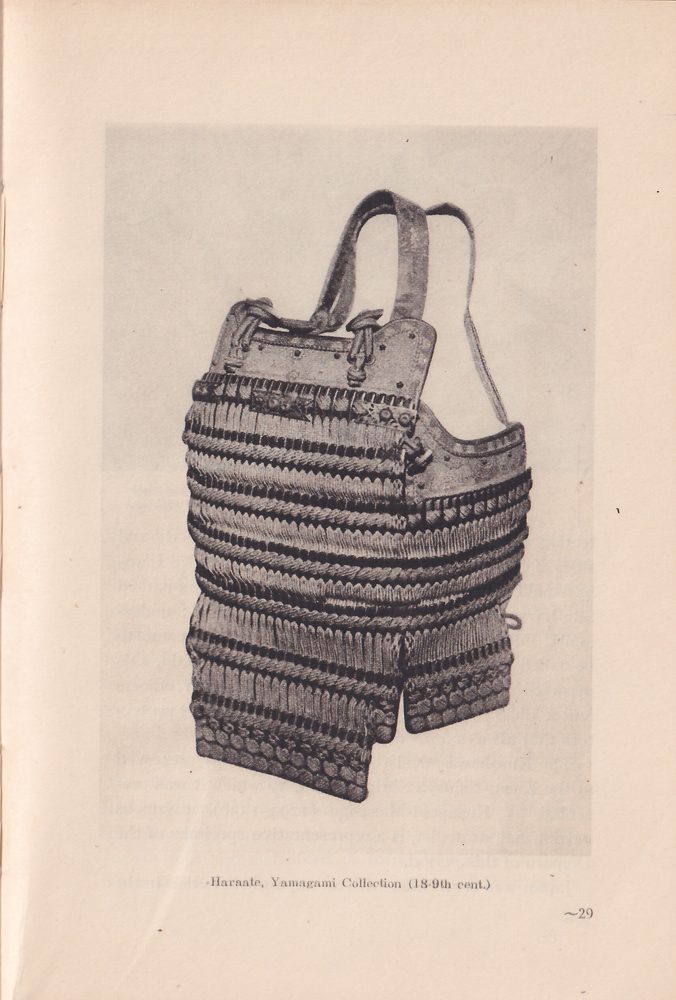
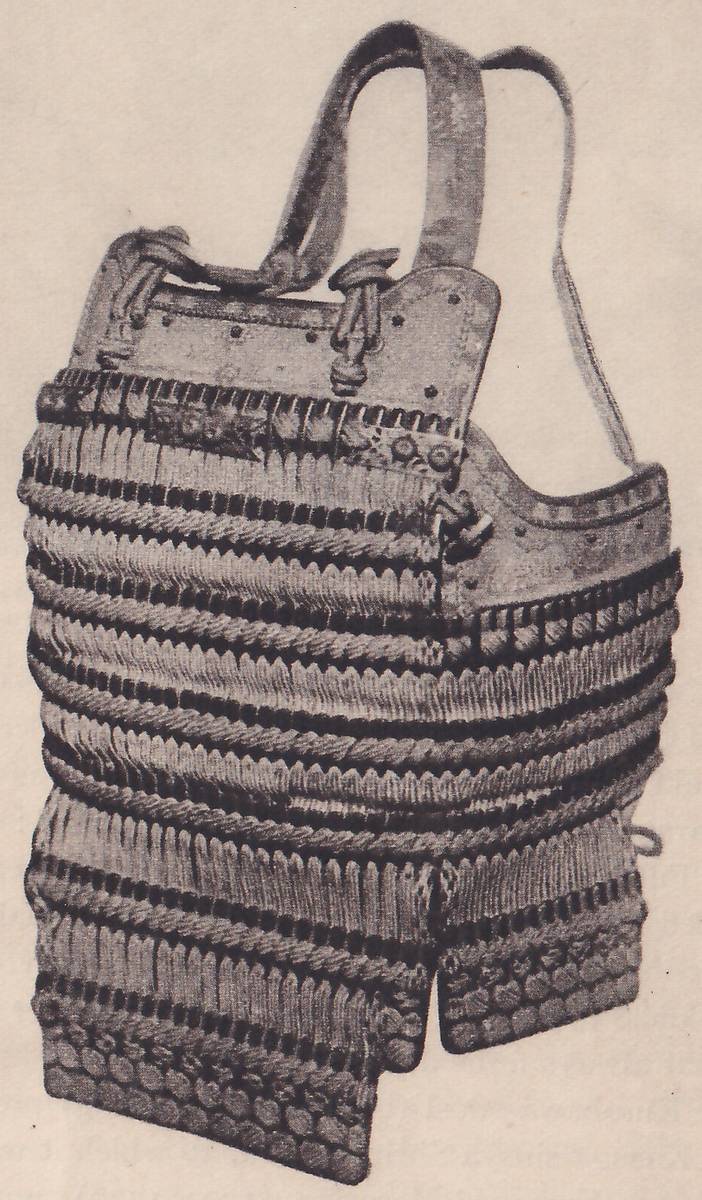
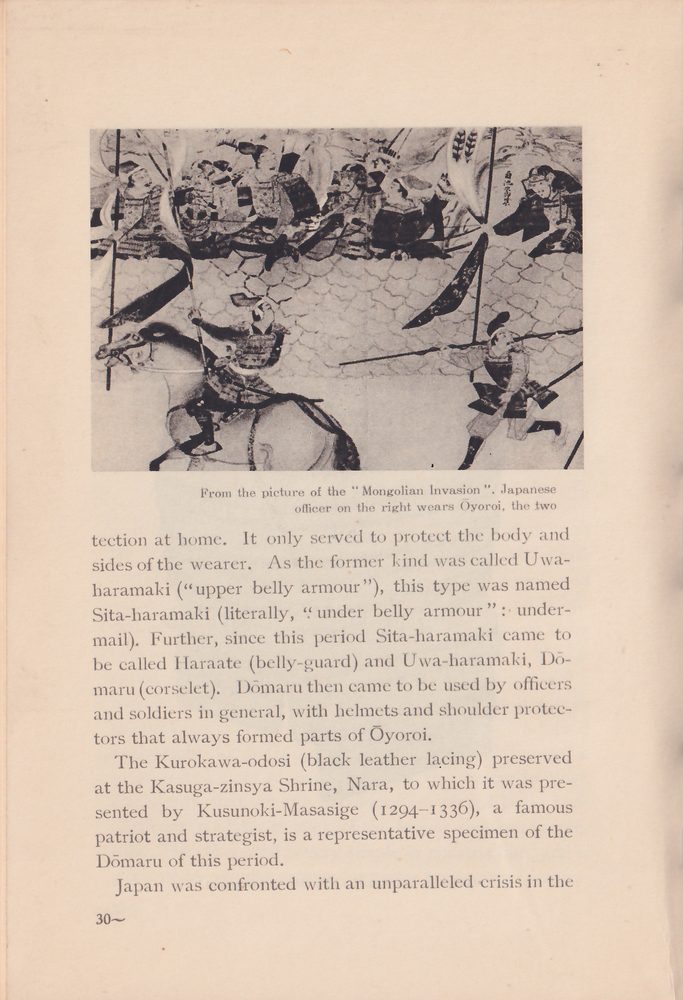
tection at home. It only served to protect the body and sides of the wearer. As the former kind was called Uwa-haramaki (“upper belly armour”), this type was named Sita-haramaki (literally, “under belly armour”: under-mail). Further, since this period Sita-haramaki came to be called Haraate (belly-guard) and Uwa-haramaki, Dōmaru (corselet). Dōmaru then came to be used by officers and soldiers in general, with helmets and shoulder protectors that always formed parts of Ōyoroi.
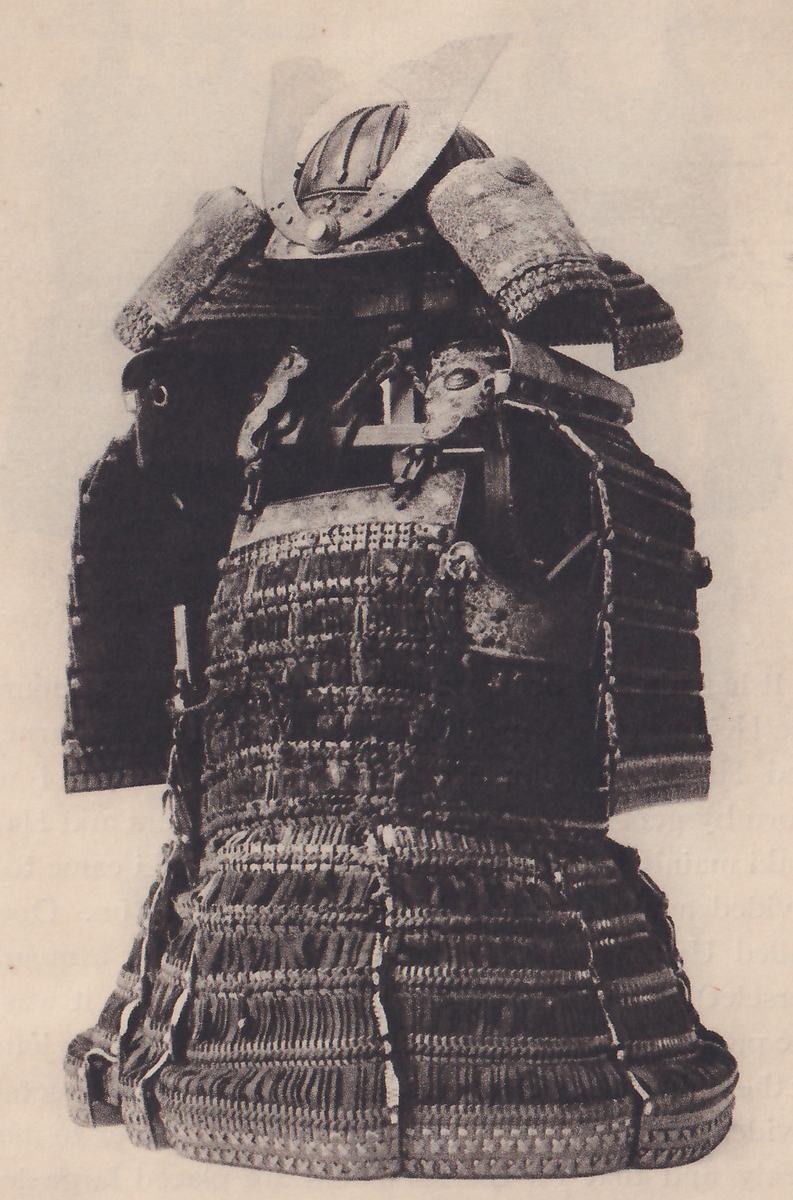
The Kurokawa-odosi (black leather lacing) preserved at the Kasuga-zinsya Shrine, Nara, to which it was presented by Kusunoki-Masasige (1294–1336), a famous patriot and strategist, is a representative specimen of the Dōmaru of this period.
Japan was confronted with an unparalleled crisis in the
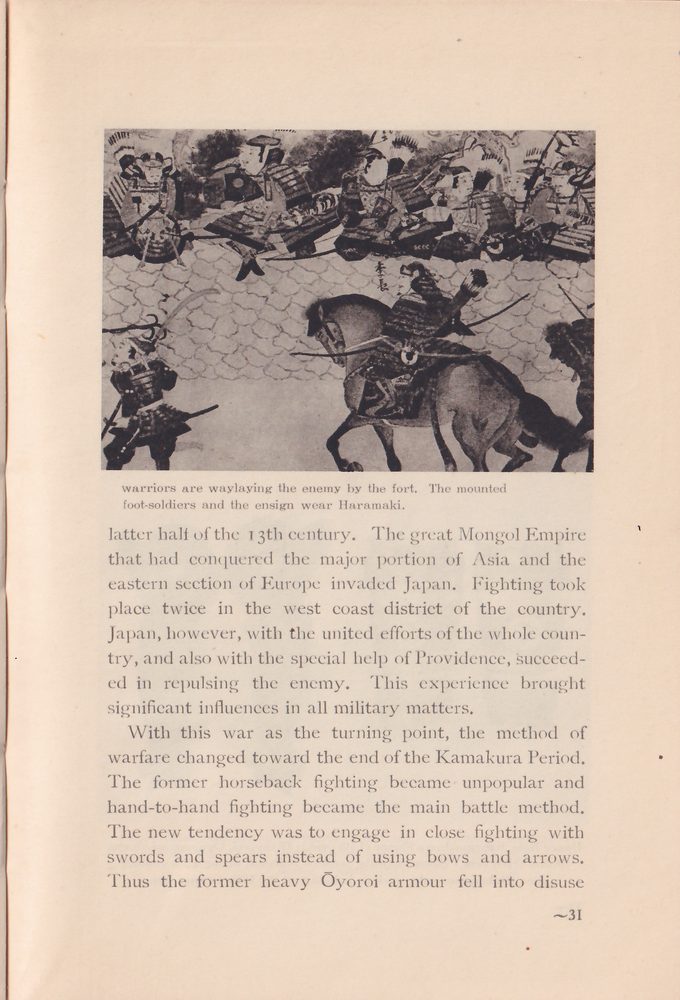
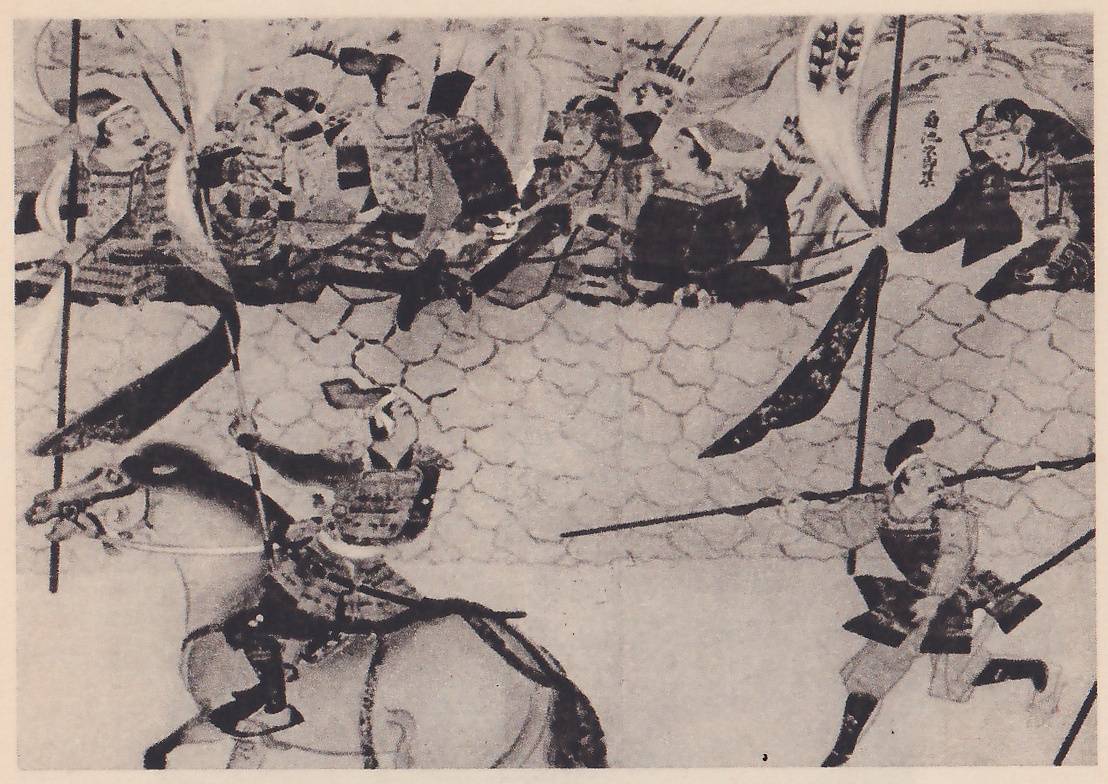
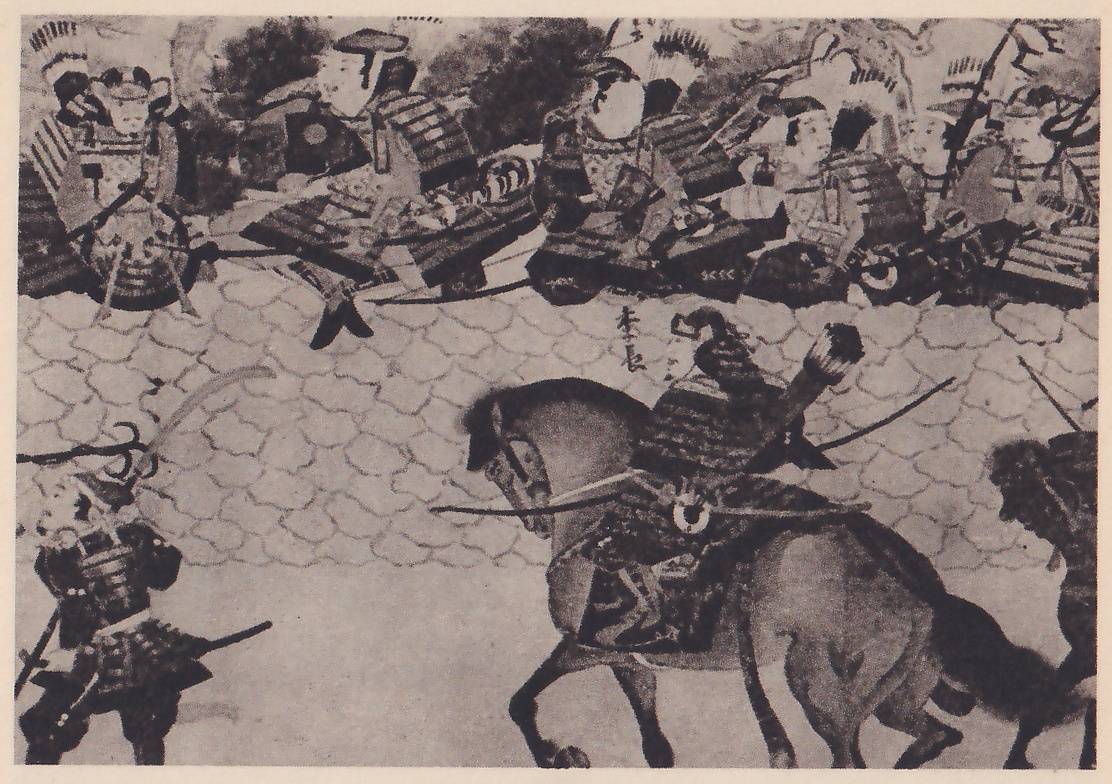
latter half of the 13th century. The great Mongol Empire that had conquered the major portion of Asia and the eastern section of Europe invaded Japan. Fighting took place twice in the west coast district of the country. Japan, however, with the united efforts of the whole country, and also with the special help of Providence, succeeded in repulsing the enemy. This experience brought significant influences in all military matters.
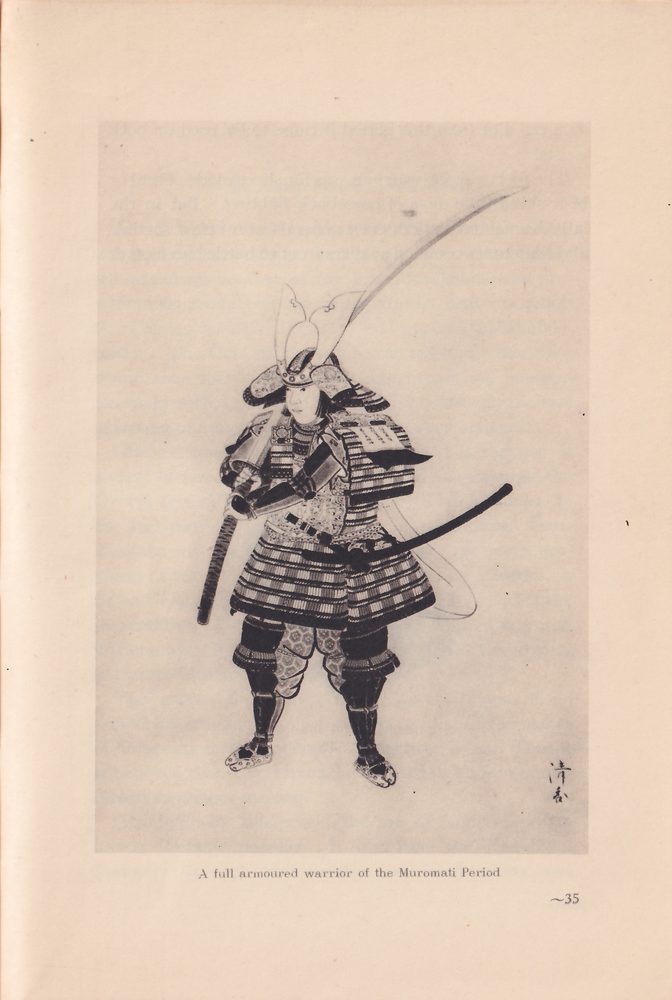
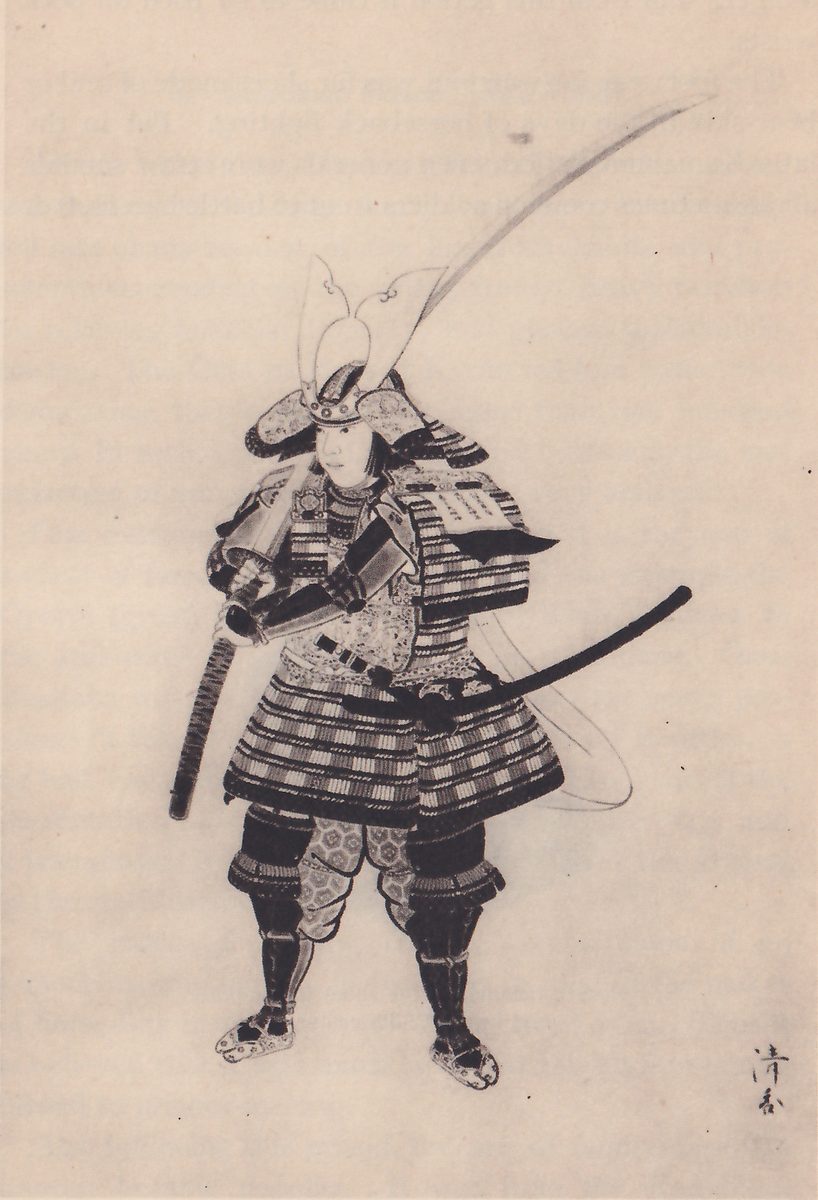
With this war as the turning point, the method of warfare changed toward the end of the Kamakura Period. The former horseback fighting became unpopular and hand-to-hand fighting became the main battle method. The new tendency was to engage in close fighting with swords and spears instead of using bows and arrows. Thus the former heavy Ōyoroi armour fell into disuse
and lighter Haramaki armour came into more general use.
To explain this notable change in greater detail, first the shape of Kabuto (helmet) was altered and its nape protector (Sikoro) was made flat to make it more convenient in using swords, and Kuwagata which formerly adorned only the generals’ helmets came to be used by all. Then, to lessen the shock and sound caused by blows on helmets, the inner leather lining came to be loosely fastened, and thus the size of helmets became larger. As a result of this change, the Hosi or projecting head of the rivet that fastened the plates forming the helmet bowl was removed.
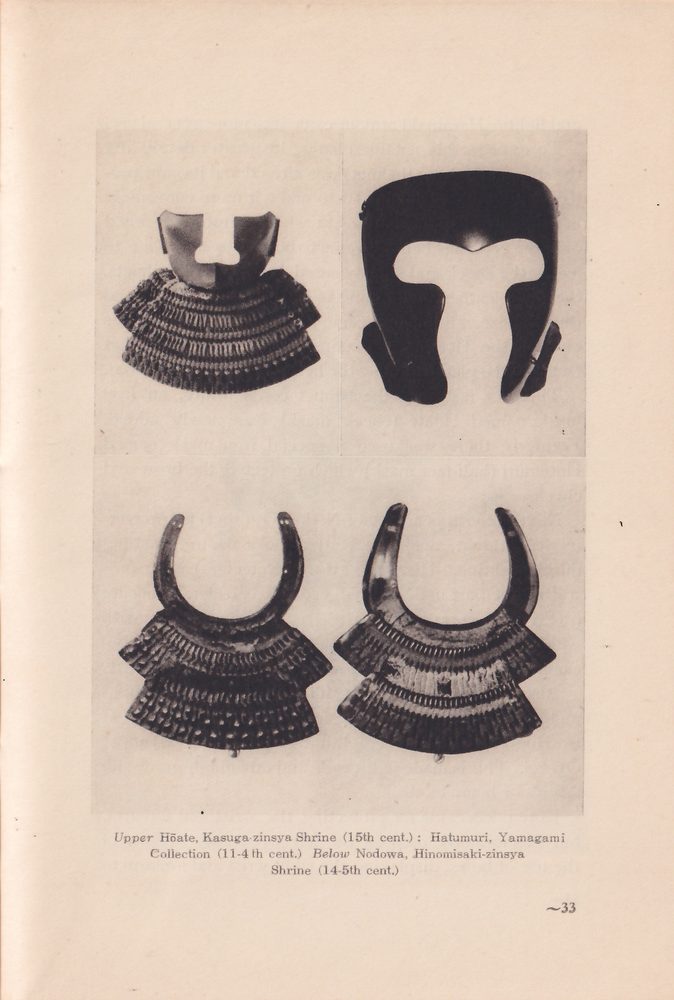
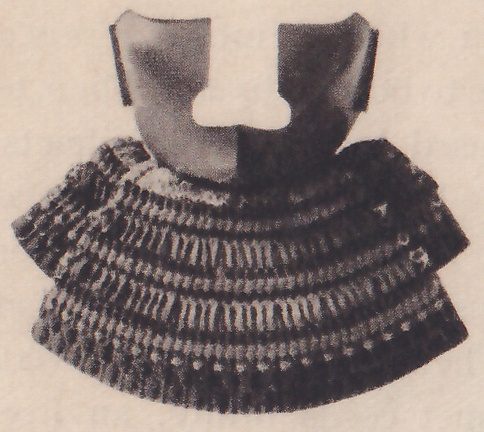
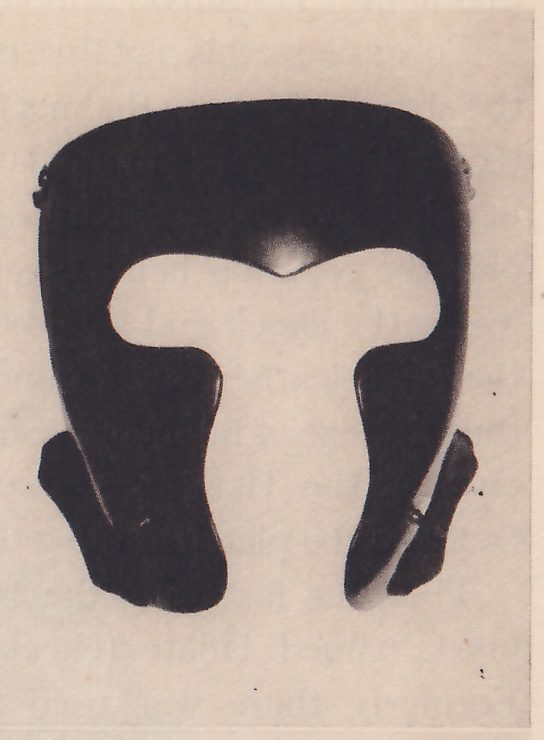
Then for fastening the helmet cords firmly, an iron mask named Hōate (cheek mask) was newly added. Formerly there was used a special iron mask named Hatumuri (half-face mask) which protected the brow and cheeks.
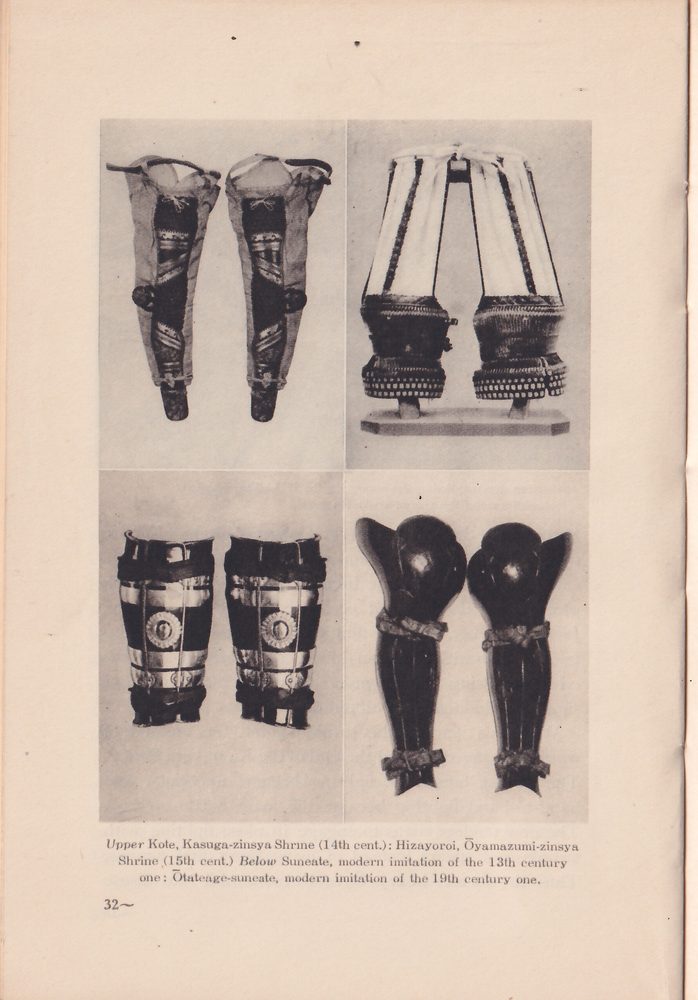
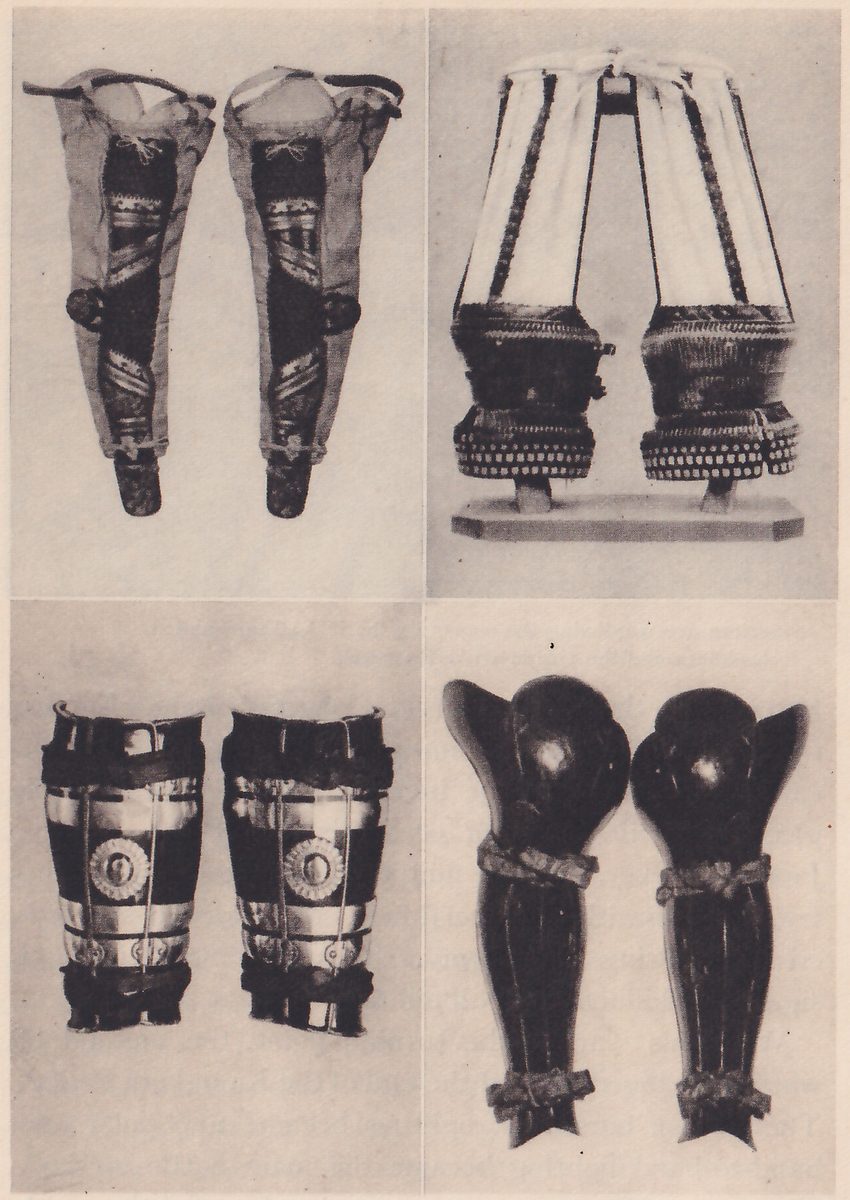
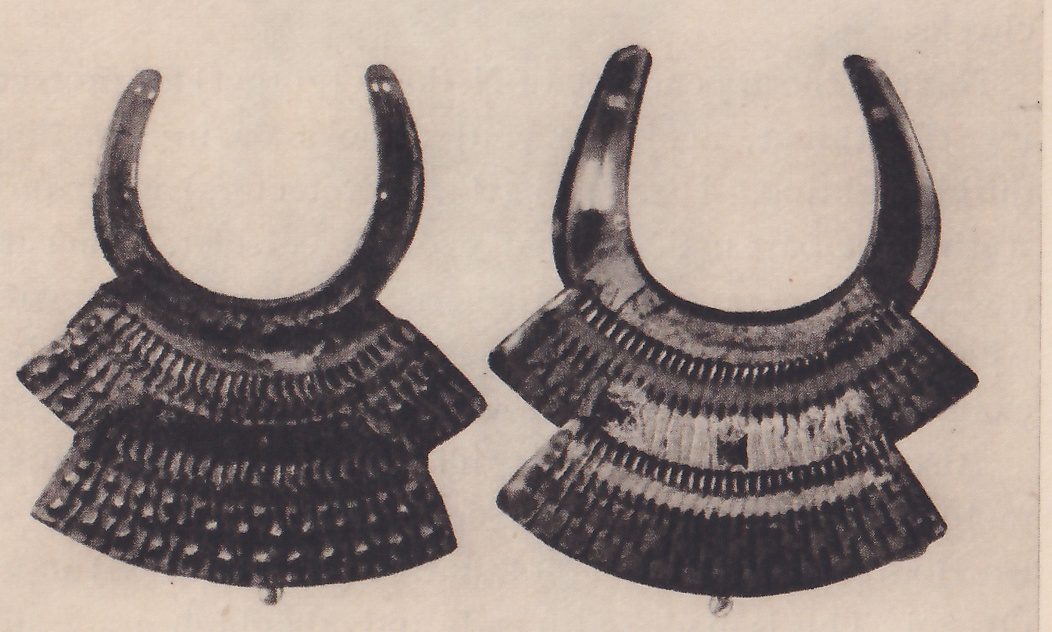
Next is the appearance of Nodowa (gorget) for protecting the throat, against sword attacks or in wrestling during fighting. Hizayoroi (thigh protectors) is for protecting the part under the edge of the corselet. Suneate (greaves) for protecting the leg became larger with widened upper parts, as the use of Naginata (halberd) became more common. Such was called Ōtateage-suneate.
Also, in the days of the brilliant battles of the Minamoto and Taira families (12 th century), generals and great warriors began to wear Yoroihitatare (armour dress) under Ōyoroi. This is made of brocade and other high-grade silk fabrics or hemp cloths.
Kote (sleeves) is for protecting the wrist and forearm, but was formerly used on the left wrist only because of the use of bows, displaying the right wrist and forearm to
danger. But from this period it came to be used on both wrists.
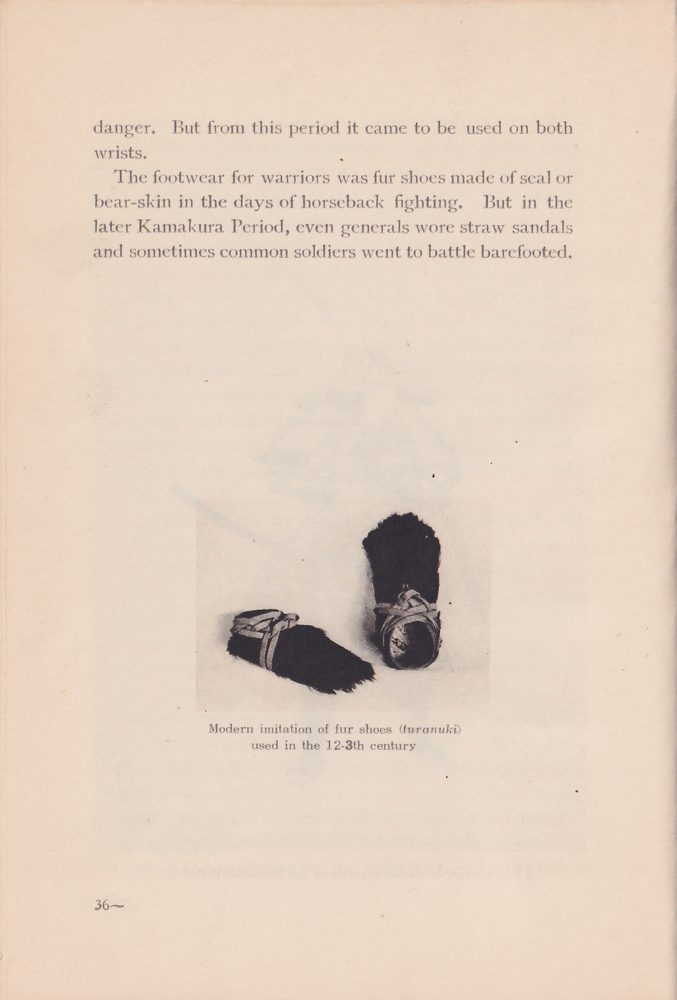
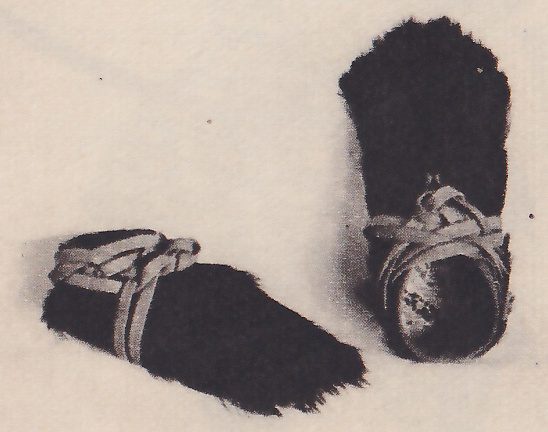
The footwear for warriors was fur shoes made of seal or bear-skin in the days of horseback fighting. But in the later Kamakura Period, even generals wore straw sandals and sometimes common soldiers went to battle barefooted.
4. Muromati Period (1392–1568)
At one time in the Muromati Period, the ruling power was held by the Asikaga family, and the whole country fell into chaos because of the luxurious habits and presumptuous conduct of the ruling family, heavy taxation for relieving financial difficulty, and general maladministration. The Ōnin incident at Kyōto led to a nationwide disturbance that continued for more than one hundred years. In such a period of rivalry and confusion, the manufacture of armour naturally became very active.
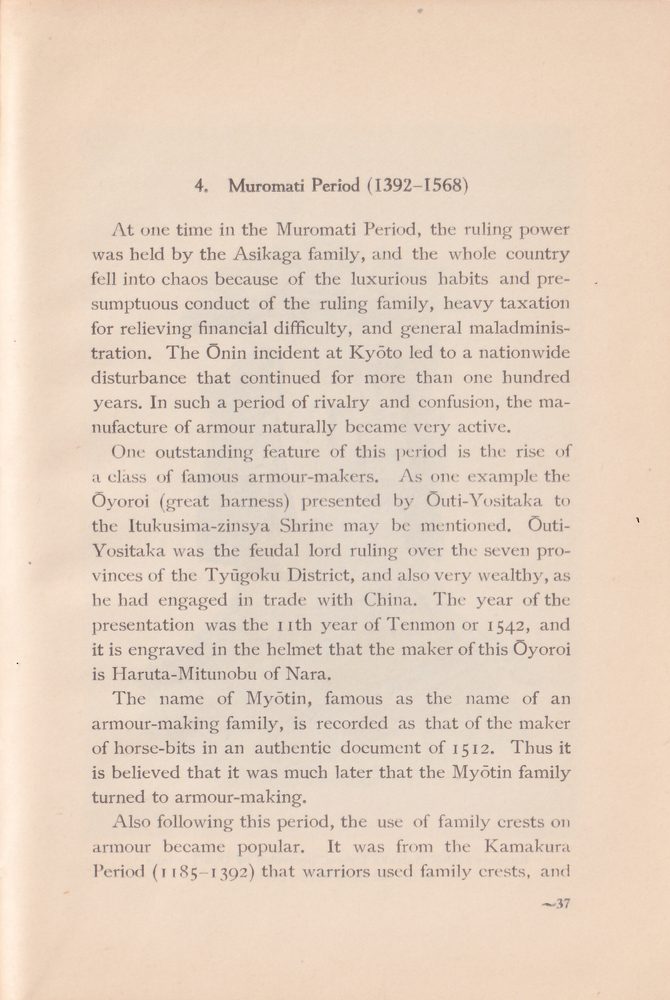
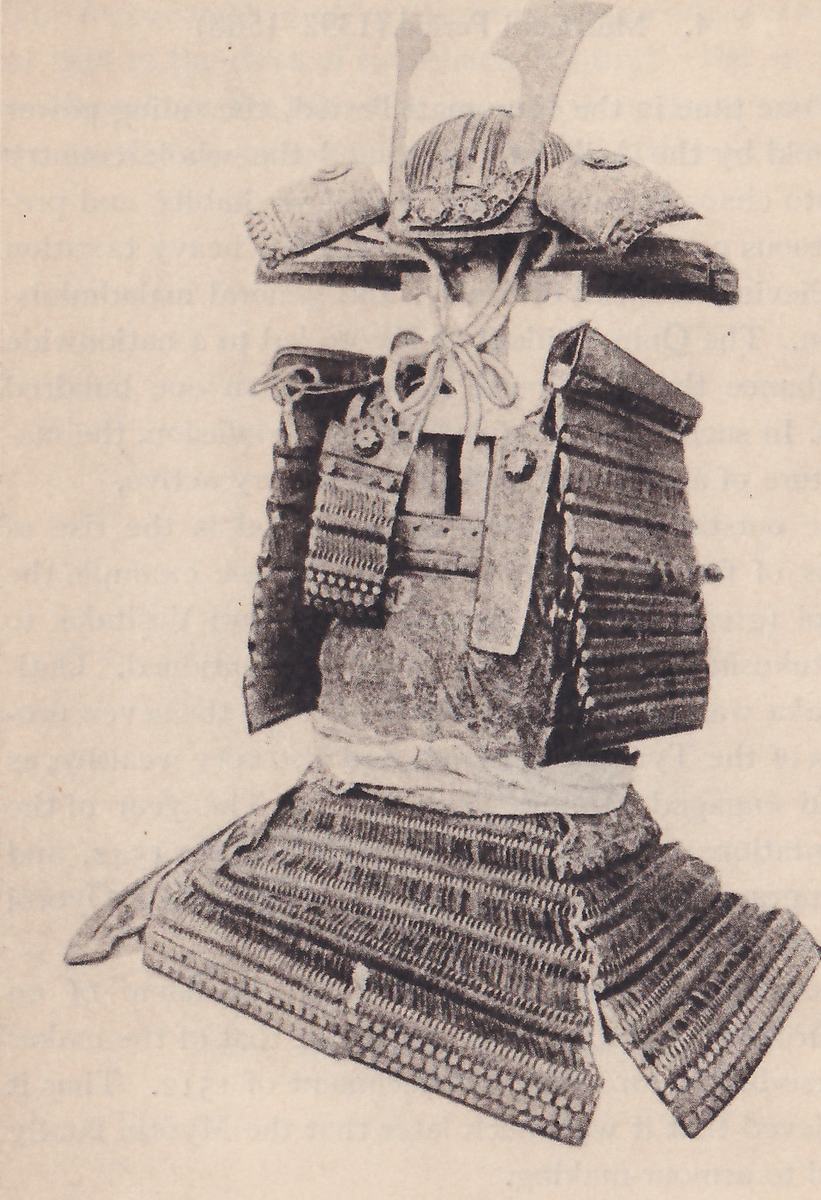
One outstanding feature of this period is the rise of a class of famous armour-makers. As one example the Ōyoroi (great harness) presented by Ōuti-Yositaka to the Itukusima-zinsya Shrine may be mentioned. Ōuti-Yositaka was the feudal lord ruling over the seven provinces of the Tyūgoku District, and also very wealthy, as he had engaged in trade with China. The year of the presentation was the 11th year of Tenmon or 1542, and it is engraved in the helmet that the maker of this Ōyoroi is Haruta-Mitunobu of Nara.
The name of Myōtin, famous as the name of an armour-making family, is recorded as that of the maker of horse-bits in an authentic document of 1512. Thus it is believed that it was much later that the Myōtin family turned to armour-making.
Also following this period, the use of family crests on armour became popular. It was from the Kamakura Period (1185–1392) that warriors used family crests, and
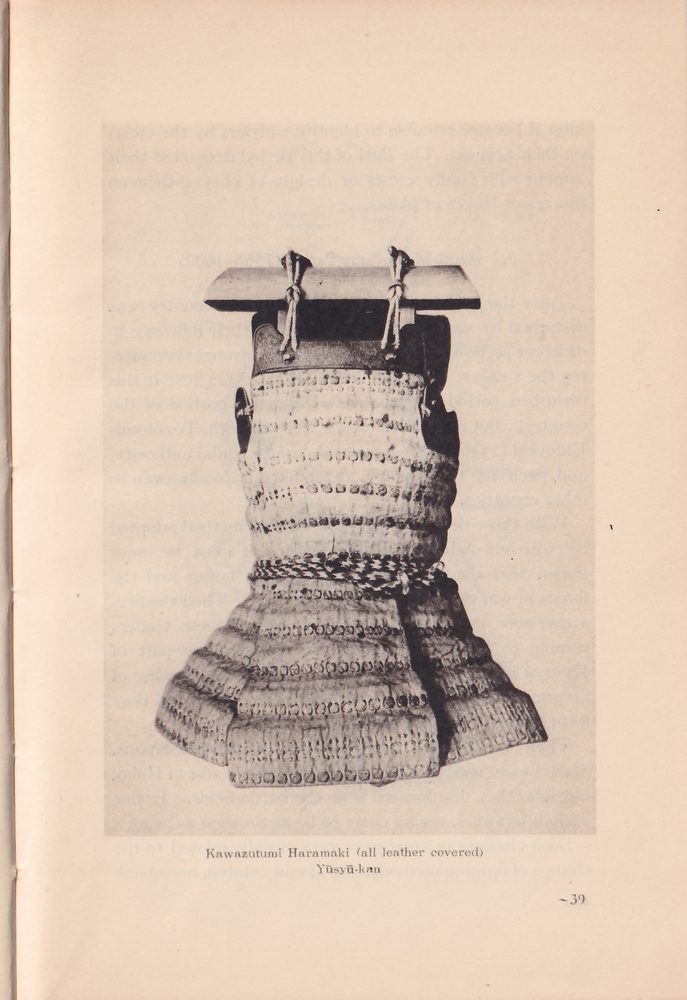
Yūsyū-kan
later it became possible to identify warriors by the crests on their armour. The Busi of this period decorated their armour with family crests or designs of chrysanthemum flowers or leaves of plants.
5. Azuti-Momoyama Period (1568–1600)
After the fall of the Asikaga family, the country was disturbed by various families extending their influence in different sections of the country and the stronger conquering the weaker. Oda-Nobunaga (1534–1581) rose in this disturbed period and conquered a major portion of the country. But upon Nobunaga’s violent death, Toyotomi-Hideyosi (1536–1598) succeeded him to feudal authority, and pacifying the country, extended his power even to other countries.
With these developments, the fighting method adopted by warriors naturally changed. First it must be mentioned that the scale of battles became larger and the forces in war campaigns increased in size. Then the firearms were introduced into Japan. Portuguese traders coming to Tanegasima Island in the southern part of Kyūsyū in 1543 first brought guns to Japan. The use of firearms rapidly spread throughout the country and they soon became essential weapons in battles.
Then spears (Yari) appeared as offensive weapons. Spears were used in ancient times under the name of Hoko, but later they disappeared from the battle-fields. In this period, however, spears came to be again used as arms.
Such changes in arms were very closely related to the change of fighting methods. As already stated, horseback
fighting that once was common had gone out of use, and hand-to-hand fighting again returned.
What effect did the appearance of the new offensive weapons have on the armour?
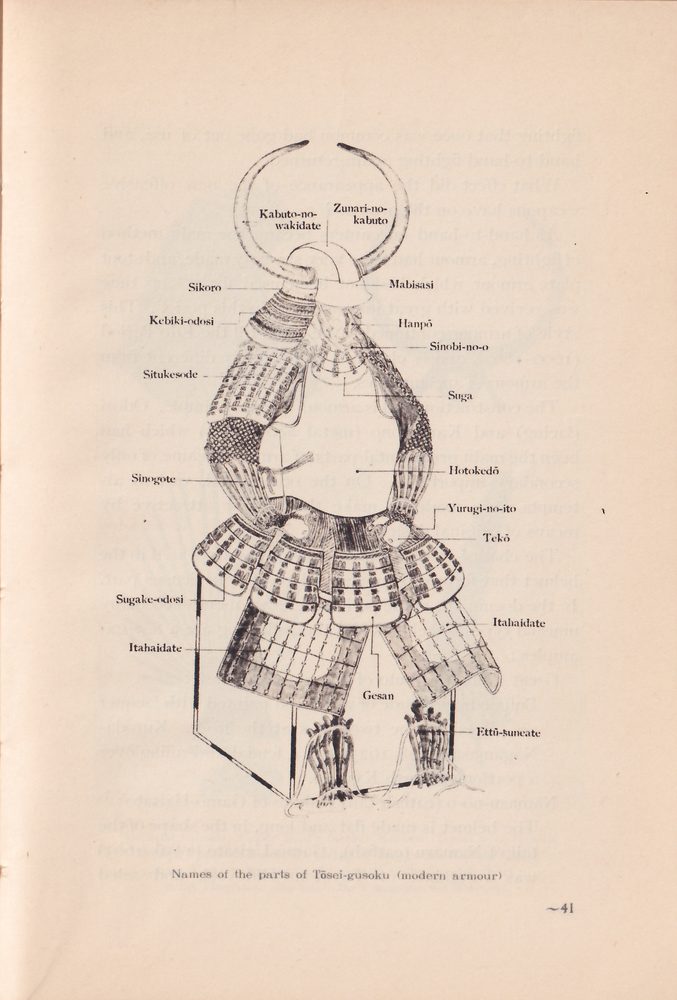
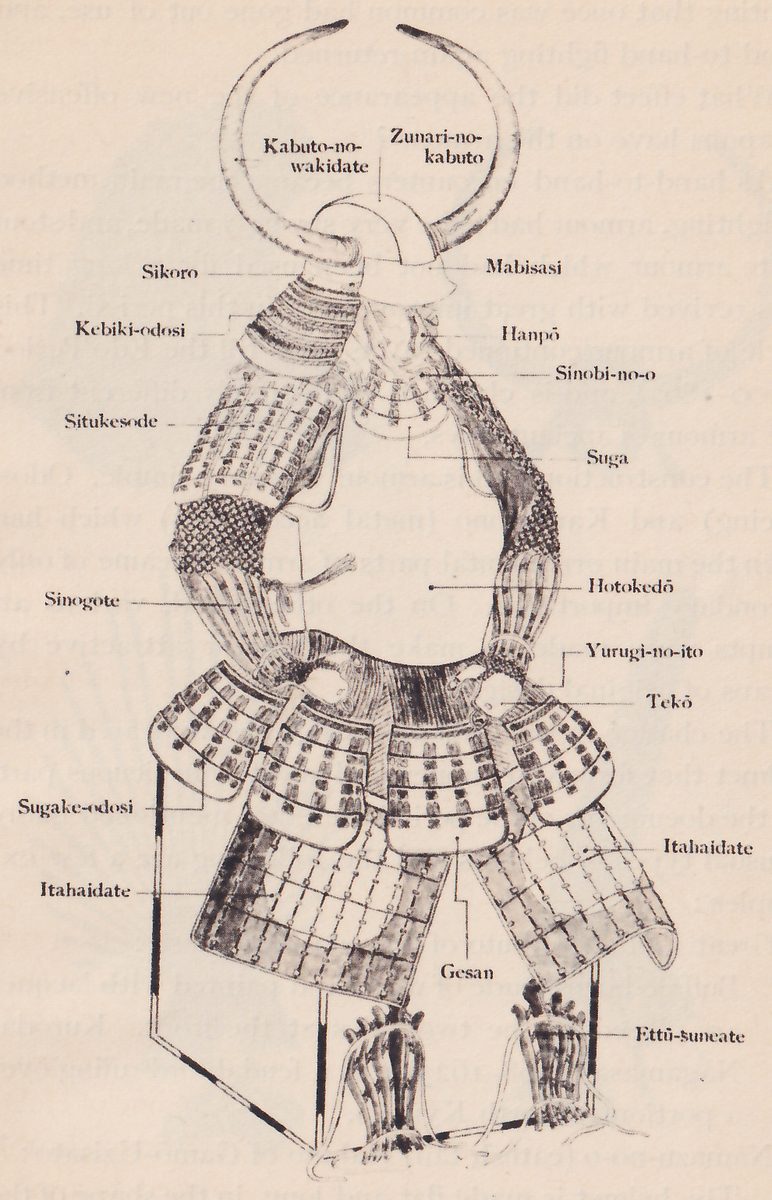
As hand-to-hand encounters became the main method of fighting, armour had to be very strongly made, and stout plate armour which had not been used for a long time was revived with great improvement in this period. This style of armour continued to be used till the Edo Period (1600–1867), and is classified as distinctly different from the armour of ancient days.
The construction of this armour was very simple. Odosi (lacing) and Kanamono (metal accessories) which had been the main ornamental parts of armour became of only secondary importance. On the other hand, various attempts were made to make the armour attractive by means of original designs.
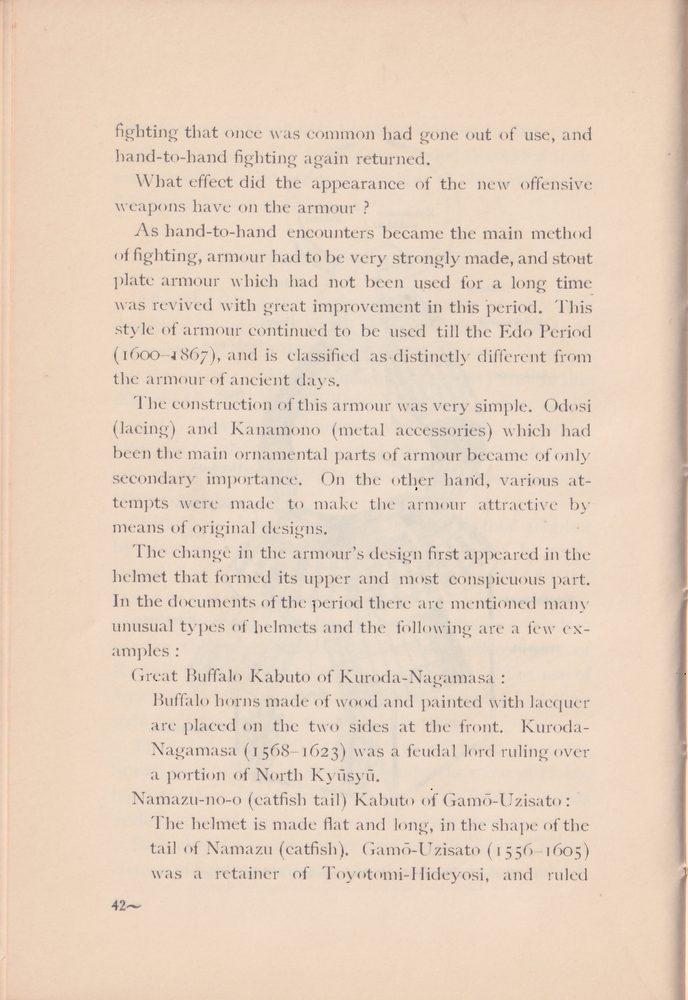
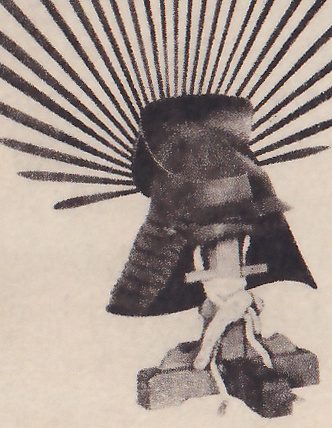
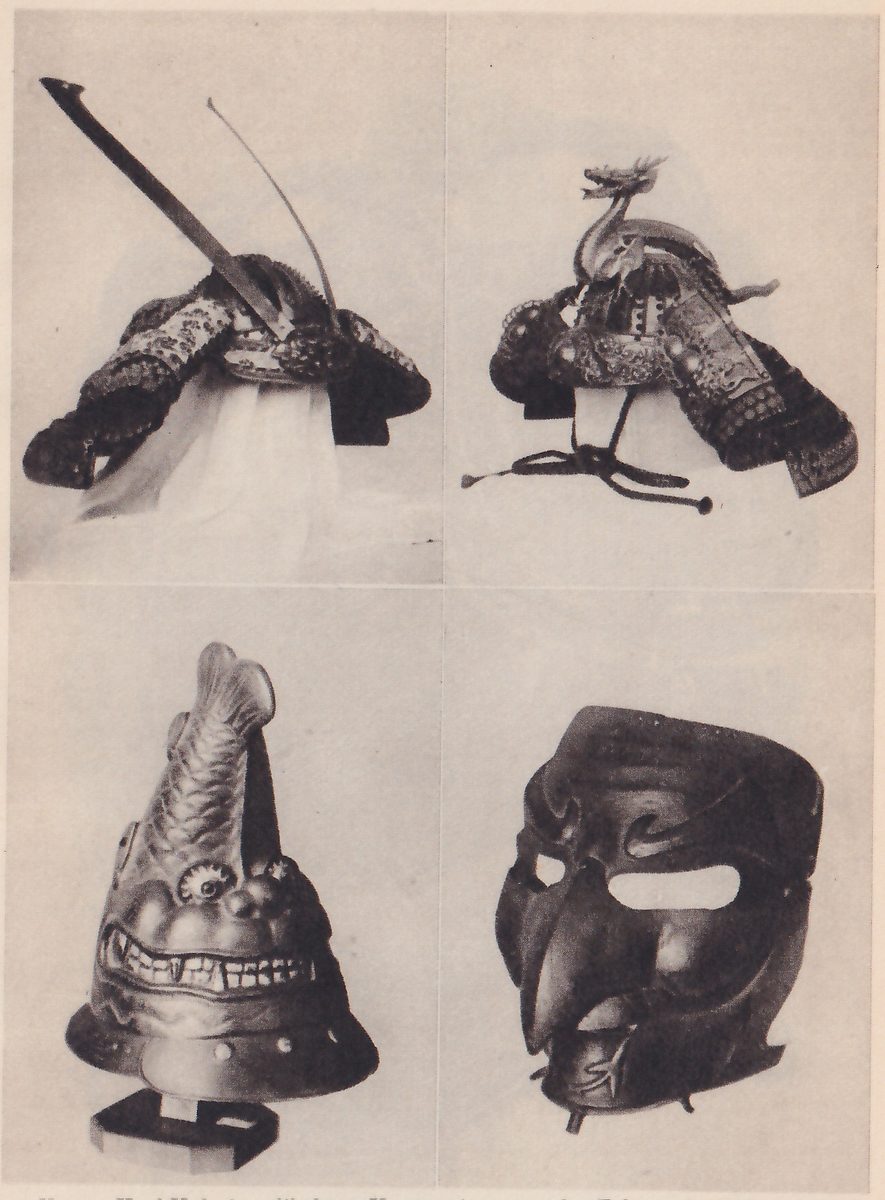
The change in the armour’s design first appeared in the helmet that formed its upper and most conspicuous part. In the documents of the period there are mentioned many unusual types of helmets and the following are a few examples:
Great Buffalo Kabuto of Kuroda-Nagamasa:
Buffalo horns made of wood and painted with lacquer are placed on the two sides at the front. Kuroda-Nagamasa (1568–1623) was a feudal lord ruling over a portion of North Kyūsyū.
Namazu-no-o (catfish tail) Kabuto of Gamō-Uzisato:
The helmet is made flat and long, in the shape of the tail of Namazu (catfish). Gamō-Uzisato (1556–1605) was a retainer of Toyotomi-Hideyosi, and ruled
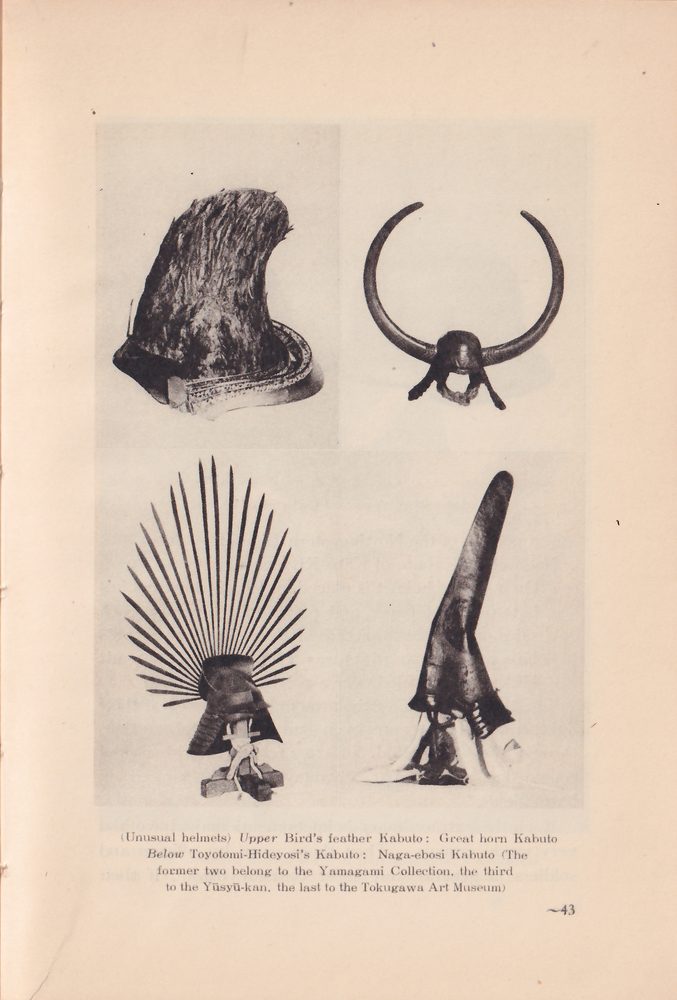
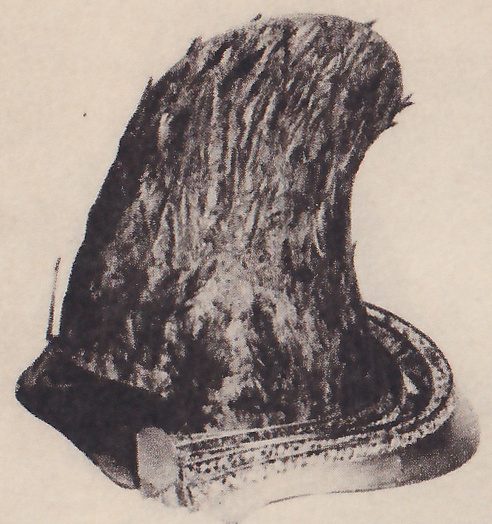
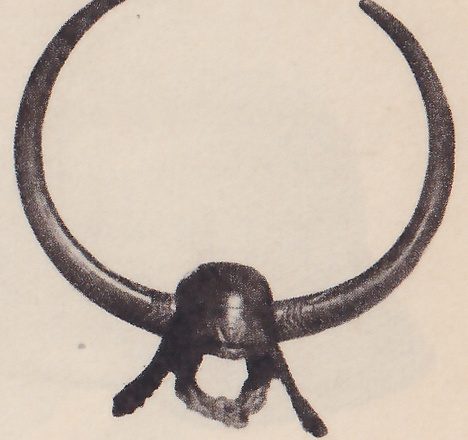
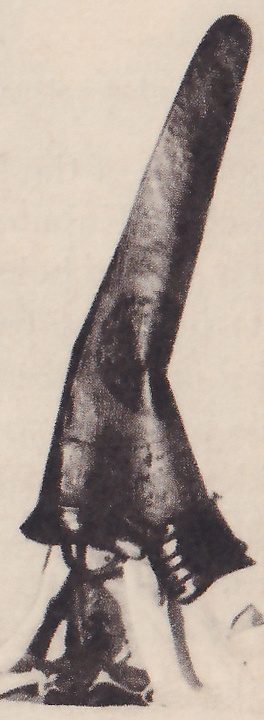
a portion of the North-eastern District.
Naga-ebosi Kabuto of Katō-Kiyomasa:
On a simple helmet is placed an Ebosi (court noble’s hat) made of paper and painted in silver, on both sides of which is a picture of the rising sun. Katō-Kiyomasa (1559–1611) was a retainer of Toyotomi-Hideyosi and ruled over a portion of Kyūsyū.
The second feature of the armour of this period is their lightness, and they are even surprisingly lighter than those of the Edo Period, an era of peace. This was of course due to the great advantage of light armour on battle-fields.
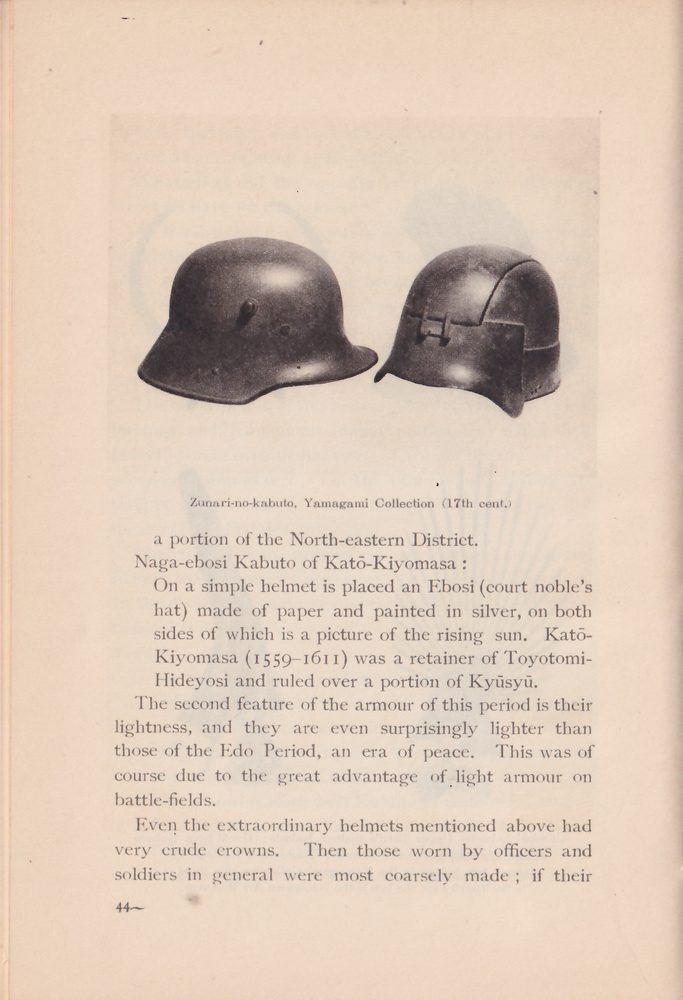
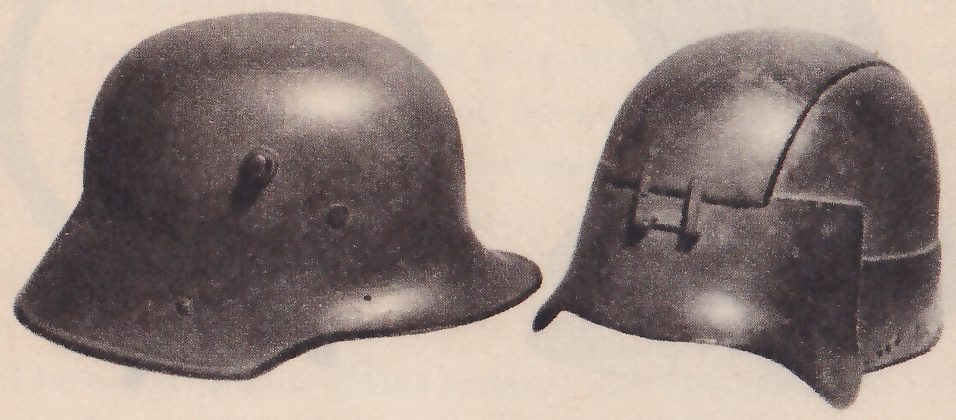
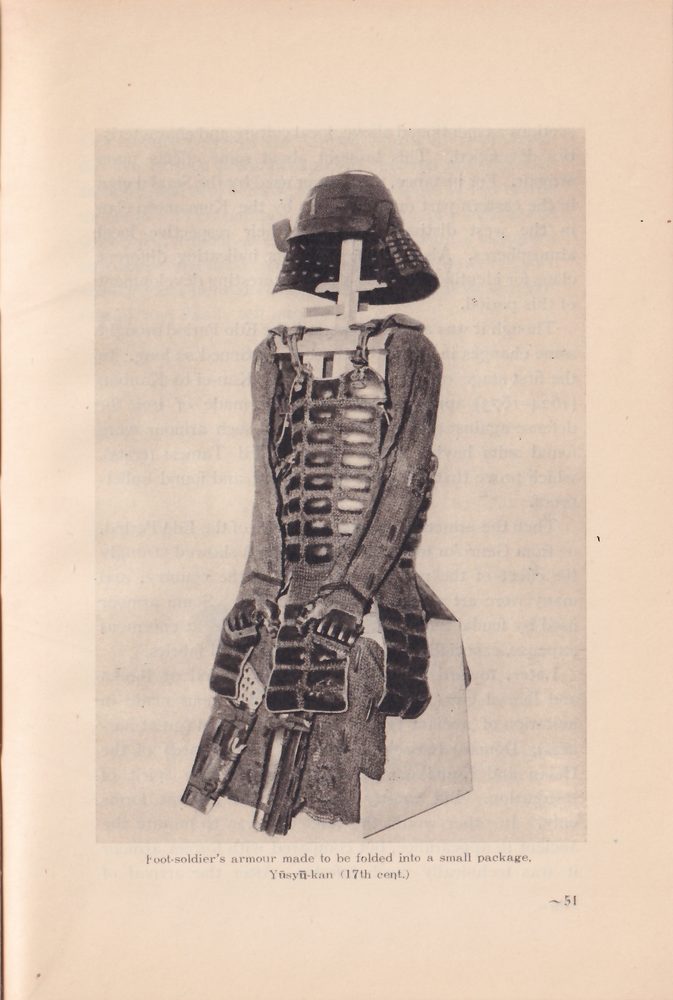
Even the extraordinary helmets mentioned above had very crude crowns. Then those worn by officers and soldiers in general were most coarsely made; if their
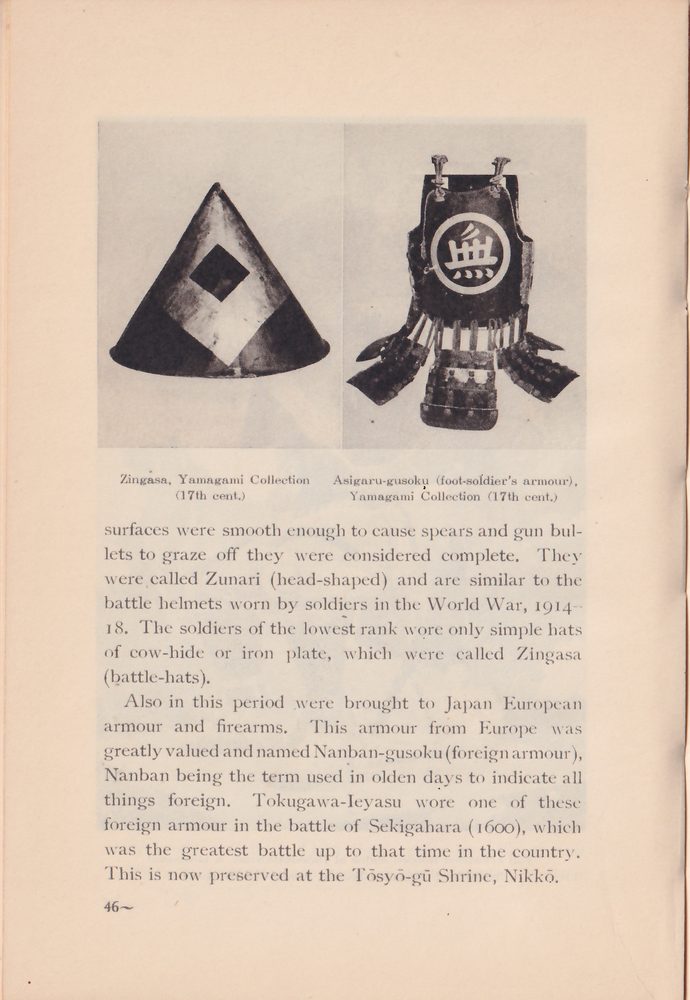
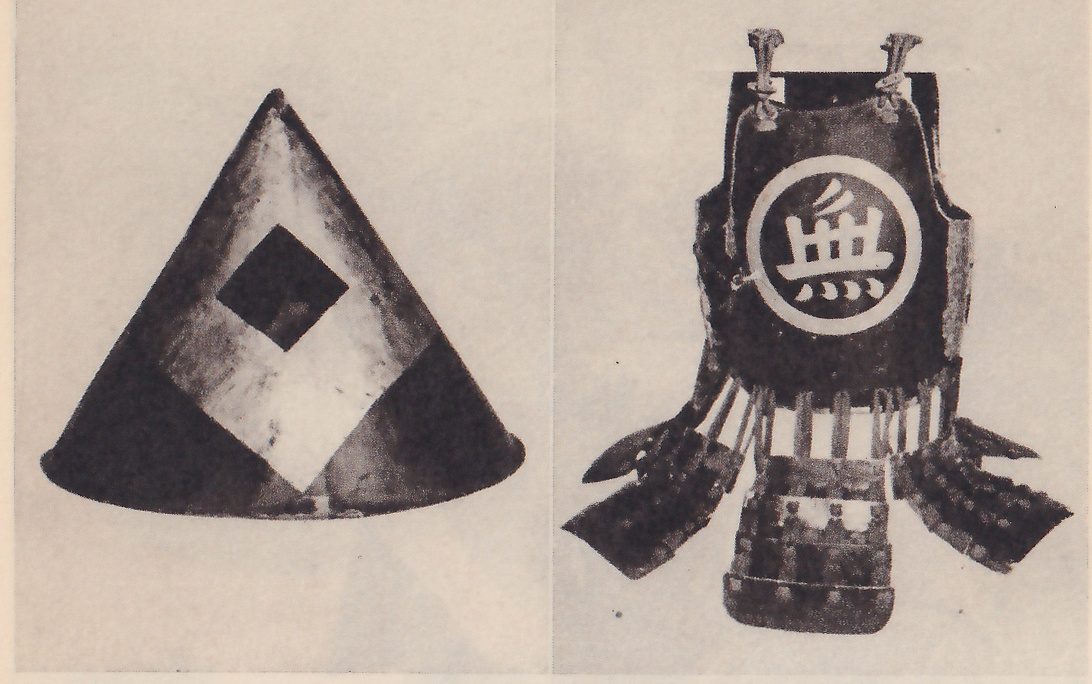
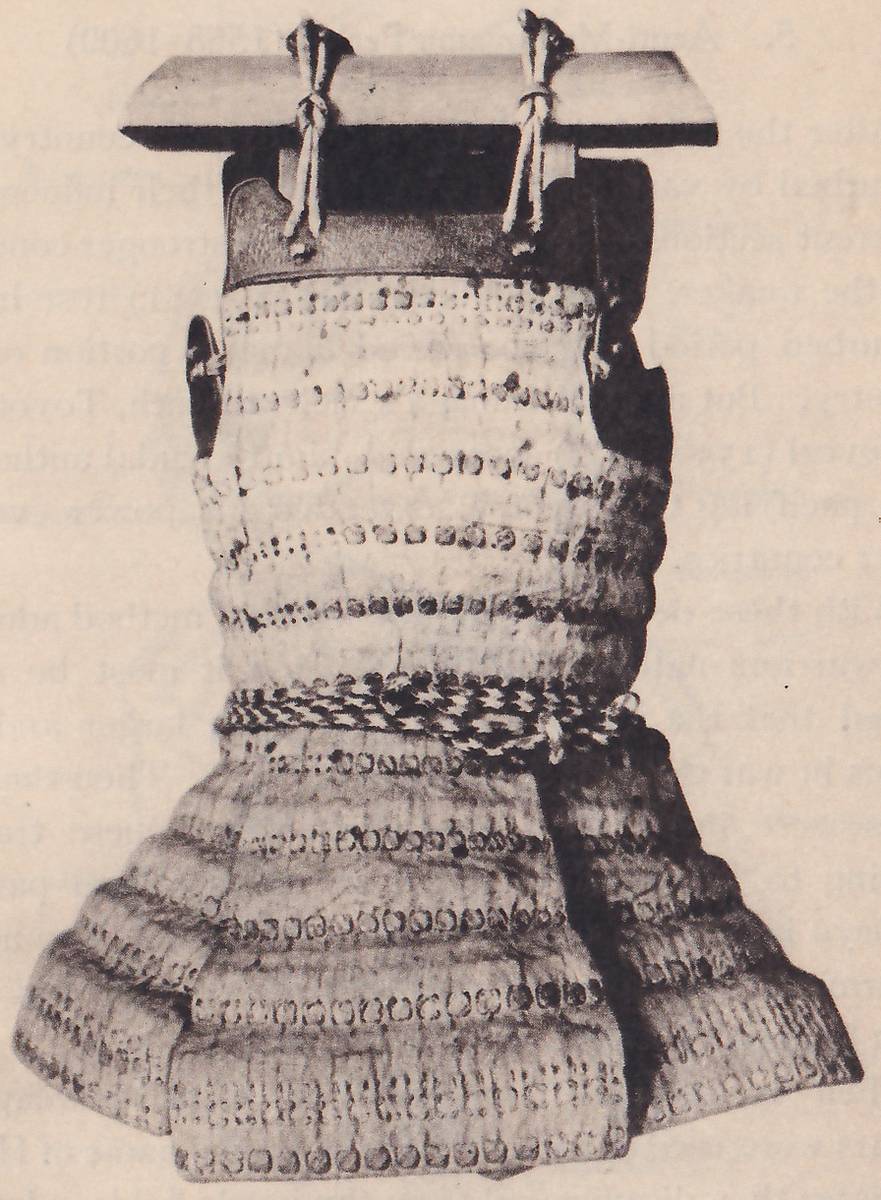
Asigaru-gusoku (foot-soldier’s armour), Yamagami Collection (17th cent.)
surfaces were smooth enough to cause spears and gun bullets to graze off they were considered complete. They were called Zunari (head-shaped) and are similar to the battle helmets worn by soldiers in the World War, 1914–18. The soldiers of the lowest rank wore only simple hats of cow-hide or iron plate, which were called Zingasa (battle-hats).
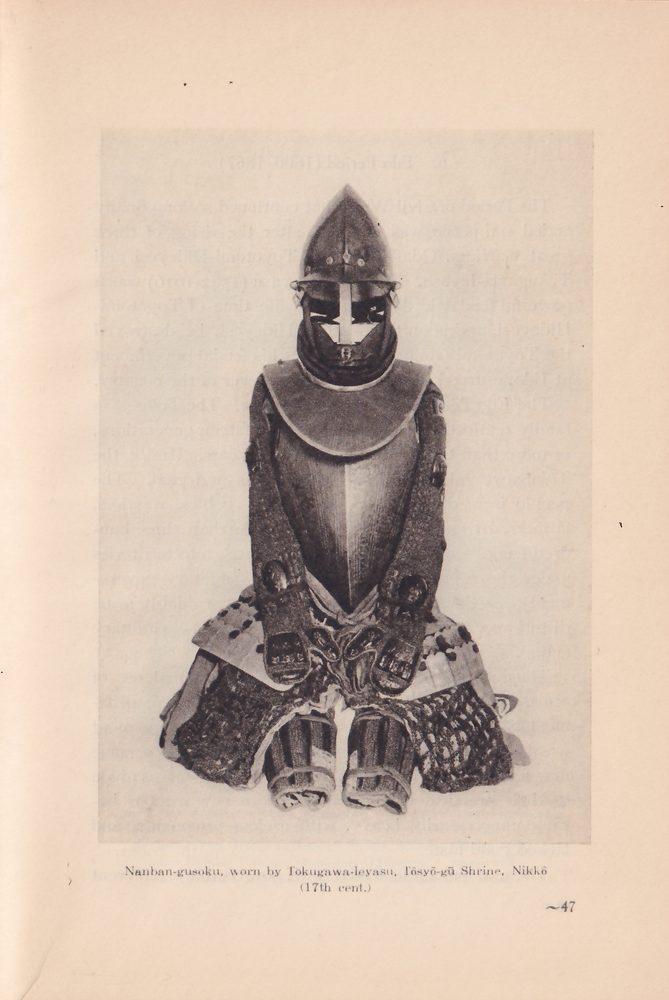
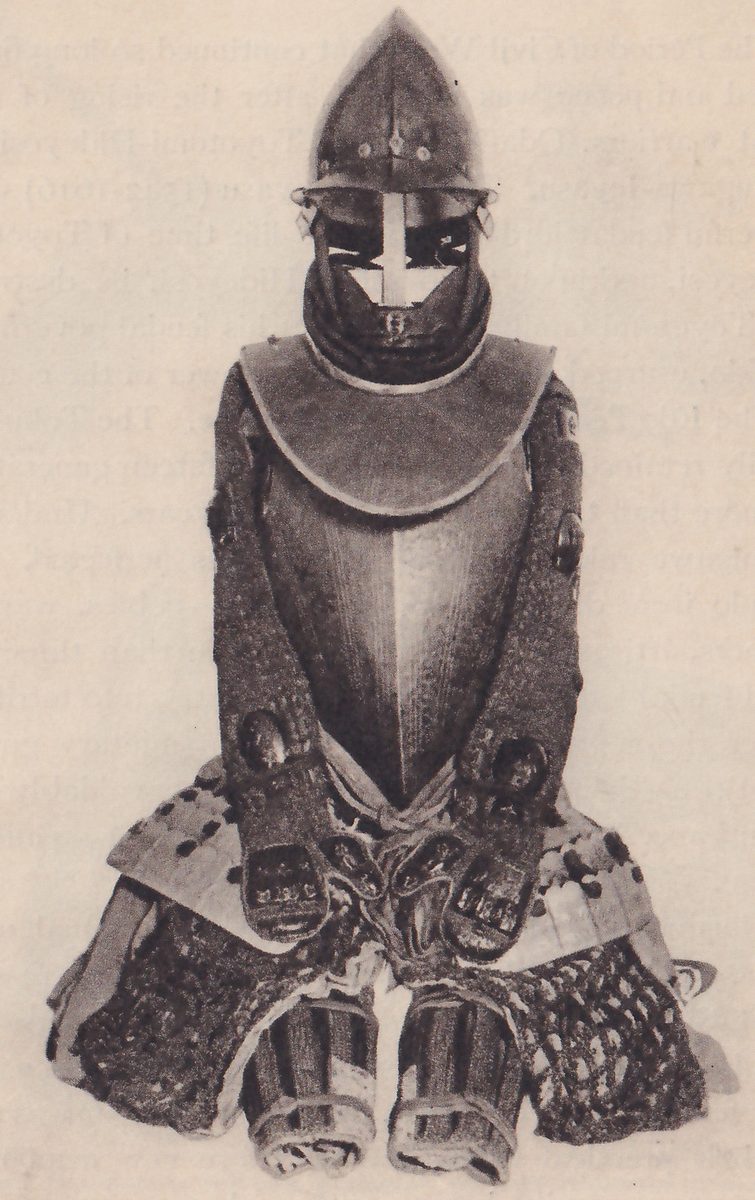
Also in this period were brought to Japan European armour and firearms. This armour from Europe was greatly valued and named Nanban-gusoku (foreign armour), Nanban being the term used in olden days to indicate all things foreign. Tokugawa-Ieyasu wore one of these foreign armour in the battle of Sekigahara (1600), which was the greatest battle up to that time in the country. This is now preserved at the Tōsyō-gū Shrine, Nikkō.
6. Edo Period (1600–1867)
The Period of Civil Wars that continued so long finally ended and peace was restored, after the rising of three great warriors, Oda-Nobunaga, Toyotomi-Hideyosi and Tokugawa-Ieyasu. Tokugawa-Ieyasu (1542–1616) was a powerful feudal lord even in the life time of Toyotomi-Hideyosi, and upon the death of Hideyosi, he destroyed the Toyotomi family and, opening his feudal government at Edo, usurped the administrative power of the country.
The Edo Period is a long era of peace. The Tokugawa family retained its ruling position for fifteen generations, or more than two hundred and sixty years. Under the Tokugawa rule the feudal system was perfected. The people were divided into five classes—nobles, warriors, farmers, artisans and merchants; more than three hundred feudal lords partitioned the country into territories under the central rule of the Bakuhu (military government). Although at first there were unavoidably some disturbances, this period for the most part saw no military action.
Thus no opportunity was there for the actual use of arms, and armour was looked upon merely as an ornament to add dignity to warriors. Newly-made armour was in imitation of former specimens. Even when some new features were designed, little consideration was given to their practical value, and therefore new armour became unnecessarily heavy, with useless ornaments, and lacked good taste.
Then, as numerous feudal lords governed over different
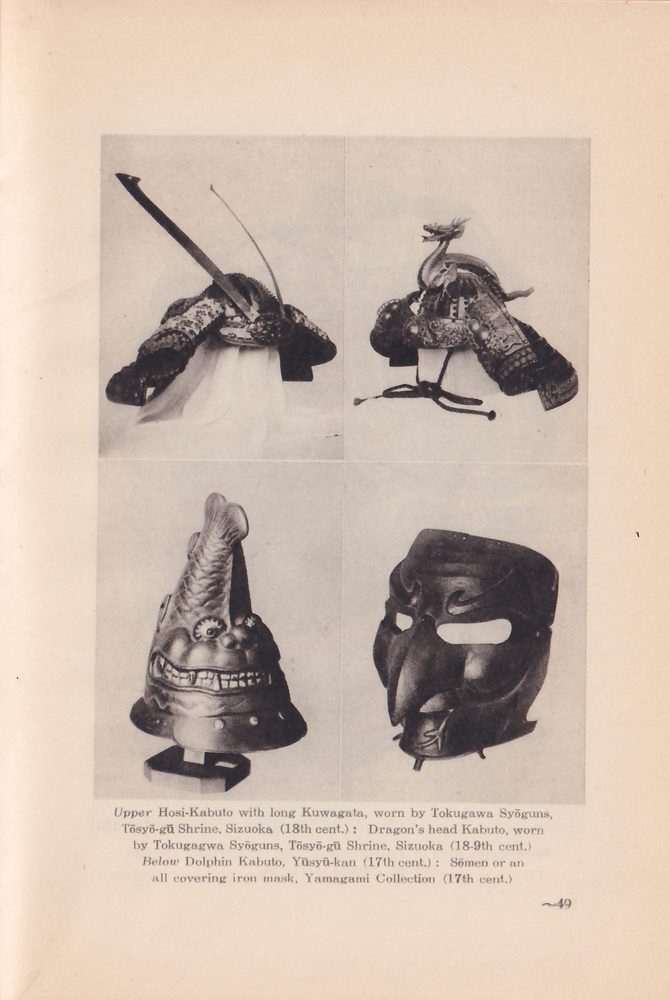
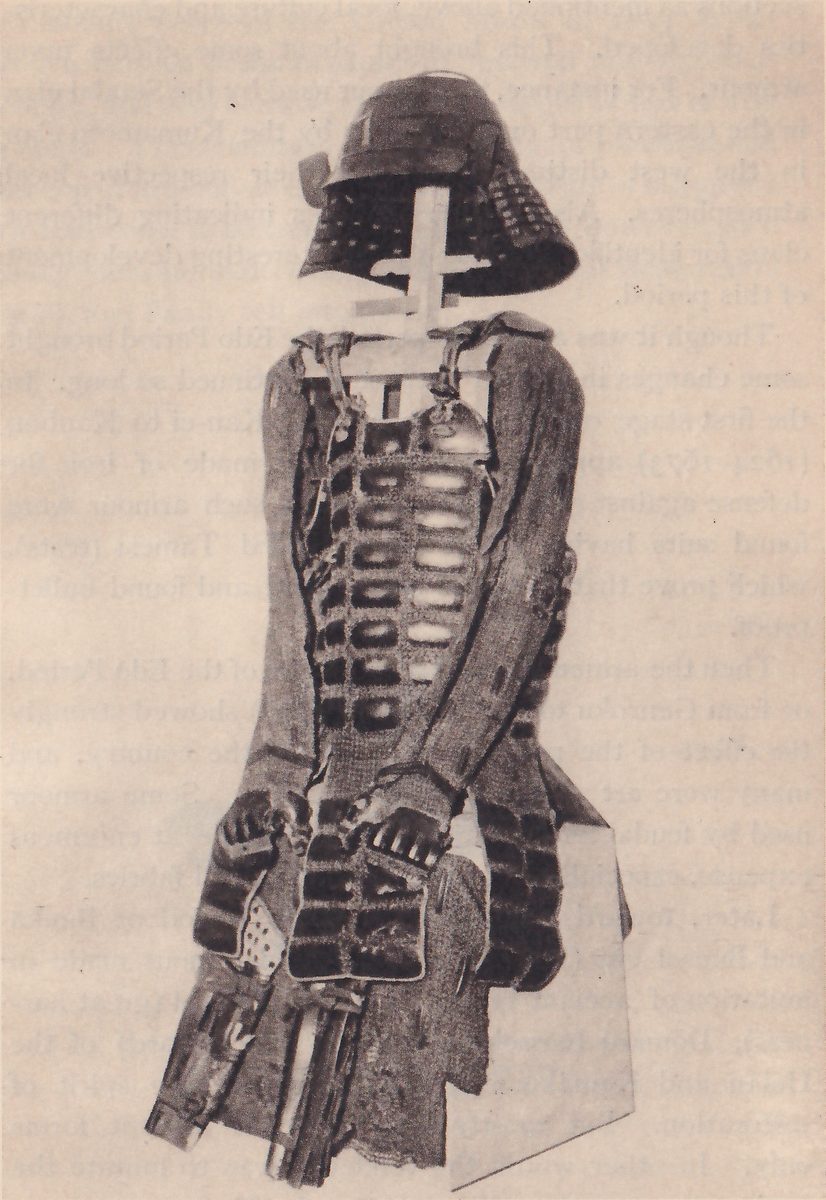
Yūsyū-kan (17th cent.)
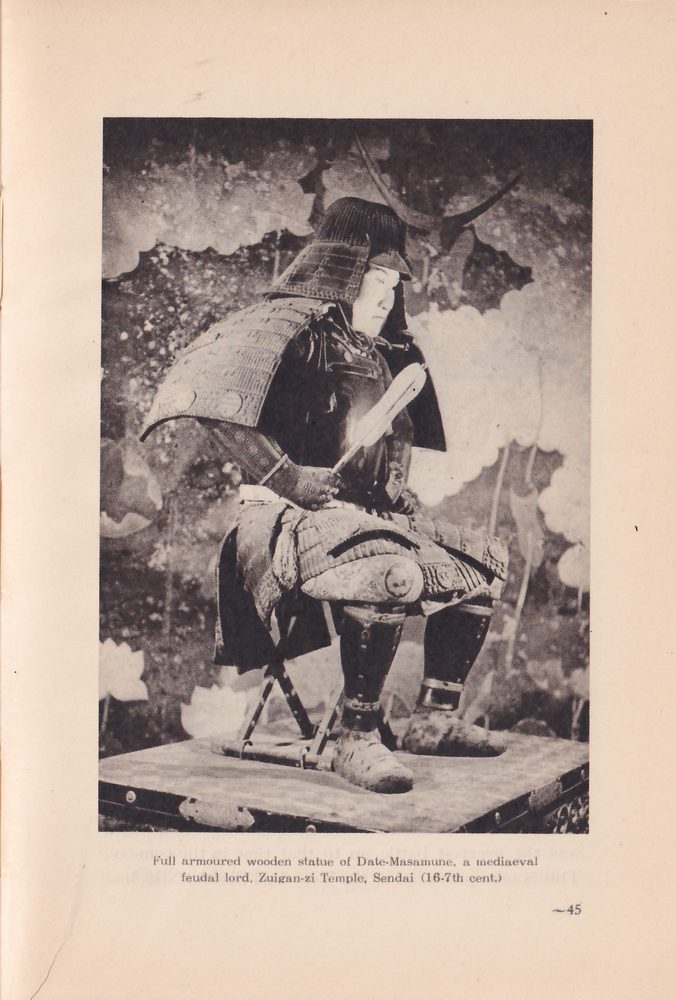
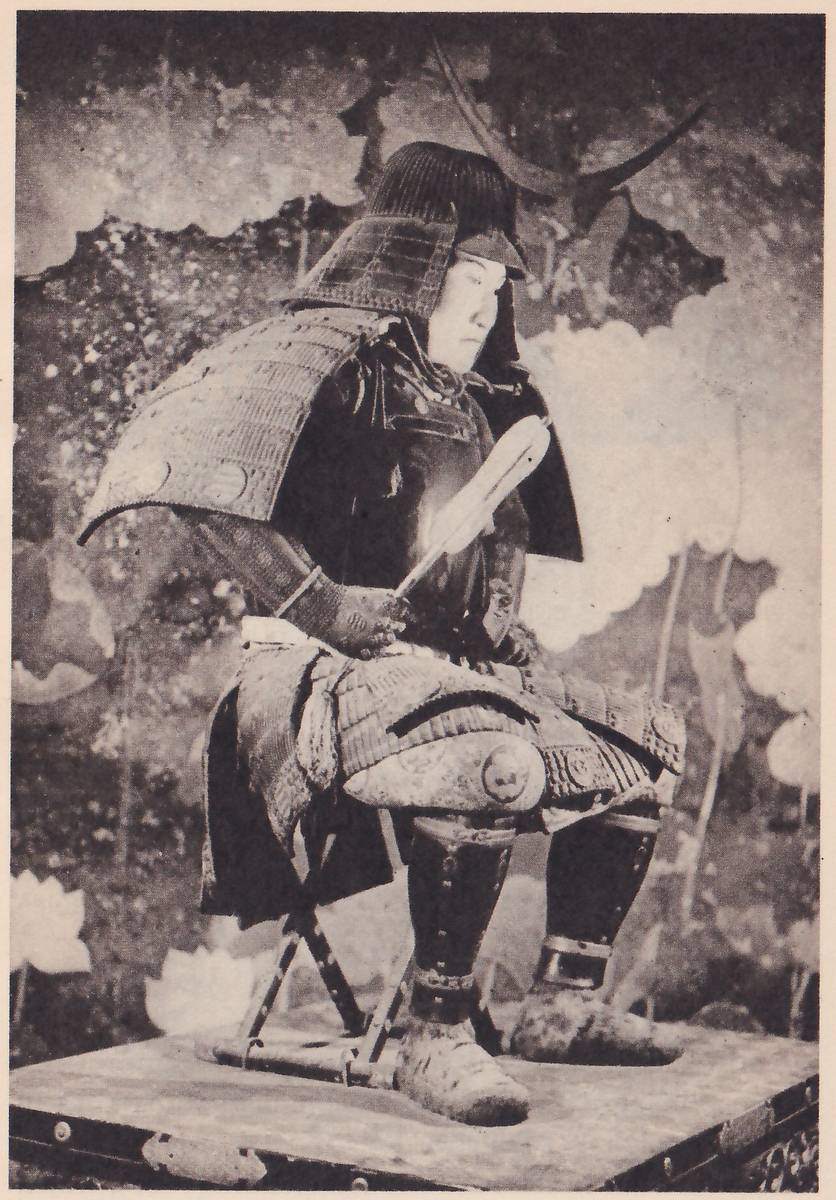
sections as mentioned above, local culture and characteristics developed. This brought about some effects upon armour. For instance, the armour used by the Sendai clan in the eastern part or those worn by the Kumamoto clan in the west distinctly reflected their respective local atmospheres. Also the use of marks indicating different clans for identification was a very interesting development of this period.
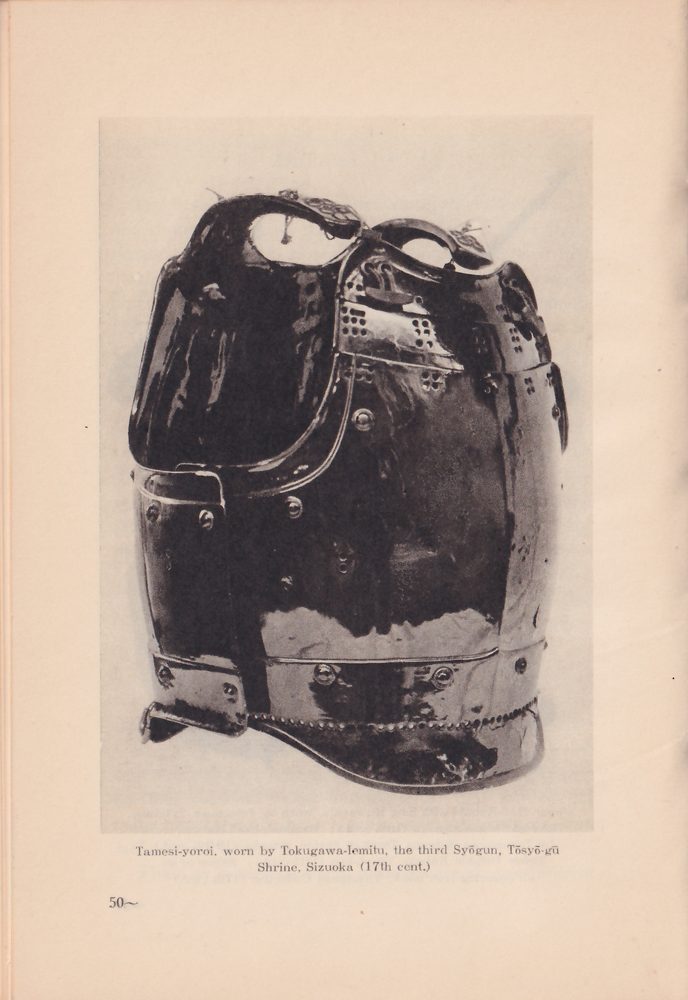
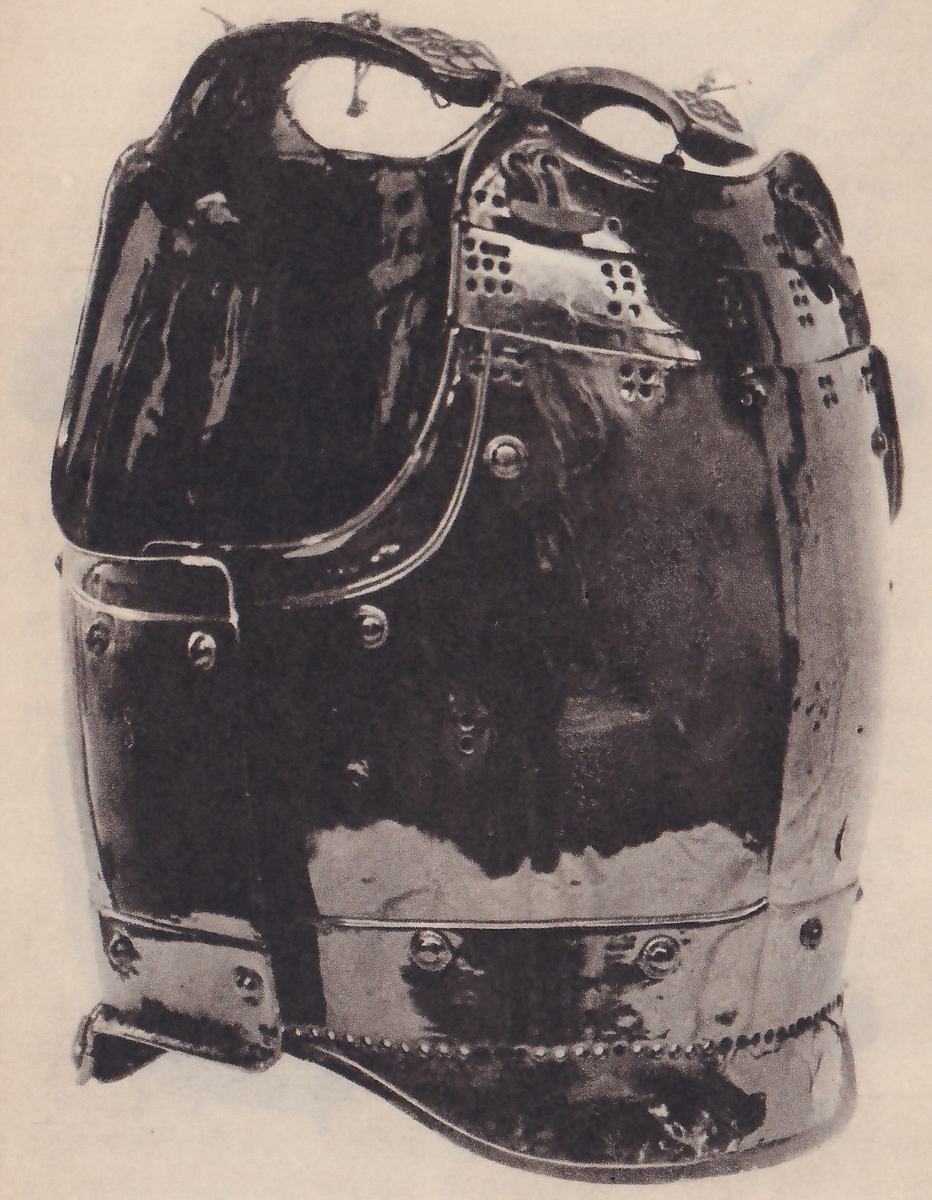
Though it was a peaceful period, the Edo Period brought some changes in armour because it continued so long. In the first stage of the period, or from Kan-ei to Kanbun (1624–1673) appeared armour partly made of iron for defense against gun bullets. Among such armour were found suits having bullet marks called Tamesi (tests), which prove that they had been tested and found bullet-proof.
Then the armour made in the middle of the Edo Period, or from Genroku to Kyōho (1688–1736) showed strongly the effect of the peaceful condition of the country, and many were art objects rather than arms. Some armour used by feudal lords particularly were made at enormous expense, especially in metal-work and dyed fabrics.
Later, toward the end of the Edo Period or Bunka and Bunsei era (1804–1829), appeared armour made in imitation of ancient types, especially Ōyoroi (great harness), Dōmaru (corselet), Haraate (belly-guard) of the Heian and Kamakura Periods, reflecting the spirit of restoration. But mostly they restored ancient forms only. In other words the tendency was to imitate the ancient in appearance, but compared with former armour it was technically much inferior. After the arrival of
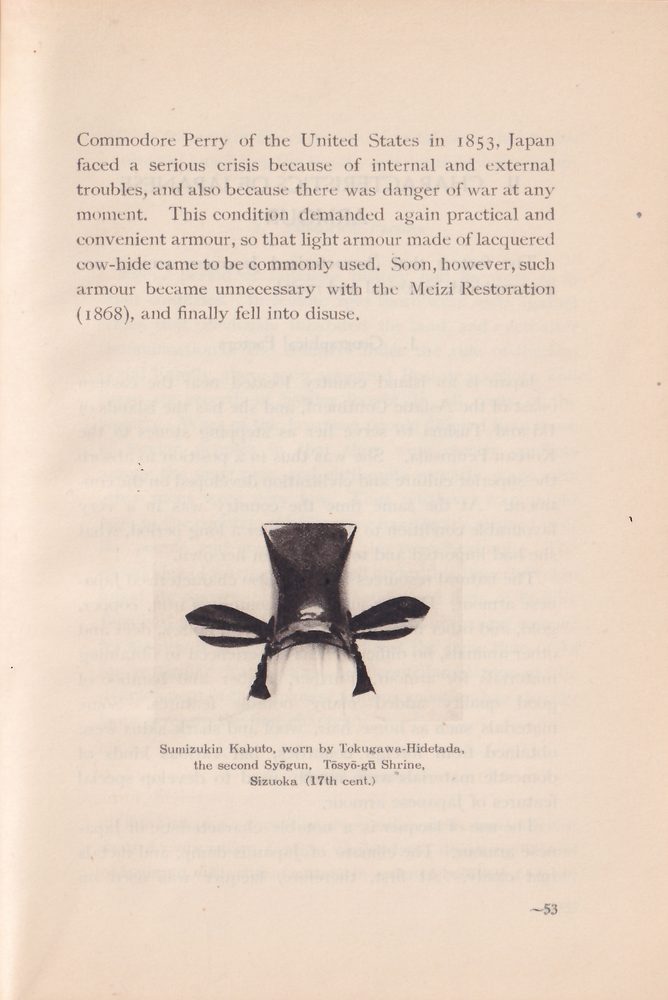
Commodore Perry of the United States in 1853, Japan faced a serious crisis because of internal and external troubles, and also because there was danger of war at any moment. This condition demanded again practical and convenient armour, so that light armour made of lacquered cow-hide came to be commonly used. Soon, however, such armour became unnecessary with the Meizi Restoration (1868), and finally fell into disuse.