

IV. THE KINDS OF TECHNIQUE
The exercises of Jūdō as an art are divided into three different kinds, Nage-waza, Katame-waza and Atewaza.
I. Nage-waza (nage—throwing+waza—art) or “The Art of Throwing” is an art devised to throw the opponent on the ground by breaking his posture or causing him to lose his balance. There are many varieties of this art of throwing, which may be divided roughly into two principal groups, “Tachi-waza” and “Sutemi-waza.”
A) Tachi-waza (tachi—standing+waza—art) or “The Art of Throwing in a Standing Position” is also divided into three large groups; they are “Te-waza” (te—hand+waza—art) or “The Hand Technique,” “Koshi-waza” (koshi—waist+waza—art) or “The Waist Technique” and “Ashi-waza” (ashi—foot+waza—art) or “The Foot Technique.”
B) Sutemi-waza (sutemi—throwing oneself+waza—art) or “The Art of Throwing in a Lying Position” is also divided into two groups; they are “Masutemi-waza” (masutemi—throwing oneself just behind+waza—art) or “The Technique of Throwing while Lying on One’s Back” and “Yokosutemi-waza” (yokosutemi—throwing oneself sideways+waza—art) or “The Technique of Throwing while Lying on One’s Side.”
Every technique uses the hand and the foot, as well as the waist, but the action of the waist is the most important. For the sake of convenience, however, the clas-
sification is made according to the relatively conspicuous actions in the art or technique.
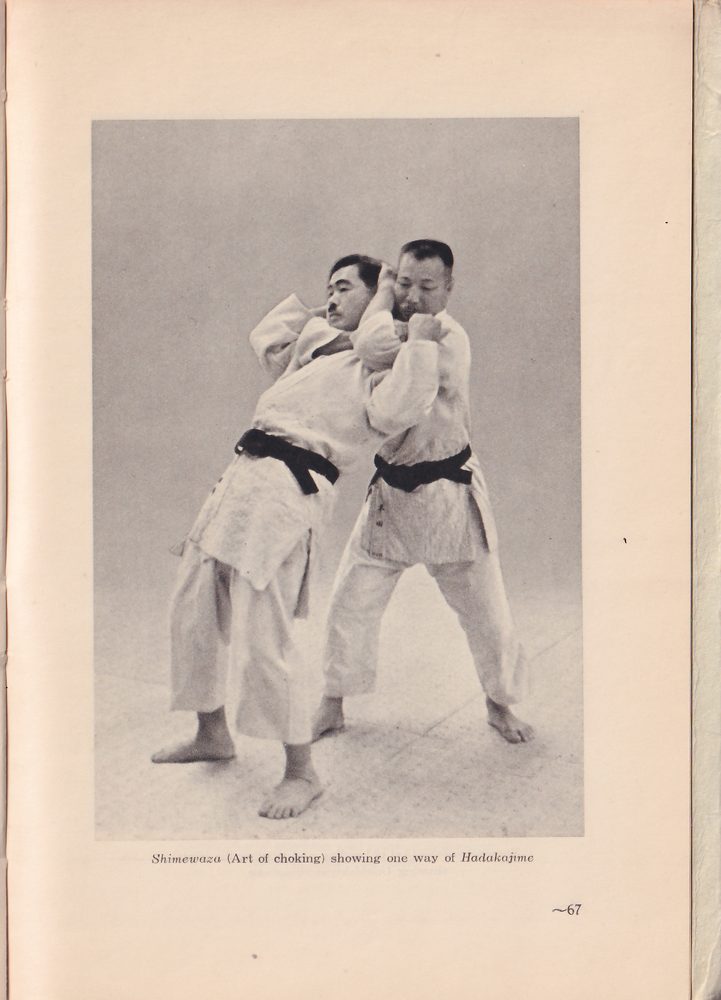
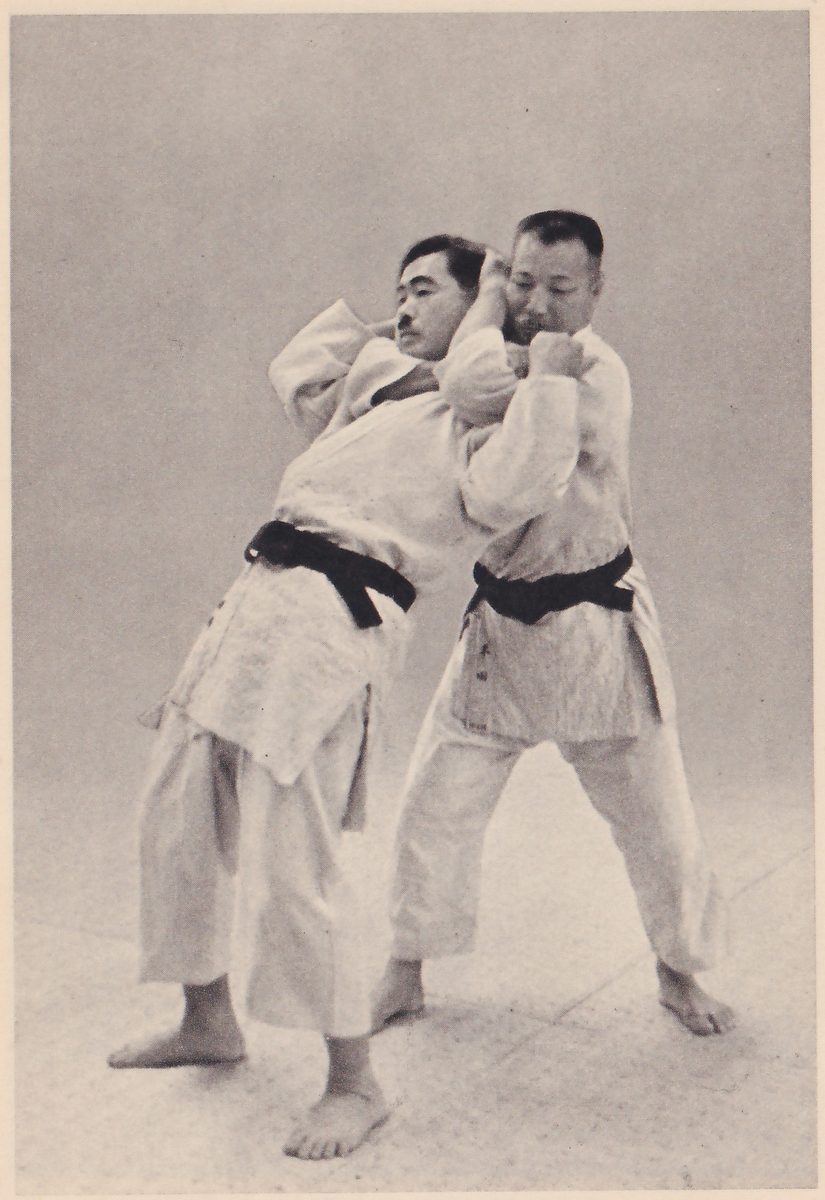
2. Katame-waza (katame—hold down or control+waza—art) or “The Art of Grappling” is an art devised to hold the opponent down and to choke him as well as to bend or twist the joints of his arms or legs, so as to cause him pain, disable him or even to cause his death. It is roughly divided into three groups, namely; “Osae-waza” (osae—hold+waza—art) or “The Art of Holding,” “Shime-waza” (shime—strangle+waza—art) or “The Art of Choking” and “Kwansetsu-waza” (kwansetsu—joint+waza—art) or “The Art of Bending and Twisting the Joints.”
3. Ate-waza (ate—strike, thrust, or kick+waza—art) or “The Art of Attacking the Vital Points” is an art devised to hit, chop, thrust, poke or kick the vital points of the opponent with the fist, the side of the little finger, the finger-tip, the elbow, the knee-cap, the ball of the foot and the heel, to cause him pain, to disable him or even to kill him. It is roughly divided into two principal groups, namely; “Ude-ate” and “Ashi-ate,” each of which is again subdivided into many techniques.
“Ude-ate” (ude—arm+ate—attack) or “The Art of Attacking the Vital Points with the Arm” includes any action which attacks the vital points of the opponent with any part of the arm; and “Ashi-ate” (ashi—foot+ate—kick) or “The Art of Attacking the Vital Points with the Foot” includes any action which kicks the vital points of the opponent with any part of the foot.
The foregoing statements may be summed up in the following table:
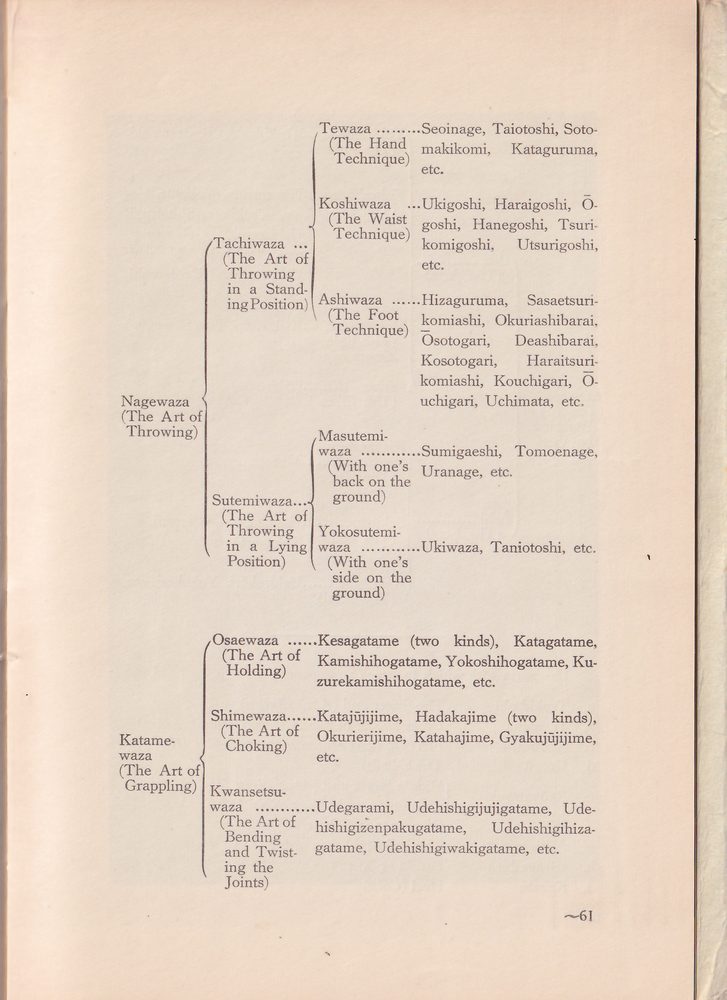
- Nagewaza (The Art of Throwing)
- Tachiwaza (The Art of Throwing in a Standing Position)
- Tewaza (The Hand Technique): Seoinage, Taiotoshi, Sotomakikomi, Kataguruma, etc.
- Koshiwaza (The Waist Technique): Ukigoshi, Haraigoshi, Ōgoshi, Hanegoshi, Tsurikomigoshi, Utsurigoshi, etc.
- Ashiwaza (The Foot Technique): Hizaguruma, Sasaetsurikomiashi, Okuriashibarai, Ōsotogari, Deashibarai, Kosotogari, Haraitsurikomiashi, Kouchigari, Ōuchigari, Uchimata, etc.
- Sutemiwaza (The Art of Throwing in a Lying Position)
- Masutemiwaza (With one’s back on the ground): Sumigaeshi, Tomoenage, Uranage, etc.
- Yokosutemiwaza (With one’s side on the ground): Ukiwaza, Taniotoshi, etc.
- Tachiwaza (The Art of Throwing in a Standing Position)
- Katamewaza (The Art of Grappling)
- Osaewaza (The Art of Holding): Kesagatame (two kinds), Katagatame, Kamishihogatame, Yokoshihogatame, Kuzurekamishihogatame, etc.
- Shimewaza (The Art of Choking): Katajūjijime, Hadakajime (two kinds), Okurierijime, Katahajime, Gyakujūjijime, etc.
- Kwansetsuwaza (The Art of Bending and Twisting the Joints): Udegarami, Udehishigijujigatame, Udehishigizenpakugatame, Udehishigihizagatame, Udehishigiwakigatame, etc.
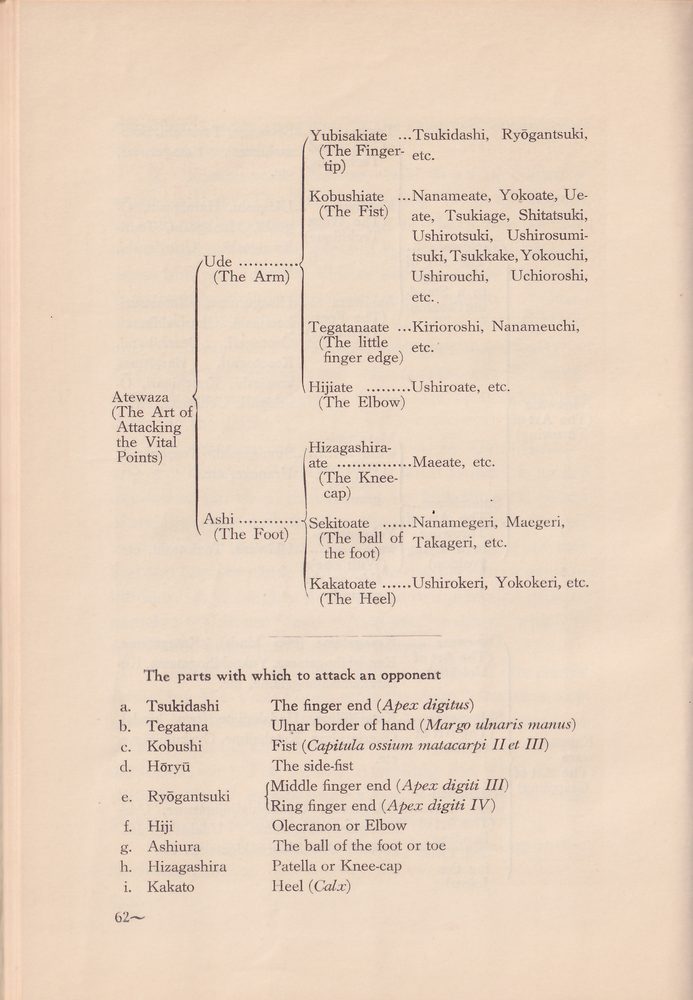
- Atewaza (The Art of Attacking the Vital Points)
- Ude (The Arm)
- Yubisakiate (The Finger-tip): Tsukidashi, Ryōgantsuki, etc.
- Kobushiate (The Fist): Nanameate, Yokoate, Ueate, Tsukiage, Shitatsuki, Ushirotsuki, Ushirosumitsuki, Tsukkake, Yokouchi, Ushirouchi, Uchioroshi, etc.
- Tegatanaate (The little finger edge): Kirioroshi, Nanameuchi, etc.
- Hijiate (The Elbow): Ushiroate, etc.
- Ashi (The Foot)
- Hizagashirate (The Knee-cap): Maeate, etc.
- Sekitoate (The ball of the foot): Nanamegeri, Maegeri, Takageri, etc.
- Kakatoate (The Heel): Ushirokeri, Yokokeri, etc.
- Ude (The Arm)
| a. | Tsukidashi | The finger end (Apex digitiPrinted: digitus) |
|---|---|---|
| b. | Tegatana | Ulnar border of hand (Margo ulnaris manus) |
| c. | Kobushi | Fist (Capitula ossium metacarpiPrinted: matacarpi II et III) |
| d. | Hōryū | The side-fist |
| e. | Ryōgantsuki | Middle finger end (Apex digiti III) Ring finger end (Apex digiti IV) |
| f. | Hiji | Olecranon or Elbow |
| g. | Ashiura | The ball of the foot or toe |
| h. | Hizagashira | Patella or Knee-cap |
| i. | Kakato | Heel (Calx) |
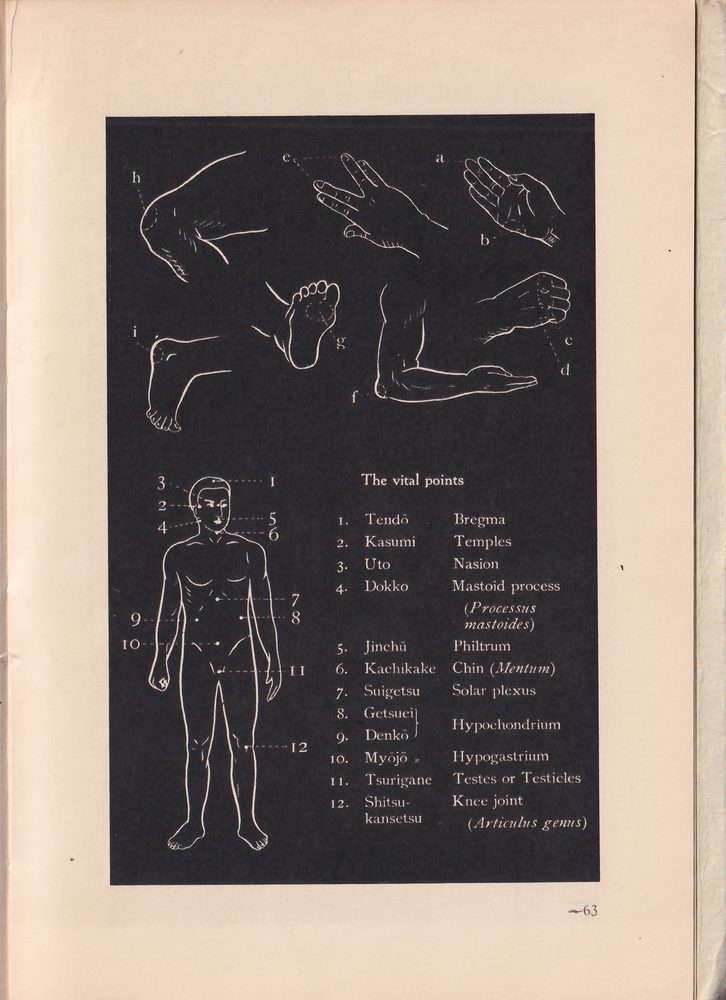
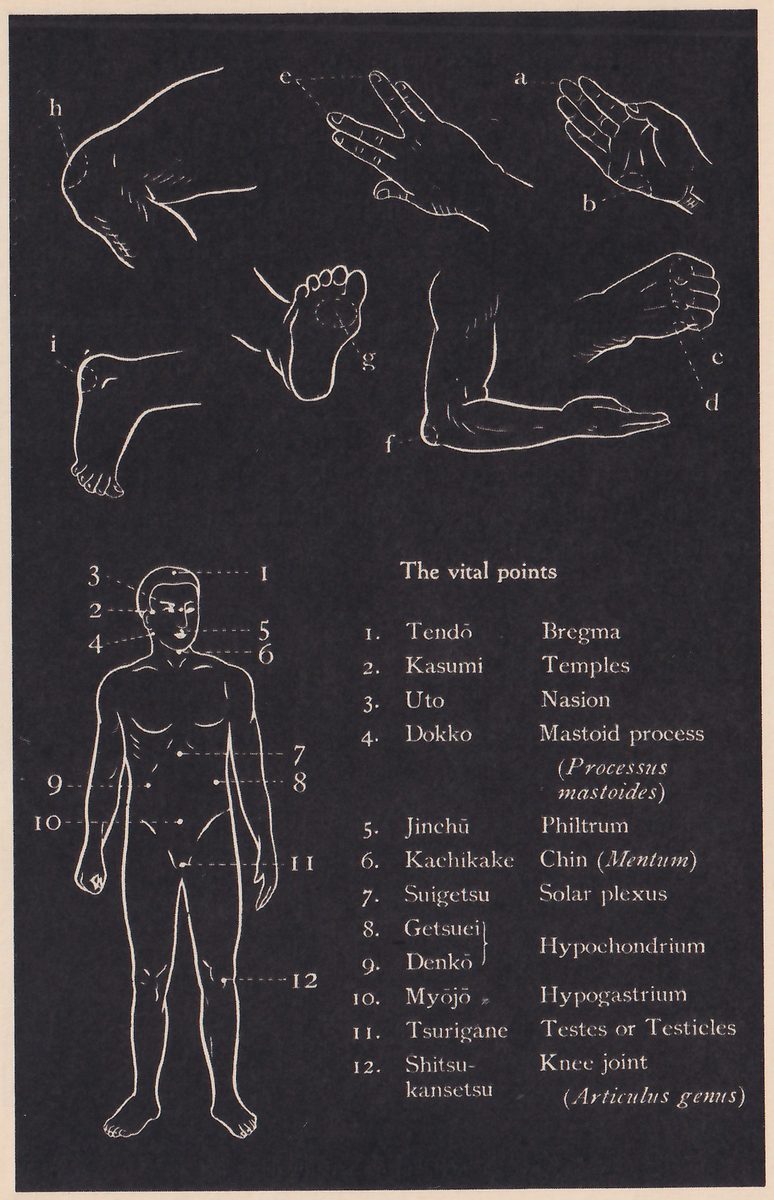
| 1. | Tendō | Bregma |
|---|---|---|
| 2. | Kasumi | Temples |
| 3. | Uto | Nasion |
| 4. | Dokko | Mastoid process (Processus mastoides) |
| 5. | Jinchū | Philtrum |
| 6. | Kachikake | Chin (Mentum) |
| 7. | Suigetsu | Solar plexus |
| 8. | Getsuei | Hypochondrium |
| 9. | Denkō | |
| 10. | Myōjō | Hypogastrium |
| 11. | Tsurigane | Testes or Testicles |
| 12. | Shitsu-kansetsu | Knee joint (Articulus genus) |
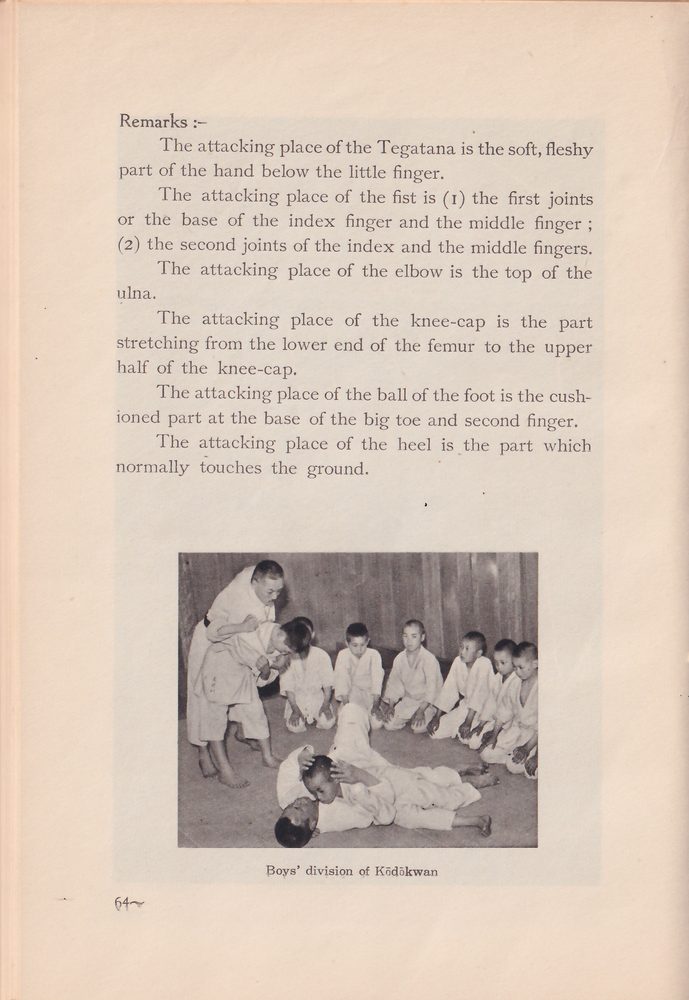
Remarks:—
The attacking place of the Tegatana is the soft, fleshy part of the hand below the little finger.
The attacking place of the fist is (1) the first joints or the base of the index finger and the middle finger; (2) the second joints of the index and the middle fingers.
The attacking place of the elbow is the top of the ulna.
The attacking place of the knee-cap is the part stretching from the lower end of the femur to the upper half of the knee-cap.
The attacking place of the ball of the foot is the cushioned part at the base of the big toe and second finger.
The attacking place of the heel is the part which normally touches the ground.
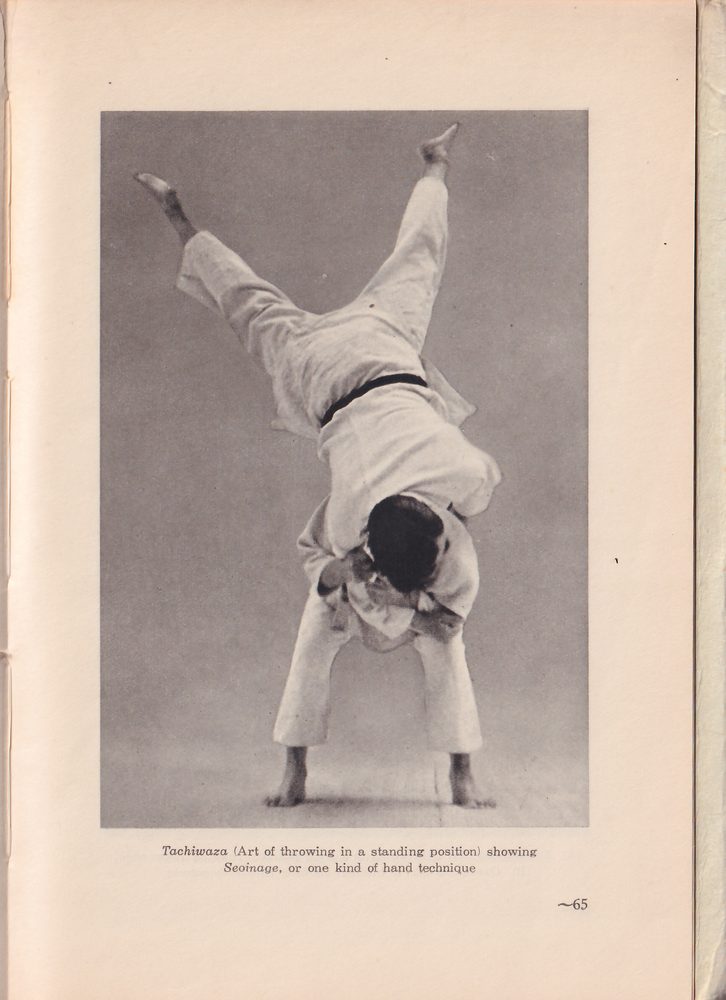
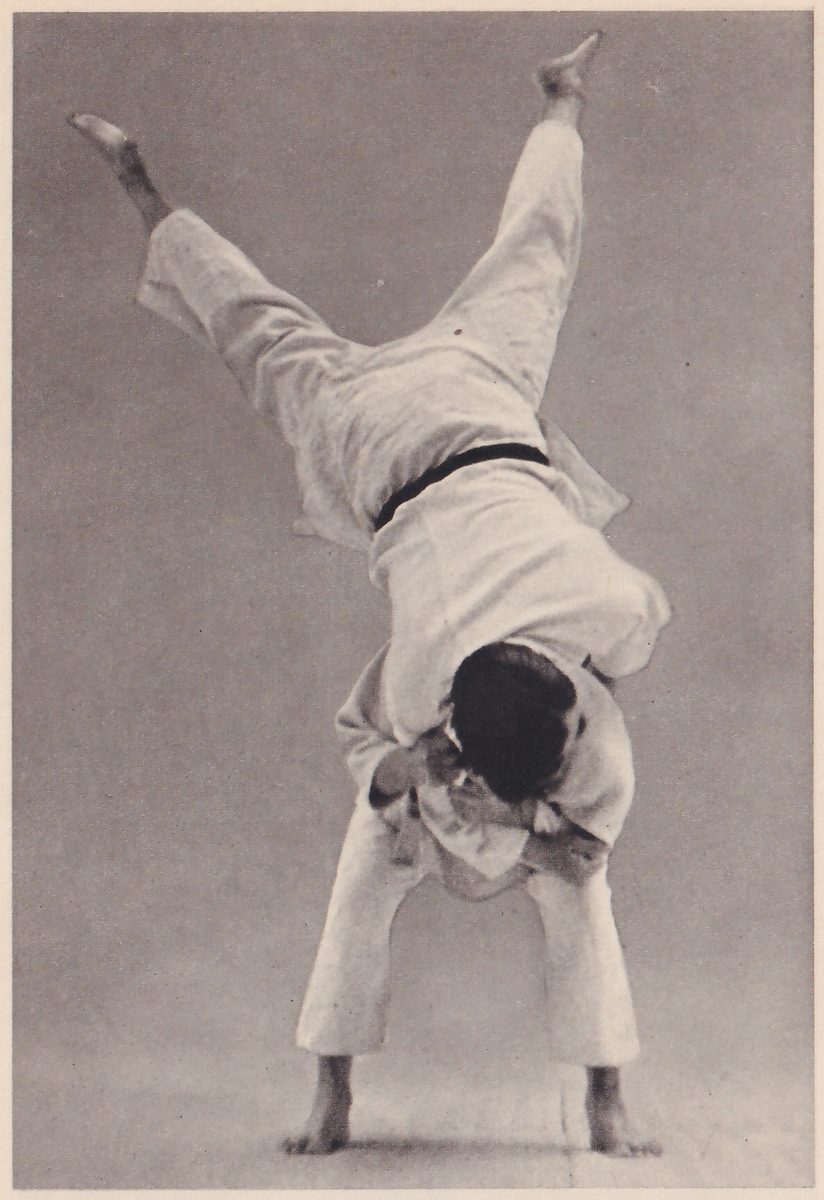
Seoinage, or one kind of hand technique
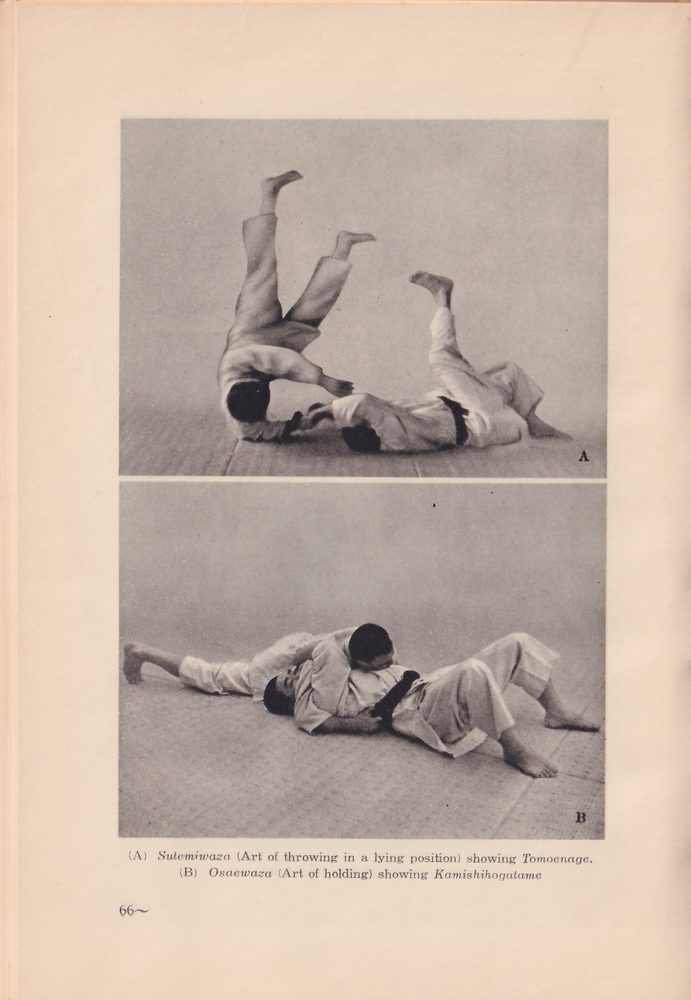
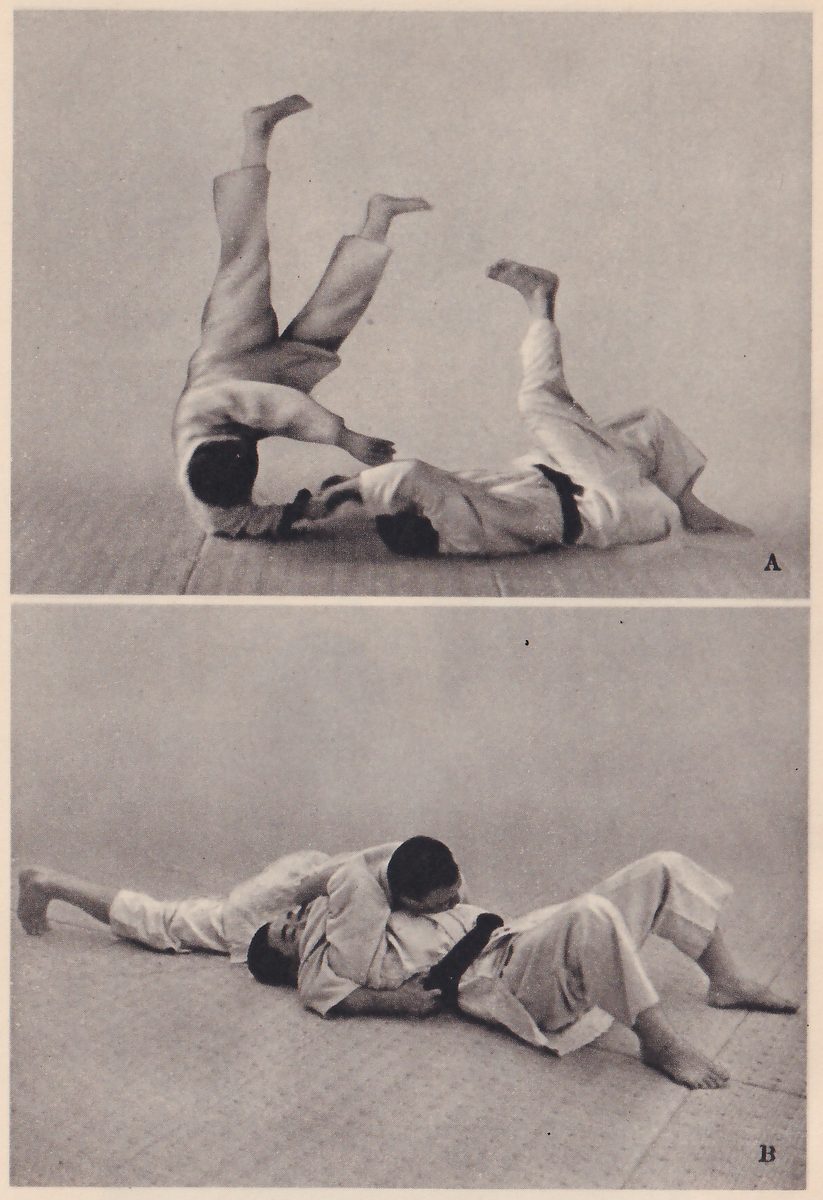
(B) Osaewaza (Art of holding) showing Kamishihogatame
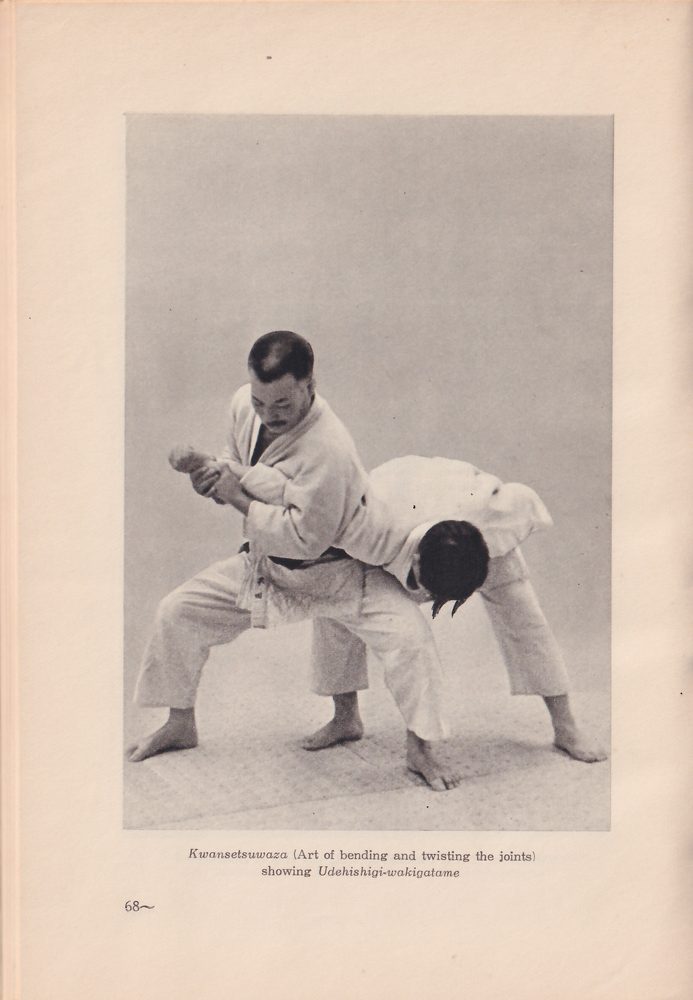
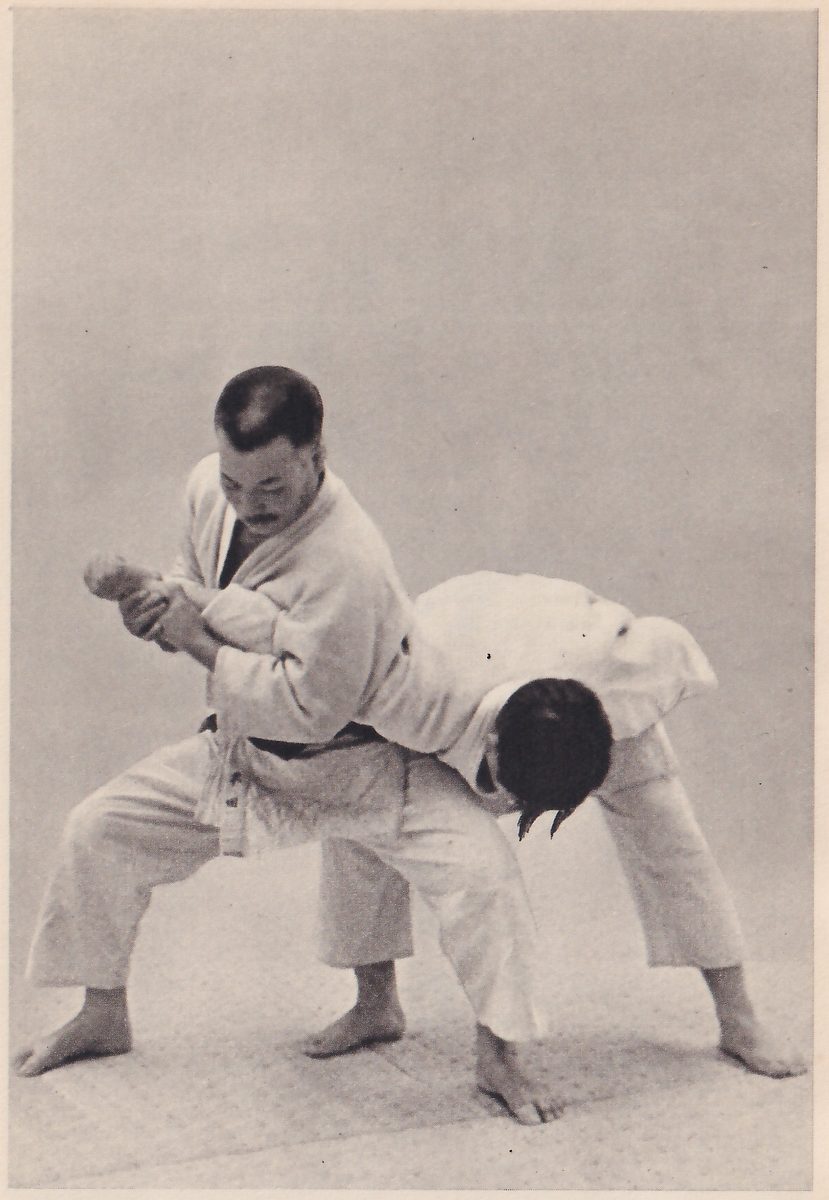
showing Udehishigi-wakigatame
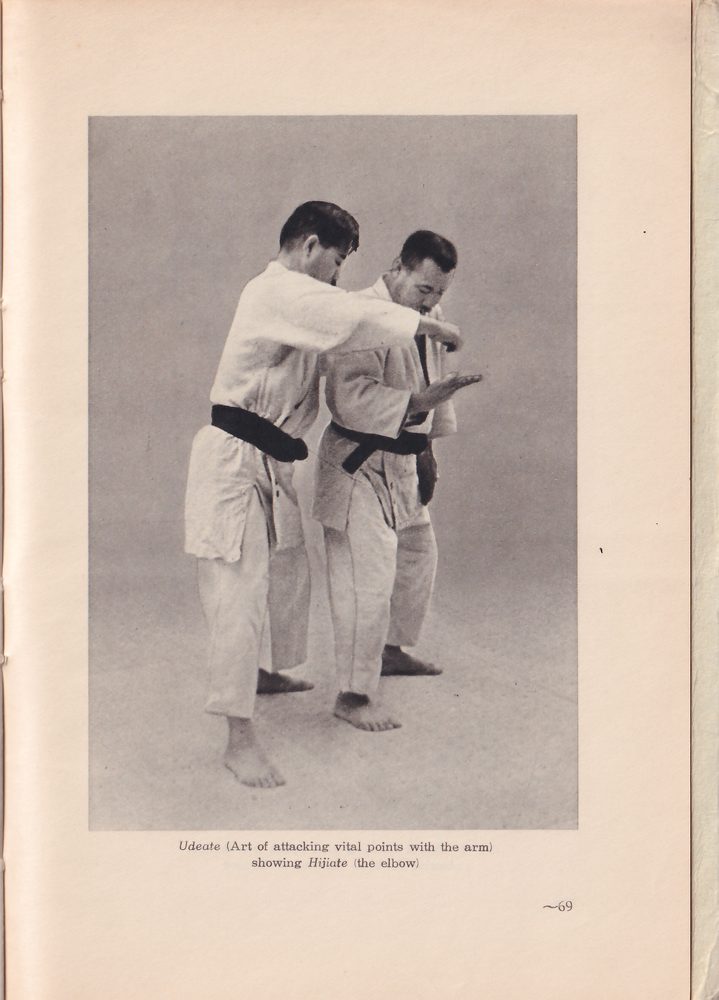
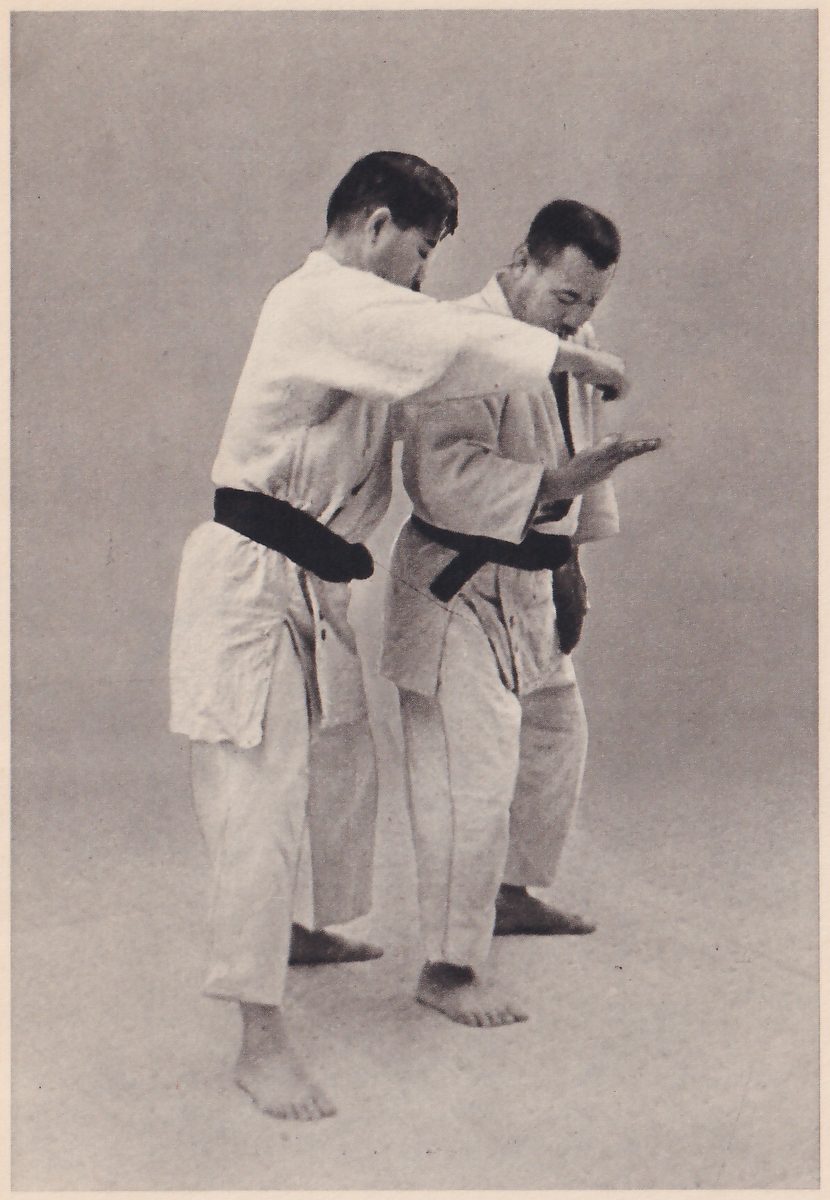
showing Hijiate (the elbow)
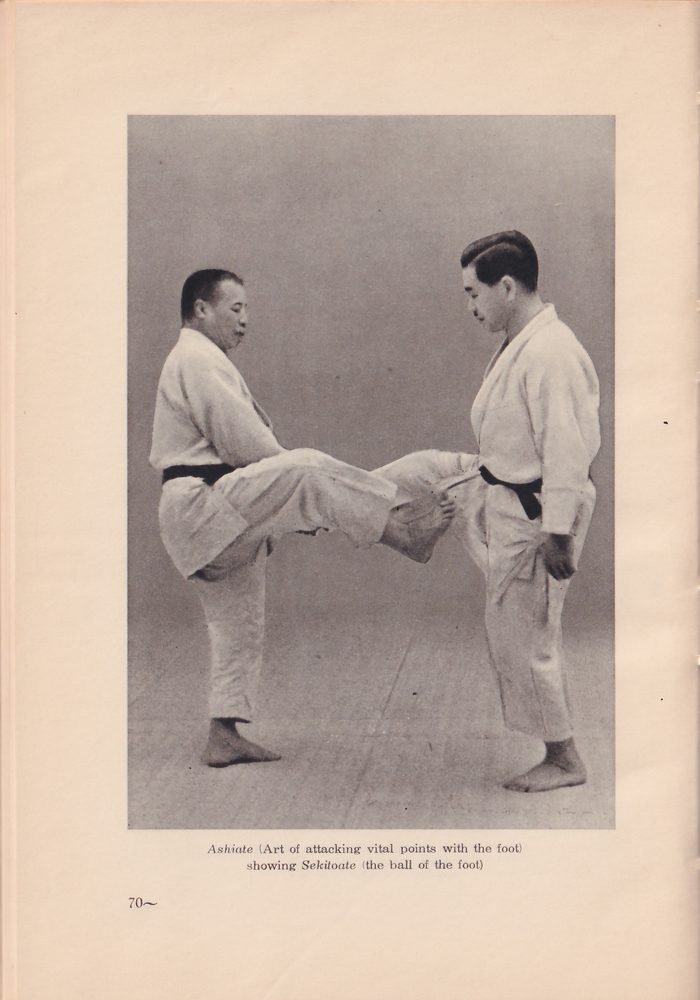
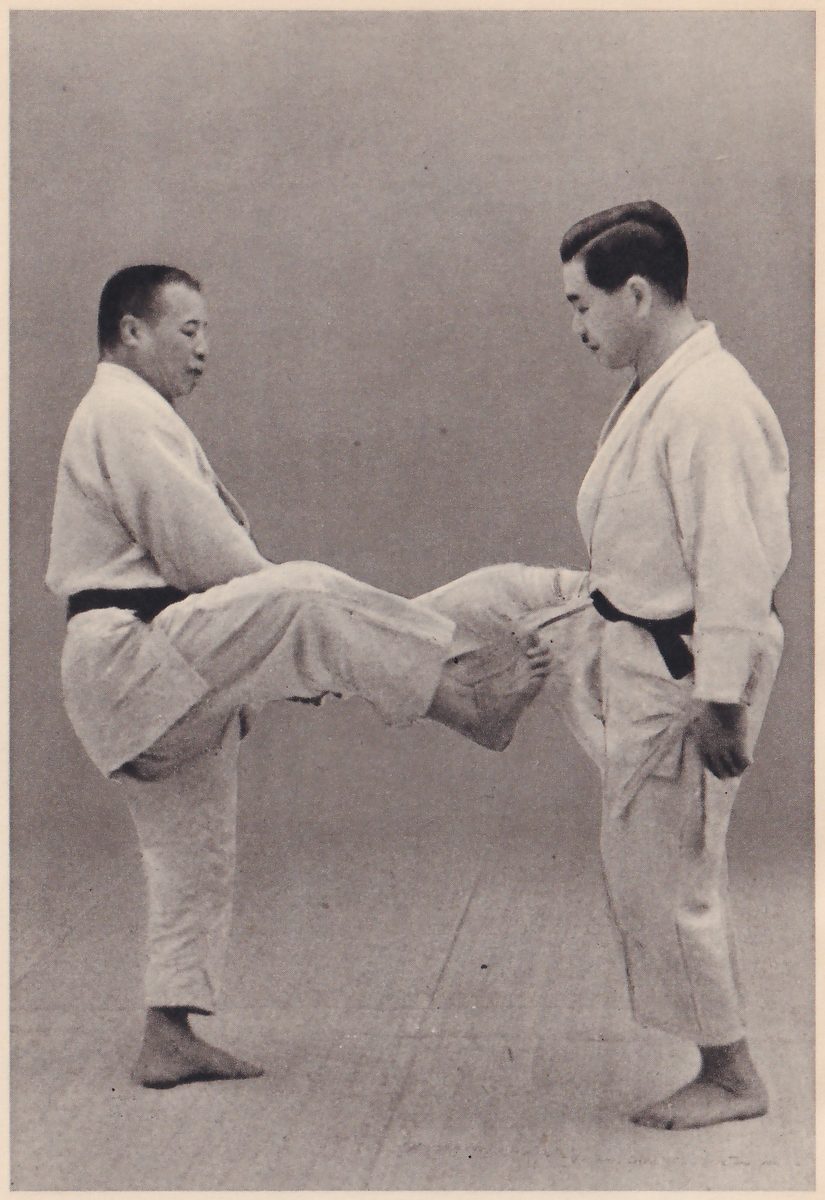
showing Sekitoate (the ball of the foot)