IX. MOVING PAINTINGS
Monsieur B’s Views on Present-Day Styles
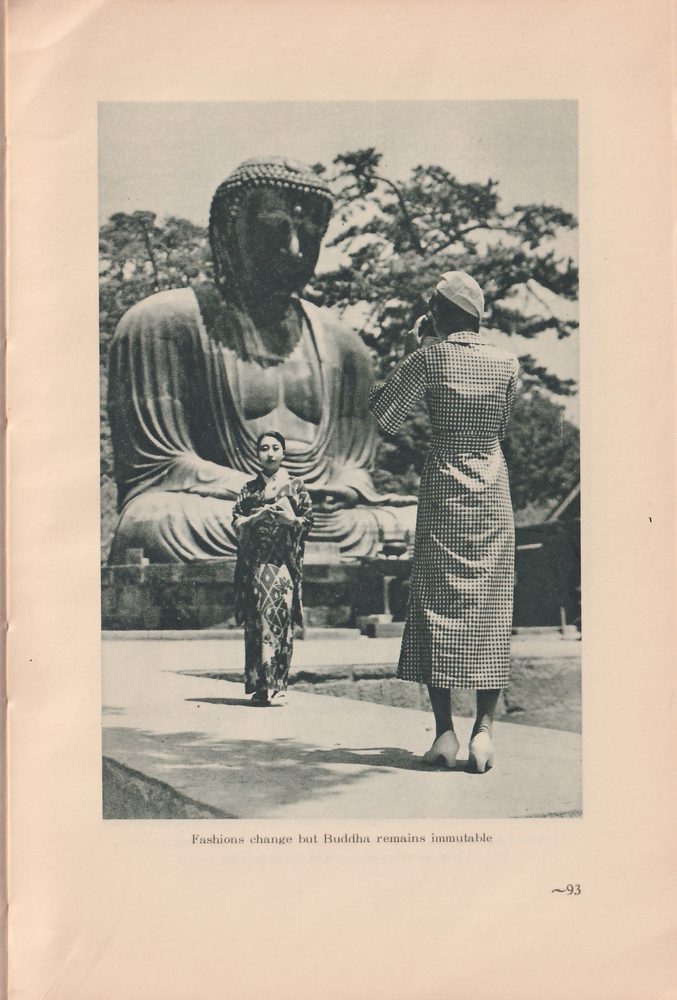
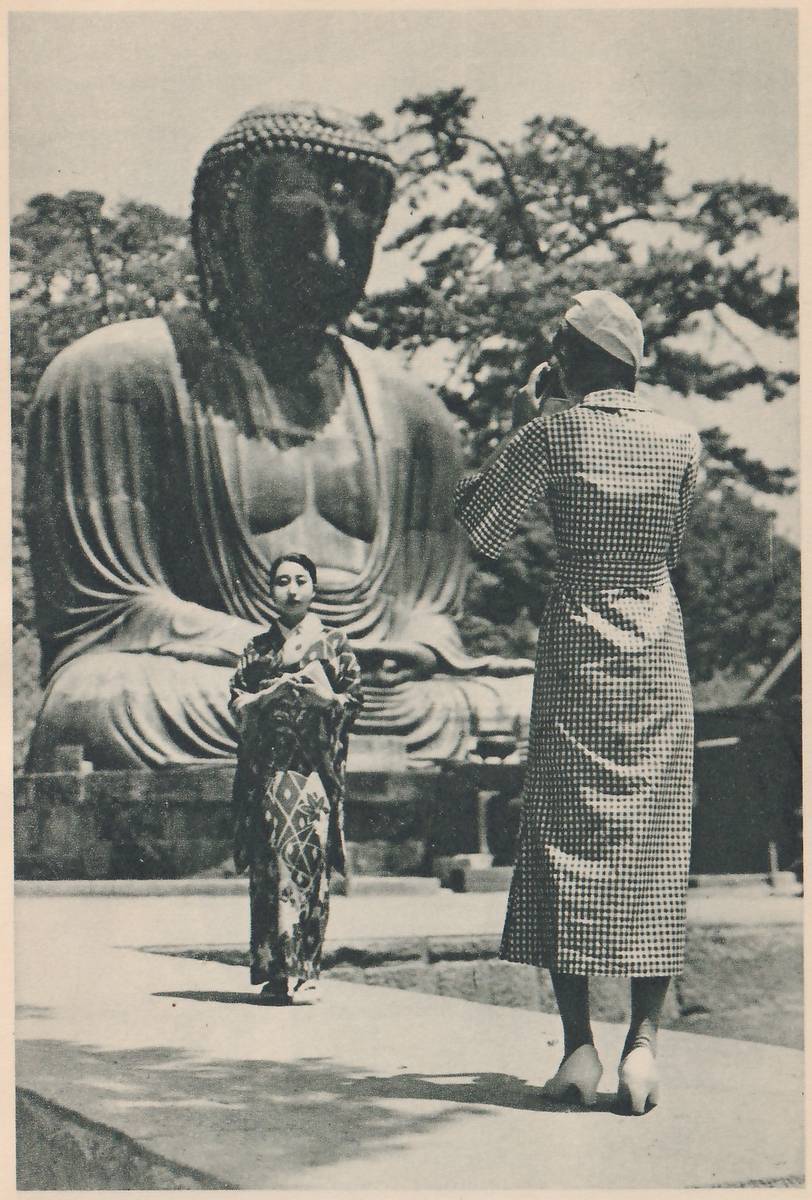
“I have seen the kimono used on all sorts of occasions, at wedding feasts, in concert halls, in the foyer of the Kabukiza, on the sidewalks of the Ginza, while shopping and in department stores, and I have discovered that there are in general three trends in the fashions in Japanese kimono today.
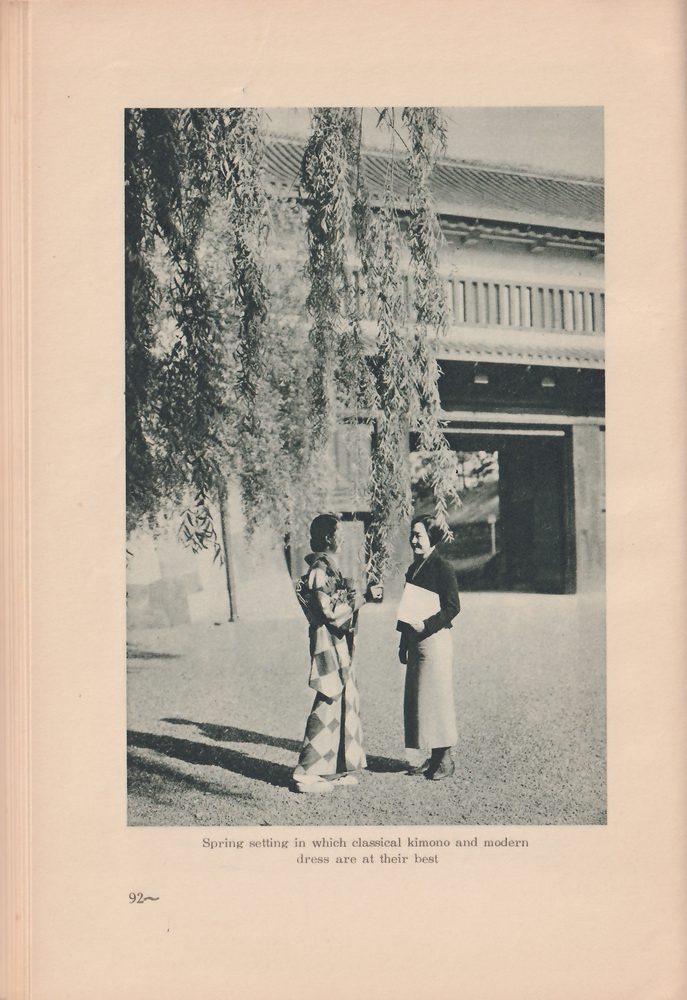
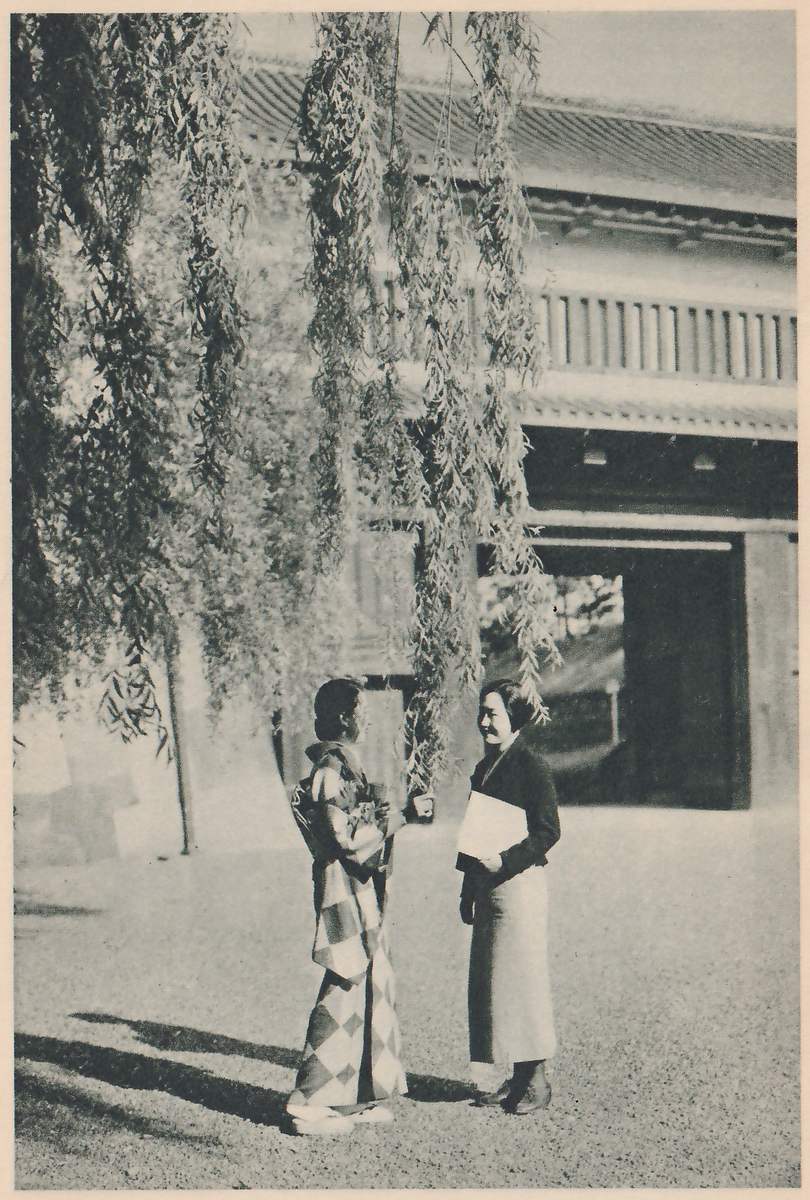
“The first trend is the new world note based on city tastes, and it is the standard of fashions in the present-day kimono.
“They show a most advanced tendency to employ to the full the flavour of newness, and when their basic colours, their harmonizing of tints, and their composition are carefully considered, it is found that in them world fashions have been skilfully Nipponized, and they are filled with a freshness expressing the new age. Isn’t the taste of young girls just about confined within these bounds?
“The second trend is the classic tone of pure Japanese taste. The kimono are duplications of the merits of the Momoyama and Keichō kosode or of meibutsu kimono, just as they are without the addition of anything new; for instance, a kimono of thin silk crape approaching a purple blue dyed in a cloud pattern by Hitta dappling with poetry cards embroidered on it
in slightly dull silver and rich coloured thread, worn with a black obi with a Hōkō withered miscanthus design woven into it, is a great favourite with middle-aged matrons. Even we can well see that this is a pure taste unchanged by the fashions of the age.
“The third trend may be called a provincial taste. Having the characteristics and flavour of the local districts where it is a sideline product made by hand in farm village homes, it is a so-called “vigorous taste,” like Yūki pongee and Ōshima pongee, and seems to be popular with people of fashion. With its special flavour, it is highly interesting.
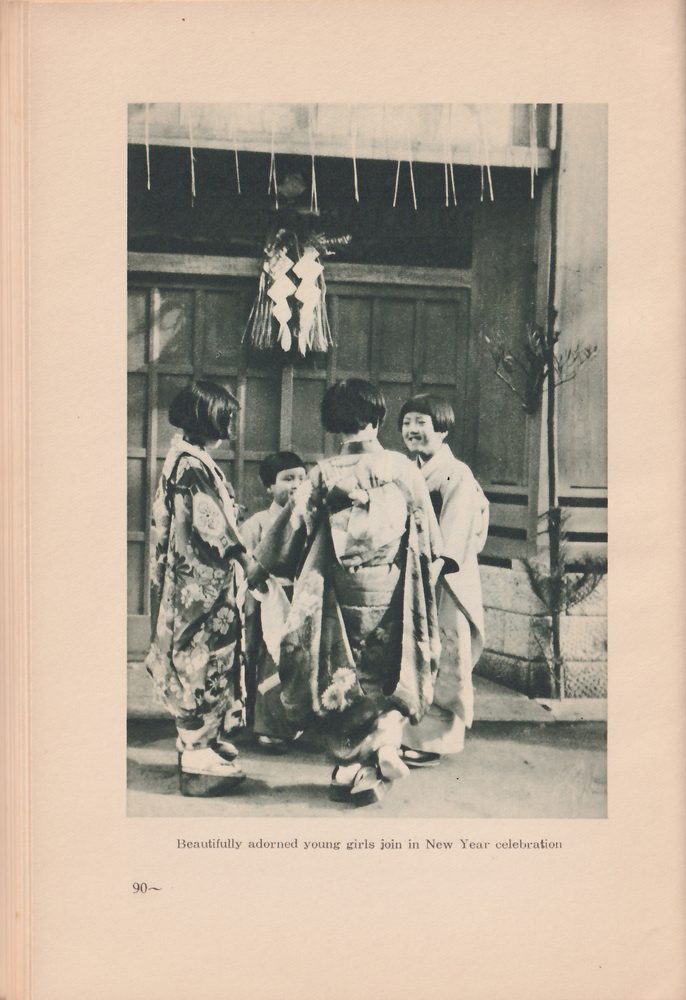
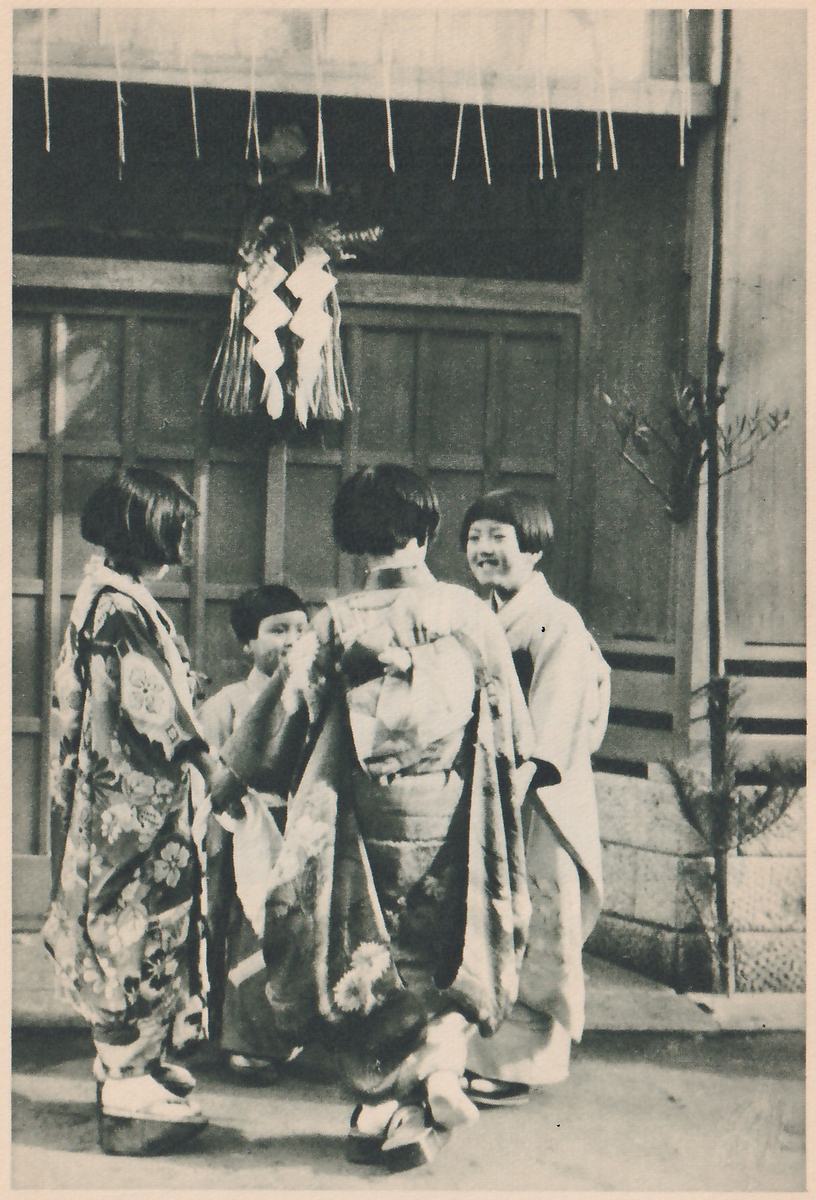
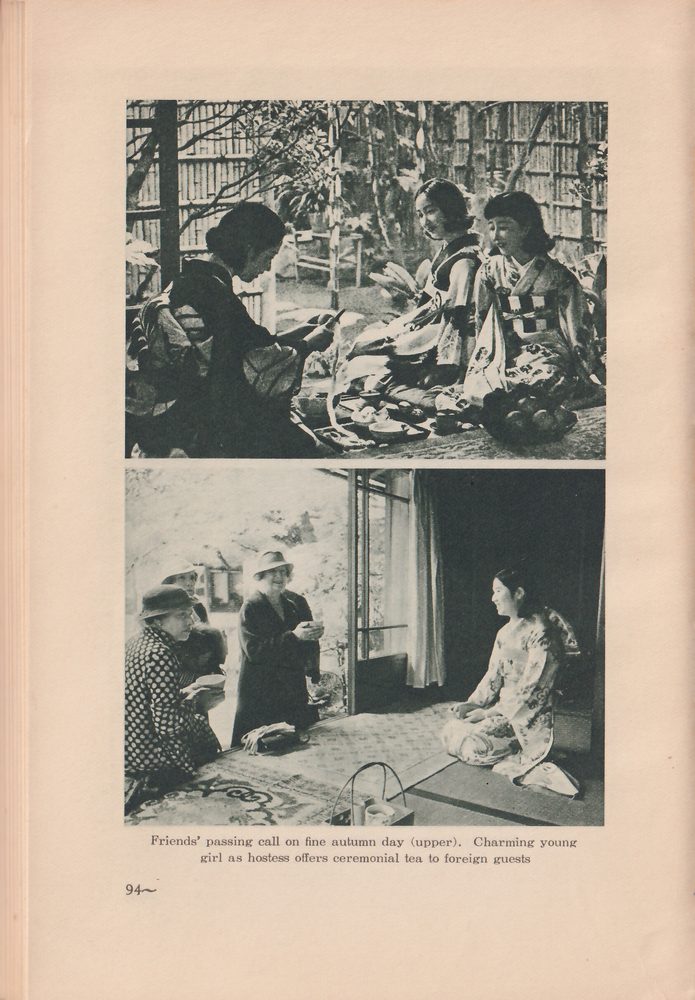
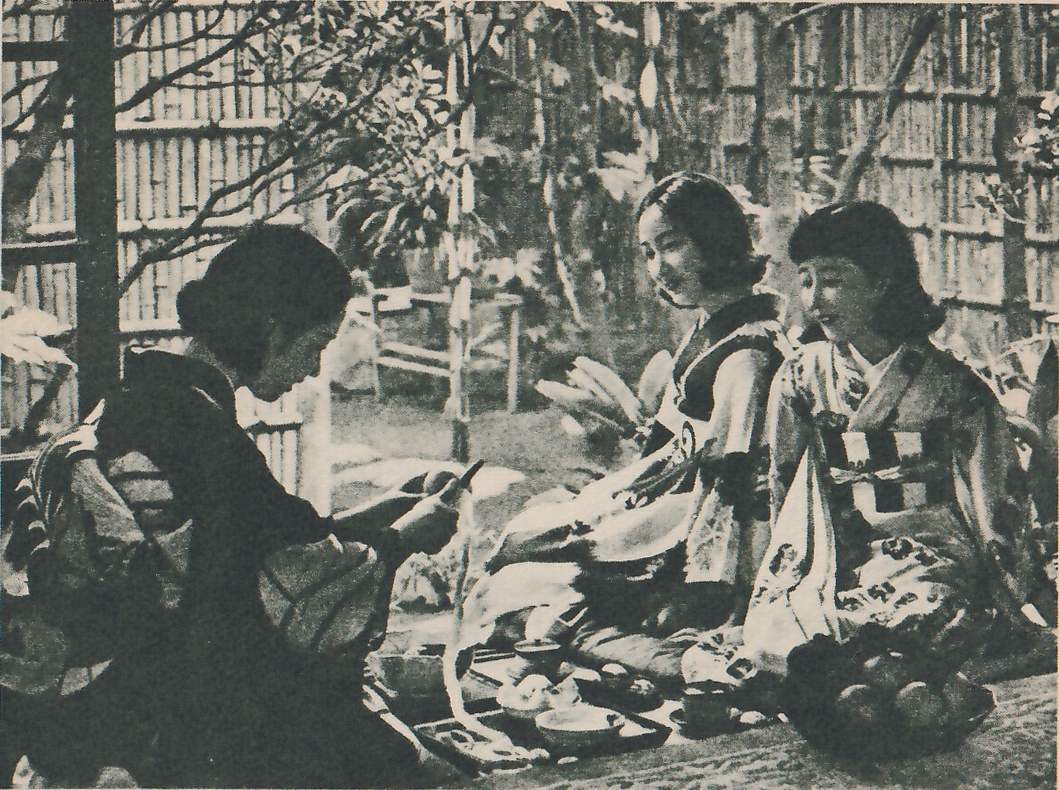
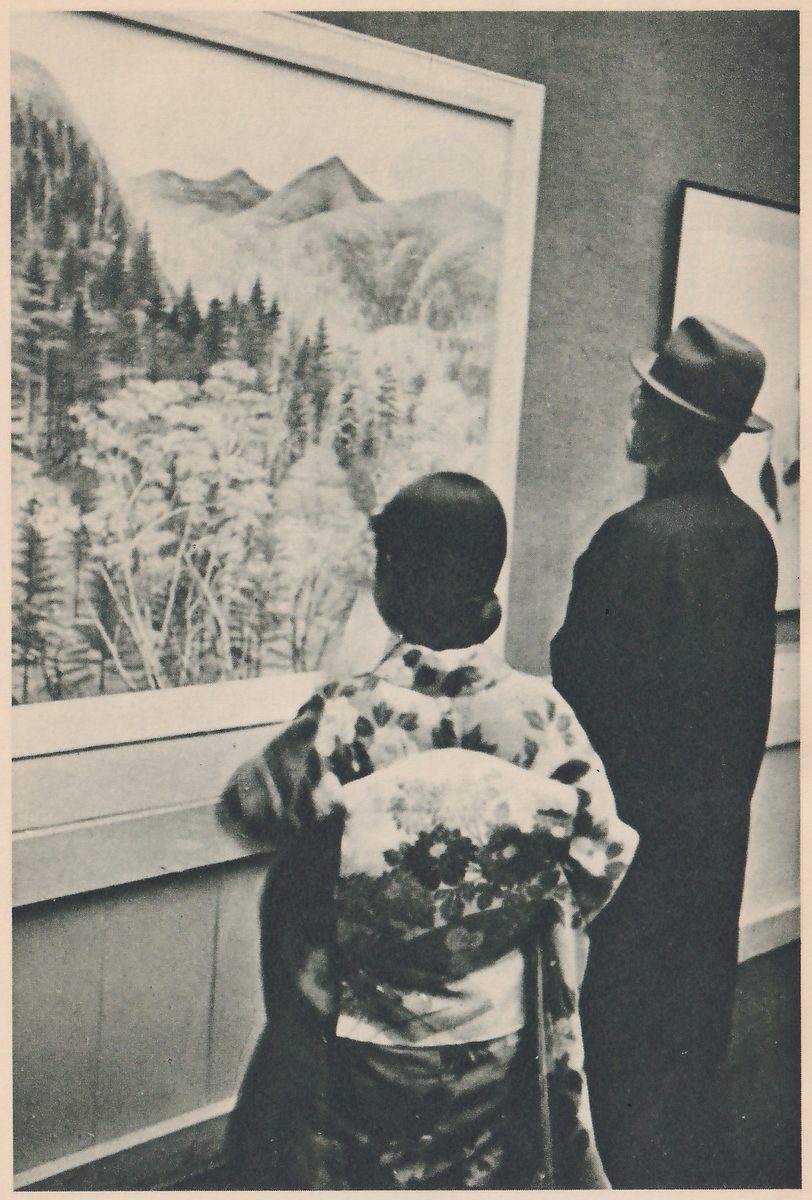
“The truth is that while I was in my own country, only reading of these things in books and imagining them from the very few examples at hand, I had no idea that colours, patterns and the whole tone were so superior. Till I saw kimono, I never went so far as to think that art could be so thoroughly combined with utility. Even in Paris there is no such combining of basic colours, changing tints and patterns. And it is the beauty of the Japanese kimono, not even enjoyed by the Parisienne, who boasts of the best style and novelty in the world, that everyone chooses for herself the colours and patterns suitable to her age; the child fresh things overflowing with the abundant life of the midsummer sun, the young girl seductively beautiful things like the flowers of spring, and the married woman quiet and rich things like autumnal scenery.
“Even the monotony of having no standard in vogues can be completely broken up by the refined orchestra that plays these complex colours and designs.
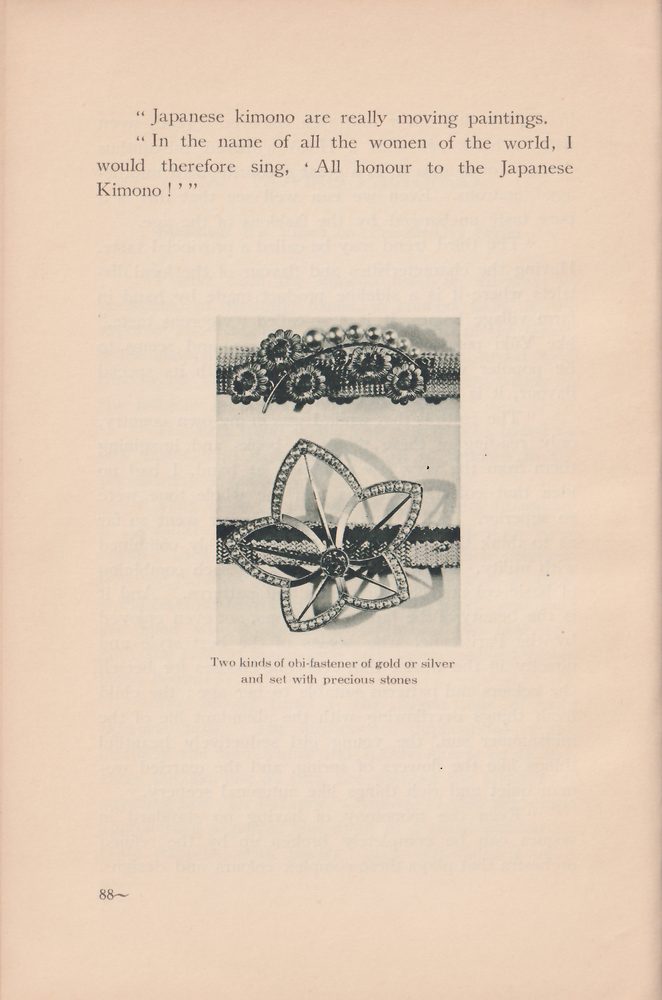
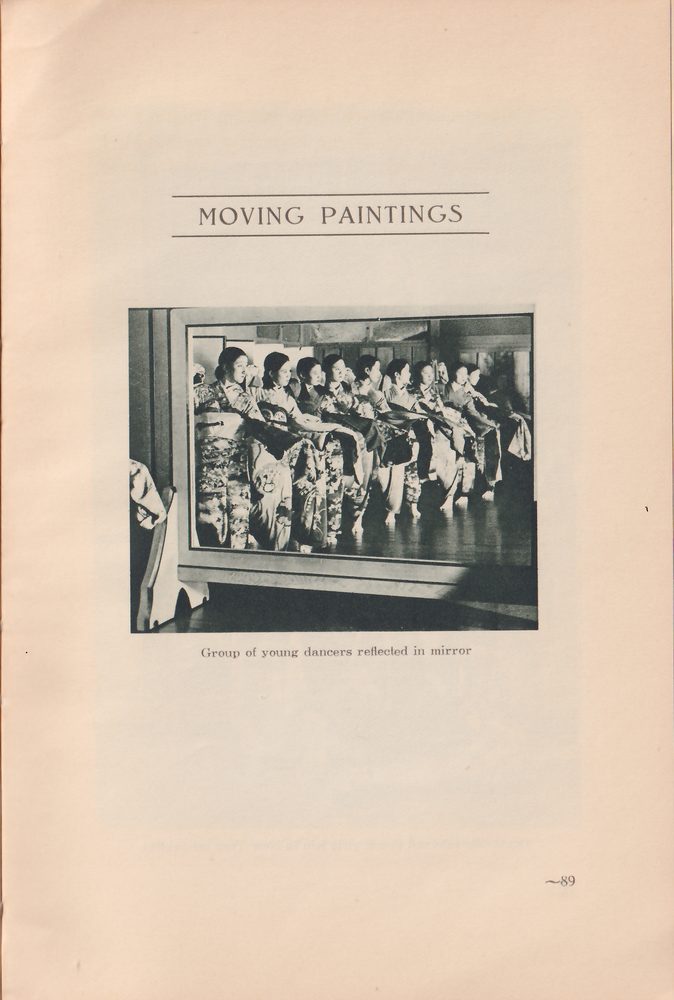
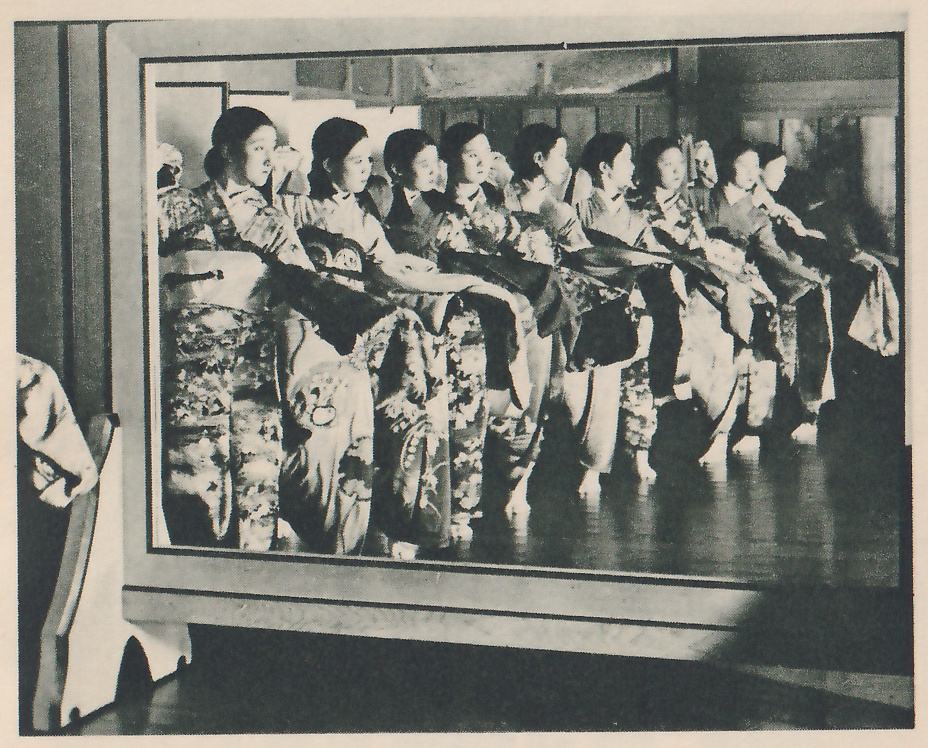
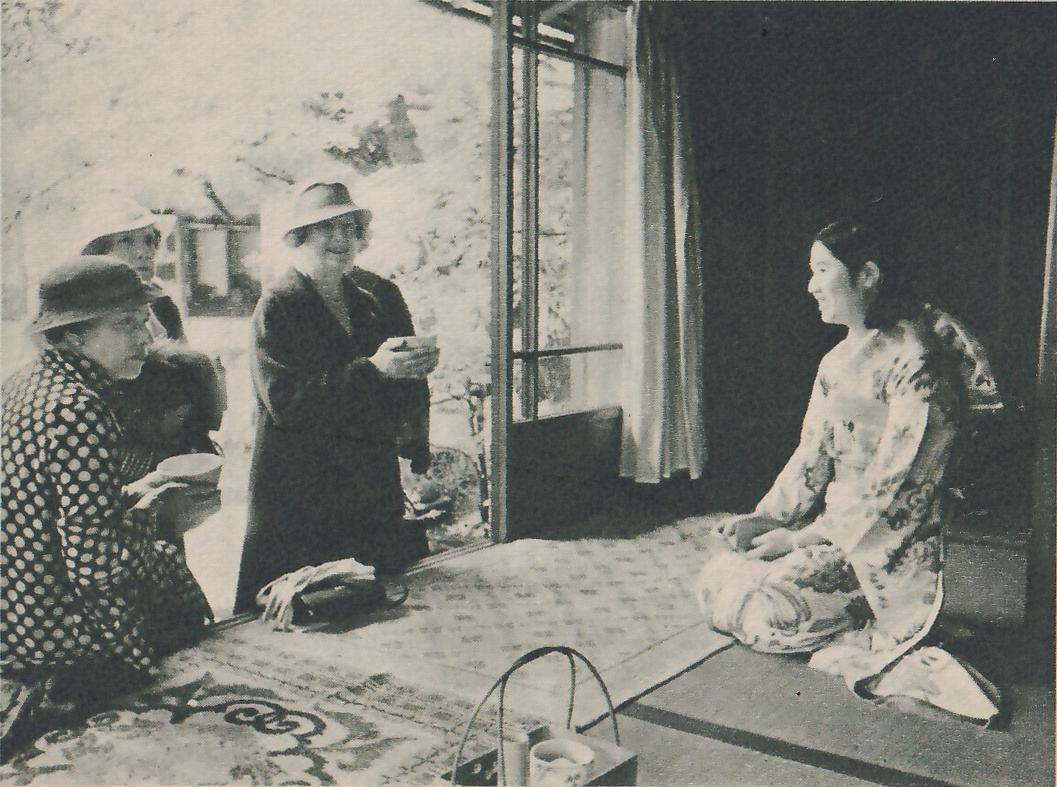
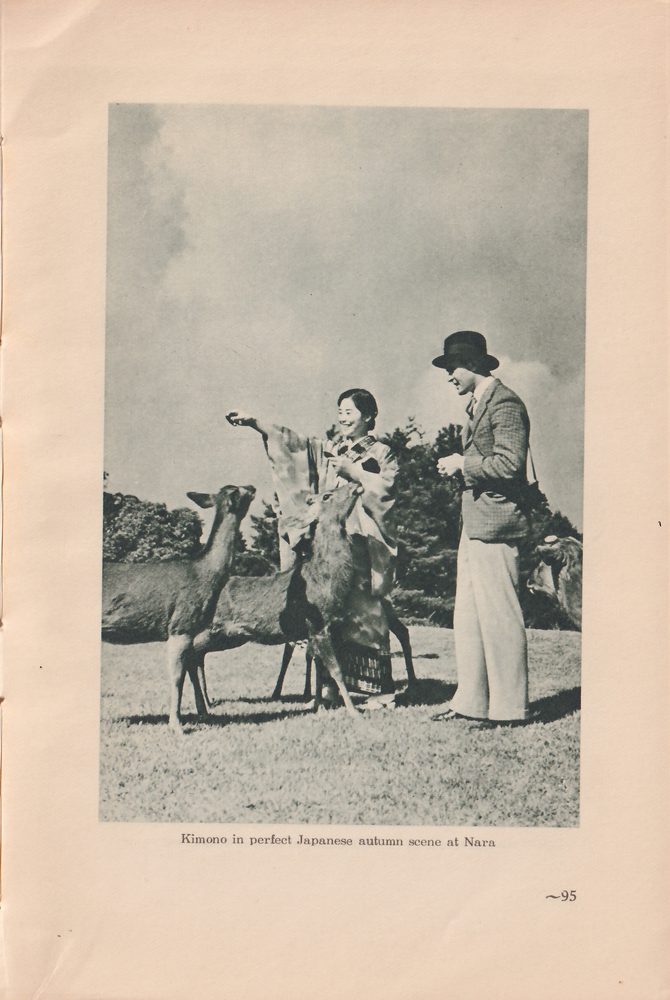
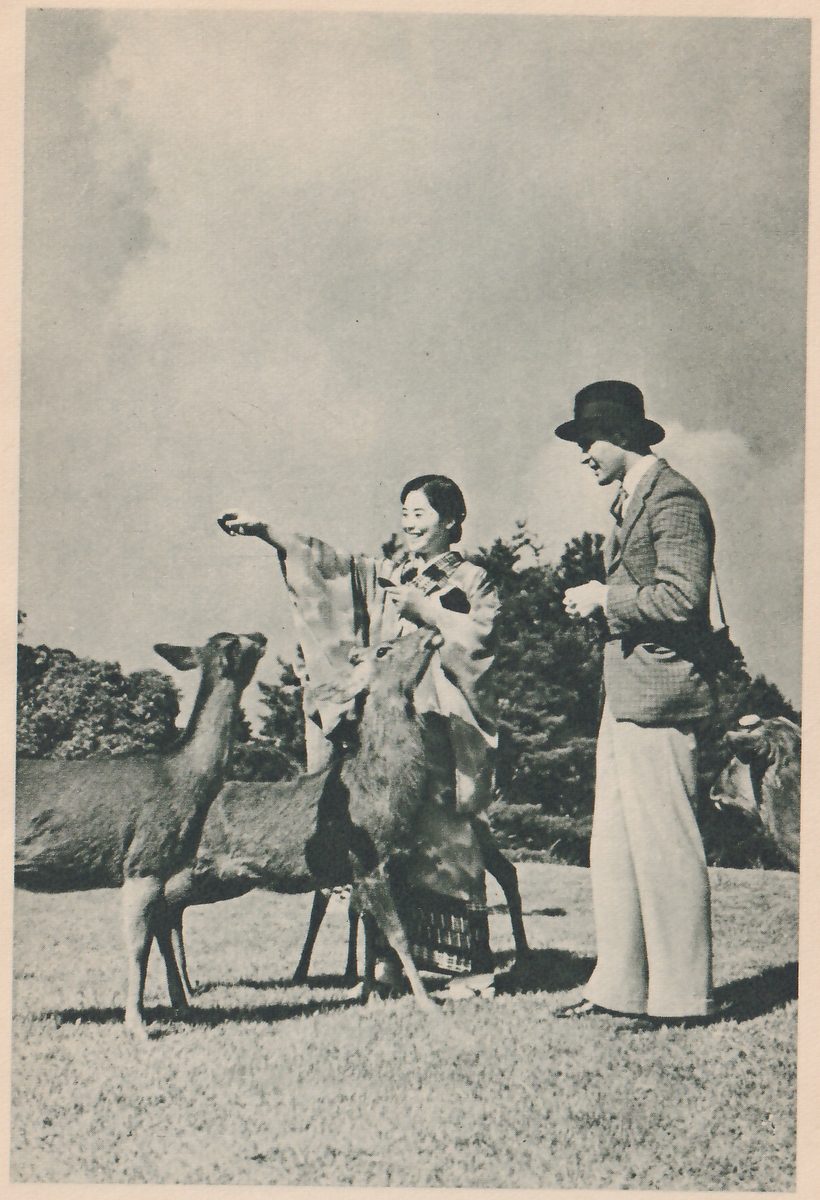
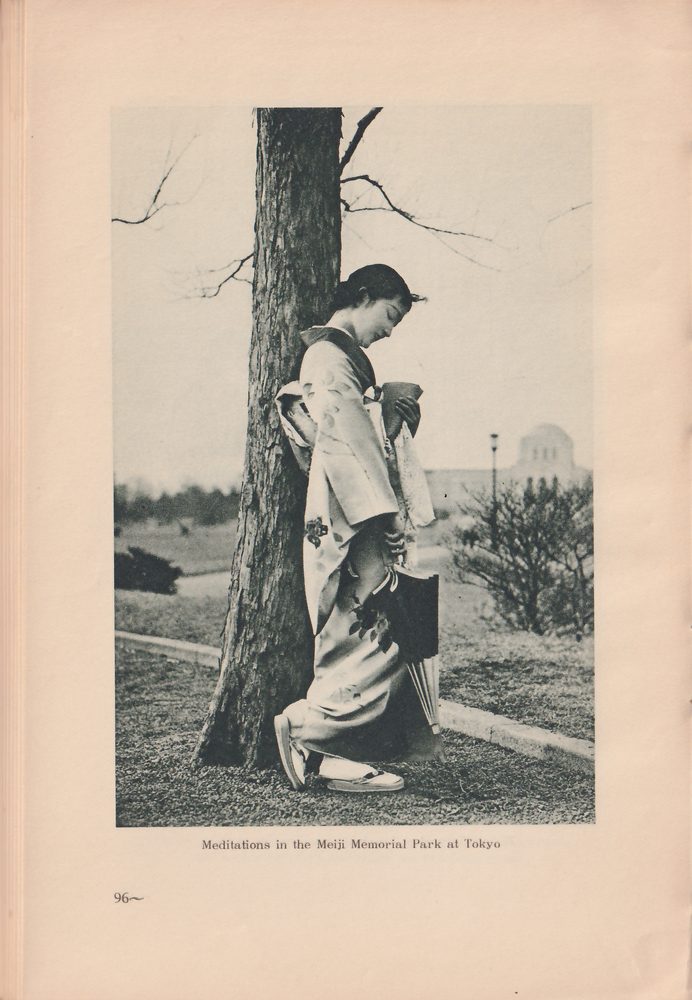
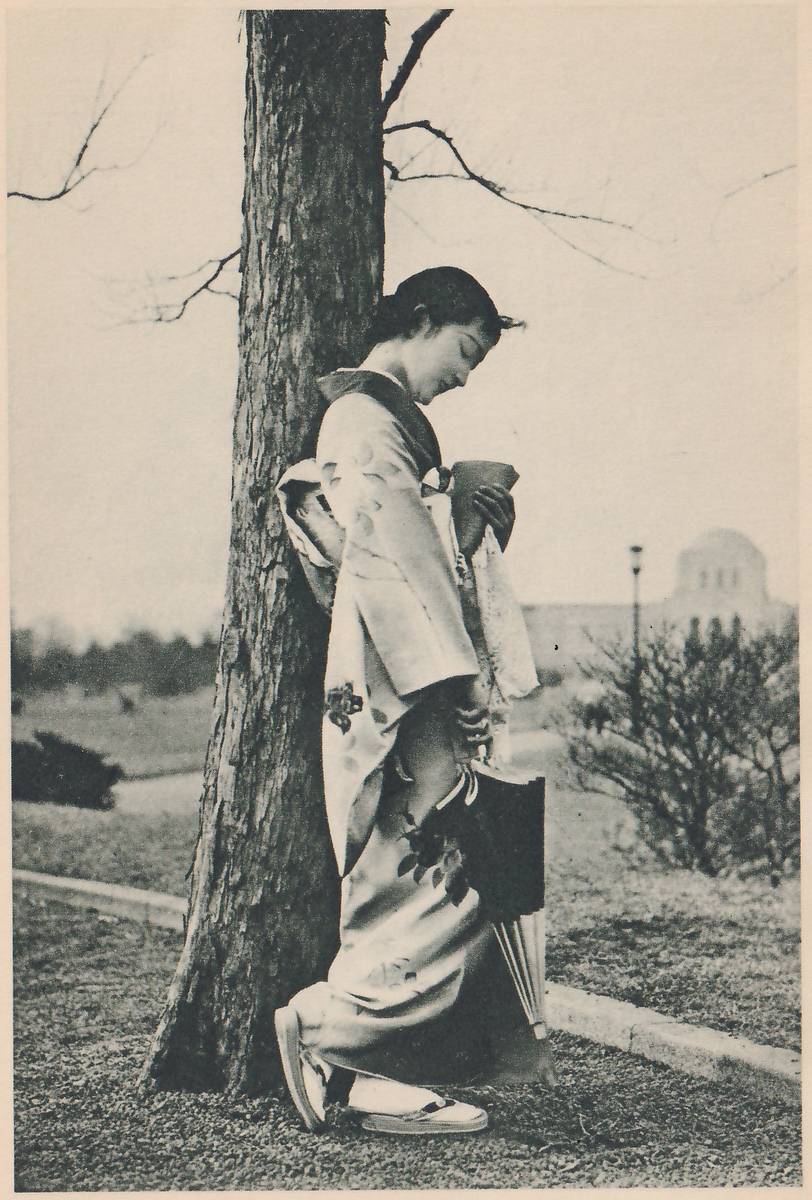
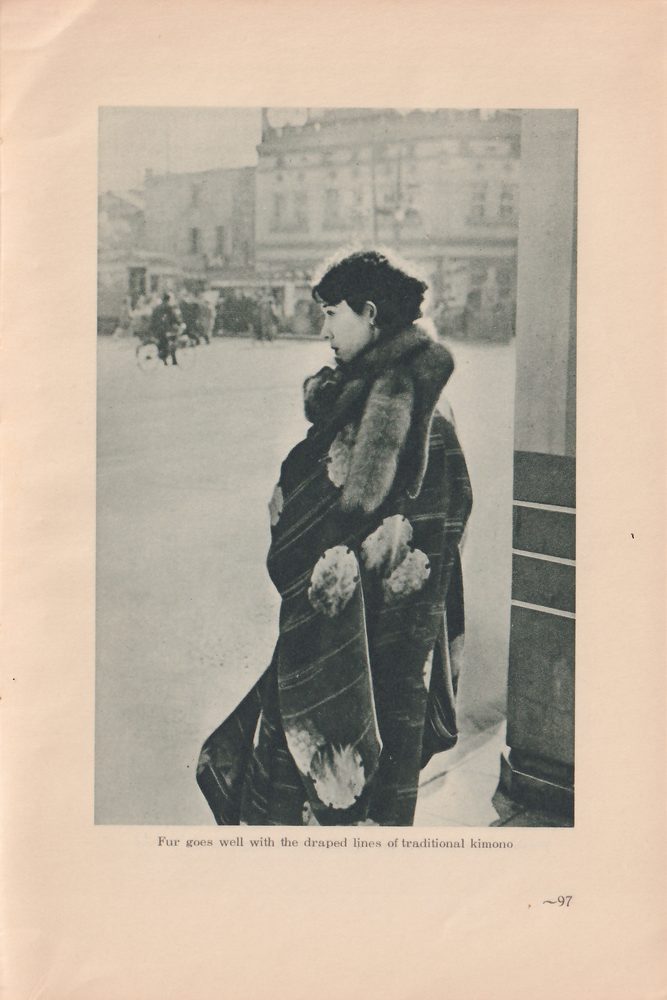
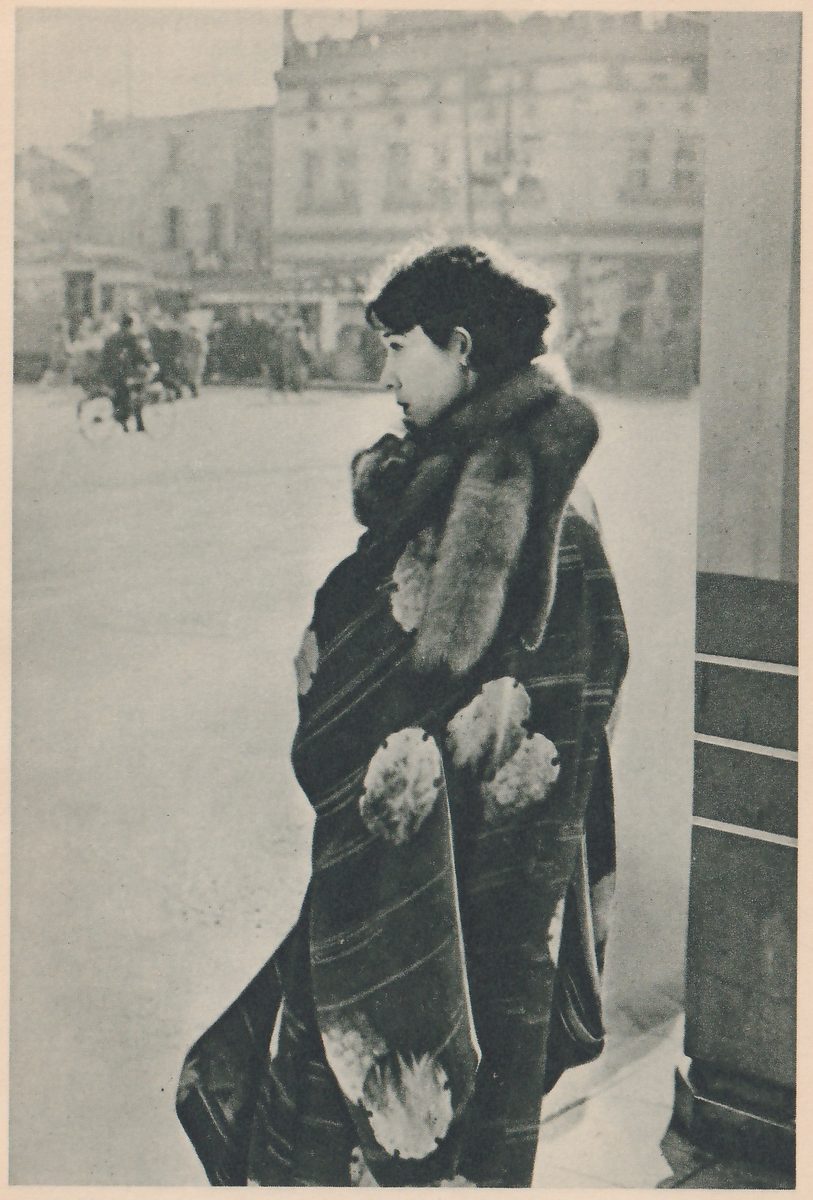
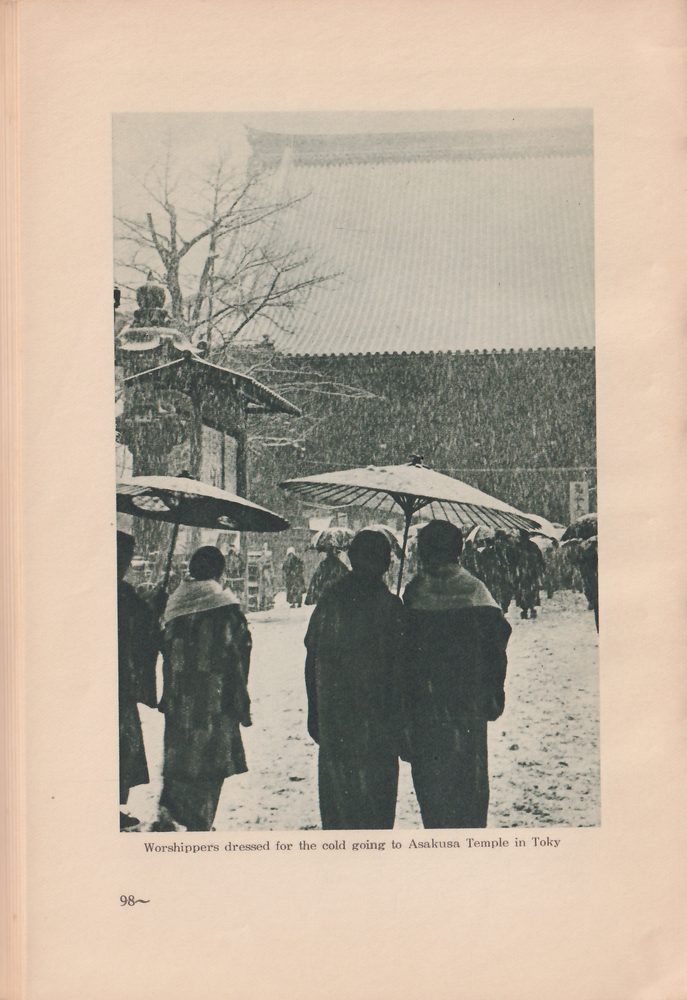
“Japanese kimono are really moving paintings.
“In the name of all the women of the world, I would therefore sing, ‘All honour to the Japanese Kimono!’”