
I. MONSIEUR B SPEAKS OF THE JAPANESE KIMONO
Monsieur B was an artist with a great future, a true Parisian, who became a good friend of mine soon after my arrival in Paris. He was always asking me all sorts of questions as if seeing countless visions of “Cherry Blossom Japan” and “Fujiyama Japan,” like nearly all Europeans and Americans. Once, while walking under the wayside chestnuts, we talked about the great Buddha at Nara, fifty-three feet high, and the scenery of Kyoto with its purple mountains and clear water. Again in the foyer of a theatre dazzlingly complex with colour, light and fragrance like a tower of cloisonné, we talked about Kabuki drama. Monsieur B was exceedingly eager, but I could only think that it was out of mere curiosity.
But one night he took me to his palatial home, and on stepping into his atelier, what was my surprise to find it hung with the splendid tapestry of magnificent Japanese sashes and wadded silk garments like a burst of gay blossoms.
To my surprise there unfolded itself here in a corner of Paris a scene such as that we are told might have been observed in the Genroku years (1688–1704) of the Tokugawa Period, when, in the season of cherry blossoms, parties of merrymakers hung up their wadded silk garments for curtains and competed with each other in extravagance and refinement under the
trees. With the sensitiveness of the artist, he must have quickly observed the surprise unconsciously producing an exclamation in my heart. And smiling with a touch of pride, he said,
“To me the Japanese kimono is a very passion. This is no mere hobby.”
Then he got out his hoard of silk wadded garments and Japanese sashes and told me how he had come to be so greatly absorbed in the Japanese kimono.
“Because of my profession, any number of models come to my atelier, but I seldom meet one possessed of a beauty that can kindle the fire of creative desire hidden deep in my heart. Really, it seems to me more difficult to find a nude beauty than it is to find pearls on the bottom of the Seine. [A close friend of Monsieur B’s says of him that he demands too much and is looking for Venus herself in this age.]
“It seems to me like this. A body ruthlessly exposed in the white sunlight, like a faded scentless rose forgotten in a bedroom, a walk without a sweetheart, an opium-smoker awakened from his dream, is a tasteless and flat thing.
“This may sound a little ironical, but I am really familiar with scenes that endorse it. One chilly autumn afternoon, a model had chanced to put on a wadded silk garment she found over yonder and was resting on a sofa.
“The moment my eyes lit on her, I felt the joy of having finally caught the ‘blue bird’ I had been wearily searching for so long.
“Where had this easily resting girl’s figure, wrap-
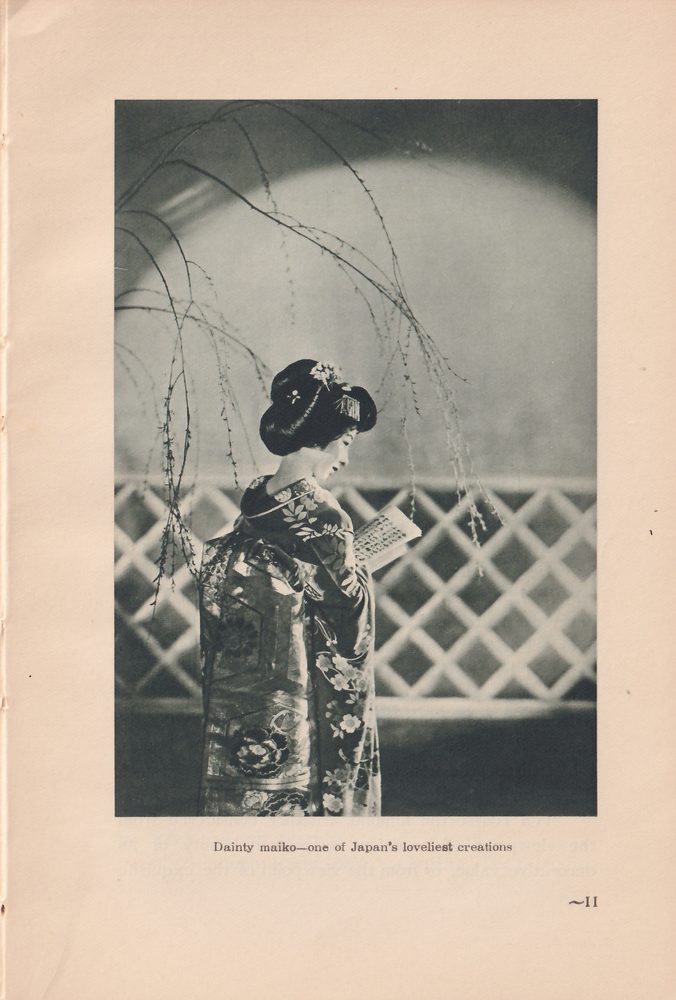
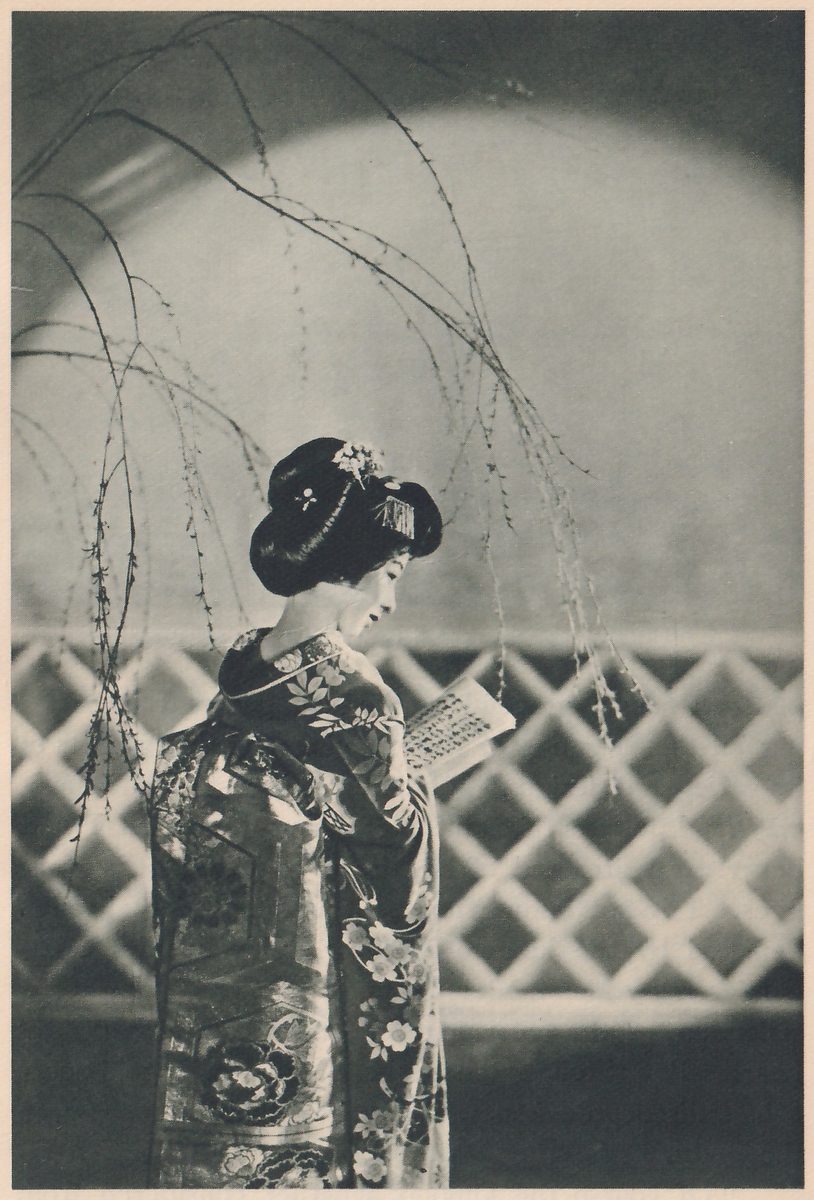
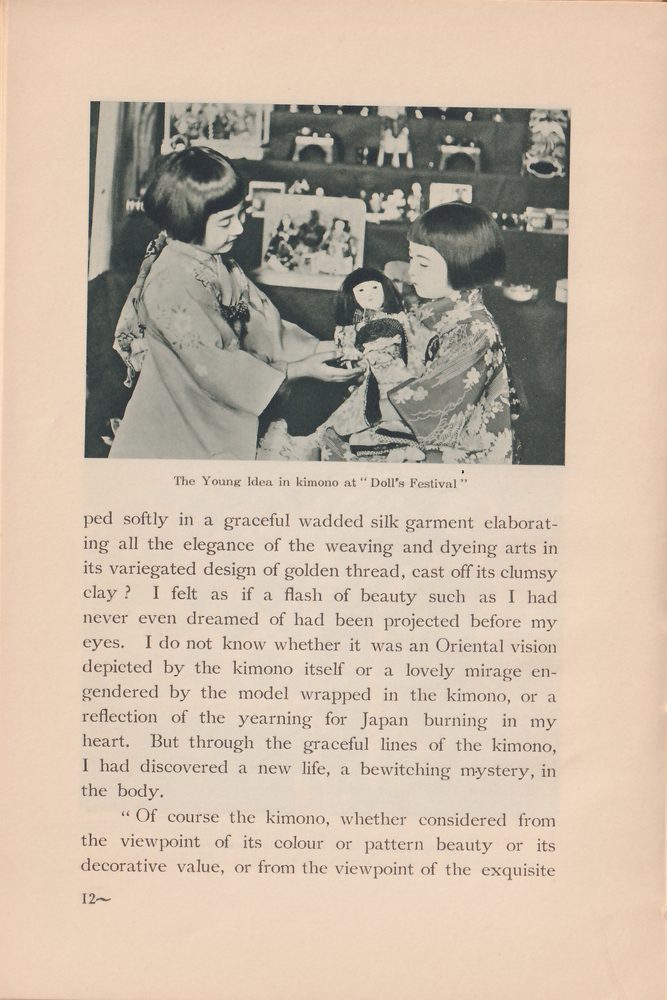
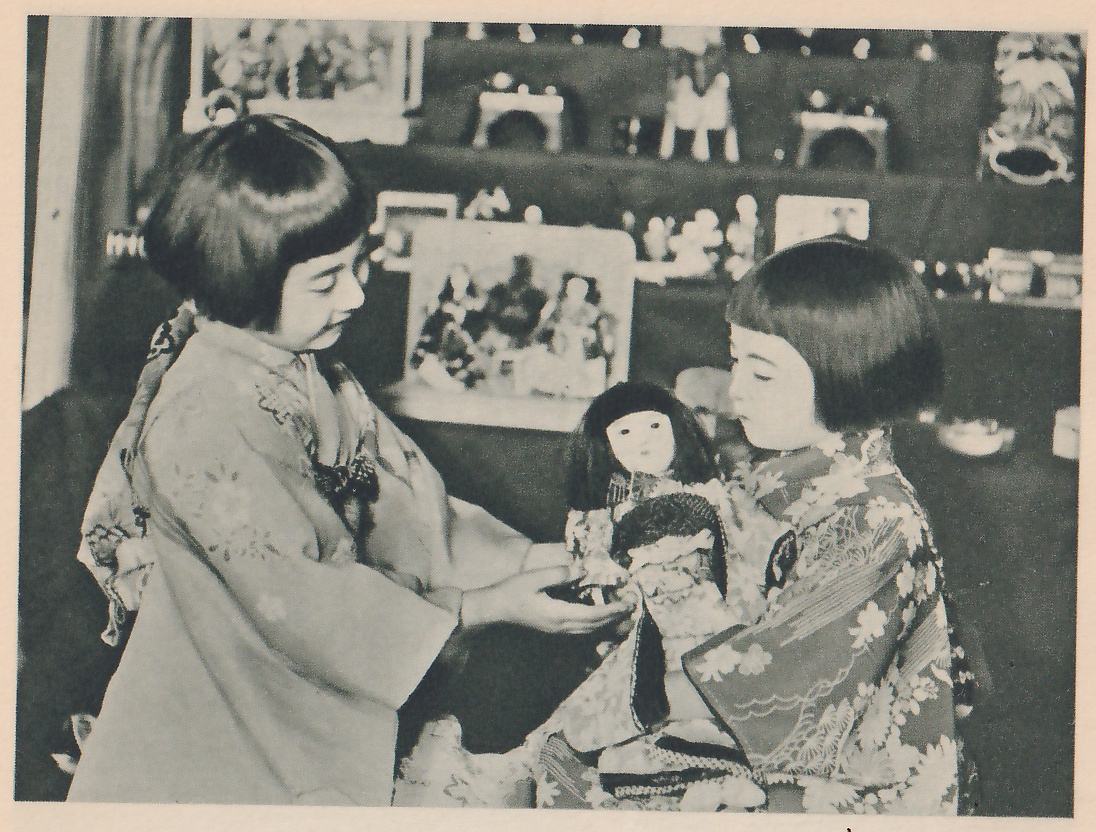
ped softly in a graceful wadded silk garment elaborating all the elegance of the weaving and dyeing arts in its variegated design of golden thread, cast off its clumsy clay? I felt as if a flash of beauty such as I had never even dreamed of had been projected before my eyes. I do not know whether it was an Oriental vision depicted by the kimono itself or a lovely mirage engendered by the model wrapped in the kimono, or a reflection of the yearning for Japan burning in my heart. But through the graceful lines of the kimono, I had discovered a new life, a bewitching mystery, in the body.
“Of course the kimono, whether considered from the viewpoint of its colour or pattern beauty or its decorative value, or from the viewpoint of the exquisite
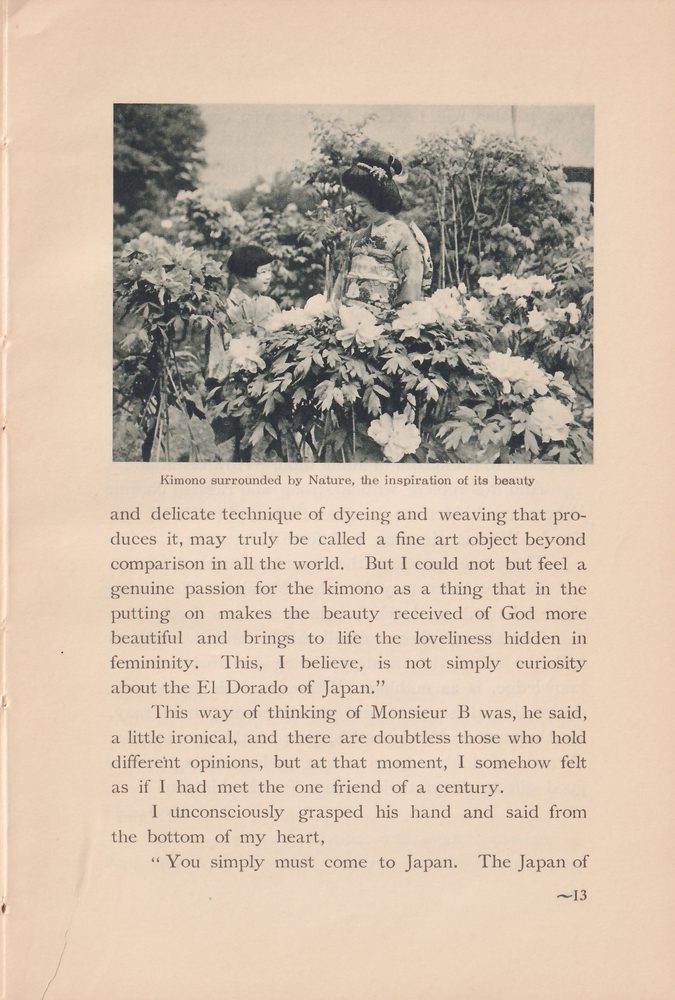
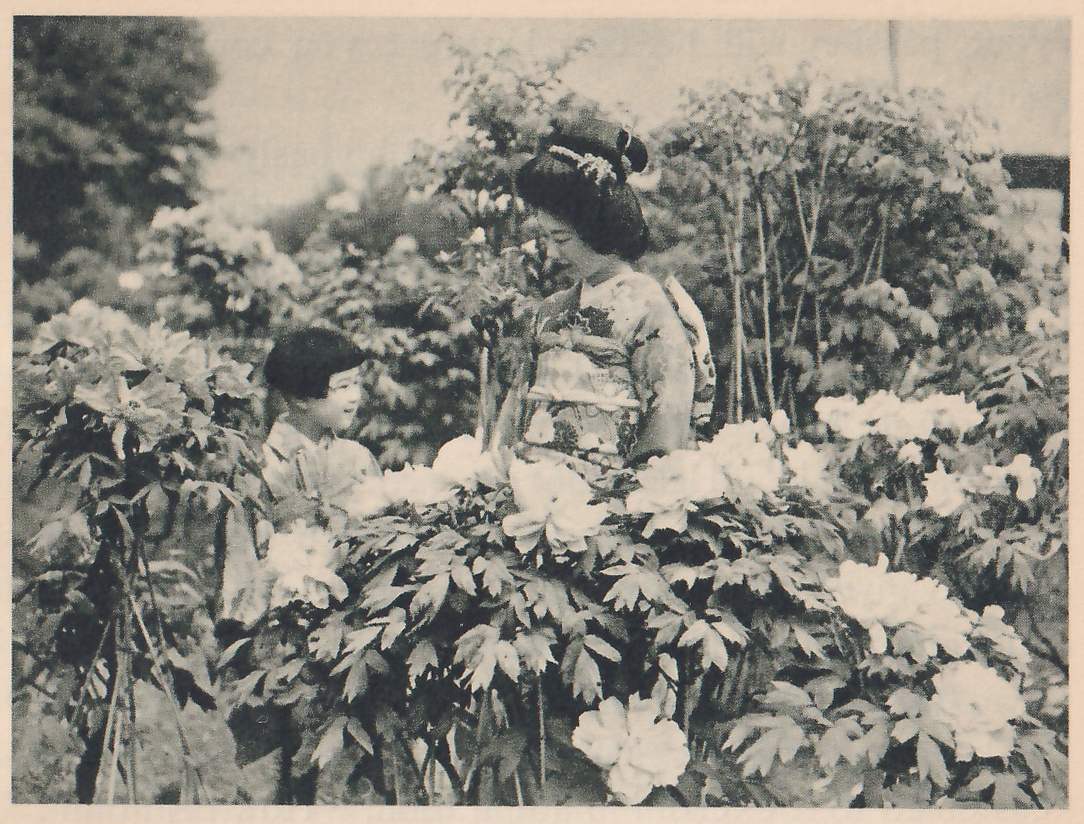
and delicate technique of dyeing and weaving that produces it, may truly be called a fine art object beyond comparison in all the world. But I could not but feel a genuine passion for the kimono as a thing that in the putting on makes the beauty received of God more beautiful and brings to life the loveliness hidden in femininity. This, I believe, is not simply curiosity about the El Dorado of Japan.”
This way of thinking of Monsieur B was, he said, a little ironical, and there are doubtless those who hold different opinions, but at that moment, I somehow felt as if I had met the one friend of a century.
I unconsciously grasped his hand and said from the bottom of my heart,
“You simply must come to Japan. The Japan of
your passion will be certain to greet youPrinted: will be certain greet you cordially with both hands......”
A number of years passed. Joyously and with a dancing heart, like a girl for whom a beautiful gala dress has been bought, Monsieur B finally came to Japan.
The very evening he arrived, he put on one of my kimono that was too short for him and, sitting on the fresh new tatami mats, said over and over, “Wonderful!” He made me promise to talk to him for many nights on the subject of the kimono. This was to give a truer and clearer outline to his practical understanding of the kimono.
In good truth the kimono is always so new as to make not only Monsieur B but even us who are accustomed to it exclaim in admiration, “How beautiful!”
And it is replete with a strong and radiant charm. Where are hidden its inexhaustible and varied beauties? Whence do they well forth?
These are questions that even we must think out. Perhaps there may be other Messieurs B’s among those who will read this brochure.
The strange flavour of all things (and it might as truly be called the mystery) being due to insufficient knowledge, is as nothing. Wherefore it is my earnest desire that these short and varied evening talks may, for these other Messieurs B’s, prove little keys to solve all sorts of doubts, to give true understanding, and a good gift to direct their passion for the kimono.