
I. GENERAL HISTORICAL OUTLINE OF JAPANESE CASTLES
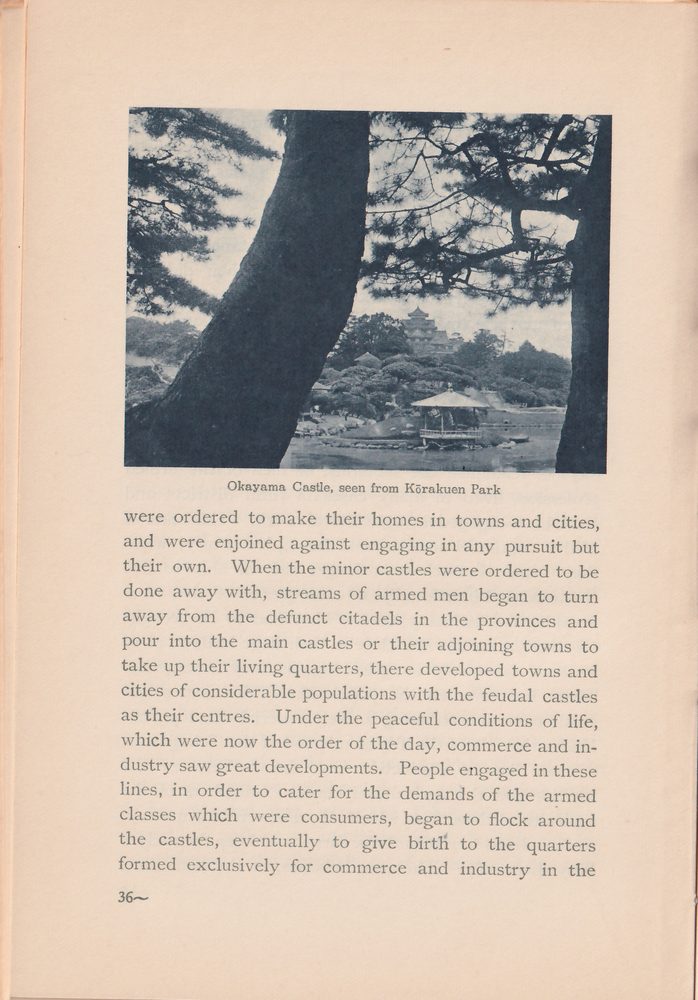
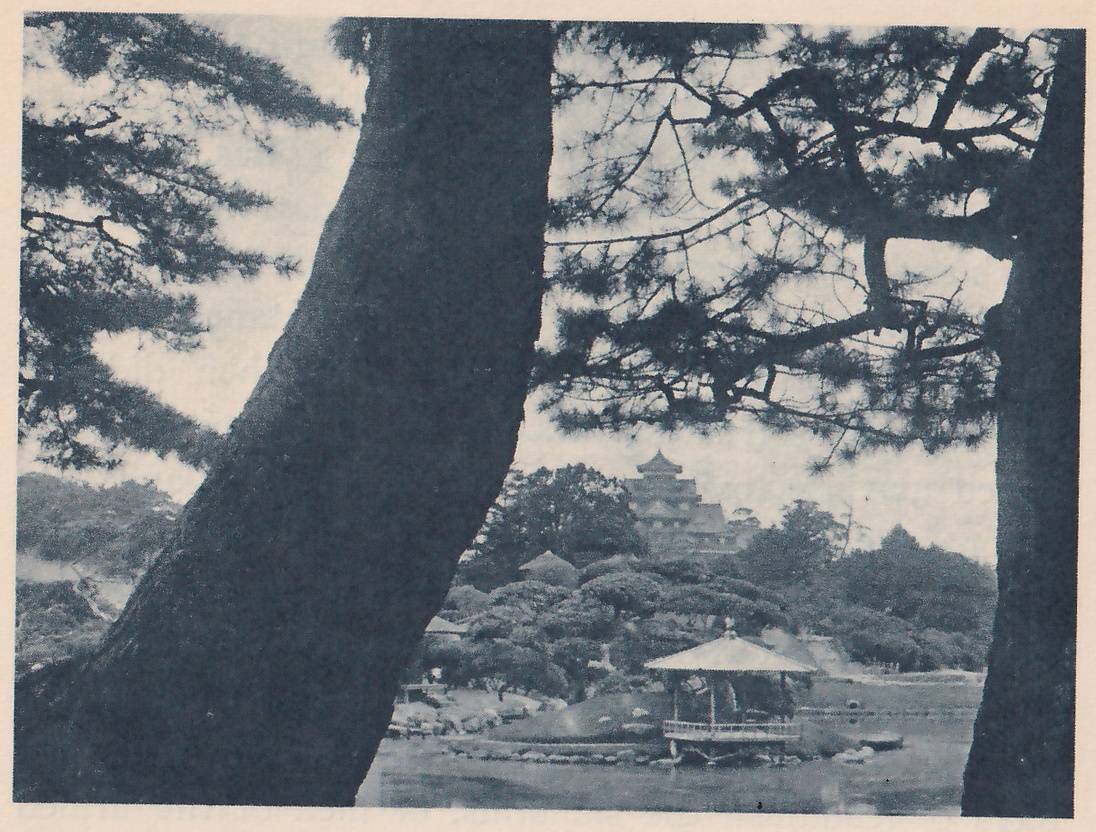
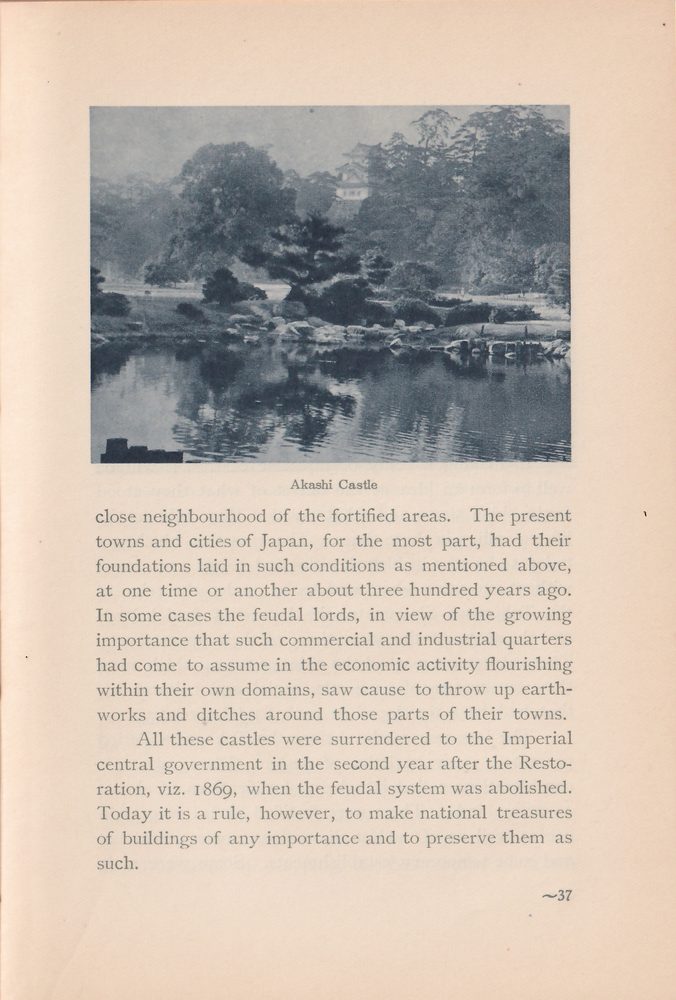
Visitors to Tokyo, Kyoto, Osaka and other historic places in Japan will not fail to see moats filled with blue, placid water lined by massive stone walls with green pine trees upon them, and, towering high above them all, lofty structures marked by white walls. It is the ancient castle of some territorial noble, one of those castles built in the feudal ages, quite original in their conception and therefore peculiar to Japan. These structures represent one of the best and most noteworthy types of architecture that have been evolved in Japan. What is more, they are to be regarded, in a certain sense, as an expression of Bushidō, of the true spirit and genius of Japanese feudalism. It is of those castles that we now propose to give an account for the benefit of those who intend to tour Japan.
The history of castle-building in Japan, from its earliest time to the present day, may be divided roughly into five distinct periods, which are as follows:
First Period: From the dawn of history to the first half of the 7th century.
Second Period: From the second half of the 7th to the 10th century.
Third Period: From the 11th to the first half of the 16th century.
Fourth Period: From the second half of the 16th to the first half of the 19th century.
Fifth Period: From the second half of the 19th century to the present age.
The first period was the age of clans, a period in which was developed a civilization peculiar to Japanese soil. In those days castles were either fortified homesteads of clans or defensive works temporarily thrown up in time of war.
The second period covers the time from the Taika era, which began in the year 645 A. D., and continued down to the end of the 10th century, marked in Japanese history by the fall of the Fujiwaras. This period is known for the reforms made towards an effective centralization of administrative power, establishing executive control over local clan chieftains, and for its series of legal enactments placing the national polity on a stronger basis. The nation at this period grew in strength and rose in prestige, maintaining, outwardly, close relations with Asiatic countries such as China, Korea and Manchuria, the last of which was then known as the Kingdom of Pohai.
Castles were considered at this period in the light of national defences, and were therefore built on an ambitious scale such as had never been seen before. These castles, as may be expected from the close political, military and cultural relations our people of the time had with other nations, show in outward form traces of more or less foreign influence. The remains of these castles are to be seen in the island of Kyūshū in the south, and in certain parts of the Ō-u districts in the northeast, and they stand in striking contrast to the castles of the feudal ages.
The third period represents the earlier part of what is known as the age of chivalry; that is to say, it extends from the time which saw the birth of the soldier or samurai class to the time when modern feudalism had attained its full development. The relations with Asiatic neighbours not being so close at this period as they had been in the past, our people were left much to themselves to make developments along their own lines. Castles in those times were built by individual soldiers for their own defensive purposes and, consequently, on unpretentious scales. The close of this period began to see armed conflict among soldiers on all sides. It was in the year 1543 A. D. that the first matchlock was imported into our country from Europe, to effect in the course of time material changes in castle-building, and to bring about its unification on a national system earlier than would have been done otherwise. There are at present few remains to be seen of the castles built at this period, except the sites on which they once stood.
The fourth period extends from the time when Oda Nobunaga, a great military leader who was among the first to make effective use of the weapon just introduced into the country, had established a unified control over the central regions of Japan, now known for cities such as Kyoto, Osaka and Nagoya, down to the ages immediately preceding the modern era of Meiji (1868–1912). The castles which are best preserved to this day are those of this period, and it is chiefly with them that the present writers intend to deal.
The fifth period begins in the years immediately
preceding the coming of Americans and Europeans to these shores to demand commercial intercourse, and continues to the present day.
When the Tokugawa régime had placed all the feudal barons of the country under its control, it decided before long, as a matter of foreign policy, to have no intercourse with any Europeans but the Hollanders. This policy remained in force for about two centuries. In the meantime, peoples of Europe and America had begun to penetrate more and more the Far East. Pressed to deal with these peoples, Japan became keenly alive to the necessity of national defence in general, and to that of the much improved ordnance of Europe in particular. Castles were built or remodelled in terms of the guns that European warfare had developed.
This state of affairs had not gone on many years before the feudal system was brought to an end. Fortifications were then taken up as a matter of national consideration; and in the same light the state has since then been attending to them as part of the scheme of national defence.
The castles you are to see are those built by feudal lords of the later period. Let us first see therefore how these strongholds came into being.
Until about seventy years ago Japan had been under feudalism, a polity which had lasted several centuries. For a period of approximately two hundred years down to the middle of the 16th century, there had been scores of warring barons, and the whole country had been ruthlessly parcelled out into almost as many divisions. The castles, which saw their
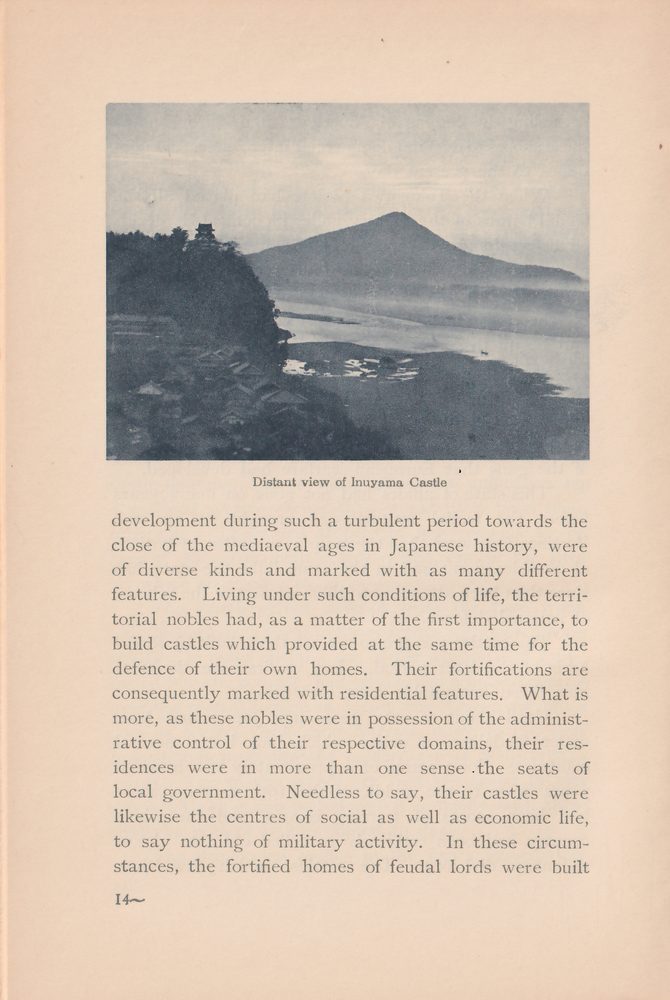
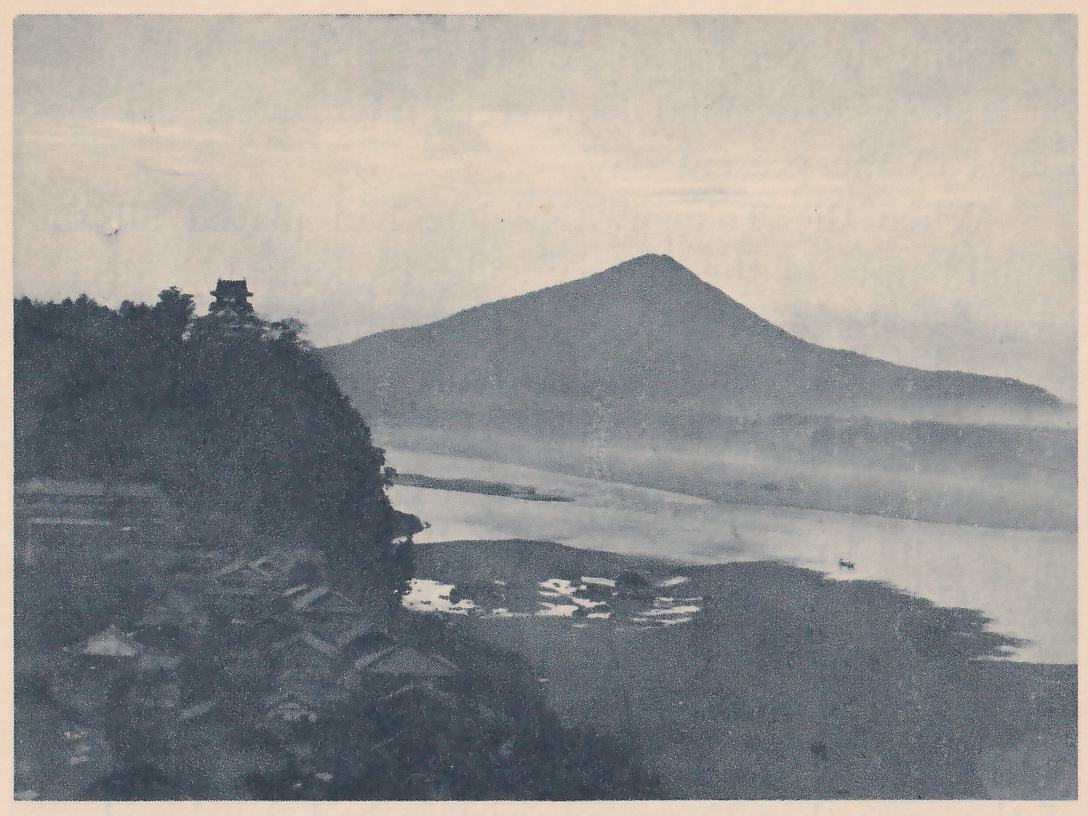
development during such a turbulent period towards the close of the mediaeval ages in Japanese history, were of diverse kinds and marked with as many different features. Living under such conditions of life, the territorial nobles had, as a matter of the first importance, to build castles which provided at the same time for the defence of their own homes. Their fortifications are consequently marked with residential features. What is more, as these nobles were in possession of the administrative control of their respective domains, their residences were in more than one sense the seats of local government. Needless to say, their castles were likewise the centres of social as well as economic life, to say nothing of military activity. In these circumstances, the fortified homes of feudal lords were built
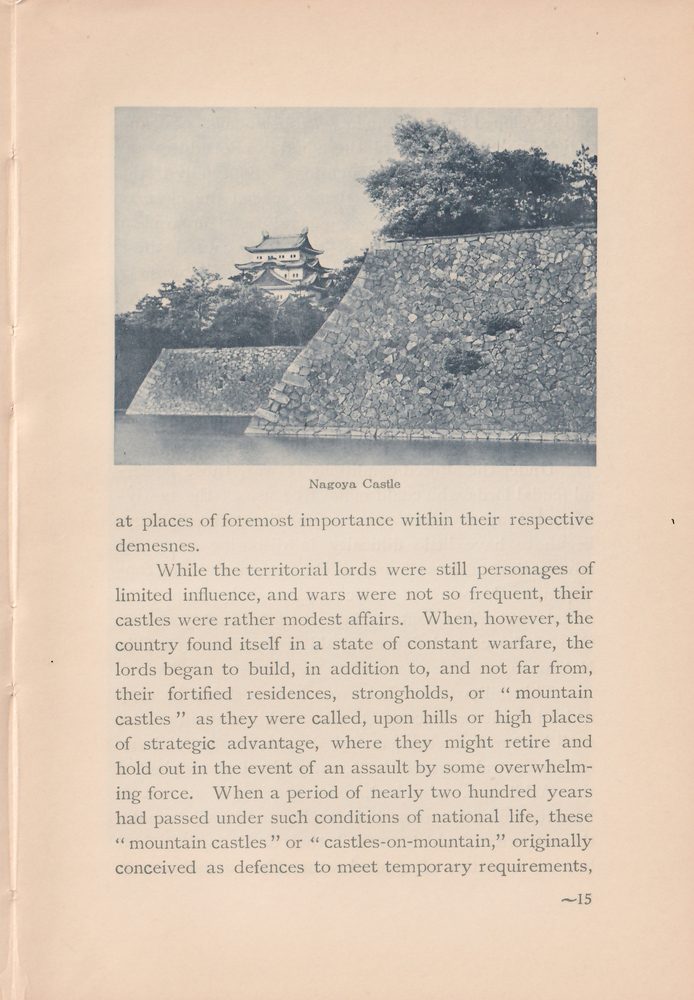
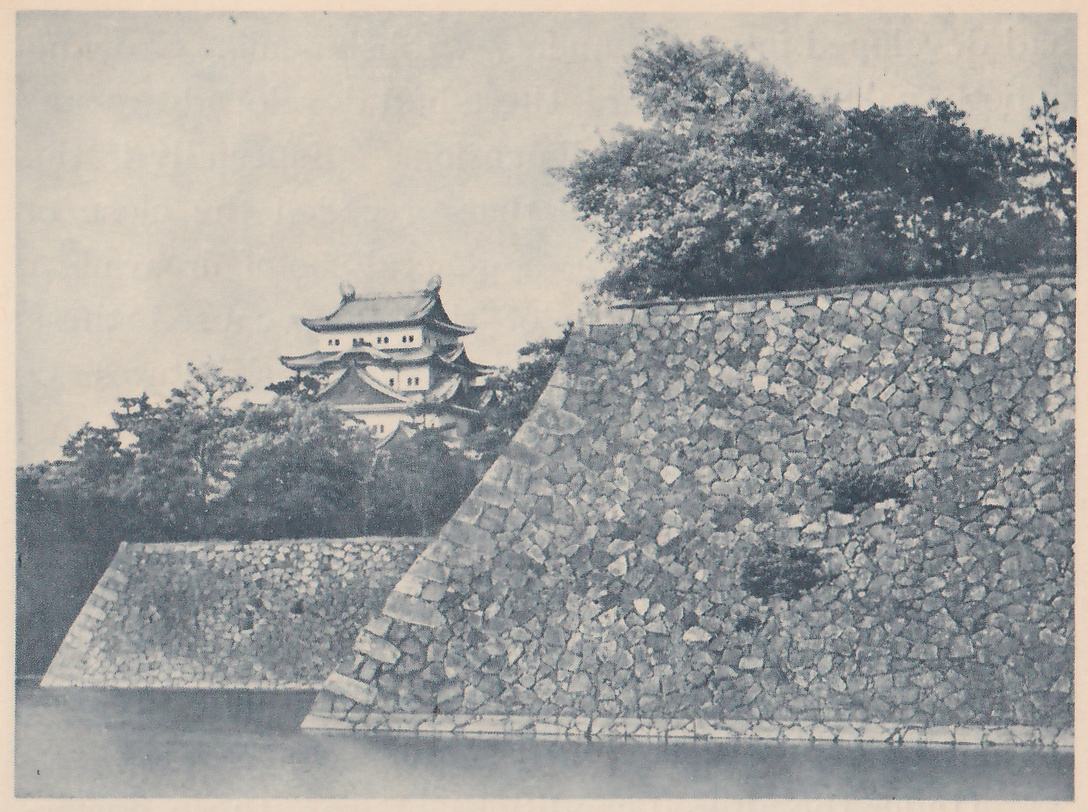
at places of foremost importance within their respective demesnes.
While the territorial lords were still personages of limited influence, and wars were not so frequent, their castles were rather modest affairs. When, however, the country found itself in a state of constant warfare, the lords began to build, in addition to, and not far from, their fortified residences, strongholds, or “mountain castles” as they were called, upon hills or high places of strategic advantage, where they might retire and hold out in the event of an assault by some overwhelming force. When a period of nearly two hundred years had passed under such conditions of national life, these “mountain castles” or “castles-on-mountain,” originally conceived as defences to meet temporary requirements,
had developed into permanent establishments. Growing in both scale and structure, there had developed “mountain castles” of imposing dimensions. Especially in the period of internecine wars that preceded the close of the age of feudal warfare, a general use of firearms, a new factor in the warfare of the time, caused these “mountain castles” to develop into structures of permanent and definite importance.
The first matchlock, which in 1543 was brought by some Portuguese to a southern corner of our country, wrought radical changes in the military system and tactics. The art of building castles was likewise modified, and they consequently developed into greater, higher, and more solid and massive strongholds.
Under the altered conditions of war, those powerful feudal lords who could make free use of the newly-imported arms which were of undisputed efficiency, began to have little difficulty in disposing of feudal adversaries in less favoured circumstances. In consequence, the work of reducing the whole country to a state of unified control began to see great progress. One of the central figures of this movement was Oda Nobunaga.
This military hero, who rose to importance in 1573 as lord of the province of Owari, steadily grew in power, until in time he became one of the most powerful lords of the central part of the country, having supplanted the Ashikagas, who had, for a period of some two hundred and fifty years, held at Kyoto the Shogunate, the authority of which, towards their declining days, had become a matter of nominal rather than actual power.
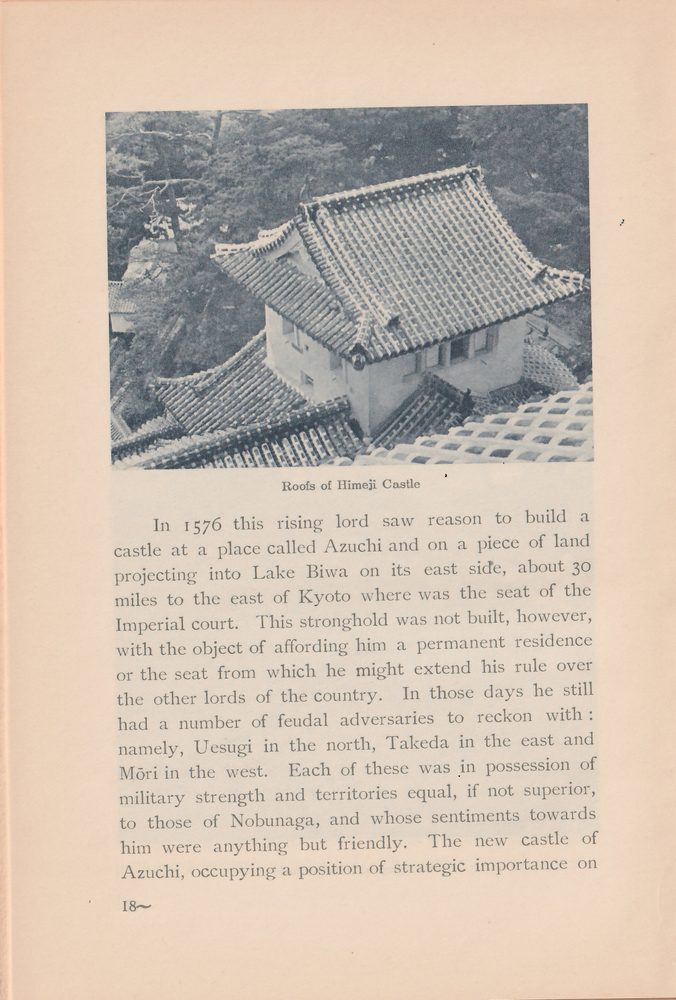
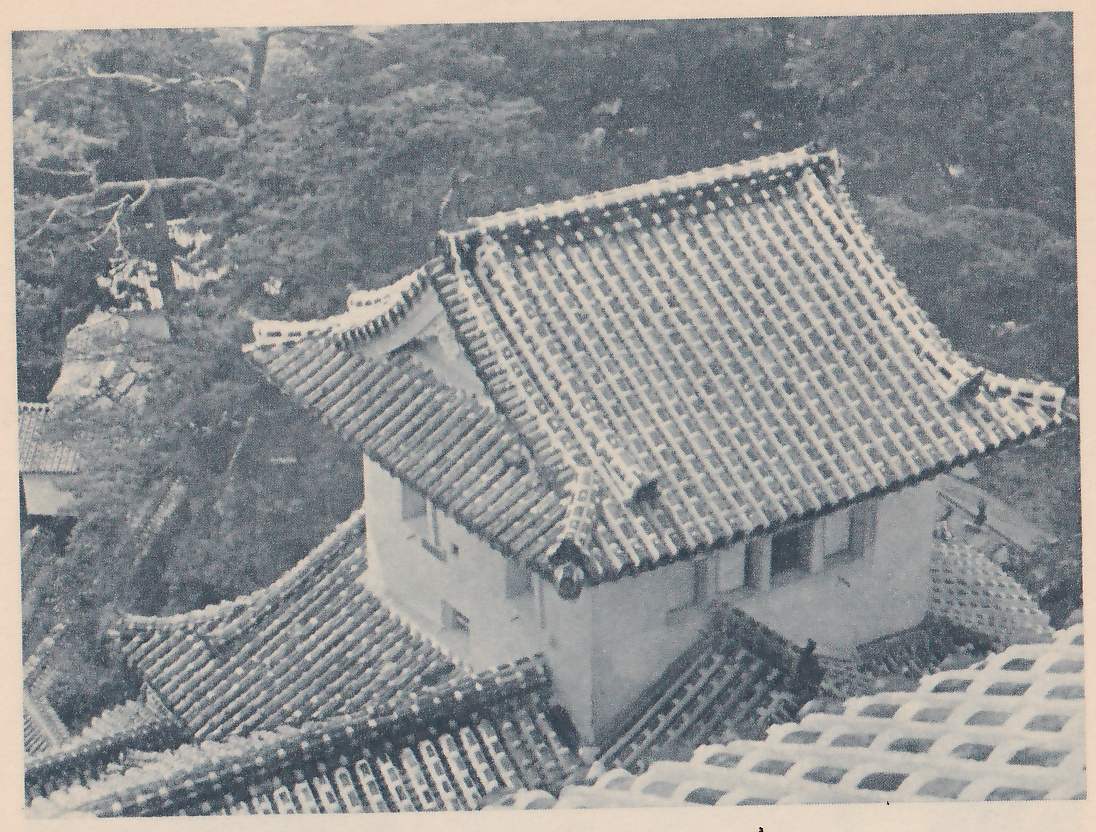
In 1576 this rising lord saw reason to build a castle at a place called Azuchi and on a piece of land projecting into Lake Biwa on its east side, about 30 miles to the east of Kyoto where was the seat of the Imperial court. This stronghold was not built, however, with the object of affording him a permanent residence or the seat from which he might extend his rule over the other lords of the country. In those days he still had a number of feudal adversaries to reckon with: namely, Uesugi in the north, Takeda in the east and Mōri in the west. Each of these was in possession of military strength and territories equal, if not superior, to those of Nobunaga, and whose sentiments towards him were anything but friendly. The new castle of Azuchi, occupying a position of strategic importance on
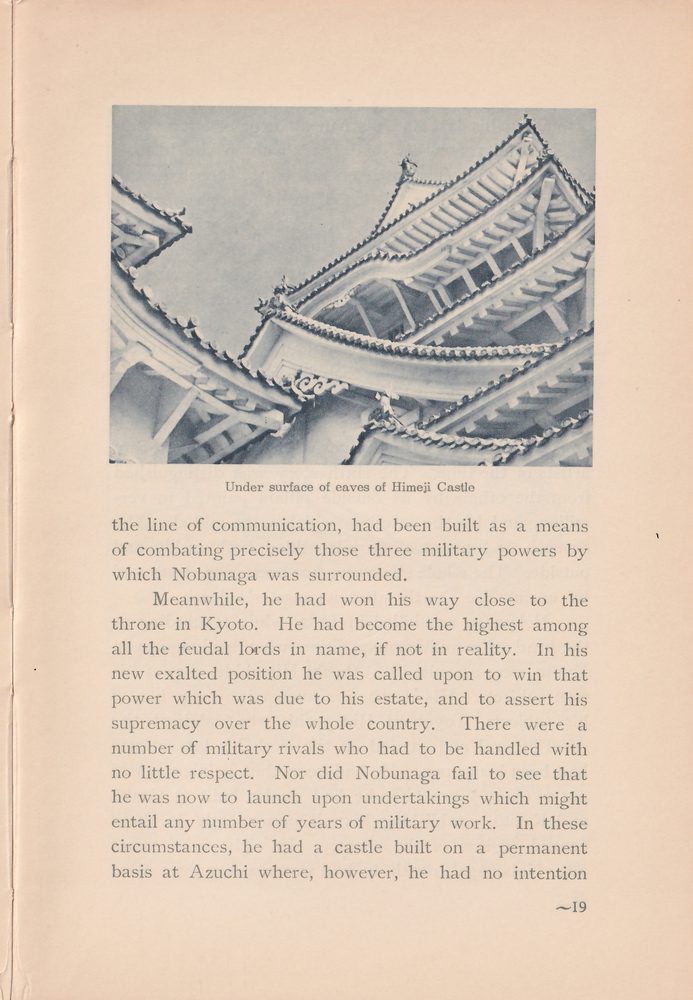
the line of communication, had been built as a means of combating precisely those three military powers by which Nobunaga was surrounded.
Meanwhile, he had won his way close to the throne in Kyoto. He had become the highest among all the feudal lords in name, if not in reality. In his new exalted position he was called upon to win that power which was due to his estate, and to assert his supremacy over the whole country. There were a number of military rivals who had to be handled with no little respect. Nor did Nobunaga fail to see that he was now to launch upon undertakings which might entail any number of years of military work. In these circumstances, he had a castle built on a permanent basis at Azuchi where, however, he had no intention
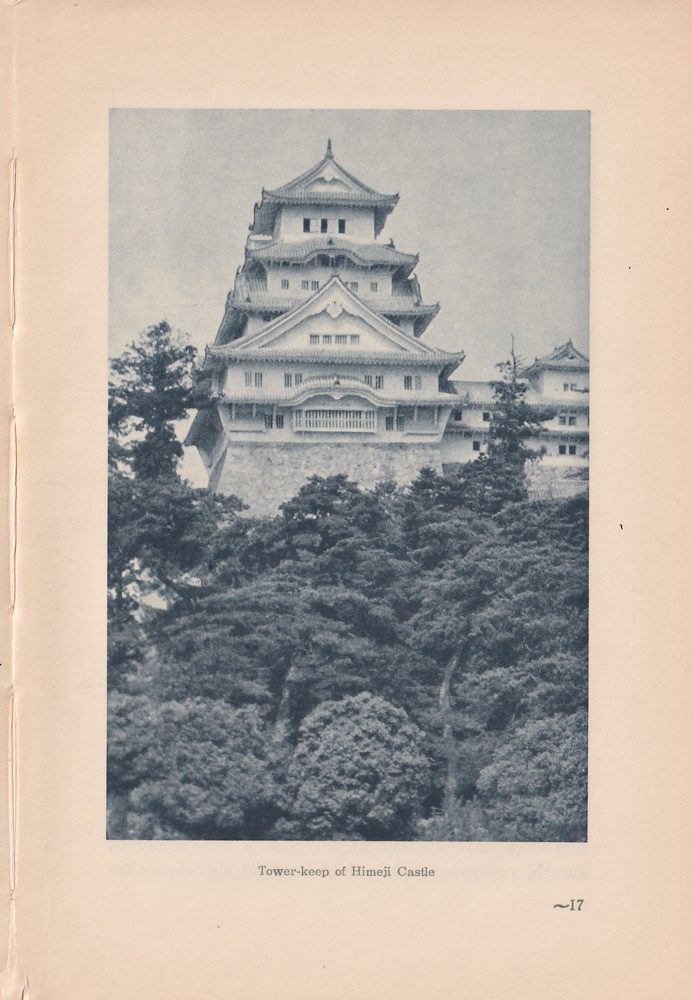
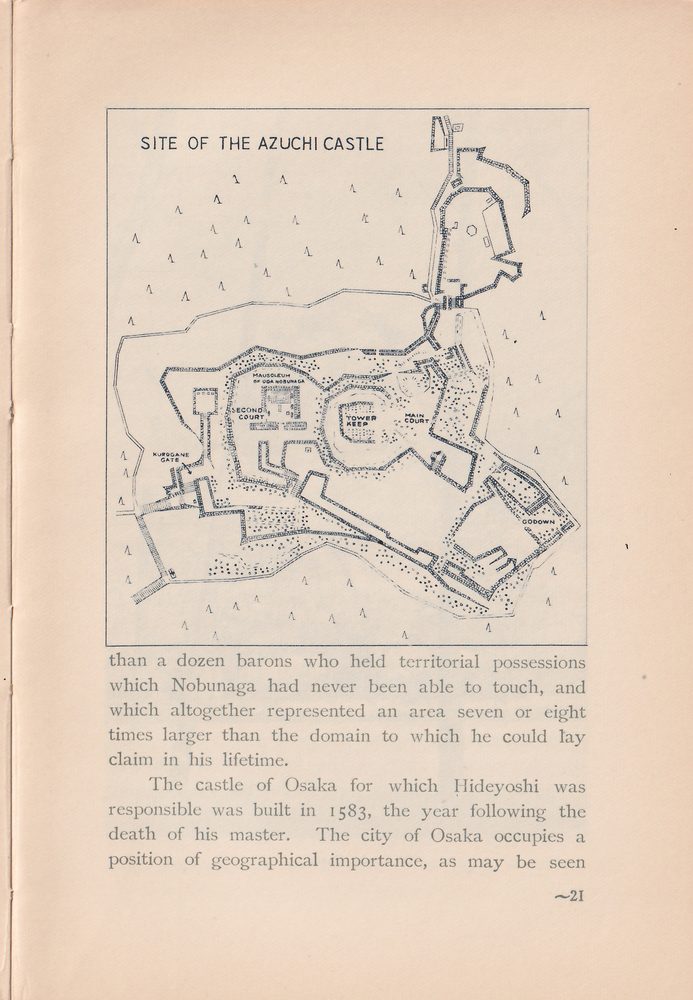
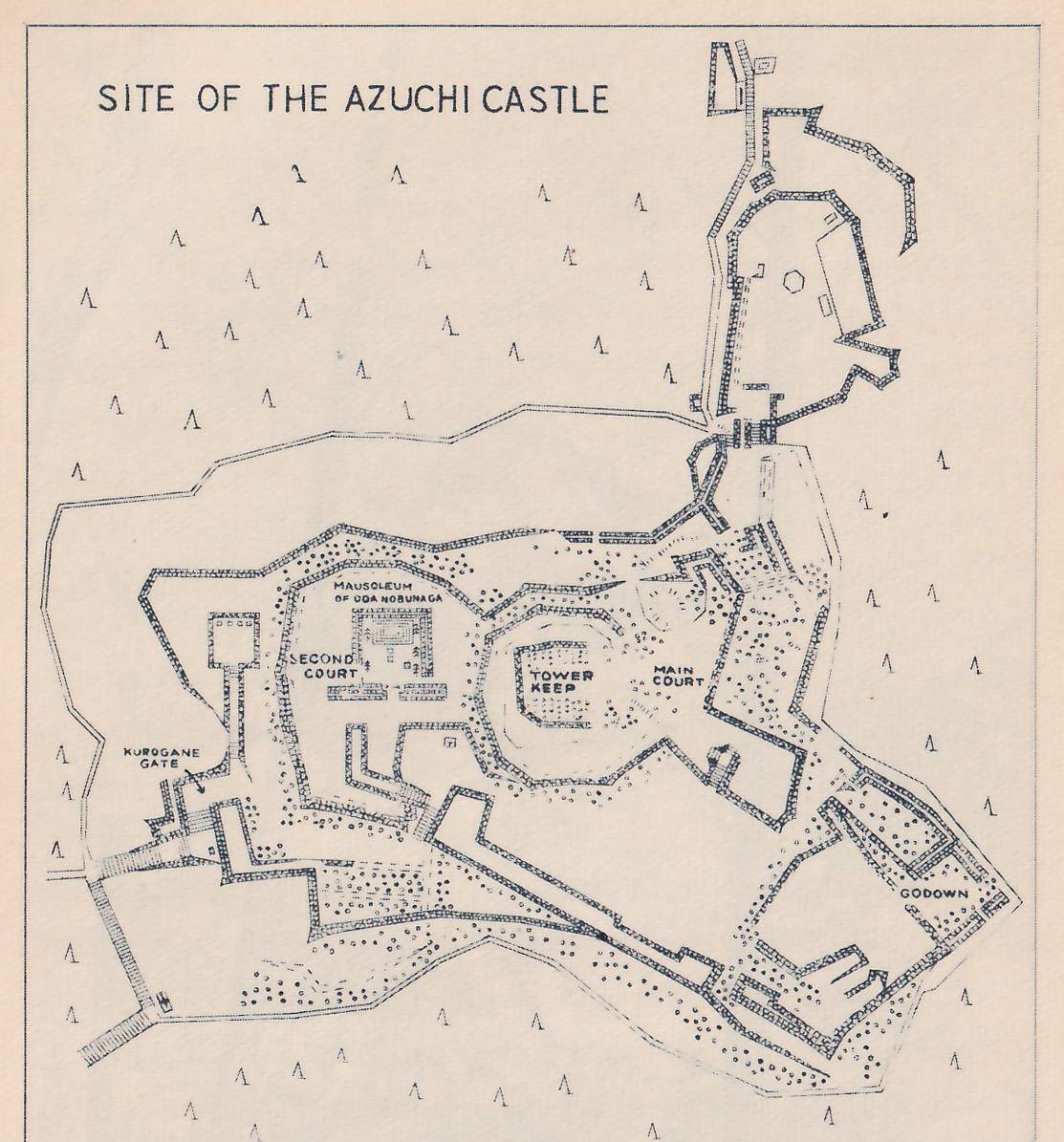
of making his last and permanent home or stronghold. As his military career made an epoch in the history of Japan, so his new castle opened a new epoch in the art of castle-building. It stood on a promontory rising 660 feet and sheer out of the water, by which it is surrounded on all sides, as if it were an islet. The highest point was crowned with a tower-keep. Around this were several courts built upon a series of rising ground. While the whole conception was not exactly a new departure as a type of “mountain castle,” its tower-keep represented a new epoch in castle architecture.
The main tower was formed of seven stories above and of one floor underground. The interior of each story was painted with decorative designs by first-rate artists of the time. The sixth story was distinguished from the others by its outside pillars painted in vermilion, and by the interiors which were gilded. The seventh or topmost story was gilded both inside and outside. The whole structure, however, was destroyed by enemy fire shortly after its master’s death.
Nobunaga was killed in 1582, while proceeding at the head of a military expedition, when his lodgings in Kyoto were assaulted by Akechi Mitsuhide, one of his own subjects. His death was avenged by another of his subjects, Toyotomi Hideyoshi, who subdued the rebel general and carried on the work his late master had been bent upon. He had been thus gaining power not so many years when he had castles built at Osaka and Kyoto, establishing himself permanently in these central regions of the country. In eight brief years after Nobunaga’s death, he had won mastery over more
than a dozen barons who held territorial possessions which Nobunaga had never been able to touch, and which altogether represented an area seven or eight times larger than the domain to which he could lay claim in his lifetime.
The castle of Osaka for which Hideyoshi was responsible was built in 1583, the year following the death of his master. The city of Osaka occupies a position of geographical importance, as may be seen
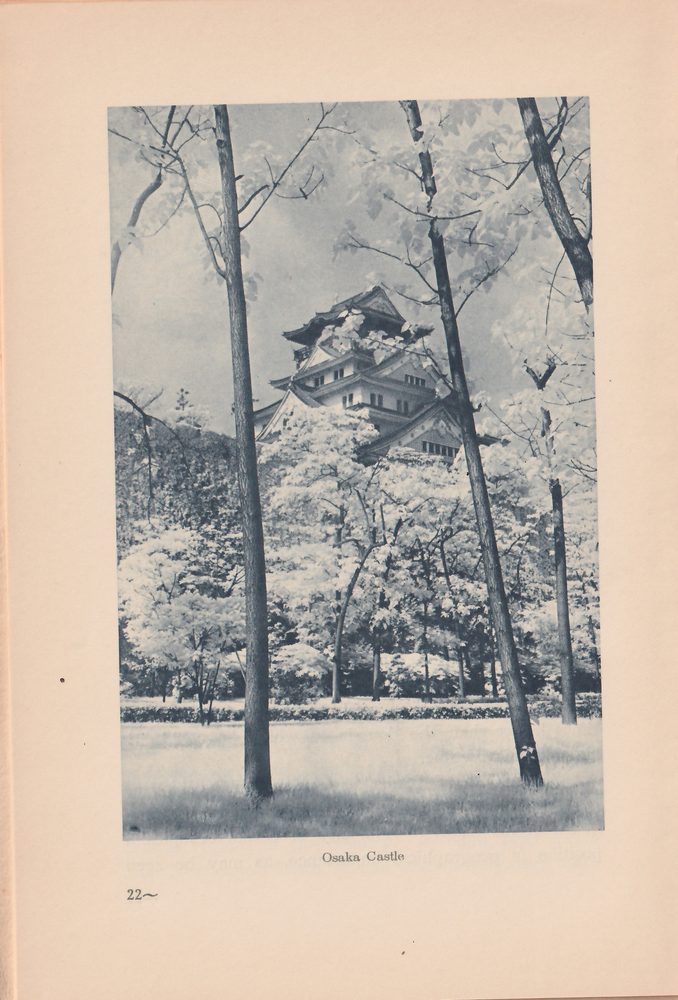
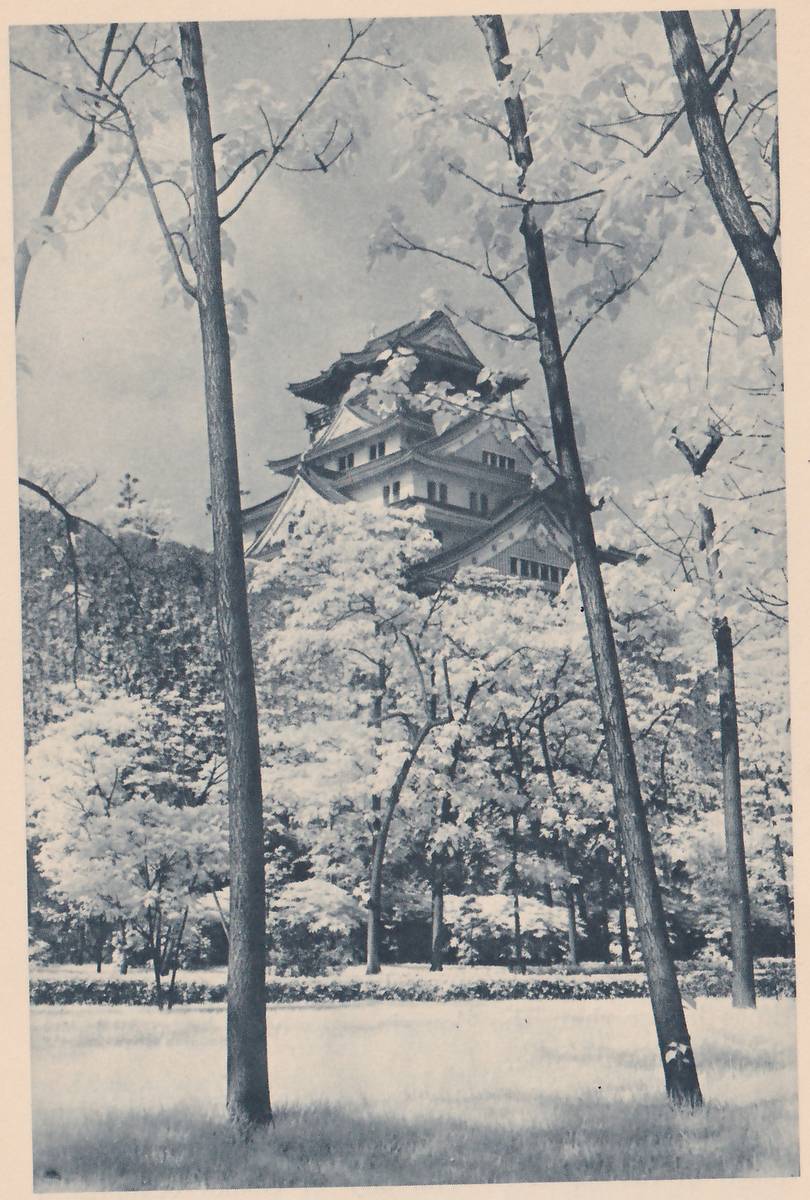
from its present position as the first commercial and industrial city of the country. Nobunaga early had an eye to this place as the base of his activity, though his idea was not to be realized, and his mantle, after his unexpected death, fell upon Hideyoshi’s shoulders. In his hands the whole work of unifying the war-worn country went on as if nature herself were working out her own destiny. The castle of Osaka was begun in 1583 and completed three years later. It was a castle of far greater dimensions than that of Azuchi and situated at a place of very much greater importance. At the time of building this ambitious stronghold at Osaka, Hideyoshi was on the eve of opening his contest with a number of men of undisputed military strength, each of whom had an eye to the highest military regency of the country. The whole nation, too, had at this period reached a state of exuberant energy and vigour, such as it had not seen for ages. As evidence, for instance, of the time marked by such strong national vitality, attention may be called to the huge blocks of stone, measuring some score feet in height, used in building the walls of Osaka Castle, and to the tower-keep designed with eight stories at an extravagant cost in gold and labour. The tower-keep was roofed with gilded tiles. Upon the ridge of the topmost roof were placed a pair of dolphins in gold. The walls of the upper sections were ornamented with designs of cranes and tigers. The crane is believed in Japan to be a bird capable of living a thousand years, and, for the same reason, regarded as symbolizing long, unchangeable prosperity. The tiger, consider-
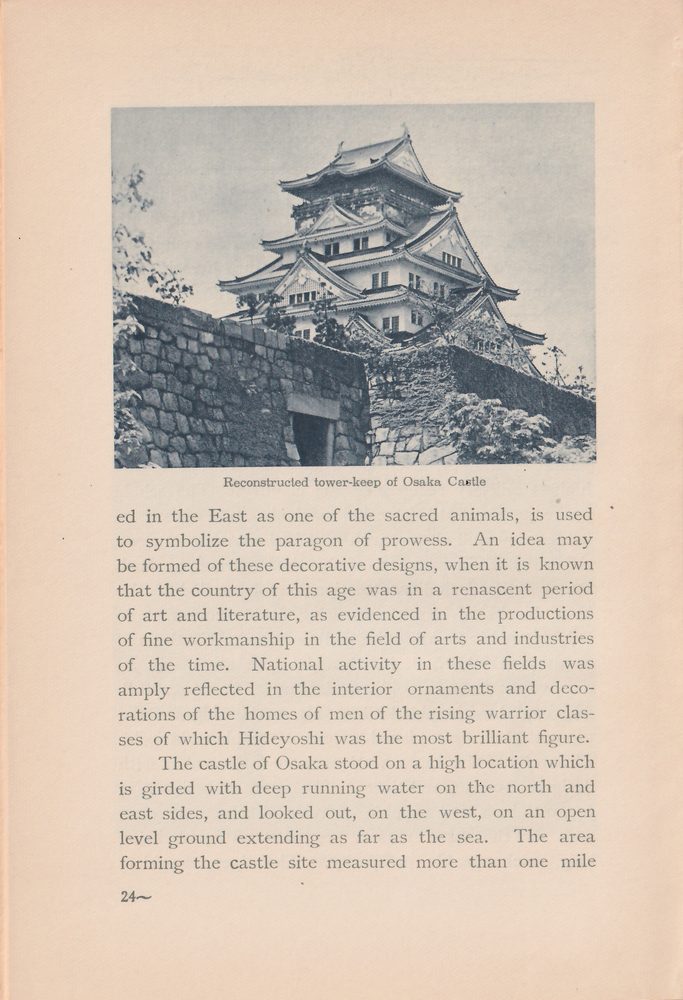
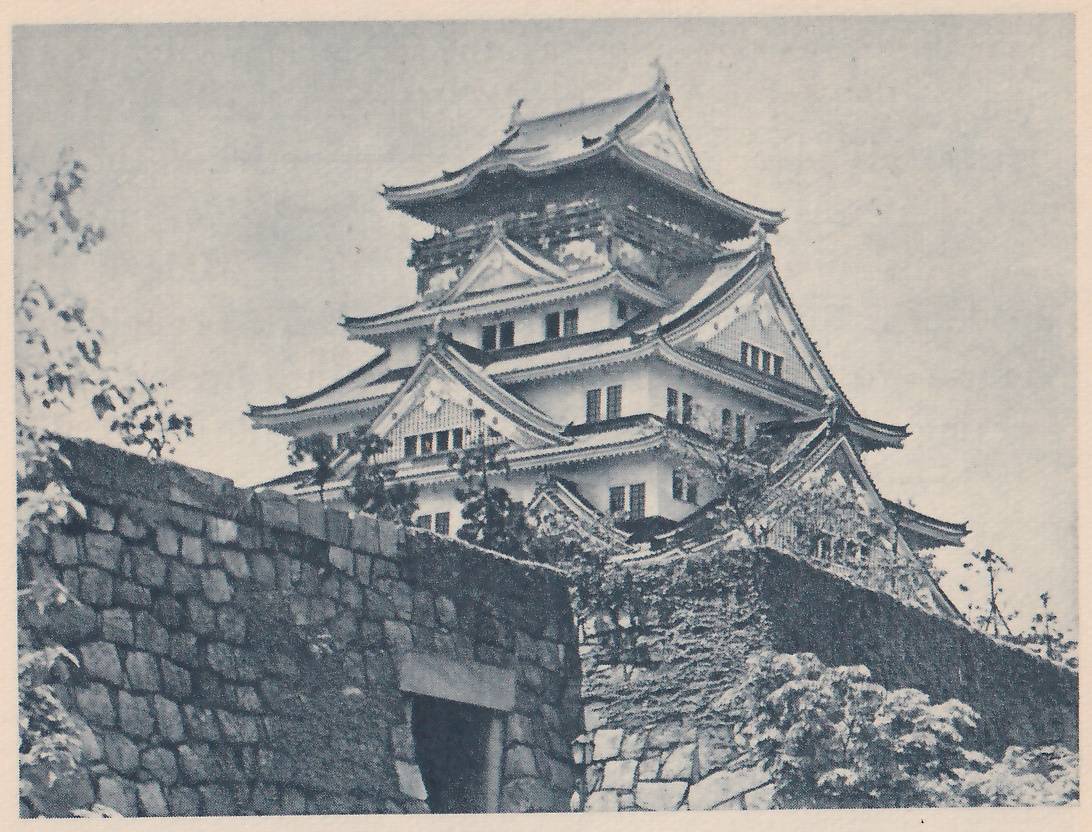
ed in the East as one of the sacred animals, is used to symbolize the paragon of prowess. An idea may be formed of these decorative designs, when it is known that the country of this age was in a renascent period of art and literature, as evidenced in the productions of fine workmanship in the field of arts and industries of the time. National activity in these fields was amply reflected in the interior ornaments and decorations of the homes of men of the rising warrior classes of which Hideyoshi was the most brilliant figure.
The castle of Osaka stood on a high location which is girded with deep running water on the north and east sides, and looked out, on the west, on an open level ground extending as far as the sea. The area forming the castle site measured more than one mile
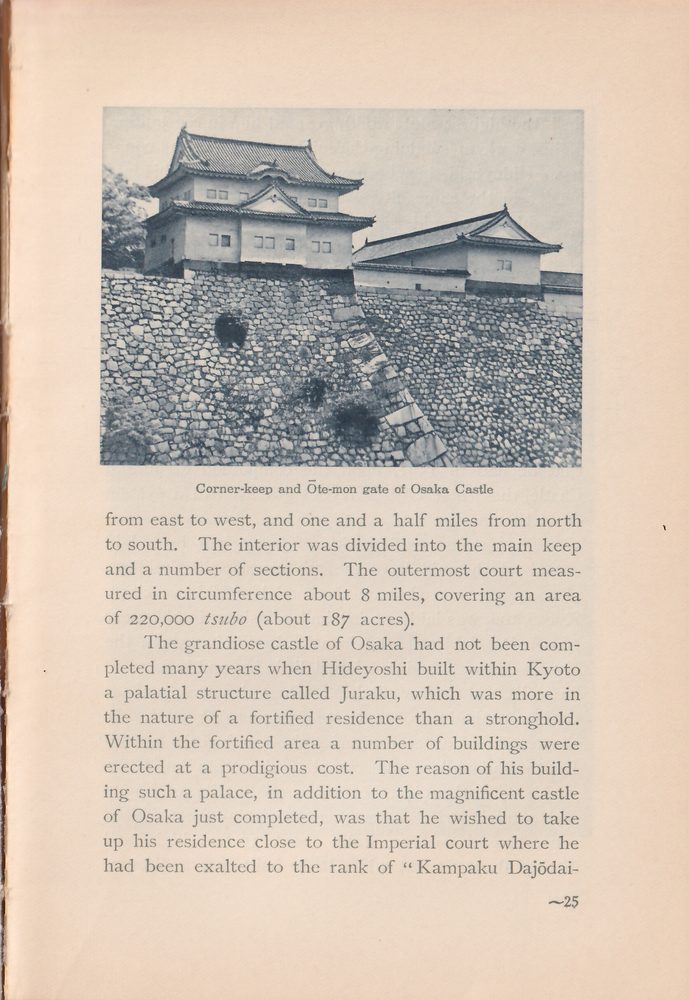
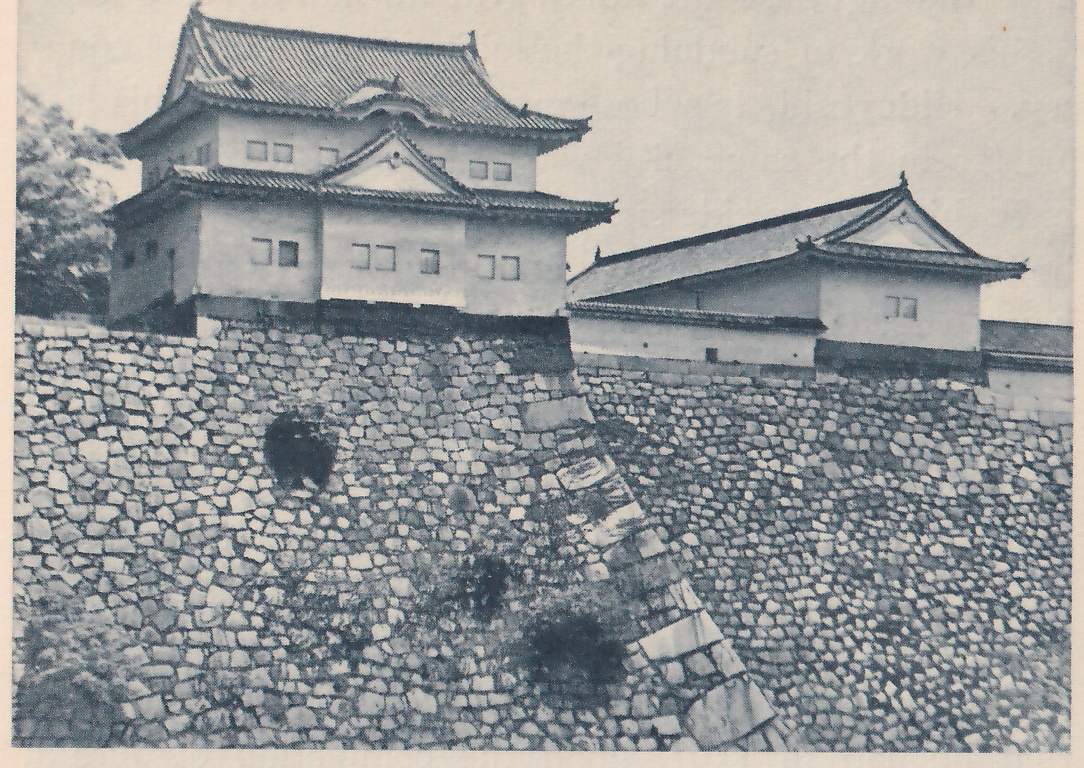
from east to west, and one and a half miles from north to south. The interior was divided into the main keep and a number of sections. The outermost court measured in circumference about 8 miles, covering an area of 220,000 tsubo (about 187 acres).
The grandiose castle of Osaka had not been completed many years when Hideyoshi built within Kyoto a palatial structure called Juraku, which was more in the nature of a fortified residence than a stronghold. Within the fortified area a number of buildings were erected at a prodigious cost. The reason of his building such a palace, in addition to the magnificent castle of Osaka just completed, was that he wished to take up his residence close to the Imperial court where he had been exalted to the rank of “Kampaku Dajōdai-
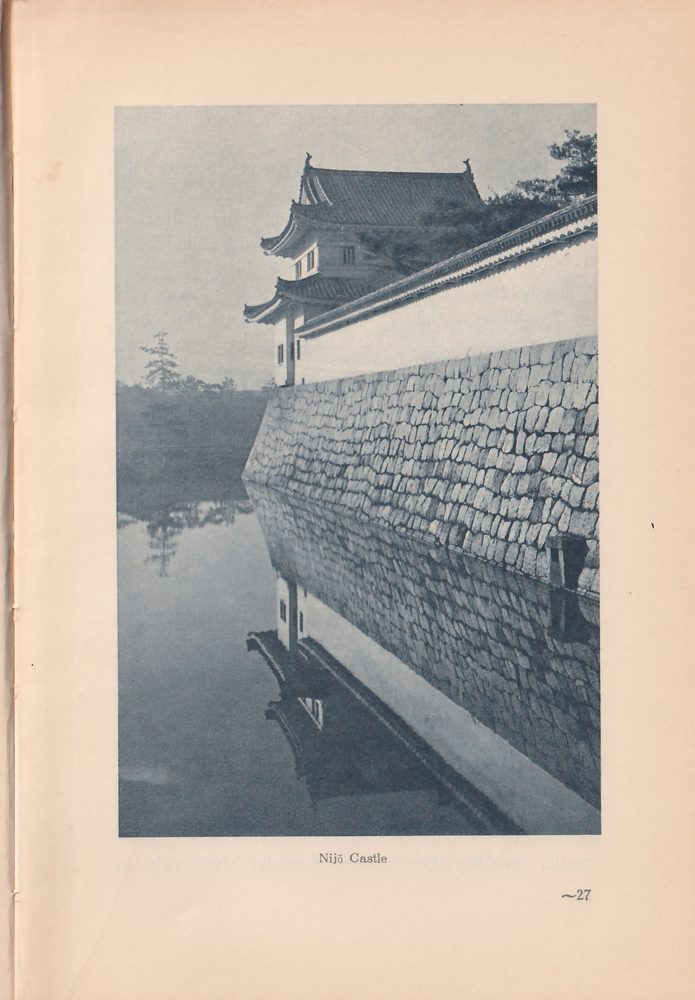
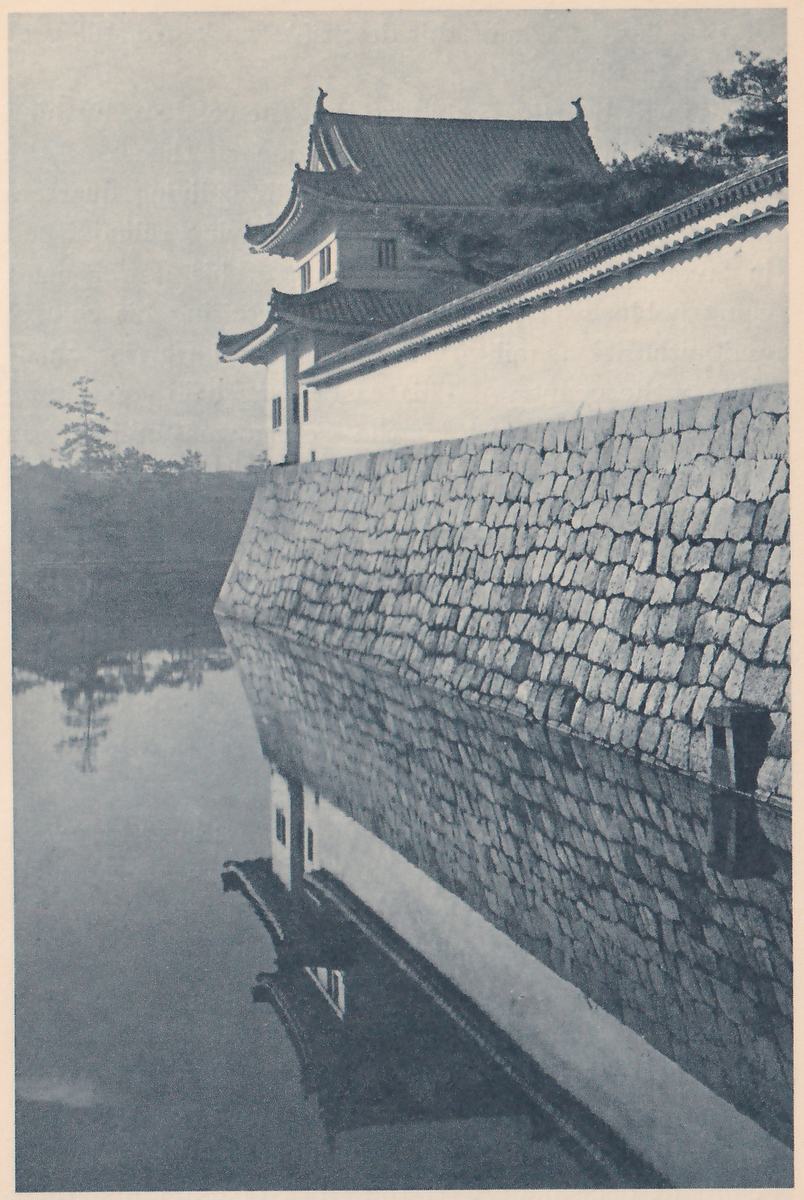
jin” (the highest court rank), granted him in recognition of his work of subduing the military strife of the country. Hideyoshi, in whose memory the death of his late master in the same city was still fresh, saw reason to have his new residence well fortified. Juraku Castle, however, was abandoned in a few years, and would have passed into history altogether, had it not been that a castle of the same kind was later built by the Tokugawas at Nijō, Kyoto, a little way to the south of the site on which once its model had stood. This castle of Nijō is preserved as an Imperial palace and is much the same as it was in the early days of the Tokugawas.
What must also be noted of Hideyoshi’s work is that he had in 1591, upon the completion of Juraku Castle, the whole city of Kyoto girded with a system of earthen walls.
The earliest capital city of Japan had been laid out about the middle of the 7th century in the form of a square somewhat on the model of Chinese cities. Kyoto, too, was laid out in similar fashion in the year 794 A. D. Subject to no invasion by foreign races, the Kyoto defences had developed little beyond low earthen walls and narrow ditches. These defences, such as they were, had no occasion to be put to the test. In the course of a few centuries the earthworks around Kyoto had fallen into complete decay. But Hideyoshi, with the object of securing the city of Kyoto and of giving rise to prosperity within the enclosed zone, caused earthen walls about 35 feet high, and ditches about 65 feet wide, to be built over a distance
of 17 miles. Parts of this defensive work are still preserved to this day.
It was by Hideyoshi also that the castle of Fushimi was built in 1594 upon an elevation southeast of the city of Kyoto. This was meant both as living quarters and seat of government of him who, having relinquished in favour of his adopted son part of his power as a court noble, was still bent upon exercising his control and authority as military leader over all warrior chieftains of the country. This castle was held for a time after his death in trust by the Tokugawas until it was demolished, the structures in one form or another being transferred to castles in Osaka, Tokyo and elsewhere, and the inner living quarters presented to temples and cloisters around Kyoto. Of this castle, consequently, there remains in Fushimi only an elaborately-carved gate, which may be seen at a Shintō shrine called Gokō-no-miya. The centre of the site of this ancient castle forms today the Mausoleum of the Emperor Meiji.
In 1598 Hideyoshi died. Two years later his close retainers and the Tokugawas were at war, the armed struggle resulting in victory for the Tokugawas. In 1603, Ieyasu, the founder of the Tokugawa régime, was appointed Shōgun, i. e. the military regent of the country. Both in name and reality he became Captain-General of the country. The Tokugawas, setting up their seat of government at Edo (now Tokyo), where they had made their headquarters some years before, at once undertook the work of extending their castle, ordering the feudatories under their rule to
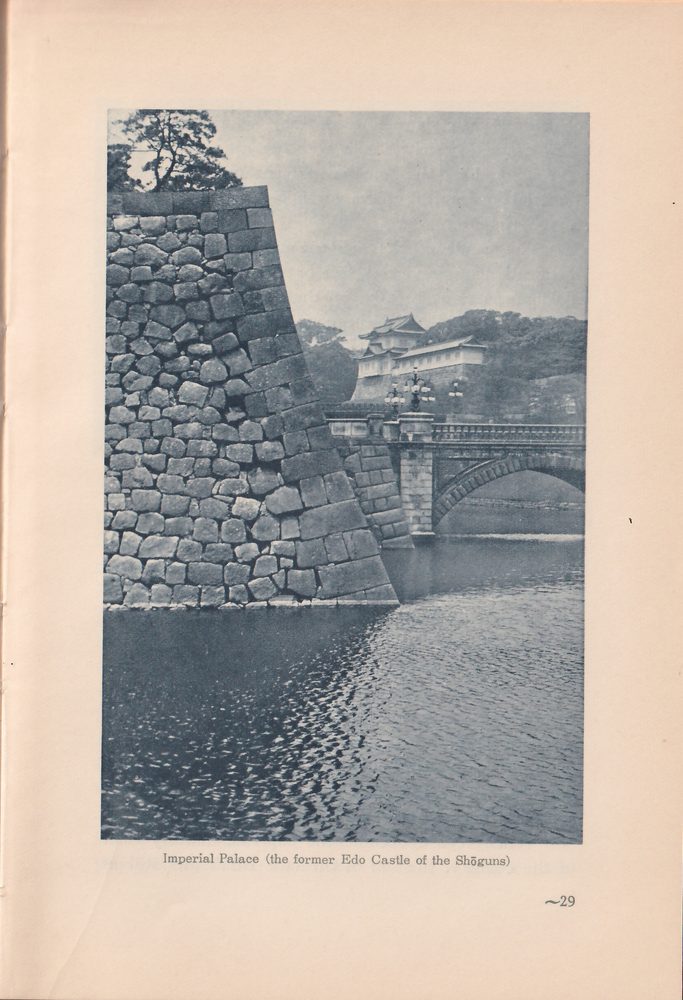
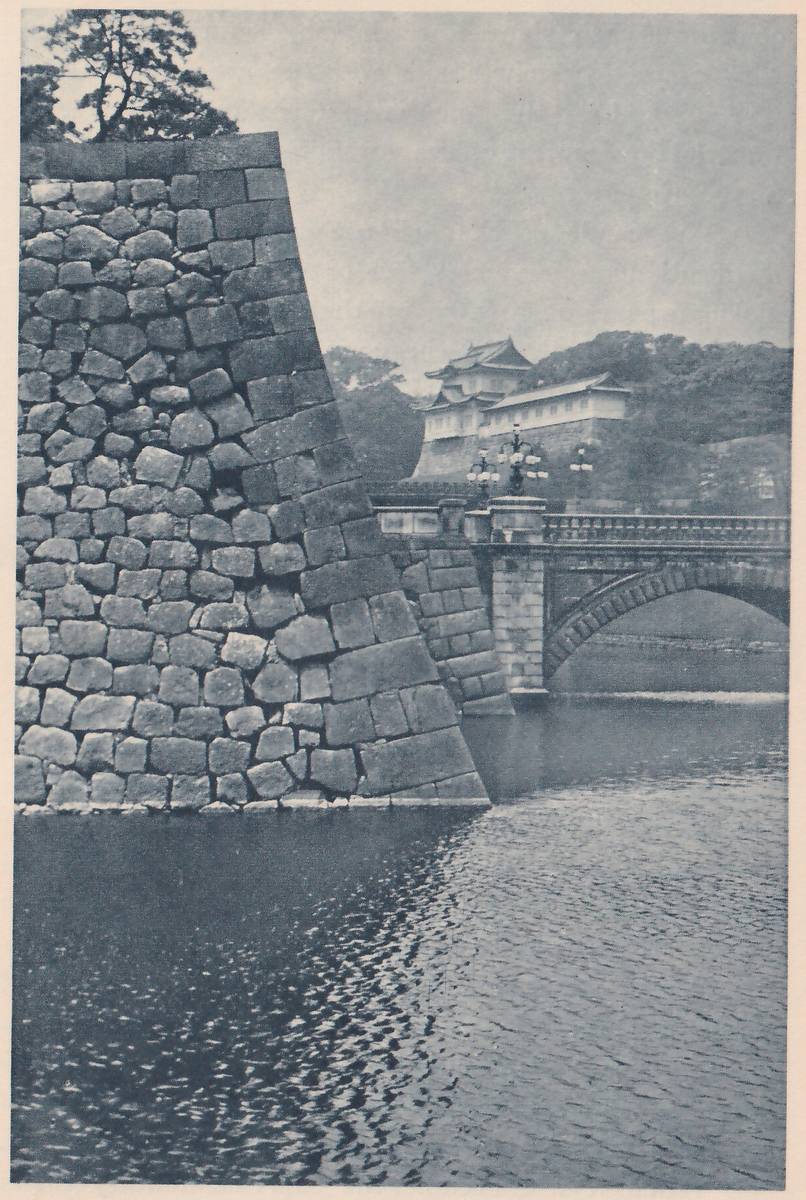
contribute their share towards the gigantic enterprise. This castle formerly stood over the areas which are now marked by the Imperial palace and a number of Imperial government offices, forming the veritable centre of the Empire.
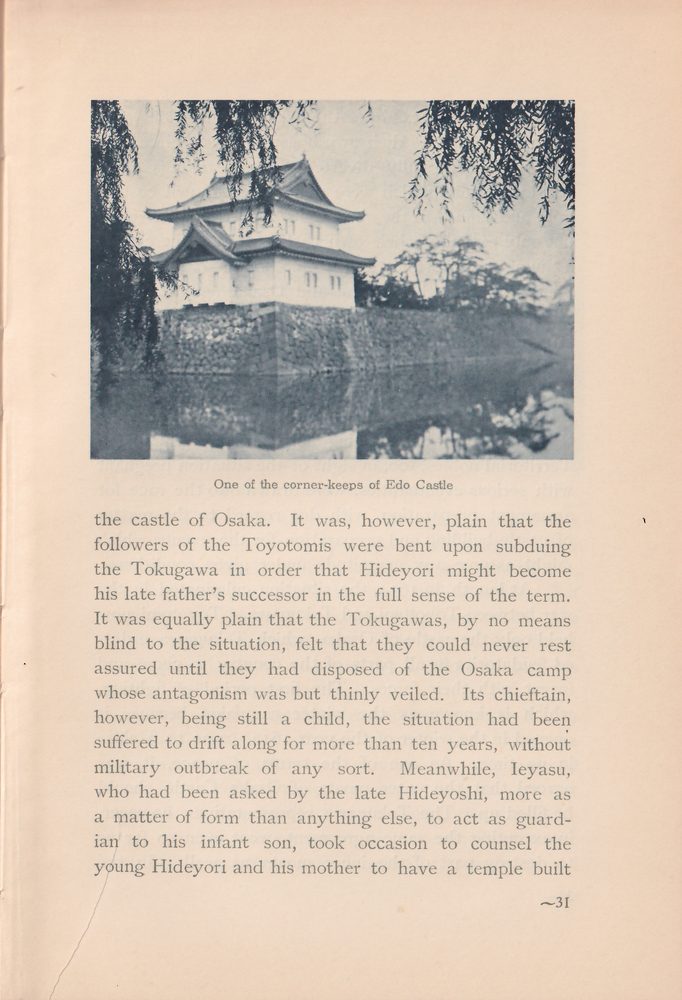
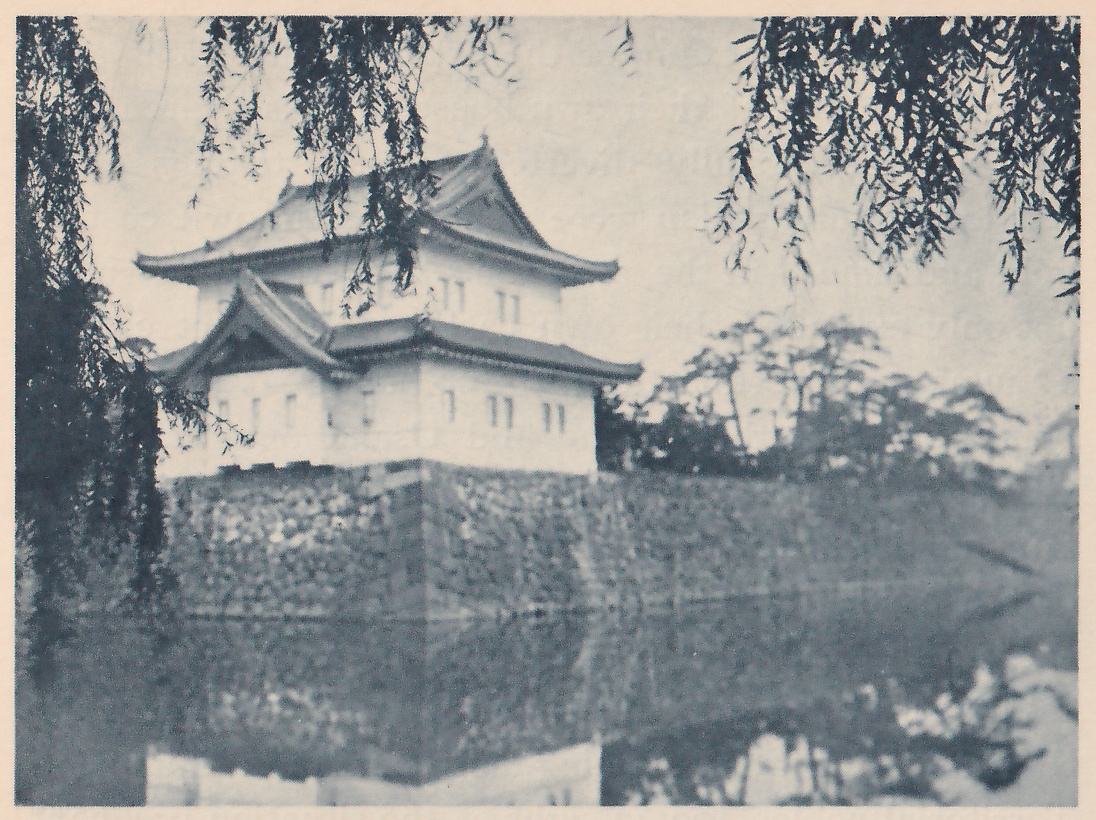
The castle of Edo had been little more than a fortification of provincial size or importance until the Tokugawas came to take up their quarters there. In 1590, Ieyasu, following the counsel of Hideyoshi, who was keenly alive to its strong strategic position, made his headquarters there. Ieyasu’s scheme of extending the same castle, launched immediately after his appointment as Shōgun and carried on by a number of feudatories on whom he imposed his will, resulted in the creation of a castle twenty times as large as it was originally. In the main court, placed at the centre of the huge fortifications, he provided his living quarters and the seat of central government. Upon the eminence running out westwards from the centre was established the western court, of about the same dimensions as the main court, which was the home of a retired Shōgun or of an heir to the military sceptre secured in the house of the Tokugawas. With these courts as the nucleus there were second and third courts, together with certain other courtly establishments. The whole castle, covering an area of 10 miles in circumference, was not completed until 1636, or about thirty years after the work was begun, after one of Ieyasu’s grandsons had been in power for more than a decade.
When Ieyasu became the supreme military ruler of the country, the son of the late Taikō was still at
the castle of Osaka. It was, however, plain that the followers of the Toyotomis were bent upon subduing the Tokugawa in order that Hideyori might become his late father’s successor in the full sense of the term. It was equally plain that the Tokugawas, by no means blind to the situation, felt that they could never rest assured until they had disposed of the Osaka camp whose antagonism was but thinly veiled. Its chieftain, however, being still a child, the situation had been suffered to drift along for more than ten years, without military outbreak of any sort. Meanwhile, Ieyasu, who had been asked by the late Hideyoshi, more as a matter of form than anything else, to act as guardian to his infant son, took occasion to counsel the young Hideyori and his mother to have a temple built
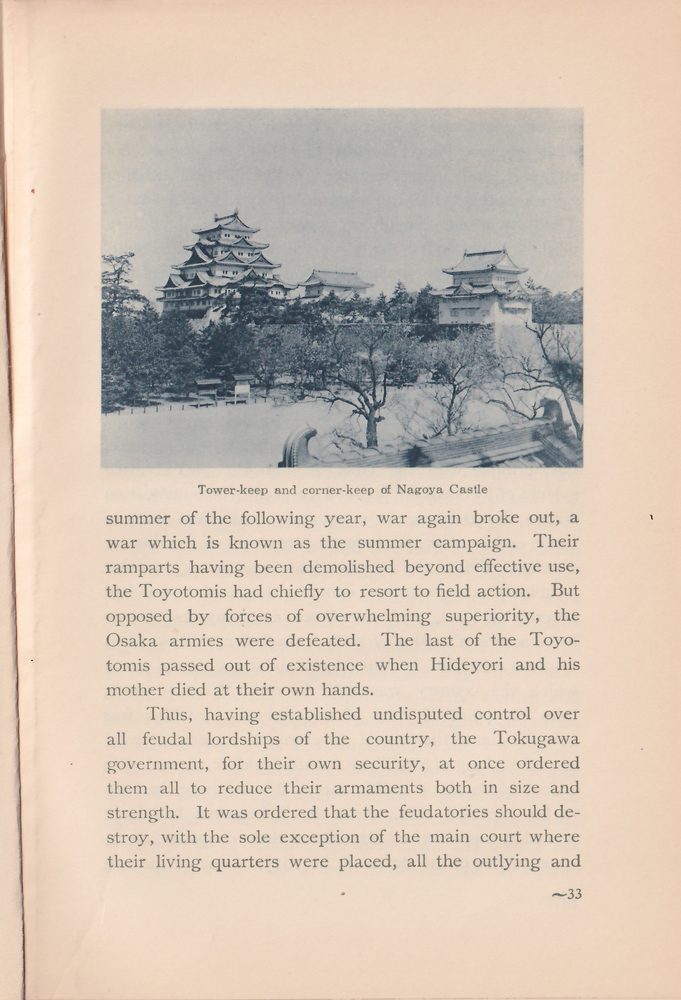
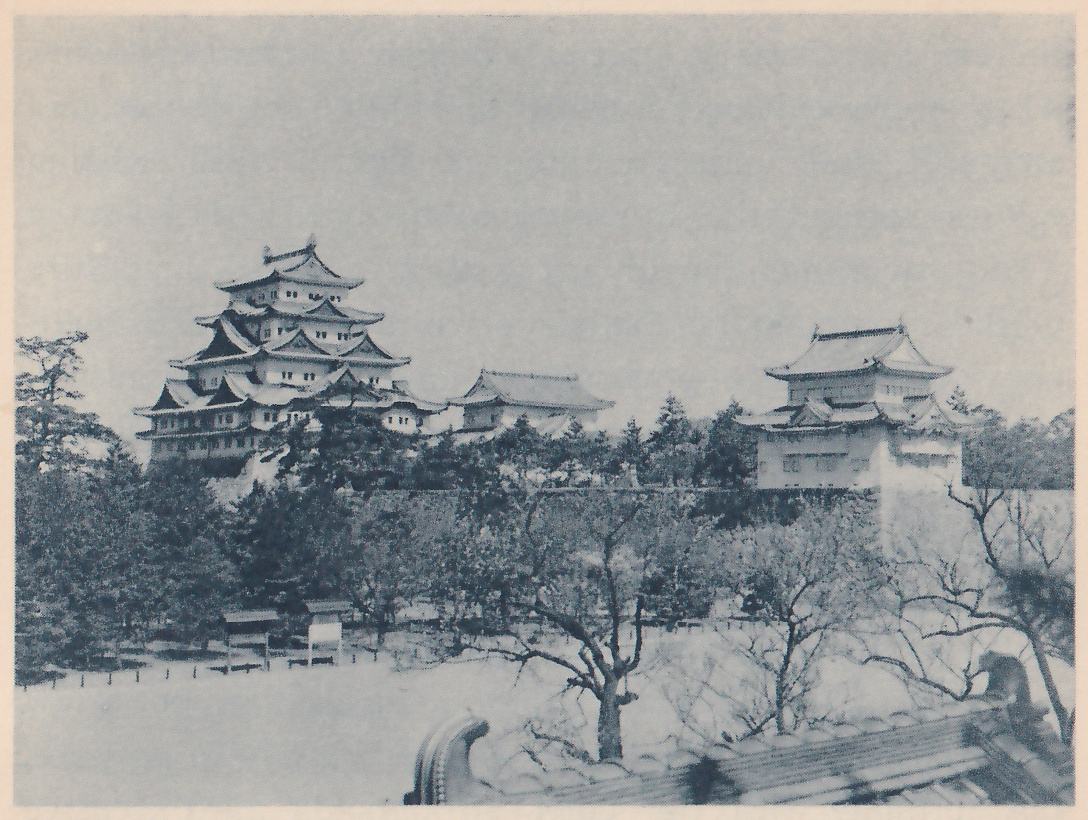
for the welfare not only of the departed illustrious soul but also for that of their own house. Thus their attention was successfully diverted to undertakings of a religious nature, which were done at their own cost in gold and time. In the meantime the Tokugawa rulers not only extended their own castle at Edo but caused a number of fortifications to be made at important points between their home and Osaka against which all their military preparations had been directed. Among these new fortifications mention may be made of the castles at Nagoya, Hikone, Shizuoka (known at the time as Sumpu), etc. In addition, strongholds were set up at several places in the vicinity of Kyoto against the war which was becoming more and more imminent. Territorial nobles, too, in sight of the situation pregnant with serious eventualities, were drawn into the race for armament preparation, with due regard to the matter of castle-building and preparation for the events which might assume any magnitude under given conditions.
At length, in 1614, the situation culminated in the war between Toyotomi and Tokugawa. Toyotomi now held only the castle of Osaka, which Tokugawa ordered feudatories in all parts of the country to come and invest with their forces. The first period of fighting, which is known as the winter campaign because it opened in the winter of the year 1614, came to a close in no time. As one of the terms of peace, it was agreed that the outer moats of Osaka Castle should be filled up. The Tokugawa representatives, however, in executing the same agreement, went even so far as to destroy part of the inner moats as well. In the
summer of the following year, war again broke out, a war which is known as the summer campaign. Their ramparts having been demolished beyond effective use, the Toyotomis had chiefly to resort to field action. But opposed by forces of overwhelming superiority, the Osaka armies were defeated. The last of the Toyotomis passed out of existence when Hideyori and his mother died at their own hands.
Thus, having established undisputed control over all feudal lordships of the country, the Tokugawa government, for their own security, at once ordered them all to reduce their armaments both in size and strength. It was ordered that the feudatories should destroy, with the sole exception of the main court where their living quarters were placed, all the outlying and
therefore secondary castles of their fortified systems. They were enjoined against building a new castle of any sort, and against making repairs in their existing castles without the approval to be obtained from the Yedo government, upon presenting in detail the nature of the repairs to be made, or without the superintendency of the same government on the same occasion. In these circumstances, a period of nearly three hundred years which followed was to see not a single new castle.
The feudal lords, in order to guard and protect their territorial possessions, had formerly been obliged to maintain, in addition to their main castles, not a few castles, secondary in position and subsidiary in purpose, but forming with the chief strongholds an extensive system of fortification planned to secure communication within the borders, to command a sufficient field of vision and to offer an adequate protection of the border districts. Before the country had been brought under a unified administrative control, the feudatories had several at least, and sometimes as many as two or three scores of castles of such a character. These fortifications dwindled in importance under the age of peace which the country was now to see. What is more, from the point of view of national peace, which was now the aim of the central government, no local activity or undertaking of a military nature could be viewed with either approval or indifference. It was therefore only to be expected that, when the Tokugawas had been placed in a position to administer their despotic rule in consequence of the downfall, in 1615, of one of the two
influences between which the country had been divided, they should lose no time in ordering the feudatories to destroy all but their own main castles. Thus, by command of the central government, the feudatories destroyed their subsidiary strongholds. From what has already been said it is easy to see that the importance of these subsidiary castles had declined. How then did the feudatories resolve the difficulty? They now concentrated at their main castles, the guards, arms and provisions which had hitherto been kept in their subsidiary strongholds. In these circumstances, the main castle of which each feudal domain was possessed, now developed into an establishment on a scale larger than it had been in the past. It must be noted that in the early days of feudalism the samurais, or men of the armed profession, lived in many cases in rural districts and sometimes engaged in agricultural work. This state of affairs continued until about the 14th century, when they found themselves no longer safe or able to live scattered and individually, in consequence of civil wars breaking out on many sides. They had to be brought together at castles and close to their liege lords so as to be kept constantly on guard against any emergency. These men swelled the population of the castles and castle towns, contributing to their material development. Under the rule of the Toyotomis and of the Tokugawas, a clear line of distinction was drawn between the warrior and the agricultural classes. Members of the agricultural class, from which all arms were taken away, were ordered to return to the farms and keep themselves busy there only. The armed classes, at the same time,
were ordered to make their homes in towns and cities, and were enjoined against engaging in any pursuit but their own. When the minor castles were ordered to be done away with, streams of armed men began to turn away from the defunct citadels in the provinces and pour into the main castles or their adjoining towns to take up their living quarters, there developed towns and cities of considerable populations with the feudal castles as their centres. Under the peaceful conditions of life, which were now the order of the day, commerce and industry saw great developments. People engaged in these lines, in order to cater for the demands of the armed classes which were consumers, began to flock around the castles, eventually to give birth to the quarters formed exclusively for commerce and industry in the
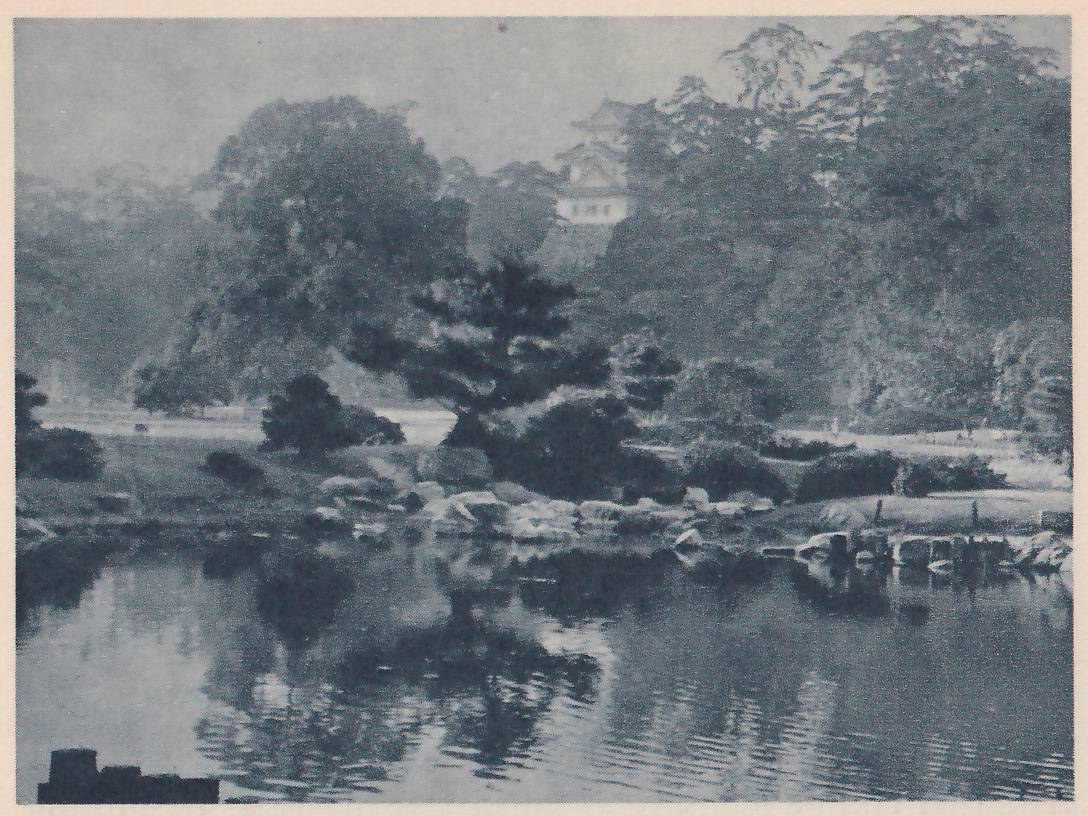
close neighbourhood of the fortified areas. The present towns and cities of Japan, for the most part, had their foundations laid in such conditions as mentioned above, at one time or another about three hundred years ago. In some cases the feudal lords, in view of the growing importance that such commercial and industrial quarters had come to assume in the economic activity flourishing within their own domains, saw cause to throw up earthworks and ditches around those parts of their towns.
All these castles were surrendered to the Imperial central government in the second year after the Restoration, viz. 1869, when the feudal system was abolished. Today it is a rule, however, to make national treasures of buildings of any importance and to preserve them as such.