




Cursive · sōsho 草書 · VC5J
Cursive or sōsho (草書) styles are the most simplified styles and Master Takase's favorite. While very beautiful, these styles are often difficult to read even by specialists.
福禄寿 fukurokuju Good Fortune, Prosperity and Long Life
Good fortune, prosperity and long life.
Hand-brushed by Master Eri Takase
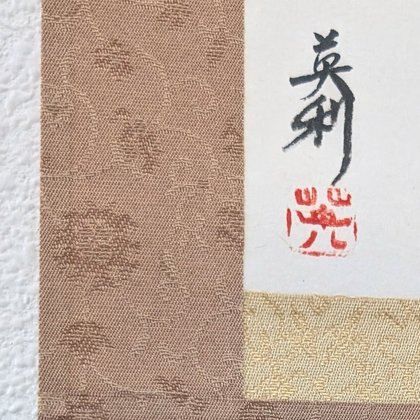
Master Japanese Calligrapher Eri Takase brushes your scroll by hand when you order it. Each scroll bears her red seal, 英利, and her signature.
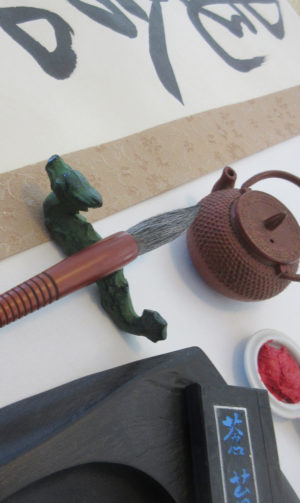
Eri Takase was born and raised in Osaka, Japan, and holds the rank of Shihan, the highest rank in Japanese calligraphy, from the Bokuteki-kai and the Bunka-shodo.
12 1/4" × 43" Japanese Scroll
The scrolls are 12 1/4" W × 43" H (31 × 109 cm), with woven damask borders and layered Japanese paper (washi), designed to last generations. The scrolls themselves are made by a scroll maker in Gifu, Japan, and we have worked with them for over two decades.


Ships in 1-3 days from Washington State
Your scroll is brushed when you order it and completed within 1 to 3 business days.
Your scroll ships from Master Takase's studio in Washington State. Shipping is calculated at checkout. We ship worldwide.
Includes detailed explanation, gift-ready
Your scroll arrives boxed, with a printed insert describing the words in detail.
Sending it as a gift? Add your message at checkout and we will include it with the insert.
30-day money-back guarantee
Every order is covered by our 30-day money-back guarantee. If your scroll arrives damaged, or we made an error, we replace it or refund you in full, including shipping.
Explanation
福禄寿 (fukurokuju): good fortune, prosperity and long life.
福禄寿 is three wishes in three characters: good fortune, prosperity and long life. In Japan the same characters are also the name of one of the Seven Lucky Gods. Fukurokuju is a short old man with a very long head and a long beard, with a crane beside him. He is said to hold all three blessings. The three characters say good fortune, an official's stipend and long life. The stipend has come to mean prosperity. Whether you take it as the wish or as the god is yours.
A Japanese book written before 1724 calls the three in 福禄寿 what people of all four classes wish for. On New Year's Day, the book says, the three are celebrated and prayed for before anything else. A sixteenth-century commentary on the Tale of Genji says it is hard to have all three.
One encyclopedia says the god 福禄寿 came to Japan chiefly as a subject of Zen ink painting. In 1819 a painting of the god was mounted as a hanging scroll and sent to a feast for a man turning fifty. The words written for the painting say people want good fortune, stipend and long life, and that the three are whole together. A dictionary of 1889 to 1891 gives the god's everyday name, Fukurokujin.
The three characters name what a Chinese life wished for, blessing, an official's stipend and long life, which China painted by the Ming as three star gods; Japan made them one figure, known first as a painting in its Zen temples, the earliest known a single scroll in a Kyoto temple's inventory of 1410.
Learn More About These Words
We want you to be as happy with the meaning as you are with Master Takase's art. To learn more, visit Philology of 福禄寿.


