


Font Design · VD5J
Font Designs are Master Takase's unique designs. Often she will use her own style or a combination of fonts and, without a classification limit, create exactly the look she wants.
柔能制剛
jū yoku gō wo seisu
The Soft Overcomes the Hard
The soft overcomes the hard: the supple turns aside the strong and wins in the end.
Master Takase creates this beautiful scroll when your order is placed. Personally preparing the ink and brushing your art that proudly bears her signature and seal. This is an original work of art.
Description
柔能制剛 (jū yoku gō wo seisu): the soft and supple overcome the hard and strong.
柔能制剛 is read in Japanese as a sentence, 柔能く剛を制す. The supple deftly turns aside the sharp point of the hard and strong, and wins in the end. By extension, the soft and weak prevail over the hard and strong, against expectation. A Japanese dictionary sets beside it the saying that the willow is not broken by the snow. Whether it is for the judo mat or for the conduct of a life is yours.
In a puppet play of 1721, the mother of the strategist Yamamoto Kansuke asks Takeda Shingen how he would use his soldiers. He feeds a fire twig by twig until the kettle boils, and she answers with the saying. In 1748 the last act of the 忠臣蔵, the night attack of the forty-seven rōnin, opens on it. In 1755 the scholar Matsumiya Kanzan wrote that the name 柔術, jūjutsu, no doubt means this saying. In 1923 Kanō Jigorō, the founder of judo, wrote that it explains one part of judo contests, not the whole of judo.
A 1925 book prints jūjutsu passages saying true softness comes out of the midst of hardness, and the soft without the hard drifts into weakness. A dictionary of calligraphy phrases printed in 1942 offers the saying as a line to brush, beside lines warning against leaning to one side. In Japanese it is also written 柔よく剛を制す. In English it has been rendered The soft can overcome the hard (1872) and Softness overcomes hardness (1974).
The four characters are a quotation in the first section of the 三略, a Chinese military book under the name of Huang Shigong, which takes them from a lost book of military sayings and warns in the same section that a state that is only soft is pared away; the earliest dated use read for this history is the emperor Guangwu's edict of 51 CE refusing his generals a war.
We want you to be as happy with the meaning as you are with Master Takase's art. To learn more, visit Philology of 柔能制剛.
Delivery
Your scroll is brushed when you order it and completed within 1 to 3 business days. It ships by USPS Priority Mail from Master Takase's studio in Washington State, boxed and ready to hang, with a printed page giving the art's English, romaji and Japanese.
Sending it as a gift? Add your message at checkout and we will include it.
Shipping is calculated at checkout from your address; within the United States it is $13 to $23. We ship worldwide, and any import charges for your country are shown at checkout before you pay.
Every order is covered by our 30-day money-back guarantee. If your scroll arrives damaged, or we made an error, we replace it or refund you in full, including shipping. Refund policy
About Our Scrolls
Master Japanese Calligrapher Eri Takase brushes your scroll by hand when you order it. Each scroll bears her red seal, 英利, and her signature.
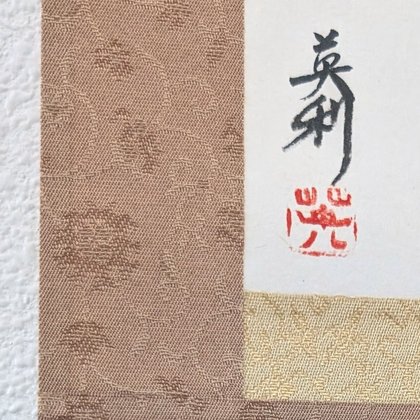
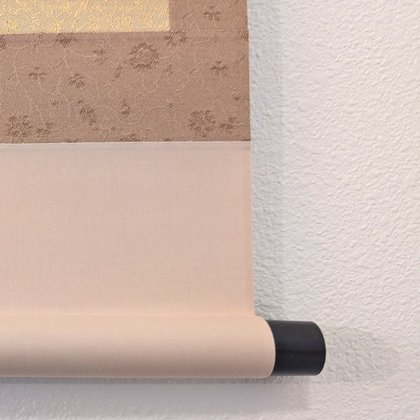
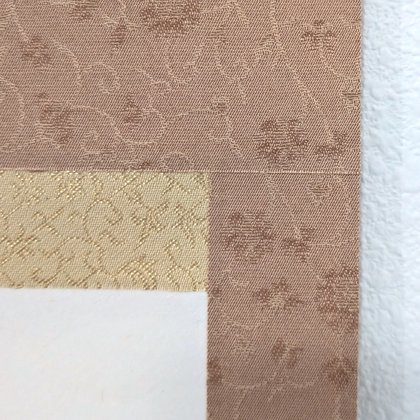
The scrolls are 12 1/4" W × 43" H (31 × 109 cm) with real silk borders and Japanese paper that are layered so the scroll hangs straight and will not warp over time. The scrolls themselves are made by Sankō (株式会社三幸) in Gifu prefecture, which has been making high quality scrolls since 1947, and we have worked with Sankō for over two decades.
Eri Takase was born and raised in Osaka, Japan, and holds the rank of Shihan, the highest rank in Japanese calligraphy, from the Bokuteki-kai and the Bunka-shodo. About Master Takase
Related products

Aikido (aikidō)
Aikido (aikidō) on a traditional Japanese Scroll by Master Eri Takase.

Always Be Creative (tsune ni shinen kufū seyo)
Always Be Creative in Japanese, 常に思念工夫せよ (tsune ni shinen kufū seyo), a hand-brushed hanging scroll by Master Calligrapher Eri Takase.

Always on the Battlefield (jōzai senjō)
Always on the Battlefield (jōzaisenjō) on a traditional Japanese Scroll by Master Eri Takase.

Be Water My Friend (tomo yo mizu ni nare)
Be Water My Friend (tomo yo mizu ni nare) on a traditional Japanese Scroll by Master Eri Takase.