


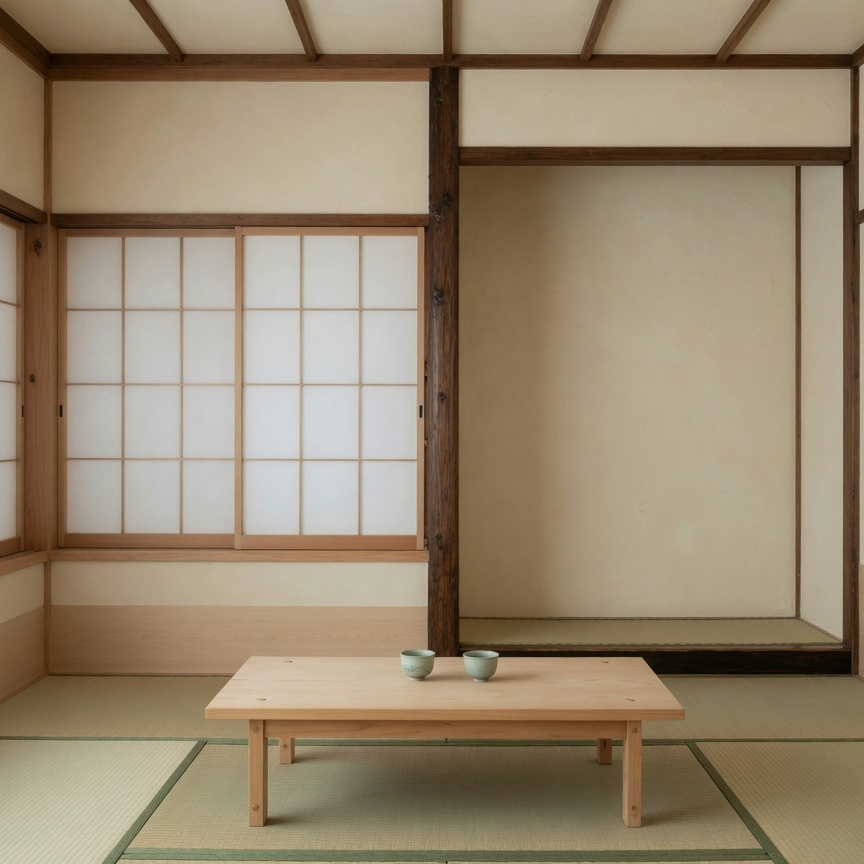

Eri's Choice · VD5J
Eri's Choice is a design that does not keep strictly to one style; it is Master Takase's own artistic choice.
笑門来福
shōmon raifuku
Fortune Comes to a Home Full of Laughter
Good fortune comes to a home full of laughter.
Hand-brushed by Master Eri Takase
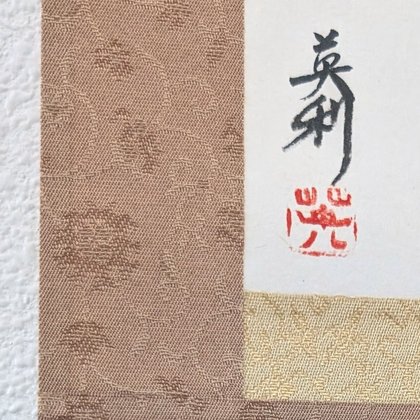
Master Japanese Calligrapher Eri Takase brushes your scroll by hand when you order it. Each scroll bears her red seal, 英利, and her signature.
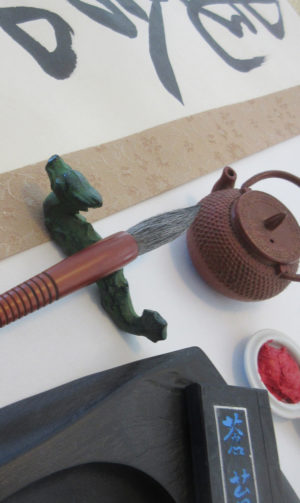
Eri Takase was born and raised in Osaka, Japan, and holds the rank of Shihan, the highest rank in Japanese calligraphy, from the Bokuteki-kai and the Bunka-shodo.
12 1/4" × 43" Japanese Scroll
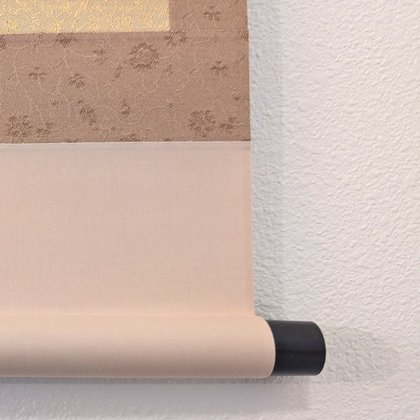
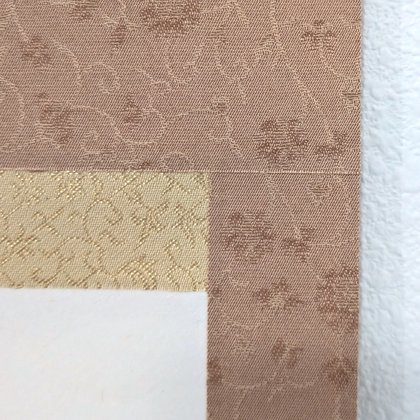
The scrolls are 12 1/4" W × 43" H (31 × 109 cm), with woven damask borders and layered Japanese paper (washi), designed to last generations. The scrolls themselves are made by a scroll maker in Gifu, Japan, and we have worked with them for over two decades.
Ships in 1-3 days from Washington State
Your scroll is brushed when you order it and completed within 1 to 3 business days.
Your scroll ships from Master Takase's studio in Washington State. Shipping is calculated at checkout. We ship worldwide.
Includes detailed explanation, gift-ready
Your scroll arrives boxed, with a printed insert describing the proverb in detail.
Sending it as a gift? Add your message at checkout and we will include it with the insert.
30-day money-back guarantee
Every order is covered by our 30-day money-back guarantee. If your scroll arrives damaged, or we made an error, we replace it or refund you in full, including shipping.
Explanation
笑門来福 (shōmon raifuku): good fortune comes to a home full of laughter.
笑門来福 is the Japanese proverb 笑う門には福来る written in four characters. Japanese dictionaries define the proverb: good fortune comes of itself to a house that is always full of laughter. The four characters say laugh, gate, come and good fortune. The gate stands for the house and the family in it. The scroll is read shōmon raifuku. The same four characters have also been read in print as the proverb, warau kado ni wa fuku kitaru.
An essay printed in 1850 opens with the proverb: The world has a saying: fortune comes to the gate that laughs. The essay was written for an image of Daikoku, the god of fortune, laughing with his mouth wide open. A book of 1877 tells of a New Year at a bath-house in Kyoto. The bath is named Tortoise, its keeper Crane, and the ward Pine and Bamboo. The writer counts the good omens, laughs, and says the proverb twice as a blessing.
A tea journal of 1930 reports a great painted gourd hung in the alcove of a tea room, with 笑門来福 written inside it. In 1943 street calligraphers sold 笑門来福 on scrolls. One dictionary notes the short form, 笑門, on New Year decorations hung over the front door.
Japanese, not Chinese: the proverb 笑う門には福来る, fortune comes to the gate that laughs, set into four characters of literary Chinese. Edo wrote 笑門 for the proverb's opening from the 1780s; the four characters are a pen name in 1811, and they open 川北温山's essay 大黒像記, printed in 1850, as 笑門福来, the proverb's own order. The order of the scroll, 笑門来福, is on a seal of 1850 by a scholar's report and on a printed title of 1883, and became the usual form only after the 1960s.
Learn More About This Proverb
We want you to be as happy with the meaning as you are with Master Takase's art. To learn more, visit Philology of 笑門来福.


