



Jiun · 自運 · VD5B
Jiun (自運) is the calligrapher's word for writing from one's own invention. As a Shihan, Master Takase has a hand of her own, and these designs are that hand: she draws freely on the classic scripts to create exactly the look she wants.
うらやまし
美しう成て
散る紅葉
urayamashi
utsukushū natte
chiru momiji
shikō 支考
How enviable
Turning beautiful then falling
maple leaves.
Enviable, to turn beautiful and then to fall: the maple leaves.
Master Takase creates this beautiful scroll when your order is placed, personally preparing the ink and brushing your art, which proudly bears her signature and seal. This is an original work of art.
Description
How enviable
Turning beautiful then falling
maple leaves.
|
urayamashi utsukushū natte chiru momiji |
うらやまし 美しう成て 散る紅葉 |
| shikō | 支考 |
うらやまし美しう成て散る紅葉 (urayamashi utsukushū natte chiru momiji): enviable, to turn beautiful and then to fall: the maple leaves. うらやまし is how I envy, enviable, and the verse opens on the feeling and gives its object last; 美しう成て is having become beautiful, 美しう the classical form of 美しく; 散る紅葉 is the maple leaves that fall, the autumn season word. It is Kagami Shikō's on the record of two books of 1909 from one publisher that set his name beside it, and Miyamori and Yasuda agree; nothing older is known. Miyamori read it through the wild cherry that scatters at the height of its beauty, the samurai's flower, and the maxim better a jewel broken than a tile whole: the poet envies the maple for going the same way. The envy comes first, and the leaves last. The English is Timothy L. Jackowski's, made for Takase Studios.
Calligraphy Notes:
1) We have used the Japanese from Miyamori though we do see different ways of writing this same poem. Specifically some write urayamashi in kanji as 羨まし美しうなりて散る紅葉. And there is another reading to the poem which uses narite in hiragana rather than natte in kanji. For example, うらやまし美しうなりて散る紅葉. We avoid this ambiguity by using 成て which can be read either narite or natte.
Translation Notes:
1) うらやまし urayamashi is today written 羨ましい (urayamashii) or うらやましい (urayamashii - note the extra i) and means "envious; jealous; enviable".
2) 美しう成て is read utsukushuu natte but the actual romaji is utsukushiu natte. Today we would write 美しくなって or 美しく成って which is utsukushiku natte. 美しく (utsukushiku) is from 美しい (utsukushii) meaning "beautiful; lovely". And 成って (natte) is from 成る (naru) meaning "to become; to change into; to be completed".
3) 散る (chiru) means "to fall; to scatter;". The implication is also "to die a noble death", but the word by itself does not have this meaning.
4) 紅葉 (momiji) means "maple leaves; autumn colors; red leaves". 紅 means "deep red; crimson" and 葉 means "leaf; leaves". Notice this can be read kouyou meaning "autumn colors" or momiji referring more specifically to the maple leaf.
Shikō wrote the verse in the autumn of 1730, in his last illness, on a visit to the memorial he had raised for himself, and it was first printed in 1732 in the record of that illness his disciple 廬元坊 published; he later changed its opening to 花よりも, more than the flowers.
We want you to be as happy with the meaning as you are with Master Takase's art. To learn more, visit Philology of うらやまし美しう成て散る紅葉.
Delivery
Your scroll is brushed when you order it and completed within 1 to 3 business days. It ships by USPS Priority Mail from Master Takase's studio in Washington State, boxed and ready to hang, with a printed page giving the art's English, romaji and Japanese.
Sending it as a gift? Add your message at checkout and we will include it.
Shipping is calculated at checkout from your address; within the United States it is $13 to $23. We ship worldwide, and any import charges for your country are shown at checkout before you pay.
Every order is covered by our 30-day money-back guarantee. If your scroll arrives damaged, or we made an error, we replace it or refund you in full, including shipping. Refund policy
About Our Scrolls
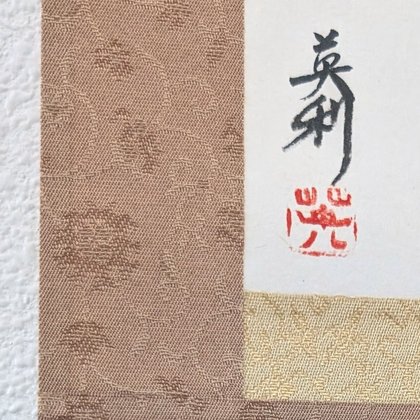
Master Japanese Calligrapher Eri Takase brushes your scroll by hand when you order it. Each scroll bears her red seal, 英利, and her signature.
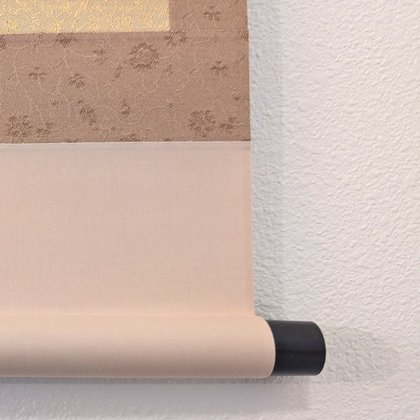
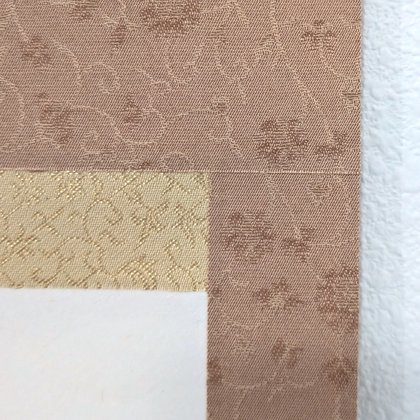
The scrolls are 12 1/4" W × 43" H (31 × 109 cm), with woven damask borders and layered Japanese paper, designed to last generations. The scrolls themselves are made by a scroll maker in Gifu, Japan, and we have worked with them for over two decades.
Eri Takase was born and raised in Osaka, Japan, and holds the rank of Shihan, the highest rank in Japanese calligraphy, from the Bokuteki-kai and the Bunka-shodo. About Master Takase
Related products

Issa - This dewdrop world, is a dewdrop world, and yet露の世は露の世ながらさりながらtsuyu no yo wa tsuyu no yo nagara sari nagara

Issa - Snail, ever so slowly climb, Mt Fuji蝸牛そろそろ登れ富士の山katatsuburi sorosoro nobore fuji no yama

Bashō - How admirable, to see lightning, and not think life is fleeting稲妻にさとらぬ人の貴さよinazuma ni satoranu hito no tattosa yo
