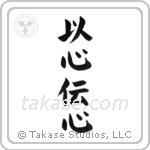
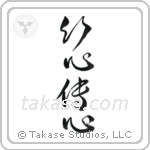
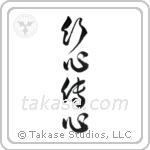
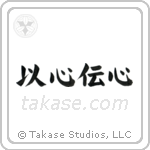
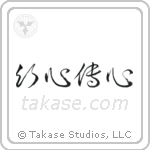
以心伝心 (ishindenshin): what passes between two people without being said. Read as a sentence, the four characters say
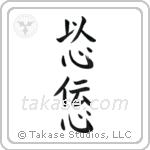
by the heart, transmit the heart: 以 is
by means of, 心 is the heart and mind, 伝 is to hand on, and 心 again. In everyday Japanese it is the warmest ordinary thing one can say about two people, that they understand each other with no word spoken, and it is said of a couple who have been together long enough for it to be simply true, and of a teacher and a student, which is where it began. The word is Zen's, from the story of the Buddha holding up a flower before a silent assembly while one disciple smiled, and the masters who used it were careful about what it means: the Chan master Huangbo defined transmitting mind as
to get not a single thing, and Dōgen, writing it in the Shōbōgenzō, called it beginners' talk. What the word names is not a transfer but a recognition, two people arriving at the same place with no proof except that both of them know. In English it has been rendered
telepathy,
tacit understanding and
mind to mind; the last two are closest to what the word means in a Japanese sentence. 以心伝心 is composed of the
kanji 以 (read i) meaning "by means of; because; in view of",
心 (read shin) meaning "heart; mind; spirit",
伝 (read den) meaning "transmit; go along; walk along", and
心 (read shin) meaning "heart; mind; spirit".