

Saying nothing, the guest, and the host, and the white chrysanthemum.
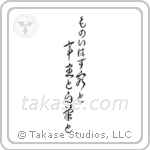
Ryōta - They spoke no words, The visitor the host, And the white chrysanthemum
ものいはず客と亭主と白菊と
mono iwazu kyaku to teishu to shiragiku to
Vertical Cursive VC6B
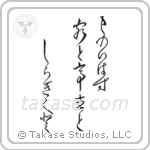
Ryōta - They spoke no words, The visitor the host, And the white chrysanthemum
ものいはず客と亭主と白菊と
mono iwazu kyaku to teishu to shiragiku to
Vertical Jiun VD3B
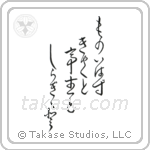
Ryōta - They spoke no words, The visitor the host, And the white chrysanthemum
ものいはず客と亭主と白菊と
mono iwazu kyaku to teishu to shiragiku to
Vertical Jiun VD5B
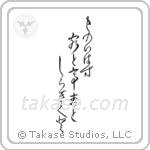
Ryōta - They spoke no words, The visitor the host, And the white chrysanthemum
ものいはず客と亭主と白菊と
mono iwazu kyaku to teishu to shiragiku to
Vertical Jiun VD6B
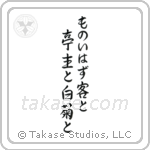
Ryōta - They spoke no words, The visitor the host, And the white chrysanthemum
ものいはず客と亭主と白菊と
mono iwazu kyaku to teishu to shiragiku to
Vertical Semi-Cursive VS5C
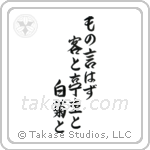
Ryōta - They spoke no words, The visitor the host, And the white chrysanthemum
ものいはず客と亭主と白菊と
mono iwazu kyaku to teishu to shiragiku to
Vertical Semi-Cursive VS5D
