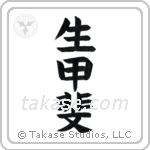
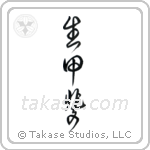
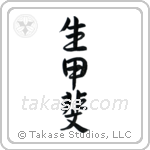
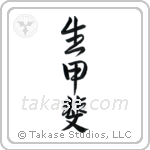
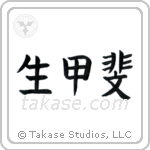
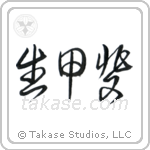
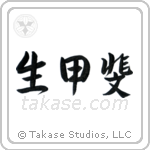
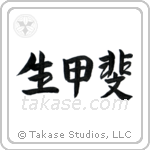
What makes your life worth the living: not a goal you set, but the thing that gives your days their worth, the person or the work you get up for. It is an everyday Japanese word, on record since the fourteenth century, built on 甲斐 (kai), an old native noun for the worth an act turns out to have had; a mother says it of her child. For five hundred years it was said mostly in the negative, of a life not worth the living, and the novelists around 1900 gave it the zest it carries now, a sense a psychiatrist could fill a book with in 1966 without defining it. The four-circle diagram that travels with the word in English, what you love, what you are good at, what the world needs, what you can be paid for, is not the word: it was drawn in 2011 for the Spanish word for purpose and given the Japanese name in 2014. The Japanese asks only whether living is worth it, and names what makes it so; which thing that is, for you, is yours.
We want you to be as happy with the meaning as you are with Master Takase's art. To learn more, visit Philology of 生甲斐.