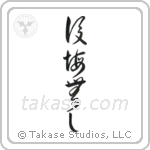
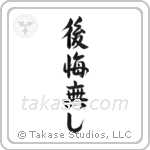
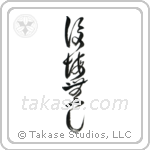
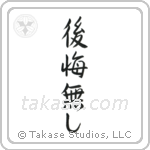
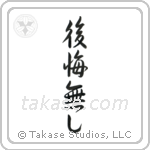
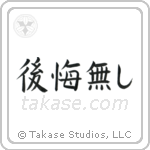
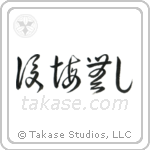
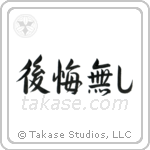
後悔無し (kōkai nashi): no regrets, there is no regret, said of a thing done. 後悔 (kōkai) is regret after the fact, sorrow for something one did; 無し (nashi) is the classical adjective
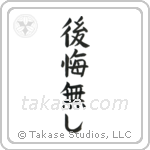
there is none, the ancestor of the everyday ない. Together the four characters make a statement rather than a command,
there is no regret, and they make it in the literary form: this is the sentence in which Japanese readers have read the Chinese classics'
no regret for centuries, the form a general wrote from a siege and a moralist wrote in his study, while the same thing said in conversation is 悔いなし (kuinashi) or 後悔はない. Its nearest classical echo is the man who would die without regret, whom Confucius passed over for the man who plans with care, so the old moral of the phrase is the rash man's virtue and its modern one is the settled mind of someone who chose and would choose again.
No Regrets is the exact English, and the design keeps the statement form; a buyer who wants the spoken form has 悔いなし. 後悔無し combines the words
後悔 (read kōkai) meaning "regret, regrets" with
無し (read nashi) meaning "no, none, without".