

Were my father here, I would want to see the dawn over the green fields.
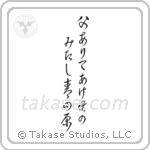
Issa - Were my father here, At dawn we would gaze, Over the green fields
父ありてあけぼのみたし青田原
chichi arite akebono mitashi aotabara
Vertical Cursive VC6B
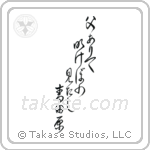
Issa - Were my father here, At dawn we would gaze, Over the green fields
父ありてあけぼのみたし青田原
chichi arite akebono mitashi aotabara
Vertical Jiun VD4B
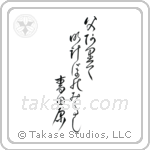
Issa - Were my father here, At dawn we would gaze, Over the green fields
父ありてあけぼのみたし青田原
chichi arite akebono mitashi aotabara
Vertical Jiun VD5B
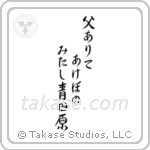
Issa - Were my father here, At dawn we would gaze, Over the green fields
父ありてあけぼのみたし青田原
chichi arite akebono mitashi aotabara
Vertical Semi-Cursive VS6C
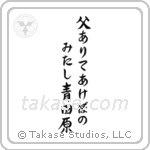
Issa - Were my father here, At dawn we would gaze, Over the green fields
父ありてあけぼのみたし青田原
chichi arite akebono mitashi aotabara
Vertical Semi-Cursive VS6D
