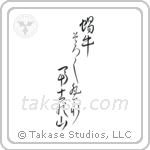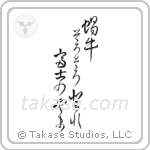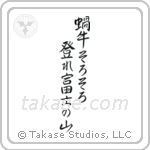

蝸牛そろそろ登れ富士の山 (katatsuburi sorosoro nobore fuji no yama)
| Snail ever so slowly climb Mt Fuji | katatsuburi sorosoro nobore fuji no yama | 蝸牛 そろそろ登れ 富士の山 |
| Issa | issa | 一茶 |
蝸牛そろそろ登れ富士の山 (katatsuburi sorosoro nobore fuji no yama): snail, slowly, slowly, climb Mount Fuji. 蝸牛 is the snail, a summer word, read katatsuburi in the old books and katatsumuri today; そろそろ is *slowly, little by little*, the adverb doubled; 登れ is the imperative, *climb*; 富士の山 is the mountain by its full name. The verse is an address, not a picture: the snail is told to climb the highest mountain in the country and told how, and the how is the whole of it. Every collected edition of Issa's verse prints it, from the first in 1902, and no older witness has been found; the edition that dates each verse from his diaries has no year for this one. The Meiji schoolbooks set it under *modesty* and *perseverance* with a companion line, *one step at a time and you are at the summit*, and by the 1920s walkers on the Fuji trail quoted it as advice on pace. Blyth read it the other way: if you are a snail, be a snail, and climb as a snail climbs. Master Takase brushes the kanji 蝸牛 on every design, so the calligraphy is the same under either reading. The English is Timothy L. Jackowski's, made for Takase Studios.
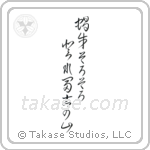
Note that in most haiku books "snail" has the romaji katatsuburi. The modern Japanese word for "snail" is katatsumuri. These designs all use the kanji so the different readings do not change the calligraphy.
Couldn't add to cart. Please try again.