

This world of suffering; and if the cherry blooms, so it has bloomed.
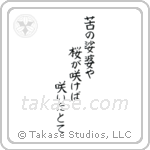
Issa - A world of grief and pain, Flowers bloom, Even then
苦の娑婆や桜が咲けば咲いたとて
ku no shaba ya sakura ga sakeba saita tote
Vertical Block VB6C
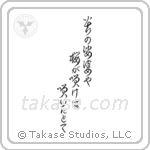
Issa - A world of grief and pain, Flowers bloom, Even then
苦の娑婆や桜が咲けば咲いたとて
ku no shaba ya sakura ga sakeba saita tote
Vertical Cursive VC6B
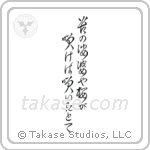
Issa - A world of grief and pain, Flowers bloom, Even then
苦の娑婆や桜が咲けば咲いたとて
ku no shaba ya sakura ga sakeba saita tote
Vertical Cursive VC7B
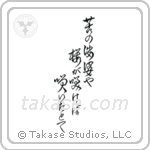
Issa - A world of grief and pain, Flowers bloom, Even then
苦の娑婆や桜が咲けば咲いたとて
ku no shaba ya sakura ga sakeba saita tote
Vertical Jiun VD5B
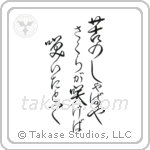
Issa - A world of grief and pain, Flowers bloom, Even then
苦の娑婆や桜が咲けば咲いたとて
ku no shaba ya sakura ga sakeba saita tote
Vertical Jiun VD5C
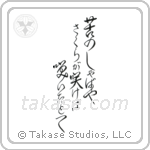
Issa - A world of grief and pain, Flowers bloom, Even then
苦の娑婆や桜が咲けば咲いたとて
ku no shaba ya sakura ga sakeba saita tote
Vertical Jiun VD5D
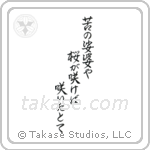
Issa - A world of grief and pain, Flowers bloom, Even then
苦の娑婆や桜が咲けば咲いたとて
ku no shaba ya sakura ga sakeba saita tote
Vertical Semi-Cursive VS5C
