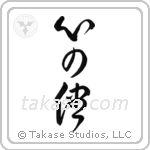
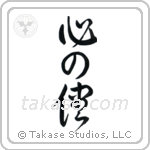
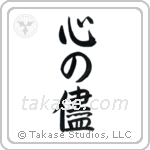
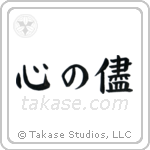
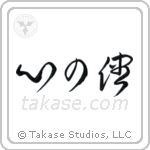
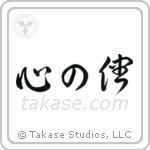
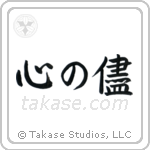
心の儘 (kokoro no mama): as the heart wills; following one's own heart. 心 (kokoro) is the heart and the mind together, の (no) joins it to 儘 (mama),
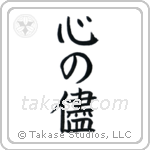
the state as it is, so the phrase is
the heart, just as it is, the condition of doing as one's heart directs; the dictionaries head it as
just as one thinks, at one's own discretion, to one's heart's content. It is the one classical phrase on this shelf and reads as one: it is in the oldest Japanese tale, where a suitor cannot press the moon princess as he wishes, and in the
Tale of Genji. Freedom is its sense, and in the old chronicles sometimes license, a lord doing as he pleased, which is the edge a reader should know;
follow your heart has the sense right, with the difference that the Japanese describes the state where the English gives the instruction. 儘 is the full form of the character; the dictionaries write the word in kana and older print often writes 侭, and all three are one word. 心の儘 is composed of the
kanji 心 (read kokoro) meaning "heart", the possessive grammatical element
の (read no) and
儘 (read mama) meaning "as it is; as one likes".