

The spring sea, all day long, swelling and falling, swelling and falling.
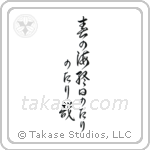
Buson - The spring sea, all day rising and falling, rising and falling
春の海終日のたりのたり哉
haru no umi hinemosu notari notari kana
Vertical Cursive VC6B
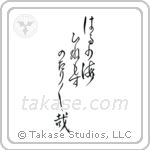
Buson - The spring sea, all day rising and falling, rising and falling
春の海終日のたりのたり哉
haru no umi hinemosu notari notari kana
Vertical Design VD5B
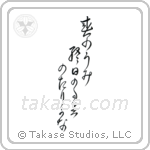
Buson - The spring sea, all day rising and falling, rising and falling
春の海終日のたりのたり哉
haru no umi hinemosu notari notari kana
Vertical Design VD6B
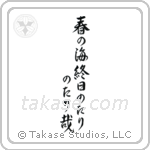
Buson - The spring sea, all day rising and falling, rising and falling
春の海終日のたりのたり哉
haru no umi hinemosu notari notari kana
Vertical Semi-Cursive VS6C
