

Loneliness, and there is gladness in it too; autumn dusk.
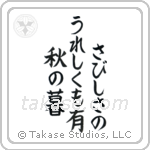
Buson - In loneliness, there is joy too, An autumn eve
さびしさのうれしくも有秋の暮
sabishisa no ureshiku mo ari aki no kure
Vertical Block VB4C
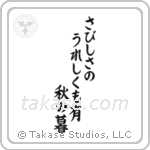
Buson - In loneliness, there is joy too, An autumn eve
さびしさのうれしくも有秋の暮
sabishisa no ureshiku mo ari aki no kure
Vertical Block VB5C
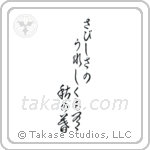
Buson - In loneliness, there is joy too, An autumn eve
さびしさのうれしくも有秋の暮
sabishisa no ureshiku mo ari aki no kure
Vertical Cursive VC5C
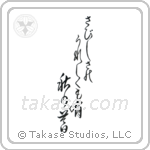
Buson - In loneliness, there is joy too, An autumn eve
さびしさのうれしくも有秋の暮
sabishisa no ureshiku mo ari aki no kure
Vertical Jiun VD5B
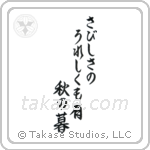
Buson - In loneliness, there is joy too, An autumn eve
さびしさのうれしくも有秋の暮
sabishisa no ureshiku mo ari aki no kure
Vertical Semi-Cursive VS4C
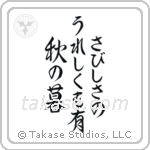
Buson - In loneliness, there is joy too, An autumn eve
さびしさのうれしくも有秋の暮
sabishisa no ureshiku mo ari aki no kure
Vertical Semi-Cursive VS5C
